Author: wildharvestedtea

  • Sanmai, the village in Mengsong where time seems to have stopped

    Sanmai, the village in Mengsong where time seems to have stopped

    Sanmai has gained more and more attention from pu’er enthusiasts in recent years, following the growing interest in the forests of Naka and the Mengsong area.

    It is surrounded by some of the most famous mountains in Menghai county, about an hour north of Banpo zhai in the Nannuo area, and an hour and a half south of Huazhuliangzi, reachable passing through the villages of Bameng and Baotang. The forests alternate with the taidicha like an ecological clash between human and nature,the primitive and forest scenarios intensify as you enter the trees towards the North, on the road to Sanmai Laozhai. Once in Sanmai Shangzhai there are only a few kilometers to walk towards the ancient gardens where the natural severity and the inexorability of the woods continues up to the gates of Nanben Laozhai.

    Some Mengsong areas seem to open up towards the immense, they consecrate themselves in that “Open” which for Heidegger was the condition in which things, places, people can appear for what they are and not for their numerical value. From the ancient gardens of Sanmai, the valley sloping down to Jinghong, it seems like a mirage that would have elicited a surprised smile, despite his countless trips, even at Frederic Edwin Church.

    The lichens and saprophytic plants embrace the shrubs in those slopes born from an insane verticalism, which forced the few pickers who bet part of their existence on tea to remain more anchored to the anxieties of concreteness, where the violet of their cheeks was the only chromatic hint among the shades of that primordial greenery.

    Beyond the narrow and steep road, the rugged gorges and the road surface in which every ravine seems an existential leap, the Hani have found a home for centuries, what was previously a settlement became a security hub in 1934 under the name of Nanben Hebao, for then seeing his own name, Sanmai, only in 1956. Caravans often interrupted their journey here, the rains broke in for days, the oxen slipping caused them to lose the equipment entrusted to them and hence the legend of the name Sanmai, or the place where the tools were tied forming a trellis in the saddle of the ox.

    In the ancient gardens tea trees are scattered, some tall yet young seem to converse with the conical bodies of Moso bamboo which often makes this forest look like the ecosystem of Huazhuliangzi.
    Here, on the contrary, the bamboo was planted artificially, when tea had not yet reached its current economic importance, as a cash crop for building and textile purposes, and to restore the excessive soil reclamation which led to extremely important erosive phenomena. However, now its removal and reconversion of the land is a problem that inhabitants are facing with difficulty.

    The descendants of those exiled souls who bet on the tea of Mengsong and Sanmai now reap the fruit of a legacy that expands beyond its disciplinary limits, to the point of involving the destiny of their own territory.

    The rural scenes give value to the time that has passed, the villages develop on the open ridges of the mountains,where the approximately 500 families, mainly Hani, still live mainly thanks to livestock and farming. During the Gatangpa festival you can smell the scent of glutinous rice cakes in the alleys, people walk along the beaten path to reach the place of offerings, and then gather with their families drinking tea and rice wine, even some hens seem busy running out of the old wooden sheds; the black of the ethnic clothes, adorned with silver and silk tassels and the colorful bandanas with geometric motifs offer the only chromatic contrast from the red of the clay soil, as if their smiles were in that instant the only color detail on a black and white background.

    Despite the growing awareness of the value of their tea, it seems that the jianghu forged by conflicts of personality and self-affirmation has not arrived here, their leaves still manage to offer an experience saturated with meaning, freed from economic conflicts and apocryphal slogans; they develop an extended atmosphere in which the link with a past emerges, with those identities, of those perceptions beyond time, which have the ability to bring the aesthetic experience of this village back to the dimension of the present in a different, imperceptible and at the same time sensitive in its liquid revelation.

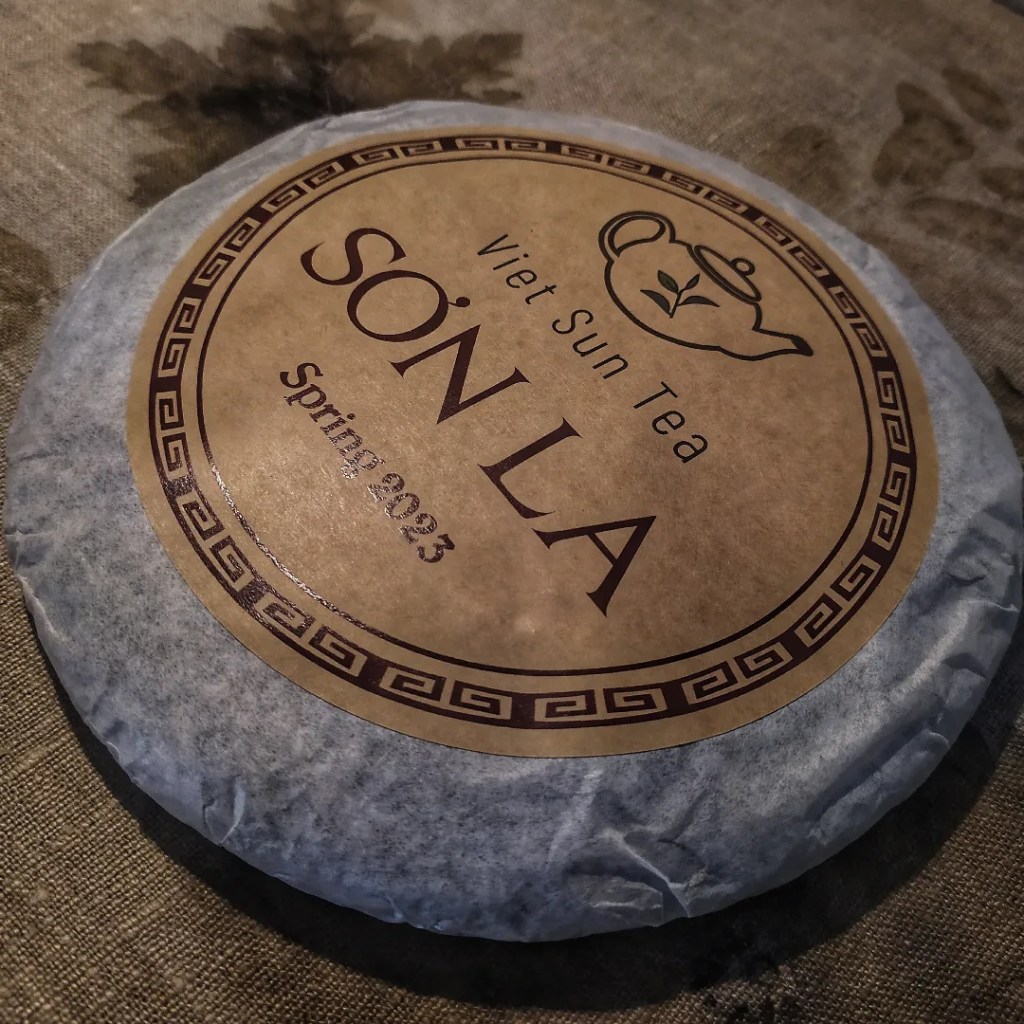
  • The forest of Hoàng Su Phì and reconciliation with the truth. Soliloquy with Viet Sun black tea from ancient trees

    The forest of Hoàng Su Phì and reconciliation with the truth. Soliloquy with Viet Sun black tea from ancient trees

    The sound of the horn in the Dao rituals dictates the rhythm of a place that seems alive in the eternal instant of a perpetual past, the thunders are rhythmic like the steps of the Jade Emperor on his journey to earth.

    The people do their utmost in the preparation of the traditional ceremony in their black tunic whose red drapes blown by the wind seem to give them a permanent dynamism, while their clothes and the folds on their faces seem to merge with the sky broken by lightning, letting the viewer try to understand the silent emotions they express.

    Places like Hoàng Su Phì revive that pure, almost mythological naturalism, saving it from being a mere memory. The paths seem a return to the eras of myths and magic, spiritualism, tenacity and subsistence, far from the paved road of self-flagellation materialism. It is those paths that force us to reformulate contingency, those smells of an extinct nature that ask us, as Derrida said, to rethink our relationship with the truth. They are forests where not only the camellia orchestrate a unique opéra in harvest time, but they are real metaphysical theater for find again time and conciliation with history, acts of rediscovery of a lost essentiality.

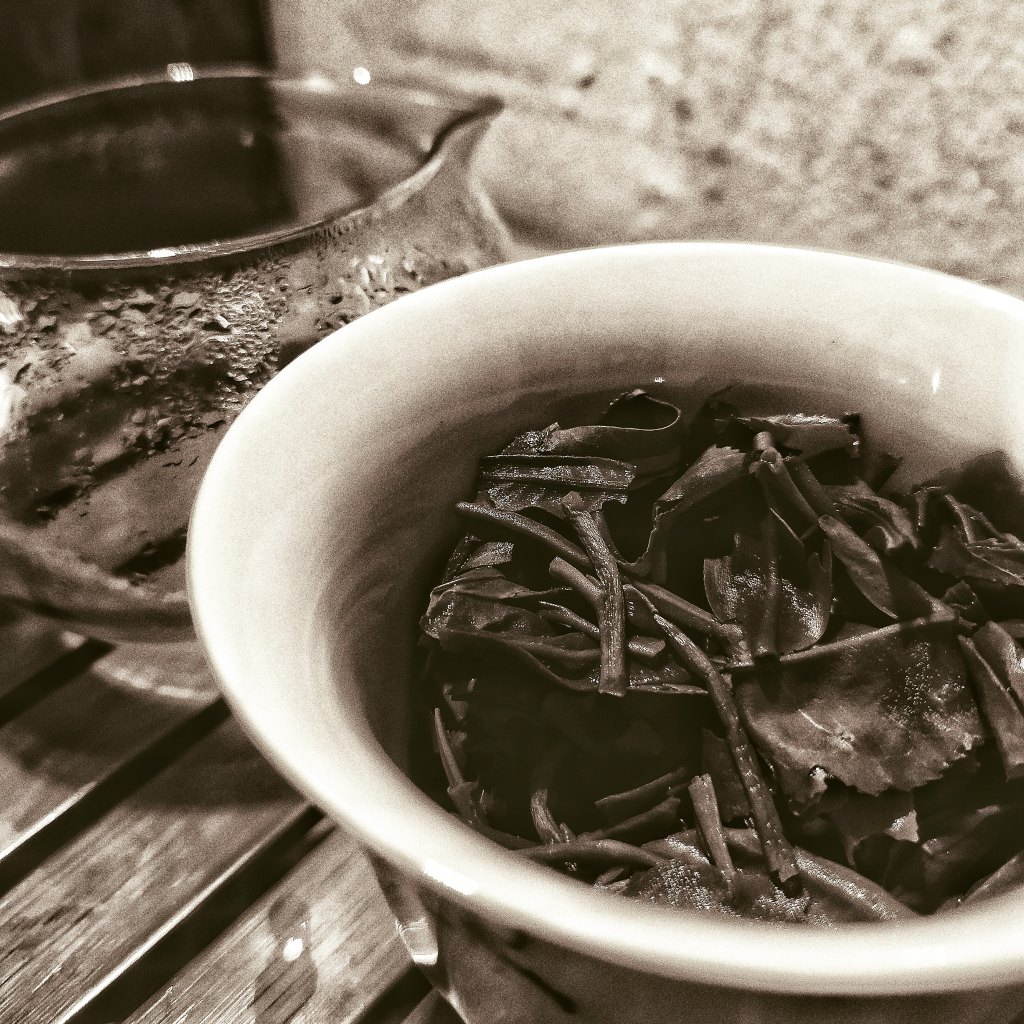
    A particularly interesting Viet Sun tea from 2022, sourced from ancient trees in the Hoàng Su Phì forest in Hà Giang province. The notes of the wet leaves are extremely special, aromas of chestnut honey, cocoa and malt biscuits are perceptible, accompanied by dried sour cherries combined with more floral nuances of violet and lilac. A more particular weaving approaches timidly, in the background you can feel the dried straw, tamarind sauce and dry cranberry, to then arrange on very clear memories of distilled grape skin, muscat grappa and notes of old, freshly waxed wood.

    The sip is coherent, medium-bodied, sensations of cocoa combine beautifully with those of malted barley and honey, enlivened by a never tiring, balanced and persistent sweetness.

  • A forest out of this world, shaped by a Caravaggesque hand. This is Paliang

    A forest out of this world, shaped by a Caravaggesque hand. This is Paliang

    Passing the muddy paths close to Bulang, with those mountains behind you that seem to have been born from the virtuosity of a Caravaggesque hand, shaped by tectonic inclemency, by geological tension, the sun shines burning over the tropical karst sinkholes, a place where nature and men weave millenary relationships, meeting in the most inaccessible forest and in the architectural remains of the imperial era.

    The light filters through the dense forest, radiating the tea trees that look like illuminated actors in a naturalistic work twisted in lignified gestures, while the boys in the village load the trucks with cassava and laughter intones a background melody. Here stands the ancient village of Paliang, an out of this world place at about 1850 meters above sea level, surrounded by primitive works, where popular customs are preserved in their amnioticism.

    All this is defined by leaves that show in an objective elegance what is an empathetic initiation to Bulang teas. The infusions reveal a more restrained astringency, a character devoid of that fatherly austerity represented by the strong bitterness of some teas that are encountered a few tens of miles away.

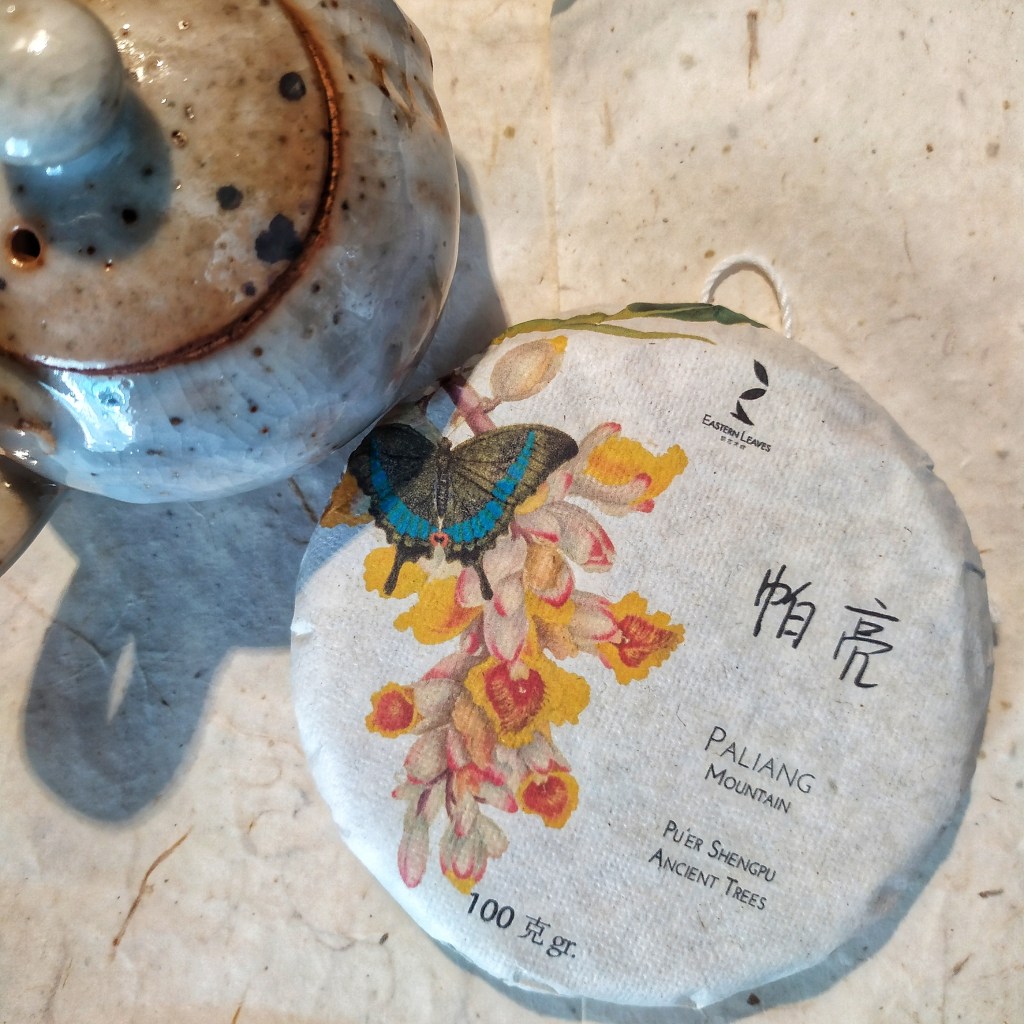
    This sheng pu comes from material harvested in 2021 in Paliang. The scents of the leaves are like taking a look at an ancestral view, when wet they recall charcoal-cooked tropical fruit, the wild flowers bring back memories of an excursion on the bank of a wooded river, surrounded by deep forest moss, pervaded by the smell of wet rock. Almost primitive and mineral scents are accompanied by those of the juiciness of a basket of ripe fruit, there are notes of toasted dried fruit and slight hints of ancient leather.

    In the mouth it flaunts a smooth texture, it seems wrapped in silk drapes, the bitterness is contained although present, tempered by the soft and deep echoes of a sweetness resulting from the juiciness of a ripe peach. The sip recalls the sensations of a good Montrachet, the palate is soon refreshed by a peculiar minerality and eagerly seeking the next contact with the cup.

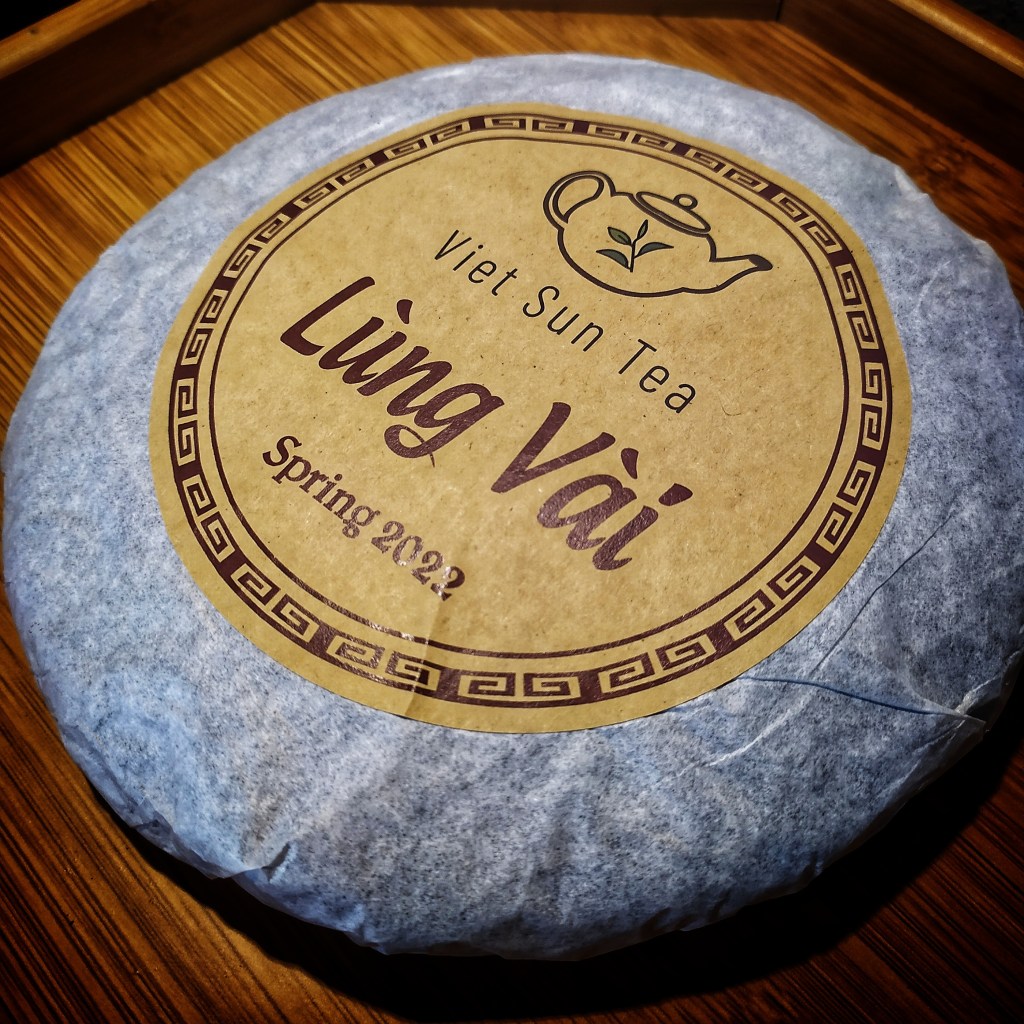
  • A visceral bond with time that has never been broken and a history that has never been betrayed. Journey to Lùng Vài through this Viet Sun 2022 sheng pu’erh

    A visceral bond with time that has never been broken and a history that has never been betrayed. Journey to Lùng Vài through this Viet Sun 2022 sheng pu’erh

    The rain poured down, the people in the highland villages returned home after working in the fields all day, the light fades as people’s voices approach, dispersing the fatigue of the harvest in their song. The forests stand between the terraced fields like polychromatic marvels, the mountain farmers appear like artists when their work creates such harmonious beauty, one that would have enraptured Holderlin and which he would have described as an art inspired by that original mutual belonging between sky and earth.

    As the sunlight disperses the mist, the fields fill with water like sparkling mirrors reflecting the sun and clouds. A now dim light filters through the palm roofs, the rural architecture seems aged and embraced by moss, but still firm and representative of times gone by. One can see an ancient splendor that is renewed with every glance at it, imagining a visceral bond with time that has never been broken and a history that has never been betrayed.

    This Viet Sun Lùng Vài tea, like the architecture in this area, bears witness to the events, they are beyond the present, not as a relic of the post-history but as narrating entities surviving in the subsistence of their descendants.

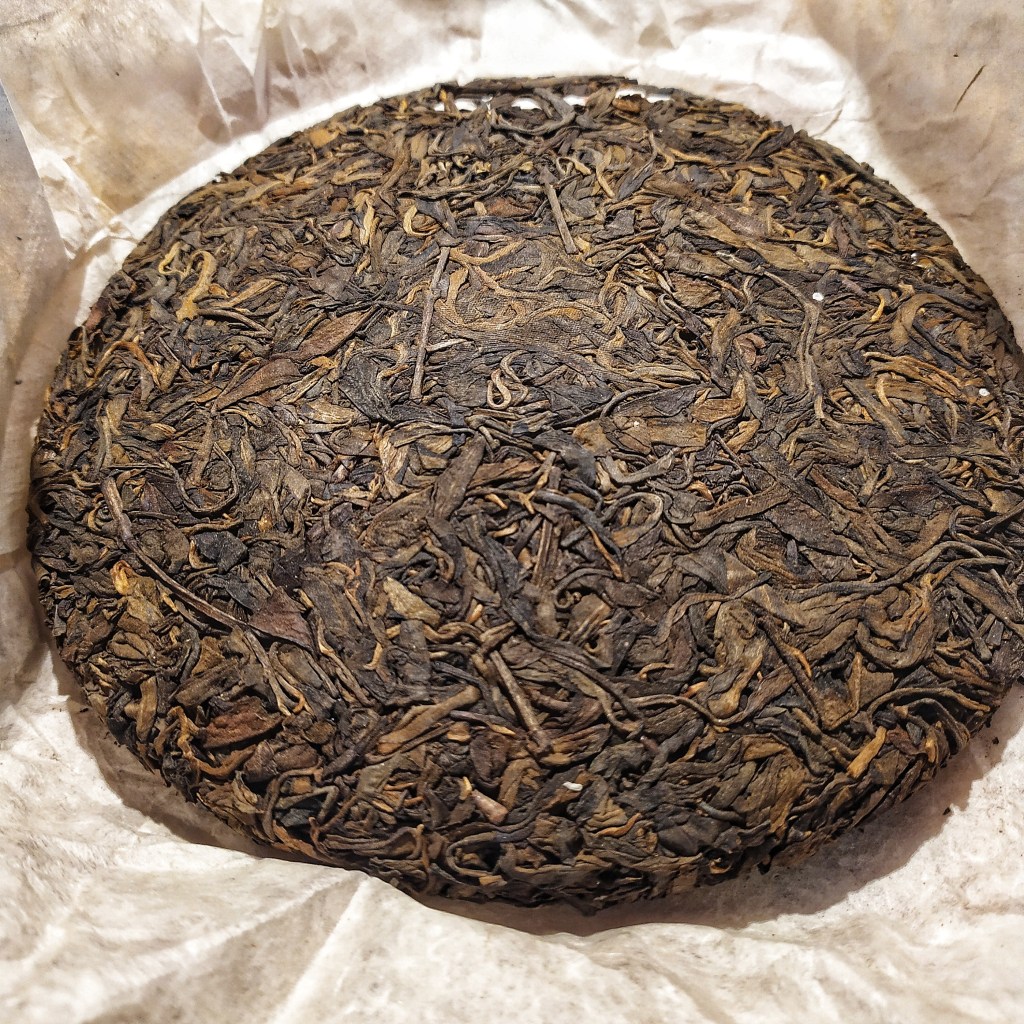
    This is a sheng from an extremely interesting and characteristic terroir, located on the eastern side of Tây Côn Lĩnh mountain, Hà Giang province, from ancient tea trees. The dried leaves have an intensely floral scent, once wet they show an evocative and complex character made up of citrus tones, charcoal-cooked fruit, fragrances of dried mango, pear soaked in white wine, candied orange and apple custard. The sip is both juicy and vibrant, refreshing, wisely balanced and medium-bodied, with an initial and subtle bitterness.

    A good huigan accommodates aromas that recall lemon cream, citrus honey, flambéed fruits on a background of alpine herbs; notes of orange peel and carrot plumcake conclude a dynamic and intensely meaningful session.

  • An emotional tea along Xiangling Highway. Mr Quen Cun An and his early 2000’s Manzhuan pu’er

    An emotional tea along Xiangling Highway. Mr Quen Cun An and his early 2000’s Manzhuan pu’er

    Along the Xianglun Highway, the entrances to the forest alternate with those of the taidicha, a single main road connects the village of Manzhuang to that of Manlin. The primeval essence of the tropical forest can be seen from the few patches of bare earth left; the age, mineralogy and extensive leaching of acrisol, which have led to low levels of plant nutrients, counteract the silt-clay undertones of the iron- and aluminum-rich ferrarsol in which the camellia has found its home.

    In the teahouses you drink the liquid consequence of a territory and its time, of a history of sacrifices and the search for the truest self-assertion. They become a place to find a family, a group or a simple shelter where one can abstract oneself from taxes or from any contradiction of contingencies, where every soul, even if tacit, does not wander alone, but together with other worn out and thirsty souls.

    Mr. Quen’s Manzhuan sheng pu’er expresses the charm of the lived, it is the example of those teas that seem to simplify what is most hidden and arcane and complicate what is simpler, making a set of organoleptic notes a complex symphony and a vivid image.

    The liqueur has a reddish color with orange reflections, reminiscent of the nuances of a tawny port. The scents of the wet leaves enriched with jinhua bring back memories of raw and primitive landscapes as Bruegel the Elder would have imagined them, with notes of damp earth, dried mushrooms, undergrowth, leading to a wood cabin under the rain, with the smell of aged mahogany, old books and a bouquet of faded flowers. Light balsamic tones take over in the background, together with those of burnt wood, laurel, dried plums, piloto tobacco, black pepper and dried longan.

    The gloomy evening atmosphere becomes more vivid with the appearance of notes of leather, cognac and typical hints of aging in oak barrels.
    The body is medium thick, the sip has notes of walnut, dried plums and aromatic herbs which are the prelude to the nuances of leather, old wood, cinchona, dried citrus peel and filter coffee.

    It is a sheng of great balance and sensory complexity, the bitterness is now perfectly integrated and not very perceptible as is the astringency, excellent huigan and remarkable persistence.
    Material from Ba Zhong Zhai village, Manzhuan area, family garden of Quen Cun An.

  • As long as the root is still there, everything is still there. A few words about Manzhuan

    As long as the root is still there, everything is still there. A few words about Manzhuan

    “只要根还在,一切都还在”
    Before the advent of a group of Taiwanese tea explorers in 1994, Manzhuan was a heavily rural area, dominated by vegetation surrounding classical Han architecture. Residents of Manzhuang, Manlin and Manqian were still recovering from the war that decimated many families, the losses due to the famine and class sacrifices of the Maoist era, especially between the 50s and 70s, brought the area of Manzhuang to count less than a hundred people, the sale of tea was almost impossible and agriculture was not even enough for self-sustaining.

    Social regimentation had devastated the existence of a place, disfigured the quiet by imposing an artificial order irreconcilable to it. But history soon revealed a whole other future, and from the mid 70s onwards the production and sale of tea was resumed, many centuries-old trees were pruned to increase production and answer an ever-increasing demand. This happened until the early 2000s, when the effects of the Taiwanese expedition and the explosion of the pu’er market made sure to return to a policy of conservation and preservation of their land, reliving their past.
    As long as the root is still there, everything is still there “只要根还在,一切都还在”.

    Manzhuang is one of those few remaining places that detract from humanity the superficial, in which between man and earth there is not a mere utilitarian link as between an animal and a drinking trough, but rather existential as the one between the world and God. It is here that trees distill the air full of herbs and wild fruits and man becomes able to transform it into the liquid painting of a land that still resists modernization, taking root in its primordial essence.

    Drinking Manzhuan pu’er like Mr. Quen’s is like letting a sip of reconstruction run down your throat, giving you the keys to a hard-earned identity. They are teas that allow to go beyond the material nature of the object, a liquid synthesis of the historical complexity of a region that has been the cradle of tea lyricism and incubator of a natural heritage for more than a thousand years.

    P.S. the cake in the photo, although produced in Yibang, bears the symbol and style of the productions of Mr. Quen Cun An’s family (Quanjihao tea factory), who manage gardens throughout the Six Mountains, including Manzhuan.

  • A tea that is a symbol of redemption, of radical change and self-determination. Viet Sun Lùng Vài pressed white tea 2022

    A tea that is a symbol of redemption, of radical change and self-determination. Viet Sun Lùng Vài pressed white tea 2022

    A long time has passed, from Chinese cultural domination, from French colonization, from the 30 years of struggle for independence, the time necessary for the rain to give respite to the memory from the pain of the loss. But tea in Vietnam resisted everything as an observer of events, as a symbol of the zeitgeist, the spirit of the time and as such able to invest every era, to be reflected in literature and philosophy, in arts and everyday practice.

    Tea here is not a subject of dispute, the object of a claimed originality, of authenticity, but it is a symbol of restoration and self-affirmation, of a common thread with the past through a new way of doing things, it is a narrator of epics and tragedies, epitome of imaginative experiences of past places, of the old shops of Hanoi, of the narrow and terraced architecture leaning against the alleys full of vendors and trucks, of the old agricultural research stations abandoned and rebuilt in the late 70’s.

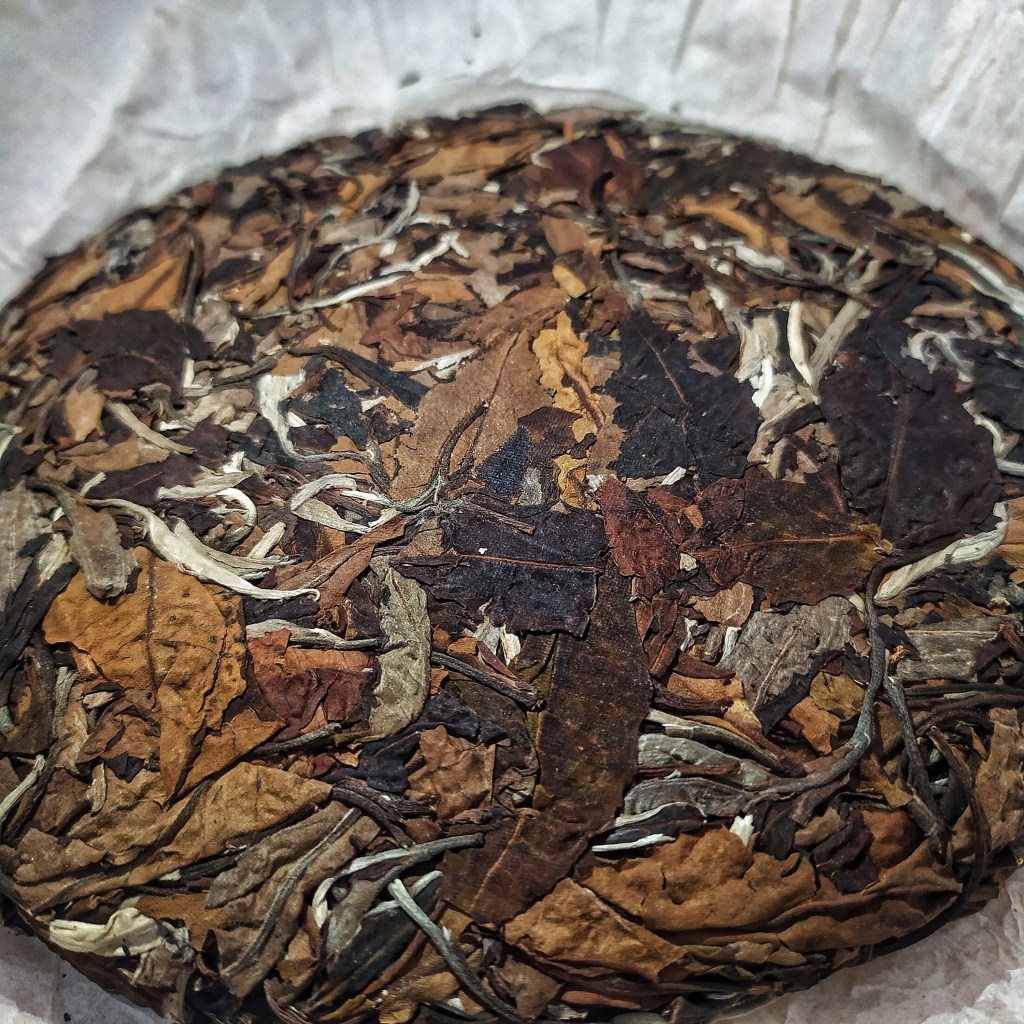
    The laobaicha of Viet Sun comes from material of 2022 collected from centenary trees in the area of Lùng Vài, Ha Giang, in the district of Vị Xuyên, at an altitude of 1000-1100 m. Vị Xuyên was the scene of one of the saddest battles that Vietnam saw in its history, a war that until 1985 repelled hundreds of thousands of soldiers, but which is now the district of one of the most interesting productive areas of the country. Tea in this case is a distillate of its place of origin, so expressive as to bear an almost salvific garment for a place, to extract from it its opposite, to exercise their ancient alchemical propositions of transmutation and renewal and at the same time to preserve and protect the scents of an original flowering.

    This is a white tea that gives a perfect daily drink, saturated with sense and without unnecessary garments. Its character is punctuated by ancestral scents, the olfactory notes recall those of a bouquet of roses resting on an antique piece of furniture, in which woody scents are linked to the fragrances of fresh and withered flowers, emerge the fragrance of apricots and kumquats stored in a bamboo basket, while those of spices and leather complete an intense and decadent picture, enlivened by a mnemonic expressiveness not always so frequently experienced.

    The mouthfeel is medium-thick, enveloping, lingering and balanced, distinctive and not similar to any other, enriched with spicy notes and ripe fruit, rhubarb and medicinal herbs. I thank Vietsun project for having contributed greatly to the in-depth discovery of Vietnamese teas, providing excellent material and information for the study of this country, its terroir and its history.

  • The Shangkang festival, the reconciliation of civilization, a nostalgic tea. Thoughts through a 2021 Wengji sheng pu from Moychay

    The Shangkang festival, the reconciliation of civilization, a nostalgic tea. Thoughts through a 2021 Wengji sheng pu from Moychay

    People gathered at the Shankang festival, their predecessors were honored, the offerings placed at the foot of a distant past in which every year the memory revived. It was an occasion to dance, to be involved in a moment when time seemed to stop, saturated with a sense that was difficult to translate into words, where society was reconciled and perfected, new relationships were woven and in the dance a harmonious idea of freedom and order was restored.

    The intense emanation of life was palpable also through the negatives of the photographs still hanging to dry, in those images you could see the dynamism of movements, conversations, aspirations, through that dance was reconstituted a kind of social consciousness, a “to be for others” even through the individualism, an assignment of virtue reflected in rhythmic and modal imposition, in traditional customs, in emphasized forms of courtesy, creating a link between distance and proximity, freedom and respect, confidence and discipline.

    In an age of collective utopias, among the mountain forests of Wengji flourishes instead the sense of dwelling, tea is evocative of a feeling of belonging, a vital civilization supported by the ability to live for its territory and its history alongside its neighbors, a loyalty to its land and the narration of its importance.

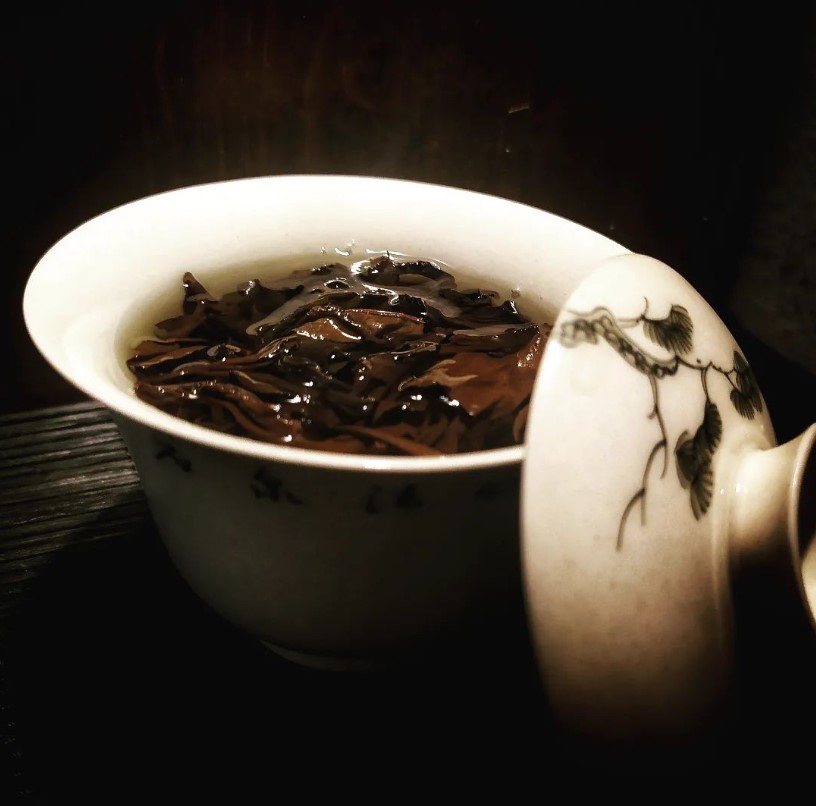
    In the gaiwan there is a 2021 Wengji sheng pu from Moychay, a complex tea where the typical character of Jingmai emerges in the notes of honey and flowers, orange peel, caramelized apricot, cooked strawberry and pandolce, with more primitive nuances in the background. The body is medium thick, the aromas direct and defined, the huigan emerges early after the advance of a archetypical and balanced bitterness.

  • The primordial essence of Da Xue Shan in YongDe County

    The primordial essence of Da Xue Shan in YongDe County

    he subtropical scenery of the Nanting River, from the foot of the mountain to the northern view of the main peak, seems to capture all the splendor of the world. Daxue rises to over 3,400 meters, opposite the other peak of the Nu mountain range, Xiaoxueshan.

    Karst severity alternates with the chromatism of the tropical forest of broad-leaved trees, water and land, peaks and plains create an antithetical contrast. It is said that a mountain has 4 seasons but thousands of different skies, and in Daxue there is nothing more true.
    Primordial colourism is the home of the black crested gibbon, the beauty and brilliance of wild flowers interrupts the immensity of the mountain, the Wanzhangyan waterfall seems suspended, as if it fell from the sky.

    Some families of the valley floor who do not work in large cities graze animals, while others work in small laboratories that produce Mangtuan paper, a tissue paper with a history of over 600 years made by hand from a bark called Maisha in the Dai language, for centuries used to transcribe Buddhist scriptures, books and packaging. Still others are dedicated to the collection of tea leaves and of the rare fruit varieties of the county such as Xiaomengtong pears, Mengdi litchi, Minglang papayas and Yongkang mango.

    The tea of Daxue, like its places, is addressed to the taster as a sincere lyric does with its auditorium, the distilled essence of a place is poured into our body giving it back its life while sweetness refluxes like childhood memories. His tea has quenched the thirst of poets and workers, revives memories of distant and primitive places as well as those of a work of art on a ceramic.

    Tea like those of Da Xue Shan are invested with a symbolic charge like few others, labaro of radical changes and that rise and fall from one existential plan to another that nothing is but the path of a rational being. Tea appropriates human nuances and analogies without resorting to forced anthropomorphism, it is imbued with a meaning that we ourselves put on it, it represents a momentary suspension where the ego meets in the cup its reflection.

  • When Mahei was called Lù biān. Journey through the history of the village in the company of a 2020 Mahei dashu sheng pu

    When Mahei was called Lù biān. Journey through the history of the village in the company of a 2020 Mahei dashu sheng pu

    Travel 25 kilometers west of Guafengzhai, you will arrive in Mahei. This was the first stage of the ancient tea road on the journey from Laos to China. It is said that one of the original names of Mahei 麻 黑 was “路 边” Lù biān, “Roadside”, because Maheizhai is near the road leading to Laos. In the past, one could start from Laos towards Yiwu and settle the night at the “roadside”, the old Mahei.

    Although it is one of the areas that dictates the highest price in Yiwu, only in recent years has there been an incessant attention to the restoration of natural conditions with low interventionism in the tea forests, remedying the tough pruning approach of the 80s-90s in order to increase the yield of ancient trees. Many trees still exceed 300 years but today the mixed and indistinct collection of gushu, young trees and ancient pruned trees is very common and have a clear organoleptic distinction is very complicated. Old trees Mahei pu is much sought after and expensive and its taste embodies part of the soul of Yiwu.

    Roughly speaking, it can be said that Mahei tea from ancient wild trees has a softer sip, with a greater opening sweetness and a bitterness that acts as a splendid counterweight. The astringency orchestrates a balanced, lingering and memorable melody, the huigan is intense, powerful and comes quickly, the body is silky and refreshing in which the typical honeyed character is enriched by a complexity unrecoverable in some non-wild or shengtai material.

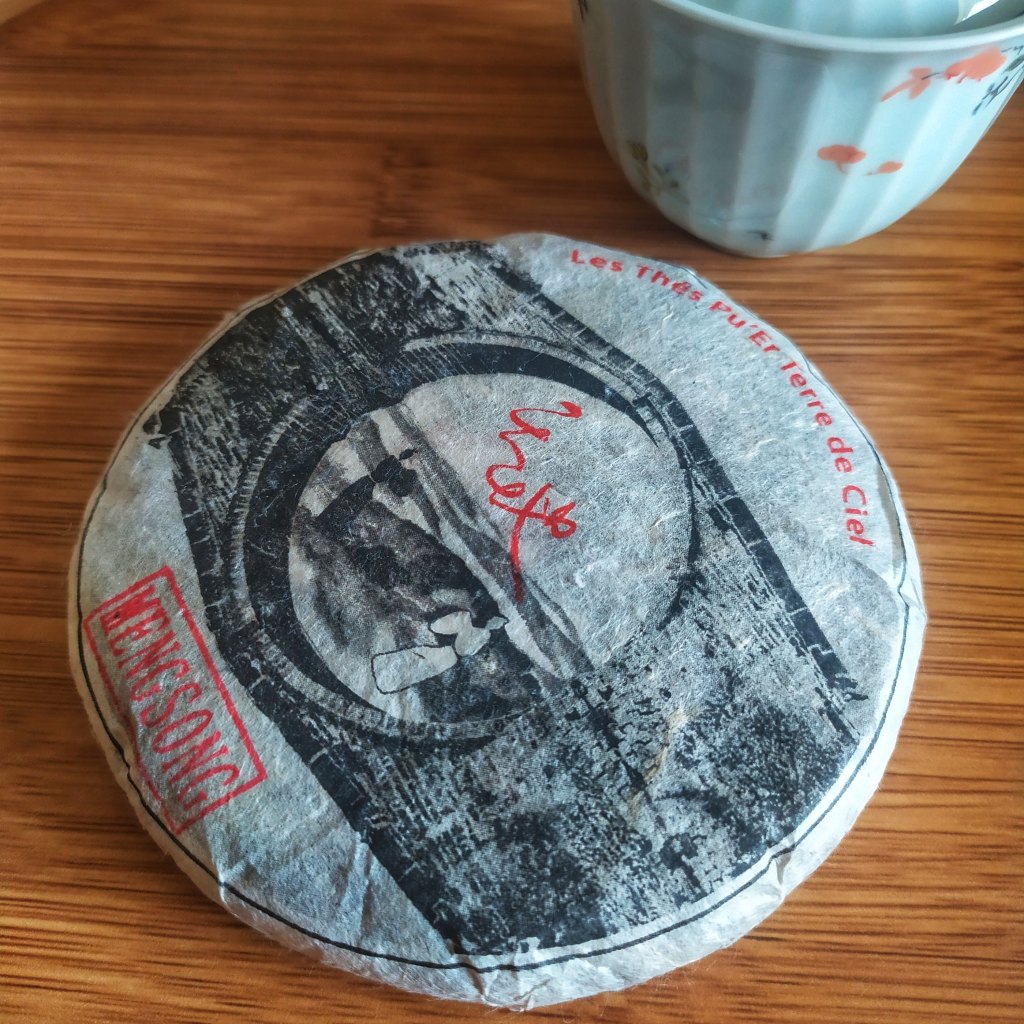
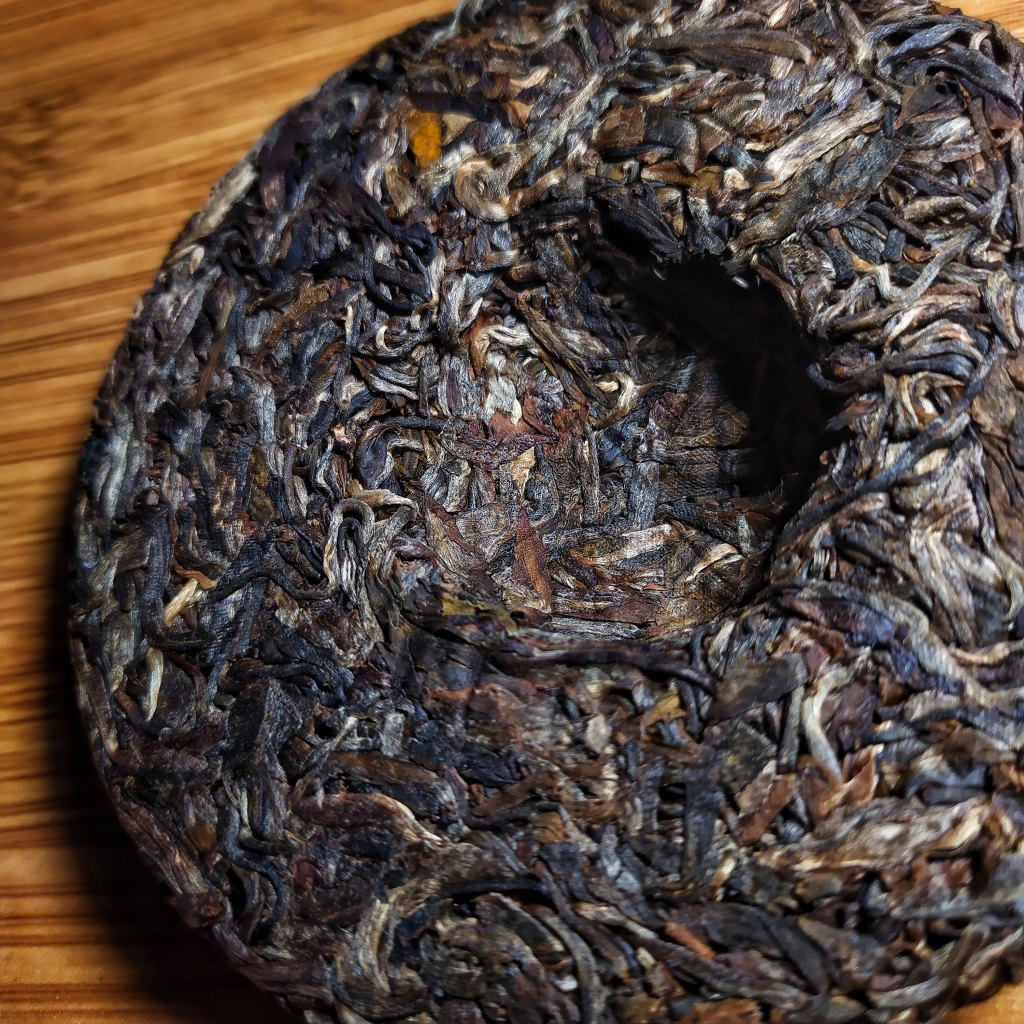
    This sheng pu by Thés terre de ciel comes from dashu trees, from material collected in the spring of 2020. In the wet leaves vegetal and wild hints of leather are combined with notes of honey, flowers and caramel, woody fragrances like those of raw mushrooms are the prelude to a sweet opera adorned with a bouquet of aromatic herbs, in which the background smells of petricore and wet vegetation.

    The sip has an excellent structure, the pleasant and indulgent bitterness typical of Mahei does not overshadow or obscure the other sensations but instead enhances the tea by contrasting with sweetness and a graceful astringency. The huigan is immediate, minerality makes the mouth water refreshing the palate in which progressively appear aromas of myrtle leaf, dried and candied apple, mango and mulberry. A good roundness accompanied by notes of acacia honey and manuka continue in a very lingering finish at the end of an antithetical taste experience, elegant and wild at the same time, still enlivened by a freshness and a vegetal nuance that herald its evolutionary intent.