Category: Articles

  • Elegy for the Impatient Tongue

    Elegy for the Impatient Tongue

    Friday never fails to ambush me with military precision, a shard of LED light that needles the cornea just as the blog-renewal alert detonates my hard-won, tax-season calm. I can’t remember the last time I lingered over a single tea. Perhaps the moment I proclaimed independence from performative tastings, a small act of mutiny against what Instagram has become: a midway of recycled meanings, its algorithms drifting steadily toward isolation and middling advertorial fodder, or maybe it was the darker undertow of existential unease.

    Everything seems already said, about tea, about Pu’er, about teapots, each new sentence feels like drilling a dry well, an intellectual oil rush I quit long ago. Yet tea keeps seducing me. At dawn it steals into the room with the breath of damp undergrowth, commandeers my hands before I’m fully awake. That’s hyperbole, of course; most mornings begin with cold water in the face, then the office, the stench of burnt coffee and courtesy smiles fit for a character in Severance.

    Still, tea moves me viscerally. In the sprawling, anarchic stack of cakes looming from the shelves, each sip is a small act of resistance against the world’s static. Writing has become a private necessity, a way to pry loose stories before premature cerebral rust deletes them.

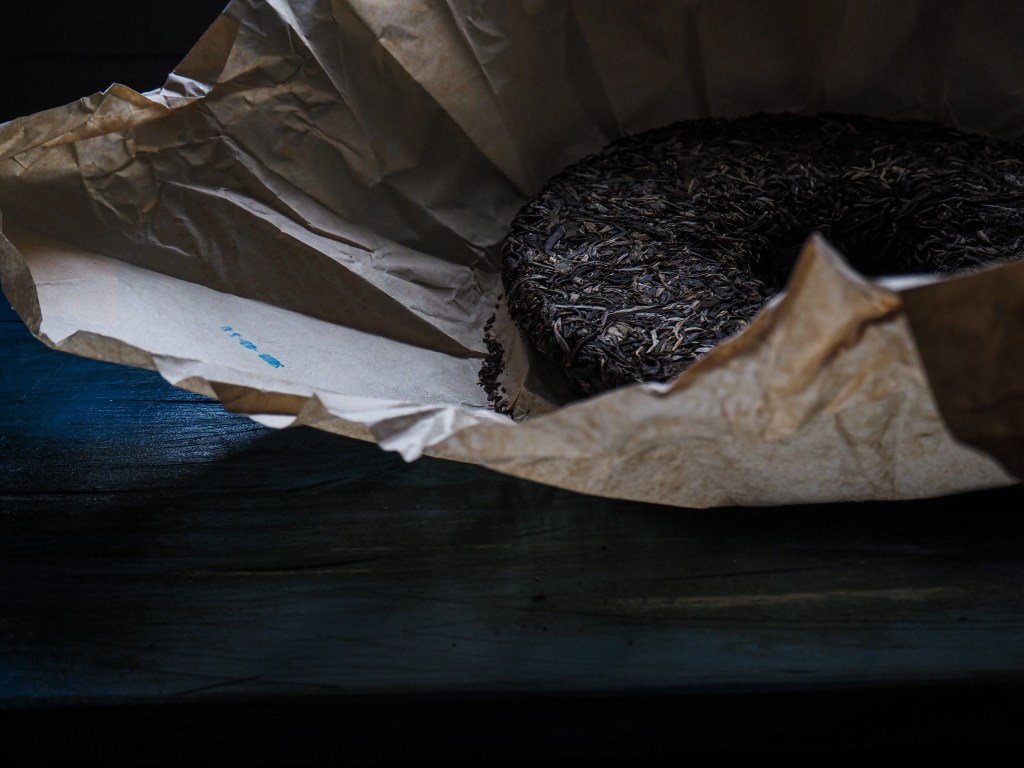
    I think of this while I pry open a modest 100g Gua Feng Zhai cake, one I’d assumed desiccated by the parched air of northern Italy, where the weather is as unstable as Liz Truss’s cabinet. The first scent summons an obstinate old man I met long ago: hunched, wrinkled, spirited, flashing the few teeth he had like contraband. He reminded me of my grandfather, another riverbank curmudgeon, though oceans apart. He’d abandoned Sheng Pu’er after seventy, blaming sorghum liquor for his rebellious stomach.

    We spoke of tea, yes, but mostly of the fragments he’d salvaged from youth, like how his father, Yu Senior, served in the logistics rear in ’39 while Japanese forces chewed through Hunan and Jiangxi toward the lower Yangtze. The old man conjured red-rice paddies where the smell of bruised grass mingled with kerosene and swamp rot; his father boasted that once shook hands with Long Yun and claimed familiarity with generals of the Kuomintang. To Yu the terraces looked like mercury pools, with the rice stalks standing at attention like soldiers waist-deep in blood; he recalled drunken sprints in the forest, collapsing against girlfriends’ bellies, a bottle of rice wine sweating in the palm as they trudged home from the factory.

    Decades later, after the collapse of the Great Leap Forward, granaries emptied and markets dwindled to skeletal queues. Yu and his brother waded waist-deep in the canal’s narrowest throat, hauling up níqiū,  “those idiotic serpent-loaches,” he growled, for supper. Evenings they gutted fish on elm stools, washing them down with tea and sorghum spirit. His wife, seated a short distance away, bent fish-hooks into makeshift needles and embroidered fields of millet on the threadbare fabric, sewing with fishing line instead of thread.

    His village, he swore, produced the bravest and the crookedest, the finest lovers and the wildest drunks. He spent his last working years at the Fangcun market; he was there when the Pu’er bubble burst, watching price charts bleed the same crimson as his father’s paddies. I listened, sipped, and took mental notes, half-inebriated on rice wine, as he tested my liver’s resilience, clutching the bottle’s neck with his hands swollen by bulging veins, mottled and capped by knuckles the color of mother-of-pearl.

    “Just wait, this quiet leaf always finds its voice again, the way my wife does after a quarrel; she can’t sulk for long,” he would say, letting the words tumble into a laugh that instantly dissolved into a tobacco-cured cough, as if his lungs were plotting an orderly escape from the cage of his chest and the habit that ruled them. One hand stayed clamped to his breastbone, as though bracing it against the strain.

    “Blame the sorghum liquor, and those stupid serpent-loaches,” he added. Certainly not the thirty Chungwas a day drilling through his alveoli. Smoke had become the grain of every anecdote, a reminder of his father, who smoked opium but never let it own him. That haze was now a curtain behind which to duck from his wife’s scoldings, the latest triggered after he’d wandered into the fields alone and lost his bearings. It wasn’t the first time, but previously he had always found his way back by following the river’s murmur.

    Amid that swarm of cigarettes, tea, and wry marital sparring, I learned to trust time, to let what matters breathe, settle, and finally declare its meaning.

  • The Taste of Agreement – Why Old Factory Pu’er Can’t Be Your Baseline

    The Taste of Agreement – Why Old Factory Pu’er Can’t Be Your Baseline

    Honestly, I’ve been looking for a topic worth an article for quite some time now. For the past few weeks my Instagram feed has once again been clogged with photos of old factory cakes and boutique brands whose teas easily cost more than a gastroscopy.

    As I write this it is Sunday, and even though I don’t particularly care, somewhere in the nave of the church inside my head a patriarchal voice keeps echoing, suggesting that, just this once, I should not be as caustic, or, how shall we say, corrosive toward other people’s ideas.

    I still haven’t decided whether to listen to it.

    In any case, I often hear people refer to pre-2005 teas, or generally anything produced before the Pu’er speculative bubble burst, as a sort of baseline, a ground zero from which to build one’s knowledge. They are often accessible; sometimes you can find 15- to 20-year-old material at relatively reasonable prices, even if occasionally it feels like drinking a decoction of your own sweaty shirt, baptized by the humidity of Taiwan’s western coast. And this is the first principle of my disagreement. A logistical criterion (access) is often mistaken for an epistemic one (understanding quality). The fact that something is accessible does not make it instructive; it only makes it easy to build a theory around it.

    Act I: the baseline.
    A “baseline” serves to calibrate sensitivity, language, and critical measure; it should therefore be built on samples that clearly represent key variables (raw material, processing, storage style), not on what the market makes convenient to buy in terms of quantity and price. One still hears the fairy tale that sheng from the 90s and up to 2005 were intrinsically sublime, but this is not always true, often it is simply mediocre tea swallowed at great expense, only to discover that it is worth little more than a drunken lost bet, and its chaqi will not save you from the terrible judgment of the Sabbath.

    For clarity: chaqi exists, even if it lacks a clear and unified scientific explanation, but it cannot be what motivates a purchase. Tea discourse often turns mystical, full of “energy” and “vibrations”, frequently because a shared vocabulary for describing quality is missing. Chaqi may be a real, even if subjective, experience, but used as an argument it is often an easy escape hatch. As proof, it amounts at best to a personal impression elevated to a criterion.

    00s factory teas mainly teach an industrial profile: standardization, blending, productive compromise. It is one of the worlds of Pu’er, but not the qualitative world of Pu’er in any absolute sense. That alone is enough to produce a distorted baseline. You grow accustomed to the “factory taste” as a norm and judge everything else as deviation.

    Act II: storage.
    We know quite a lot about storage in general principles, very little about real reproducibility, and almost nothing about comparability between storage environments when data are lacking. There are physical principles, but also an absurd number of uncontrollable variables and complexities, and the whole discussion often dissolves into a broth of anecdotes and mysticism. Whenever I hear conversations about storage invoking names like Kunming, Taiwan, Malaysia, and Hong Kong, I feel as though I am witnessing an Allan Kaprow performance: no one understands what is happening, but everyone has been sufficiently involved that no one can criticize it.

    Storage undeniably influences a Pu’er’s development and quality over time, one need not summon a climate physicist to admit this. Yet its impact is decisive even after only three years. At 17–20 years or more, especially with wetter storage, many differences in raw material and processing compress into a potentially generic profile. This always happens, it is biochemistry, though this does not mean all aged Pu’er tastes the same. Storage is excellent for understanding style and for objectifying a general aromatic dimension, but weak as a baseline for intrinsic quality.

    Act III: aging.
    I come from the world of wine. Twelve years ago, before I began studying what Pu’er actually was, that’s where my free time went, along with a credit card financed by badly paid jobs. Among the initiates of the Bacchus sect one thing is clear: aging is not simply getting old, and aging “without collapse” is not the same as aging “with depth.” The same, frankly, applies to Pu’er.

    Seeing vendors raise the price of unsold Pu’er after a single year already gives me gastritis. But when people identify “aging success” as merely avoiding decay, I feel certain dendritic networks in my brain quietly die. Aging, in the sense of maturation, cannot mean only that bitterness softens and edges round off. Aging is not mere attenuation. Quality, in its dynamic and evolving sense, implies aromatic layering, structure, intensity, huigan, persistence, and a clean transformation not excessively dictated by storage.

    Act IV: prices.
    Tea was once conceived to be stored, not immediately consumed. Even my goat Violette understands this. And Violette knows that if the grass was poor when cut, aged grass remains poor grass. Watching her, one easily understands that the essence of mediocre things is marked in a subtle, almost existential way.

    For years, until roughly 2010–2012, the Pu’er market priced time itself. Primitive, but effective. Now high prices follow expectations of material and origin, desirability, trust, social value, intentions, and all the things Tony Blair might have said to sweeten a policy for his electorate. In short: narrative.

    I have never spent fortunes on old cakes. Not out of moral superiority, but suspicion. Or perhaps because I am not spiritually elevated enough to perceive what the fetishists of granny Pu’er claim to see. I see the risk of fakes, uncertain origin, possible smells of basements sublet for ransom kidnappings, people in windowless humid rooms swapping wrappers while smoking, selling rubbish for four-figure sums, and speculation about batch reputation formed long before the moment of consumption yet already determining the purchase price. A book on the economization of modern art would explain half the Pu’er market.

    In some cases 80s–90s cakes have been among the most meaningful Pu’er I have ever tasted. More often, however, they have earned me a night on the couch and a bitterness in the mouth, the kind reserved for layoffs and extortion, lasting until morning.

    Act V: historical-economic context.
    During the bubble, observers noted raw-material shortages and flows of maocha from border regions into Yunnan, with consequences for average quality and perceived authenticity. Combined with heavy herbicides and chemical fertilization spreading, drastic pruning, and new low-altitude, high-density plantations expanding since the 80s, it is reasonable to conclude that the Pu’er boom pushed toward compromises in material quality and left a large quantity of mediocre tea that has now reached us. This was not mysterious; it was the predictable behavior of a market convinced it had found an eternally appreciating good.

    Factories are logistical machines. When demand rises and high-grade material is scarce, sourcing widens and more ordinary leaf is used. The result is not necessarily bad tea, but tea designed to be reliable, purposeful, not memorable for a few thousand obsessives like me. This baseline represents a supply-chain compromise, not a qualitative summit.

    Look around: a great deal of old Pu’er still circulates, even in Europe, at crazy prices. Ask when you last heard someone speak negatively about those exact teas. Never. Either people lie, or they submit to the mechanisms already described here, or here. In perhaps 20% of cases the tea is genuinely good.

    And here lies the curious point: often we are not drinking what survived because it was the best, but what survived because it was abundant or left aside in who knows what conditions. Or widely counterfeited.

    Act VI: the disciples.
    Other people’s opinions are initially valuable and eventually dangerous. Understanding quality requires experience directed toward objective judgment, not passive adherence to an ideology. Accumulating recommended tastings is not enough. Today the idea of quality in Pu’er resembles a permanent biennale: much celebration, occasional sterile condemnation, and little critical sense. Direct experience is replaced by informal hierarchies, mediated tastings, questionable reviews, preferences learned before tasting. It is not deliberate deception but cognitive economy: easier to recognize a judgment than to form one. Thus a community of interpreters emerges rather than drinkers, a voyeuristic party rather than a participatory community.

    Act VII: philosophy.
    Early in my Pu’er journey, drinking old teas often irritated me. As soon as one session ended something better appeared: rarer, more expensive, a batch from the cellar of some semi-mythical Mr. Someone had to be tried. The hyper-specialized vendors were like dealers in a 1970s novel, not selling a product but the possibility of never stopping.

    It reminded me how, when I was younger, I had a vague idea that my sentimental education might be the result of a permanent structural dissatisfaction typical of the young middle class, a bohemian depression, vaguely Marxist at its origin, the kind felt by those who know they might not truly have it but choose to appropriate it anyway as a social role. A collective suffering based on the impossibility of reaching the next level, something to be simply accepted. Pu’er was exactly the same: happiness and remorse, desire and correction, like a nun who ardently longs for carnal sin and then runs to confession.

    There was certainly repeatability and reliability in each cake, but reliability is not always positive when it becomes leveling. Small productions often vary within the same batch; that variation is the character of craftmanship, not a conscious and unconditional pardon of flaws, but an acceptance of random error and the human element. I had believed that, at least in a product like Pu’er, originally laden with symbols, people were not seeking serial reproducibility and technical anonymity. Factory Pu’er reduces uncertainty, avoids surprises, and allows a judgment consistent with what has already been said. It does not become a baseline because it explains Pu’er, but because it stabilizes the drinker’s experience. Yet there are those who consciously desire exactly this, and even appreciate it. Another shot fired at the memory of Walter Benjamin.

    To escape the warm amniotic comfort of sterile criticism, a possibility exists: constructing a baseline “by matrix” and not by category. One learns nothing from merely drinking “good” teas. One learns only by comparing comparable ones.

    Pu’er is a system of four macro-variables: material, processing, storage, and time. Evaluate them all at once and draw conclusions, it is like reading tarot, not tasting tea. A baseline built on old factory cakes fuses all variables. Excellent for consumption, poor for understanding.

    Taste relatively green-processed samples from different regions of the same year. Try modern “honged” or “oolonged” shengs meant for early drinking: they act as reagents, revealing what happens when processing dominates leaf. Then compare teas from the same vendor or producer, stored similarly for 5–8 years and again for 12–20. Only then you will begin to see what time actually does. At least three of the four parameters should remain fixed.

    Okay, it is not romantic, no mountain sages, no mythic wrappers, no secret Malaysian cellars guarded by tigers. But the differences become legible.

    And here the strange thing happens: once you see the variables separately, much of Pu’er’s narrative evaporates, not because it was false, but because it was not knowledge. It was the socialization of taste.

  • For Personal Reasons – Brew & Blossom Aged Zhangping Shuixian

    For Personal Reasons – Brew & Blossom Aged Zhangping Shuixian

    I realize immediately it isn’t a question of time.
    Time is a polite, almost political excuse; its supposed lack is like fastening a little tie before going to church on Sunday, a superfluous ornament, yet institutionally acceptable, a way of dressing up a lie for a setting you can’t quite tolerate.

    The truth is that writing, now, has ceased to be a gesture, a rite, and has become a habit without interlocutors. A vestigial movement of a vice you’ve already abandoned: like holding an unlit cigarette between your fingers, like swirling an empty glass that once contained God knows what, or sitting at the table of the same restaurant, occupying two chairs when you are, in fact, waiting for no one.

    You post on Instagram and nothing happens , not silence, precisely nothing, and writing stops resembling an act and turns into a routine without recipients, a small private war against the flattening of content and against a stupid algorithm.

    So what remain are unfinished texts, disjointed sentences, in the manner of This Charming Man, except you’re playing the unfortunate version of Morrissey. You tell yourself you write for the pleasure of lining up a few words; you persuade yourself it is the simple necessity of not forgetting, that what exists in your head requires existence outside it.

    In the end, though, writing resembles one of those bars open even on weekdays until four in the morning, frequented by a handful of wrecks, survivors of their own idiocies and victims of their urge to keep defying gravity for no apparent reason, staggering past rows of unoccupied tables under a milky light that pierces their retinas.

    Then, somehow, something significant arrives, disconcerting though invisible to the casual passerby. A tea, a drink, but not just any. This Aged Zhangpin Shuixian does not provoke theatrically impressed reactions or servile compliments. It doesn’t strike you; it holds you. Deep without heaviness, complex to the point of improbability yet ordered, not an abyss, rather a long, poorly lit corridor that seems endless and quietly compels you to walk it to the end.

    In the wet leaves appears toasted hazelnut, not the sugared caricature of contemporary patisseries, but a severe, almost dry one; then dried flowers, rosewood, and the scent of an old library: a olfactory bouquet of an apartment from the nineteenth century, where someone has stopped receiving visitors but not retreating into erudition. Then orange blossom, oats, raisins, an echo of cranberry and hibiscus liquor.

    On the palate everything arranges itself coherently, more enveloping, sweeter, yet never ingratiating. Dried orchid, butter, gingerbread, hazelnut cream, a memory of vin jaune. It’s the sip you would drink while pretending to reread The Catcher in the Rye to impress a former college flame. The texture is soft and continuous, with balanced sweetness and a clear minerality present from the attack through the swallow.

    The aromatic intensity is not excessive, yet the persistence is stubborn and lasting. Its refinement is almost unexpected. The floral substance typical of these oolongs remains, but softened by time and integrated into a composed, adult roast, devoid of any roaster’s narcissism.

    When you encounter a tea like this, you understand that words may return. Not for Instagram, not for the numbers, not to chase an audience that has become hypothetical, not to write yet another clinical, sterile review no one cares about, but because some things demand to be said, and when that happens, writing is no longer content production. It is company. It is a necessary act.

  • Temporary Relief, Applied Correctly – Seven Essence Autumn 2024 Darjeeling Serenade

    Temporary Relief, Applied Correctly – Seven Essence Autumn 2024 Darjeeling Serenade

    Well, you see, when I first started drinking tea I never thought it would become such an important part of my life. I suppose no one ever expects it at the beginning, but I certainly didn’t imagine that something with such a high percentage of water could bring relief to my cirrhotic, worn-out soul, born of a guttural Tom Waits scream and stitched onto me by a drunk tailor.

    It’s not something I dwell on very often. My life, like most lives I know, leaves little room for sustained introspection or ascetic reveries, the sort where you retrace your existence with your bare collarbones pressed into cold marble. The last few times I found myself flat on my back, it certainly wasn’t in pursuit of insight. If anything, with me sprawled out like that, the room seemed to shed what little claim it had to respectability.

    Every so often, though, something breaks through the ambient noise, something that jump-starts circulation in my tingling brain and brings me back to the keyboard while I’m drinking something unexpectedly pleasurable, wearing that faint, unmistakable smile of post-coital satisfaction, the kind you hope no one is paying close attention to.

    Tea, for me, isn’t meditation. It’s maintenance. A necessary distinction, especially once you’ve stopped believing in revelations and settled instead for remaining operational. And this isn’t simply tea. It’s the return of the impulse to move my hands across a keyboard, a reminder of where everything began, when writing hadn’t yet adopted the tone of therapy and was merely a byproduct of staying awake longer than everyone else.

    It’s a reminder of my therapist’s office, Bauhaus in style, where amid excesses of glassy functionalism and metallic geometries, the photographs of Jung, her bony hands protruding from the cuffs of her usual wool sweater, beyond the teak surface of that Danish desk, I can feel entitled to sink into my moment, which, in that case, meant the cognac-leather backrest of her Wassily Chair B3. Marcel Breuer did just as fine a job with that chair for my mental well-being. I liked that room; it was furnished as if someone had decided that psychologically misaligned, too, deserved a proper frame, not just polypropylene crap, particleboard, and poly-laminate assembled in some windowless warehouse while singing the praises of aesthetic surrender.

    In its own way, Serenade does the same thing.

    It’s a frosted batch, from the autumn of 2024 if memory serves, a sweet, sugared liquid that never quite tips into cloying. Aromas of saffron, powder, antique rose. As I inhale the damp leaves, I’m taken back to my mother’s bottle of Baccarat Rouge, two-thirds empty, sitting on her nightstand, the kind of object that disappears alongside the unspoken understanding that something is slowly, quietly ending.

    On the palate, those Kurkdjian-adjacent notes return, flanked by hints of jam and honey, followed by an aromatic excess of sandalwood and musk, a depth that arrives late and lingers with the elastic persistence of its own sweet afterimage. It’s a tea that allows anyone access to ecstasy without going into debt: a quietly subversive form of wealth, a luxury that doesn’t improve your standing in the world, but makes it temporarily more inhabitable.

  • Critique of Darjeeling Reason, or Why Reducing Darjeeling Black Teas to “Muscatel” Is a Recipe for Disaster

    Critique of Darjeeling Reason, or Why Reducing Darjeeling Black Teas to “Muscatel” Is a Recipe for Disaster

    We have all heard it at least once: that Darjeeling black teas, the second flushes, taste like muscatel. To some it may seem a trivial matter, but for me reading it for the umpteenth time is torture, a subtle form of violence, like being tied to a bed and forced to listen over and over again to a lullaby sung by that unbearably grating voice of Liam Gallagher. Muscatel has become not a descriptor but a credential, a badge meant to pre-empt further inquiry.

    Over the past decades, this obsession with muscatel has degenerated badly, taking on the shape of every late-capitalist fetish: ultra-categorization, linguistic anesthesia, the aesthetics of pseudo-scarcity, and the misappropriation of other people’s labor (where those who break their backs always earn next to nothing, in short). Premium harvests, super-premium, super rare, Imperial this or Royal that, Maharaja, special series, gold, silver… entering 80% of the online shops that sell Darjeeling is like being completely drunk, crashing your car through the window of a bar, and then asking where they’ve hidden the gas pump. It’s chaos wrapped in floral notes and, obviously, muscatel.

    While the price of what is arguably the most “muscatel-like” oolong on Earth, the Dongfang Meiren (Oriental Beauty), was skyrocketing in Taiwan, and countries like Japan were demanding more and more teas with this profile, various Thai and Vietnamese players were putting their own substitutes on the market, with results that were sometimes surprising and at other times depressing. The difference is that, in those teas, muscatel aroma became an icon of ambiguity, whereas in Darjeeling people rushed headlong into it with kamikaze enthusiasm, to the point that this single aromatic note became the identity card of the entire terroir. No narrative was needed: all that mattered was printing the estate name in huge letters, saying it tasted of muscatel, and to hell with everything else.

    Some time ago I had a discussion about this with two old friends at L.’s house, on one of those days when the air feels heavier, slower, saturated with humidity, the kind of day when you feel the urge to attack something immediately just to distract yourself from the terribly depressing climate trying to crush your mental health. L. is not a lover of Darjeeling teas, let’s be clear. She mostly drinks Tieguanyin, Yancha, and Dancong. Or rather, she had never really been interested in Darjeeling, had never felt the call to walk down the nave and reach the land of lightning. To her they were indecipherable; she simply didn’t feel like buying them, dismissing them as “all the same.” Brutal, but how can you blame her if you read “muscatel” everywhere? It’s as if there were a sort of olfactory socialism, an aromatic Marxism. At some point, their supposed crown jewel, the muscatel note, turned into a leveling policy, an ontological sponge through which no tea is allowed to stand out for its diversity. And the 200 appellations used in a schizophrenic way do nothing to help, further complicating a broth into which everything has now been thrown to please everyone. L. found them oppressively repetitive and excessively, self-consciously “colonial” in their communication. Who would spend €0.50-1+ per gram on teas you don’t even know where to begin distinguishing, drowned in lexical accumulation and burdened by a long struggle to recover from counterfeiting? To be clear, origin falsification happens everywhere tea is produced, but here the media, local ones included, have shown no restraint in piling on, placing a blood-drained territory under the spotlight with macabre, necrophiliac delight.

    But back to the point: the problem is not muscatel itself. Muscatel has the same innocence jazz once had before becoming the soundtrack of elevators and three quarters of Christmas movies. L. told me she had last tried a Darjeeling ten years ago. The experience reminded her of her first time returning home after university, to her stale bedroom that smelled of being shut in and of puberty, with the blinds left in exactly the same position and the same wallpaper, only half detached and yellowed.

    This is because only in recent years Darjeeling has begun to stop being a historical museum, a sarcophagus of the status quo, although resistance remains. Sellers still peddle stuff on the verge of turning to dust, shredded, insipid leaves, or teas dressed up with names that excite colonial nostalgics and crown enthusiasts. What I’ve never understood is this inability to distance oneself from the constant urge toward self-marginalization, and why Darjeeling has refused to stop playing a marginal role, the eternal wallflower at the dance, watching others on the floor while sitting on the chair farthest from the punch bowl, waiting for an appointment that will never come on its own.

    The real problem is the renunciation of conflict. Authentic Darjeeling does not taste only of fucking muscatel. Sure, it’s there too, especially in certain cultivars and in specific seasonal windows, but reducing everything to that means deliberately amputating the rest, making people believe that Darjeeling tea tastes like nothing else. In reality, the tea from these mountains is frenetic, conflictual, full of friction, to the point that you would never believe the same leaves, processed differently, could come from the same terroir, or even the same continent.

    To insist on muscatel as the defining criterion is to deny this productive volatility, to make Darjeeling safe, legible, and ultimately harmless.

    The term muscatel has become a sedative that Darjeeling has been carrying around for fifty years like a bag of diazepam shot straight into the arm, endlessly.

    This territory does not need to be Kyoto, where everything is ultra-described, every sign is endlessly verbose in its insistent multilingualism, where everything is clear to the point of exasperation. Darjeeling should instead show its character, like a Calcutta market at five in the morning, or a pub brawl on any Friday night in Birmingham: disordered, real, and above all done with pretending that this land begins in the White Drawing Room, with all those useless appellations.

    There is an existential need to change the narrative around these teas, so that they can be described uniquely, as one would a singular work of art. We need to detox from neutral descriptions and lexical ambiguities. There is no need to re-propose a worn-out variation of the same symphony. Continuing to scrape the violin over the word “muscatel” is nothing but a preemptive retreat, a laziness that domesticates the masses. Excessive categorization has forced Darjeeling into the need to correspond to a genre, and as such it must “respond” and “fit,” rather than signify.

    Moreover, the systematic exclusion of autumn teas from market discourse looks more like an intention than an oversight. Autumn is less photogenic; muscatel aromas are often muted by a desire to experiment, to create more ambiguous leaves that offer a complex, divisive, at times eccentric aromatic stratification, shaped by different growing conditions.

    In this case, science ends up confirming what experience had already suggested. The famous muscatel aroma is the result of complex interactions, pedological, climatic, agronomic, altimetric, cultivar-related, and the relationships between plants and insects. This aroma appears almost as a direct consequence of the plant’s defense strategies against herbivorous insects, particularly thrips (Scirtothrips dorsalis) and jassids (Empoasca flavescens), whose activity increases during the second flush. The lesions caused by their mouthparts, rasping-sucking in thrips, piercing-sucking in jassids, activate inducible defense responses that lead to the production and release of secondary metabolites. In general, these metabolites play crucial ecological roles: they may act as toxins, feeding deterrents, reducers of plant tissue digestibility, or chemical signals that attract the natural enemies of herbivores. This principle, widespread throughout the plant kingdom, is particularly evident in tea plants. In the specific case of Darjeeling, herbivory stress induces strong up-regulation of genes involved in the biosynthesis of volatile aromatic molecules such as linalool, geraniol, nerolidol and their oxides, as well as key enzymes like lipases, alcohol dehydrogenase and glycosidases. Many of these compounds derive from precursors stored as disaccharide glycosides (β-primeverosides) which, under conditions of cellular integrity, remain separated from β-primeverosidases; membrane rupture caused by insects (and later amplified during processing) allows hydrolysis of these precursors and the release of free aromatic molecules. Among them are terpenoid compounds such as 2,6-dimethyl-3,7-octadiene-2,6-diol and 3,7-dimethyl-1,5,7-octatrien-3-ol, which specifically contribute to muscatel perception. A similar mechanism occurs in Taiwan with Empoasca onukii (Jacobiasca formosana).

    Darjeeling thus represents an emblematic case of convergence between ecology and taste, where muscatel is only one expression of an extremely complex system of interdependencies, also modulated by cultivar, altitude, agronomic management, and seasonality. But what happens when there are climatic imbalances, when gardens are located at very different altitudes, when insect density decreases? These increasingly common phenomena lead to teas that are radically different and inherently unpredictable from year to year. So why not accept this and build a new narrative structure?

    This is made extremely evident by scientific analyses, which highlight how the interaction of the factors listed above allows spring and autumn harvests to accumulate higher levels of metabolites, playing a crucial role in shaping Darjeeling’s aromatic and gustatory profile. Equally important, metabolomic analyses show clearly distinct profiles between flushes (amino acids, sugars, polyphenols, organic acids), demonstrating that spring and autumn can yield high metabolite accumulation and thus cups of great finesse, complexity, and internal tension, which should prompt a reconsideration of autumn teas not as secondary expressions, but as integral to the identity of Darjeeling itself.

    Choosing diversity, accepting that Darjeeling implies teas that are almost impossible to assimilate into any single category, means recognizing its very beauty, a beauty as refusal of assimilation, a beauty as measure, a beauty as resistance of an unnormalized remainder. Continuing to say that Darjeeling teas taste only of muscatel is like building a library filled with a hundred scientific studies, adding a generous amount of humanistic literature, Adorno, Camus, Scruton, Heidegger, Dostoevsky, and then setting it on fire.

    Changing the narrative means reintroducing risk. It means accepting experimentation in tea processing, occasionally producing batches that are hard to sell, leaves no one has ever heard of. Until a few years ago I myself was completely ignorant of what this land has to offer. Then I discovered Darjeeling teas from non-Chinese cultivars, roasted, smoked, or with every imaginable degree of oxidation, leaves with a huigan capable of overshadowing many Chinese teas; notes of mango and green cardamom, of apricot and at the same time wax on an antique piece of furniture, of moss and buttercream and Damask rose, or freshly pressed olives alongside jasmine accords. These are aromas that seem utterly incompatible in any other context, yet here they find shelter, like the eccentricities of the most diverse people taking refuge from urban rain under the same bus stop.

    Reorienting the narrative therefore means striving to describe each lot as one would an unrepeatable painting, just out of the studio and still smelling of oil-paint solvent. It means abandoning the illusory idea that quality coincides with clarity, aromatic clarity this time, not descriptive, because the most disparate and useless filo-colonial appellations will never restore lost authenticity, nor the uniqueness that teas from this terroir so desperately need to reclaim.


    Bibliography:

    Cho, Jeong-Yong & Mizutani, Masaharu & Shimizu, Bun-ichi & Kinoshita, Tomomi & Ogura, Miharu & Tokoro, Kazuhiko & Lin, Mu-Lien & Sakata, Kanzo. (2007). Chemical Profiling and Gene Expression Profiling during the Manufacturing Process of Taiwan Oolong Tea “Oriental Beauty”. Bioscience, biotechnology, and biochemistry. 71. 1476-86. 10.1271/bbb.60708.

    De D,  Hazra A, Das S. & Ray S.. (2025). Metabolomic insights into seasonal variations in Darjeeling orthodox tea: implications for quality, flavor, and nutritional profile. Journal of Food Science and Technology -Mysore-. 62. 10.1007/s13197-025-06310-2.

    De D, Sarkar S, Chhetri H, Chatterjee J, Sinha N, Das S, Sarkar A, Ray S (2024) Impact of meteorological and processing factors on metabolite composition of Darjeeling tea. J Anal Sci Tech 15(1):1–19.

    G, Bornali & Borchetia, Sangeeta & Bhorali, Priyadarshini & Agarwala, Niraj & Bhuyan, Lakshi & Rahman, A & Sakata, K & Mizutani, Masaharu & Shimizu, Bun-ichi & Gurusubramanian, Guruswami & Ravindranath, R & Kalita, Mohan & Hazarika, Mridul & Das, Sudripta. (2012). Understanding Darjeeling tea flavour on a molecular basis. Plant molecular biology. 78. 577-97. 10.1007/s11103-012-9887-0.

    Liu, Huifan & Li, Sufen & Xiao, Gengsheng & Wang, Qin. (2021). Formation of volatiles in response to tea green leafhopper (Empoasca onukii Matsuda) herbivory in tea plants: a multi-omics study. Plant Cell Reports. 40. 10.1007/s00299-021-02674-9.

    Sakata K, Mizutani M, Ahn YO, Shimizu B (2005) Floral aroma of Oolong tea are results of stress-responded reactions in tea leaves during the tea processing. In: 2005 international symposium on innovation in tea science and sustainable development in tea industry, 11–15 Nov 2005, organized by Tea research institute, Chinese academy of agricultural sciences, China tea science society and Unilever (China) Ltd., Hangzhou, China, pp 607–617.

    Wang L, Di T, Peng J, Li Y, Li N, Hao X, Ding C, Huang J, Zeng J, Yang Y, Wang X (2022) Comparative metabolomic analysis reveals the involvement of catechins in adaptation mechanism to cold stress in tea plant (Camellia sinensis Var. sinensis). Env Exp Bot 201:104978.

  • The Cup That Didn’t Need Your Approval – Viet Sun Tủa Chùa Spring 2024

    The Cup That Didn’t Need Your Approval – Viet Sun Tủa Chùa Spring 2024

    We all know it: social networks always leave too much room for sensationalism. There’s endless space for anyone obsessed with sanctifying new brands and glorifying mind-blowing teas that promise an experience somewhere between spiritual awakening and a methamphetamine binge. A permanent pop-up of disposable enthusiasm. It’s the amusement park where anyone can feel like a prophet for a day, canonizing the newest square meter of the most remote village, where snakes, tigers, and giant beetles supposedly lurk ready to attack the tea pickers, only them, of course, not people practicing any other profession, before moving on without even bothering to stub out their cigarette in the ashtray of final verdicts.

    Everything seems to shine, everything seems harmless, everything promises miracles, at least until you realize it was only a reflection, not the source. That’s life.

    It has happened to me too: speaking too highly, too soon.
    But there is one terrain, one terroir, on which I’m not willing to make the slightest concession: Tủa Chùa.

    From a mountainous rear area near the Điện Biên Phủ valley, where in 1954 the decisive battle that ended French colonial rule was fought, this region has become an enclave capable of producing surprisingly accomplished Pu’er teas. Many areas once considered marginal and reactionary, such as Tủa Thàng, turned into revolutionary bases, as they combined geographic isolation with strong social cohesion. The karst plateau, with its steep mountains and paths invisible to outsiders, offered natural refuge to high-ranking officials of the Việt Minh. They took shelter in the homes of Hmong villages, protected by the population’s collective silence.

    The inhabitants knew the land intimately, guiding men, weapons, and messages along unmarked routes, avoiding French patrols and keeping the mountain areas connected to the Điện Biên valley. All of this unfolded in conditions of extreme poverty, yet they provided food, places to rest, and intelligence on enemy movements, accepting extraordinarily high risks. In those mountains, silence was a form of resistance, and the geography itself seemed to have taken sides.

    Now, back to the tea.

    If I had to explain to someone what true mineral, botanical, ancestral excellence means, if I had to make them understand what these trees are capable of, and why Vietnam today not only looks Yunnan straight in the eye but openly challenges its borders, I wouldn’t hesitate for a second. I’d pour them this tea. No preamble, no rhetorical acrobatics, no captions.

    The way this tea is evolving is sublime, truly the kind of harvest you get once every five years.

    I’m sorry to say it won’t deliver the tragic depth of Marina Abramović’s gaze, the high priestess of emotional intensity descending upon us mortals to elevate us by staring into our eyes like a corneal topographer.

    What it will give you is a perfect sip.

    This is a sheng with an almost exasperated intensity, like an overexposed photograph that somehow works. It lingers on orchid notes, though not like Jingmai, those notes seem wrapped in a dense, almost brooding forest aroma, the kind currently fashionable to flaunt when talking about Guafengzhai, but here they feel more arrogant, they slide under your skin with a needle’s quiet, deliberate precision, an elegance that’s both unsettling and strangely pleasant.

    On the palate it’s viscous, medium-bitter, with barely perceptible astringency. The huigan is quick, floral, so persistent it feels more like a reforming than a return.

    This isn’t a tea for fragrance addicts or niche perfume obsessives.

    The qi is the real point here.

    It’s a tea for those who recognize the exact moment when something slips in and changes you.

    You don’t keep drinking it just for the aroma, you do it because a part of you has already been pulled in, and now it wants to know what will happen if you keep filling the cup.

  • Why Are We Still Pretending Darjeeling Doesn’t Matter? – Seven Essence Darjeeling Ouroboros 2025

    Why Are We Still Pretending Darjeeling Doesn’t Matter? – Seven Essence Darjeeling Ouroboros 2025

    There are several reasons why I sometimes disappear and stop writing. A loss of imagination, a lack of interesting teas, and other times it’s simply my own bad habits sabotaging every functioning neuron like a broker gambling with other people’s money. And then there are a couple of reasons no one would care about anyway.

    But through all of this, I never stop reading.

    Still, I never seem to read enough about Darjeeling, about what happens up there, about its teas.

    I’ve always been a fanatic of the outcast and a chronic sentimentalist when it comes to shadowy corners, yet I can’t quite explain how, after twenty years of transformation, twenty years since Darjeeling was a caricature of itself, a withered tea ground into particles so fine they resembled the jaundiced, depressing version of the world’s most famous nose white powder. But now that this terroir is producing something extraordinary, even radical, it remains buried under a silence so thick it’s hard not to suspect that plenty of people prefer it that way.

    I mean, at this point Darjeeling has become like one of those old guitar shops where you walk in thinking you’ll just take a quick look and end up realizing that every instrument in the room has more personality than you do.
    And now they’ve even taken to crafting a flawless Yabukita, without kidnapping any Japanese makers or resorting to those “minor cultural seizures” the British used to call foreign policy when they royally screwed things up with China.

    Some time ago I met an art dealer who spent his days among some of humanity’s most astonishing paintings, only to return to an apartment with exposed meters, peeling plaster, cracks running across the walls like badly healed scars, and rugs riddled with cigarette burns. It was a hole carved out in the middle of urban chaos, the kind of place he’d only been able to afford back when interest rates were frozen. But to him, it was home. His emotional bunker. The private stage for his domestic follies.

    Ouroboros, this Yabukita first flush, is more or less the same thing for me. A reset button, the kind you press only when you’ve officially run out of patience.

    The aroma of the wet leaves recalls the soft, dim sensuality that must have permeated the ridotti of nineteenth-century Venice, where the creaking parquet served as an unintentional soundtrack to the backstage vocal warm-ups, and the scent of stage makeup sold to actors and singers mingled with the smell of sex and the dusty, threadbare drapes.

    It’s a tea processed like an oolong, a futurist tea built on juxtapositions and clashes, where notes of moss, damask rose, and face powder emerge as if a performer had just walked past you, brushing against your shoulder, not by accident but with deliberate slowness. Then mango, verbena, polished wood, and tuberose shift in tangled succession.

    As the sip moves forward, the intensity rises like a cab driver who refuses to acknowledge the existence of brakes; the mango grows richer with floral shades of geranium and violet, leaving a film of sugary sweetness on the palate and an obstinately long aromatic persistence.

    It’s a tea that grabs you by the collar and drags you right back to the exact point where you stopped feeling alive, but with a new perspective.

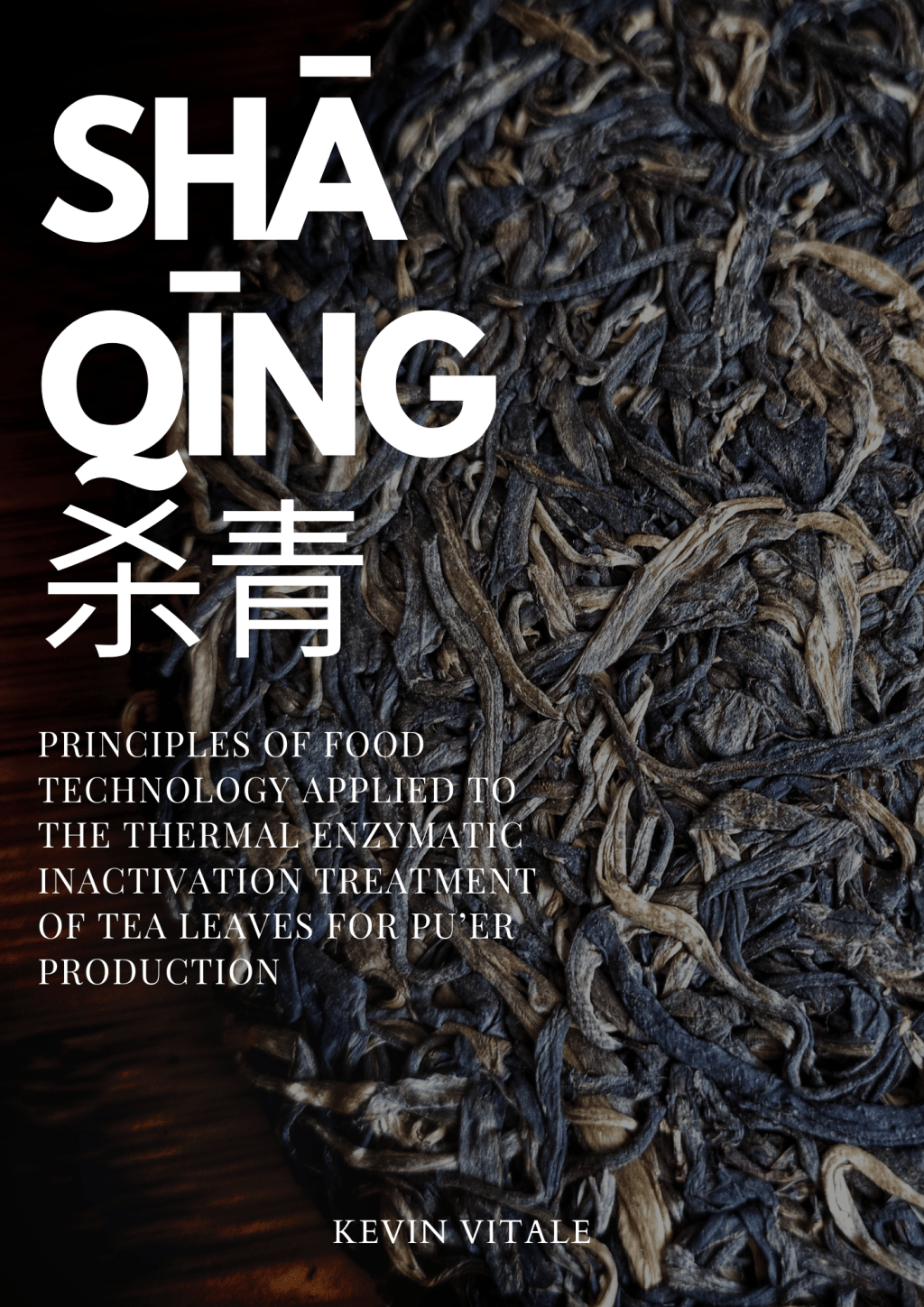
  • Shāqīng: My New EBook Is Out Now (English & Italian)

    Shāqīng: My New EBook Is Out Now (English & Italian)

    Hello everyone!

    With this post, I would like to share the result of a project that has accompanied me over the past few months: a publication born from the desire to present, in an ordered and comprehensible form, the most significant insights I have gathered about the world of fermented teas.

    More than a year ago, I began collecting material for a book that would include a wide range of information concerning the engineering, microbiology, and biochemistry of fermented teas. Given the complexity of the project, and unsure whether it would ever see the light of day, I decided to publish a preview dedicated exclusively to shaqing.

    There are not many publications capable of addressing tea processing with clarity and rigor; even fewer do so in a way that is accessible and free from economic barriers. This work attempts, at least in part, to fill that gap by offering a starting point for understanding the complexity of production processes, particularly those of Pu’er and fermented teas.

    I have always believed that knowledge, to be genuine, must be offered without ostentation; that it should serve as a space for connection rather than exclusion. For this reason, I wanted this excerpt to be freely available.

    It is a gesture of gratitude toward those who have stood by me, toward those who are no longer with us, toward all who have contributed to the creation of this work, and naturally toward tea itself and the people whom, thanks to it, I have been fortunate enough to meet.

    If you choose to read it, I hope you will find within these pages not only information, but also a measure of the care and passion I have tried to pour into them, and that you may feel inspired to share it with as many people as possible.

    In the end, as often happens with traditions that endure, what truly matters is not merely knowledge itself, but the community that forms around it.

    Below you will find the downloadable file, available in both Italian and English.

    Cheers, my friends, and happy reading!


    Kevin Vitale – Shaqing Principles ENGLISH

    Kevin Vitale – Shaqing Principi ITALIANO

  • On How Hard It Is to Make a Good Black Tea – Sipping Viet Sun’s Lào Cai Deep Forest Black Spring 2025

    On How Hard It Is to Make a Good Black Tea – Sipping Viet Sun’s Lào Cai Deep Forest Black Spring 2025

    I sometimes think we take far too much for granted just how complicated it is to make a truly good tea, especially a good black tea.
    It’s treated as a Pavlovian reflex, a gesture made without thought, like pouring yourself another glass of prosecco when the guests’ conversation has already descended into collective complaint.

    We grow used to the idea of that same black tea we’ve known since childhood, the one we dip into hot water, pressing it against the bottom of the cup with a spoon as though drowning an enemy soldier, then lifting it out in an act of sheer mercy, waiting for answers that will never come.
    But how difficult is it, really, to make a tea that isn’t just another instrument of urban survival, like the burnt acid coffee of a NOLA diner where Truman Capote used to sleep off his drunk?

    Crafting an excellent black tea can be a perilous act, a poorly calculated risk, a climatic roulette.
    The best terroirs, in Yunnan, Vietnam, and Thailand, where the best Dianhong and wild black teas are born, are surreal, high-mountain subtropical zones with humidity often above 80% and violent diurnal temperature shifts.
    Many varieties from these regions, particularly the wild non-sinensis sinensis types, bear large, waxy leaves with thicker cell walls requiring greater mechanical force to rupture.
    And in cold, damp environments such as Lào Cai, leaf plasticity itself changes with temperature, creating irregular breaks that result in uneven oxidation.

    During withering and oxidation, intracellular water regulates enzymatic kinetics and oxygen diffusion; therefore, the microstructure of the leaf, guided by the degree of mechanical rolling and the residual moisture content, controls the access of O₂ to phenolic substrates. In large, thick-cuticle leaves, diffusion is limited, and mechanical rolling, by potentially breaking cells unevenly, can create micro-anoxic zones that produce grassy notes alongside over-oxidized regions responsible for bitter flavors.

    To make matters worse, these varieties exhibit a polyphenol oxidase activity significantly higher than that of sinensis sinensis cultivars, sometimes two to three times greater.
    This causes a much faster initial rate of oxidation and a greater release of heat, since these reactions are strongly exothermic.
    The result is a local rise in temperature within the leaf pile and extreme sensitivity to even the slightest thermal or oxygen fluctuations.
    A gradient of merely ±5 °C between surface and core can produce differences of 20–30% in the local oxidation rate, turning the process into a blind sprint toward excess.

    The pronounced diurnal temperature range triggers metabolic oscillations, leading to unstable enzymatic activity. Add to that the high humidity and the coincidence of the rainy season during harvest and processing, and the withering can drag on for hours and hours. Moreover, even the final natural drying can prove impossible and storage can turn into a logistical nightmare.
    All this leads to the constant risk of unwanted chromatic heterogeneity, partial over-oxidation, and distorted aromatic profiles, dominated by earthy and metallic tones, mouthfeel stripped of viscosity, and a finish that is absent, unpleasantly vegetal-oxidized, laced with the taste of missed opportunity and lost money.

    And yet, this Lào Cai Deep Forest 2025 by Viet Sun tells another story.
    Its wet leaves smell of a kind of wildness that would even coax a smile from Eduardo Kohn, of forest berries, amber, and guava.
    The olfactory profile deepens through the corroded cortex of a nostalgic old Tory: leather and forgotten colonial furniture, oak aged Pedro Ximénez, and the memory of a wilted rose.

    On the palate, it is soft, seductive, with a sugarcane sweetness and flavors of wild berries, dried flowers, and dehydrated cherry.
    It’s a difficult tea, one whose making requires traversing a desert of problems, an act of resistance against mechanization itself.
    But perhaps that is the price to pay for something potentially extraordinary.

    Kerouac once wrote that “problems are the general definition of the things in which God exists.”
    And here, God is probably caked with mud, smokes Saigon Red, and occasionally takes refuge in the hands of those who still believe in difficulty.

  • After the Metaphors – Viet Sun Cao Bồ Tall Trees Spring 2025

    After the Metaphors – Viet Sun Cao Bồ Tall Trees Spring 2025

    Usually, I would write about a place, a land, the wind disturbing the fragile balance of the hats of farmers bent by time and sciatica. I would use rhetorical tightrope acts that might seem almost contrived to some, or romantic and evocative to others.
    But this time I won’t do any of that, no recycled sensations, no stories about the battles in the Tây Côn Lĩnh mountains or about how this tea recalls that Eastern peace we like to import in small doses into our European afternoons, that peace found in watching Maggie Cheung walk under the rain while time slows down, when everyone holds their breath, diaphragm tensed, as absolutely nothing happens. Things that usually grant every tea a kind of added grandeur, a metropolitan dignity sweetened with a touch of neo-rural nostalgia.

    I’m not John O’Hara, and I don’t think people care to see every banal gesture described as a moral battlefield.
    So, this is a sheng. We’ve more or less all arrived there. And if I stopped here, I’d already be more honest than most of contemporary gastronomic documentary.

    But I believe this is one of those few Pu’er teas that doesn’t need me, or my words, or anyone else’s, to be understood. Roland Barthes saw in photography two fundamental aesthetic elements: the studium, the set of information one needs to know, and the punctum, the element that wounds, that seizes attention and couldn’t care less about the rest, about its translation into prose; it just arrives, contracted like a beast.

    It’s in its wet leaves, tremendously fruity and earthy at once, in that quarrel between magnolia, orchid, dandelion root, and Tellicherry pepper that the punctum arises. Barthes would say it’s in that absurd moment of unconditional pleasure that meaning breaks and truth seeps through, like a development flaw on a film roll.

    This ancient tall trees tea it’s a bomb wrapped in silk drapes, almost nervously delicate and at the same time powerful. It’s a sip of terroir served at a hundred degrees; it has everything that remains when you strip away the narrative.
    The texture is medium-soft; it tastes of pepper and wildflowers, white grapes, juniper, it tastes like that childhood photo with the grain too visible, the one you wish you had but that someone is now romanticizing somewhere on Netflix.

    The qi leaves you with a strange calm, almost clinical. The huigan is excellent; the bitterness is low, the astringency absent. The persistence is long, the sip seems to linger there, clinging to the squamous epithelium of your throat like a gentle remorse.