Category: Tea History

  • The Price of Inconsistency: The State of the Market and Why an Uncontrolled Price Increase is So Dangerous

    The Price of Inconsistency: The State of the Market and Why an Uncontrolled Price Increase is So Dangerous

    A few days ago, a couple of videos by Farmer Leaf were published on the situation of leaves prices in Yunnan, with some insights similar to an article I posted back in late January, written with a slight tone of historical catastrophism, which, rereading it now, almost feels like a premonition. But that happens because history repeats itself in a damnably perpetual way, and I take no credit for that. Now, I don’t think William needs my promotion, I’ve never even spoken to him, to be honest, but I believe he’s one of the people with the most complete, intellectually solid, and sincere vision of the Pu’er landscape, at least on the western side, and, most importantly, capable of combining field experience with analytical clarity, not only because he lives and produces tea in Yunnan. After all, a heart patient is not automatically a great cardiologist, right? For this reason, I would like to ideally connect to what was said in the videos, and perhaps push the boundaries of the discussion a bit further. I know this might seem like an idle exercise, especially now that we’re on the threshold of a season that in many areas hasn’t yet shown itself for what it will be, but I believe the world of tea is already saturated with misleading narratives, or overly bent towards consumption and function-driven logic, so I think many can still tolerate one more.

    In some areas like Jingmai, but also in the whole Lincang region, Wuliang, and many parts of Bulang, for example, we have seen a significant depreciation. Not all in the same way, as the price of Yiwu leaves has remained almost unchanged in the famous villages, likewise in Bingdao, although I’ve heard of at least a 10% drop in surrounding villages. The forecast is that plantation and old trees materials from less famous areas, including gushu from some terroirs, will be the most affected. It’s no secret that Pu’er has become almost a superhuman niche game in the last 10-12 years, but was this scenario so unpredictable?

    The last discussions on this topic were buried by me in 2014 when more and more people, myself included, became involved with Pu’er, along with a sinking fleet of capital supporters still rushing towards creditors because they considered it a good investment. The growth of the sector was predicted to be unstoppable, which indeed happened for the next ten years. But now it’s no longer like that. The signs have been there for a long time, just like they were present in 2007, although I stand by my previous position, namely that today the situation doesn’t verge on tragedy as it did back then.

    What is truly tragic is that Pu’er has reached ridiculously high prices, and in economic terms, this doesn’t mean that people can no longer afford it, which is the point that many emphasize, as if saying that there will always be people willing to spend; the problem lies in the willingness. When the price of a good drastically exceeds its perceived or utilitarian value, cognitive dissonance occurs in consumers, leading to a drop in demand despite the availability of money, simply due to economic rationality. The opportunity cost (what one gives up) becomes too high compared to the perceived benefit. This is in line both with prospect theory, which suggests people react to losses by perceiving an excessive price as “unfair,” and with the luxury paradox. Luxury, which has often been used as a justification for the monstrous figures requested, actually operates in a paradoxical way where some goods lose their appeal if they become too accessible or even too exclusive. A good loses its appeal as a status symbol if its accessibility (real or perceived) collapses.

    Price is not just a number; it is a psychological signal, and the breaking point is not universal. Exceptions are represented, for example, by works of art: they maintain high prices for centuries because they embody the brilliance of human genius, something that transcends mere consumption; they do not extinguish or exhaust in the face of the tangible, as they serve no purpose other than themselves. Their value transcends consistency, even while having physical effectiveness; it’s a status that no other thing in the world possesses. But for most goods, including Pu’er, when the price loses all connection to the economic, cultural, or functional reality, the market simply collapses.

    I remember that a while ago, people often debated the origins of capitalism, the rise of the West, and how it had overshadowed the Eastern economy in some ways, contributing to a geopolitical gap that is now not so clear. It was in this context that Pomeranz’s “Great Divergence” concept emerged. This was later placed in an economic context by Robert Shiller, who understood it as a situation where financial prices deviate too far from the real economy, creating imbalances destined to correct themselves, often traumatically. The way to identify this phenomenon comes from observing its three main drivers:

    – Economic narratives: shared cultural constructions that influence collective economic behavior, often independent of fundamentals. These narratives, such as “the tea from this mountain is liquid gold,” “only here can you find true gushu from 3,000-year-old trees,” “the stock of this Sheng keeps increasing in value,” or “this is the last chance to buy before prices explode,” act as psychological catalysts, amplifying expectations and contributing to speculative communication. The power of a narrative lies in its ability to be replicated and spread, much like a virus.

    – Positive feedback loop: a dynamic mechanism where an increase in the price of a financial asset attracts further investment, which in turn drives prices even higher. This process can generate a self-reinforcing spiral disconnected from fundamental values, further fueling the underlying narrative. It’s a recurring dynamic in speculative markets, often a precursor to a correction.

    – Imitative behaviors: the tendency of economic actors to replicate others’ decisions rather than base their choices on an independent analysis of available information. This behavior arises from both cognitive (reducing uncertainty) and social (fear of being excluded from collective gain or consumption) incentives, and is one of the main forces amplifying the effects of dominant narratives in markets.

    The key point to understand is that no divergence between prices and reality can last forever, none. You might ask, “What about works of art?” Works of art don’t enter into this context because they don’t have divergence. This sets in when the vicious cycle becomes unstable, because goods like tea are always subject to physical constraints, like having a house on the side of a hill in an area that is perpetually at risk of earthquakes. For real goods, final demand always depends on tangible utility, whether it’s for dwelling, consuming, or earning. If this function is lost in products that naturally possess it, the market collapses in the end.

    The significant difference from wine is that in the latter, entire areas have seen an increase in land cost and corresponding product beyond imagination, like Pu’er, but there are still labels that are more accessible and others totally out of reach for 90% of people, and both contribute to maintaining the peak of that specific terroir, which remains accessible but sufficiently elitist. In Pu’er, this doesn’t happen, which leads everything to a single standardized dimension. But it isn’t the same for quality. An example can be that all Bingdao shengs are expensive, some more prohibitive than others, but all are excessively costly and generally inaccessible, even the mediocre ones. The quality of raw material can differ even within the same micro-territorial context, but, above all, the hand of the producer is often unknown in the world of Pu’er, reducing everything to a blind purchase if you go outside your small circle of trusted producers or traders. According to this mechanism, if one producer in Montrachet makes a mediocre wine, it’s an isolated case; if someone sprays herbicides every Friday or produces low-level Pu’er in Yi Shan Mo, everyone risks being affected.

    Secondly, there is the crisis of trust, which arises when investors realize that the price is an “empty promise” in terms of missed capitalization or, at the same time, in terms of unfulfilled organoleptic quality, no matter how high it may be. Furthermore, the crisis of trust sets in when uncertainty exceeds average tolerance thresholds. Rigged auctions, counterfeits, false claims about the region and age of the trees — all factors contributing to the genesis of distrust. Have you ever seen cakes that looked ordinary, wrapped in plain white paper, always nibbled by the chewing apparatus of some friendly larva, with a damp stain, deliberately present to legitimize a supposed date, affixed a line before a price with 3 or 4 digits? If you were to sell a Chateau d’Yquem, pick any vintage as long as it’s not the 2008, to a wine expert, but that Sauternes were in a naked bottle, without a label, do you think they’d be willing to give you $600 on trust alone? Without clear traceability, strict controls based also on biochemical analysis, do you think people would spend a fortune on any Burgundy wine? In these contexts, people self-report among neighbors, whereas with Pu’er, there still seem to be actors who want that jianghu, that shadow line that seemingly benefits everyone. Wine is clearly different and not all concepts can be applied to tea, as it’s a different raw material. But why is it that everything becomes tolerable for Pu’er?

    Finally, there are external interventions, or regulatory agents that trigger corrections, which in this case can be merchants or investors. The money flow stops, and the machine halts, and this is the third reason for the unsustainability of the divergence.

    All these factors are usually monitored by financial experts to assess the health of the current market but also to avoid excessive financialization. If a good loses sight of its utility principle, it becomes an asset detached from what makes it itself, turning into a tool for speculation. So, I ask once again: why is there such a desperate effort in Pu’er to gamble and push itself to the edge of this condition?

    Complicit in all these self-flagellation efforts are surely all those photos, those beautiful live postcards with tea trees standing like soldiers at attention, ready to go to war to satisfy our palates, slaves to a huigan, an authenticity and a cha qi at $2/g findable only there, and I mean only there in those 5 square meters of land immortalized, because only there, according to the seller, God has cast his gaze, good tea is made only at that spot, everything else has obviously been planted to shade that little patch of earth, not to be harvested and sold. What they might not show you is how the person taking the photo might be standing on a guardrail next to the highway, and maybe the grass burnt by pesticides gets cut out with editing, as well as the poorly pruned trees (sometimes they don’t even hide those), or other similar things. Or, simply, the tea doesn’t even come from that patch of earth, because let’s be honest, buying tea is often not just an act of trust, it’s entirely an act of faith. This doesn’t apply to everyone, but it’s a concept that applies to many.

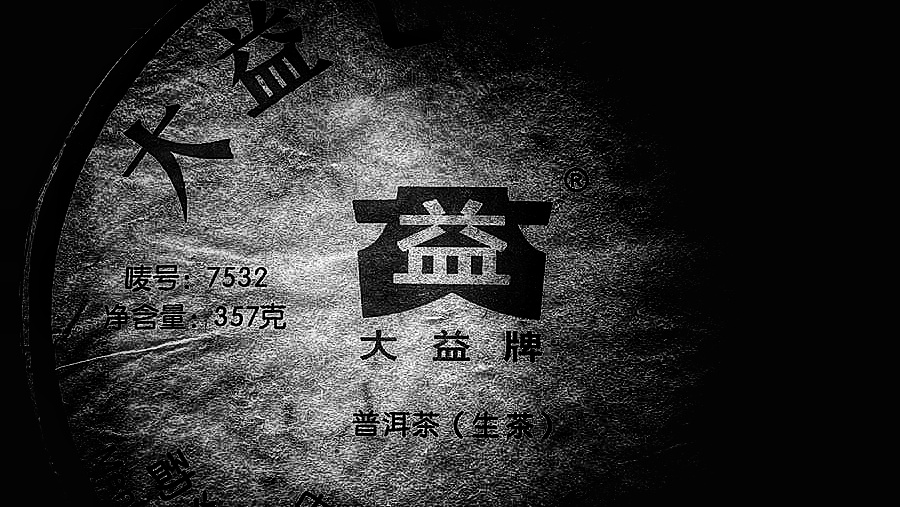
    There are no certifications to guarantee the maintenance of a supply chain, nor that a fair price is paid to the producer or farmer, nor control over denominations like in wines. There are chemometric authentication methods through the analysis of stable isotope ratios to trace the origin and harvest year, but I’m smiling just thinking about it. $400 for 357 grams of pure “maybe” seems a bit too much. Half would still be too much. As you can see, the problem is not whether one can afford it or not, for once the problem isn’t money. The problem is the physiological rejection, that immune response of my body against the enormous “if” that resides in my cup, which I’m about to swallow, hoping that the huigan will overwhelm me so I don’t have to engage in psychomanipulative strategies and explain to myself why I spent yet another boatload of money on something that’s barely worth a third of what I paid for it. Usually when there is asymmetry of information between the buyer and the seller, an average price is paid due to the lack of knowledge of one of the two parties. But in Pu’er this does not happen.

    And having mentioned authenticity, I’ll refer to the next crazy price-justifying argument. I remember an interesting article by Shuenn-Der Yu, an anthropologist from Academia Sinica in Taipei, who concluded by saying, “Ironically, the story of Puer tea demonstrates that the concern for authenticity may have reached a state where no one cares what Puer really is, so long as the current version of the tradition generates profits.” And here comes another bitter pill to swallow. The campaign for understanding what is authentic in the world of Pu’er has been going on for at least 50 years, and today we are still at the same point, the starting point. Authenticity has moved through the debate between wet and dry storage, between terrace tea and forest tea, until reaching the exasperation of single-origin, which cannot be guaranteed, and the compulsive search for gushu. The search for authenticity has poured into the desire to know the exact location of the bathroom closest to the wok that generated the leaves of that cake from the Banpo forest and the need for those trees to date back to the Qinghai campaign of 1723. Otherwise, you’ll never know what authentic Pu’er tastes like. It’s not a communicative strategy adopted by everyone, but there’s always someone ready to pull out the sign saying “I have the real gushu, the others are fake.”

    From the late Qing period, blending (pinpei, 拼配) was considered a refined skill, the result of long training and experience, not unlike, in rigor and sensitivity, the art of blending in whisky or tobacco. This technique continued to represent an essential component of production, both for shenh ad shou Pu’er, continuing its evolution even within large state-owned companies in modern times. But today, authenticity resides in the single village, in the extreme representation of terroir, in tasting the locality, an invitation to the sage of purity and a claim to a place, as happens with French crus or Italian MGA. Too bad that in Pu’er there is nothing similar, neither in historical documentation nor in tradition, nor, again, in the concept of denomination. And without denominations and identity controls, which terroir are we talking about exactly? We can talk about it when we are in that mountain, in that forest, tasting the tea that comes from it because we know who worked it or picked it. But hundreds or thousands of kilometers away, how does that certainty remain intact?

    Apart from the controls in some areas, in other parts no one will tell you the truth about what’s happening. Ten years ago, MarshalN wrote, “If you think about it, nothing stops a seller from going to the nearest Chinatown supermarket, buying a bunch of tea cans that cost $5 each, emptying them, repackaging them as quality tea, and reselling them at a 4x markup,” and what has changed in 10 years? Nothing.

    The marketing of Pu’er tea has for many years been a choreographed performance, orchestrated through often incomplete contracts that leave excessive room for opportunistic behavior. This modus operandi can be rationalized by observing three harmful symptoms: the sanctification of space, the providential narrative, and the pseudo-religious iconography. All of these are present and exposed above. The Pu’er market has been plundered by what should be the true agronomic meaning and sense of terroir, which deserves true protection, not mere commercialization. What should be the core of authenticity becomes the passive accomplice of an economy of hope.

    “It’s normal for people to always want more and earn more; it’s useless to play the morality crusader,” is a typical phrase I hear in debates about situations like these, and it is the natural response many would wield in face of this article. Therefore, I would conclude by reaffirming the reasons that constitute the danger of such a perverse economic cycle.

    In the relentless pursuit of higher margins, many areas have converted their crops, with reductions in many cases of more than 40% of the land cultivated for essential foods, increasing vulnerability in case of external imbalances. To expand or maintain production, many farmers have taken out high-interest loans, which, naturally, are also increasing, as the bet was based on a continuously rising price for Pu’er, thus increasing pressure on the credit system and families. Now, if the price of raw tea continues to decline in the coming seasons, these farmers would find themselves in technical default. I read somewhere years ago that rural banks in Yunnan had about 40% of their loan portfolio tied to the Pu’er sector: if producers could no longer repay the loans, there would be a risk of chain insolvencies, similar to a mini subprime mortgage crisis:

    Farmers → insolvency → rural banks → credit freeze → collapse of local businesses → slow return to normalcy.

    So, the point is not just to lower prices, but to rebuild a network of trust. Continuing the speculative system would not only lead to critical adjustments for honest farmers and intermediaries but also to credit rationing phenomena that would prevent rapid recovery or mere subsistence even after the true outbreak of the crisis. Banks and credit institutions could limit loans to avoid adverse selection risks, like financing risky projects, favoring only the large intermediaries and leaving smaller entities behind. And this is a frequent thing that nobody ever talks about.

    Moreover, most of the workforce in rural Yunnan is directly or indirectly involved in the sector: farmers, processors, vendors, tea-related tourism employees. With another market crisis, what transferable skills would hundreds of thousands of potential unemployed people have? Economic restructuring is not possible in the short term to cope with a potential crisis, given the absence of industrial alternatives. To conclude this excessively dramatic view, even with a collapse in the value of Pu’er, rents and mortgages would not fall, since for a good initial period, land and properties would still be valued based on high-return expectations, and families would remain trapped in a stagflation trap (despite some sectoral deflation): high production, high costs, falling income, rising underemployment, and declining consumption. I don’t believe Yunnan is in this situation, despite some sectoral deflation and possible inflationary rigidity of essential goods and fixed costs, nor do I think it will get there soon. But this article is an investigation into various perspectives, so it is necessary to describe even extreme but possible conditions.

    Essentially, the Pu’er sector, grown under a model of accumulation and continuous speculative expectations, is now facing its structural limits:

    • Inflated prices → distorted rents → inefficient resource allocation.
    • Dependency on a single product → systemic vulnerability.
    • Lack of diversification and resilience → risk of regional social and economic crisis.

    The Pu’er market has evolved into a microcosm of financialized capitalism, where the described drivers create a deadly divergence between price and reality. The correction is painful but necessary, as only by anchoring the price to real values (quality more closely correlated with price, an ethical and certified supply chain, cultural utility) can we avoid the trap of the “Great Divergence.” As Galbraith wrote: “Everyone thinks they can leave the party before the punch bowl runs dry. But the punch always runs dry suddenly.”

    In light of the above, the solutions – though complex and not immediately applicable – must include a selective revision of price levels, especially in areas that have experienced the sharpest increases in recent years. This recalibration would help to rise quality, to reduce the entry barriers that currently discourage new operators and consumers in a sector characterized by volatile and often unstable preferences.

    It is true that there is a niche of loyal consumers, deeply connected to Pu’er from both a cultural and taste perspective; however, most consumers show high price sensitivity, and in the event of compromised accessibility, they will drastically reduce consumption or migrate towards alternative tea varieties, or turn to other Pu’er production areas such as Laos, Thailand, and Vietnam, which are more economically sustainable and are now producing excellent teas.

    As also highlighted by William in his videos, another key strategy is diversification: particularly the development of sustainable and integrated tourism (ecotourism) and the reintegration of agricultural crops suited not only for human consumption but also functional for renewable energy production, such as biomass for biogas, or alternative crops like coffee, given the growing prestige of the Menghai region, where extremely high-quality varieties like Gesha are now being successfully grown, representing promising ways to free local communities from the near-exclusive dependence on tea monoculture.

    At the same time, the introduction of a mandatory certification system for Pu’er is necessary as a tool to restore market trust and strengthen the perception of the product’s intrinsic value. The cheerful postcards will not be enough sooner or later. In this regard, the use of blockchain technology – to ensure traceability and transparency – together with the formal recognition of local designations of origin, represents an essential step towards a credible and sustainable revaluation of the entire sector.

    From a macroeconomic and credit perspective, if the market continues to show rigidity and an absence of adaptive capacity, it will be inevitable to implement extraordinary intervention tools. Among these, it will be crucial to begin systematic monitoring of essential goods prices in the most affected areas, to contain the regressive effects of the crisis on the most vulnerable households. It will be necessary to consider the possibility of activating public debt moratoriums for small producers, as well as, with extreme caution, evaluating the partial conversion of debt into equity instruments. Although this measure would provide immediate financial relief and potentially facilitate access to certification programs and technical support, it carries significant structural risks: among them, the potential for abuses, the excessive commercialization of production logics, and the disproportionate cession of land-use rights in relation to debts that might be overestimated or poorly contracted.

    Those who know me or have had the chance to read what I usually write on my profile know how attached I am to Yunnan and China, and they perfectly understand my language, saturated with admiration for an irreducible people. However, I believe that poetic phrasing, lyrical tones, and romantic philosophy are no longer enough. On the contrary, I think a more critical, aware, and participatory approach is needed: a form of shared responsibility toward a market that has proven extremely fragile and that requires more balance and transparency, for the good of all, those who live there and those, like us, who observe, love, and frequent that world.
  • Pu’er Price Collapse, Are We Heading For A New Crash?

    Pu’er Price Collapse, Are We Heading For A New Crash?

    I’ve always loved investigative journalism but I’ve always hated those catastrophic clickbait headlines that always seem to make things bigger than they really are, but there’s a phenomenon in the pu’er world that’s been going on for a little too long to be simply buried like a dog with its bone.

    Now, we all, or almost all, remember the bursting of the speculative bubble in 2007, where the pu’er market swelled exponentially overnight that spring only to falter in July and collapse over 70% by the end of the year, basically cutting the legs off an entire industry. Well, we may not be at those levels, but it doesn’t seem like the lesson has been learned, rather it seems like someone just put their shirt on inside out to hide the stain.

    What were the causes? Well, to simplify, let’s consider that 70% of purchases were motivated by investment and not by real consumption, production quintupled in 4 years, saturating the market, to which we add fraudulent practices of counterfeiting, manipulation of markets and auctions and crisis of confidence in the product, the source and the quality due to opaque practices dictated by the absence of clear regulation that was convenient for everyone, then we obtain what is a self-destructive economic logic based on artificial growth, completely disconnected from the fundamentals of the product.

    In the West we most likely think that Pu’er buyers have broken free from this dimension because we see a large part of them consuming the same tea they bought, which is partly true, but partly not. Many areas of Yunnan that have reached rationally unthinkable numbers, brands or editions that beat crazy prices have behind them a generative structure often of speculative nature that does not always have to do with scarcity, production costs or the quality of the tea.

    A while back I found myself tasting old samples or cakes from my collection that I had probably forgotten about. I tasted an old 2005 DaYi 7542, batch 501, along with some more recent production, a 2022 7542 and a 2022 Premium Peacock, both batch 01. I honestly can’t say they were bad teas, they were really good, but to what extent can you justify a crazy price, crazy especially when compared to those before 2015, for a basically “a little more than good” tea. This is not only true for DaYi, but let’s analyze for a moment the price trend of some famous productions. Among the most sought-after cakes in recent years there has been the 2003 Jin No.5 batch 201, in January 2021 its value was 1.45 million RMB/jiàn (84 cakes) while in January 2025 the value amounts to 1.1 million, lower than 5 years ago and above all far from the exorbitant price of 3.2 million in March 2021, same fate for the 2005 7542 (batch 501) which in February 2020 was 230.000 RMB /jiàn (84 cakes), reached 880.000 in February 2021 and then collapsed again at the beginning of this year to 300.000 RMB.

    In recent years DaYi has marketed numerous other special and prestigious productions, such as the 2201 Premium Peacock or the 2021 Golden Rhyme to counteract the erosion of the pu’er market prices, but without much success, the first had a value of 118.000 RMB / 42 cakes now collapsed to 61.500 RMB while the second which had reached 152.000 RMB / 28 cakes now touches “only” 33.000 RMB.

    So, in China there is a particular and complex economic situation and due to personal and corporate financial difficulties, those who invested in this type of goods have tried to divest from illiquid assets such as Pu’er. The tea market does not guarantee a quick sale (and this can be seen from the huge amount of cakes kept obsessively by those who bought them for this purpose) without even seeing a potential for short-term revaluation, and this has led to a greater supply than demand, which is why many recently produced cakes are and will be available in the future.

    Added to this is the real estate crisis triggered by the collapse of Evergrande in 2021, the real estate sector has traditionally absorbed a huge share of savings from Chinese families, who now see the value of their properties deflate, which has caused an erosion of perceived wealth. The liquidation, even at a loss, of pu’er tea to quickly recover liquidity and move a part of immovable money can only worsen the price situation.

    Let’s add a piece: in recent years some brands, attracted by demand, have pushed for an increase in production, not limiting themselves to a couple of pressing batches; with the drop in demand, the market is now flooded with a surplus of product and an inability of the market to absorb the supply.

    But above all, wage stagnation, a lack of robust welfare for which the capital of families is concentrated more on pension, salary and educational expenses and a slowdown in redistributive policies slow down or cancel the entry of new buyers into the market, a situation that brings us back to the last problem of the analysis: The collapse of the speculative segment.

    The cakes of large “investment” brands have suffered a 30-50% drop compared to the 2021-2022 peaks, especially for the post-2010 editions, a sign of the exhaustion of the speculative model, something already seen in 2007, but currently the situation is less dramatic. However, reliance on time is not a reassuring factor in the development of these phenomena, which can see prolonged stagnation as well as a sudden acceleration rather than their dissolution.

    Now I get to the point. For years, the “investment” market has functioned with a pseudo-pyramidal scheme: investors bought new and old editions waiting for others to enter after them, driving up prices. When the absence of new players becomes apparent, the system simply collapses, as the first to arrive only gain if new buyers arrive willing to pay higher prices (those who know the world of fine wines are probably not unfamiliar with this game). So prices collapse because there is no longer real demand to support them.

    The biggest problem with the collapse of speculative Pu’er is that as it increases in value it sometimes cause the price increase of raw material and “consumer” cakes even from small brands, it can have exactly the opposite impact on the local economy of the region, where many small producers depend on the sector, since the costs for harvesting, processing and storage of Pu’er increase accordingly, especially for the latter who do not benefit from economies of scale.

    In addition, many young people seem to give up on this type of purchase and the crisis of confidence due to several allegedly rigged auctions have not helped the image of this sector which in itself is already a niche.

    In this article, not all the main problems have been touched upon, for example, I have intentionally left out the problem of fakes (both new and old pu’er, both big brands and, especially currently, smaller brands) and that of fraud on the origin of the leaves, which represents a huge critical point.

    As far as pu’er consumers are concerned, the only possible logic is to form and create a personal standard that is totally independent from the logic of price, fashion and advertising of brands and sellers. If it is true that a low price does not bode well, it is also true that a high price does not provide any a priori guarantee on its real quality or on the truthfulness of its origin, and this applies to both Asian retailers and European sellers. Trust in a shop and in the people who run it still remains a fundamental prerequisite, as well as fighting speculative logic through greater criticism and greater detachment from trends that contribute nothing to an authoritative and well-founded personal education, nor do any good to a market that certainly no longer needs speculative logic (also considering the polarity of speculation, which could occur in a unipolar way in the West thanks to some retailers without it actually occurring in Asia). All very familiar advice to those of you who have been out here a while, nothing new from the early 2000s.

    To conclude, this trend of continuous increase in prices in a generalized way is not infinitely sustainable, and history unfortunately teaches this, especially in an uncertain global economic context. The future of the market will depend on the ability to balance price, quality and accessibility, avoiding speculative excesses and opening up to new consumers. If the sector is able to adapt, Pu’er will remain a valuable product, but with more balanced and less volatile prices. Companies must become ambassadors of transparency, for example by introducing blockchain certifications or declaring costs and margins so as to show how much is paid to farmers, as happens with some micro-roasteries in the coffee world. Consumers must act as ethical “gatekeepers” avoiding being carried away by the hype without evaluating the quality and institutions must guarantee clear, more stringent rules that absurdly no one seems to ask for (except to limit the use of fertilizers or other superficial environmental restrictions), clarify terms (e.g. gushu) so that they are internationally univocal and measurable as happens with European standards and denominations. All these things seem like utopia, but every now and then it’s good to say things out loud, they don’t even sound bad.

    *All prices in the article were taken from donghetea.com

  • Echoes of Tea Lyricism Part 1: “Bay Meng Yu and The Rise and Fall of the Nannuo Shan Tea Factory”

    Echoes of Tea Lyricism Part 1: “Bay Meng Yu and The Rise and Fall of the Nannuo Shan Tea Factory”

    The Instagram story from a few days ago about Bai Meng Yu and the radical mid-century shift in the mechanization of tea production in Nannuo has gotten more attention than I thought, and I thank you so much for that. So on this chilly morning, drinking a 2003 Nannuo sheng, it seems conceivable that I would be talking to you about pu’er, about a historic change in its production. But no, or at least not really.

    This is because the factory I will talk about did not exactly produce pu’er, in the 30s there was a different concept than the modern one, not all mountains produced pu’er tea and consumed it with the same frequency. The tea produced was mainly sundried green, a sort of primordial maocha. Let’s remember that the era was still that of the ancient pu’er, few mountains managed to have a pseudo-continuous production, often interrupted by internal conflicts, and the price of a cake was extraordinarily high, while the production volume remained exceptionally low. At the time 800 cakes were a big deal and satisfied almost all of Hong Kong’s internal demand. Production was mostly attributable to private family brands where tea was sometimes just a collateral part of their farm, often focused on rice, soy, sorghum and other grains. The period is that of brands such as Jingchang Hao, Fuyuangchang Hao, Songpin Hao, Tongqing Hao and others. But what was pioneering and unprecedented on such a scale was the establishment of Nannuo’s first factory in Shi Tou Zhai.

    Bai was born Bai Liang Cheng, later nicknamed Meng Yu and Lian Fu, in 1893. He was a Muslim of Hui ethnicity and lived in Shadian before undertaking business trips to more than 20 provinces across the country in 1936 and 1937 to analyze the tea market, and finally to conduct studies in Japan and India on processing technology. Upon his return to Menghai, he was put under the spotlight by the Yunnan provincial government. It was early 1938, and the provincial institutions were determined to invest in the creation of the Yunnan Si Pu District Experimental Tea Factory, appointing Bai Meng Yu as its director. He had always been impressed by Nannuo, had a special predilection for that mountain, and when he took over the project he opened a branch there. He was among the first to understand the historical, cultural and geographical complexity of that mountain, of that place that was and would be the cradle of tea lyricism for centuries.

    Bai’s vision was not only about productive efficiency but also about building a sense of community, a sense of responsibility that transcended mere economic considerations. He persuaded local farmers to plant over 100,000 tea trees, establishing a lasting resource of socio-economic value. This initiative was not just a pioneering agricultural operation, but an act of cultural preservation and reconstitution, a pact that would bind generations, establishing deep roots both in the soil and in the spirit of the community.

    There he set up a hospital for the staff, a basketball court, housing for the workers, entertainment rooms and a building for the autonomous production of energy. What was innovative was the particular form of conservative design chosen for the construction, the modern plant was built directly on the summit, designed not to detonate any part of the mountain; the loading system and the vertical structuring of the work were reminiscent of those of the old wine presses on Etna: the fresh tea was weighed on the upper floor, dried and sent to the first floor for the rolling phase through a gravity system with trapdoors located on the work surfaces and on the floor. The final drying took place in the sun, in the shaihong style. Since each phase progressed from top to bottom, the process could be significantly accelerated and the workload per individual worker substantially reduced. At that time, the factory had fewer than 60 workers and could produce more than 20 tons of tea per day.

    The factory was officially operational in January 1941, mainly producing black tea and maocha whose leaves were sourced only from Nannuo farmers, mainly sold to Hong Kong, Myanmar, India as well as locally. In this way, it not only secured the province the precious foreign exchange it desperately needed, but also laid a solid foundation for the future mechanized production of quality tea, probably before Menghai, Dali, Fengqing, Mengku, and not only in Yunnan but also beyond the country’s borders, leaving an imprint that would echo in the global tea landscape.

    The narrative surrounding the procurement of the tea processing machinery is instead shrouded in an almost epic aura, worthy of a time when industrial progress was rarely seen in those parts. The machines are believed to have been imported from the United Kingdom, shipped by sea to Myanmar, transported by land to Jingdong and through a grueling pilgrimage of trucks and mules to their destination.

    There is, however, another version of the facts, more prosaic and less romantic, of those who think that the machinery was more likely purchased in India, in Calcutta, where Bai had been some time before and where many companies selling such equipment were based, such as Marshall, Sons & Co. and Brown & Co. but above all the Ceylon Tea Machinery Company and that of Sir William Jackson, a Scotsman whose mechanical genius had revolutionised the tea industry, who worked for his brother’s company in Assam, the Scottish Assam Tea Co. His inventions included the Excelsior, probably the first rolling machine, as well as the Victoria, Venetian and Britannia driers.

    What is truer, however, regardless of the version of the story, is the enormous human effort that made the installation of the equipment on the mountain possible. 10 carts were involved, each pulled by 3 oxen under the supervision of 15 workers to reach the top of the construction site, advancing in all conditions for 2km a day, cutting down trees, breaking rocks, building drainage systems and closing ditches. For six exhausting months the men worked tirelessly, challenging that harsh and previously inaccessible land, completing an unexpected and anachronistic work.

    But right in the middle of a major plan to modernize and expand markets, the Japanese army invaded southern Yunnan. The Burmese highway was bombed by enemy planes and traffic was paralyzed. Tea destined to Myanmar, a key hub, could no longer be transported, and teahouses and factories soon began to cease production and convert many of their plants to war production facilities. The crisis congested the entire nation and Bai decided to take an active part in the conflict. He helped build a reception center in Jinghong, organized the construction of dozens of bamboo rafts to help soldiers deployed across the border return home. Together with other officials, he trained tea factory workers, turning them into guerrilla fighters against the Japanese occupation, ensuring that each of them was armed and financing their equipment. However, the climate became even more incendiary and the economy collapsed even further towards the beginning of 1948, the Nannuo factory closed permanently and Bai Meng Yu was forced to leave Menghai, moving first to Myanmar and then to Chiang Mai, where a large community of Chinese Muslim immigrants resided, dedicating his last years to literary activity until August 1965, year of his death.

    After the founding of the People’s Republic of China, the government organized its restoration and reconstruction in 1953 and the following year it was merged with the Fohai Tea Factory (the predecessor of the Menghai Tea Factory), with which Bai had a strong rivalry at the time and whose director was Fan Hejun, another cornerstone of the tea industry during the last century. The Nannuo Factory remained under the leadership of Yang Kai Dang until 1994.

    With the reform and opening of markets, tea production and sales were liberalized. Private tea factories emerged, while state-owned ones struggled to keep up. By the early 2000s, the Nannuo Factory was gradually ceasing production amidst the turbulence of an industry undergoing profound and unimaginable changes at an unprecedented speed. A glorious era that had paved the way for modern tea was now fading.

  • Brief historical excursus on the efforts and resilience of the Anhua people

    Brief historical excursus on the efforts and resilience of the Anhua people

    Politics clouded every public and private space in China at the end of the 70s, revolutionary inspiration raged incessantly from the large squares to the alleys of the rural dimension. The Hunan we know today, a land of extraordinary teas, has seen some of the most important Chinese political figures sit at its hickory wood tables.

    The dark liqueur, imbued with smoky aromas, was a participant in the CCP meetings, a witness to history and speeches that were never revealed. The heicha was present during the strategies of a young chairman Mao, of Liu Shaoqi, Wang Zhen, and then-Liberation Army militant Hua Guofeng, who would become the main supporter of the monumental growth of tea cultivation and agricultural modernization during the Cultural Revolution.

    Before leaving for Beijing, having defeated the gang led by Mao’s mad widow and being recognized as one of the most powerful men in China until the takeover of the Deng Xiaoping movement, he saw the acreage of Hunan tea increase from 42 to 172 thousand hectares in ten years, even if half were removed around the 90s.

    It was the heicha that warmed the souls of the soldiers during the Sino-Japanese battle of Ichigo Operation, that sustained the squadrons on days when not even the land could give relief to the dead.

    The huigan of a heicha dates back as the disenchanted voice of those who have now passed away and those who continue their work. Homeland of farmers, idealists, politicians, the look at Hunan is left to a feeling of fatigue and historical awareness that never seems to find rest.

    Initially tea was a necessity for the inhabitants of the province, planting it meant having preferential access to coal, kerosene, iron for work tools and fertilizers, furthermore the cooperatives purchased all the tea produced with advances in cash, so that farmers could purchase inputs before harvest, although often at unfair prices.

    Even today the roads that lead to Yiyang are part of an arduous pilgrimage where few still venture out, at times it seems like everything has remained still, you seem to have entered another era where in many rural villages no one will offer you a flat image for families or a little speech from a leaflet, rather a cup of tea together and lives to listen to. The people, the territory, are like their teas, a hermitage in the highlands, stranger to that sad modernist compulsion and the sadistic urbanism that seems to bypass history.

    In many homes you can still see jars containing remedies and potions on wooden shelves, alongside old ceramic and copper teapots; you are greeted by the warm whine of the kettle on the stove, the wood is now white ash, the smell of smoke still sometimes saturates the atmosphere and the drops of condensation look like tears on the windows, those little things that drag you into your corner of familiar comfort even in the most remote place in the world.

    Here, in the early Hongwu years of the Ming Dynasty, Shaanxi tea merchants opened a factory to purchase and process tea, then transport it to Jingyang. After fermentation and flowering was pressed into bricks and then sealed with hemp paper. The central government established inspection and transportation departments in Xining, Hezhou and other places in Shaanxi. Fucha was so important that to prevent tax evasion, sanctions were approved such as beheading for those who illegally left the province with tea and imprisonment or death sentence for officials who allowed their escape.

    Anhua tea traders were later empowered to transport tea on grueling and brutal journeys across the Anhua Ancient Tea Horse Road, starting from the ancient market of Huangshaping and Yuzhou, along the Zishui River, then to Dongting Lake by sail boat, and then transferred it to Shaanxi.

    However, the birth of the farmer movement and the Shaanxi-Gansu Muslim Uprising blocked tea trade routes in the northwest, resulting in a slowdown in trade and the people of Anhua found themselves without anyone to accept the import, creating a circuit of tax non-compliance that was at that point incurable. Furthermore, foreign capital took advantage of contractual asymmetries and inadequacies between sellers and the Qing government to directly purchase large quantities of cheap tea.

    The first signs of recovery came with Zuo Zongtang’s “Tea Law”, opening the doors to a new tributary system and a new and prolific tea export route, but new problems were created, however, during the political disintegration of China under the blows of the warlords of Beiyang and in the early years of the Republic of China.

    The central government’s control over local forces weakened considerably, the tea trade in the northwestern region was left to the local government which was solely concerned with the collection of tea taxes without any attention to direct control over tea market policies.

    After a slight relief from the markets due to a fiscal relief of the provisional regulation of April 1942, throughout all the 40s to the following 40 years there would no longer be much news; the social unrest, the Sino-Japanese war, the consequent destruction of the roads to block supplies and the lack of intervention in the management of the markets in Hunan caused the disappearance of this type of tea, whose presence persisted almost exclusively at a local level.

    The history of Anhua has always concerned people, going beyond politics, beyond market logic, carrying on its shoulders the weight of history and the torment that accompanies the sunset of eras, but it is certain that a new future awaits this territory, worthy of these people and their tea.

    While I’m doing this soliloquy I’m drinking a wonderful Eastern Leaves 2007 Fucha from Anhua, and I am more and more convinced of how this is a tea that more than others is a veteran of incendiary contexts, a reactionary symbol endowed with the cadence of the human voice in narrating with spiritual sincerity our past, when farmers produced tea surrounded by the metallic noise of trucks and the smell of kerosene, fixing the historical truth in the persistence of consciousness.