Category: Tea Science

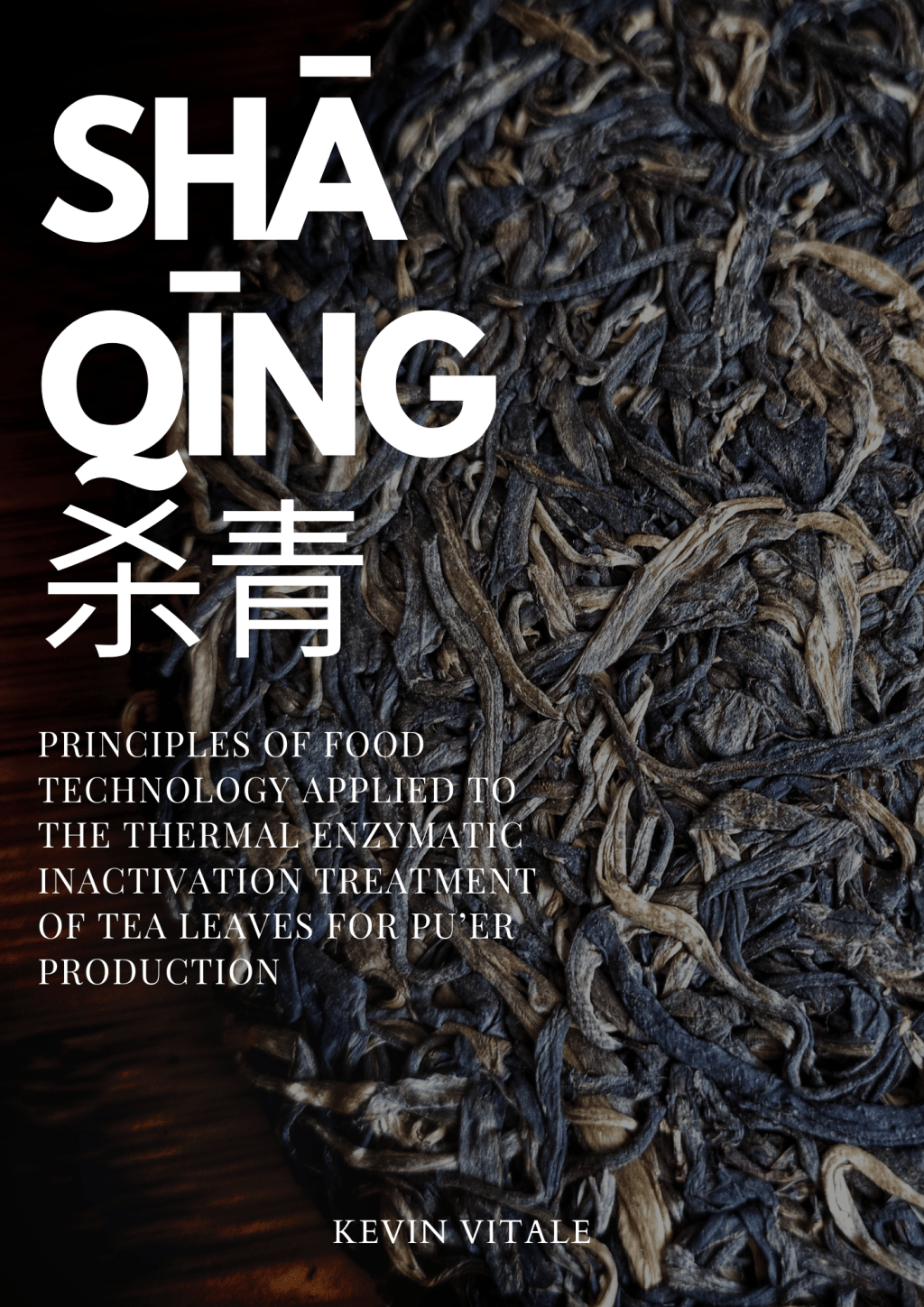
  • Shāqīng: My New EBook Is Out Now (English & Italian)

    Shāqīng: My New EBook Is Out Now (English & Italian)

    Hello everyone!

    With this post, I would like to share the result of a project that has accompanied me over the past few months: a publication born from the desire to present, in an ordered and comprehensible form, the most significant insights I have gathered about the world of fermented teas.

    More than a year ago, I began collecting material for a book that would include a wide range of information concerning the engineering, microbiology, and biochemistry of fermented teas. Given the complexity of the project, and unsure whether it would ever see the light of day, I decided to publish a preview dedicated exclusively to shaqing.

    There are not many publications capable of addressing tea processing with clarity and rigor; even fewer do so in a way that is accessible and free from economic barriers. This work attempts, at least in part, to fill that gap by offering a starting point for understanding the complexity of production processes, particularly those of Pu’er and fermented teas.

    I have always believed that knowledge, to be genuine, must be offered without ostentation; that it should serve as a space for connection rather than exclusion. For this reason, I wanted this excerpt to be freely available.

    It is a gesture of gratitude toward those who have stood by me, toward those who are no longer with us, toward all who have contributed to the creation of this work, and naturally toward tea itself and the people whom, thanks to it, I have been fortunate enough to meet.

    If you choose to read it, I hope you will find within these pages not only information, but also a measure of the care and passion I have tried to pour into them, and that you may feel inspired to share it with as many people as possible.

    In the end, as often happens with traditions that endure, what truly matters is not merely knowledge itself, but the community that forms around it.

    Below you will find the downloadable file, available in both Italian and English.

    Cheers, my friends, and happy reading!


    Kevin Vitale – Shaqing Principles ENGLISH

    Kevin Vitale – Shaqing Principi ITALIANO

  • Discovering Y Tý: Comparison of two Viet Sun sheng pu’er from a Dao and a H’Mông village

    Discovering Y Tý: Comparison of two Viet Sun sheng pu’er from a Dao and a H’Mông village

    A place of magnificent waterfalls, azaleas and wild peaches, the mountains background seems to give every gesture an additional majesty, a primordial dignity.
    The small mud-walled houses of Y Tý stand in the green and golden colors of the rice fields, offering rural nuances to that tranquility typical of the “cloudy” land, located at more than 1700 meters above sea level. Pyramid roofs, stone fences and terraced fields are symbols of the will, minds and hands of many generations in the highlands, created to interact and converse with the nature of the mountains and rivers.

    The Y Tý market meets every week and is a cultural place of exchange for Hà Nhì, H’Mông and Red Dao. Most of the stalls are run by Hà Nhì women in black and dark blue dresses, i remember the shy face of a young mother and her little girl, lying obediently in a gray jute sash on her chest. Her hair is tied back and almost glazed due to the effect of the sun on her coal black hair, the vivid gaze with her head tilted to the side as if she were listening to the voices in the wind.

    Tourists are busy buying vegetables, red peanuts and Pạ Phì. The road covered in red earth dust is full of rattan baskets, worn enough to indicate actual use of their contents and well enough maintained to suggest respect for the contents themselves.

    Higher up in the mountains, the landscape unravels lively between the fog, between the sandy and rocky soils of the Dao villages surrounded by the wild bamboo forest and the more clayey and fertile soils of the H’Mông villages. Those mountains that protected the soldiers on their way to the front, towards the place where the Lũng Pô creek meets the silt-tinged waters of the Hồng River, up to A Mú Sung, where they fought and fell to protect the border.

    Here it is as if tea is able to fit in with culture as well as nature and can make use of both as it pleases. The landscape seems like the unconscious of the earth and the teas that derive from it are its liquid consequence.

    After a more romantic first part, I will talk in a more technical and boring way about how a territory with an enormous potential now demonstrated like Vietnam can have that complexity of landscapes, that dramatic discrepancy of soil composition that is often associated with great terroirs, such as France and Italy for wine and Yunnan and Taiwan for tea.

    Vietnam often is in conditions of high humidity and high temperatures during the year, such as to hypothesize a much faster maturation of the soil than, for example, northern Asia or some areas of northern Yunnan. But in the mountains many things can change, here at over 1800 meters we can have leaching, erosive, frost phenomena and extremely variable contents of the organic fraction from mountain to mountain or even in the same mountain at different elevation levels.

    We can also notice typical results of the meteorological conditions of these areas, such as the deeply yellow and yellow-red color of the soil, indicative of a condition of water saturation. The soil environment is reduced and, under these conditions, the iron is reduced to the ferrous state (Fe2+), the color of the soil becomes lighter and yellower, with gleying and mottling sometimes. The iron will be in a more soluble state and therefore more available for chemical reactions.

    H’Mông village has very old and tall trees growing on the slopes near the border with China, the climate here is wetter, there is more forest cover, resulting in darker green leaves than in the Dao village. This is due to the shade and the greater capacity of water retention, less leaching and greater content of organic substance, typical conditions of a soil richer in clay and organic elements, the presence of sand and silt in surrounding areas also suggests a clayey but not asphyxiated soil, with a good potential for oxidation of organic matters. The leaves of the H’Mông village express themselves with greater roundness in the cup, with a persuasive softness and with more animal and leathery hints, with less citrusy but warmer and more mature fragrances.

    The tea area of Dao village overcomes a wild bamboo forest, there are many old and ancient trees, the climate is sunny and dry, and the soil is rocky-sandy, which will result in a possible slower growth rate of trees, given the possible greater difficulty for the soil to retain water, nutrients, greater leaching of minerals, erosive phenomena and loss of organic substance and this conformation is in line with a lower maturity of the soil given a lower presence of water. The leaves of the Dao village reveal more mineral and rocky accords, more citrus and herbaceous, a less imposing and soft body, more agile despite the medium thickness.

    This is an example of how at a short distance, pedogenesis and transformative climate phenomena can change drastically, returning a vastness of results that cannot be found in most other areas of the world and how this complexity does not derive only from the altitude, therefore also translating into extremely different teas in an area of a few kilometers.

    Mixing together the leaves of the two villages you get a concert of the unlikely son of Emily Dickinson and Rory Gallagher, the romantic essence with its disciplined lyricism and the annihilating chaos, the sublime that is the basis of great things.

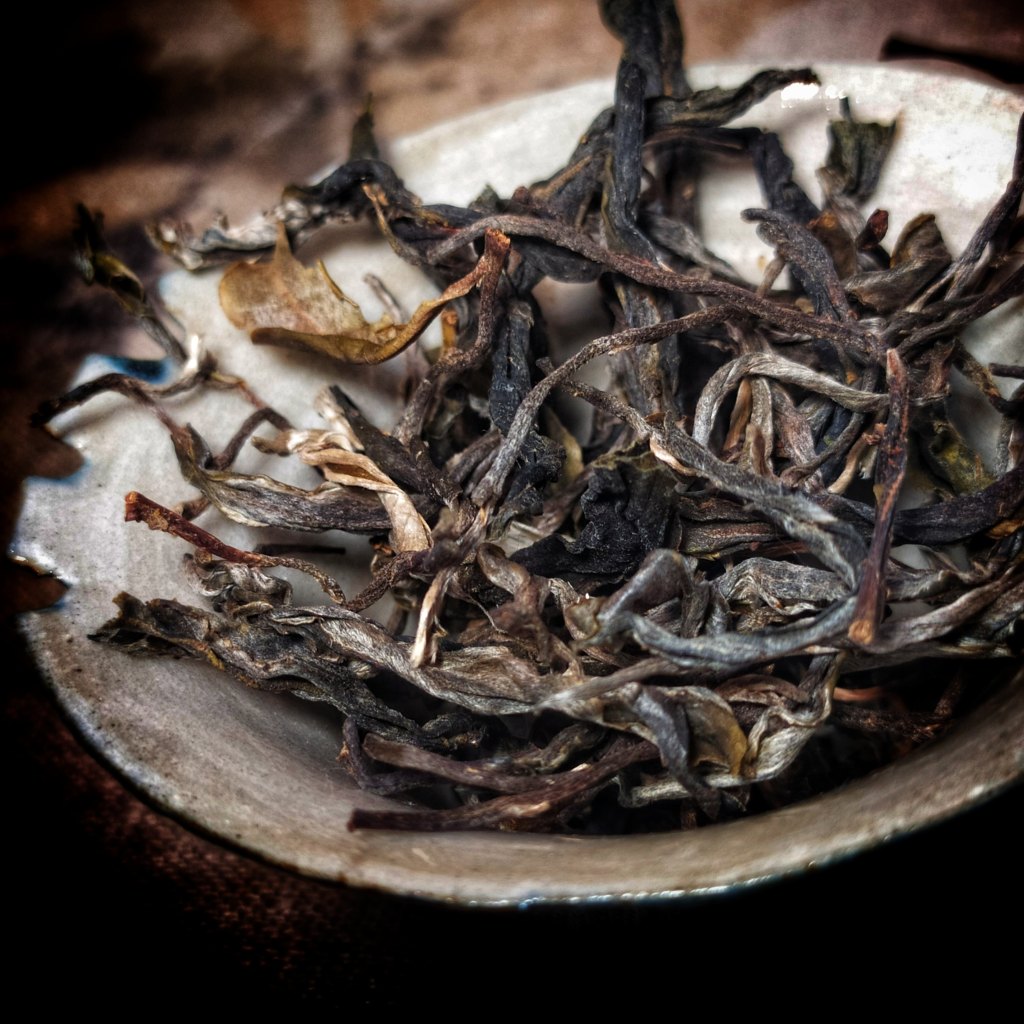
    The ambivalent aromatic essence of the leaves is initially dark, bringing back Bruegel’s Flemish nature in the almost primitive woodland scents, with memories of a bonfire extinguished in the rain, undergrowth and slightly animal smells.

    Then the texture of tropical fruit and candied hibiscus, tomato leaf, orchard hay begins to emerge, supported by counterpoints of medicinal herbs, wild flowers and saltiness on the skin. On the sip it shows fullness, with notes of white mulberry, linden, apricot and slightly herbaceous hints. It is never prosaic and the thickness is sized and juxtaposed with freshness and minerality and a medium-low bitterness, which make drinking agile and never tiring.

    The strong and relaxing and at the same time almost lysergic qi accompanies a persistent and very present huigan from the first cups.

    You can find much more information on the Viet Sun website

  • Epitome of Fuzhuan fermentation: Eurotium cristatum, the hero of Anhua

    Epitome of Fuzhuan fermentation: Eurotium cristatum, the hero of Anhua

    Despite my passion for history, anthropology and philosophy, my training background in daily life has always concerned scientific world; in particular agronomic and food technology studies have led me to be fascinated by microbiology of tea, which in the western world, however, is a subject with which we find ourselves dealing too little often.

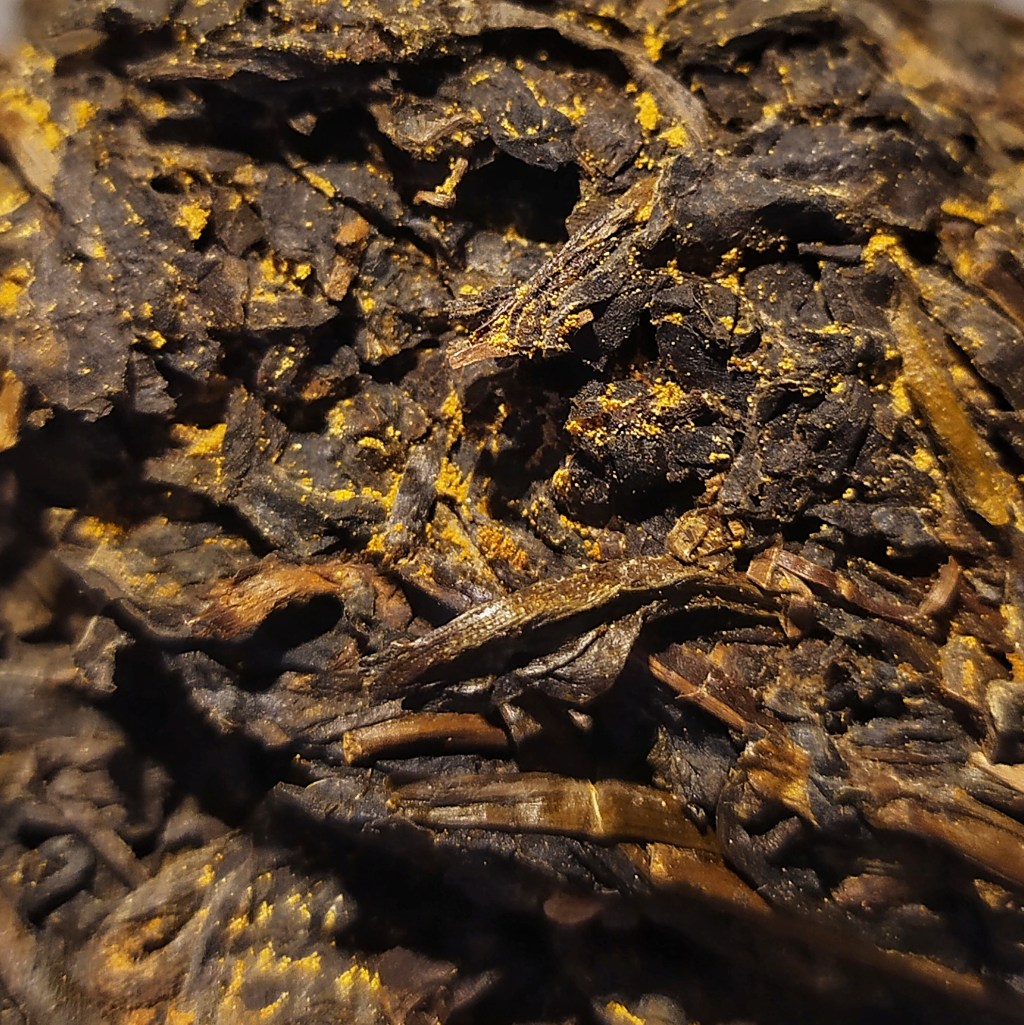
    I will not investigate the oxidative and fermentative processes, which will be the subject of other posts, but I will speak in particular of a fungus, an extraordinary being, what I would describe as the microbiological hero of Fuzhuan. Eurotium cristatum is a very vigorous ascomycota, typical of the Hunan region, able to survive at relatively high temperatures and in situations of high osmolarity. The origin of Fuzhuan brick tea is still very controversial today, but it can probably be traced back to the Ming dynasty. Already in ancient times the jin hua, the golden flowers due to the populations of E. cristatum, were used as a quality standard for heicha bricks.

    This “flowering”, the Fa Hua, unavailable elsewhere, is a process due to the uniqueness of the microclimate of Hunan, and owes its color to the golden-yellow hue of the ascocarp of the fungus. But how does this condition arise, and how does it affect the taste of the tea?

    The creation of Fucha is one of the most complicated production processes among dark teas, which involves three particular fermentation stages that differentiate it from the others. Once the rolling phase (sometimes 2 rolling phases) of the leaves has been completed, which favors the rupture of the cell membranes favoring the biological processes, the leaves are processed at a temperature between 100-200°C (depending on whether it is pile steaming or other methods), creating a selective condition (about 90% of fungi and bacteria are killed).

    Follows a piling phase, a pre-fermentation phase in which the leaves are placed in piles and the temperature is lowered below 60°C and moisture content of 65% to 68% to favor microbial proliferation, creating an initial selection for some species of microorganisms.

    The loose leaf tea is therefore left as raw material stage, the pile is turned at certain intervals. The reactions will take place and will develop the scent of the tea, such as various types of degradation of amino acids or hydrocarbons, Strecker degradation, enzyme-mediated oxidation and hydrolysis, as well as non-enzymatic degradation and oxidation. The pile fermented leaves were then dried; in old days the drying process was done in an oven with pinewood at around 70°C. Raw Fucha is now ready.

    All this will end with the subsequent steam heating of the leaves at around 80°C and piled up again throughout the night, to make them suitable for pressing and further determine a selective environmental condition. At this point the pressing in bricks will take place once the temperature has reached 50°C and the bricks stored so that the third phase can begin, the flowering phase, known as fahua, under controlled moisture and temperature for at least 15–25 days, which marks the post-fermentation events.

    We always keep in mind that these procedures, times and temperatures can vary according to the recipe and the various traditional methods.

    Phases of a typical production process: (1) Fresh tea leaves, (2) Shaqing, (3) First rolling, (4) Pile fermentation, (5) Possible Second rolling, (6) Drying, Raw Fucha is ready, (7) Screening and sorting, (8) Blending, (9) Pile steaming, (10) Second short pile fermentation, (11) Pressing, (12) Fa Hua, Microbial fermentation, (13) Packaging and storage

    E. cristatum together with other microbial agents acts on tea leaf molecules thanks to the activity of extracellular enzymes produced by fungal fermentation, such as α-amylases, polyphenol oxidase, cellulase, pectinase, xylanase, proteases and hemicellulase oxidase, contributing to the change of volatile substances and bioactive components during the fermentation process.

    The dominant genres of microorganisms identified were Eurotium, Debaryomyces and Aspergillus, and three genres of bacteria such as Klebsiella, Lactococcus and Bacillus. Although all microorganisms contribute to the flavor profile, Eurotium cristatum was found to be deeply characterizing.

    The degradation of proteins and polyphenols, as well as the production of metabolites, carbonaceous and nitrogenous compounds due to the action of E. cristatum and associated microorganisms lead to the formation of the distinguishable fungal and woody aroma of Fuzhuan tea, of stale, mentholated and undergrowth perception.

    Furthermore, the traditional brick form must not be understood as a casual or merely hedonistic and cultural process, it has in fact emerged that the differences in the structure of the bacterial community between the different types of Fucha can be in part mainly attributed to the different degree of compression of the material.

    Notable differences emerged in the microbial community in its taxonomic diversity and population size, in loose, unpressed, lightly pressed, hand-pressed, or machine-pressed Fuzhuan tea leaves. They all influenced the fermentative development in their own way, creating different tissue damage, thus modifying the release of leaf cell contents. This in turn plays an important role in influencing the subsequent fermentation stage.

    The results consistently indicated that machine-pressed Fuzhuan tea contained the highest abundance and diversity of microorganisms.
    The excessive mechanical damage caused by the strong pressing causes a greater degree of rupture of the membranes which is followed by a considerable release of the intracellular contents, as well as affected the humidity and air circulation inside the brick, significantly promoting the growth and the development of colonies of microorganisms.

    The result is that the endogenous enzymatic and non-enzymatic action of the leaves, and to a greater extent the exogenous one of the microorganisms, leads to polyphenolic oxidation with a consequent greater production of thearubigins which characterizes the dark color of this heicha; the reactions involving polyphenols, carbohydrates and amino acids affect the silky texture and volatile compounds, as well as the oxidation of fatty acids.

    The metabolic activity of eurotium cristatum and of the other microorganisms attenuates the green, herbaceous sensations, being replaced by floral, woody, stale ones towards the last part of fermentation, due to molecules such as methyl salicylate, derivatives of hexanol and of trimethoxybenzene. Furthermore, the gustatory characteristics are also changed.

    Cathechins like EGCG, GCG, EGC, CG are positively correlated to the sensation of astringency, acidity and bitterness. It has been seen that during the fermentation process these substances tend to decrease proportionally to the microbial development and its metabolic activity, it can therefore be deduced that the latter is related to greater softness, less astringency and a higher sweetness with the continuation of the tea aging.

    We have reached the end of this scientific journey into the world of this little golden wonder.

    I remain available for further curiosities or material in case you want to learn more about the topic.