Tag: 2007

  • Neo-Noir Infusion: Drinking Time in a 2007 Banzhang Cake

    Neo-Noir Infusion: Drinking Time in a 2007 Banzhang Cake

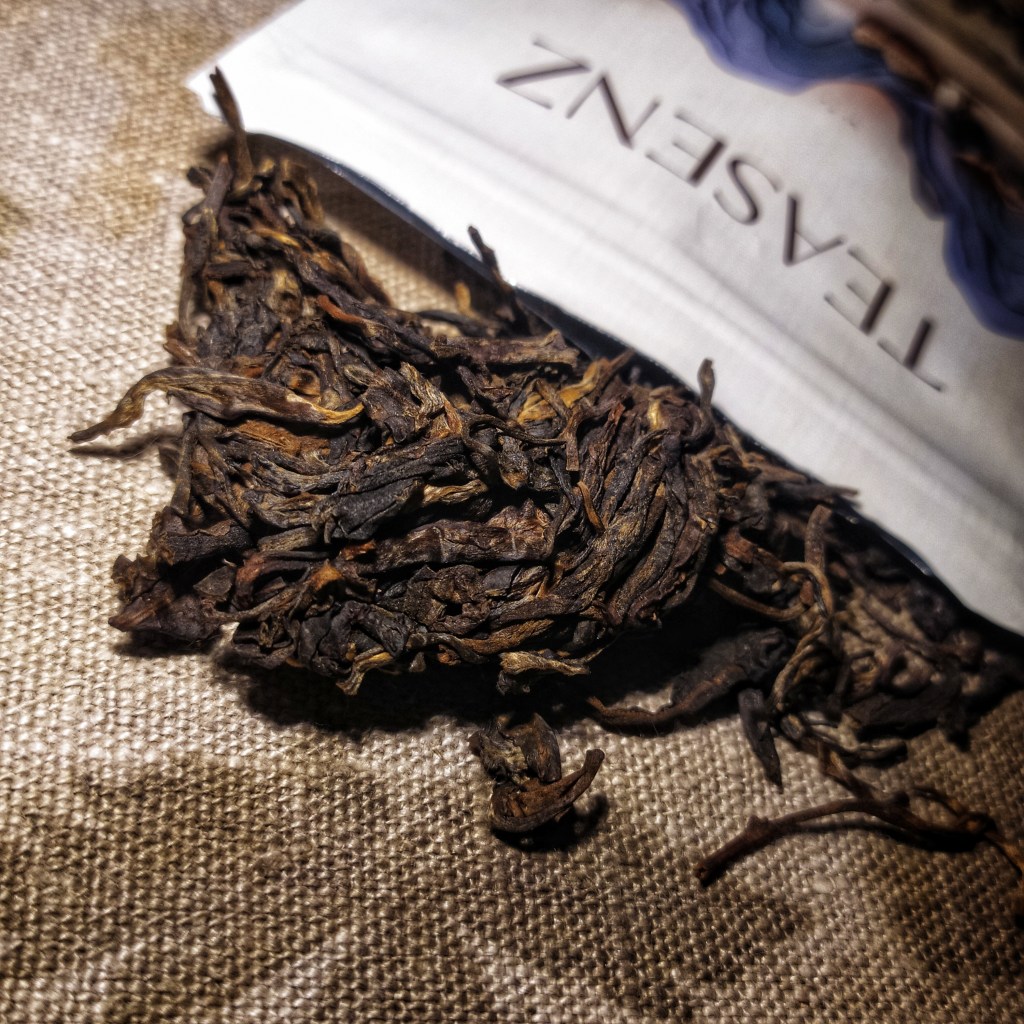
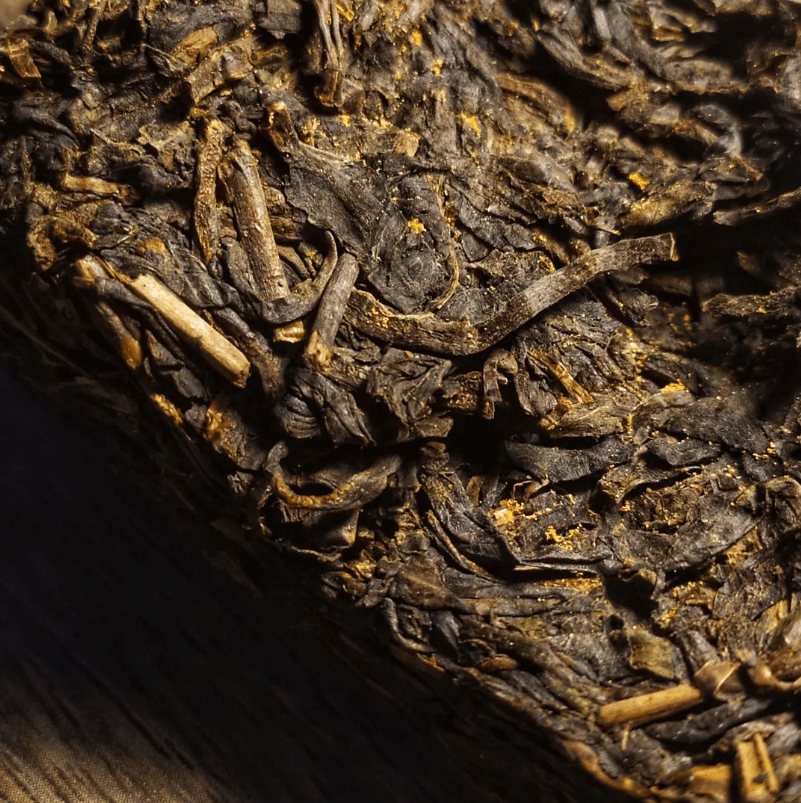
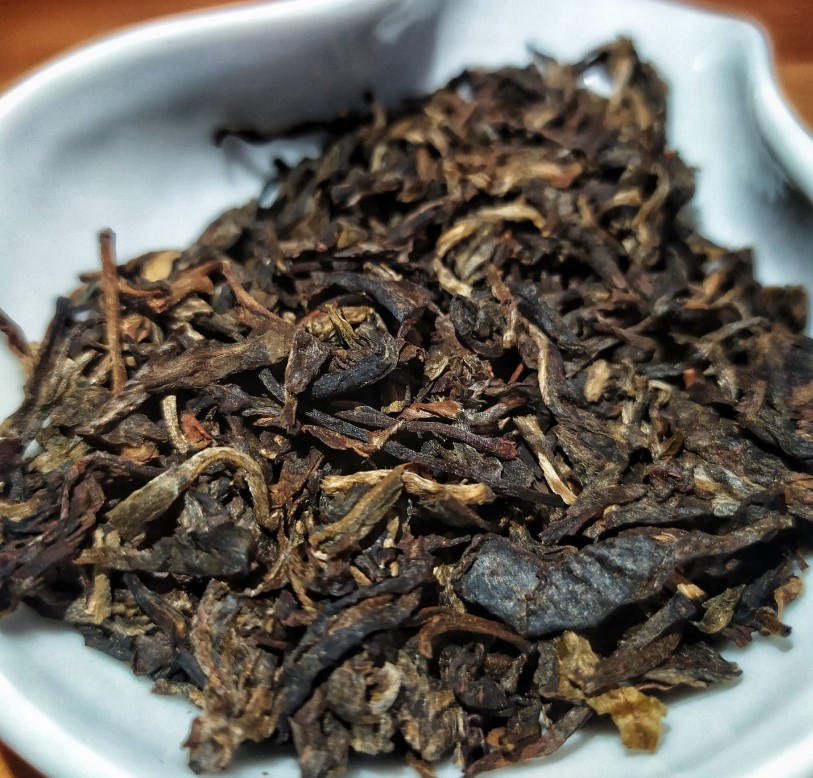
    Lao Man Er, a brand many are likely familiar with, produced this cake in 2007 using old trees leaves from the Banzhang area. I doubt it includes LBZ or Lao Man E, and I equally doubt there is a significant share of XBZ, but there is something intriguing here. Beyond the brands and trends, there are things—or teas, in this case—that offer a window into a space and time distinct from our own, tempting those caught in the compulsion of favoring only a preferred label to look elsewhere.

    With its undeniable urban bohemian verve, it teaches the perfect balance of wet and dry storage, revealing mature yet still vibrant aromas woven into a humid structure, neither weary nor depleted by the damp condensation of some Taiwanese basement.

    Through earthy undertones interwoven with hints of leather seats from an old E-Class and cognac-soaked cork, it conjures a muggy, far-from-perfect night inside a car, where buildings seem to jostle against each other to stay upright. What emerges is a metropolitan Erebus seen through the hyperreal cornea of Richard Estes, with the visual cortex overexposed to those nocturnal images of smoke and decay, a flickering interplay of light and shadow in the neo-noir outskirts of Hong Kong.

    The leaves evoke the metallic sheen of a puddle on warm asphalt, the dry sweetness of tobacco, a distant echo of spices and herbal tinctures. They also bring to mind fermented fruit, aged pomelo peels, the scent of old haberdashery furniture, and the leather-bound books of a forgotten bookstore hidden in the alleys of a city that never sleeps.

    The sip feels like a 35mm frame, with each scent of time etched into it, like a latent image forming on film, one catches a glimpse of a past spent in some chipped underground warehouse, as well as a more recent existence in a better-exposed shop in Guangdong, when notes of chestnut, dried plum, figs, and kombucha come alive, only to give way to a faint yet persistent huigan, dissolving slowly and gradually like the last cigarette left burning, like the night retreating at dawn.

  • Memories of chatting about Mengsong and an old Bameng friend with a 2007 Teasenz gushu

    Memories of chatting about Mengsong and an old Bameng friend with a 2007 Teasenz gushu

    I don’t think there can be any tea, any time, any sip without the people who bring with them the truth of a territory. One of the first tea maker I met was from Bameng, he worked for a factory in Mengsong and was nicknamed 小毛虫 “little caterpillar”. This name was given to him by his parents, when he used to sneak out of the woven wooden basket to observe spiders and insects while his family clung to the ancient trees for the harvest.

    Every time he picked up those yellow caterpillars he went back towards his mother’s legs crying, with his face full of mud and his hands swollen from the stinging substance of the insect. He had an immoderate passion for those caterpillars and an even greater stubbornness.
    His family’s teas were special, with that disarming power right in the mouth, his laughter when talking about the times now spent in his village were even more energetic.

    His nickname also referred to the ability of those insects to transform, as well as the growth that his parents hoped for him. He incessantly emphasized how his village had changed, how the people of that place had changed and with them their landscape. We talked about how tea had been an alibi for both dreams and reality, a substance of conversion capable of overturning eras and conditions, of extracting from things its opposite.

    We sipped pu’er talking about how the tea inherited its alchemical nature, as a transmutative substance and as a creator ex nihilo. The noise of the forest and of the harvest would always be the backdrop to his life and tea would always accompany him until the end of the sunset, until the last dance of the chrysalises.

    This 2007 Mengsong Gushu by Teasenz reminds me of those chats, those powerful, intense and penetrating pu’er. The scent of wet leaves is reminiscent of leather boots, sundried plum, flambéed citrus peel together with the sensation of dried rose petals in the middle of an ancient book. Balsamic notes then appear, of turnips cooked over charcoal and in the background light nuances of an open tin of latakia tobacco placed on an old, slightly damp fir furniture.

    The sip is silky with a medium persistence and an excellent sweetness accompanied by a typical salty flavor that recalls a pleasant mineral sensation of rock. A good huigan is surrounded by notes of roots, rhododendron honey, rose hips, plum and leather, adorned with an orchestra of citrus notes, balsamic candy and light traces of cardamom.

  • Brief historical excursus on the efforts and resilience of the Anhua people

    Brief historical excursus on the efforts and resilience of the Anhua people

    Politics clouded every public and private space in China at the end of the 70s, revolutionary inspiration raged incessantly from the large squares to the alleys of the rural dimension. The Hunan we know today, a land of extraordinary teas, has seen some of the most important Chinese political figures sit at its hickory wood tables.

    The dark liqueur, imbued with smoky aromas, was a participant in the CCP meetings, a witness to history and speeches that were never revealed. The heicha was present during the strategies of a young chairman Mao, of Liu Shaoqi, Wang Zhen, and then-Liberation Army militant Hua Guofeng, who would become the main supporter of the monumental growth of tea cultivation and agricultural modernization during the Cultural Revolution.

    Before leaving for Beijing, having defeated the gang led by Mao’s mad widow and being recognized as one of the most powerful men in China until the takeover of the Deng Xiaoping movement, he saw the acreage of Hunan tea increase from 42 to 172 thousand hectares in ten years, even if half were removed around the 90s.

    It was the heicha that warmed the souls of the soldiers during the Sino-Japanese battle of Ichigo Operation, that sustained the squadrons on days when not even the land could give relief to the dead.

    The huigan of a heicha dates back as the disenchanted voice of those who have now passed away and those who continue their work. Homeland of farmers, idealists, politicians, the look at Hunan is left to a feeling of fatigue and historical awareness that never seems to find rest.

    Initially tea was a necessity for the inhabitants of the province, planting it meant having preferential access to coal, kerosene, iron for work tools and fertilizers, furthermore the cooperatives purchased all the tea produced with advances in cash, so that farmers could purchase inputs before harvest, although often at unfair prices.

    Even today the roads that lead to Yiyang are part of an arduous pilgrimage where few still venture out, at times it seems like everything has remained still, you seem to have entered another era where in many rural villages no one will offer you a flat image for families or a little speech from a leaflet, rather a cup of tea together and lives to listen to. The people, the territory, are like their teas, a hermitage in the highlands, stranger to that sad modernist compulsion and the sadistic urbanism that seems to bypass history.

    In many homes you can still see jars containing remedies and potions on wooden shelves, alongside old ceramic and copper teapots; you are greeted by the warm whine of the kettle on the stove, the wood is now white ash, the smell of smoke still sometimes saturates the atmosphere and the drops of condensation look like tears on the windows, those little things that drag you into your corner of familiar comfort even in the most remote place in the world.

    Here, in the early Hongwu years of the Ming Dynasty, Shaanxi tea merchants opened a factory to purchase and process tea, then transport it to Jingyang. After fermentation and flowering was pressed into bricks and then sealed with hemp paper. The central government established inspection and transportation departments in Xining, Hezhou and other places in Shaanxi. Fucha was so important that to prevent tax evasion, sanctions were approved such as beheading for those who illegally left the province with tea and imprisonment or death sentence for officials who allowed their escape.

    Anhua tea traders were later empowered to transport tea on grueling and brutal journeys across the Anhua Ancient Tea Horse Road, starting from the ancient market of Huangshaping and Yuzhou, along the Zishui River, then to Dongting Lake by sail boat, and then transferred it to Shaanxi.

    However, the birth of the farmer movement and the Shaanxi-Gansu Muslim Uprising blocked tea trade routes in the northwest, resulting in a slowdown in trade and the people of Anhua found themselves without anyone to accept the import, creating a circuit of tax non-compliance that was at that point incurable. Furthermore, foreign capital took advantage of contractual asymmetries and inadequacies between sellers and the Qing government to directly purchase large quantities of cheap tea.

    The first signs of recovery came with Zuo Zongtang’s “Tea Law”, opening the doors to a new tributary system and a new and prolific tea export route, but new problems were created, however, during the political disintegration of China under the blows of the warlords of Beiyang and in the early years of the Republic of China.

    The central government’s control over local forces weakened considerably, the tea trade in the northwestern region was left to the local government which was solely concerned with the collection of tea taxes without any attention to direct control over tea market policies.

    After a slight relief from the markets due to a fiscal relief of the provisional regulation of April 1942, throughout all the 40s to the following 40 years there would no longer be much news; the social unrest, the Sino-Japanese war, the consequent destruction of the roads to block supplies and the lack of intervention in the management of the markets in Hunan caused the disappearance of this type of tea, whose presence persisted almost exclusively at a local level.

    The history of Anhua has always concerned people, going beyond politics, beyond market logic, carrying on its shoulders the weight of history and the torment that accompanies the sunset of eras, but it is certain that a new future awaits this territory, worthy of these people and their tea.

    While I’m doing this soliloquy I’m drinking a wonderful Eastern Leaves 2007 Fucha from Anhua, and I am more and more convinced of how this is a tea that more than others is a veteran of incendiary contexts, a reactionary symbol endowed with the cadence of the human voice in narrating with spiritual sincerity our past, when farmers produced tea surrounded by the metallic noise of trucks and the smell of kerosene, fixing the historical truth in the persistence of consciousness.

  • Xigui, the other side of Bangdong

    Xigui, the other side of Bangdong

    After talking about Mangfei, Yongde county, we travel along the G323 in a 2-hour journey through the pre-Western architecture of Heping village, passing Bangdong gardens, leaving Mangmai until we enter the wild forest to reach Xigui, the last village of the west bank of Lancangjiang.

    The roads are unpaved and where it meets the asphalt this is covered with a patina of red clay dust, the architecture underlines the rural context and the mere functionality of the buildings. Tea plants define the extra-urban landscape sloping down to the river that separates them from the Xiushai forest on the opposite bank. Here the inhabitants catch the fish and take it to the local inn, while on the other side the foragers with weathered faces give no rest, they welcome the leaves between their rough palms with their shoulders anteroverted in their cotton shirts, with arched backs, bent by the severity of the years. They are intent on collecting the material of that mountain, between 700 and 1400 meters, and working it until the sun goes down, until it sets in Lancang and the river bank disappears, so that space and time in Xigui appear in their absolute.

    The varieties are mainly Bangdong large-leaf and medium-leaf, with some small-leaf tree, which is a big difference from other Lincang teas. The forest, the plateau and the currents of Lancangjiang isolate the pedoclimatic context from the rest of the Linxiang district, making this tea unique.

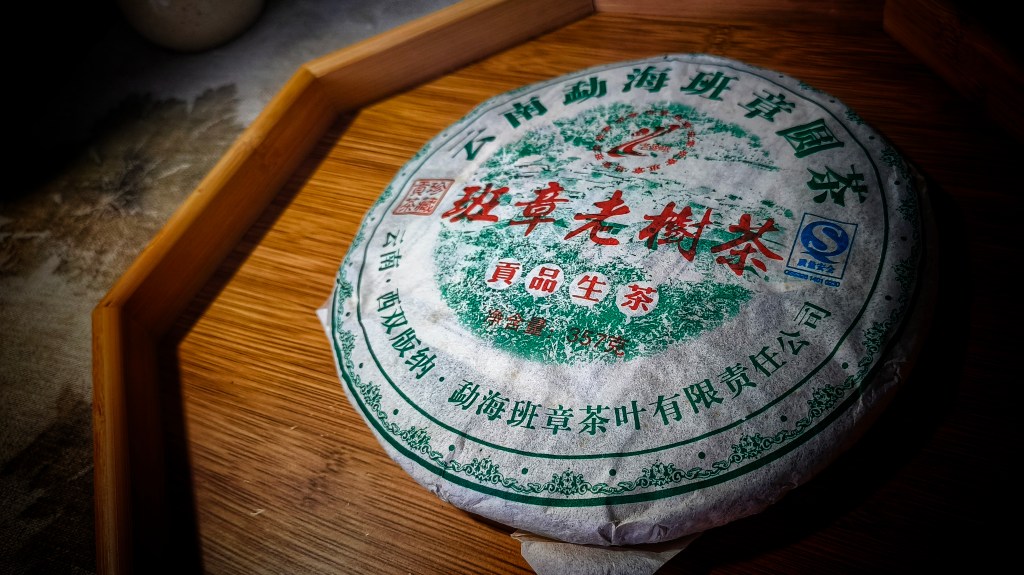
    The 2007 Xigui pu from Zhaozhou comes from 200 year-old trees, which is almost the maximum age found in this area, and it is a tea that perfectly translates the character of this terroir, with its slopes, the soil rich in organic matter, the temperature range, the different biotypes. It denotes a composed exuberance rounded off by the years of aging, a sweetness that sets a soliloquy in a sensorial harmony where little space is given to bitterness and astringency, and like a good Xigui it shows a wild aromatic complexity that contrasts with an elegant and refined olfactory bouquet.

    The wet leaves range from apricot jam to spices, reminiscent of nectarine peach, petrichor, medicinal herbs, leather. Accompanies a light note of camphor, followed by vanilla, mineral fragrances, sandalwood, undergrowth, orchard, acacia’s honey, mushrooms and black pepper. The orange liqueur appears dense already to the eye, in the mouth it is round and less multidimensional than other Xigui, the sweetness takes over almost immediately, a characteristic also provided by the 15 years of refinement. The sip is syrupy, dense, enveloping, with sweet and fruity aromas, with jasmine and herbs flavors. The sweetness re-emerges wrapped in citrus notes while the qi is precocious and invigorating.