Tag: 2017

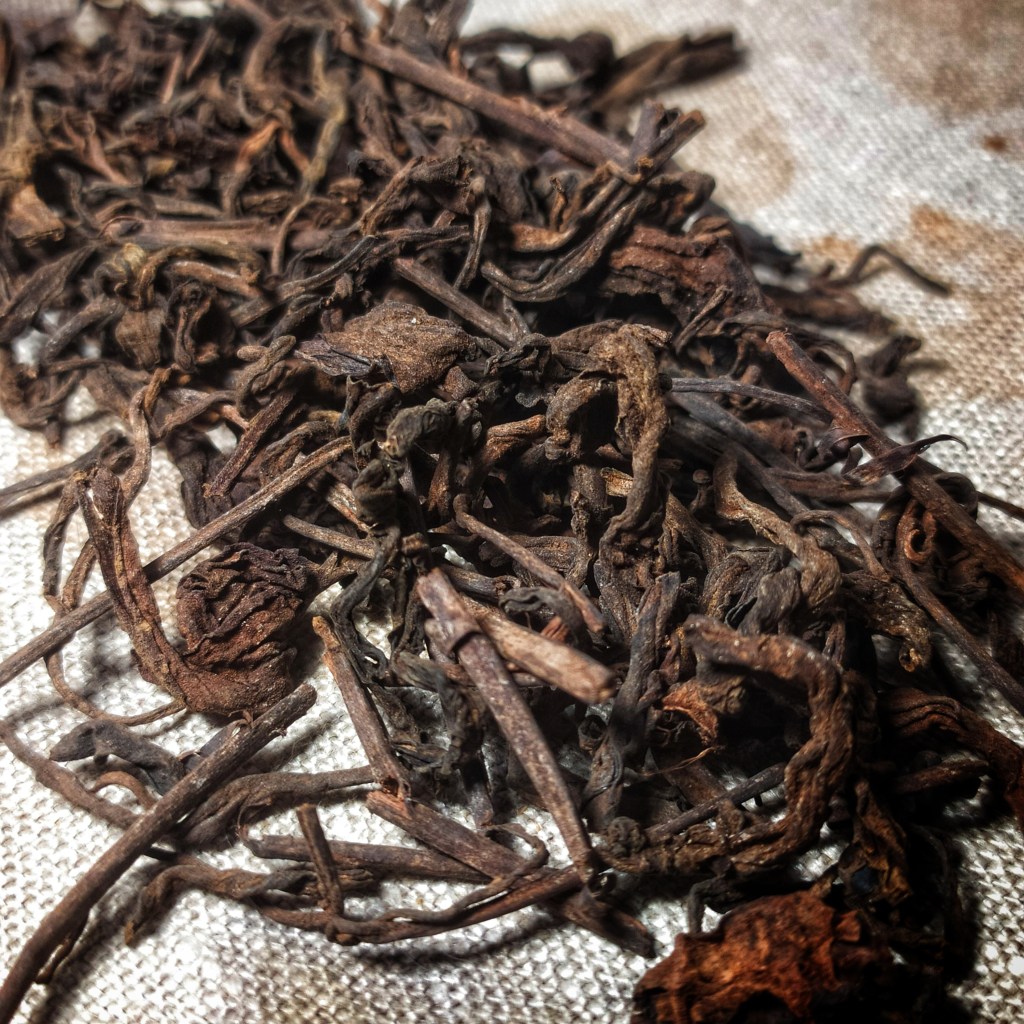
  • Reflections on ripe pu’er and an alchemical potion from Vietnam – Viet Sun Thượng Sơn Gushu Ripe 2017

    Reflections on ripe pu’er and an alchemical potion from Vietnam – Viet Sun Thượng Sơn Gushu Ripe 2017

    I have always loved ripe pu’er fermented in small batches, artisanal productions that made me forget those old hypertrophic factories of Menghai, with those endless expanses of concrete on which the leaves are turned over and battered with old rusty construction shovels.

    However, I hate many contemporary shu hyper-fermented in piles as tall as buildings, so thick that you struggle to move them with the tongue in your mouth and whose swallowing simulates an attempted suffocation.

    Because for me a great tea is a cultural fact as well as a substance, which still represents people and territories, something that according to Dumas should be drunk on knees and with bare heads, which responds to the order of its terroir and not vice versa, a distillate of that perspective that the Greeks called aidos, the honest recognition that other things and people are more important than ourselves and not something to be lumped together until the bacteria perform some kind of transubstantiation.

    This 2017 @vietsuntea pu’er comes from gushu in Thượng Sơn and it is more than a great tea, it is a remedy, an alchemical potion, an extract of those sunsets whose light reflected by the rice fields seems to create an apparent contrast between two skies.

    It presents itself with a dark leather brown colour, the scent pervade the room with hints of molasses, rice pudding, hong dou sha, leavening dough, cocoa beans and dried fruit, all enveloped in hints of leather, antique wood and fermented leaves.

    The liqueur is also peculiar, it is creamy, enveloping, silky but without that excessive thickness resulting from a fetishism for the jaw fatigue of some post-modern yunnanese shu. The sip is firm, old-fashioned, with a nostalgic sweetness of those times when the bitterness of Lao Man E was considered even slightly vulgar.

    The qi is frighteningly tangible, the aromas almost recall those of a 30 year old Hermitage, the hint of licorice tells of a Greece it has never been to and the earthy and ricey accords gather with them the whole soul of its people. Around the world in a cup.
  • Cai Mao Xing Jie tea factory Mang Fei sheng pu’er 2017

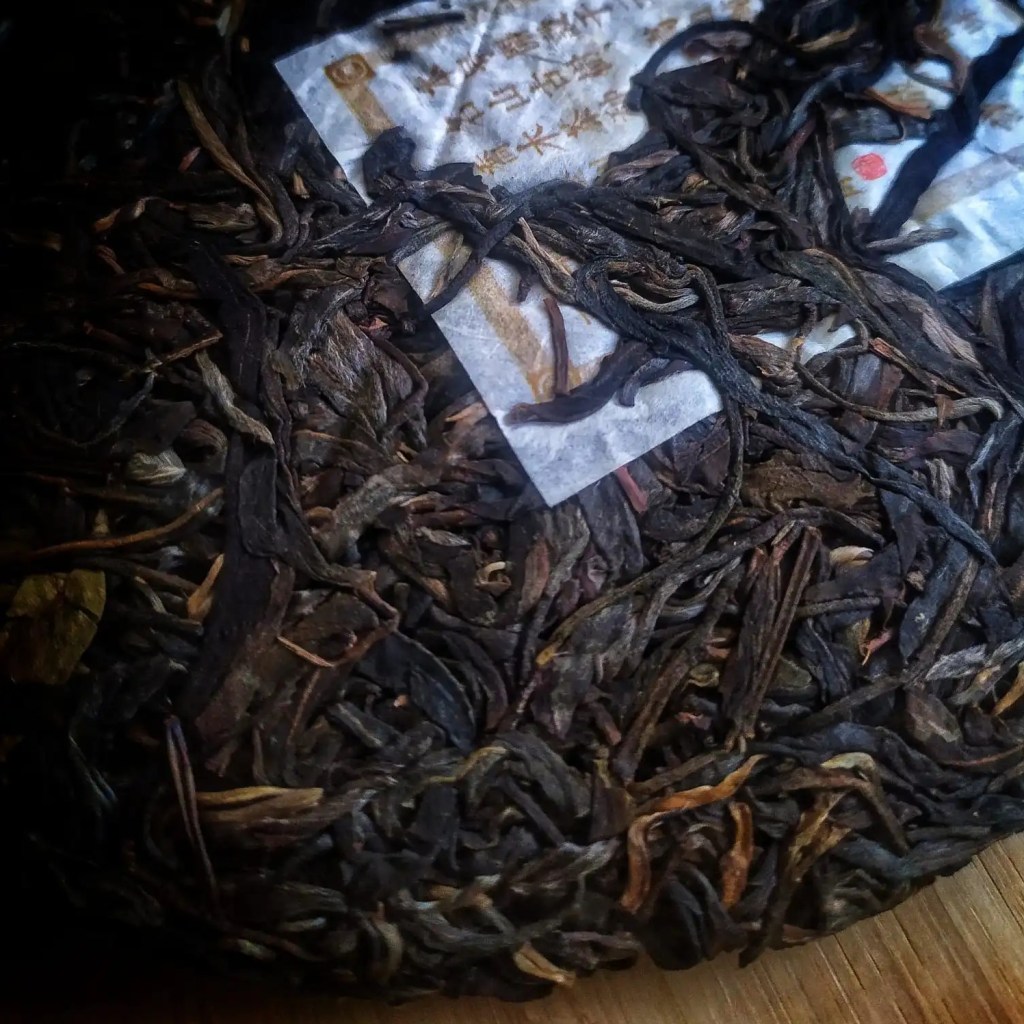
    Cai Mao Xing Jie tea factory Mang Fei sheng pu’er 2017

    Yongde county is a mountainous area, rich in forests, where nature seems to have had free will for most of the centuries, slopes and ancient trees surround Mangfeicun protecting it in a landscape and cultural amnioticism. In Yongde county alone there are at least 22 ethnic minorities, many of which are involved in harvesting, curing and processing tea. From the slopes it is possible to see the syncopated, wildly forested scenery that continues to Zhenkang county where history is intertwined with it.
    Mangfei’s post-modern puer shows sweeter and more graceful traits, even if the aromatic profile is green and oxidation kept under control, the sip, except in some vintages, is characterized by a greater pleasantness already in the early years, by ease of drinking , elegance and vegetal notes that hardly show that austerity of some young raw Mengku, but rather similar to the thick sip and creamy hints of Xigui puer, albeit with due exceptions.


    This 2017 sheng pu is produced by Cai Mao Xing Jie tea factory, probably dry stored; the straw-gold color of the liqueur is typical of the puer of Mangfei area, in which hints of camphor are revealed in the wet leaves, initially balsamic scents, then a subtle smokiness, alcohol macerated fruit, juniper and wild botanicals. The complexity is then revealed under tones of musk and manuka honey and continues consistently to the sip, sweet, fresh, of medium-light astringency, with musky and woody aromas and notes of bitter herbs that appear towards the fourth infusion. Floral, fruity and spicy sensations are contrasted, in an up and down of a sensorial score, where the gloomy taste unfolds on tones of cooked apple, white pepper and juniper before the appearance of creamy notes, of a lemon sablè tarte, of the sweetness that brings a compote of wild strawberries and mint and alpine herb candies. It is a tea with an exuberant qi, a sweet huigan and the continuous placing before and after the threshold of maturity makes it an extremely satisfying tea already in its youth.