

For generations, caravans laden with pu’er have traversed the steep paths of Lunan, eluding the harsh karst landscape, leaving it behind them, slowly advancing towards Tibet.
The muleteers, with their faces hollowed by frost and fatigue, relied on themselves, on their companions, on the tenacity of their horses, following the paths traced by their ancestors, where every bend concealed stories of exchange, trade and survival.
Pasha seems to have been able to overcome everything, from the destruction that occurred with the Panthay rebellion to the wreck of traditionalism and the collectivization of the Cultural Revolution, to the persecution of the Red Guards.
Hölderlin wrote “where there is danger, what saves also grows,” and so it is here that natural beauty and spiritual aspirations intertwine into a rich and vibrant cultural cloth, and teas like this, with their dense depth of flavors of vanilla, candied fruit, nuts and persimmons, take us into a dimension of time that we cannot easily grasp, a place where tradition is not only preserved, but continually recreated.
With its silky sip, honeyed sweetness, musky and citrus tones, the cup becomes a sort of refuge, a bridge rather than an end.
When we sip a cup of pu’er like this we are entering into a dialogue with the past, it reminds us that not all is lost, that in its slow and patient aging lies both a concession and a resistance to time.
A great pu’er becomes an elegy, not only a lyric of sadness for what is lost but a celebration of the intrinsic value of what has been. In its leaves pervaded by scents of red dates, walnuts and toasted pumpkin seeds, of withered broom flowers, its elegiac essence revived through a call to the earth, to history, to the culture, every sip becomes an existential plan, a way of inhabiting time with consciousness.
It offers us a key to a further, more saturated dimension of time, in which loss is not an obstacle to overcome but nourishment for our being. Both, the elegy and the pu’er make memory a cure, an antidote to oblivion, reminding us that the past is not a wound to be closed, but a legacy to draw from.
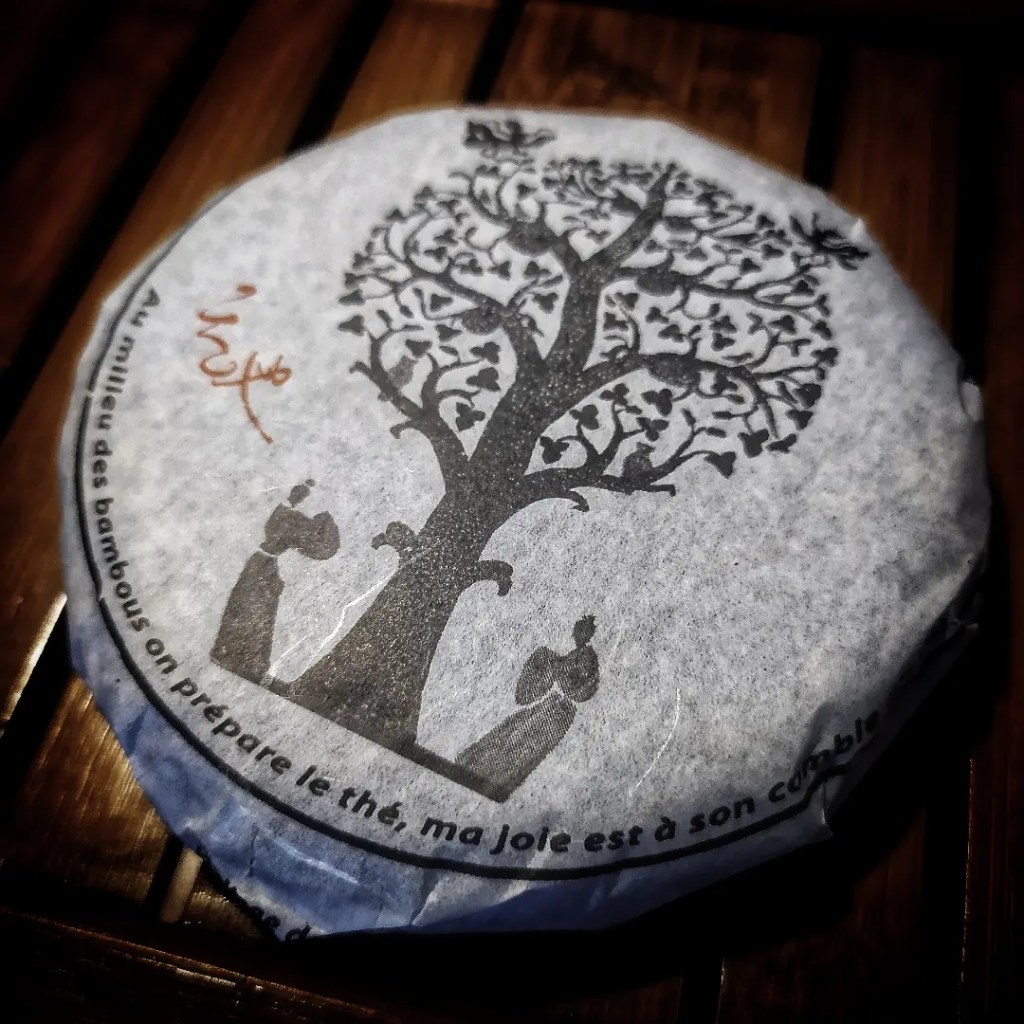

 Wild Harvested