Tag: 2023

  • Notes from the Wrong Side of the Province: A Few Words on Jinggu, an Old Tea Merchant, and Two High-Mountain Pu’er.

    Notes from the Wrong Side of the Province: A Few Words on Jinggu, an Old Tea Merchant, and Two High-Mountain Pu’er.

    If you ask many people what their favorite production area is, they’ll probably start listing off famous terroirs, Bingdao for its body, Laobanzhang for its qi, Naka for its fragrance, and some remote shack in a forgotten Yiwu village, which never hurts to name-drop. In short, a litany of names, as if it were a medical prescription for some trivial pathology to be handled with grave care. Or perhaps just another way to show how worn out the magnetic stripe on their credit card has become.

    Jinggu likely won’t even cross their lips, not even by accident. This area is surrounded by mountains on three sides, an enclave where the best gardens are often inaccessible, and where the obsession with naming every single rooftop (as in Yiwu) is quickly anesthetized by a lack of roads and the even greater lack of desire to build them. Here, not even the clunky two-ton electric behemoths at the service of Western merchants can climb their way up.

    I agree that vast expanses of flat land, dull stretches of agricultural functionality, are today brutally carpeted with Da Bai Cha, as in the flatlands of Wen Shan Ding. A cultivar that acts like a funerary carpet, its tea merely a collateral damage, a distillate of hardship and credit requests, with a hint of bank loan in the aftertaste. But if you start climbing and forget all that, you’ll reach over 2,000 meters at Kuzhu Shan. There, ancient trees stretch in swathes; in some spots, they’re even Teng Tiao, like in Banuo, but with a slightly different aromatic profile, less delicate, more fragrant, impactful, and mineral. Less mannered, and more Felliniesque, to put it simply.

    Some time ago, I met a Pu’er expert, a merchant from Lincang whose main business revolved around the Fangcun market. I asked him why he thought people considered teas from Jinggu less worthy, almost like children of a lesser god, tolerated but avoided, like the uncle with a drinking problem at Christmas dinner. He was a big man, with hands the size of shovels. He stared at me for a moment, with his huge, isochoric pupils, maybe the largest I’ve seen on someone from Yunnan, wide like those of an Australian owl photographed by Joel Sartore, performing tiny mechanical micro-adjustments every time you locked eyes with him, as if missing an autofocus. He answered in monosyllables, he looked like someone who read Anna Karenina just to root for Vronsky. He smiled too, but it seemed like his facial muscles were slightly jammed from decades of monsoon rains. And yet, he was one of the most knowledgeable people on Pu’er I’ve met.

    It took him a while, then he said something, I don’t quite remember what. I was too busy noticing the irrelevant details I’d later include in this article. But the meaning behind his cocktail of anthropology and Moutai was clear: Jinggu was guilty of not being immediate enough. Too real, too unavailable. Add to that the fact that the era when people chased uniqueness has been over for a couple of decades. They discovered the villages of Yiwu, Laobanzhang, Bingdao, a few others in between, and the punch bowl quickly ran dry. Because, you see, he said, the markets want exclusivity. The consumers who arrive in polished shoes at the edge of the forest, who slip on plastic sandals before posing in front of an ancient tree, are looking for tea like they’re looking for sushi in Berlin.

    And he was right. Some want only the illusion of a mysterious narrative, not the truth of the land. They prefer a tea that behaves like a cool, aloof actor, properly trained to play the silent type, the tormented one, the aged-in-a-hut-with-a-hidden-past role, rather than someone, or something, that simply tastes like what it is.

    Jinggu teas aren’t for complexity maniacs. They’re rather blunt, direct, break through your guard with a few solid punches, enveloping you in sweetness and asserting themselves through their huigan and bodily sensation.

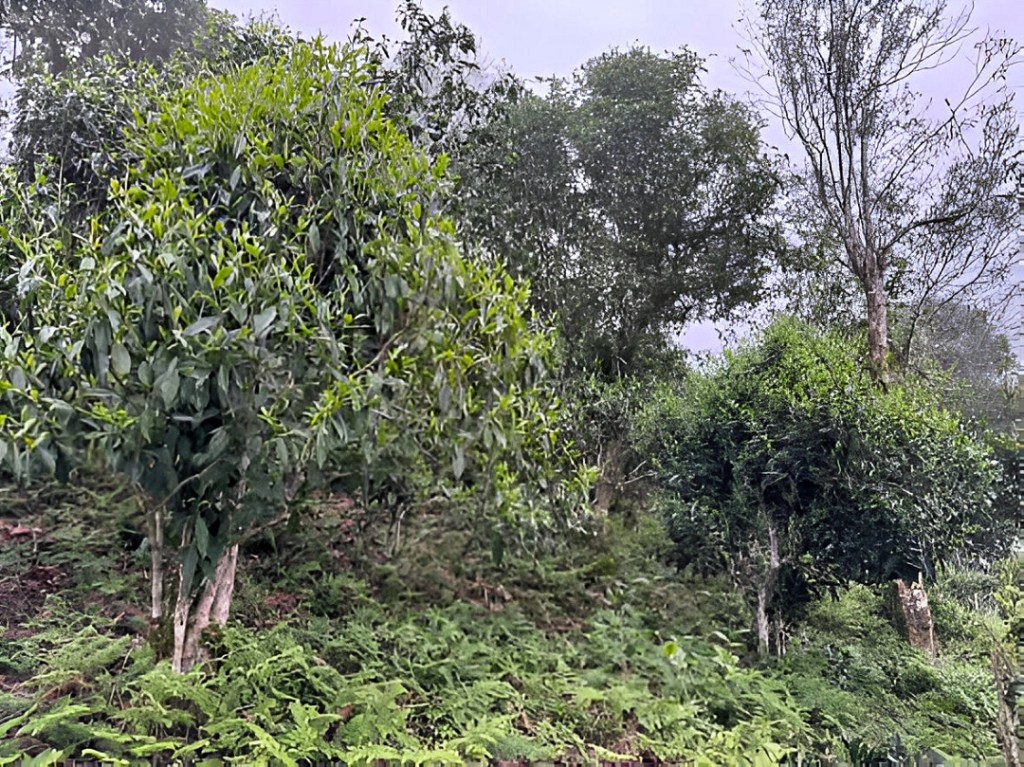
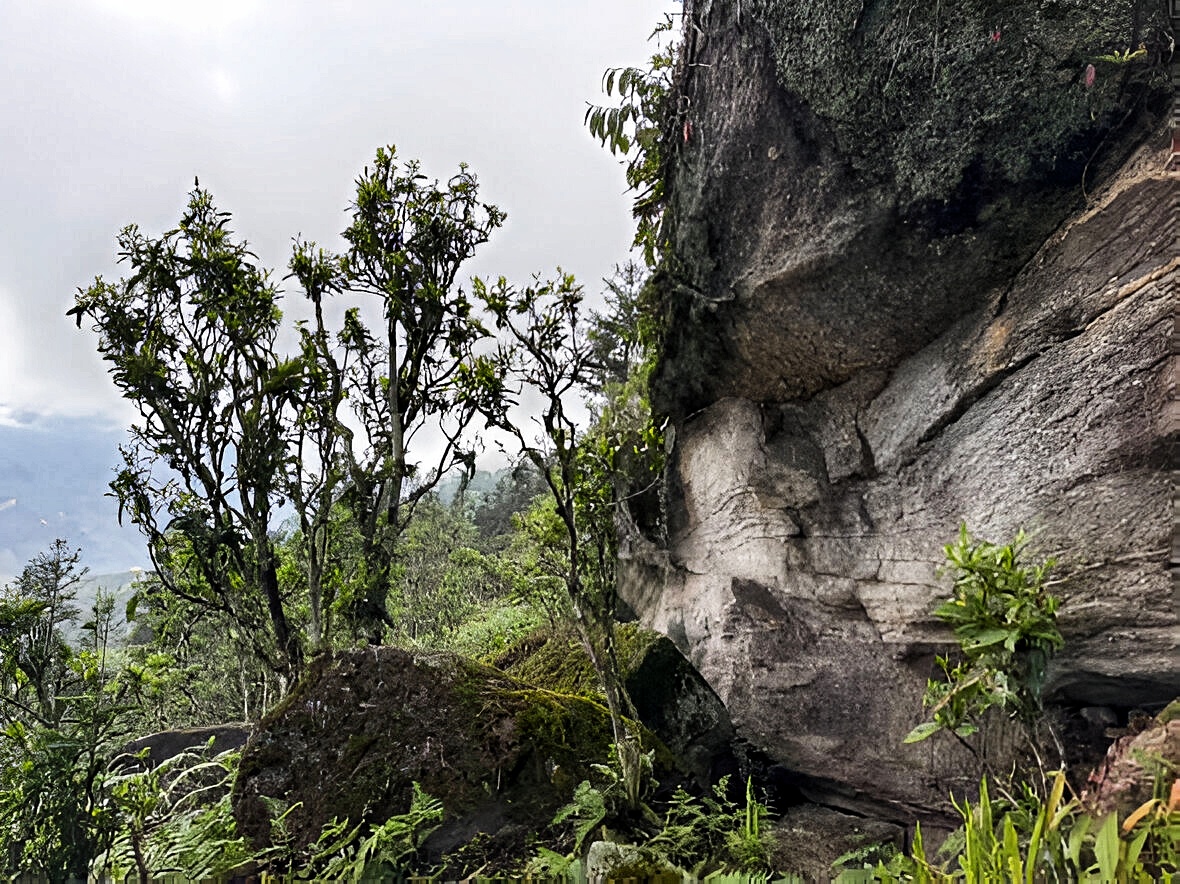
    In the Kuzhu and Tang Fang Liang Zi areas, you’ll find real forest coverage where tea is harvested, like some portion of Yiwu, the northwestern edges of Laos and Vietnam, or the forested zones of Guogan in Myanmar. Here, the trees grow close to and inside the forest. The soil is clay-based with a good amount of rock, confirming the tea’s mineral and sweet character. The plants are spaced well apart, and younger trees are left to grow naturally. You won’t see any drastic pruning, only containment cuts.

    It’s a complex terroir. In one cup, you’ll think you’ve stumbled into Jingmai. Drive twenty kilometers and drink again, you might swear you’re tasting Yiwu. Walk another ten, parched and hopeful, and you’ll find bitter cultivars whose huigan is so forceful, so magnetic, it makes some Bulang teas feel like passive-aggressive outbursts by comparison.

    Here, like in Laoman’e, bitter and sweet varietals sometimes coexist in the same natural amphitheater. The former, known as kucha, often dominates the more remote slopes, but it’s never overwhelmingly bitter, never out of place or chaotic. It soon turns its cheek to a wild sweetness, like a fist on the table that prepares the caress. If the sweet variety is a well-composed, harmonic melody, the bitter one is drama and catharsis, leaving every door open for further development. These are teas that, even years later, remain an enigma. Tasting them again over time is like revisiting a neighborhood in daylight where you partied in the night before. You barely recognize it, and the sunlight seems to restore a grace you previously failed to notice.

    In both cases, what stands out is an oily, umami-like sip and a genuine, full-bodied chaqi, it feels like it thins your tissues, filling your chest and pushing every muscle fiber up against your skin. A tea with a soul that doesn’t scream, but also doesn’t compromise. A tea you don’t expect, and which, especially in the case of ancient trees, hasn’t been tamed to soften its impact.

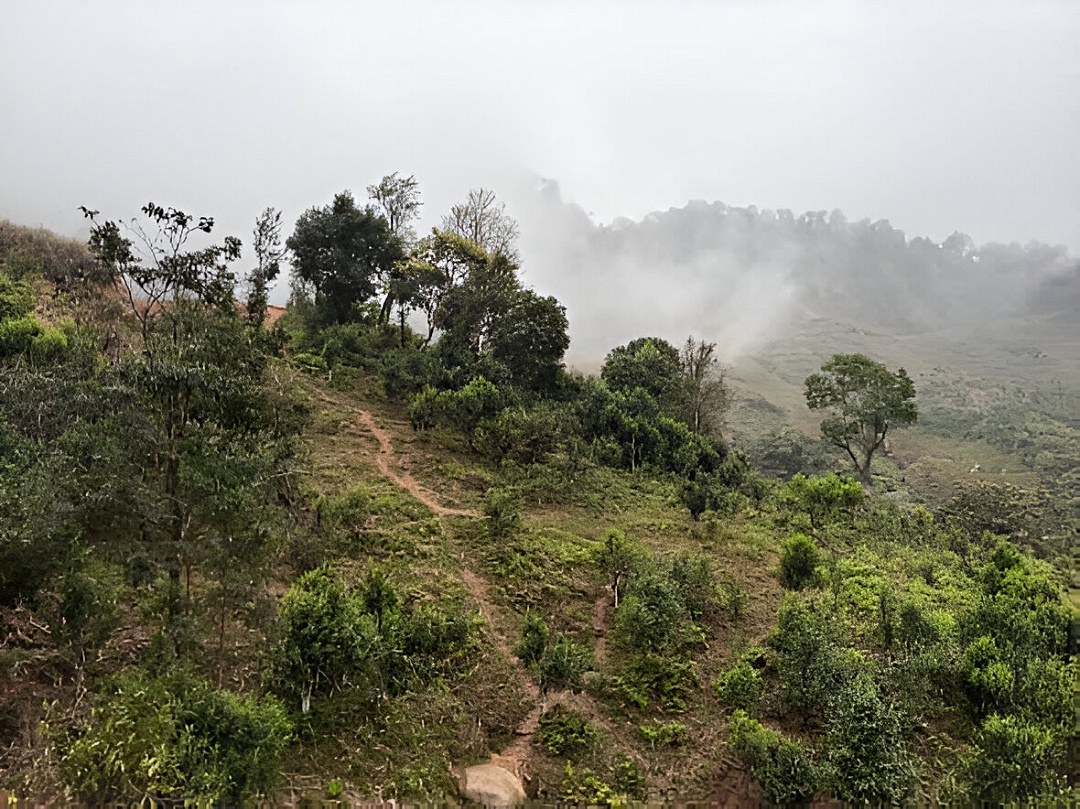
    Southwest of Jinggu Town lies Jiu Tai Po, one of the most expensive and coveted areas, graced with the elegance of something that knows how to stay hidden. Few signs, no selfie points, no desire to be disturbed more than necessary. The village itself, small and vaguely adrift in agricultural amniotism, has little tea directly surrounding it; most of it is in the forest zone, along the ridges or on the opposite slopes. Road access is practically nonexistent, and like Guafengzhai, it takes hours of hiking to reach the tea trees. These aren’t roads for people in Italian leather shoes, and a camo cap won’t get you to the top. The landscape feels like a James Cameron set, shot with Kubrick’s cinematography and directed by a mood-swinging park ranger. There, the leaves aren’t picked by good boys, but by madmen, neurotics howling at the moon, yelling into the western wind, and probably monks armed with faith and an unearthly amount of patience. Climbing up there feels like trying to earn a glance from Maria Callas, flailing pathetically to grasp the corner of her eye, she ignores you, and you thank her anyway.

    In recent years, Jinggu has had its big moments, times when even the cynics had to admit that yes, even from those mountains often relegated to Act Two of the Pu’er narrative, something remarkable could emerge. Like the Pu’er from Tang Fang Liang Zi by Farmer Leaf, especially the single tree series that reads like an elegant lithograph set by De Chirico; the 2017 Chawangdi or the 2016 You Shang from Chawang Shop, perhaps among the Western forerunners of Jinggu’s nouvelle vague, to the 2007 Shang Pin by Xi Zi Hao or the old relics from Changtai, old-school, decadent, like an old house with silk on the walls, with the scent of leather and creaking parquet.

    But today, I’ll focus on two other excellent sheng Pu’er by Thés Terre de Ciel, both from old-ancient trees.


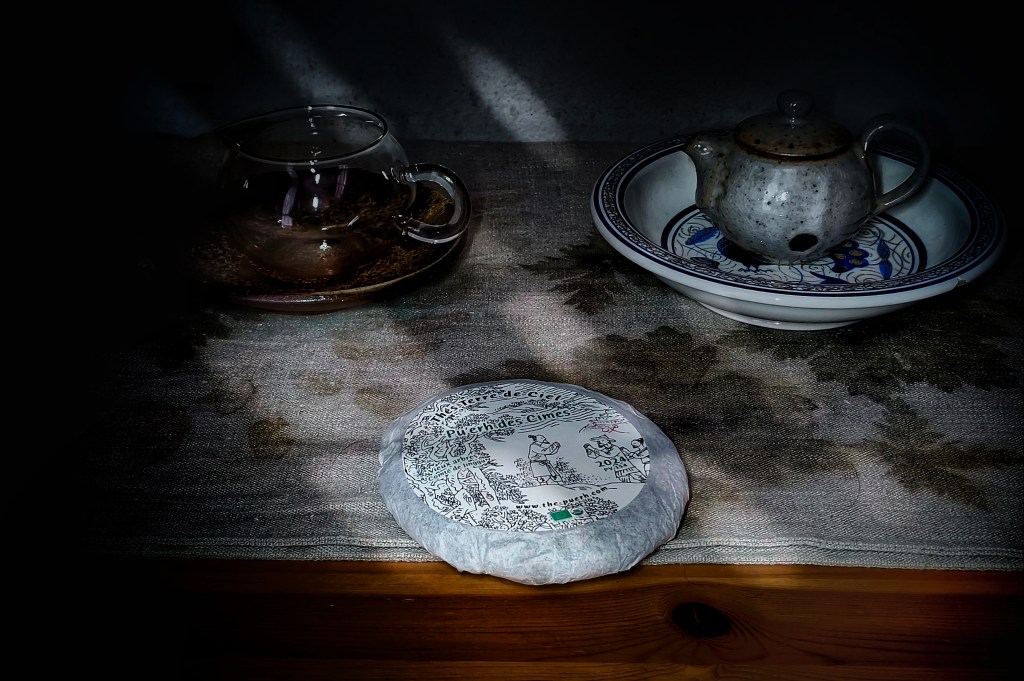
    TdC Spring 2024 Xiao Jinggu Puerh des Cimes

    I’ve always had a soft spot for the Pu’er of Jinggu, for their remoteness, their distance from the inflated rhetoric about the primordial nature of its landscapes, for from the market wars over taste profiles and terroir cred. Jinggu teas owe nothing to expectation; they answer only to themselves.

    This is one of those teas. The kind with no prefabricated image, no guiding archetype. Nothing to anchor your imagination, no Muse whispering interpretation in your ear, as Hesiod might have hoped. Just you and the leaf. No crib sheet. No narrative. Only the moment.

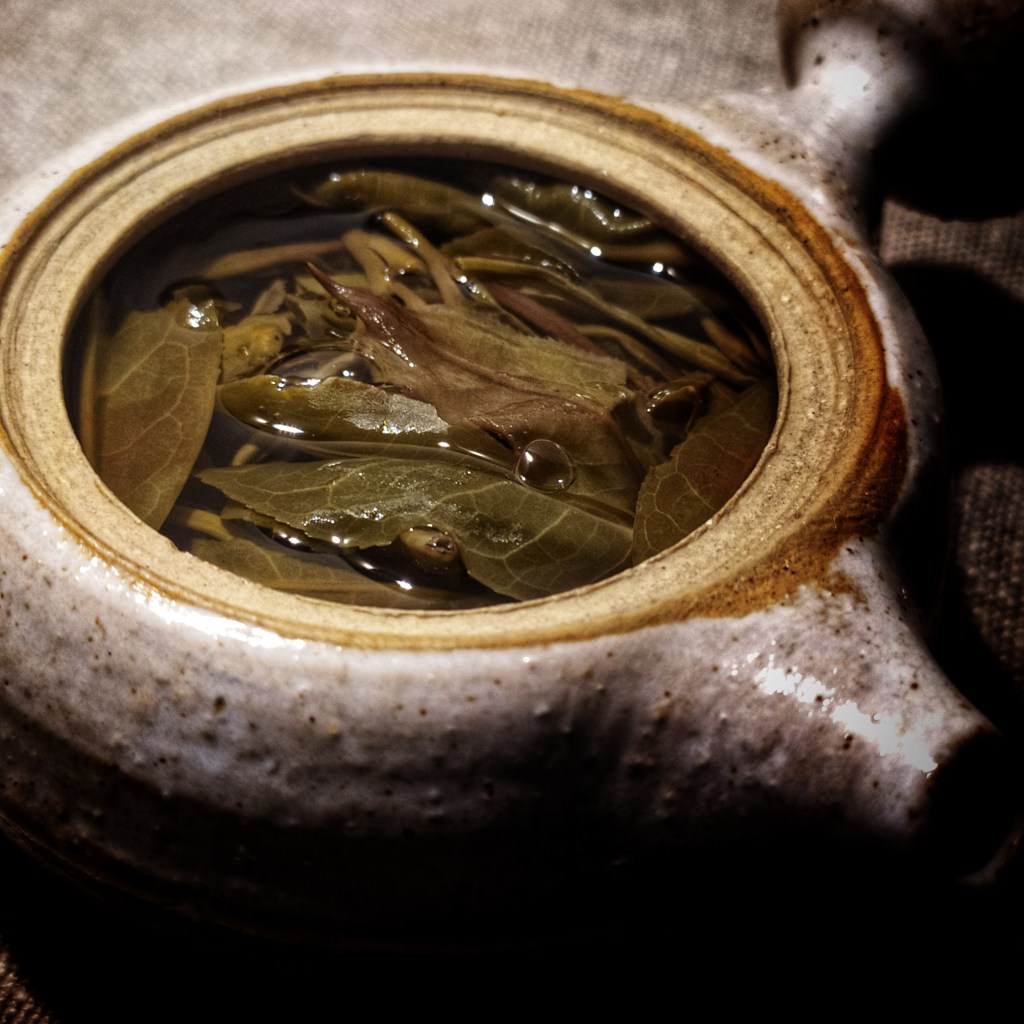
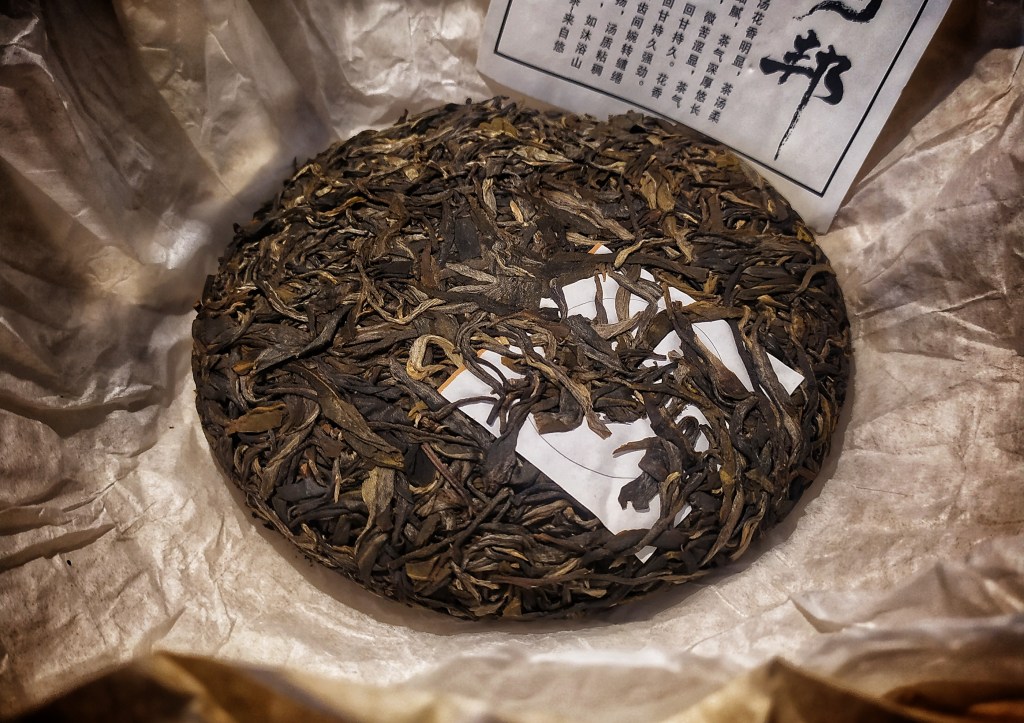
    The leaves are twisted, dark green. The sip is viscous, with a round, sticky umami reminiscent of chicken broth from a market stall in Chongqing. There’s a sweetness too, unopposed and undistracted, a sensory monologue rich in subtext. The huigan lays itself across the tongue like a seamless silk blanket. Bitterness exits the discussion early.

    The Qi is delicate, but it moves under your skin, subtly shifting your posture, your pace, your pulse. The salivation it provokes becomes a kind of gustatory capital. The sensation is almost organic-minimalist, like an alabaster vase with no sharp edges, revealing more intentions than it cares to admit. The intensity of the peach note approaches something like an orchestral delirium, building in a near-psychedelic crescendo, and that out-of-the-ordinary umami makes it feel less like a beverage, and more like a pre-dessert at L’Arpège.


    TdC Spring 2023 Kuzhu Shan

    This Pu’er from Kuzhu Shan seems like it emerged straight out of a
    William Morris wallpaper, drawn after two glasses of fine Vin Jaune. Alienated, eclectic, remote, saturated with organic vitality. The dry leaves exude hints of light tropical fruit, citrus, and wildflowers. As expected, this is not a tea that lingers in a labyrinthine dimension of complexity, but that’s not the terrain where Kuzhu teas show their hand.

    The true opera magna takes place in the mouth, which becomes the theater for a clash and debate between a pronounced yet agreeable bitterness and a sweetness that follows quickly, almost antithetical to it. It’s a generative tension that drives this medium-bodied sip to evolve, to layer itself, each new sensory stratum tearing apart, cannibalizing the one laid down before it.

    The tasting unfolds as a kind of sensorial acceleration, like a Baz Luhrmann film, abrupt cuts, frenetic pacing, a hyperactive montage, leading to a terribly refreshing, surreal sensation with an unmistakable note of tonic water.

    It’s a Gin & Tonic stripped of its damnation, as Nick Carraway might say while struggling with his addiction. This is a vividly alive liquid, whose finish is so enduring it seems pointless to measure. It unwinds slowly on notes of ginger beer, candied lemon peel, and rhubarb, while your tongue’s receptors are still stunned by the mineral lash it dealt twenty minutes earlier.

    Usually, when I drink a Pu’er, I think about its aging potential, its price-to-quality ratio, I imagine derivatives and equations, risk and return curves, asking myself whether it’s better to keep it for the medium or long term. I make a lot of projections, hypotheses, even metaphysical guesses.

    But the truth is, this is one of the few teas where none of that matters. I drink it because it’s simply really good. Whether it lasts twenty years or disappears in two days, for once, I really don’t care.
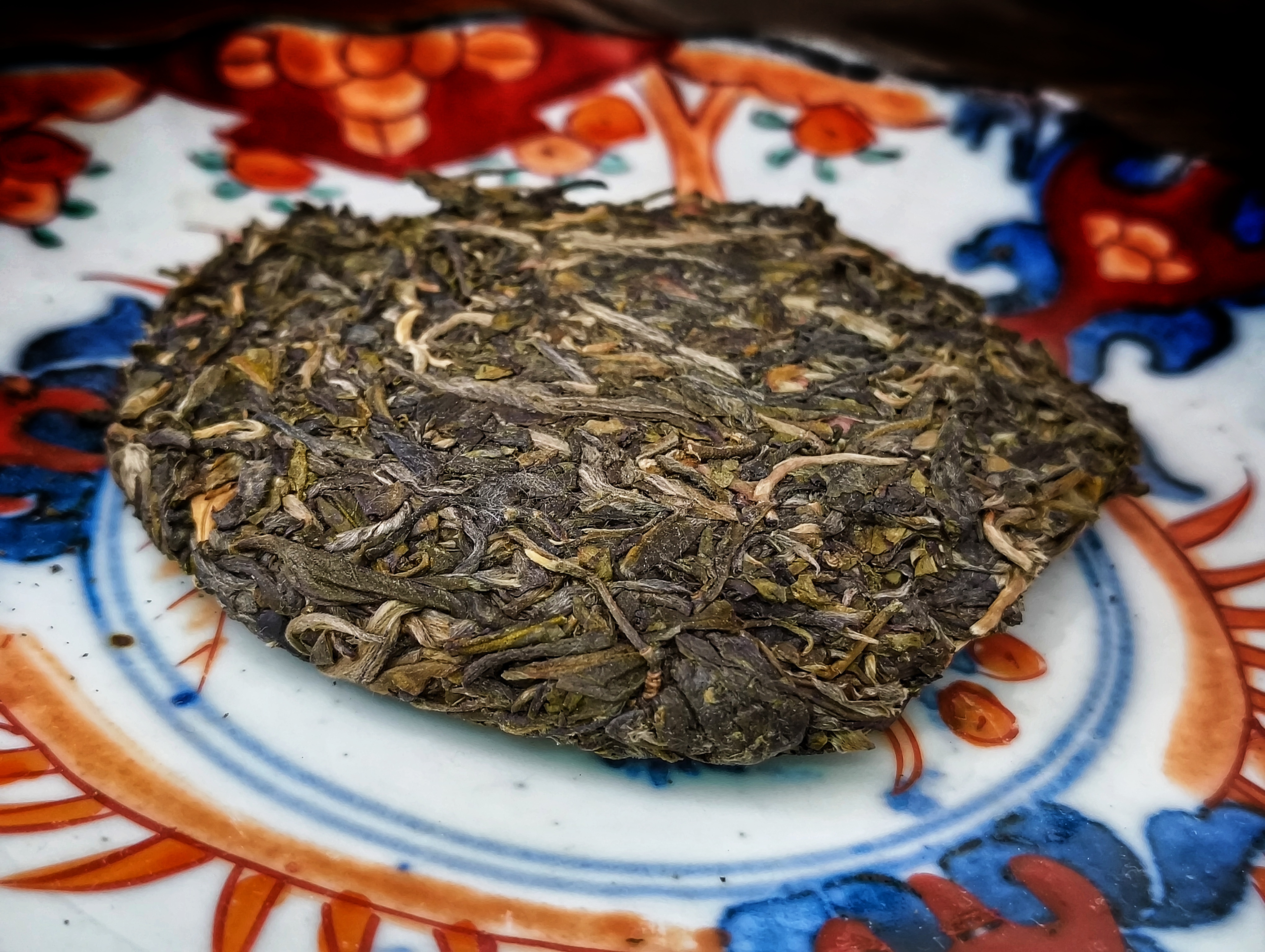
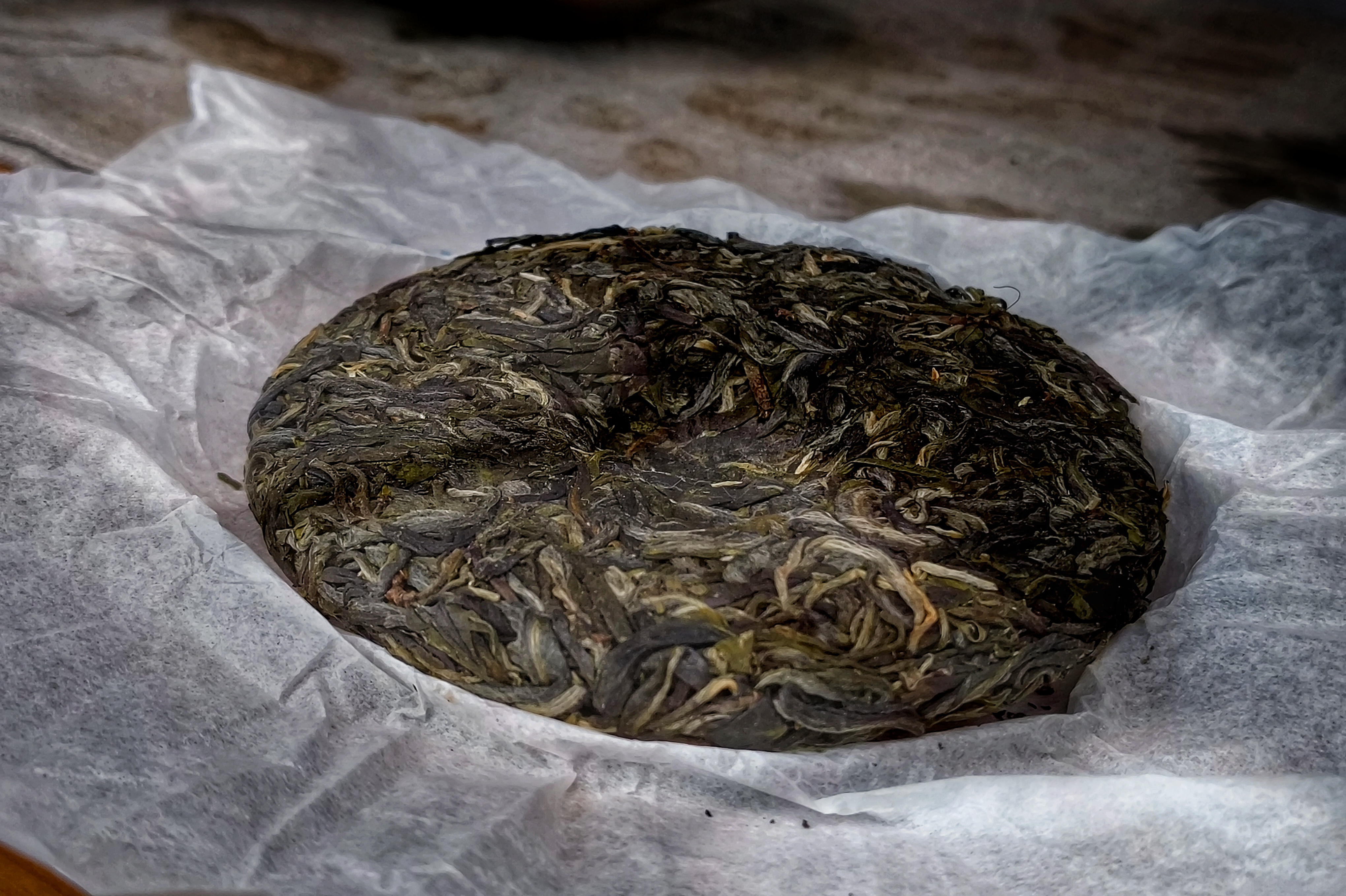
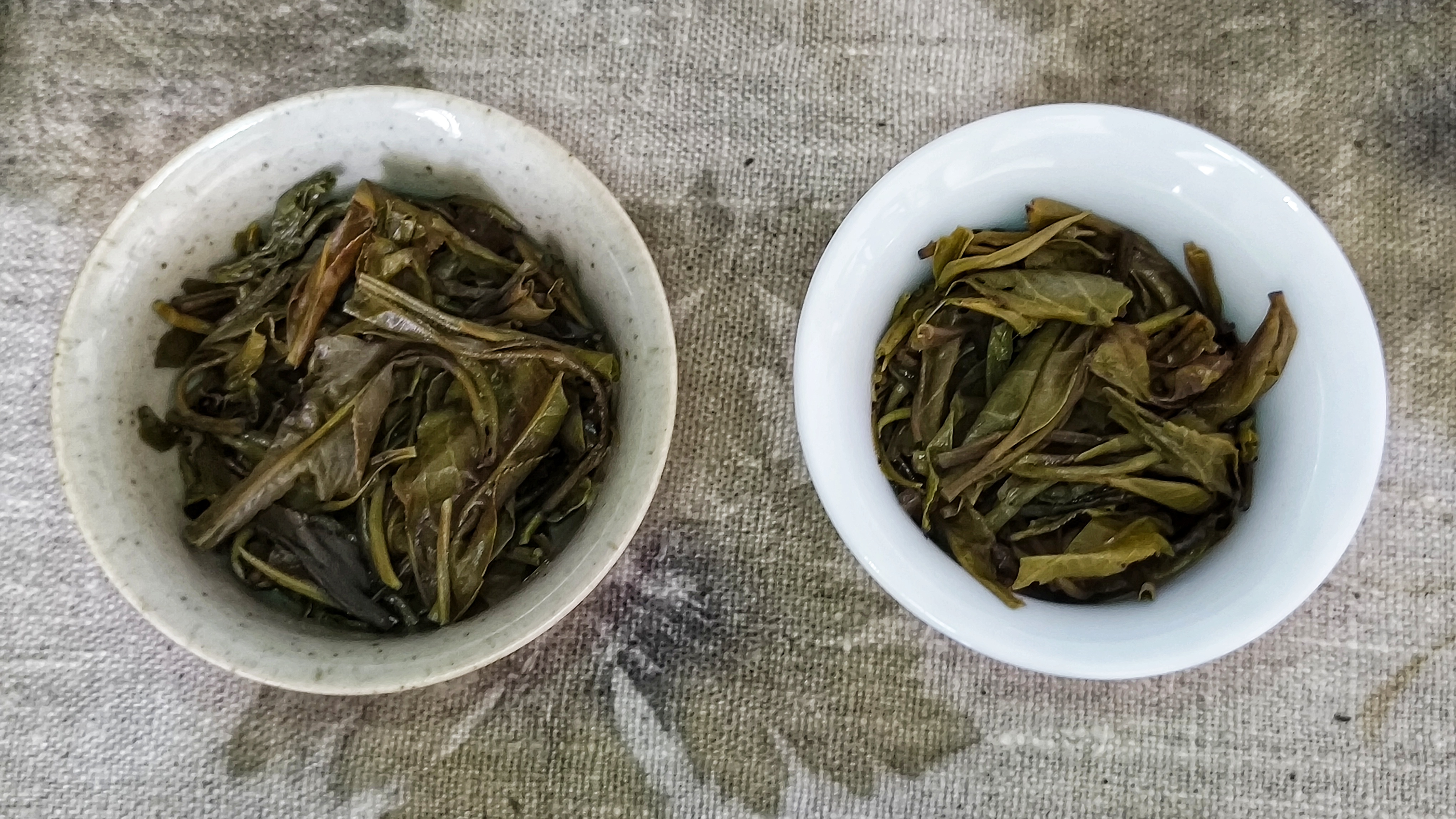
    Left: 2023 Kuzhu Shan

    Right: 2024 Xiao Jinggu

  • Tả Củ Tỷ & the Weight of the Mist: Aesthetics and Ontology of the Big Rice Field

    Tả Củ Tỷ & the Weight of the Mist: Aesthetics and Ontology of the Big Rice Field

    With A Comparative Journey Through Two Traditional Viet Sun Sheng Pu’er

    When I first saw Steve’s photos, his Vietnam, made of fiery red sunsets, emerald pastures, and motorcycles whose tire treads were mere memories, I was left hanging in a sense of emptiness, of existential incompleteness tied to never having visited those places. Looking at those shots felt like peering into a parallel world, embraced by a sort of ontological nostalgia.

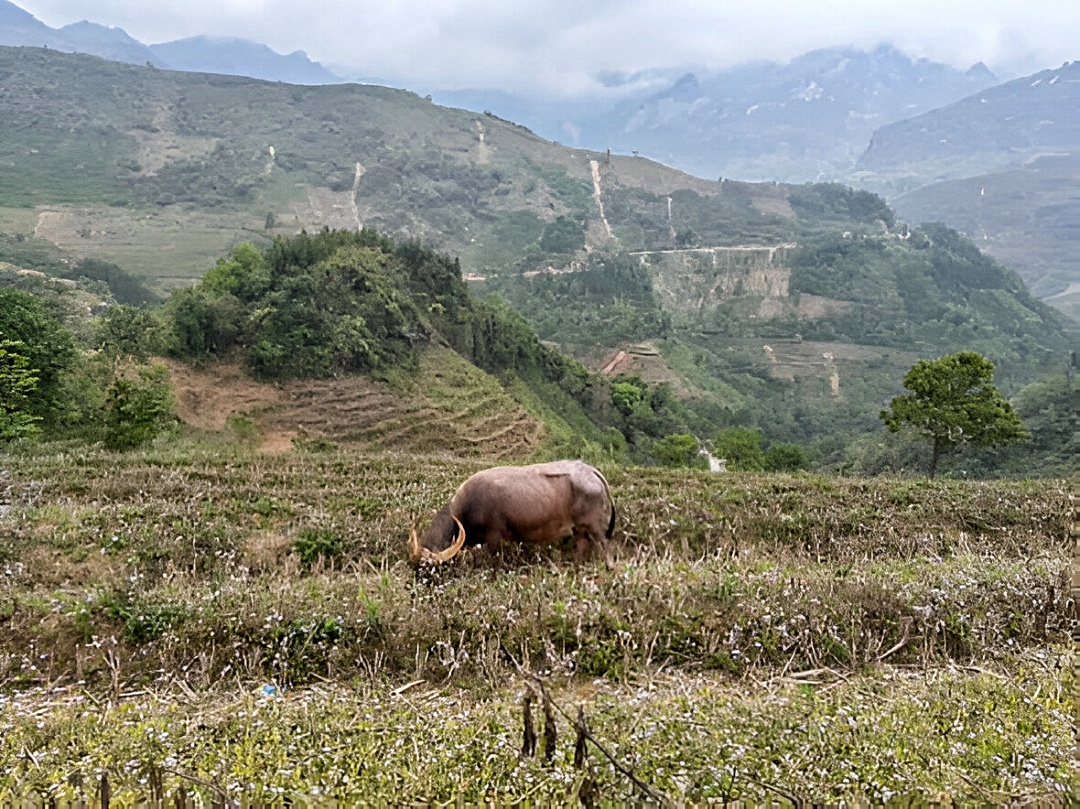
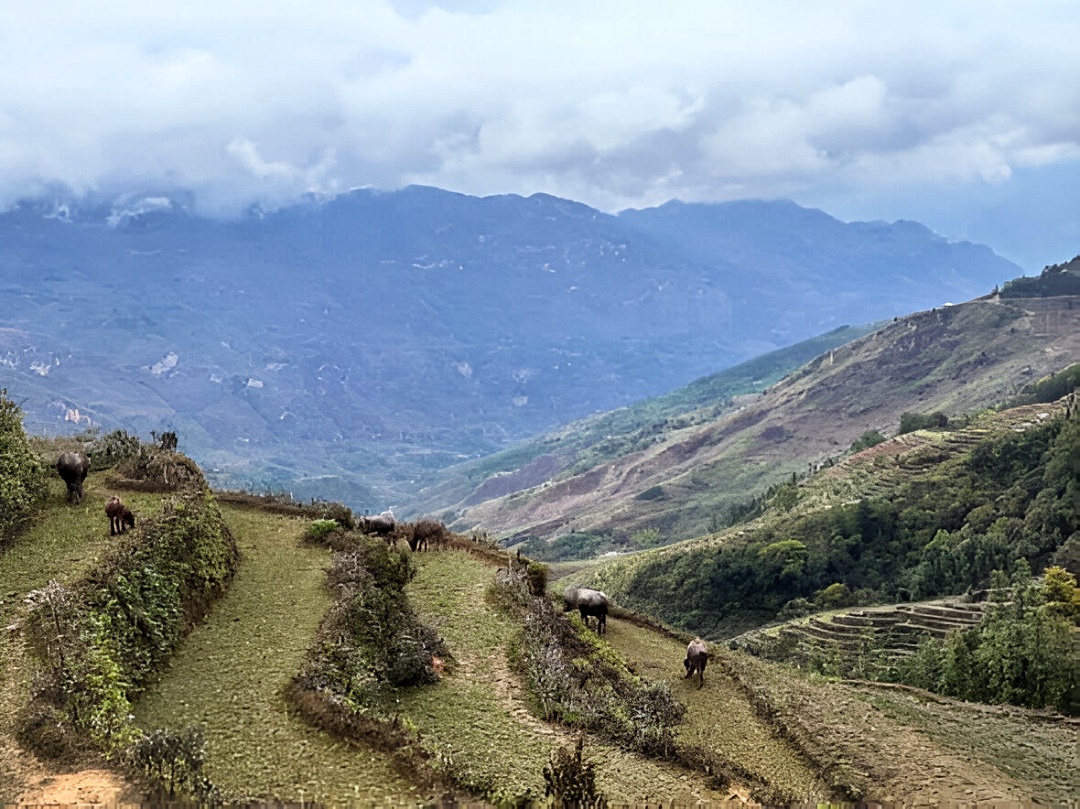
    The snapshots of Tả Củ Tỷ, the “Big Rice Field,” reveal the truth of a borderland world, of earth and blood, behind the major cities, whose distant lights appear like a sarcastic smile with pearl-white teeth. Then the horizon arches, growing increasingly vertical, rising further along the crumbling clay arteries, beyond the rice paddies, moments ago drained, now swollen with rain and reflecting the vastness of the sky.

    Here, every tree, every tea leaf, every sensory experience is an imperfect shadow of an eternal idea. This is where one of the best Pu’er teas in Vietnam is made, loaded with a near-theological sincerity, vibrant in every vintage, soft, flowery, and endlessly mineral. The shengs of Tả Củ Tỷ are like the Rieslings of the Mosel, a form of resistance against the trials the gods impose through the elements. They express the same minerality and layered memory. But while Riesling whispers sweet notes and sings praises like a Romantic poet on a summer evening surrounded by Viennese Jugendstil, the Pu’er of Tả Củ Tỷ elegantly drags you down a muddy mule path under relentless monsoon rain. In both, there is the same sharp and ruthless beauty, but whereas the Mosel wines evoke the rarefied skies of Chagall, suspended in uncorrupted blue, in Tả Củ Tỷ the image offers no redemption, it demands confrontation. Time here doesn’t pass, it presses. The landscapes are those painted by Turner, but not the sublime, ethereal artist of the Dover sea, rather the feverish, visionary Turner of his final years, where light shatters into curls of shadow and smoke, and the scene dissolves into an intensified, nebulous inner reality.

    The province of Lào Cai hosts a pedological diversity of rare complexity, the result of interactions between lithology, comprising metamorphic and sedimentary bedrocks, and a harsh topography shaped by steep slopes and variable altitudes ranging from the Red River’s lowlands to peaks shrouded in mist. In this living landscape, far from documentary clichés, ten major soil groups intertwine, distributed into around thirty subcategories, reflecting an extreme variety of geomorphological, climatic, and land-use conditions. In this mosaic, most fall into the categories of alluvial soils, minimally developed, fertile, fine-textured, laid across the Red River’s floodplains. As elevation rises, submontane zones host deep ferralitic soils, with aggressive pedoenvironments and reddish-brown hues. Then come humic soils on red-yellow parent rock, which inhabit the gentler slopes of the Sa Pa and Bắc Hà districts, ideal for mountain orchards and medicinal plants, the same ones that Dao grandmothers will grant you for a spider bite, heartbreak, or to recover quicker from the drunken night before. Higher still, where the air thins, the sun burns your skin, and geology shifts from academic subject to a lesson in humility, you find the brown, acidic forest soils typical of high-altitude tea forests, marked by thick organic horizons and excellent water retention, where the labor is real, marketing fades, and matter begins. The higher you go, the more essential the soil becomes, and the mountain strips you of every excess you thought you needed.

    Since ancient times, the region now known as Lào Cai has been a living tapestry of peoples from the H’Mông–Dao (including Mông, Dao, and Phù Lá) and the Kra-Dai groups (including Tày and Nùng). The Phù Lá migrated from Yunnan during the waves of the 15th and 17th centuries and opened the Lào Cai–Hekou pass, a crossroads for southern Chinese merchants and Tibetan fugitives, military settlers, and Tonkinese textile makers. Salt, tea, silk, and livestock crossed gorges and cliffs towards the Red River Delta, in exchange for rice, gourds, rare spices, and La Chi cotton fabrics. The trade route stayed open for five centuries, until the war with China in 1979. Tả Củ Tỷ and the entire Bắc Hà highland area have always been a “slippery edge” of the Vietnamese empire: formally part of Đại Việt, but in practice governed by local clan leaders and traversed by cross-border trade routes. Only with the expansion of the Nguyễn dynasty and, later, the arrival of the French, did state control become more pervasive. But that’s another story.

    The forests of Tả Củ Tỷ possess a mad, honest allure. The color palette feels like something conjured by a cosmic hangover, while the mist moves slowly, like cigarette smoke drifting in a closed room. Its radiance isn’t the kind choreographed by a cheerful smile or Caribbean hues, but rather the disarming kind of beauty of a woman who’s cried all night and then looks at you at dawn, bare-faced. A fleeting moment of rare grace, allowed to linger briefly in the interlude of suffering, the kind of incorruptible, visceral visual rapture that doesn’t let you lie.

    These dusty clay paths have been trodden by pack leaders, smugglers, and warriors. They’ve witnessed rites of passage and the initiations of Dao and Mông shamans, the veneration and sacred songs of the Tày, and offered shelter for markets and negotiations, for secrets traded with Xôi ngũ sắc, and for boisterous jokes between bowls of Thang Cọ and glasses of rice wine.

    From this thread of bare earth echoes the sound of an absolute beauty that refracts through the contingent, like a bridge between the transitory and the infinite. I could be among them now, being filmed as I say that it is in the resilient rurality of these villages that Heidegger’s concept of Gelassenheit unfolds, that is, a spiritual disposition of letting-be, an openness to the essence of things, and, as he interprets in his Parmenides, how it reveals itself through history and daily life. But at some point, a scooter would honk to urge me out of the way, and it would be right to do so. So, thousands of kilometers away, I conclude by saying that there, people have never betrayed their own history, even while embracing change, reminding us that the truth of a place is not measured by the order of its exotic scenery, nor through a mere anthropological lens. Especially not in that land, Vietnam, daughter of the sky, immersed in the dreamlike dimension of its eternity.

    On the left: Tả Củ Tỷ Sheng Pu’er Autumn 2023, medium aged, old and ancient trees
    On the right: Tả Củ Tỷ Sheng Pu’er Spring 2024, old and ancient trees


    Viet Sun Tả Củ Tỷ Sheng Pu’er Autumn 2023

    The autumn version comes from a mixture of medium-aged, old, and ancient trees growing at different altitudes and on diverse soils. It presents itself with a mature register, more oxidized, and the difference from the spring version is indeed perceptible. The autumn leaves are darker, as confirmed by the liquor, a decidedly golden hue, with shades that recall Turner’s Goethe’s Theory, to stay on theme. While the wet leaves retain a line of continuity with the orchid and apricot notes typical of the spring harvest, here honeyed tones and hazelnut hints emerge more clearly, intertwined with musky nuances, dried fruit and pan-fried greens memories, with lightly buttery accents.

    Although vibrant, the sip is clearly more fragile, with a more hesitant body compared to the spring tea. Its huigan is more restrained and immediate, with sharper astringency, although the impression remains of a sweet brew with well-calibrated bitterness. Rather than floral aspects, the palate leans more toward raisin, apricot, and unmistakably honeyed flavors. The mouthfeel is less viscous, with more modest intensity and persistence, yet it remains decidedly interesting for this theater of contrasts between warm, comforting fragrances and still grassy notes, between roundness and sharpness. It is a tea that certainly holds aging potential, but is already quite enjoyable in its youth.


    Viet Sun Tả Củ Tỷ Sheng Pu’er Spring 2024

    I believe there are four essential elements that make a Pu’er good, if I were pressed to summarize: aroma, the taste of the mountain, excellent viscosity and huigan. And all of them are here. There are no substantial altitude differences compared to the autumn counterpart, but here we have leaves only from old and ancient trees. They appear lighter, less reddened, the liquor takes on a straw-yellow hue, and the aroma recalls that of orchid, not the florist’s kind, but the wild one you stumble upon between the cracks of limestone, with scents of an intensely floral field and apricots.

    Framing it is a very light smoky note that fades quickly over the course of the session, while a constant forest-like tone remains, along with wet stone elements that greatly define the olfactory texture. The character is decidedly more intense, more subtly grassy and floral, geared toward evolution over time. The liquor is beautifully smooth, sustained by light bitterness and astringency, which pave the way for a huigan that is reactive, quick, enveloping, and progressively expands from throat to palate.

    As the session continues, it constantly reminds me of some Pu’er from Gedeng, but even more boldly floral and with a distinctly mineral signature. The huigan and the persistence of the aftertaste are undoubtedly the pillars of the tasting experience, two traits that make you forget many gushu from beyond the border.


    Note: All the stunning photos of the passages were taken by Steve (Viet Sun)

  • A mystical, primordial village that gave refuge to outlaws, tea merchants, heroic loggers and ghosts. Huang Cao Ba told with a 2023 old trees sheng pu’er

    A mystical, primordial village that gave refuge to outlaws, tea merchants, heroic loggers and ghosts. Huang Cao Ba told with a 2023 old trees sheng pu’er

    Huang Cao Ba is a village of less than 800 souls, a respectable number considering the average of the nearby ones. Although it lives on a simple economy, based mostly on the production of food to be consumed on site, on livestock and agriculture, it can boast a certain basic well-being and the historical prestige of having a thousand-year history of tea production, with most of the relatively contiguous gardens planted in the middle and late Qing dynasty (1636-1912).

    The red and yellow dirt roads on which Huang Cao Ba based much of his social life were the edges of a wild peak in whose forests the boys dreamed of being explorers and daredevils. You could smell the rice paddies that overwhelms you like an army of silk bundles, you could smell the mud, the green bamboo swaying in the wind broken by the spring rainstorm and every kind of subtropical exhalation.

    Before those houses built with stone and clay bricks with sloping tin roofs, there was a traffic of information and documents, exchange of words and silences in that village which was a post station during the Nanzhao reign on the “刊木古道” the ancient timber cutting road which was a significant link for the foreign and military policy, the culture and the economy of the reign, which ran from Dali through Jingdong, Zhenyuan, Jinggu to Pu’er.

    The vegetation consists of evergreen mountain broadleaf and mixed coniferous forests covering the centuries-old tea trees, so dense that the first exploration team was sent from Jinggu County only in 2001. Even its name derives from the cultural ethnocentrism of the first men, who, unable to penetrate it with the same ease they encountered in other villages, hastily dismissed it with what they could see from afar, as the land of yellow grass.

    A mystical, primordial village that gave refuge to outlaws and fugitives during the Tang and Ming dynasties, a village of Yi healers and shamans and tea merchants on the Tea Horse Road, heroic loggers and ghosts of fallen workers, It is from its old trees that the leaves of this TdC 2023 sheng come. The leaves are wrapped in scents of peach jelly, cut grass and rock sugar, mango sherbet and orchid.

    In the mouth it is delicately soft, translating the wild genesis of the slopes from which it comes, incredibly sweet and persuasive in the aromas of candied fruit, hibiscus, ripe apricot, then hints of walnut, vanilla and citrus peel finish a sip of excellent persistence.

  • Love for Country, Reconstruction and Tea. A few words about Yi Bang and Man Gong Village with a 2023 Gushu

    Love for Country, Reconstruction and Tea. A few words about Yi Bang and Man Gong Village with a 2023 Gushu

    What was the land of the emperor’s tea in the 18th century and a trading circle between Myanmar, Calcutta, Kalimpong and Sikkim in the 19th century soon became dust and ashes in the middle of the 1900. The refoundation of Yibang and its prestige started from that old road paved with mud and stone, the only thing that did not bend to human will, the connection with the Tea Horse Road, the bridge with its past.

    Many now predict the disappearance of our civilization in the “disaffection”, but in times in which remembering, thinking, writing poetry, praying, living together are barely advancing, there are still places where that duende resides, that thrill in which the call to the land comes to mind. That innate affection that associates us with a land, that binds us to a place, weaves bonds and founds a culture that we feel ours, of which we feel a part, of which we are heirs, children and parents.

    Tea works in this place as in those where there has been devastation as a material to give new form, the continuous permanence of what has been, something to live up to and to rebuild on the principle of belonging.

    In the village of Mangong, bamboo in those tribes of children was always in adequate supplies, because the canes that swayed in the April sky were a surprising threat to those young fighters painted in every color.

    While the young besieged the forest, each adult would bring his own tea to the threshold of an agreed upon house, chosen according to glances and silences in the first hours of light. They would settle under the roof and sometimes even on the edge of the mats that saw the drying of the collected leaves, to form a precise audience, drinking the essence of the forest. It was then that the conditions for a new hearth were created, which made those afternoon gatherings a sort of extension of the homes, an expression of those social situations that are possible only in places where the house and the forest are not yet different and opposing realities, but different verbal intonations of the same meaning.

    This Meng Hai Yun He Tea Factory sheng pu comes from Mangong village, spring 2023, from centuries-old trees at 1300 meters above sea level. The notes of wild plum and orchid follow the exuberant sweetness of rock sugar and toffee, the sip is geographical, of great finesse despite the hot year, everything is refined, is in its place, the finesse in the cup reaches a level of purity that puts the language to the test. The sip is sweet, with good huigan, in which you are invested by the “vanitas” of the de Heem fruit, still intact and preserving its natural integrity. It is a tea capable of quieting every mind, of suspending every haughty soliloquy

  • Gaoshan, the village between uncertainty and change. Bitterleaf “Vision” Gaoshan sheng 2023

    Gaoshan, the village between uncertainty and change. Bitterleaf “Vision” Gaoshan sheng 2023

    Gaoshan is a village in the Yiwu area, a place where about 100 families live, mostly Yi, more specifically Xiangtang. The first time I saw a photo of Gaoshan it portrayed a child under a table and a woman in her sixties with a basket of fruit in her hand, behind her house, she had a stern face sculpted by hardship and dark loose hair, without any hint of layers, as if it were cut with a razor. One of those people who seemed to have never changed their hairstyle in their life or residence.

    Every morning she fetched water from the well, collected wild herbs, walking tens of kilometers in that rippled gorge, where the road appears like a clay snake running through the forest.

    The photo collection also included the dense forest of tea trees and fruit trees, on a periwinkle-gray afternoon, the kind that precedes a storm. The boy, about five or six years old, was sitting on the floor under the large kitchen table, partially covered by the cloth drapes that were not long enough to hide him, but long enough to make him feel hidden.

    I believe that at the time neither the woman nor the child knew how profoundly their village would change in the next twenty-five years.

    Uncertainty and change are to Gaoshan as a bell tower is to its church, its teas are often among the truest in Mengla because they tell of their time without resorting to sweeteners or nefarious adornments, they are the fruit of the virtuous life of the settled person, who beautifies and sanctifies a place that is his, the natural result of having roots in the place that gave you the first dawn.

    The changing nature of this village can be found in this Bitterleaf Gaoshan sheng pu’er, where the aromatic fan seems to mark a new narrative trajectory every time we meet it in the gaiwan, the leaves are pervaded by a profusion of flowers in a wicker basket, but withered and in the process of changing clothes surrounded by a series of chiaroscuro, as only Rachel Ruysch would have imagined them, that battle of lights and shadows that package and give depth to the human experience.

    It is silky, complex, rich in notes of ripe fruit, such as white peach, mango, hibiscus, orchid, mineral sensations of wet lava stone, dried apples. From the first infusion you are enveloped by the honeyed and orchid sweetness typical of Gaoshan with a very nice huigan.
    The sip seems perfectly orchestrated in its essential elements but equally chaotic in its accessory elements, the way in which the aromas vary throughout the session creates a swing in which it seems to pass from one existential plane to another, from matter to concept, as in a mixture of science and spectacularization in which the result of the experiment is uncertain.

  • A few words about Giàng Pằng, the village above the clouds, brewing a reviving 2023 spring sheng pu’er

    A few words about Giàng Pằng, the village above the clouds, brewing a reviving 2023 spring sheng pu’er

    You could hear the army advancing among the ancient tea trees, the march on the wet ground through those wooden body embraced by moss interrupted the solemn silence, the metallic noises of the pots and pans being brought along and that of the rifle shells dictated the rhythm of a macabre dance.
    The H’Mông children looked at the soldiers, seeing every last remnant of soul in their eyes, acts of tenderness could still be observed on those difficult paths where the yellow grass interrupted the recurring reddish texture of the soaked clay, and so on for kilometers up to Phình Hồ accompanied by the abiding humidity that penetrated the bones and the scent of cinnamon trees mixed with that of the grease of damp weapons, and finally to Giàng Pằng.

    This must be what Tô Hoài saw on his travels to Sùng Đô, Giàng Pằng, a village above the clouds whose houses at night, lit by fire, appeared to him like the fervent eyes of a young revolutionary woman, and when the fog vanished was like lifting the thin veil that covered her countenance.

    Surrounded around the fire, the crackling of the bonfires reverberates on the branches above, producing a melody consecrating images and sounds of another world; the gaze turned to the forest of those who produce tea here seems persuaded by the same lifeblood of the camellia, of those who, despite the suffering and pain of loss, manage to live the “here and now” of their being without anything else, those who manage, despite it all, to consist in the last act of present.

    Only in recent years the government tried to enhance this forest and the resilience and tenacity of its inhabitants, an attempt to return a product that is a reflection of the extraordinary uniqueness of its primordial topography and of its territory, rich in ancient tea trees and with an unimaginable potential.

    The leaves of this 2023 spring sheng pu’er are harvested in Giàng Pằng, Yên Bái province, at 1400 m altitude. It is a mountain tea whose aromas unfold creating an ascension itinerary to the summit, the wet leaves begin with notes of wild flowers and medlars, enveloped in the scents of a pot in which peach jam is cooking. The interesting complexity develops in a crescendo of fermentative notes and macerated plum, tomato sauce and a bouquet of aromatic herbs accompanied by typical bread-making scents.
    The sip has a medium thickness, is vibrant, fresh and surprisingly sweet, with low bitterness and astringency, adorned with a pleasant floral component and supported by a good huigan and a slight tang of wild berries.

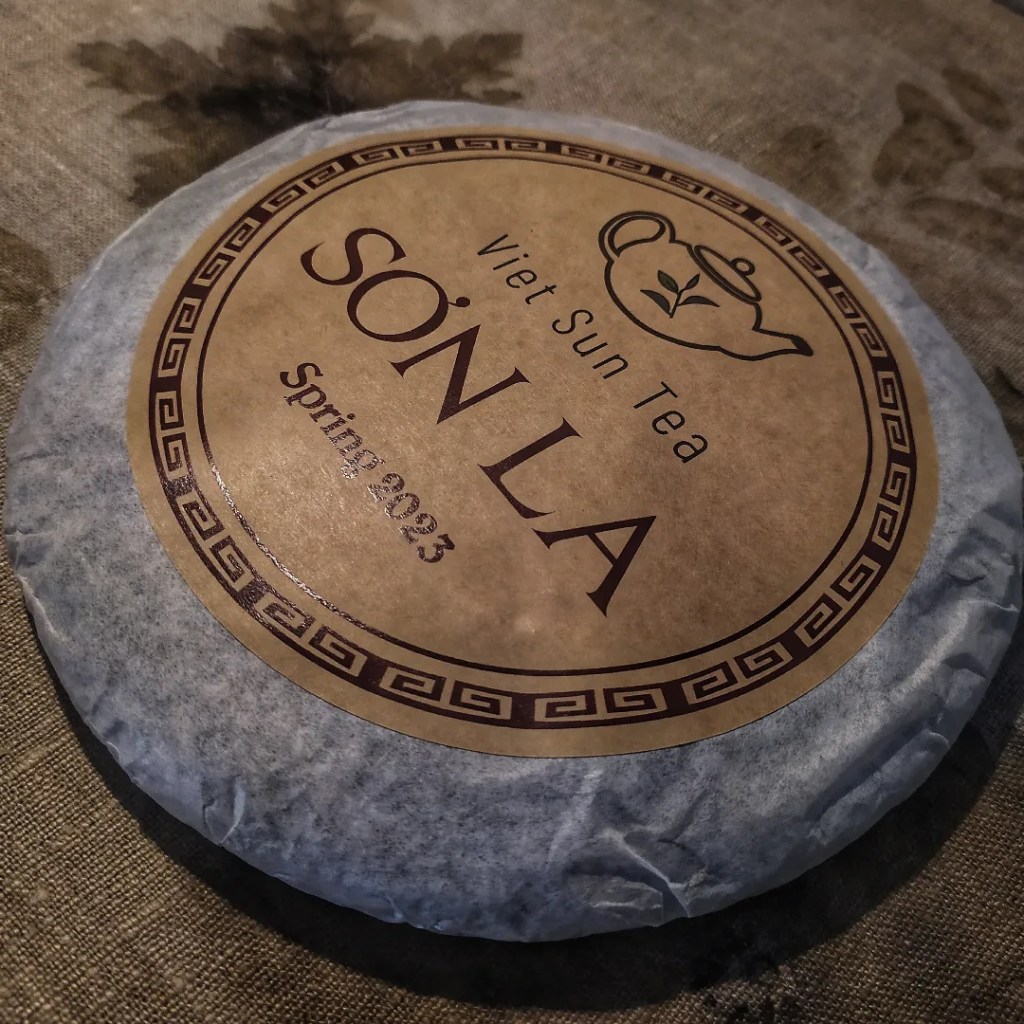
  • Another great sheng pu from Vietnam. Viet Sun Sơn La 2023

    Another great sheng pu from Vietnam. Viet Sun Sơn La 2023

    When you drink teas like those of Sơn La you are pervaded by a sense of satisfaction and touched by a contemplative streak, they are acrobatic teas capable of pushing themselves to the limit with a strong personality while maintaining balance and harmony, like a painting in which all the lines of force resolve into their own whole.

    This tea comes from Bắc Yên, a place characterized by a complex mountainous terrain at 1800-1900 m inhabited mainly by H’Mong ethniciy, in the province of Sơn La, a wild paradise full of travellers, but who instead of wandering on foot as composedly as in a painting by Camille Pissarro, they jolt disorderly on 4×4 trucks and scooters towards the summit.

    One evening, in a Vietnamese grocery shop on the way home, I heard the name Sơn La for the first time. An elderly lady slipped a sticky rice cake, the Bánh giầy, translucent and fragrant, from her experienced and elegant hands. She removed it from the banana leaf to put it on the charcoal, then took a jar containing some fermented apples. It was a vinegar made with water, sugar and táo mèo from the previous year (cat apple or Docynia indica, a typical fruit of these areas), letting herself go back to childhood memories, of springs now gone, spent in the white shadow of the Quả táo mèo in bloom, betraying a bit of emotion visible in the glimmers of her thick silvery hair.

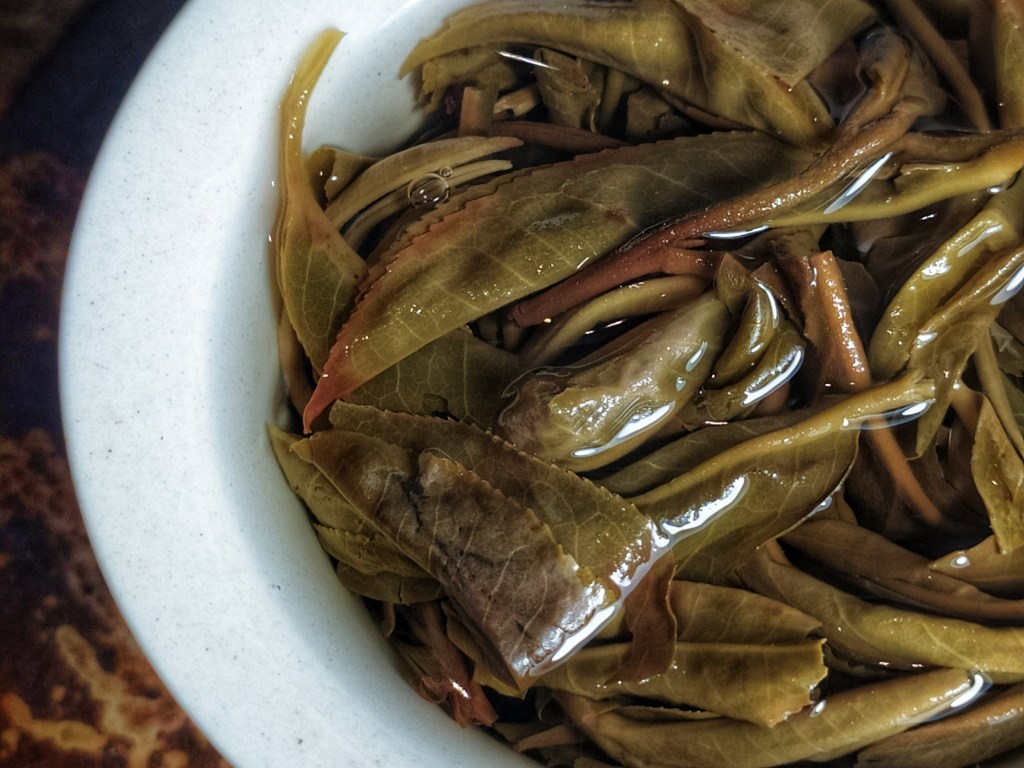
    That slight scent of embers, that wok hei can be found in the wet tea leaves, tamed by notes of green meadow, rosehip and white peach. During the infusions, notes of poached pear and kumquat, elusive scent of grapefruit peel and green pepper are revealed with a sweet nuance of canned sugar.

    The sip is unique, archetypal, enveloping and enlivened by a dynamism that alternates vibrant acidity with sweetness, a moderate bitterness of bergamot with a rocky minerality. The liqueur develops in its complexity on lingering aroma of white peach and accompanied by fragrances of jasmine, persimmon and subtle notes of serpillo.

    It is already an extremely enjoyable sheng but I am sure that with the embrace of time it will guarantee memorable and contemplative sessions.