Tag: 2024

  • Seven Essence Darjeeling Scorsese red

    Seven Essence Darjeeling Scorsese red

    This was the last tea of 2024 and the first of the new year. It was a tough, exhausting year. Dealing with the pain of loss, with the sense of emptiness, of being unmoored from the warmth of everyday life and the luxury of the habit of affection, I believe is the greatest thing that nature can ask a human being to face. For the first time in ten years, tea was not at the center of a significant moment, it was a palliative, something secondary, the translation of the search for a cure.

    What had always fascinated me about tea and its aging, its ontological tension between existing in the moment and thriving in a higher dimension, its transitory nature suspended between being and dissolving, the form and its annihilation, from that moment also applied to human life in a cruder and crueler way than I had ever experienced.

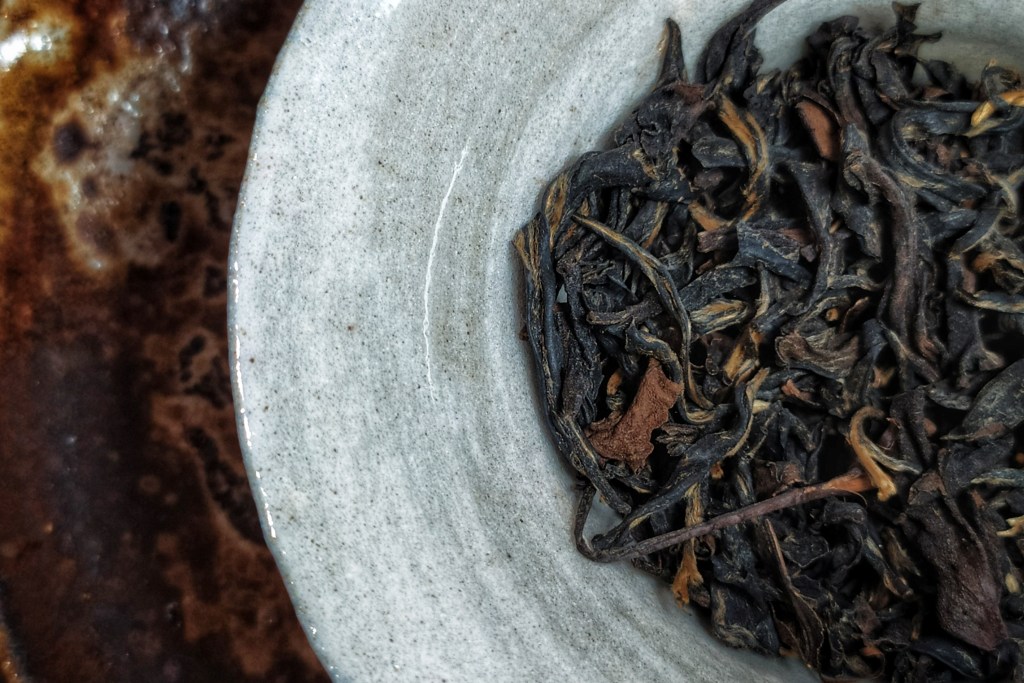
    This tea, the @sevenessenceofficial Scorsese was a companion, a ferryman between the days that followed one another without apparent sense. Sipping it is like tasting the truth, it is like watching a painting by Francis Bacon come to life, built with one brushstroke of flesh and blood after another.

    With that note of Sacher and cinnamon, of burley tobacco, of wenge, of leather and smoke, it initially presents itself as a dark and gloomy shot governed by soft lighting, with a corner set up for a sweet Christmas, all mistletoe and songs, in a untidy apartment plastered with references to art deco in the hallucinatory New York seen through the alienated and feverish gaze of Travis in Taxi Driver.

    When the world seems too hard, when losses pile up and the weight becomes unbearable, tea I believe offers a refuge, which is a greater blessing than we are often granted. It is not an escape, but a return to what is essential, and in its cheering sip pervaded by the aromas of condensed milk, apricot, vanilla and chocolate is what this tea embodies, it is like us, it resists, it keeps us standing, it appears in our lives like diegetic music, as that stranger who suddenly puts on a swing piece in a now-dimmed room in the middle of a bad night, convincing us to give life a dance once again.

  • Climate crisis, Darjeeling and Sublime. Seven Essence Darjeeling summer Ochre

    Climate crisis, Darjeeling and Sublime. Seven Essence Darjeeling summer Ochre

    Despite the climate crises, landslides and hydrogeological disasters that have brought the Himalayas to their knees in the last decade, some corners of this land continue to surprise, returning results beyond the imagination, overcoming difficulties and uncertainties.

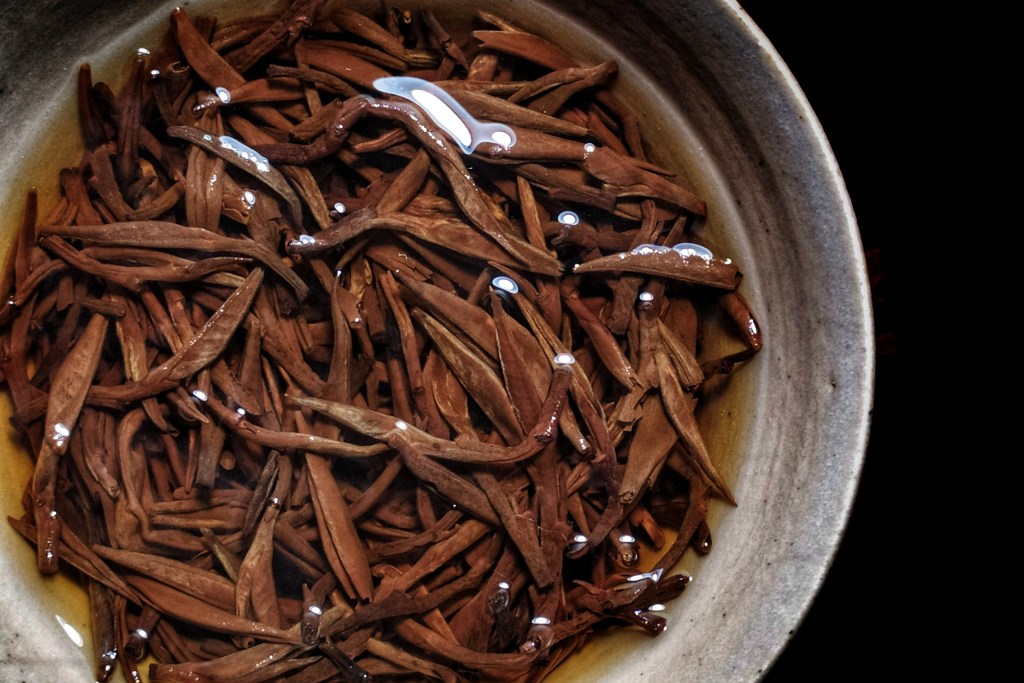
    Ochre is a Darjeeling tea, created using the AV2 cultivar, with golden leaves, twisted like the enigmatic smile of Klimt’s Judith, pleased in her languid gaze.
    Born from a thirsty summer, now the umpteenth, it reveals notes of cocoa, malt and buckwheat, then grants aromas of grilled beetroot, cherry brownies and maple syrup.

    Just like in Judith, in this tea lives that something that seduces but leaves a sense of uneasiness, showing that power, which was once attributed only to art, to evoke ambivalent sensations.
    Klimt transformed Judith’s heroic gesture, the killing of the Assyrian general Holofernes to free his people in an act that sublimates partly as a hedonic symbol and partly as a manifesto of an uncertain era and it is in these terms that Ochre places itself.

    The spring harvests are now the children of continuous cycles of drought and violent rains, an alternation of moments of climatic inactivity and destructive floods and in front of the intensity of teas like this I ask myself what and how much we risk losing, and the answer is things like these.

    The sublime is linked to terror, and terror is all the more terrible when linked to the worst fear for man, that is, loss. It takes us beyond the sensitive abyss and is the intersection between a sense of anguish that manifests itself as a shiver and that Laetitia as Schiller described it, that dazzling sense of bliss.

    And in part teas like these bring us back to this condition, to the fear that things like these may one day not be there or exist in such a different proportion that we forget what was there before.

    In its softness, in its caramelized, buttery and lactic aromas, this tea is an encounter between pleasure and meaning, between sensorial beauty and contemplative introspection, transforming its aromatic expression into an experience not only of taste, but of eternal beauty.

  • Beyond the ordinary concept of craftsmanship. Seven Essence Darjeeling Gossamer

    Beyond the ordinary concept of craftsmanship. Seven Essence Darjeeling Gossamer

    There are teas that are indifferent, inexpressive, flat, that simply fill a cup and others that nourish the soul, an expression of the genius loci, resistant, a symbol of those who bear witness to a story, to a place, to bring tea to its highest expression.

    Darjeeling has suffered in the last twenty years from the abuse of its name, from that condition of dissatisfaction for its unexpressed potential, from the awareness of being able to openly declare itself as one of the best terroirs in the world but that for a commercializing inspiration such a condition was denied.

    But to paraphrase Jasper, just as we don’t think of the disease of the shell when admiring its pearl, so when faced with the vital force of the work we don’t think of the cause, the agony that are perhaps the condition of its birth.

    Teas like Gossamer are not just a drink, but an expression of the soul of the terroir, the sublimation of a commitment that goes beyond the ordinary concept of “craftsmanship”, each sip is a meditation on the essence of beauty: the struggle between time and the moment, the fleetingness of a pleasure that persists only as a memory, a retro-olfactory photograph of everything that matters in that instant.

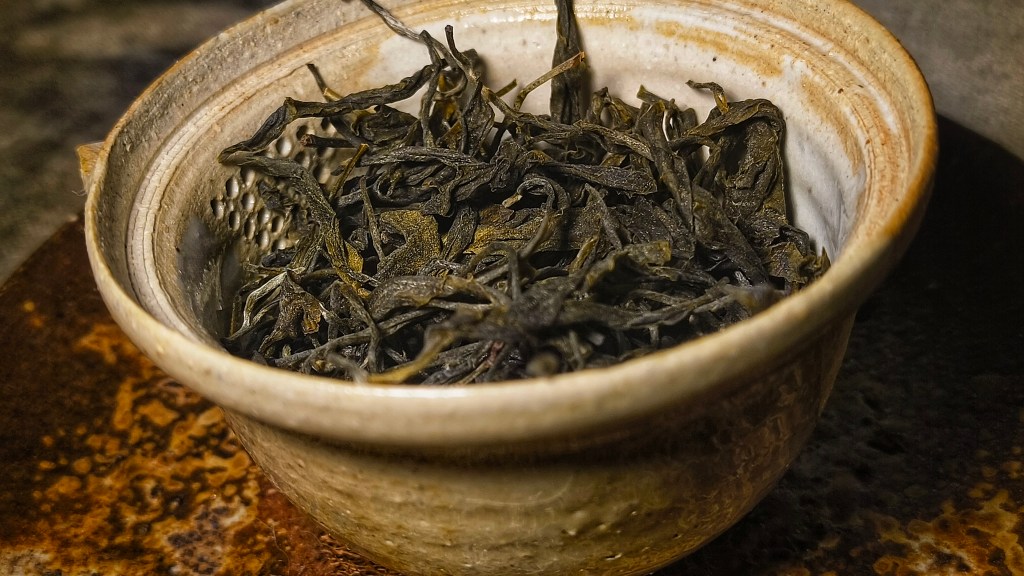
    Plucked from the B157 cultivar, its perfume is complex, polyhedric, like a work of art that always reveals new details with every attempt to decipher its chromatism. It immediately shows an almost ethereal tone that announces its subtle finesse. The aromas of chamomile blend with those of olive oil, lavender and a mango sorbet, then a bouquet opens up characterized by the scent of Aleppo soap, chrysanthemum, orchard grass, water spinach.

    The sip is persuasive, creamy, persistent with an incorruptible freshness and lets a clear return of sweetness emerge, that sweetness that consecrates a Darjeeling tea at the peak of its expression.

  • An echo of a higher truth. MST old master Dong Ding spring 2024

    An echo of a higher truth. MST old master Dong Ding spring 2024

    Taiwan is a mountainous land, rich in those peaks that seem to incessantly support the weight of the world, they are the vertebrae of the backbone of a country, the reflection of a collective history written on the skin of the earth.
    The island has a completely autonomous historical path compared to what is thought and has been affected over the centuries by flows of different cultures whose destinies have been inextricably intertwined with those of the aboriginal populations.

    Nantou is the county that has perhaps been the home of this intricate cultural fabric more than any other, hosting the tattooed faces of the Tàiyǎ, the Shào zú animal and head hunters, the Bùnóng with their polyvocal music and the Zōu with their hats adorned with eagle and blue pheasants feathers.

    In the main village of Dong Ding there is an 80-year-old master still able to work the enchantment, to orchestrate that transformation born of time and tradition, of those invisible threads that bind the present generation to those who have seen the last sunset and those who have not yet been nourished by the first dawn, to create a tea that would have made even Edmund Burke smile more than once.

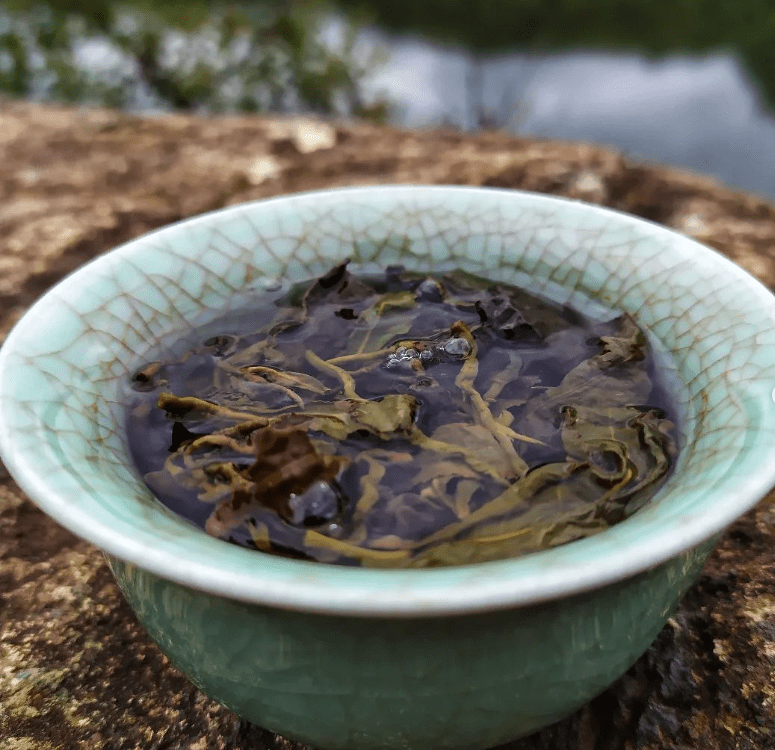
    When I tasted this Mountain Stream Teas roasted QingXin small batch oolong for the first time I found that magic, that alchemical matrix that Oakeshott defined as “practical knowledge”, a form of knowledge that cannot be explained or reduced to explicit rules but that manifests itself in doing, acting and being. Making a tea like this is not only a work of technical mastery but is a delicate art that feeds on habits, abnegation and rites, it is an order that transcends mere human will, an echo of a higher truth.

    The sip, which finds its roots in those sedimentary and volcanic soils, has a deeply complex character, with hints of mango, wild honey and light resinous nuances. In those subsoils rich in silicates, feldspars and volcanic clay, the concept of tea as a symbolic substance is shaped, leaves like these are imbued with poetry, they become ceremonies of knowledge, extracts of life, and it is this poetic principle that restores the pleasure of existence to sacrifice.

    In its notes of chestnuts, poached pears, cooked lychees the taste shows off a plastic clarity that does not allow itself to be intimidated by any rhetorical exercise, it shows an almost unexpected, vibrant, sharp purity, a sort of historiography of the soul, silent and secret.

  • Darjeeling, a refuge of perpetual change. Seven Essence Darjeeling Villanelle

    Darjeeling, a refuge of perpetual change. Seven Essence Darjeeling Villanelle

    Among those mountains where even the fogs seem to recognize themselves, always the same, the sun makes its way over the peaks of Darjeeling in that way that only northern India can do, with those sunsets stained with scarlet red as if a cup of tea had spilled in the skies.

    Among the big brands, the massive and hypertrophic estates, it is hard to believe that there is a world of artists in constant ferment. In Darjeeling, breathing is instead punctuated by two incredibly deep breaths, one is that of tradition, the other is that of an unprecedented contemporaneity, creator of teas that have become a symbol of the new future: bold, powerful, and often, undeniably, modern.

    Spring teas like Villanelle hold within them the extraordinary nature of spring, in its scents of dried magnolia, citrus, hydrangea and winter melon they seem to reconstruct the triumph of Rubens and Brueghel the Elder’s Eden, an explosion of renewed vegetation, an aromatic encyclopedia of the natural world accompanied by that body, that powerful carnal plasticity of the baroque season.

    While teas like this one consecrate the cup as the theatre of the sublime, they remind us that in these lands it is not easy to emerge, that creative flair and freedom of expression are not common or taken for granted and that spring, despite its splendor, cannot erase the bitter aftertaste of this eternal struggle.

    The sip has a good thickness, with an almost watery sweetness typical of melon that supports the weave of elderflower and orange blossom syrup, thickening in the aromas of taro mochi and acacia honey. It proves to be a vertical tea, ascending in its tension between freshness and maturity, it shows to be a path to follow, a turning point by placing a door in front of the past that must never be reopened.

    In the past decades Darjeeling has been like a vagabond in the world, a terroir of extraordinary complexity and a potential only minimally explored, but it is as if the truth has continually escaped. But now tea and producers like these are establishing a new route, a new pact with their land, a hymn to the highest genius, to the craziest tea, refuge of perpetual change.

  • An Antidote to Boredom. Seven Essence Darjeeling Ennui

    An Antidote to Boredom. Seven Essence Darjeeling Ennui

    Ennui, boredom, the name of this tea, the strange sensation that overwhelms you when nothing happens, when everything forces you to remain still, like an old wreck of a bus stopped in the middle of nowhere, and you there, with an empty gaze, with a half-extinguished cigarette between your fingers, without knowing where you will go or what you will do. Boredom is the slow rain that beats on the windshield while you wait for a level crossing to close, waiting for a train that will never pass.

    It is with you wherever you go, like an old battered suitcase that you can’t forget anywhere. According to Heidegger and Schopenhauer, boredom is a sign of a more significant absence, that of an authentic connection with reality, the feeling associated with the unsatisfiability of worldly things. But boredom can be seen as a crisis of meaning, which opens up new possibilities of existence, it makes you feel as if time is a trap, a kind of dead end, but things like culture, rituals and traditions provide an antidote through their ability to live time and experience through values that transcend the individual.

    Teas like Ennui are authentic expressions of civilization, they not only entertain but give shape to a moment. They are those true teas, shaped by high altitudes, by the hard, merciless soil, those peaks that teach you freedom and coexistence with emptiness.

    Its leaves enclose that sense of limit, of transcendence, where boredom has no space. Between the notes of chestnut honey, peach and turmeric, accords of tuberose and Bulgarian rose, jasmine and ylang ylang make their way, accompanied by the scents of birch wood and face powder as in an overlapping of works by Rachael McCampbell exhibited in an old venetian coquetry.

    And if the antidote to boredom is culture and tradition, tea, from this perspective, is a sort of Aristotelian mimesis: it imitates and returns, in the form of a sensitive experience, the nature and culture of the place from which it comes. And so in its soft and sweet sip, aromas of grapes, moss, spices and rose weave the memory of a glass of moscato passito in the middle of summer, consecrating a tea of incredible persistence.

  • A “cante jondo” between emotions and rationality. Seven Essence FF Darjeeling “Duende”

    A “cante jondo” between emotions and rationality. Seven Essence FF Darjeeling “Duende”

    Duende is the name of this tea, that duende which is a place ex-nihilo where there is no map or exercise, principle of creation, of generative power, it’s the mental dress worn by the restless, of those who renounce deep sleep by remaining in the temporal foil between the traveled path and the dreamed, of those who are willing to put aside the smile to travel the streets of disquietude.

    Through this tea in its scents of mango, green melon, among the nuances of cut grass, of late summer rain, Darjeeling rediscovers itself in a new, unique form. There are those who said that this land would not granted anything more than what has already been seen, but there are those who among the mists understood the spirit of time, who become the interpreter of that restlessness, that fertile suffering that fuses the forms, which is the matrix of the extraordinary.

    In its tones of roots, bergamot leaf, suede, pumpkin seeds and cocoa butter it translates into liquid that power of primordial vigor, of a subterranean force that destabilizes habit and consecrates itself in the new. “The arrival of the duende always presupposes a radical change of every form with respect to old plans, it gives sensations of freshness that are completely new” and it’s then that are revealed the faces of men and women who support the weight of the uncertainty, in which are configured the struggle of contrasts, the incongruence of thoughts, the refusal of the safe learned geometries to pursue the discovery of tacit truths.

    In the mouth it’s soft, buttery, contrasted by a Champagne citrus freshness, the steam brings to mind that morning breeze of Reims before the harvest, surrounded by earthy and humid aromas. They become the foundation of a deep melody of perfumes, a “cante jondo” between emotions and rationality, between ancient ports and new routes.

    But it must be tried, there is no way to explain leaves like those of Duende without resorting to a paradoxical language, because their taste, their tactile descending path towards the throat and directed to the soul cannot be adequately articulated by tired descriptors and words, but must be grasped in its sensitive experience

  • The Battle of Điện Biên, the retreats, the ancient tea trees. A sip of historical consciousness with Viet Sun Tủa Chùa sheng pu’er 2024

    The Battle of Điện Biên, the retreats, the ancient tea trees. A sip of historical consciousness with Viet Sun Tủa Chùa sheng pu’er 2024

    More than 70 years have passed since the battle of Điện Biên, since the retreat, the rice fields dyed red, the pain everywhere. Our men arrived in that area on old Royal Air Cambodia “Caravelle” flown by Taiwanese pilots who shuttled between Bangkok and Phnom Penh. They jumped on with ever more heartpounding, more and more uncertain about the possibility of landing. They often did it at night where the quiet wasn’t interrupted by the clanking of clutches, the noise of the brakes of those metal carcasses or the dull bangs of the firing pins.

    It must have been those dense nights, tinged with that frightening absence of chromatism, one of those in which probably a Kerouac character would have screamed at that dark eastern wall or howled at the moon interrupting the silence and the monologue of the wind even though the tension could be cut with a razor. There wasn’t much hope to project into the future, it seemed that things weren’t made to last but simply to survive another day, where folk didn’t have time to become aware of their identity as a people because the land they inhabited was already a foreign land from the very beginning.

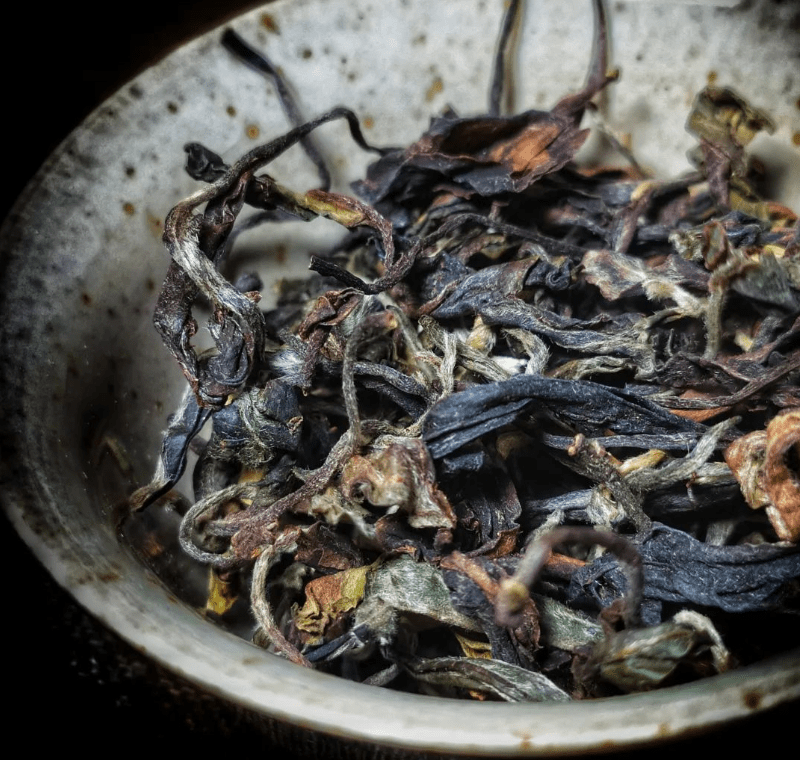
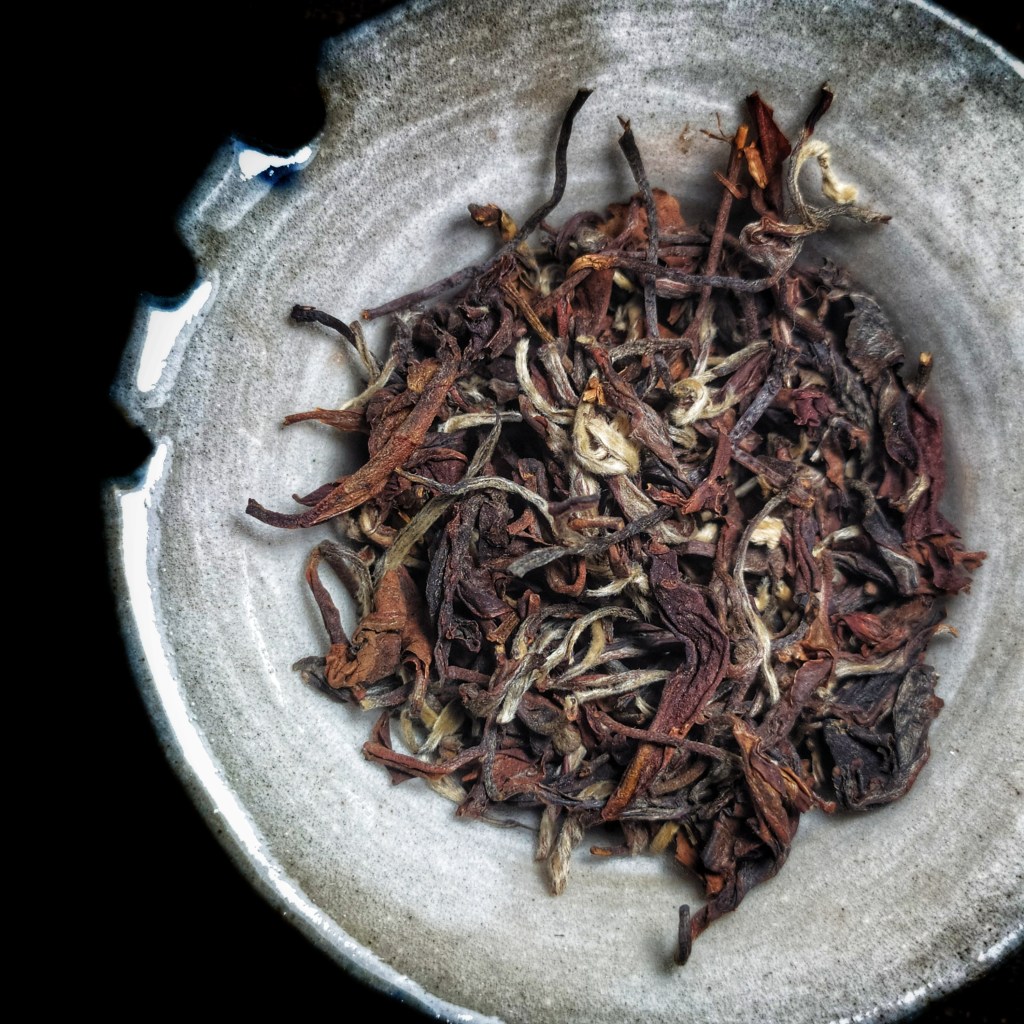
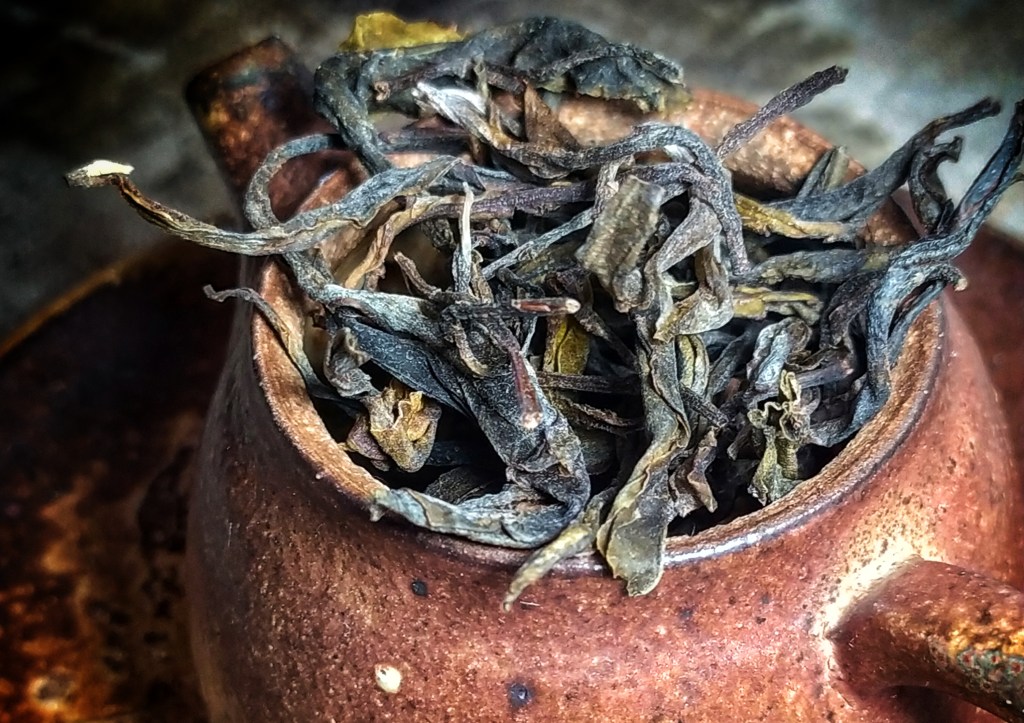
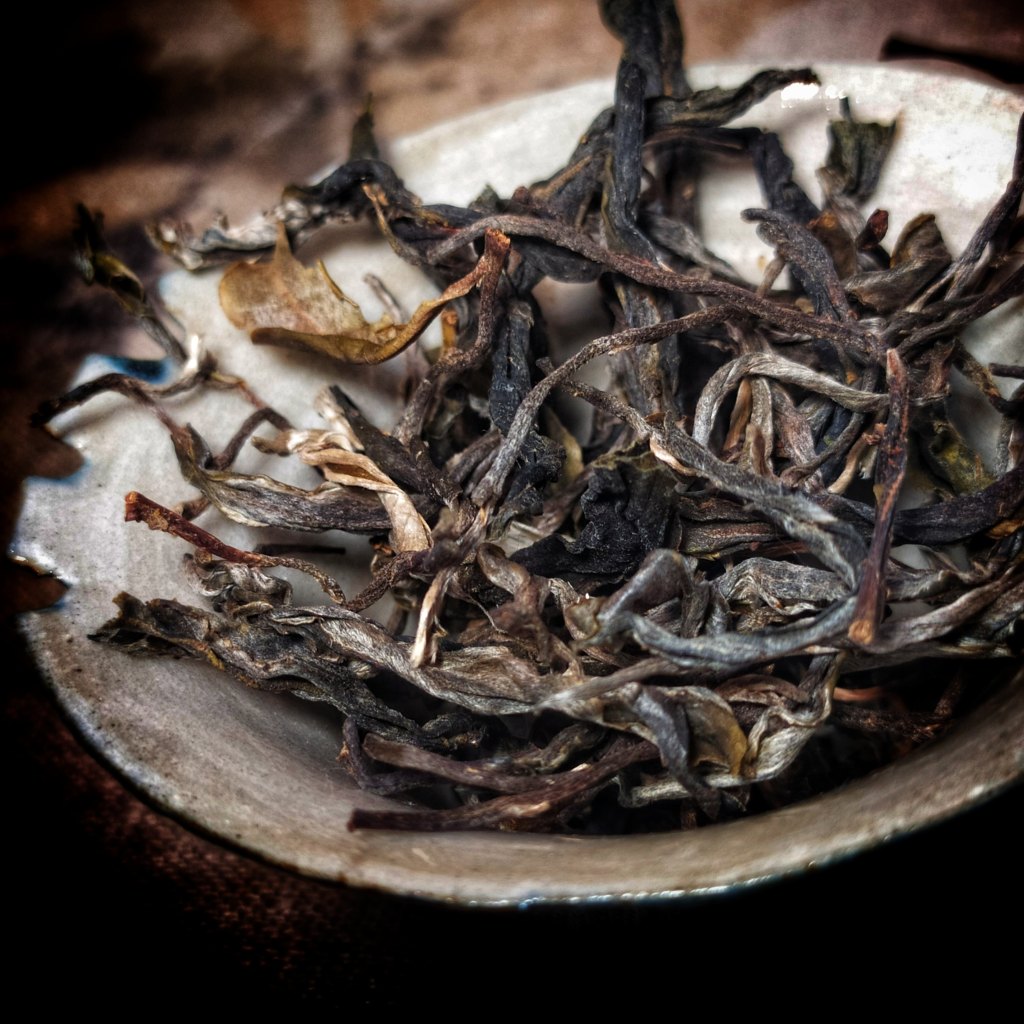
    Tủa Chùa is less than 100km from that war front, one of those mountain places where thunder strikes a sacred fear, where on humid days you can see nothing but misty trees and dark and wild slopes rising towards the sky. The tea in the photo comes from those peaks, from Xín Chải ancient trees, are leaves that recall that “suspended” of its land, capable of escaping every premonition; every other prefiguration and prediction, if there had been one, becomes irrelevant.

    This is a visceral, deep, unexpected sheng. It’s a place where faint hints of white peach, orchid and leather lie contracted, tones of tobacco and forest notes of undergrowth indulge but this is different every time because it seems in continuous change, a plot open in time, like an eternal improvisation. In the mouth it’s soft sweet and with a qi that alone could give meaning to the sip. The huigan takes control of the throat in an instant and every attempt at description from this moment seems a vain attempt by language to exhaust what is worth experiencing.

  • Discovering Y Tý: Comparison of two Viet Sun sheng pu’er from a Dao and a H’Mông village

    Discovering Y Tý: Comparison of two Viet Sun sheng pu’er from a Dao and a H’Mông village

    A place of magnificent waterfalls, azaleas and wild peaches, the mountains background seems to give every gesture an additional majesty, a primordial dignity.
    The small mud-walled houses of Y Tý stand in the green and golden colors of the rice fields, offering rural nuances to that tranquility typical of the “cloudy” land, located at more than 1700 meters above sea level. Pyramid roofs, stone fences and terraced fields are symbols of the will, minds and hands of many generations in the highlands, created to interact and converse with the nature of the mountains and rivers.

    The Y Tý market meets every week and is a cultural place of exchange for Hà Nhì, H’Mông and Red Dao. Most of the stalls are run by Hà Nhì women in black and dark blue dresses, i remember the shy face of a young mother and her little girl, lying obediently in a gray jute sash on her chest. Her hair is tied back and almost glazed due to the effect of the sun on her coal black hair, the vivid gaze with her head tilted to the side as if she were listening to the voices in the wind.

    Tourists are busy buying vegetables, red peanuts and Pạ Phì. The road covered in red earth dust is full of rattan baskets, worn enough to indicate actual use of their contents and well enough maintained to suggest respect for the contents themselves.

    Higher up in the mountains, the landscape unravels lively between the fog, between the sandy and rocky soils of the Dao villages surrounded by the wild bamboo forest and the more clayey and fertile soils of the H’Mông villages. Those mountains that protected the soldiers on their way to the front, towards the place where the Lũng Pô creek meets the silt-tinged waters of the Hồng River, up to A Mú Sung, where they fought and fell to protect the border.

    Here it is as if tea is able to fit in with culture as well as nature and can make use of both as it pleases. The landscape seems like the unconscious of the earth and the teas that derive from it are its liquid consequence.

    After a more romantic first part, I will talk in a more technical and boring way about how a territory with an enormous potential now demonstrated like Vietnam can have that complexity of landscapes, that dramatic discrepancy of soil composition that is often associated with great terroirs, such as France and Italy for wine and Yunnan and Taiwan for tea.

    Vietnam often is in conditions of high humidity and high temperatures during the year, such as to hypothesize a much faster maturation of the soil than, for example, northern Asia or some areas of northern Yunnan. But in the mountains many things can change, here at over 1800 meters we can have leaching, erosive, frost phenomena and extremely variable contents of the organic fraction from mountain to mountain or even in the same mountain at different elevation levels.

    We can also notice typical results of the meteorological conditions of these areas, such as the deeply yellow and yellow-red color of the soil, indicative of a condition of water saturation. The soil environment is reduced and, under these conditions, the iron is reduced to the ferrous state (Fe2+), the color of the soil becomes lighter and yellower, with gleying and mottling sometimes. The iron will be in a more soluble state and therefore more available for chemical reactions.

    H’Mông village has very old and tall trees growing on the slopes near the border with China, the climate here is wetter, there is more forest cover, resulting in darker green leaves than in the Dao village. This is due to the shade and the greater capacity of water retention, less leaching and greater content of organic substance, typical conditions of a soil richer in clay and organic elements, the presence of sand and silt in surrounding areas also suggests a clayey but not asphyxiated soil, with a good potential for oxidation of organic matters. The leaves of the H’Mông village express themselves with greater roundness in the cup, with a persuasive softness and with more animal and leathery hints, with less citrusy but warmer and more mature fragrances.

    The tea area of Dao village overcomes a wild bamboo forest, there are many old and ancient trees, the climate is sunny and dry, and the soil is rocky-sandy, which will result in a possible slower growth rate of trees, given the possible greater difficulty for the soil to retain water, nutrients, greater leaching of minerals, erosive phenomena and loss of organic substance and this conformation is in line with a lower maturity of the soil given a lower presence of water. The leaves of the Dao village reveal more mineral and rocky accords, more citrus and herbaceous, a less imposing and soft body, more agile despite the medium thickness.

    This is an example of how at a short distance, pedogenesis and transformative climate phenomena can change drastically, returning a vastness of results that cannot be found in most other areas of the world and how this complexity does not derive only from the altitude, therefore also translating into extremely different teas in an area of a few kilometers.

    Mixing together the leaves of the two villages you get a concert of the unlikely son of Emily Dickinson and Rory Gallagher, the romantic essence with its disciplined lyricism and the annihilating chaos, the sublime that is the basis of great things.

    The ambivalent aromatic essence of the leaves is initially dark, bringing back Bruegel’s Flemish nature in the almost primitive woodland scents, with memories of a bonfire extinguished in the rain, undergrowth and slightly animal smells.

    Then the texture of tropical fruit and candied hibiscus, tomato leaf, orchard hay begins to emerge, supported by counterpoints of medicinal herbs, wild flowers and saltiness on the skin. On the sip it shows fullness, with notes of white mulberry, linden, apricot and slightly herbaceous hints. It is never prosaic and the thickness is sized and juxtaposed with freshness and minerality and a medium-low bitterness, which make drinking agile and never tiring.

    The strong and relaxing and at the same time almost lysergic qi accompanies a persistent and very present huigan from the first cups.

    You can find much more information on the Viet Sun website

  • Viet Sun Giàng Pằng 1 Big Tree sheng pu’er spring 2024

    Viet Sun Giàng Pằng 1 Big Tree sheng pu’er spring 2024

    Giàng Pằng, it was the discovery of this village and its history, its culture and the ancestral nature of its landscapes that began what would be the focus of my attention for the last two years.

    If we were in other parts of the world people would be there taking photos, absorbed, writing farewell poems about the transience of some exotic flower and the ephemeral duration of youth, but here there are only people, real people bent over by fatigue, with their colorful bandanas, clinging to their tenacity and resilience.

    The streets are harsh, steep, the cinnamon bark is exposed to the sun, the tea is drying on bamboo mats, even the chickens think of the ephemerality of youth perched on wooden beams.

    Here where not even the setting sun seems to find rest, the old tea trees appear like lignified bodies in an archaic dance, in a land that loves no middle ground. The clouds and rains rage in a despotic manner while the fog calms down giving a conciliatory impression, each element is in a disorderly way part of an atavistic work, a fragment of the dawn of the ages.

    An anti-geometric vision where modernity barely finds space, where the succession of mountains in the distance creates its own rhythm in a primordial and perpetual order.

    This is where VN tea becomes great and it can only be like this, because like every other mountain where the gods have found refuge, great things do not happen on slopes that do not bring suffering.

    This Viet Sun teacomes from a batch processed by Steve, from a single big tree, in the spring of 2024, and is the juxtaposition between verticality and softness, between flesh, bone and soul.

    The leaves are reminiscent of wild sour green plums, dehydrated longan with a slightly smoky streak, the aromas then focus on the undergrowth, apple wood and then give way to plum, aromatic herbs and light leathery nuances.


    The sip is sartorially silky, measuredly round, with light bitterness and light astringency that ends with an excellent huigan. The strong qi accompanies an aromatic playground that goes from green melon to persimmons, in a continuous evolution infusion after infusion until it fades into accords of plum jam and alpine flowers bouquet.