Tag: autumn

  • Seven Essence Darjeeling Masquerade

    Seven Essence Darjeeling Masquerade

    I believe there are few people on this earth for whom I have ever felt even a modicum of envy, and I do not say this out of vanity nor from some absurd, ultraterrene awareness. I’m simply indifferent to the allure that possession exerts on people, the resonance of an echo of absence, the trace of a denied desire. Yet Bubble and Abhijeet have a rare, transcendent empathy when it comes to tea, a quality that is either innate or remains scarcely graspable, one that probably I don’t even have. Their autumn collection attests, indisputably, to their status as the Vaughan brothers of the Darjeeling terroir and to the perception that selecting leaves is a virtuous act, a testament to aesthetic discernment.

    The election of the proper material is not a mere sorting process; rather, within it dwells that lyricism, that aphonic language in which what resides is lifted from its ordinary form, unfolding into a dizzying array of aromas and scents where time contracts and expands with a diaphragmatic cadence. To select leaves is an invocation of the sublime, a re-creation of the universal tension between order and chaos, wherein the structural opposition of what is utilitarian and what lies beyond utility is drawn and maintained open, rendering tea not merely a beverage but a vehicle of meanings.

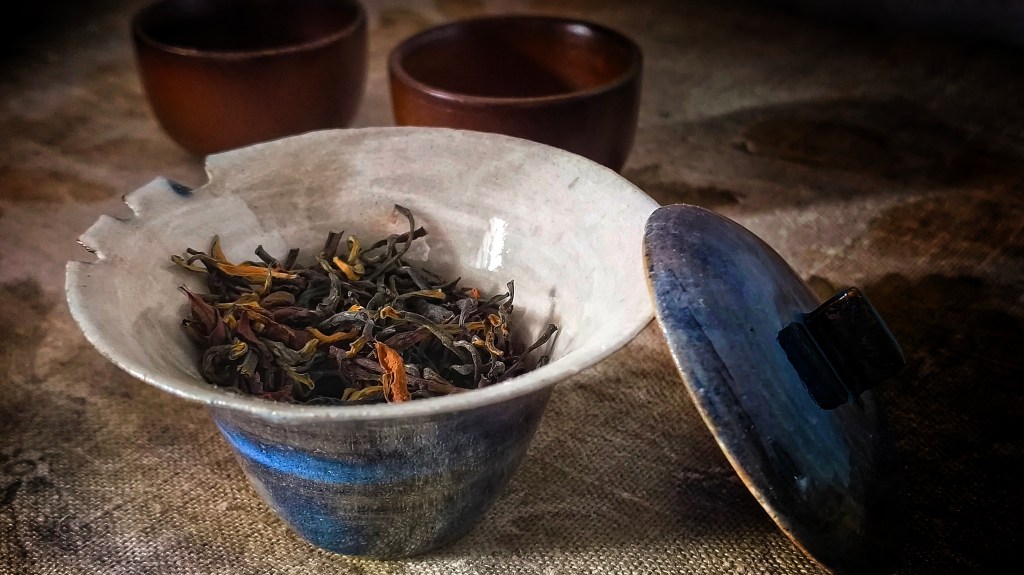
    Masquerade is a Darjeeling oolong produced from the AV2 cultivar, a tea with a dense liquor, a chromatic snapshot vibrating between ancient gold and dusty amber. The leaves exude the fragrance of rose and jasmine, of olive oil and fruit tart. The infusion is sweet, soft and persistent, with hints of pear, pistachio and dried apricot. It is a sip of freshness, capable of rejuvenating even those weary nights, illuminated by the flashing lights of police cruisers deployed in one of those torrid, sleepless nights.

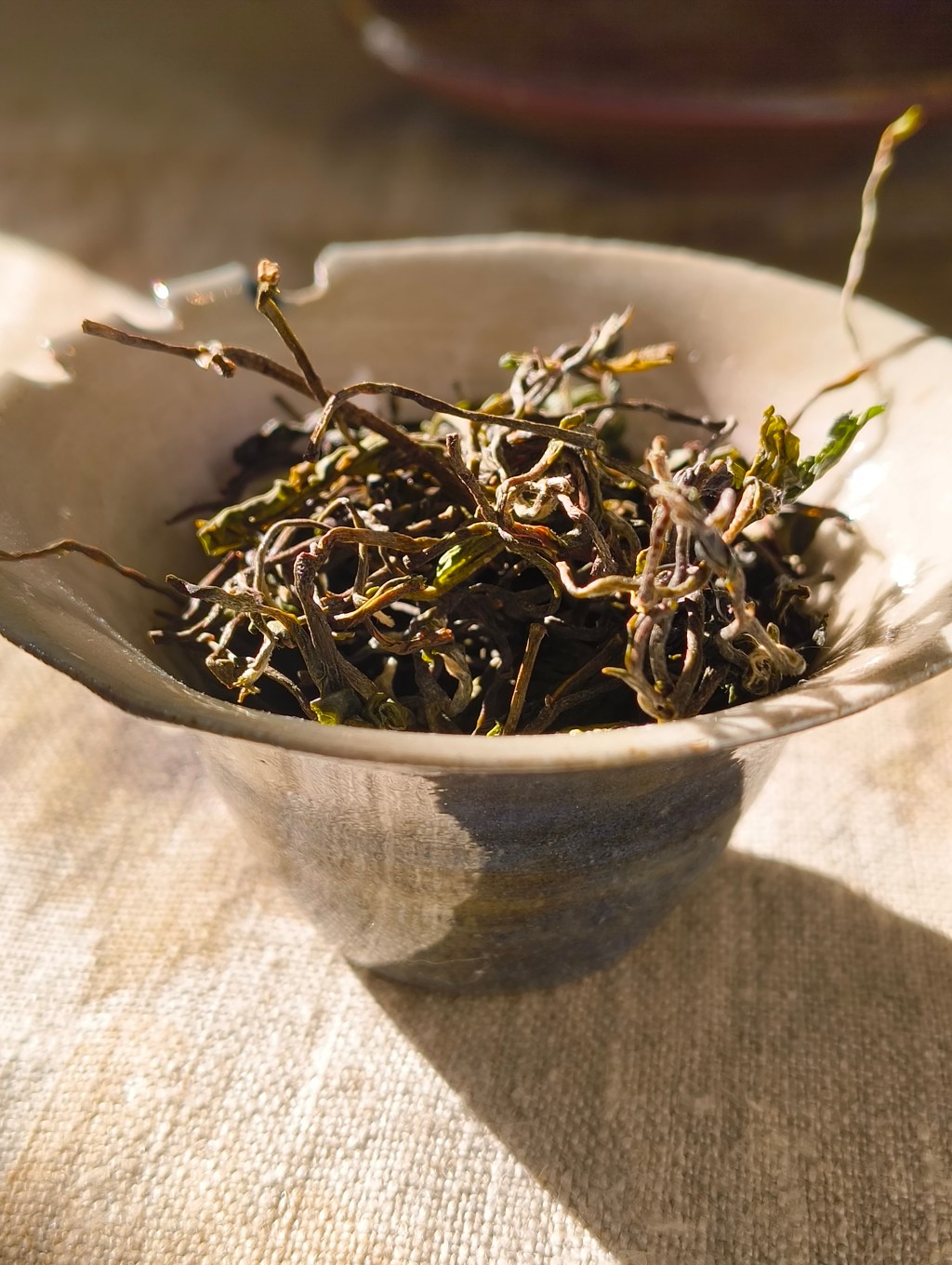
    Notes of chlorophyll, subtly vegetal, along with hints of olive leaf and mango, evoke an introspective road movie, laden with trembling shooting of hands brushing against corn stalks and bodies staggering in the sultriness, a spiral of rural unrest and youthful rage, of adolescent fights in the badlands, where typically nothing was too dear but everything cost too much.

  • The Liquid Reflection of Civilization. Seven Essence Darjeeling Epilogue

    The Liquid Reflection of Civilization. Seven Essence Darjeeling Epilogue

    Years ago, I met a professor, one of those old, gruff Labour men, fond of humanity provided it was kept at a safe distance. He lived in permanent exile from pragmatic reality, an outcast who had sought refuge in erudition, guardian of a nation that had ceased to exist before he was even born.
    He listened to Mahler after his Darjeeling, but would only play it if the tea had truly satisfied him, perched on that Danish Art Nouveau oak stool with its black leather seat, with his fingers gripping the keys like ash roots burrowing into earth.

    Epilogue by Seven Essence brings him back to me, sitting in his study poised within the hypothetical temporal sliver between Hope’s Regency style and Ruhlmann’s Art Deco.
    He never chained tea to a fixed hour, nor did he treat it as a prelude to elitist drunkenness. To him, it was the liquid echo of ancient civilizations and their highest reasoning.

    The mahogany, varnish, sweet potato, petrichor, rye bread and cask notes, all wrapped in a cloak of earthy minerality, bring back that room drowning in bound pages and an excess of ebony. Watching it in the cup, I recall our conversations about Vermeer — the tea shines, releasing a warm light, as the one that illuminated the flesh-like surface of the Girl with a Pearl Earring, a radiance both earthly and sacred.

    The sip is rounded, neoclassical, sober yet embracing, with a warm, exuberant body, full of pepper, cocoa, violets and autumn fruit. The sip ends with a sugar cane sweetness almost severe, like the curtain closing on a Powell or Pressburger finale, those directors who knew how to grasp the soul of things without succumbing to sentimental drift.

    Epilogue reminded me of those cultured, discursive forays and how drinking tea itself is politics: a good, human politics that forces us to admit our dependence on the earth, on history, on the cultures of those far from us, in another time or place.
    Every cup is a choice. Drinking good tea is an act of resistance.

  • A Theatrical Infusion of Desire and Disorientation. Seven Essence Darjeeling Autumn Caprice

    A Theatrical Infusion of Desire and Disorientation. Seven Essence Darjeeling Autumn Caprice

    Seven Essence Caprice is the whim that comes from that land pushed to the edge of the sky, it’s the tea you wished you could offer to the stranger you met every morning on the subway, with that porcelain skin not exactly free from subtle traces of time, those perfectly arranged marks that made her attractively real and weave memories of encounters that never happened in your mind. But you never came up with the right words, only the absurd idea of the right tea to offer her, and that tea is this.

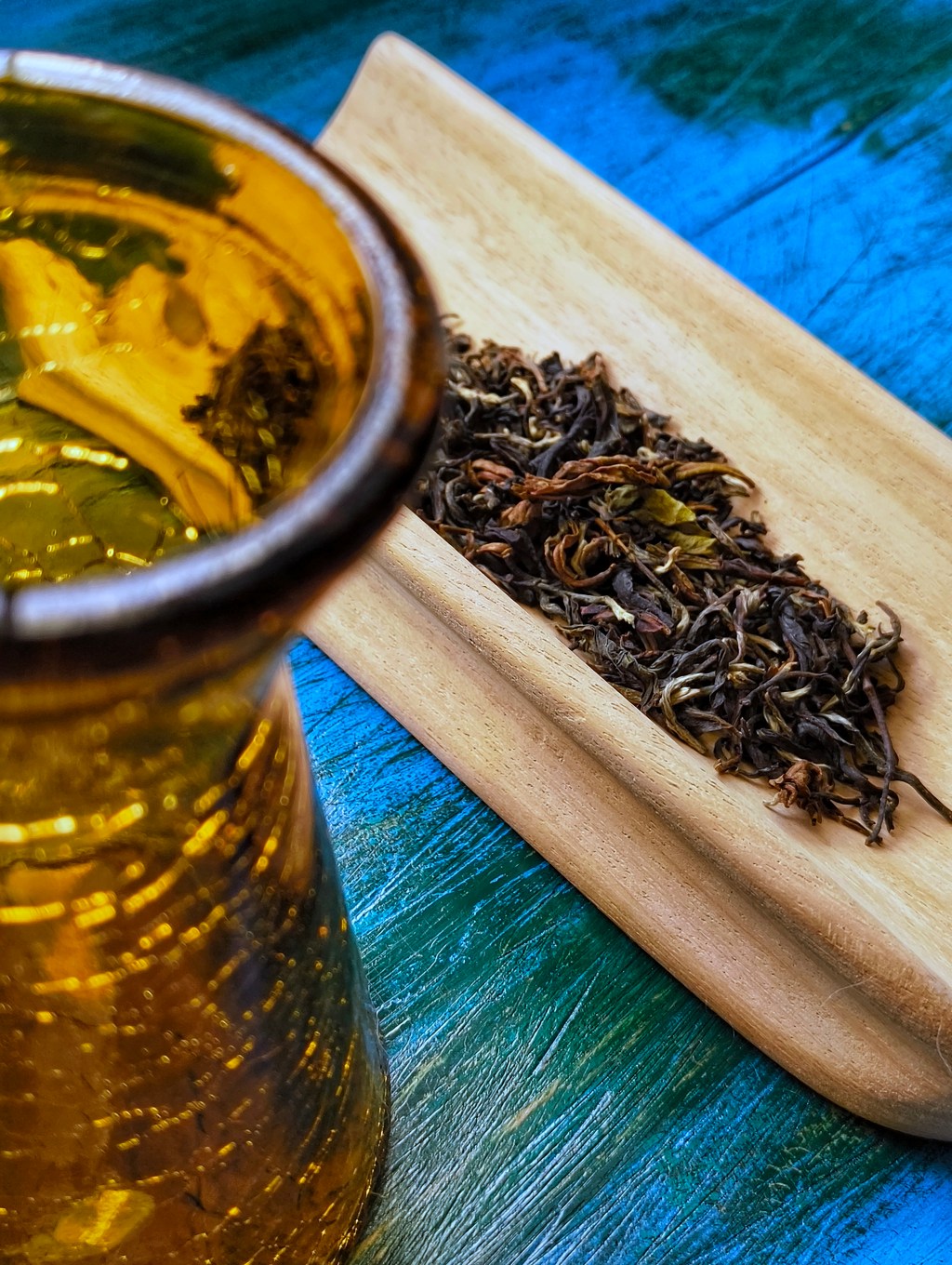
    The leaves, once wet, declare themselves on tones of magnolia, mango pulp and tomato. Then come marine notes with a Mediterranean accent-hints of salicornia, caper, green olives, and herbs butter. The extraordinary complexity reverberates in the mouth with aromas of millefeuille, white peach and cactus leaf to close a theatrical sip, sweet and at the same time salivating and refreshing.

    These notes are the orchestral delirium that connects Akita Tonburi with horseradish cream to the hysteria of strawberries with rose jam and frozen cherry blossoms at Eleven Madison, they are the trigger for a ecstatic dance in the middle of those buildings on the upper west side that stand like giant soldiers at the service of the stock market and you are leaning against the wall, rolling your tongue on the palate, trying to retrieve those aromas of mango, green plum and wild strawberries. Caprice is the highlight of the day before you disappear into the usual pre-war urban coffee shop between 6th Avenue and 8th Street, with late Art Deco interiors mixed with a sober mid-20th-century functionalism, with the reek of scrambled eggs and burnt fat in the air, the typical late-night aroma that smells of debt, perdition and broken promises useful for detoxing from the unbridled luxury of Caprice.

    It’s difficult to write about a tea like this without it seeming like an act of submissive flattery, I assure you that it’s not a simple narrative, but with some teas you don’t witness a simple act of tasting but rather a controlled hallucination, designed for those who seek disorientation and sudden revelation in taste, they are a sensorial vertigo, a chase in a context of constant perceptive tension.