Tag: av2

  • Seven Essence Darjeeling Masquerade

    Seven Essence Darjeeling Masquerade

    I believe there are few people on this earth for whom I have ever felt even a modicum of envy, and I do not say this out of vanity nor from some absurd, ultraterrene awareness. I’m simply indifferent to the allure that possession exerts on people, the resonance of an echo of absence, the trace of a denied desire. Yet Bubble and Abhijeet have a rare, transcendent empathy when it comes to tea, a quality that is either innate or remains scarcely graspable, one that probably I don’t even have. Their autumn collection attests, indisputably, to their status as the Vaughan brothers of the Darjeeling terroir and to the perception that selecting leaves is a virtuous act, a testament to aesthetic discernment.

    The election of the proper material is not a mere sorting process; rather, within it dwells that lyricism, that aphonic language in which what resides is lifted from its ordinary form, unfolding into a dizzying array of aromas and scents where time contracts and expands with a diaphragmatic cadence. To select leaves is an invocation of the sublime, a re-creation of the universal tension between order and chaos, wherein the structural opposition of what is utilitarian and what lies beyond utility is drawn and maintained open, rendering tea not merely a beverage but a vehicle of meanings.

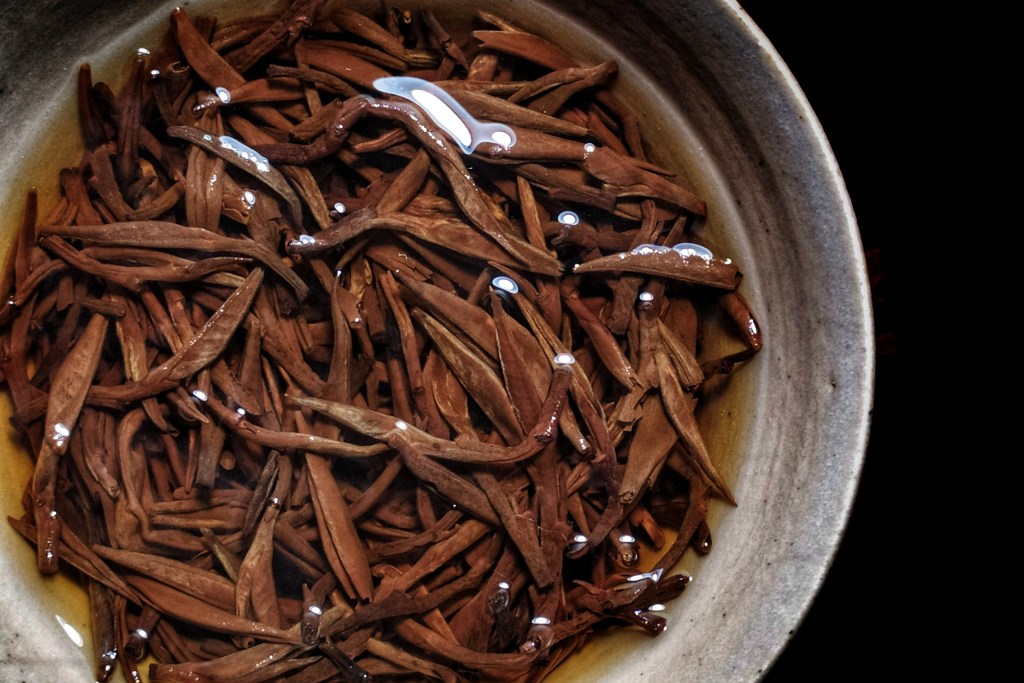
    Masquerade is a Darjeeling oolong produced from the AV2 cultivar, a tea with a dense liquor, a chromatic snapshot vibrating between ancient gold and dusty amber. The leaves exude the fragrance of rose and jasmine, of olive oil and fruit tart. The infusion is sweet, soft and persistent, with hints of pear, pistachio and dried apricot. It is a sip of freshness, capable of rejuvenating even those weary nights, illuminated by the flashing lights of police cruisers deployed in one of those torrid, sleepless nights.

    Notes of chlorophyll, subtly vegetal, along with hints of olive leaf and mango, evoke an introspective road movie, laden with trembling shooting of hands brushing against corn stalks and bodies staggering in the sultriness, a spiral of rural unrest and youthful rage, of adolescent fights in the badlands, where typically nothing was too dear but everything cost too much.
  • The Liquid Reflection of Civilization. Seven Essence Darjeeling Epilogue

    The Liquid Reflection of Civilization. Seven Essence Darjeeling Epilogue

    Years ago, I met a professor, one of those old, gruff Labour men, fond of humanity provided it was kept at a safe distance. He lived in permanent exile from pragmatic reality, an outcast who had sought refuge in erudition, guardian of a nation that had ceased to exist before he was even born.
    He listened to Mahler after his Darjeeling, but would only play it if the tea had truly satisfied him, perched on that Danish Art Nouveau oak stool with its black leather seat, with his fingers gripping the keys like ash roots burrowing into earth.

    Epilogue by Seven Essence brings him back to me, sitting in his study poised within the hypothetical temporal sliver between Hope’s Regency style and Ruhlmann’s Art Deco.
    He never chained tea to a fixed hour, nor did he treat it as a prelude to elitist drunkenness. To him, it was the liquid echo of ancient civilizations and their highest reasoning.

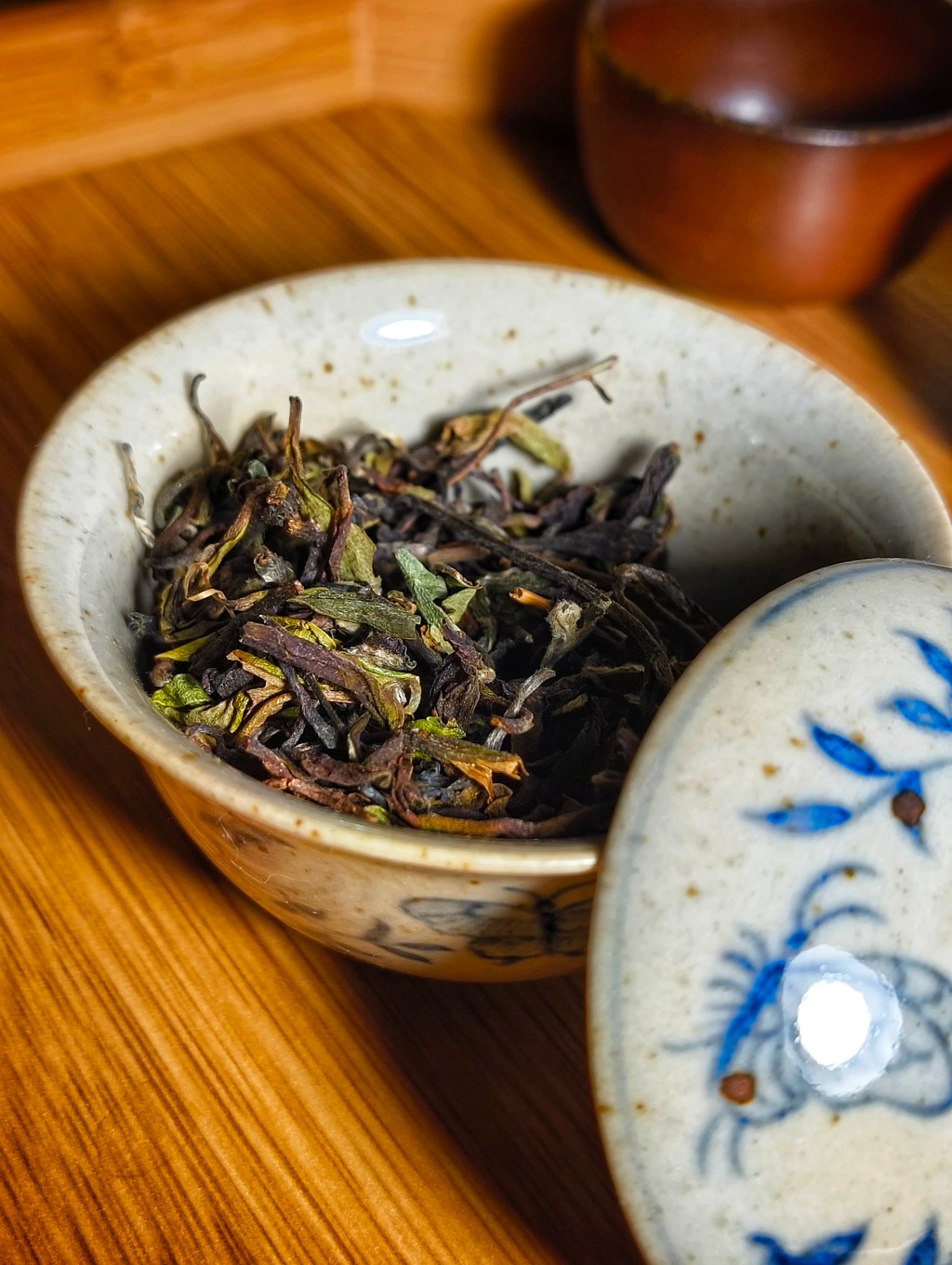
    The mahogany, varnish, sweet potato, petrichor, rye bread and cask notes, all wrapped in a cloak of earthy minerality, bring back that room drowning in bound pages and an excess of ebony. Watching it in the cup, I recall our conversations about Vermeer — the tea shines, releasing a warm light, as the one that illuminated the flesh-like surface of the Girl with a Pearl Earring, a radiance both earthly and sacred.

    The sip is rounded, neoclassical, sober yet embracing, with a warm, exuberant body, full of pepper, cocoa, violets and autumn fruit. The sip ends with a sugar cane sweetness almost severe, like the curtain closing on a Powell or Pressburger finale, those directors who knew how to grasp the soul of things without succumbing to sentimental drift.

    Epilogue reminded me of those cultured, discursive forays and how drinking tea itself is politics: a good, human politics that forces us to admit our dependence on the earth, on history, on the cultures of those far from us, in another time or place.
    Every cup is a choice. Drinking good tea is an act of resistance.

  • The Last Sip Before the Wrong Choice. Seven Essence Darjeeling Patois

    The Last Sip Before the Wrong Choice. Seven Essence Darjeeling Patois

    I’ve often tried Seven Essence teas in recent months, and I’ve observed how they are able to construct a language that oscillates between lyricism and the most material pleasure, weaving a plot of formal innovation and human depth. I believe that Patois is no exception.

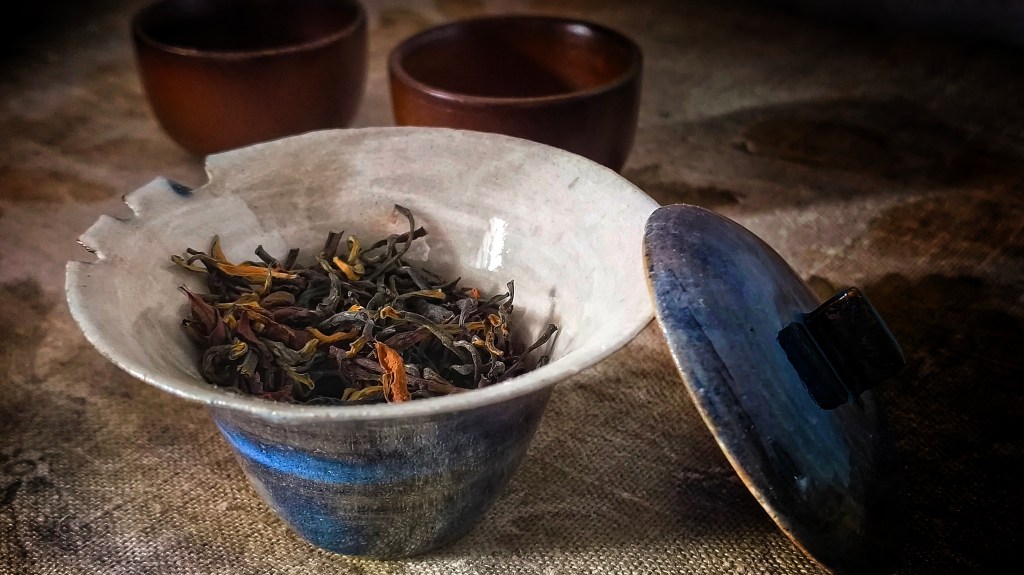
    Patois comes from the frozen AV2 buds of the autumn harvest. In that gaiwan, where the trembling light of yet another winter morning filters through, you can find a liquor that seems like liquid gold with shades of amber, giving off a disarming note of salty pistachio once the ceramic is heated. It’s one of those teas where, while you drink it, you find yourself absurdly in another place, torridly hot, watching the noisy and oscillating fan on the ceiling of a hotel room overlooking the bay, with curtains too heavy and the atmosphere influenced by the neurotic light of a neon sign now three-quarters off. And you, accustomed to the notes of green mango, basil, and wild thyme, wonder if the person still lying next to you thinks you’re crazy or is also feeling the liquid move in their mouth, soft as avocado melting on the tongue, with an aroma of magnolia and gooseberry jelly that enters the retronasal cavity like a promise.

    Teas like this are not for those who seek comfort in the warm steam of the broth your mother made when you couldn’t stand, nor the embrace of hot coffee the morning after a night out clubbing. Patois is the tea for those who stubbornly try to remember what they’ve never experienced, for those torn by nostalgia for a film that was only staged inside their mind.

    Patois is the tea Jay Gatsby would drink after a night staring at the green lighthouse, if only he were a tea person. It’s the sip that accompanies the suspended interlude before making the wrong choice. Patois is not for the faint of heart or hypochondriacs of disaster; it doesn’t comfort or warm. It leaves you there, feeding on that aphasia pregnant with suspension, which accompanies the gaze toward the trace of a Venetian coquetry-style perfume that you wish had been put on for you, but is now on the coat of someone who is too far away, fit to seduce someone else.

  • Climate crisis, Darjeeling and Sublime. Seven Essence Darjeeling summer Ochre

    Climate crisis, Darjeeling and Sublime. Seven Essence Darjeeling summer Ochre

    Despite the climate crises, landslides and hydrogeological disasters that have brought the Himalayas to their knees in the last decade, some corners of this land continue to surprise, returning results beyond the imagination, overcoming difficulties and uncertainties.

    Ochre is a Darjeeling tea, created using the AV2 cultivar, with golden leaves, twisted like the enigmatic smile of Klimt’s Judith, pleased in her languid gaze.
    Born from a thirsty summer, now the umpteenth, it reveals notes of cocoa, malt and buckwheat, then grants aromas of grilled beetroot, cherry brownies and maple syrup.

    Just like in Judith, in this tea lives that something that seduces but leaves a sense of uneasiness, showing that power, which was once attributed only to art, to evoke ambivalent sensations.
    Klimt transformed Judith’s heroic gesture, the killing of the Assyrian general Holofernes to free his people in an act that sublimates partly as a hedonic symbol and partly as a manifesto of an uncertain era and it is in these terms that Ochre places itself.

    The spring harvests are now the children of continuous cycles of drought and violent rains, an alternation of moments of climatic inactivity and destructive floods and in front of the intensity of teas like this I ask myself what and how much we risk losing, and the answer is things like these.

    The sublime is linked to terror, and terror is all the more terrible when linked to the worst fear for man, that is, loss. It takes us beyond the sensitive abyss and is the intersection between a sense of anguish that manifests itself as a shiver and that Laetitia as Schiller described it, that dazzling sense of bliss.

    And in part teas like these bring us back to this condition, to the fear that things like these may one day not be there or exist in such a different proportion that we forget what was there before.

    In its softness, in its caramelized, buttery and lactic aromas, this tea is an encounter between pleasure and meaning, between sensorial beauty and contemplative introspection, transforming its aromatic expression into an experience not only of taste, but of eternal beauty.