
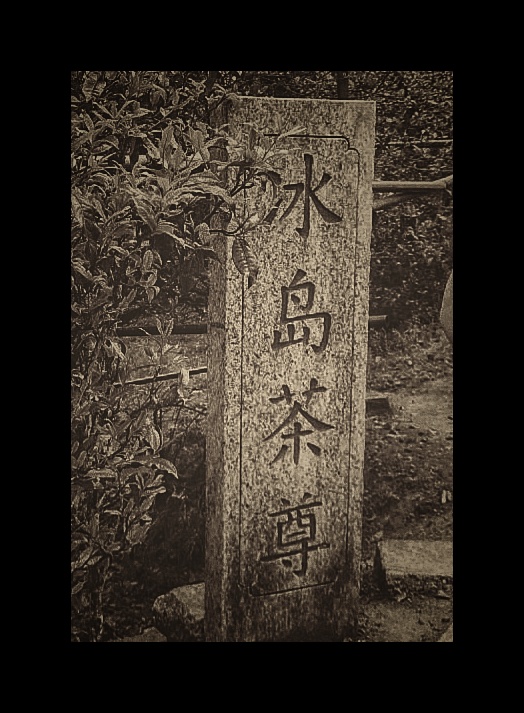
The price that Bingdao tea has reached has attracted much attention from Western countries, covering it with that mysticism reserved for the great names in Bordeaux or Burgundy winemaking, an aura that cannot guarantee that the taster’s opinion do not deform in front of it. But what makes Bingdao teas so? Where does the search for truth end in an area that sells the fresh leaves of its gushu at more than 30,000 yuan/kg (2700€/kg) and how can all the tea on the western market present itself as authentic Bingdao tea if is there so small production in certain years and at such crazy prices that even the local merchants give up?
In an objective sense we should look at the aminophenolic ratio, pedogenetic, climatic and altimetric characteristics, as well as the age of the plants. Yet on paper the puer of Bingdao do not win in this respect, which remains only mere conceptualism.
Often, when tea from a certain small production area reaches a certain level of quality, its market valuation gradually has nothing to do with quality. Often the disappointment that accompanies the tasting of sheng pu such as those of Bingdao or Laobanzhang is due to this phenomenon exactly as is the ecstasy that we build inside ourselves when a neurasthenic grimace appears on our face when we realize we have spent a quarter salary in a mediocre tea.
And this is the real focal point.
The tasting of teas such as the sheng of Bingdao, Laobanzhang, Laoman’e, Xigui aggregate the objective with the subjective, the hypothetical and the ideal condition, they are a set of antinomies that cannot be relegated to the simple obsession with categorization.
The dynamism of the market means that when an area is hit by an almost oracular mystification, many resources and capital gather in it. The increased pressure due to a high degree of visibility, the highest attention and the best technical ability will be poured into it, and after its own transitory course, the tea of that area could become one of the best with a high probability.
Why is it just probability? Because this is a simple hypothesis, idealistic and summary.
In support of this I was able to experience how it is impossible to separate pure matter from spiritualism when you are drinking tea, therefore to say that tea is the expression of the earth in the strict sense is as misleading as it is dimensionless, it means making it descend into the order of empiricism by depriving it of its aura.
Rather, tea represents the ground as much as a church bell tower is idealized by the village below, a border traced by our ability to grasp the residue of time, of a people and its spirit, to consecrate it in a higher dimension than a liquid translation of mere immanence. This is because it is what is sacred and immutable that creates a bridge between generations, a stable and lasting relationship between those who have passed away and those who have not yet been born, in that real identity that is independent of the present and the economic value.
Stubbornly objectifying the act of tasting tea like those of Bingdao is like mechanically listening to Strauss’s Metamorphosen without understanding the poignant pity of the loss combined with the fragmentation of the dignity of an entire people. In short words, what can be lost is what is most true and least intelligible.
Don’t get me wrong, quality is an objective datum and as such it must not be exploited or overwhelmed by unreal fairy tales, but relying solely on it one only runs the risk of being disappointed and deprived with an experience that escapes the most cultured languages.
 Wild Harvested