We have all heard it at least once: that Darjeeling black teas, the second flushes, taste like muscatel. To some it may seem a trivial matter, but for me reading it for the umpteenth time is torture, a subtle form of violence, like being tied to a bed and forced to listen over and over again to a lullaby sung by that unbearably grating voice of Liam Gallagher. Muscatel has become not a descriptor but a credential, a badge meant to pre-empt further inquiry.
Over the past decades, this obsession with muscatel has degenerated badly, taking on the shape of every late-capitalist fetish: ultra-categorization, linguistic anesthesia, the aesthetics of pseudo-scarcity, and the misappropriation of other people’s labor (where those who break their backs always earn next to nothing, in short). Premium harvests, super-premium, super rare, Imperial this or Royal that, Maharaja, special series, gold, silver… entering 80% of the online shops that sell Darjeeling is like being completely drunk, crashing your car through the window of a bar, and then asking where they’ve hidden the gas pump. It’s chaos wrapped in floral notes and, obviously, muscatel.
While the price of what is arguably the most “muscatel-like” oolong on Earth, the Dongfang Meiren (Oriental Beauty), was skyrocketing in Taiwan, and countries like Japan were demanding more and more teas with this profile, various Thai and Vietnamese players were putting their own substitutes on the market, with results that were sometimes surprising and at other times depressing. The difference is that, in those teas, muscatel aroma became an icon of ambiguity, whereas in Darjeeling people rushed headlong into it with kamikaze enthusiasm, to the point that this single aromatic note became the identity card of the entire terroir. No narrative was needed: all that mattered was printing the estate name in huge letters, saying it tasted of muscatel, and to hell with everything else.
Some time ago I had a discussion about this with two old friends at L.’s house, on one of those days when the air feels heavier, slower, saturated with humidity, the kind of day when you feel the urge to attack something immediately just to distract yourself from the terribly depressing climate trying to crush your mental health. L. is not a lover of Darjeeling teas, let’s be clear. She mostly drinks Tieguanyin, Yancha, and Dancong. Or rather, she had never really been interested in Darjeeling, had never felt the call to walk down the nave and reach the land of lightning. To her they were indecipherable; she simply didn’t feel like buying them, dismissing them as “all the same.” Brutal, but how can you blame her if you read “muscatel” everywhere? It’s as if there were a sort of olfactory socialism, an aromatic Marxism. At some point, their supposed crown jewel, the muscatel note, turned into a leveling policy, an ontological sponge through which no tea is allowed to stand out for its diversity. And the 200 appellations used in a schizophrenic way do nothing to help, further complicating a broth into which everything has now been thrown to please everyone. L. found them oppressively repetitive and excessively, self-consciously “colonial” in their communication. Who would spend €0.50-1+ per gram on teas you don’t even know where to begin distinguishing, drowned in lexical accumulation and burdened by a long struggle to recover from counterfeiting? To be clear, origin falsification happens everywhere tea is produced, but here the media, local ones included, have shown no restraint in piling on, placing a blood-drained territory under the spotlight with macabre, necrophiliac delight.
But back to the point: the problem is not muscatel itself. Muscatel has the same innocence jazz once had before becoming the soundtrack of elevators and three quarters of Christmas movies. L. told me she had last tried a Darjeeling ten years ago. The experience reminded her of her first time returning home after university, to her stale bedroom that smelled of being shut in and of puberty, with the blinds left in exactly the same position and the same wallpaper, only half detached and yellowed.
This is because only in recent years Darjeeling has begun to stop being a historical museum, a sarcophagus of the status quo, although resistance remains. Sellers still peddle stuff on the verge of turning to dust, shredded, insipid leaves, or teas dressed up with names that excite colonial nostalgics and crown enthusiasts. What I’ve never understood is this inability to distance oneself from the constant urge toward self-marginalization, and why Darjeeling has refused to stop playing a marginal role, the eternal wallflower at the dance, watching others on the floor while sitting on the chair farthest from the punch bowl, waiting for an appointment that will never come on its own.
The real problem is the renunciation of conflict. Authentic Darjeeling does not taste only of fucking muscatel. Sure, it’s there too, especially in certain cultivars and in specific seasonal windows, but reducing everything to that means deliberately amputating the rest, making people believe that Darjeeling tea tastes like nothing else. In reality, the tea from these mountains is frenetic, conflictual, full of friction, to the point that you would never believe the same leaves, processed differently, could come from the same terroir, or even the same continent.
To insist on muscatel as the defining criterion is to deny this productive volatility, to make Darjeeling safe, legible, and ultimately harmless.
The term muscatel has become a sedative that Darjeeling has been carrying around for fifty years like a bag of diazepam shot straight into the arm, endlessly.
This territory does not need to be Kyoto, where everything is ultra-described, every sign is endlessly verbose in its insistent multilingualism, where everything is clear to the point of exasperation. Darjeeling should instead show its character, like a Calcutta market at five in the morning, or a pub brawl on any Friday night in Birmingham: disordered, real, and above all done with pretending that this land begins in the White Drawing Room, with all those useless appellations.
There is an existential need to change the narrative around these teas, so that they can be described uniquely, as one would a singular work of art. We need to detox from neutral descriptions and lexical ambiguities. There is no need to re-propose a worn-out variation of the same symphony. Continuing to scrape the violin over the word “muscatel” is nothing but a preemptive retreat, a laziness that domesticates the masses. Excessive categorization has forced Darjeeling into the need to correspond to a genre, and as such it must “respond” and “fit,” rather than signify.
Moreover, the systematic exclusion of autumn teas from market discourse looks more like an intention than an oversight. Autumn is less photogenic; muscatel aromas are often muted by a desire to experiment, to create more ambiguous leaves that offer a complex, divisive, at times eccentric aromatic stratification, shaped by different growing conditions.
In this case, science ends up confirming what experience had already suggested. The famous muscatel aroma is the result of complex interactions, pedological, climatic, agronomic, altimetric, cultivar-related, and the relationships between plants and insects. This aroma appears almost as a direct consequence of the plant’s defense strategies against herbivorous insects, particularly thrips (Scirtothrips dorsalis) and jassids (Empoasca flavescens), whose activity increases during the second flush. The lesions caused by their mouthparts, rasping-sucking in thrips, piercing-sucking in jassids, activate inducible defense responses that lead to the production and release of secondary metabolites. In general, these metabolites play crucial ecological roles: they may act as toxins, feeding deterrents, reducers of plant tissue digestibility, or chemical signals that attract the natural enemies of herbivores. This principle, widespread throughout the plant kingdom, is particularly evident in tea plants. In the specific case of Darjeeling, herbivory stress induces strong up-regulation of genes involved in the biosynthesis of volatile aromatic molecules such as linalool, geraniol, nerolidol and their oxides, as well as key enzymes like lipases, alcohol dehydrogenase and glycosidases. Many of these compounds derive from precursors stored as disaccharide glycosides (β-primeverosides) which, under conditions of cellular integrity, remain separated from β-primeverosidases; membrane rupture caused by insects (and later amplified during processing) allows hydrolysis of these precursors and the release of free aromatic molecules. Among them are terpenoid compounds such as 2,6-dimethyl-3,7-octadiene-2,6-diol and 3,7-dimethyl-1,5,7-octatrien-3-ol, which specifically contribute to muscatel perception. A similar mechanism occurs in Taiwan with Empoasca onukii (Jacobiasca formosana).
Darjeeling thus represents an emblematic case of convergence between ecology and taste, where muscatel is only one expression of an extremely complex system of interdependencies, also modulated by cultivar, altitude, agronomic management, and seasonality. But what happens when there are climatic imbalances, when gardens are located at very different altitudes, when insect density decreases? These increasingly common phenomena lead to teas that are radically different and inherently unpredictable from year to year. So why not accept this and build a new narrative structure?
This is made extremely evident by scientific analyses, which highlight how the interaction of the factors listed above allows spring and autumn harvests to accumulate higher levels of metabolites, playing a crucial role in shaping Darjeeling’s aromatic and gustatory profile. Equally important, metabolomic analyses show clearly distinct profiles between flushes (amino acids, sugars, polyphenols, organic acids), demonstrating that spring and autumn can yield high metabolite accumulation and thus cups of great finesse, complexity, and internal tension, which should prompt a reconsideration of autumn teas not as secondary expressions, but as integral to the identity of Darjeeling itself.
Choosing diversity, accepting that Darjeeling implies teas that are almost impossible to assimilate into any single category, means recognizing its very beauty, a beauty as refusal of assimilation, a beauty as measure, a beauty as resistance of an unnormalized remainder. Continuing to say that Darjeeling teas taste only of muscatel is like building a library filled with a hundred scientific studies, adding a generous amount of humanistic literature, Adorno, Camus, Scruton, Heidegger, Dostoevsky, and then setting it on fire.
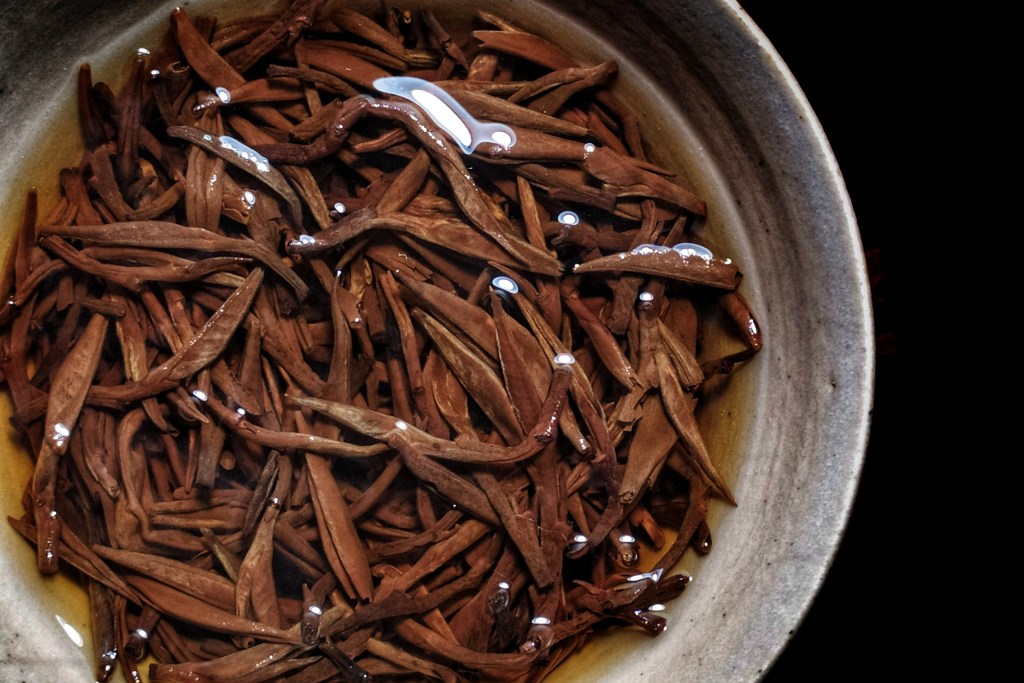
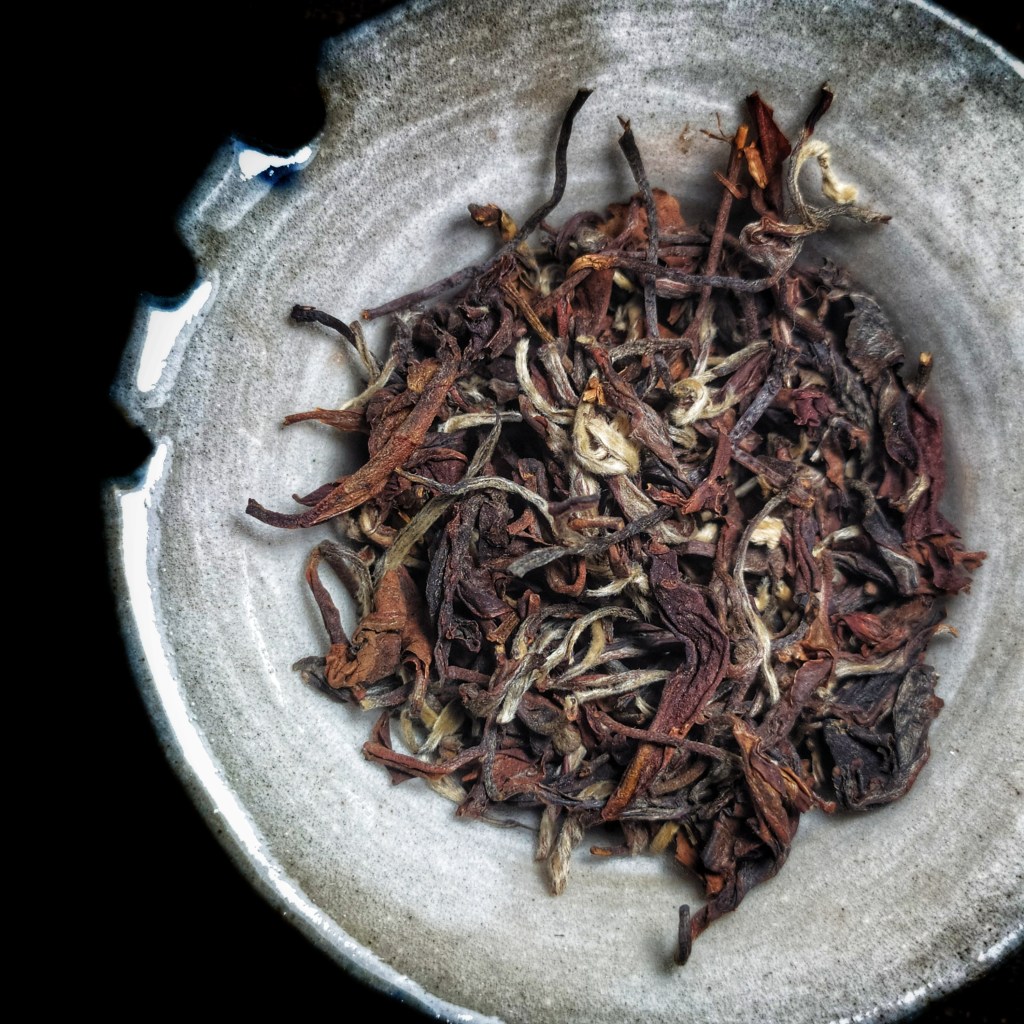
Changing the narrative means reintroducing risk. It means accepting experimentation in tea processing, occasionally producing batches that are hard to sell, leaves no one has ever heard of. Until a few years ago I myself was completely ignorant of what this land has to offer. Then I discovered Darjeeling teas from non-Chinese cultivars, roasted, smoked, or with every imaginable degree of oxidation, leaves with a huigan capable of overshadowing many Chinese teas; notes of mango and green cardamom, of apricot and at the same time wax on an antique piece of furniture, of moss and buttercream and Damask rose, or freshly pressed olives alongside jasmine accords. These are aromas that seem utterly incompatible in any other context, yet here they find shelter, like the eccentricities of the most diverse people taking refuge from urban rain under the same bus stop.
Reorienting the narrative therefore means striving to describe each lot as one would an unrepeatable painting, just out of the studio and still smelling of oil-paint solvent. It means abandoning the illusory idea that quality coincides with clarity, aromatic clarity this time, not descriptive, because the most disparate and useless filo-colonial appellations will never restore lost authenticity, nor the uniqueness that teas from this terroir so desperately need to reclaim.
Bibliography:
Cho, Jeong-Yong & Mizutani, Masaharu & Shimizu, Bun-ichi & Kinoshita, Tomomi & Ogura, Miharu & Tokoro, Kazuhiko & Lin, Mu-Lien & Sakata, Kanzo. (2007). Chemical Profiling and Gene Expression Profiling during the Manufacturing Process of Taiwan Oolong Tea “Oriental Beauty”. Bioscience, biotechnology, and biochemistry. 71. 1476-86. 10.1271/bbb.60708.
De D, Hazra A, Das S. & Ray S.. (2025). Metabolomic insights into seasonal variations in Darjeeling orthodox tea: implications for quality, flavor, and nutritional profile. Journal of Food Science and Technology -Mysore-. 62. 10.1007/s13197-025-06310-2.
De D, Sarkar S, Chhetri H, Chatterjee J, Sinha N, Das S, Sarkar A, Ray S (2024) Impact of meteorological and processing factors on metabolite composition of Darjeeling tea. J Anal Sci Tech 15(1):1–19.
G, Bornali & Borchetia, Sangeeta & Bhorali, Priyadarshini & Agarwala, Niraj & Bhuyan, Lakshi & Rahman, A & Sakata, K & Mizutani, Masaharu & Shimizu, Bun-ichi & Gurusubramanian, Guruswami & Ravindranath, R & Kalita, Mohan & Hazarika, Mridul & Das, Sudripta. (2012). Understanding Darjeeling tea flavour on a molecular basis. Plant molecular biology. 78. 577-97. 10.1007/s11103-012-9887-0.
Liu, Huifan & Li, Sufen & Xiao, Gengsheng & Wang, Qin. (2021). Formation of volatiles in response to tea green leafhopper (Empoasca onukii Matsuda) herbivory in tea plants: a multi-omics study. Plant Cell Reports. 40. 10.1007/s00299-021-02674-9.
Sakata K, Mizutani M, Ahn YO, Shimizu B (2005) Floral aroma of Oolong tea are results of stress-responded reactions in tea leaves during the tea processing. In: 2005 international symposium on innovation in tea science and sustainable development in tea industry, 11–15 Nov 2005, organized by Tea research institute, Chinese academy of agricultural sciences, China tea science society and Unilever (China) Ltd., Hangzhou, China, pp 607–617.
Wang L, Di T, Peng J, Li Y, Li N, Hao X, Ding C, Huang J, Zeng J, Yang Y, Wang X (2022) Comparative metabolomic analysis reveals the involvement of catechins in adaptation mechanism to cold stress in tea plant (Camellia sinensis Var. sinensis). Env Exp Bot 201:104978.

 Wild Harvested