Tag: bulang

  • Neo-Noir Infusion: Drinking Time in a 2007 Banzhang Cake

    Neo-Noir Infusion: Drinking Time in a 2007 Banzhang Cake

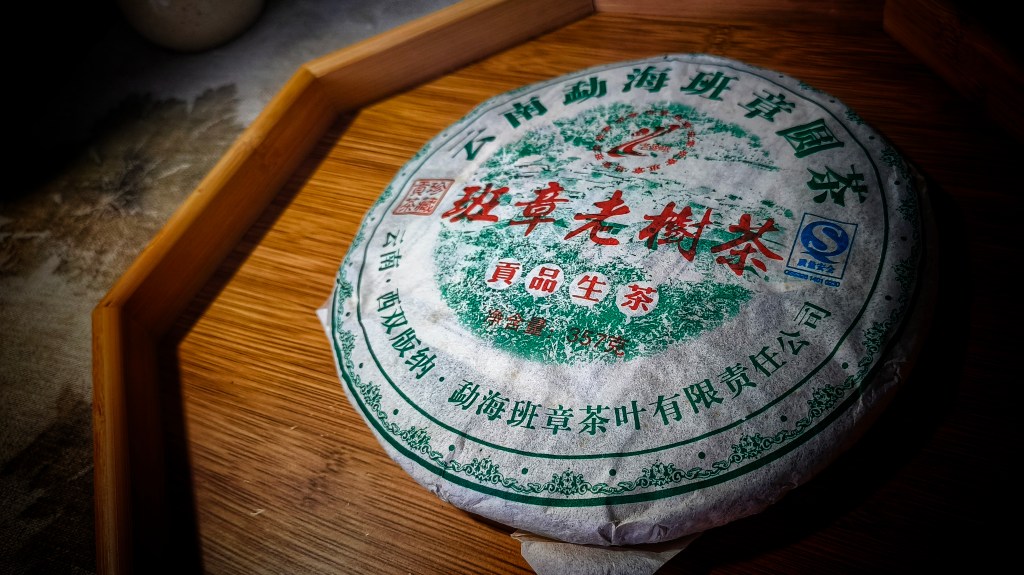
    Lao Man Er, a brand many are likely familiar with, produced this cake in 2007 using old trees leaves from the Banzhang area. I doubt it includes LBZ or Lao Man E, and I equally doubt there is a significant share of XBZ, but there is something intriguing here. Beyond the brands and trends, there are things—or teas, in this case—that offer a window into a space and time distinct from our own, tempting those caught in the compulsion of favoring only a preferred label to look elsewhere.

    With its undeniable urban bohemian verve, it teaches the perfect balance of wet and dry storage, revealing mature yet still vibrant aromas woven into a humid structure, neither weary nor depleted by the damp condensation of some Taiwanese basement.

    Through earthy undertones interwoven with hints of leather seats from an old E-Class and cognac-soaked cork, it conjures a muggy, far-from-perfect night inside a car, where buildings seem to jostle against each other to stay upright. What emerges is a metropolitan Erebus seen through the hyperreal cornea of Richard Estes, with the visual cortex overexposed to those nocturnal images of smoke and decay, a flickering interplay of light and shadow in the neo-noir outskirts of Hong Kong.

    The leaves evoke the metallic sheen of a puddle on warm asphalt, the dry sweetness of tobacco, a distant echo of spices and herbal tinctures. They also bring to mind fermented fruit, aged pomelo peels, the scent of old haberdashery furniture, and the leather-bound books of a forgotten bookstore hidden in the alleys of a city that never sleeps.

    The sip feels like a 35mm frame, with each scent of time etched into it, like a latent image forming on film, one catches a glimpse of a past spent in some chipped underground warehouse, as well as a more recent existence in a better-exposed shop in Guangdong, when notes of chestnut, dried plum, figs, and kombucha come alive, only to give way to a faint yet persistent huigan, dissolving slowly and gradually like the last cigarette left burning, like the night retreating at dawn.
  • Another soliloquy about Laobanzhang with a 2018 sheng pu from Tianhong tea factory

    Another soliloquy about Laobanzhang with a 2018 sheng pu from Tianhong tea factory

    Laobanzhang has long been an example of ambivalence. Its bitterness contrasts with the sweetness that pervades you a moment later, the exaltation of its essence opposed to the condemnation of the upheaval caused by its own greatness. Its leaves can be as bitter and severe in youth as they are sweet and complex as they age, teaching us that solemnity is not in the present and that it can never be enclosed once and for all. What drives us to buy what now seems so distant from reality? Yet as Sophocles said there is no life without pleasure but, above all, life is more beautiful when one does not think.

    This is Laobanzhang, a corner of the world where gods seem to have found refuge, a strip of 300 hectares of ancient trees that have seen the course of the ages so much as to survive the history of the village itself. There are about 120 families mostly of the Hani ethnic group who inhabit these mountains, about 500 people almost all involved in the tea market, that same tea that once animated their ancestors now seems to have took away the soul of their descendants. The radical change in lifestyle, the experimentation of mere materialism have placed the village in front of a test that is only partially overcoming. There are many examples of counterfeiting, of slightly above average tea, quality standards that are not always clear or respected. All at crazy and irrational prices.

    However, a sip of a real Laobanzhang is able to enrapture us to the point of blurring the language, words become superfluous and we are ready to resort to the credit card through a disintegration of self-control only to chase the memory of a tea which, when authentic, remains indelible in our memory.
    The problem is that by now we risk finding very little of that authenticity in the future and at that point the bitterness will take over even the sweetest of memories.

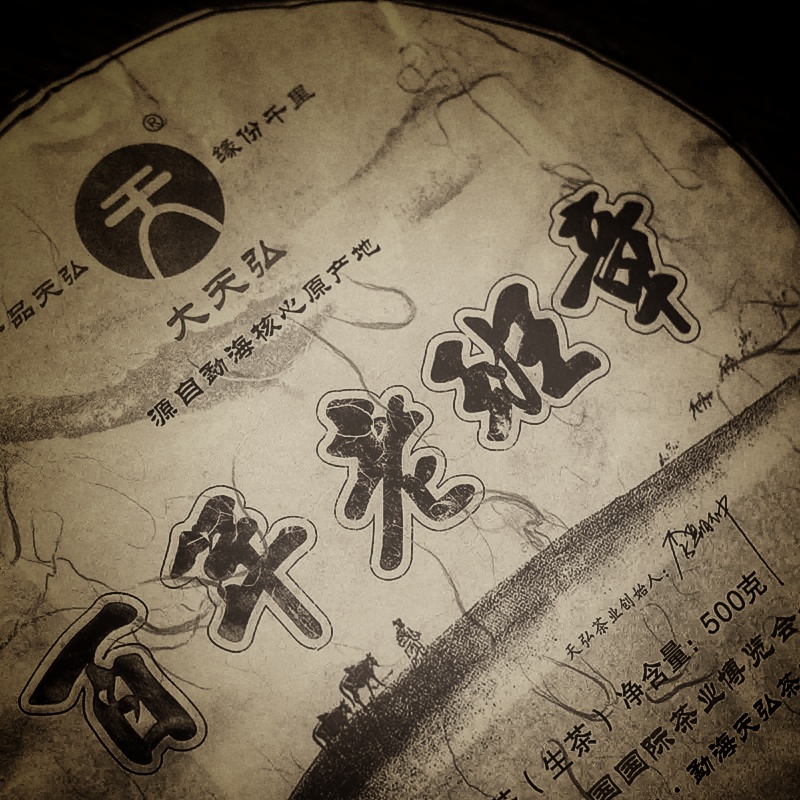
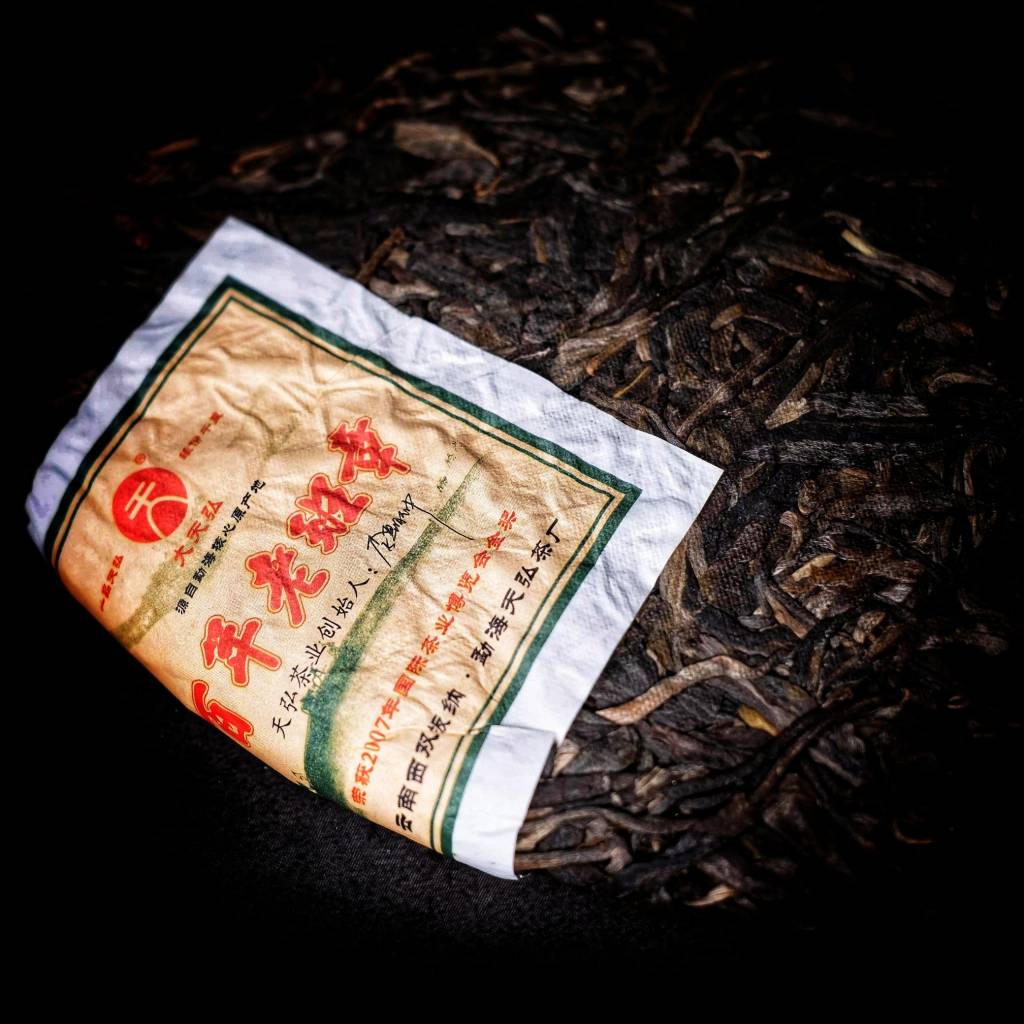
    That of the Tianhong Tea Factory is a centenary trees sheng pu from material collected in the spring of 2018 that contains all the ancient charm of a village. It appears in a brilliant golden color with pinkish undertones; notes of wood burning in the rain and nuances of ripe apricot emerge from the wet leaves than hints of cavendish tobacco, plum jam, light botanical-alcoholic fragrance along with reminiscences of wild flowers, caramelized citrus and subtle scent of violet candy.
    I think the measure of a good Laobanzhang is not only the sensory complexity, but the ability to stimulate the memory in a articulated and orderly sense, like an open book on the knees whose pages are nostalgically leafed through; that is what happened with this sheng. On the palate it has an extraordinary balance, the herbaceous flavor is wrapped in a honeyed sensation, the liqueur is thick, juicy, the bitterness allows the aromas to remain for an interminable time and the mouth to salivate while intrepidly awaiting the next sip. The qi is strong and the final notes close on a pleasantly floral and refreshing sensation.

  • Reflections about the pu’er market and Laobanzhang

    Reflections about the pu’er market and Laobanzhang

    Everything about tea is born from an initial effort and suffering, and through these it is consecrated in a sort of spiritual life that is strengthened over time, in its determined and individual character. Tea is not the immediate gift of nature. Immediacy in tea always comes at a high price.

    Laobanzhang is experimenting a pattern already seen in areas where previously a deep famine reigned; now money is spent in the most disparate ways, new contemporary-style buildings arise and what comes from the past is quickly supplanted by the well-being of a conscience that appears liberated from the oppressive spirit of the previous period.

    The new generations are not destined to experience that effort and suffering, the natural rhythm of things, the process that brought Laobanzhang tea to what it is even before the invisible hand of Yunnan moved prices in the spring of 2007.
    Everything happened very quickly, in 20 years a main road capable of connecting all the villages once disconnected from the world was built, new branches were opened, new investment funds and capital arrived from holding companies which saw a safe source of investment. All of this is reminiscent of a situation before the burst of the speculative bubble, but it is not, all of this is the present.
    The price of raw tea has gone from 8 yuan/kg to 1800 in the famous spring of 2007, up to exceeding 13000 today, an escalation that does not seem to stop.

    The tea leaves are sold to the shops before they are processed most of the time without any intermediary, just as en primeur wines are sold in Bordeaux before they end up in the bottle. This is what has been happening for years now in these mountains and which has led many merchants to abandon them, in what we can define as the third emigration of Laobanzhang.

    How much of the real Laobanzhang is left today and how much it is still worthwhile for tea merchants to look for a product that no longer lives for its uniqueness and soul? How much the economic value of a place can become a burning glass of its greatness and how long will we wait before another crash of the speculative bubble?