Tag: darjeeling

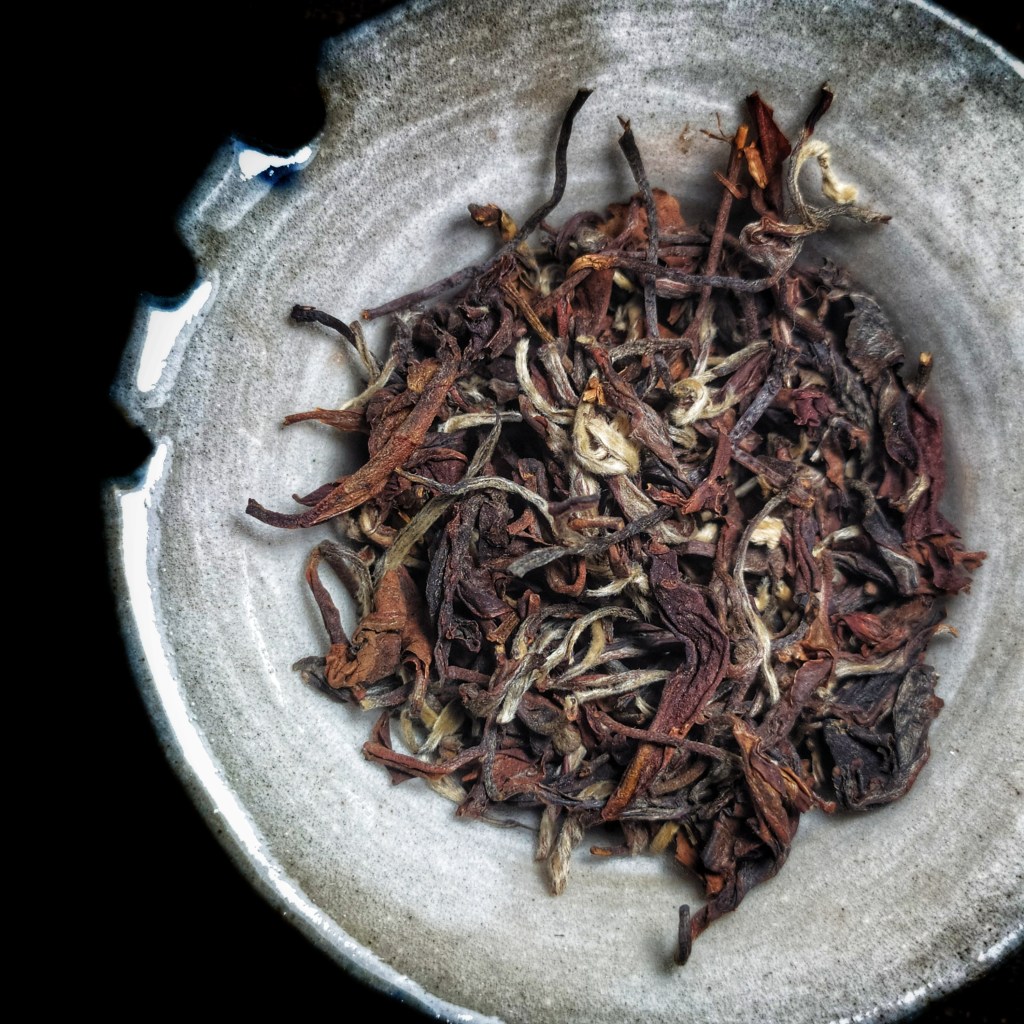
  • Seven Essence Darjeeling Scorsese red

    Seven Essence Darjeeling Scorsese red

    This was the last tea of 2024 and the first of the new year. It was a tough, exhausting year. Dealing with the pain of loss, with the sense of emptiness, of being unmoored from the warmth of everyday life and the luxury of the habit of affection, I believe is the greatest thing that nature can ask a human being to face. For the first time in ten years, tea was not at the center of a significant moment, it was a palliative, something secondary, the translation of the search for a cure.

    What had always fascinated me about tea and its aging, its ontological tension between existing in the moment and thriving in a higher dimension, its transitory nature suspended between being and dissolving, the form and its annihilation, from that moment also applied to human life in a cruder and crueler way than I had ever experienced.

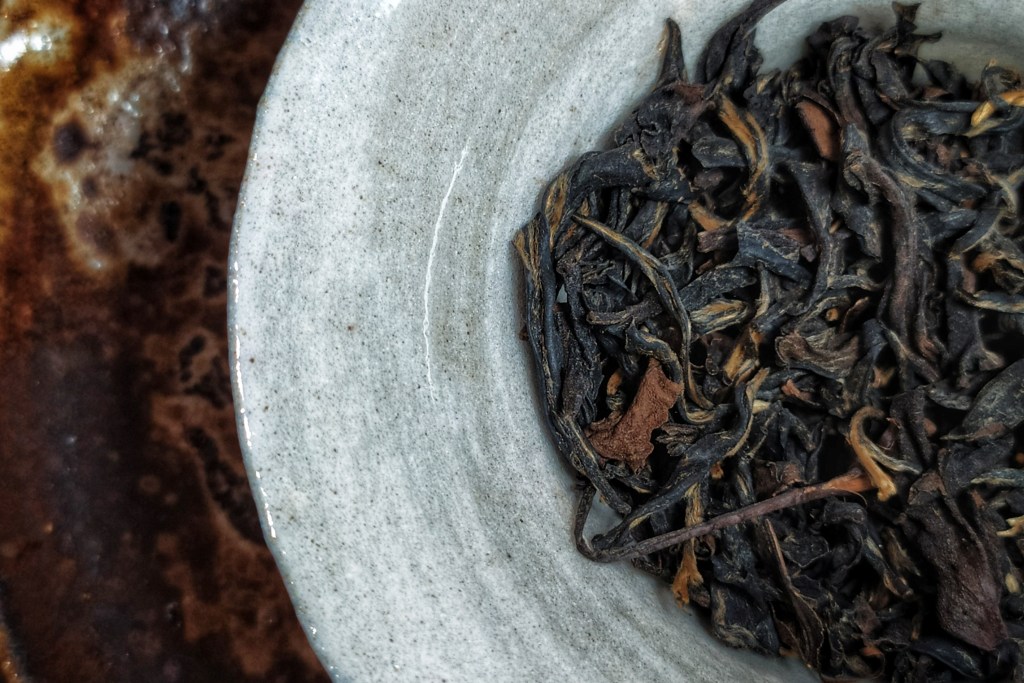
    This tea, the @sevenessenceofficial Scorsese was a companion, a ferryman between the days that followed one another without apparent sense. Sipping it is like tasting the truth, it is like watching a painting by Francis Bacon come to life, built with one brushstroke of flesh and blood after another.

    With that note of Sacher and cinnamon, of burley tobacco, of wenge, of leather and smoke, it initially presents itself as a dark and gloomy shot governed by soft lighting, with a corner set up for a sweet Christmas, all mistletoe and songs, in a untidy apartment plastered with references to art deco in the hallucinatory New York seen through the alienated and feverish gaze of Travis in Taxi Driver.

    When the world seems too hard, when losses pile up and the weight becomes unbearable, tea I believe offers a refuge, which is a greater blessing than we are often granted. It is not an escape, but a return to what is essential, and in its cheering sip pervaded by the aromas of condensed milk, apricot, vanilla and chocolate is what this tea embodies, it is like us, it resists, it keeps us standing, it appears in our lives like diegetic music, as that stranger who suddenly puts on a swing piece in a now-dimmed room in the middle of a bad night, convincing us to give life a dance once again.

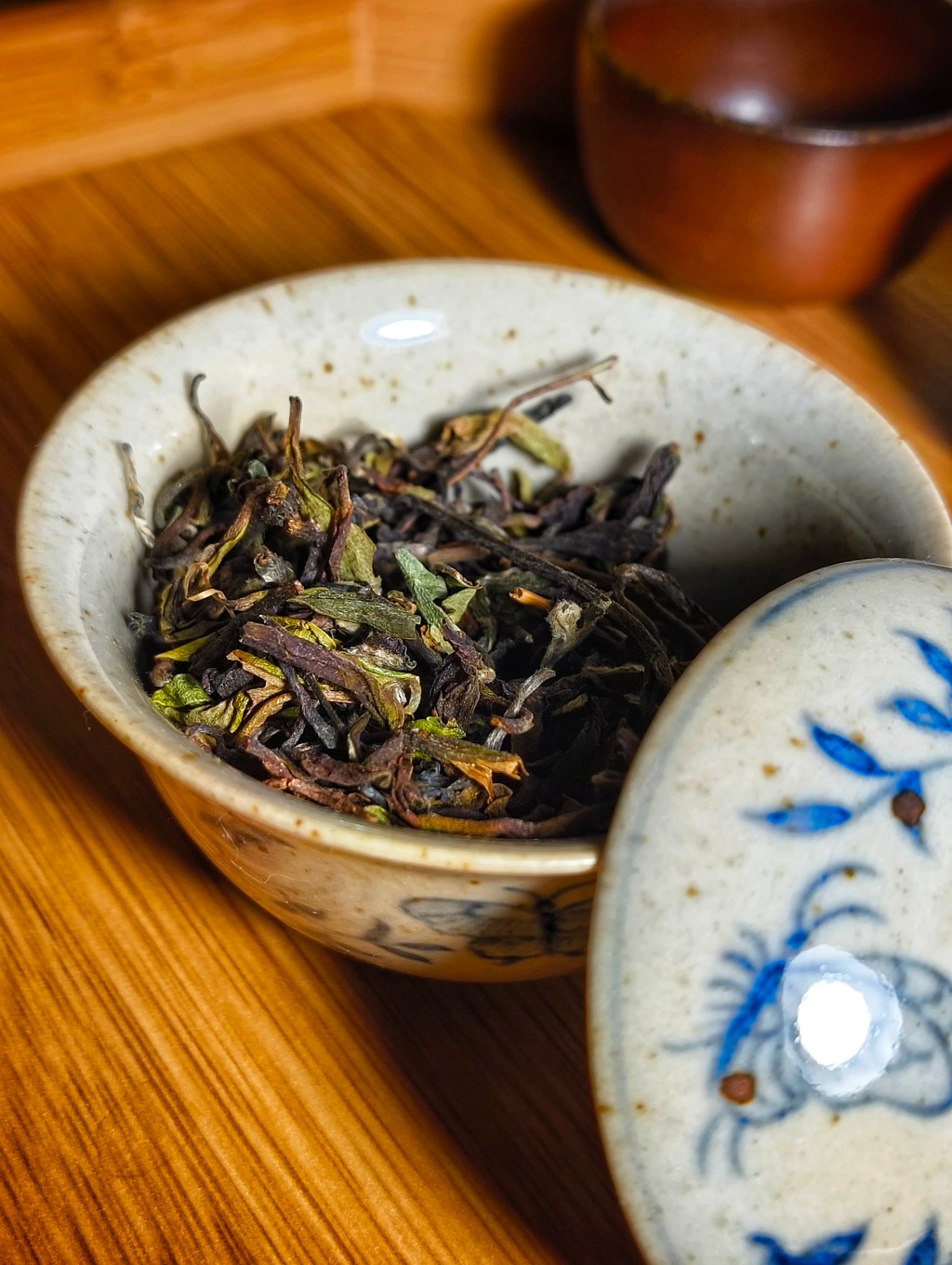
  • Climate crisis, Darjeeling and Sublime. Seven Essence Darjeeling summer Ochre

    Climate crisis, Darjeeling and Sublime. Seven Essence Darjeeling summer Ochre

    Despite the climate crises, landslides and hydrogeological disasters that have brought the Himalayas to their knees in the last decade, some corners of this land continue to surprise, returning results beyond the imagination, overcoming difficulties and uncertainties.

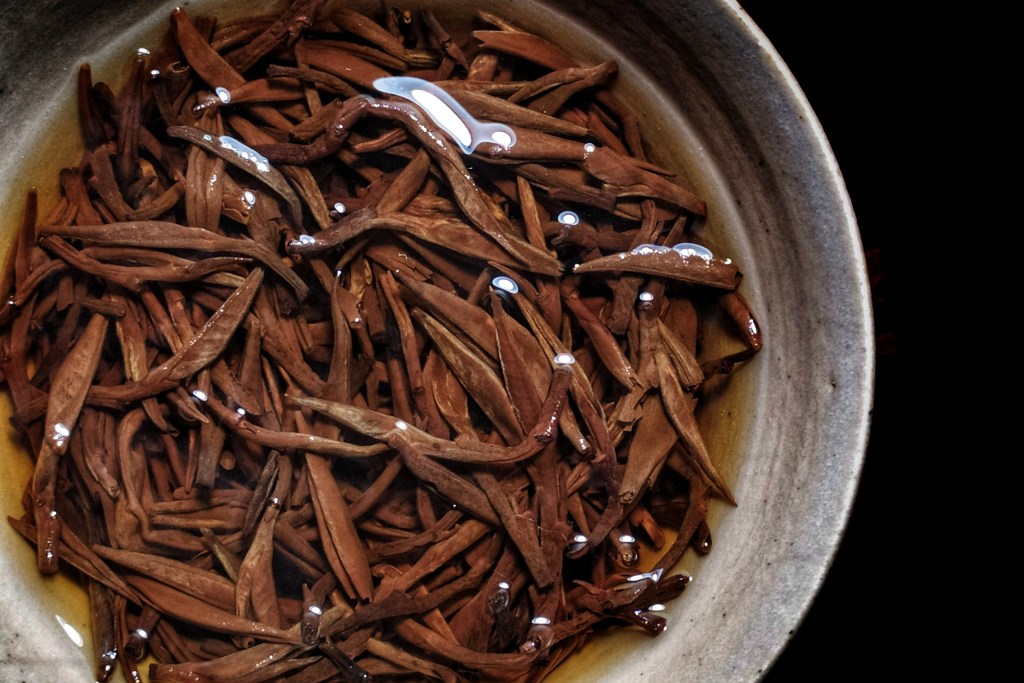
    Ochre is a Darjeeling tea, created using the AV2 cultivar, with golden leaves, twisted like the enigmatic smile of Klimt’s Judith, pleased in her languid gaze.
    Born from a thirsty summer, now the umpteenth, it reveals notes of cocoa, malt and buckwheat, then grants aromas of grilled beetroot, cherry brownies and maple syrup.

    Just like in Judith, in this tea lives that something that seduces but leaves a sense of uneasiness, showing that power, which was once attributed only to art, to evoke ambivalent sensations.
    Klimt transformed Judith’s heroic gesture, the killing of the Assyrian general Holofernes to free his people in an act that sublimates partly as a hedonic symbol and partly as a manifesto of an uncertain era and it is in these terms that Ochre places itself.

    The spring harvests are now the children of continuous cycles of drought and violent rains, an alternation of moments of climatic inactivity and destructive floods and in front of the intensity of teas like this I ask myself what and how much we risk losing, and the answer is things like these.

    The sublime is linked to terror, and terror is all the more terrible when linked to the worst fear for man, that is, loss. It takes us beyond the sensitive abyss and is the intersection between a sense of anguish that manifests itself as a shiver and that Laetitia as Schiller described it, that dazzling sense of bliss.

    And in part teas like these bring us back to this condition, to the fear that things like these may one day not be there or exist in such a different proportion that we forget what was there before.

    In its softness, in its caramelized, buttery and lactic aromas, this tea is an encounter between pleasure and meaning, between sensorial beauty and contemplative introspection, transforming its aromatic expression into an experience not only of taste, but of eternal beauty.

  • Beyond the ordinary concept of craftsmanship. Seven Essence Darjeeling Gossamer

    Beyond the ordinary concept of craftsmanship. Seven Essence Darjeeling Gossamer

    There are teas that are indifferent, inexpressive, flat, that simply fill a cup and others that nourish the soul, an expression of the genius loci, resistant, a symbol of those who bear witness to a story, to a place, to bring tea to its highest expression.

    Darjeeling has suffered in the last twenty years from the abuse of its name, from that condition of dissatisfaction for its unexpressed potential, from the awareness of being able to openly declare itself as one of the best terroirs in the world but that for a commercializing inspiration such a condition was denied.

    But to paraphrase Jasper, just as we don’t think of the disease of the shell when admiring its pearl, so when faced with the vital force of the work we don’t think of the cause, the agony that are perhaps the condition of its birth.

    Teas like Gossamer are not just a drink, but an expression of the soul of the terroir, the sublimation of a commitment that goes beyond the ordinary concept of “craftsmanship”, each sip is a meditation on the essence of beauty: the struggle between time and the moment, the fleetingness of a pleasure that persists only as a memory, a retro-olfactory photograph of everything that matters in that instant.

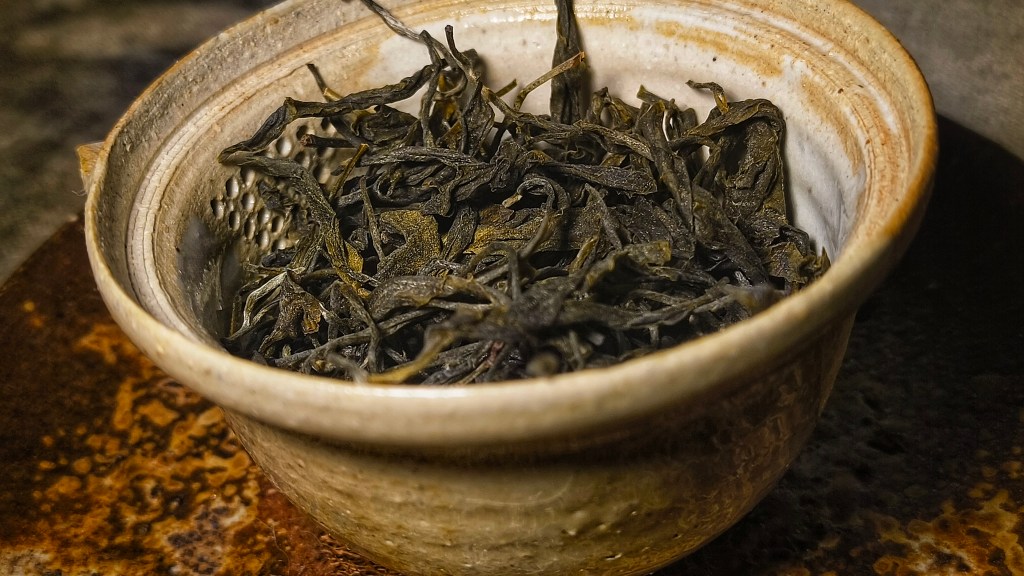
    Plucked from the B157 cultivar, its perfume is complex, polyhedric, like a work of art that always reveals new details with every attempt to decipher its chromatism. It immediately shows an almost ethereal tone that announces its subtle finesse. The aromas of chamomile blend with those of olive oil, lavender and a mango sorbet, then a bouquet opens up characterized by the scent of Aleppo soap, chrysanthemum, orchard grass, water spinach.

    The sip is persuasive, creamy, persistent with an incorruptible freshness and lets a clear return of sweetness emerge, that sweetness that consecrates a Darjeeling tea at the peak of its expression.

  • Darjeeling, a refuge of perpetual change. Seven Essence Darjeeling Villanelle

    Darjeeling, a refuge of perpetual change. Seven Essence Darjeeling Villanelle

    Among those mountains where even the fogs seem to recognize themselves, always the same, the sun makes its way over the peaks of Darjeeling in that way that only northern India can do, with those sunsets stained with scarlet red as if a cup of tea had spilled in the skies.

    Among the big brands, the massive and hypertrophic estates, it is hard to believe that there is a world of artists in constant ferment. In Darjeeling, breathing is instead punctuated by two incredibly deep breaths, one is that of tradition, the other is that of an unprecedented contemporaneity, creator of teas that have become a symbol of the new future: bold, powerful, and often, undeniably, modern.

    Spring teas like Villanelle hold within them the extraordinary nature of spring, in its scents of dried magnolia, citrus, hydrangea and winter melon they seem to reconstruct the triumph of Rubens and Brueghel the Elder’s Eden, an explosion of renewed vegetation, an aromatic encyclopedia of the natural world accompanied by that body, that powerful carnal plasticity of the baroque season.

    While teas like this one consecrate the cup as the theatre of the sublime, they remind us that in these lands it is not easy to emerge, that creative flair and freedom of expression are not common or taken for granted and that spring, despite its splendor, cannot erase the bitter aftertaste of this eternal struggle.

    The sip has a good thickness, with an almost watery sweetness typical of melon that supports the weave of elderflower and orange blossom syrup, thickening in the aromas of taro mochi and acacia honey. It proves to be a vertical tea, ascending in its tension between freshness and maturity, it shows to be a path to follow, a turning point by placing a door in front of the past that must never be reopened.

    In the past decades Darjeeling has been like a vagabond in the world, a terroir of extraordinary complexity and a potential only minimally explored, but it is as if the truth has continually escaped. But now tea and producers like these are establishing a new route, a new pact with their land, a hymn to the highest genius, to the craziest tea, refuge of perpetual change.

  • An Antidote to Boredom. Seven Essence Darjeeling Ennui

    An Antidote to Boredom. Seven Essence Darjeeling Ennui

    Ennui, boredom, the name of this tea, the strange sensation that overwhelms you when nothing happens, when everything forces you to remain still, like an old wreck of a bus stopped in the middle of nowhere, and you there, with an empty gaze, with a half-extinguished cigarette between your fingers, without knowing where you will go or what you will do. Boredom is the slow rain that beats on the windshield while you wait for a level crossing to close, waiting for a train that will never pass.

    It is with you wherever you go, like an old battered suitcase that you can’t forget anywhere. According to Heidegger and Schopenhauer, boredom is a sign of a more significant absence, that of an authentic connection with reality, the feeling associated with the unsatisfiability of worldly things. But boredom can be seen as a crisis of meaning, which opens up new possibilities of existence, it makes you feel as if time is a trap, a kind of dead end, but things like culture, rituals and traditions provide an antidote through their ability to live time and experience through values that transcend the individual.

    Teas like Ennui are authentic expressions of civilization, they not only entertain but give shape to a moment. They are those true teas, shaped by high altitudes, by the hard, merciless soil, those peaks that teach you freedom and coexistence with emptiness.

    Its leaves enclose that sense of limit, of transcendence, where boredom has no space. Between the notes of chestnut honey, peach and turmeric, accords of tuberose and Bulgarian rose, jasmine and ylang ylang make their way, accompanied by the scents of birch wood and face powder as in an overlapping of works by Rachael McCampbell exhibited in an old venetian coquetry.

    And if the antidote to boredom is culture and tradition, tea, from this perspective, is a sort of Aristotelian mimesis: it imitates and returns, in the form of a sensitive experience, the nature and culture of the place from which it comes. And so in its soft and sweet sip, aromas of grapes, moss, spices and rose weave the memory of a glass of moscato passito in the middle of summer, consecrating a tea of incredible persistence.

  • A “cante jondo” between emotions and rationality. Seven Essence FF Darjeeling “Duende”

    A “cante jondo” between emotions and rationality. Seven Essence FF Darjeeling “Duende”

    Duende is the name of this tea, that duende which is a place ex-nihilo where there is no map or exercise, principle of creation, of generative power, it’s the mental dress worn by the restless, of those who renounce deep sleep by remaining in the temporal foil between the traveled path and the dreamed, of those who are willing to put aside the smile to travel the streets of disquietude.

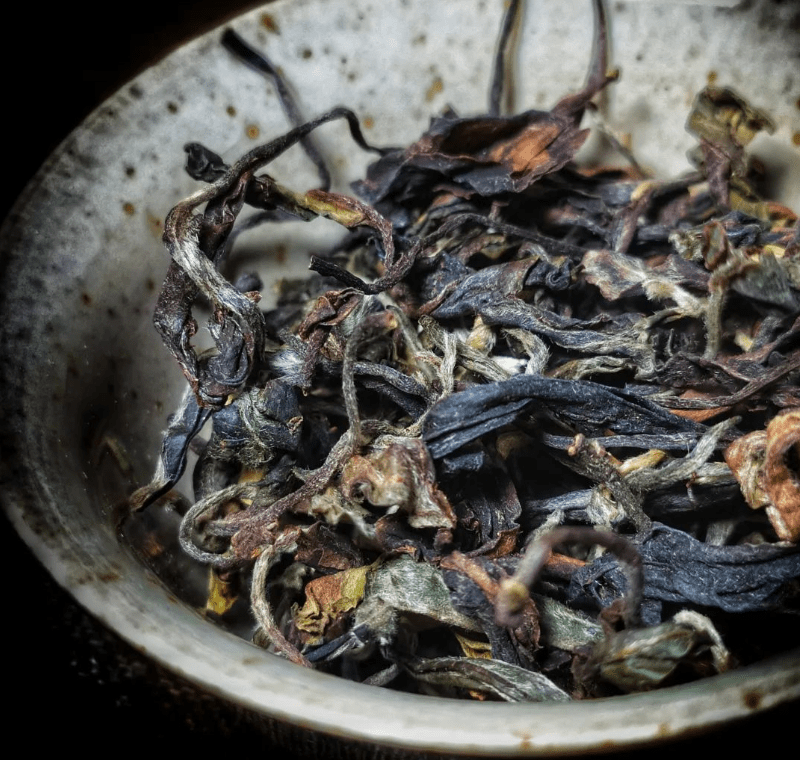
    Through this tea in its scents of mango, green melon, among the nuances of cut grass, of late summer rain, Darjeeling rediscovers itself in a new, unique form. There are those who said that this land would not granted anything more than what has already been seen, but there are those who among the mists understood the spirit of time, who become the interpreter of that restlessness, that fertile suffering that fuses the forms, which is the matrix of the extraordinary.

    In its tones of roots, bergamot leaf, suede, pumpkin seeds and cocoa butter it translates into liquid that power of primordial vigor, of a subterranean force that destabilizes habit and consecrates itself in the new. “The arrival of the duende always presupposes a radical change of every form with respect to old plans, it gives sensations of freshness that are completely new” and it’s then that are revealed the faces of men and women who support the weight of the uncertainty, in which are configured the struggle of contrasts, the incongruence of thoughts, the refusal of the safe learned geometries to pursue the discovery of tacit truths.

    In the mouth it’s soft, buttery, contrasted by a Champagne citrus freshness, the steam brings to mind that morning breeze of Reims before the harvest, surrounded by earthy and humid aromas. They become the foundation of a deep melody of perfumes, a “cante jondo” between emotions and rationality, between ancient ports and new routes.

    But it must be tried, there is no way to explain leaves like those of Duende without resorting to a paradoxical language, because their taste, their tactile descending path towards the throat and directed to the soul cannot be adequately articulated by tired descriptors and words, but must be grasped in its sensitive experience