Tag: first flush

  • Why Are We Still Pretending Darjeeling Doesn’t Matter? – Seven Essence Darjeeling Ouroboros 2025

    Why Are We Still Pretending Darjeeling Doesn’t Matter? – Seven Essence Darjeeling Ouroboros 2025

    There are several reasons why I sometimes disappear and stop writing. A loss of imagination, a lack of interesting teas, and other times it’s simply my own bad habits sabotaging every functioning neuron like a broker gambling with other people’s money. And then there are a couple of reasons no one would care about anyway.

    But through all of this, I never stop reading.

    Still, I never seem to read enough about Darjeeling, about what happens up there, about its teas.

    I’ve always been a fanatic of the outcast and a chronic sentimentalist when it comes to shadowy corners, yet I can’t quite explain how, after twenty years of transformation, twenty years since Darjeeling was a caricature of itself, a withered tea ground into particles so fine they resembled the jaundiced, depressing version of the world’s most famous nose white powder. But now that this terroir is producing something extraordinary, even radical, it remains buried under a silence so thick it’s hard not to suspect that plenty of people prefer it that way.

    I mean, at this point Darjeeling has become like one of those old guitar shops where you walk in thinking you’ll just take a quick look and end up realizing that every instrument in the room has more personality than you do.
    And now they’ve even taken to crafting a flawless Yabukita, without kidnapping any Japanese makers or resorting to those “minor cultural seizures” the British used to call foreign policy when they royally screwed things up with China.

    Some time ago I met an art dealer who spent his days among some of humanity’s most astonishing paintings, only to return to an apartment with exposed meters, peeling plaster, cracks running across the walls like badly healed scars, and rugs riddled with cigarette burns. It was a hole carved out in the middle of urban chaos, the kind of place he’d only been able to afford back when interest rates were frozen. But to him, it was home. His emotional bunker. The private stage for his domestic follies.

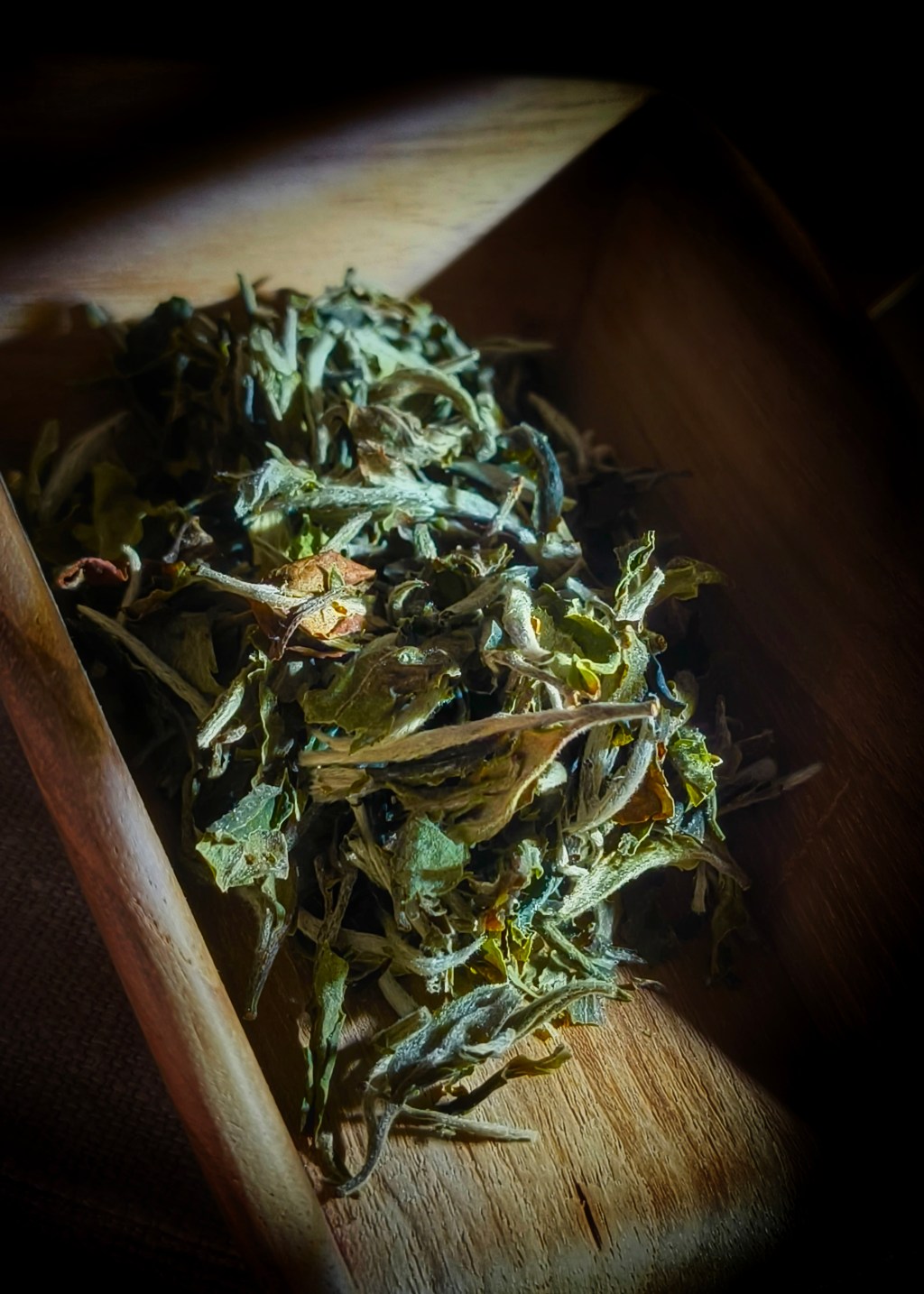
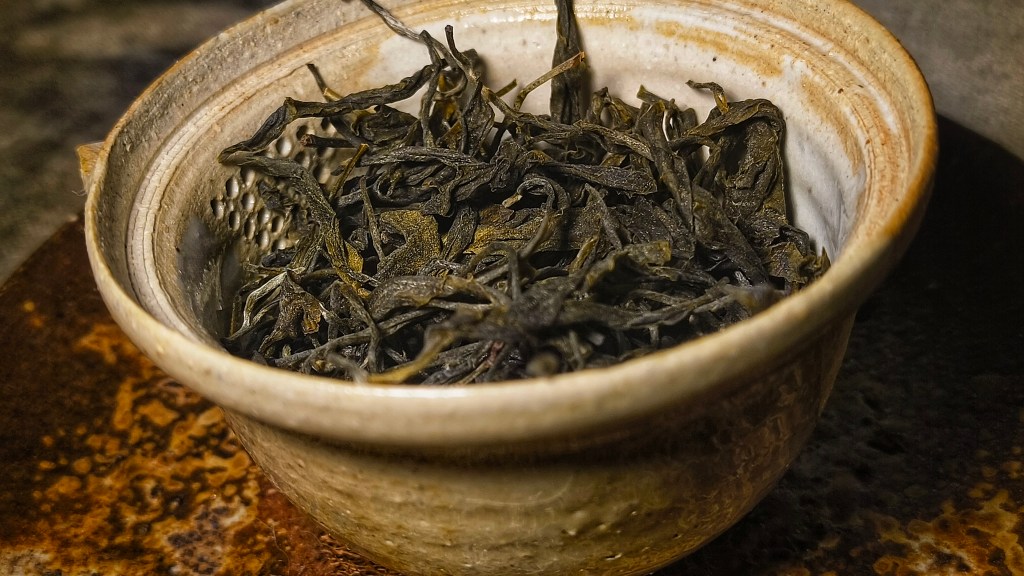
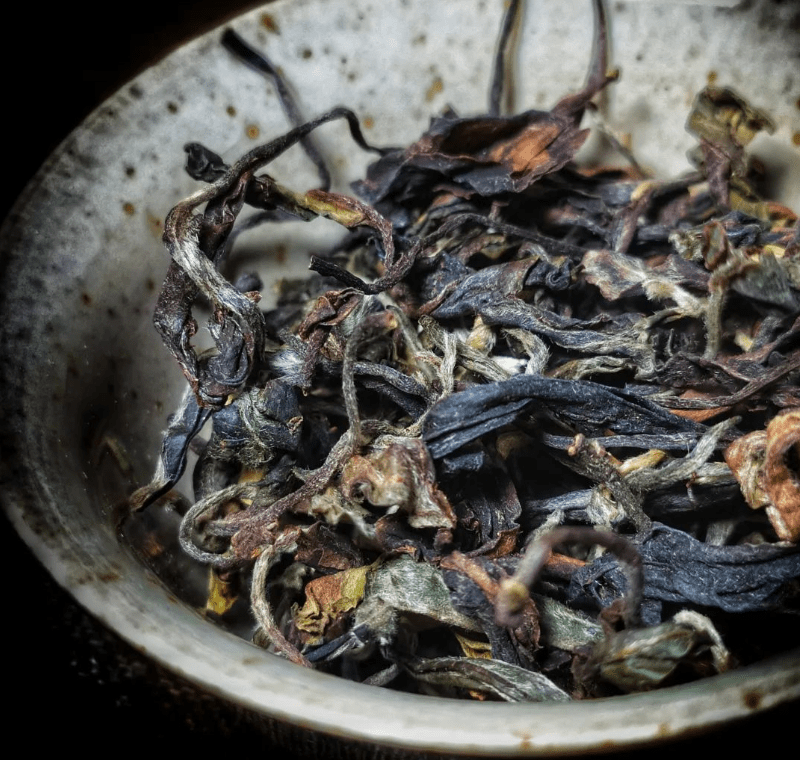
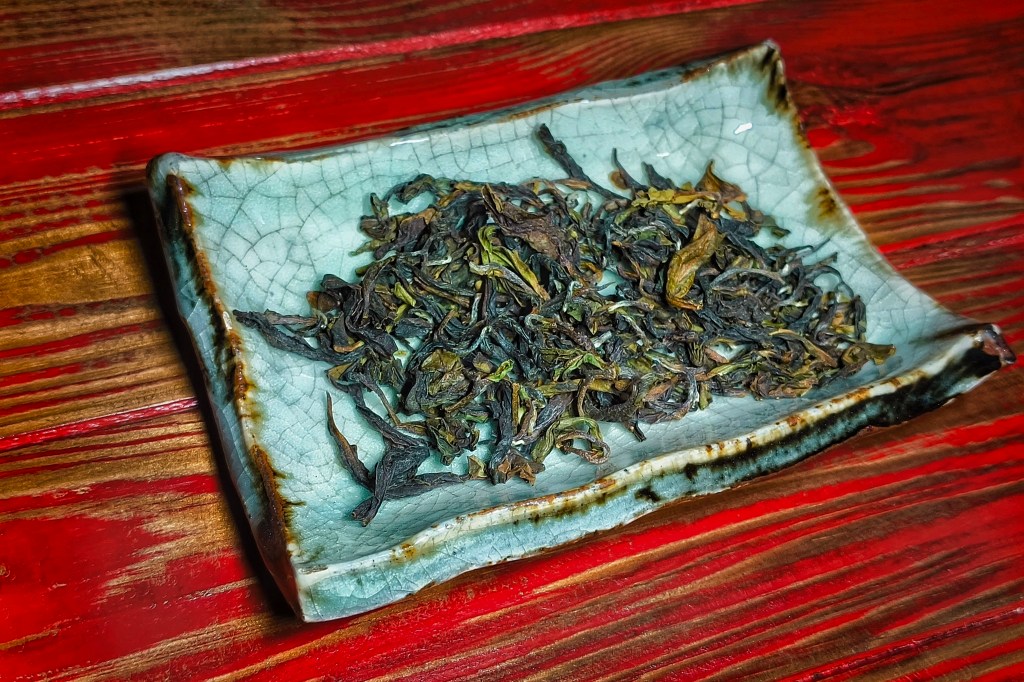
    Ouroboros, this Yabukita first flush, is more or less the same thing for me. A reset button, the kind you press only when you’ve officially run out of patience.

    The aroma of the wet leaves recalls the soft, dim sensuality that must have permeated the ridotti of nineteenth-century Venice, where the creaking parquet served as an unintentional soundtrack to the backstage vocal warm-ups, and the scent of stage makeup sold to actors and singers mingled with the smell of sex and the dusty, threadbare drapes.

    It’s a tea processed like an oolong, a futurist tea built on juxtapositions and clashes, where notes of moss, damask rose, and face powder emerge as if a performer had just walked past you, brushing against your shoulder, not by accident but with deliberate slowness. Then mango, verbena, polished wood, and tuberose shift in tangled succession.

    As the sip moves forward, the intensity rises like a cab driver who refuses to acknowledge the existence of brakes; the mango grows richer with floral shades of geranium and violet, leaving a film of sugary sweetness on the palate and an obstinately long aromatic persistence.

    It’s a tea that grabs you by the collar and drags you right back to the exact point where you stopped feeling alive, but with a new perspective.
  • Dark Alleys, Bright Lies. Seven Essence Spring 2025 Darjeeling Petrichor

    Dark Alleys, Bright Lies. Seven Essence Spring 2025 Darjeeling Petrichor

    You never thought you’d find yourself at this hour of the morning in a place like this, and you wish you could appear to yourself less out of place than you actually are. You got there after immense vestibular struggles, tearing your jacket at the shoulder that had christened the walls of the whole 3rd Avenue, walls that were essential for you to keep an upright stance, while thinking about what it would be like to sit with your nose pressed against the condensation on the window, as outside the city swarmed in the intricate anthill of the metropolis’s underground.

    The hours slip away like scraps of time in the incessant rain, the night overcomes the inertia of time, and in that instant two o’clock turns implacably into five. The smell of water on asphalt enters through the door, filling your lungs. Within those four walls, where people seem intent on parading the abandonment of beauty as an ideal, human matter appears left in its larval, suffering state. And yet you decide, finally, to chase the storm. You leave that refuge of castoffs with cautious agility, pushing past the wreckage of bodies. The merciless daylight has not yet pierced you, but you sense that, if you dare to lift your gaze, you would discover the kind of sky Buñuel would have loved to film: bare, raw, condemning.

    The scent of petrichor comes as a diagnosis, a primordial odor of drowned cities and funerals. You fancy yourself a walk-on in Mastroianni’s La Dolce Vita, except there is no Anita Ekberg to redeem you, only empty taxis, memories soured by undigested alcohol, no vintage Italian cars, only graffiti, puddles shimmering metallic green, and a man clutching a handrail like Christ in Grünewald’s Crucifixion.

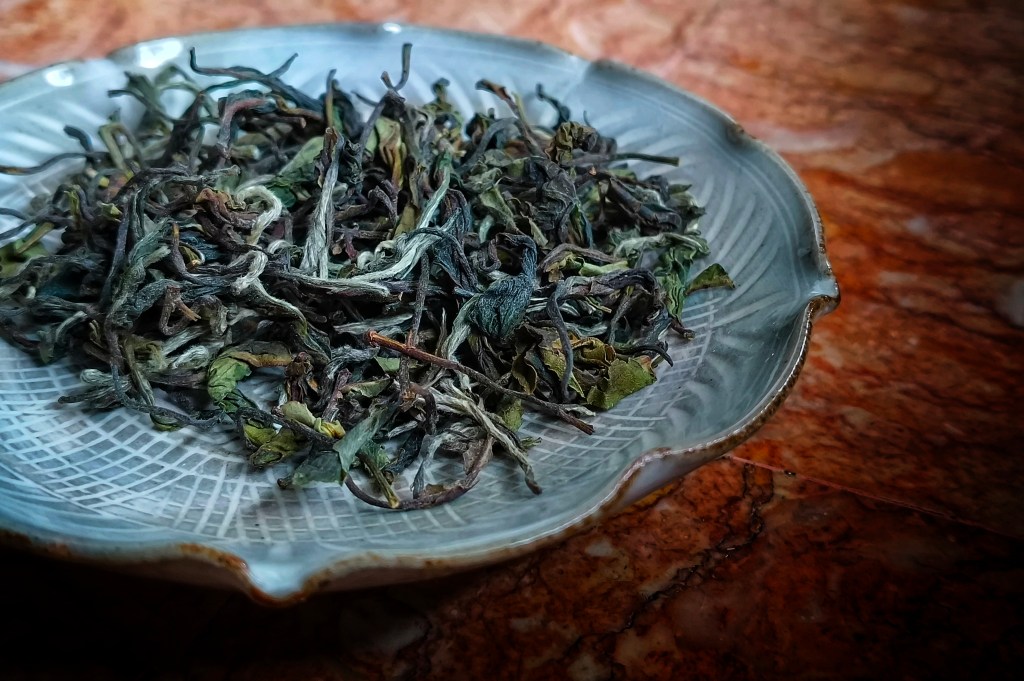
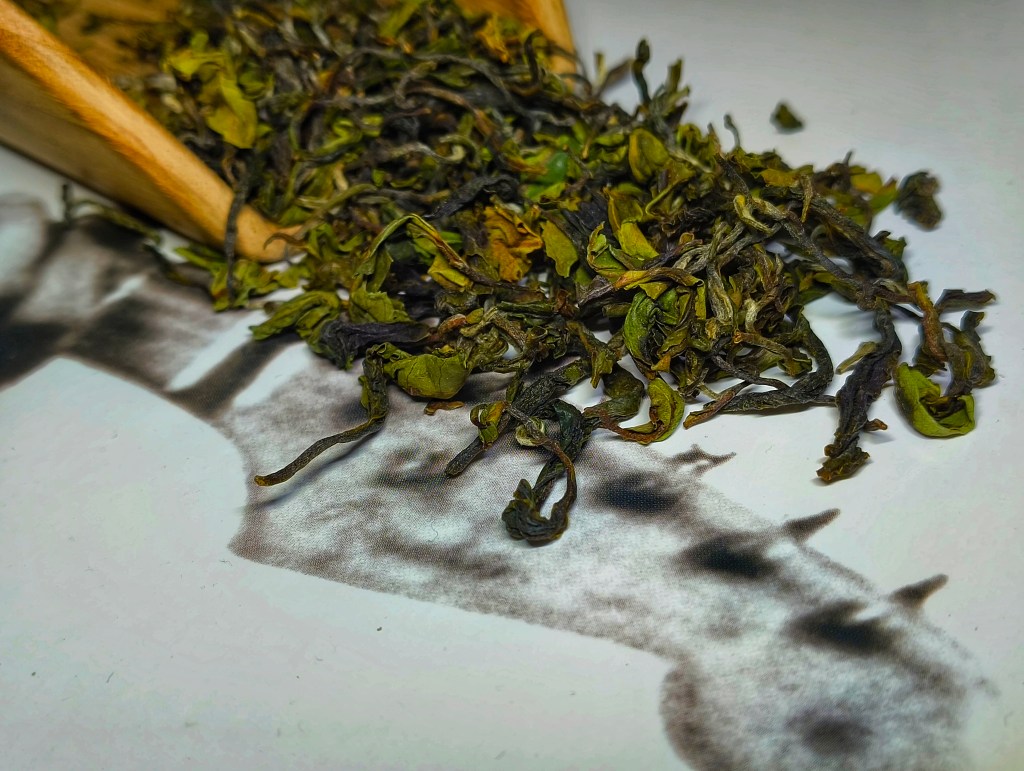
    And this Seven Essence tea, a 2025 Darjeeling first flush, is a confession of hidden memory, an echo from your compromised hippocampus able to grant grace even to one of these formless nights. It recalls the mineral scent of rock, buildings washed by a midsummer tropical rain, the dark humid nights spent cradling a glass; it carries that note of cake and caramelized fruit reminiscent of your mother’s tarte tatin at six in the morning, when you returned home sheepishly, with many good intentions and little balance. In this situation, the P312 cultivar seems to proclaim with satisfaction that nature manages to create grand works without pomp or excess. In its tones of aged wood and oat hay, echoes of moss and jasmine rise, preparing you for a perfect sip. one of those that seem to set things right, becoming a medical prescription for your attempt at redemption.

    This tea is a window onto the beyond, a buttery tincture, sweet and herbaceous, the liquefaction of a Salgado photograph with its exasperated structure. The sip is lushly viscous, the sweetness on the finish borders on obsessive, its complexity remarkable, and the persistence so strong that it makes you forget your last dinner in a seedy diner. But now that note of petrichor offers a way out of the city you had once chosen as the stage for your aspirations, a bandage on the broken promise of art that was meant to illuminate mankind, but which to your eyes now seems reduced to rancid ketchup and congealed mayonnaise.

  • The Design of Ephemeral Grace – Seven Essence 2025 Spring Quiescence

    The Design of Ephemeral Grace – Seven Essence 2025 Spring Quiescence

    Quiescence is the child of temptation, a tea that crashes in like Dean Moriarty’s wild, unhinged laughter, a tea that halts time, that fills empty spaces with the substance of life.
    It’s a spring harvest from cultivar B157, one of those rare works that appear once every four springs, refusing to exist in reflections, in mirrors, in repetition.

    The wet leaves smell of frangipani and vanilla, laced with the almost milky notes typical of Taiwanese oolongs. It feels like it fell from a Liberty canvas, dried in the dawn sun of Los Angeles, back when the light was still golden and the air almost liquid.

    It’s a hymn to creative impulse, to those destined to vanish, leaving behind only a trace,  like perfume on a pillow, or a copy of Les Fleurs du mal forgotten on a veneered nightstand, underlined, underlined everywhere.

    The sip is soft, pliant, sweet. It leaves a creamy, floral, almost cosmetic film on the tongue. You can sense the intent, the effort to craft an exceptional tea, every sharp edge softened like a minimalist organic vase. Its aromatic texture feels woven through an analytical, obsessive, surgical search for sensation.

    Sweet notes surface, mango custard, whipped cream, a whisper of osmanthus water. It’s the ultrasound of a happy childhood memory, evaporating into something denser, more designed.
    It lingers in the mouth, clinging to the palate, with a hauntingly familiar aftertaste of strawberry cream.

    There’s a quiet sense of luxury in all of this.
    It’s like stepping into a room decorated only in pale gold and French velvet, with bottles of Champagne scattered across the floor,  where nothing is left to chance, and even the dust participates in the choreography.

    It’s a layered, intentional experience. A reminder that 2025 is a truly remarkable year for Darjeeling.

  • First Flush, Final Breath: Drinking the Last of the Muses. Seven Essence 2025 FF Darjeeling Muse

    First Flush, Final Breath: Drinking the Last of the Muses. Seven Essence 2025 FF Darjeeling Muse

    At a time when humanity still seemed willing to believe in something beyond the mere surface of things, the Muses sat upon Mount Parnassus. It was an age when people were aware that art was something more than just a string of provocations with fluctuating budgets, something more than what you can now sort “from most to least expensive”. The nine daughters of Zeus and Mnemosyne guided the hands of painters; their voices stirred the blood that fed the cante jondo, urged demons to move T-Bone Walker’s left hand just a little more, whispered the six sonatas for violin and harpsichord into the ear of Vienna’s young prodigy. Today, I fear they no longer sit anywhere. Presumably locked away in some post-industrial loft in Milan, gagged with tape labeled “reconstructed identity” or some other bullshit straight out of the Damien Hirst playbook.

    Calliope, the one who once conversed with Cesare Pavese, has now ceded her place to seventeen seasons of some televised sobfest. Euterpe, on the other hand, is in despair, seeing a world that once resonated with the sublime tones of Giuditta Pasta now wander aimlessly with earbuds in, listening to some immersive composting sound experience, something for those who believe that rhythm is a new form of urban mysticism. Suffering is no longer catharsis, but mere reportage. Tragedy has become a type of therapy. Art is now a vehicle for delivering yet another saccharine confession that nobody asked for. The Muses have not been imprisoned by the market, but by contemporary philosophy itself, which has always denied their necessity.

    And yet, now and then, one of them escapes. And when that happens, a Christone Ingram appears. Or a Jordan Casteel. Or a Jacopo Cardillo. Someone who doesn’t need to prove that their kind of expression deserves a higher, transcendent status, because people don’t need to convince themselves that it does. They simply know it. Instinctively. No massively inflated price tag is required to protect their importance, because no price would ever be enough.

    Where once we invoked the austere beauty of Dreyer, or the sacred silence of Tarkovsky, today we exalt centrifugal narratives that refuse to come to any kind of conclusion, as if the unfinished were somehow more “true” than the completed. Perhaps I too am an asymptomatic carrier of this condition. I have a draft of a book sitting untouched in the upper left corner of my desktop for six months. I sometimes drink more than I should. I let Rory Gallagher depress me far too much. And I find myself sensing emotion in a throwaway work by Twombly.

    Before the whisper of a Muse, before hearing the chords of Erato’s lyre move the soul, before Melpomene offers her sword to face the tragic, it now feels almost more honest to linger in the unformed, a sort of beta version of the present that will, one day, receive its necessary update. We live in an age that collects fragments. Isolated sentences. Reels. Reels of reels. Everything must appear as something short enough to scroll past, yet long enough to suggest continuation, even if that continuation never comes. And this, I believe, applies to everything in our lives.

    And I believe it also applies to tea. Including the rare sparks of the extraordinary. It’s entirely possible that one of the Muses escaped into the Darjeeling region, slipping away for one spring from her confinement to the ruins of mythology, leaving strands of her robe in what this first flush has become today: the blooming of precocious talent, something you feel a desperate urge to consume, for fear that it may wither overnight.

    Muse is a sublime tea, the kind I come across only once every three or four years, because evidently nature does not wish to give more than that. It’s a tea whose wet leaves smell of bison grass, soft French nougat, myrtle leaf, and mulberry gelato. At first, it seems accommodating, then it leaves the coasts of Occitania and dives into deeper waves of sweetness: guava, golden kiwi, and frangipani, lined with vegetal chords of cactus, then aloe, like in an art deco perfumery in Silver Lake. In the end, everything contracts into something foreign, citrusy. Pomelo. Sharp. Precise. Almost hostile.

    In the mouth, it’s soft, intensely sweet, but anything but commonplace. The flavors point to fig, vine leaf, traces of herb butter, something vaguely liqueur-like, maybe green acorn distillate, and then birch sap. It’s not a taste. It’s an image. Then it veers. Completely, into mulberry and grape.

    For anyone who believes Indian teas lack Qi, they need to try this. The sensation is stunning, abrupt like a flood of adrenaline rushing through the vena cava, like that chill running down your spine when something truly significant happens. Like all great teas, it lingers. It stays with you for hours, like a text message at 3 a.m. you wish you’d never read. You can push it through ten infusions, fifteen, but the flavor never leaves your mucosae. Muse persists, like nails tapping softly on a taut drumskin, quieter and quieter until nothing is heard anymore and the noise of the street comes through the window, and yet you know that something is still resonating in that absurd chaos.

  • Beyond the ordinary concept of craftsmanship. Seven Essence Darjeeling Gossamer

    Beyond the ordinary concept of craftsmanship. Seven Essence Darjeeling Gossamer

    There are teas that are indifferent, inexpressive, flat, that simply fill a cup and others that nourish the soul, an expression of the genius loci, resistant, a symbol of those who bear witness to a story, to a place, to bring tea to its highest expression.

    Darjeeling has suffered in the last twenty years from the abuse of its name, from that condition of dissatisfaction for its unexpressed potential, from the awareness of being able to openly declare itself as one of the best terroirs in the world but that for a commercializing inspiration such a condition was denied.

    But to paraphrase Jasper, just as we don’t think of the disease of the shell when admiring its pearl, so when faced with the vital force of the work we don’t think of the cause, the agony that are perhaps the condition of its birth.

    Teas like Gossamer are not just a drink, but an expression of the soul of the terroir, the sublimation of a commitment that goes beyond the ordinary concept of “craftsmanship”, each sip is a meditation on the essence of beauty: the struggle between time and the moment, the fleetingness of a pleasure that persists only as a memory, a retro-olfactory photograph of everything that matters in that instant.

    Plucked from the B157 cultivar, its perfume is complex, polyhedric, like a work of art that always reveals new details with every attempt to decipher its chromatism. It immediately shows an almost ethereal tone that announces its subtle finesse. The aromas of chamomile blend with those of olive oil, lavender and a mango sorbet, then a bouquet opens up characterized by the scent of Aleppo soap, chrysanthemum, orchard grass, water spinach.

    The sip is persuasive, creamy, persistent with an incorruptible freshness and lets a clear return of sweetness emerge, that sweetness that consecrates a Darjeeling tea at the peak of its expression.

  • Darjeeling, a refuge of perpetual change. Seven Essence Darjeeling Villanelle

    Darjeeling, a refuge of perpetual change. Seven Essence Darjeeling Villanelle

    Among those mountains where even the fogs seem to recognize themselves, always the same, the sun makes its way over the peaks of Darjeeling in that way that only northern India can do, with those sunsets stained with scarlet red as if a cup of tea had spilled in the skies.

    Among the big brands, the massive and hypertrophic estates, it is hard to believe that there is a world of artists in constant ferment. In Darjeeling, breathing is instead punctuated by two incredibly deep breaths, one is that of tradition, the other is that of an unprecedented contemporaneity, creator of teas that have become a symbol of the new future: bold, powerful, and often, undeniably, modern.

    Spring teas like Villanelle hold within them the extraordinary nature of spring, in its scents of dried magnolia, citrus, hydrangea and winter melon they seem to reconstruct the triumph of Rubens and Brueghel the Elder’s Eden, an explosion of renewed vegetation, an aromatic encyclopedia of the natural world accompanied by that body, that powerful carnal plasticity of the baroque season.

    While teas like this one consecrate the cup as the theatre of the sublime, they remind us that in these lands it is not easy to emerge, that creative flair and freedom of expression are not common or taken for granted and that spring, despite its splendor, cannot erase the bitter aftertaste of this eternal struggle.

    The sip has a good thickness, with an almost watery sweetness typical of melon that supports the weave of elderflower and orange blossom syrup, thickening in the aromas of taro mochi and acacia honey. It proves to be a vertical tea, ascending in its tension between freshness and maturity, it shows to be a path to follow, a turning point by placing a door in front of the past that must never be reopened.

    In the past decades Darjeeling has been like a vagabond in the world, a terroir of extraordinary complexity and a potential only minimally explored, but it is as if the truth has continually escaped. But now tea and producers like these are establishing a new route, a new pact with their land, a hymn to the highest genius, to the craziest tea, refuge of perpetual change.

  • A “cante jondo” between emotions and rationality. Seven Essence FF Darjeeling “Duende”

    A “cante jondo” between emotions and rationality. Seven Essence FF Darjeeling “Duende”

    Duende is the name of this tea, that duende which is a place ex-nihilo where there is no map or exercise, principle of creation, of generative power, it’s the mental dress worn by the restless, of those who renounce deep sleep by remaining in the temporal foil between the traveled path and the dreamed, of those who are willing to put aside the smile to travel the streets of disquietude.

    Through this tea in its scents of mango, green melon, among the nuances of cut grass, of late summer rain, Darjeeling rediscovers itself in a new, unique form. There are those who said that this land would not granted anything more than what has already been seen, but there are those who among the mists understood the spirit of time, who become the interpreter of that restlessness, that fertile suffering that fuses the forms, which is the matrix of the extraordinary.

    In its tones of roots, bergamot leaf, suede, pumpkin seeds and cocoa butter it translates into liquid that power of primordial vigor, of a subterranean force that destabilizes habit and consecrates itself in the new. “The arrival of the duende always presupposes a radical change of every form with respect to old plans, it gives sensations of freshness that are completely new” and it’s then that are revealed the faces of men and women who support the weight of the uncertainty, in which are configured the struggle of contrasts, the incongruence of thoughts, the refusal of the safe learned geometries to pursue the discovery of tacit truths.

    In the mouth it’s soft, buttery, contrasted by a Champagne citrus freshness, the steam brings to mind that morning breeze of Reims before the harvest, surrounded by earthy and humid aromas. They become the foundation of a deep melody of perfumes, a “cante jondo” between emotions and rationality, between ancient ports and new routes.

    But it must be tried, there is no way to explain leaves like those of Duende without resorting to a paradoxical language, because their taste, their tactile descending path towards the throat and directed to the soul cannot be adequately articulated by tired descriptors and words, but must be grasped in its sensitive experience