
I realize immediately it isn’t a question of time.
Time is a polite, almost political excuse; its supposed lack is like fastening a little tie before going to church on Sunday, a superfluous ornament, yet institutionally acceptable, a way of dressing up a lie for a setting you can’t quite tolerate.
The truth is that writing, now, has ceased to be a gesture, a rite, and has become a habit without interlocutors. A vestigial movement of a vice you’ve already abandoned: like holding an unlit cigarette between your fingers, like swirling an empty glass that once contained God knows what, or sitting at the table of the same restaurant, occupying two chairs when you are, in fact, waiting for no one.
You post on Instagram and nothing happens , not silence, precisely nothing, and writing stops resembling an act and turns into a routine without recipients, a small private war against the flattening of content and against a stupid algorithm.
So what remain are unfinished texts, disjointed sentences, in the manner of This Charming Man, except you’re playing the unfortunate version of Morrissey. You tell yourself you write for the pleasure of lining up a few words; you persuade yourself it is the simple necessity of not forgetting, that what exists in your head requires existence outside it.
In the end, though, writing resembles one of those bars open even on weekdays until four in the morning, frequented by a handful of wrecks, survivors of their own idiocies and victims of their urge to keep defying gravity for no apparent reason, staggering past rows of unoccupied tables under a milky light that pierces their retinas.
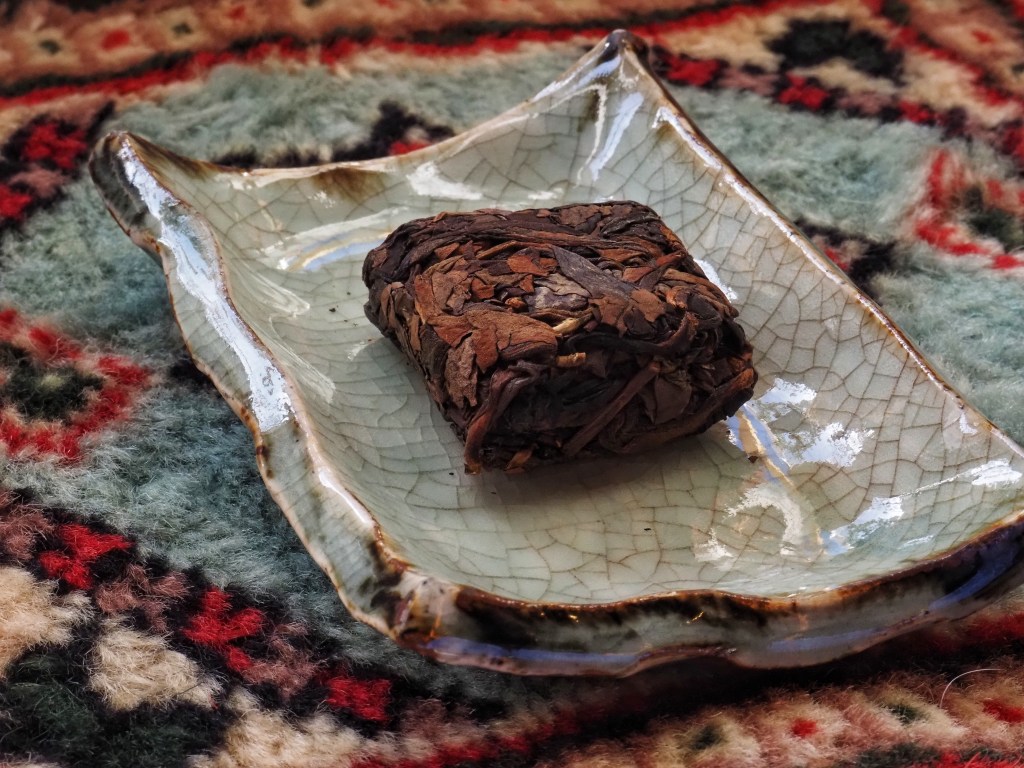
Then, somehow, something significant arrives, disconcerting though invisible to the casual passerby. A tea, a drink, but not just any. This Aged Zhangpin Shuixian does not provoke theatrically impressed reactions or servile compliments. It doesn’t strike you; it holds you. Deep without heaviness, complex to the point of improbability yet ordered, not an abyss, rather a long, poorly lit corridor that seems endless and quietly compels you to walk it to the end.
In the wet leaves appears toasted hazelnut, not the sugared caricature of contemporary patisseries, but a severe, almost dry one; then dried flowers, rosewood, and the scent of an old library: a olfactory bouquet of an apartment from the nineteenth century, where someone has stopped receiving visitors but not retreating into erudition. Then orange blossom, oats, raisins, an echo of cranberry and hibiscus liquor.
On the palate everything arranges itself coherently, more enveloping, sweeter, yet never ingratiating. Dried orchid, butter, gingerbread, hazelnut cream, a memory of vin jaune. It’s the sip you would drink while pretending to reread The Catcher in the Rye to impress a former college flame. The texture is soft and continuous, with balanced sweetness and a clear minerality present from the attack through the swallow.
The aromatic intensity is not excessive, yet the persistence is stubborn and lasting. Its refinement is almost unexpected. The floral substance typical of these oolongs remains, but softened by time and integrated into a composed, adult roast, devoid of any roaster’s narcissism.
When you encounter a tea like this, you understand that words may return. Not for Instagram, not for the numbers, not to chase an audience that has become hypothetical, not to write yet another clinical, sterile review no one cares about, but because some things demand to be said, and when that happens, writing is no longer content production. It is company. It is a necessary act.

 Wild Harvested