Tag: ha giang

  • The forest of Hoàng Su Phì and reconciliation with the truth. Soliloquy with Viet Sun black tea from ancient trees

    The forest of Hoàng Su Phì and reconciliation with the truth. Soliloquy with Viet Sun black tea from ancient trees

    The sound of the horn in the Dao rituals dictates the rhythm of a place that seems alive in the eternal instant of a perpetual past, the thunders are rhythmic like the steps of the Jade Emperor on his journey to earth.

    The people do their utmost in the preparation of the traditional ceremony in their black tunic whose red drapes blown by the wind seem to give them a permanent dynamism, while their clothes and the folds on their faces seem to merge with the sky broken by lightning, letting the viewer try to understand the silent emotions they express.

    Places like Hoàng Su Phì revive that pure, almost mythological naturalism, saving it from being a mere memory. The paths seem a return to the eras of myths and magic, spiritualism, tenacity and subsistence, far from the paved road of self-flagellation materialism. It is those paths that force us to reformulate contingency, those smells of an extinct nature that ask us, as Derrida said, to rethink our relationship with the truth. They are forests where not only the camellia orchestrate a unique opéra in harvest time, but they are real metaphysical theater for find again time and conciliation with history, acts of rediscovery of a lost essentiality.

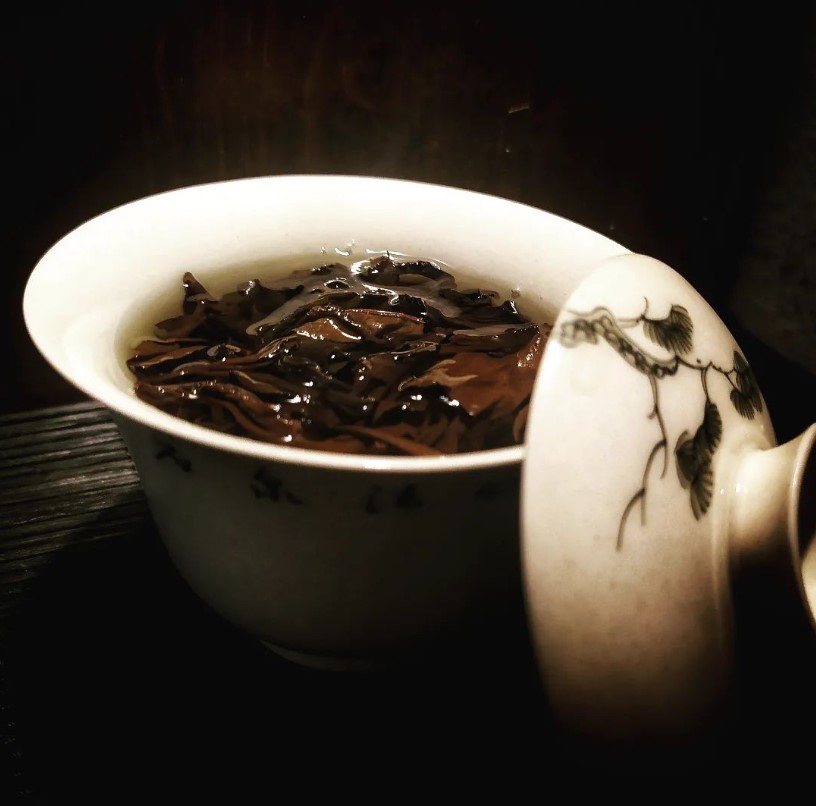
    A particularly interesting Viet Sun tea from 2022, sourced from ancient trees in the Hoàng Su Phì forest in Hà Giang province. The notes of the wet leaves are extremely special, aromas of chestnut honey, cocoa and malt biscuits are perceptible, accompanied by dried sour cherries combined with more floral nuances of violet and lilac. A more particular weaving approaches timidly, in the background you can feel the dried straw, tamarind sauce and dry cranberry, to then arrange on very clear memories of distilled grape skin, muscat grappa and notes of old, freshly waxed wood.

    The sip is coherent, medium-bodied, sensations of cocoa combine beautifully with those of malted barley and honey, enlivened by a never tiring, balanced and persistent sweetness.
  • A visceral bond with time that has never been broken and a history that has never been betrayed. Journey to Lùng Vài through this Viet Sun 2022 sheng pu’erh

    A visceral bond with time that has never been broken and a history that has never been betrayed. Journey to Lùng Vài through this Viet Sun 2022 sheng pu’erh

    The rain poured down, the people in the highland villages returned home after working in the fields all day, the light fades as people’s voices approach, dispersing the fatigue of the harvest in their song. The forests stand between the terraced fields like polychromatic marvels, the mountain farmers appear like artists when their work creates such harmonious beauty, one that would have enraptured Holderlin and which he would have described as an art inspired by that original mutual belonging between sky and earth.

    As the sunlight disperses the mist, the fields fill with water like sparkling mirrors reflecting the sun and clouds. A now dim light filters through the palm roofs, the rural architecture seems aged and embraced by moss, but still firm and representative of times gone by. One can see an ancient splendor that is renewed with every glance at it, imagining a visceral bond with time that has never been broken and a history that has never been betrayed.

    This Viet Sun Lùng Vài tea, like the architecture in this area, bears witness to the events, they are beyond the present, not as a relic of the post-history but as narrating entities surviving in the subsistence of their descendants.

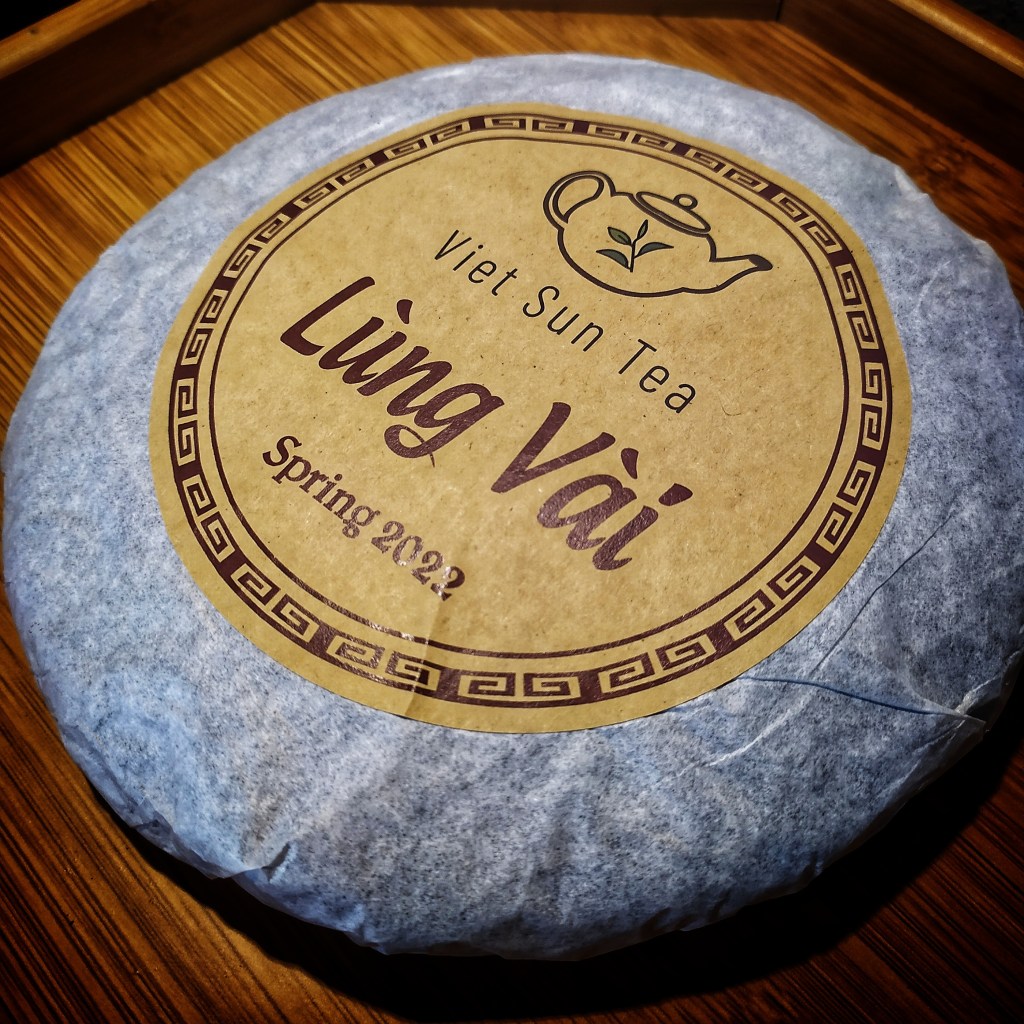
    This is a sheng from an extremely interesting and characteristic terroir, located on the eastern side of Tây Côn Lĩnh mountain, Hà Giang province, from ancient tea trees. The dried leaves have an intensely floral scent, once wet they show an evocative and complex character made up of citrus tones, charcoal-cooked fruit, fragrances of dried mango, pear soaked in white wine, candied orange and apple custard. The sip is both juicy and vibrant, refreshing, wisely balanced and medium-bodied, with an initial and subtle bitterness.

    A good huigan accommodates aromas that recall lemon cream, citrus honey, flambéed fruits on a background of alpine herbs; notes of orange peel and carrot plumcake conclude a dynamic and intensely meaningful session.

  • A tea that is a symbol of redemption, of radical change and self-determination. Viet Sun Lùng Vài pressed white tea 2022

    A tea that is a symbol of redemption, of radical change and self-determination. Viet Sun Lùng Vài pressed white tea 2022

    A long time has passed, from Chinese cultural domination, from French colonization, from the 30 years of struggle for independence, the time necessary for the rain to give respite to the memory from the pain of the loss. But tea in Vietnam resisted everything as an observer of events, as a symbol of the zeitgeist, the spirit of the time and as such able to invest every era, to be reflected in literature and philosophy, in arts and everyday practice.

    Tea here is not a subject of dispute, the object of a claimed originality, of authenticity, but it is a symbol of restoration and self-affirmation, of a common thread with the past through a new way of doing things, it is a narrator of epics and tragedies, epitome of imaginative experiences of past places, of the old shops of Hanoi, of the narrow and terraced architecture leaning against the alleys full of vendors and trucks, of the old agricultural research stations abandoned and rebuilt in the late 70’s.

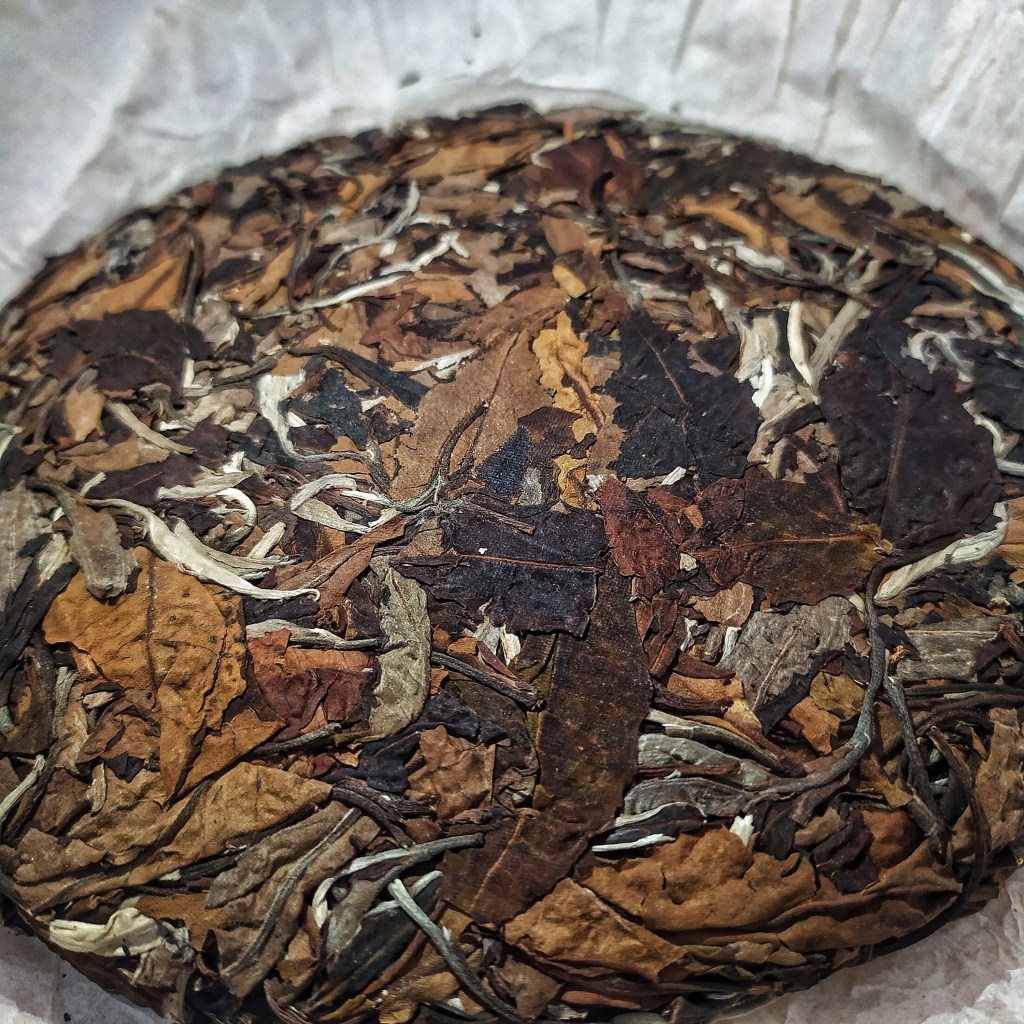
    The laobaicha of Viet Sun comes from material of 2022 collected from centenary trees in the area of Lùng Vài, Ha Giang, in the district of Vị Xuyên, at an altitude of 1000-1100 m. Vị Xuyên was the scene of one of the saddest battles that Vietnam saw in its history, a war that until 1985 repelled hundreds of thousands of soldiers, but which is now the district of one of the most interesting productive areas of the country. Tea in this case is a distillate of its place of origin, so expressive as to bear an almost salvific garment for a place, to extract from it its opposite, to exercise their ancient alchemical propositions of transmutation and renewal and at the same time to preserve and protect the scents of an original flowering.

    This is a white tea that gives a perfect daily drink, saturated with sense and without unnecessary garments. Its character is punctuated by ancestral scents, the olfactory notes recall those of a bouquet of roses resting on an antique piece of furniture, in which woody scents are linked to the fragrances of fresh and withered flowers, emerge the fragrance of apricots and kumquats stored in a bamboo basket, while those of spices and leather complete an intense and decadent picture, enlivened by a mnemonic expressiveness not always so frequently experienced.

    The mouthfeel is medium-thick, enveloping, lingering and balanced, distinctive and not similar to any other, enriched with spicy notes and ripe fruit, rhubarb and medicinal herbs. I thank Vietsun project for having contributed greatly to the in-depth discovery of Vietnamese teas, providing excellent material and information for the study of this country, its terroir and its history.