Tag: india

  • Seven Essence Darjeeling Masquerade

    Seven Essence Darjeeling Masquerade

    I believe there are few people on this earth for whom I have ever felt even a modicum of envy, and I do not say this out of vanity nor from some absurd, ultraterrene awareness. I’m simply indifferent to the allure that possession exerts on people, the resonance of an echo of absence, the trace of a denied desire. Yet Bubble and Abhijeet have a rare, transcendent empathy when it comes to tea, a quality that is either innate or remains scarcely graspable, one that probably I don’t even have. Their autumn collection attests, indisputably, to their status as the Vaughan brothers of the Darjeeling terroir and to the perception that selecting leaves is a virtuous act, a testament to aesthetic discernment.

    The election of the proper material is not a mere sorting process; rather, within it dwells that lyricism, that aphonic language in which what resides is lifted from its ordinary form, unfolding into a dizzying array of aromas and scents where time contracts and expands with a diaphragmatic cadence. To select leaves is an invocation of the sublime, a re-creation of the universal tension between order and chaos, wherein the structural opposition of what is utilitarian and what lies beyond utility is drawn and maintained open, rendering tea not merely a beverage but a vehicle of meanings.

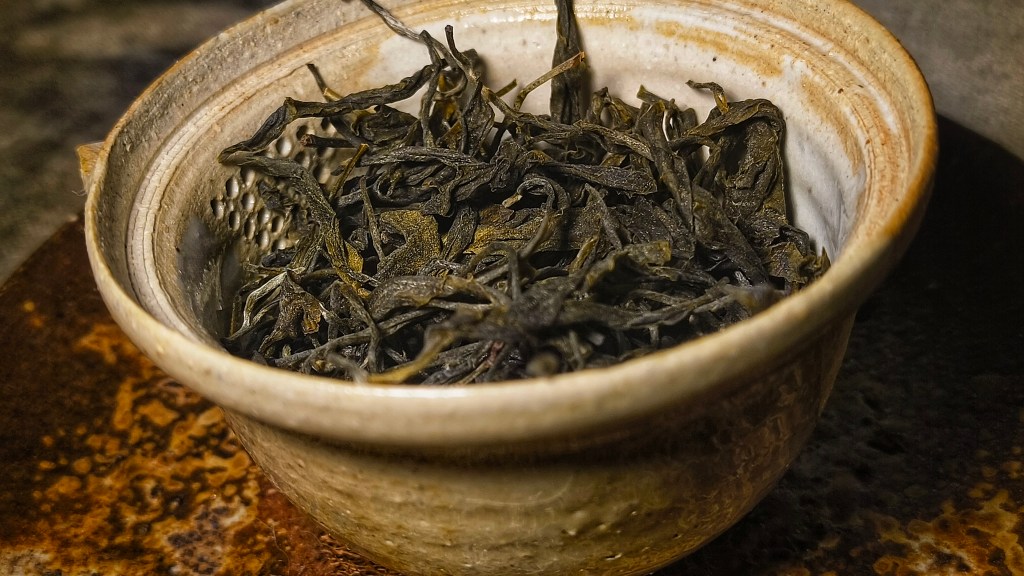
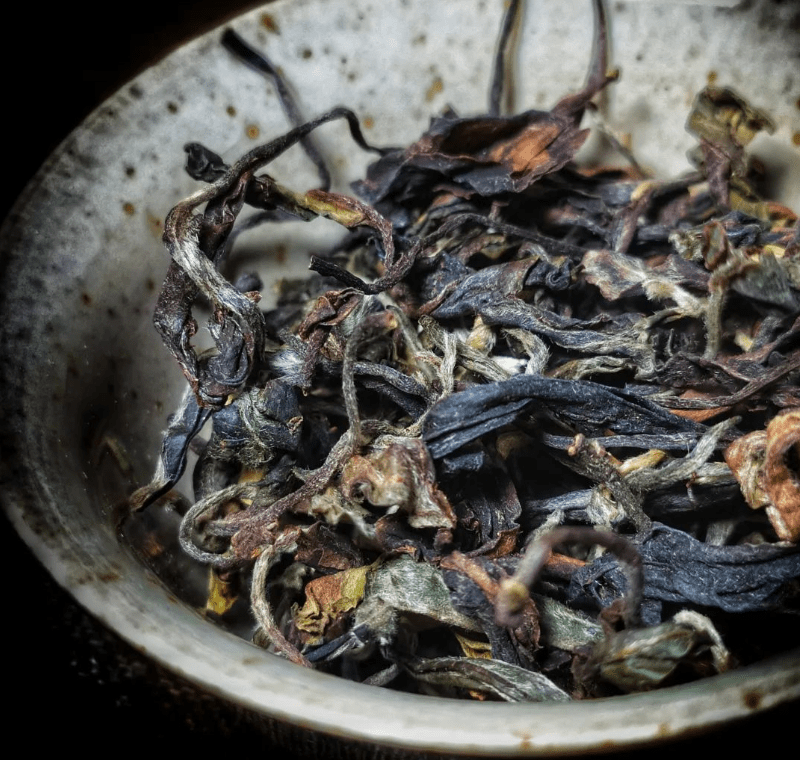
    Masquerade is a Darjeeling oolong produced from the AV2 cultivar, a tea with a dense liquor, a chromatic snapshot vibrating between ancient gold and dusty amber. The leaves exude the fragrance of rose and jasmine, of olive oil and fruit tart. The infusion is sweet, soft and persistent, with hints of pear, pistachio and dried apricot. It is a sip of freshness, capable of rejuvenating even those weary nights, illuminated by the flashing lights of police cruisers deployed in one of those torrid, sleepless nights.

    Notes of chlorophyll, subtly vegetal, along with hints of olive leaf and mango, evoke an introspective road movie, laden with trembling shooting of hands brushing against corn stalks and bodies staggering in the sultriness, a spiral of rural unrest and youthful rage, of adolescent fights in the badlands, where typically nothing was too dear but everything cost too much.
  • The Liquid Reflection of Civilization. Seven Essence Darjeeling Epilogue

    The Liquid Reflection of Civilization. Seven Essence Darjeeling Epilogue

    Years ago, I met a professor, one of those old, gruff Labour men, fond of humanity provided it was kept at a safe distance. He lived in permanent exile from pragmatic reality, an outcast who had sought refuge in erudition, guardian of a nation that had ceased to exist before he was even born.
    He listened to Mahler after his Darjeeling, but would only play it if the tea had truly satisfied him, perched on that Danish Art Nouveau oak stool with its black leather seat, with his fingers gripping the keys like ash roots burrowing into earth.

    Epilogue by Seven Essence brings him back to me, sitting in his study poised within the hypothetical temporal sliver between Hope’s Regency style and Ruhlmann’s Art Deco.
    He never chained tea to a fixed hour, nor did he treat it as a prelude to elitist drunkenness. To him, it was the liquid echo of ancient civilizations and their highest reasoning.

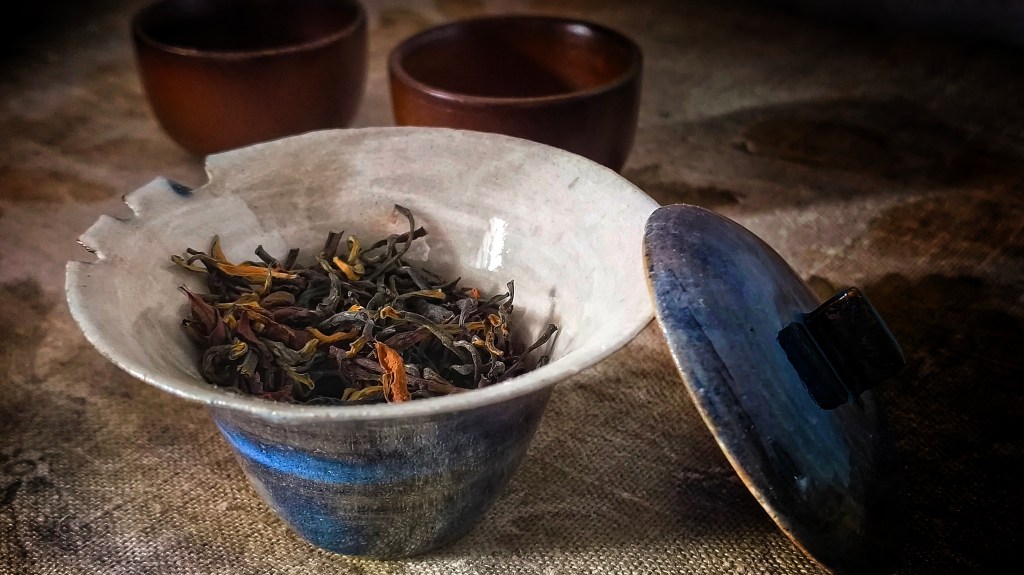
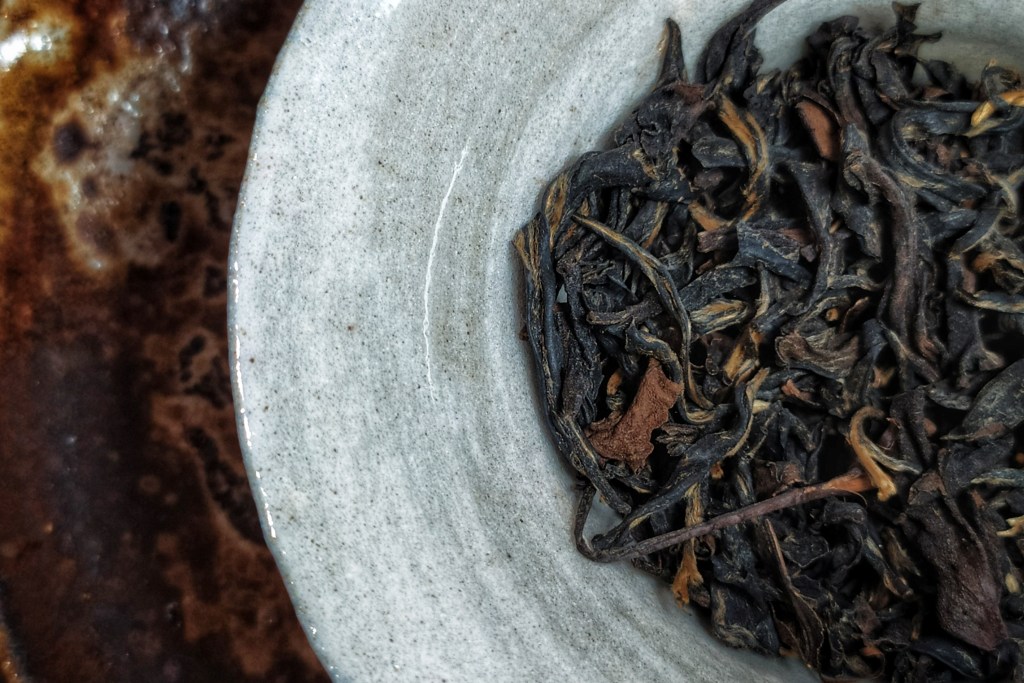
    The mahogany, varnish, sweet potato, petrichor, rye bread and cask notes, all wrapped in a cloak of earthy minerality, bring back that room drowning in bound pages and an excess of ebony. Watching it in the cup, I recall our conversations about Vermeer — the tea shines, releasing a warm light, as the one that illuminated the flesh-like surface of the Girl with a Pearl Earring, a radiance both earthly and sacred.

    The sip is rounded, neoclassical, sober yet embracing, with a warm, exuberant body, full of pepper, cocoa, violets and autumn fruit. The sip ends with a sugar cane sweetness almost severe, like the curtain closing on a Powell or Pressburger finale, those directors who knew how to grasp the soul of things without succumbing to sentimental drift.

    Epilogue reminded me of those cultured, discursive forays and how drinking tea itself is politics: a good, human politics that forces us to admit our dependence on the earth, on history, on the cultures of those far from us, in another time or place.
    Every cup is a choice. Drinking good tea is an act of resistance.

  • Seven Essence Darjeeling Scorsese red

    Seven Essence Darjeeling Scorsese red

    This was the last tea of 2024 and the first of the new year. It was a tough, exhausting year. Dealing with the pain of loss, with the sense of emptiness, of being unmoored from the warmth of everyday life and the luxury of the habit of affection, I believe is the greatest thing that nature can ask a human being to face. For the first time in ten years, tea was not at the center of a significant moment, it was a palliative, something secondary, the translation of the search for a cure.

    What had always fascinated me about tea and its aging, its ontological tension between existing in the moment and thriving in a higher dimension, its transitory nature suspended between being and dissolving, the form and its annihilation, from that moment also applied to human life in a cruder and crueler way than I had ever experienced.

    This tea, the @sevenessenceofficial Scorsese was a companion, a ferryman between the days that followed one another without apparent sense. Sipping it is like tasting the truth, it is like watching a painting by Francis Bacon come to life, built with one brushstroke of flesh and blood after another.

    With that note of Sacher and cinnamon, of burley tobacco, of wenge, of leather and smoke, it initially presents itself as a dark and gloomy shot governed by soft lighting, with a corner set up for a sweet Christmas, all mistletoe and songs, in a untidy apartment plastered with references to art deco in the hallucinatory New York seen through the alienated and feverish gaze of Travis in Taxi Driver.

    When the world seems too hard, when losses pile up and the weight becomes unbearable, tea I believe offers a refuge, which is a greater blessing than we are often granted. It is not an escape, but a return to what is essential, and in its cheering sip pervaded by the aromas of condensed milk, apricot, vanilla and chocolate is what this tea embodies, it is like us, it resists, it keeps us standing, it appears in our lives like diegetic music, as that stranger who suddenly puts on a swing piece in a now-dimmed room in the middle of a bad night, convincing us to give life a dance once again.

  • Beyond the ordinary concept of craftsmanship. Seven Essence Darjeeling Gossamer

    Beyond the ordinary concept of craftsmanship. Seven Essence Darjeeling Gossamer

    There are teas that are indifferent, inexpressive, flat, that simply fill a cup and others that nourish the soul, an expression of the genius loci, resistant, a symbol of those who bear witness to a story, to a place, to bring tea to its highest expression.

    Darjeeling has suffered in the last twenty years from the abuse of its name, from that condition of dissatisfaction for its unexpressed potential, from the awareness of being able to openly declare itself as one of the best terroirs in the world but that for a commercializing inspiration such a condition was denied.

    But to paraphrase Jasper, just as we don’t think of the disease of the shell when admiring its pearl, so when faced with the vital force of the work we don’t think of the cause, the agony that are perhaps the condition of its birth.

    Teas like Gossamer are not just a drink, but an expression of the soul of the terroir, the sublimation of a commitment that goes beyond the ordinary concept of “craftsmanship”, each sip is a meditation on the essence of beauty: the struggle between time and the moment, the fleetingness of a pleasure that persists only as a memory, a retro-olfactory photograph of everything that matters in that instant.

    Plucked from the B157 cultivar, its perfume is complex, polyhedric, like a work of art that always reveals new details with every attempt to decipher its chromatism. It immediately shows an almost ethereal tone that announces its subtle finesse. The aromas of chamomile blend with those of olive oil, lavender and a mango sorbet, then a bouquet opens up characterized by the scent of Aleppo soap, chrysanthemum, orchard grass, water spinach.

    The sip is persuasive, creamy, persistent with an incorruptible freshness and lets a clear return of sweetness emerge, that sweetness that consecrates a Darjeeling tea at the peak of its expression.

  • Darjeeling, a refuge of perpetual change. Seven Essence Darjeeling Villanelle

    Darjeeling, a refuge of perpetual change. Seven Essence Darjeeling Villanelle

    Among those mountains where even the fogs seem to recognize themselves, always the same, the sun makes its way over the peaks of Darjeeling in that way that only northern India can do, with those sunsets stained with scarlet red as if a cup of tea had spilled in the skies.

    Among the big brands, the massive and hypertrophic estates, it is hard to believe that there is a world of artists in constant ferment. In Darjeeling, breathing is instead punctuated by two incredibly deep breaths, one is that of tradition, the other is that of an unprecedented contemporaneity, creator of teas that have become a symbol of the new future: bold, powerful, and often, undeniably, modern.

    Spring teas like Villanelle hold within them the extraordinary nature of spring, in its scents of dried magnolia, citrus, hydrangea and winter melon they seem to reconstruct the triumph of Rubens and Brueghel the Elder’s Eden, an explosion of renewed vegetation, an aromatic encyclopedia of the natural world accompanied by that body, that powerful carnal plasticity of the baroque season.

    While teas like this one consecrate the cup as the theatre of the sublime, they remind us that in these lands it is not easy to emerge, that creative flair and freedom of expression are not common or taken for granted and that spring, despite its splendor, cannot erase the bitter aftertaste of this eternal struggle.

    The sip has a good thickness, with an almost watery sweetness typical of melon that supports the weave of elderflower and orange blossom syrup, thickening in the aromas of taro mochi and acacia honey. It proves to be a vertical tea, ascending in its tension between freshness and maturity, it shows to be a path to follow, a turning point by placing a door in front of the past that must never be reopened.

    In the past decades Darjeeling has been like a vagabond in the world, a terroir of extraordinary complexity and a potential only minimally explored, but it is as if the truth has continually escaped. But now tea and producers like these are establishing a new route, a new pact with their land, a hymn to the highest genius, to the craziest tea, refuge of perpetual change.

  • A “cante jondo” between emotions and rationality. Seven Essence FF Darjeeling “Duende”

    A “cante jondo” between emotions and rationality. Seven Essence FF Darjeeling “Duende”

    Duende is the name of this tea, that duende which is a place ex-nihilo where there is no map or exercise, principle of creation, of generative power, it’s the mental dress worn by the restless, of those who renounce deep sleep by remaining in the temporal foil between the traveled path and the dreamed, of those who are willing to put aside the smile to travel the streets of disquietude.

    Through this tea in its scents of mango, green melon, among the nuances of cut grass, of late summer rain, Darjeeling rediscovers itself in a new, unique form. There are those who said that this land would not granted anything more than what has already been seen, but there are those who among the mists understood the spirit of time, who become the interpreter of that restlessness, that fertile suffering that fuses the forms, which is the matrix of the extraordinary.

    In its tones of roots, bergamot leaf, suede, pumpkin seeds and cocoa butter it translates into liquid that power of primordial vigor, of a subterranean force that destabilizes habit and consecrates itself in the new. “The arrival of the duende always presupposes a radical change of every form with respect to old plans, it gives sensations of freshness that are completely new” and it’s then that are revealed the faces of men and women who support the weight of the uncertainty, in which are configured the struggle of contrasts, the incongruence of thoughts, the refusal of the safe learned geometries to pursue the discovery of tacit truths.

    In the mouth it’s soft, buttery, contrasted by a Champagne citrus freshness, the steam brings to mind that morning breeze of Reims before the harvest, surrounded by earthy and humid aromas. They become the foundation of a deep melody of perfumes, a “cante jondo” between emotions and rationality, between ancient ports and new routes.

    But it must be tried, there is no way to explain leaves like those of Duende without resorting to a paradoxical language, because their taste, their tactile descending path towards the throat and directed to the soul cannot be adequately articulated by tired descriptors and words, but must be grasped in its sensitive experience