
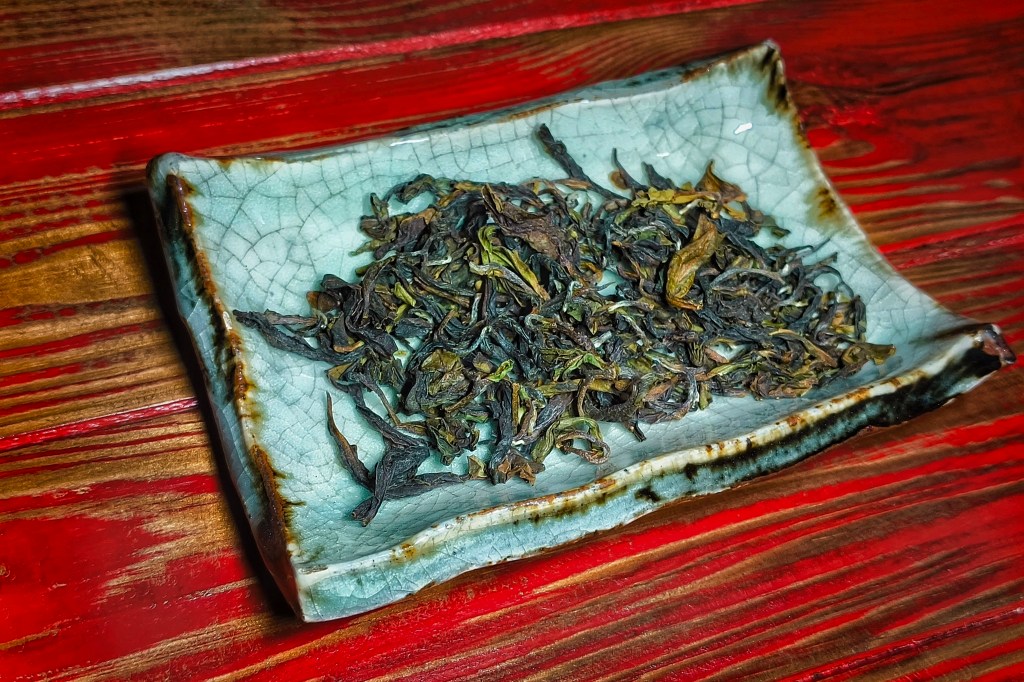
There are several reasons why I sometimes disappear and stop writing. A loss of imagination, a lack of interesting teas, and other times it’s simply my own bad habits sabotaging every functioning neuron like a broker gambling with other people’s money. And then there are a couple of reasons no one would care about anyway.
But through all of this, I never stop reading.
Still, I never seem to read enough about Darjeeling, about what happens up there, about its teas.
I’ve always been a fanatic of the outcast and a chronic sentimentalist when it comes to shadowy corners, yet I can’t quite explain how, after twenty years of transformation, twenty years since Darjeeling was a caricature of itself, a withered tea ground into particles so fine they resembled the jaundiced, depressing version of the world’s most famous nose white powder. But now that this terroir is producing something extraordinary, even radical, it remains buried under a silence so thick it’s hard not to suspect that plenty of people prefer it that way.
I mean, at this point Darjeeling has become like one of those old guitar shops where you walk in thinking you’ll just take a quick look and end up realizing that every instrument in the room has more personality than you do.
And now they’ve even taken to crafting a flawless Yabukita, without kidnapping any Japanese makers or resorting to those “minor cultural seizures” the British used to call foreign policy when they royally screwed things up with China.
Some time ago I met an art dealer who spent his days among some of humanity’s most astonishing paintings, only to return to an apartment with exposed meters, peeling plaster, cracks running across the walls like badly healed scars, and rugs riddled with cigarette burns. It was a hole carved out in the middle of urban chaos, the kind of place he’d only been able to afford back when interest rates were frozen. But to him, it was home. His emotional bunker. The private stage for his domestic follies.
Ouroboros, this Yabukita first flush, is more or less the same thing for me. A reset button, the kind you press only when you’ve officially run out of patience.
The aroma of the wet leaves recalls the soft, dim sensuality that must have permeated the ridotti of nineteenth-century Venice, where the creaking parquet served as an unintentional soundtrack to the backstage vocal warm-ups, and the scent of stage makeup sold to actors and singers mingled with the smell of sex and the dusty, threadbare drapes.
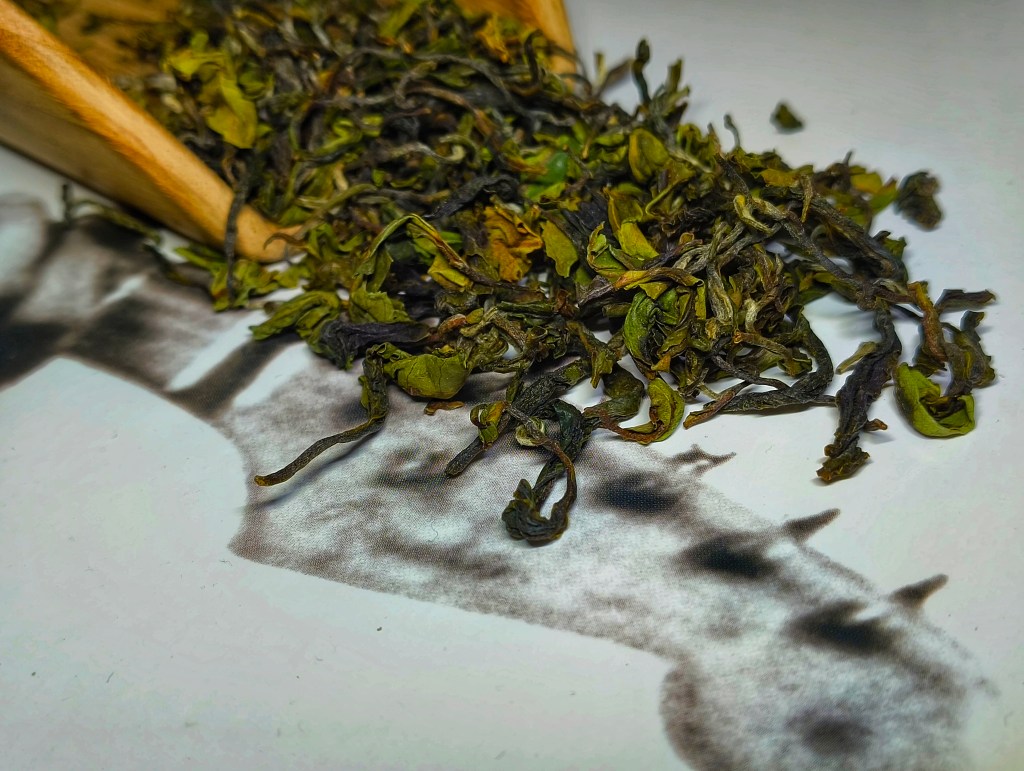
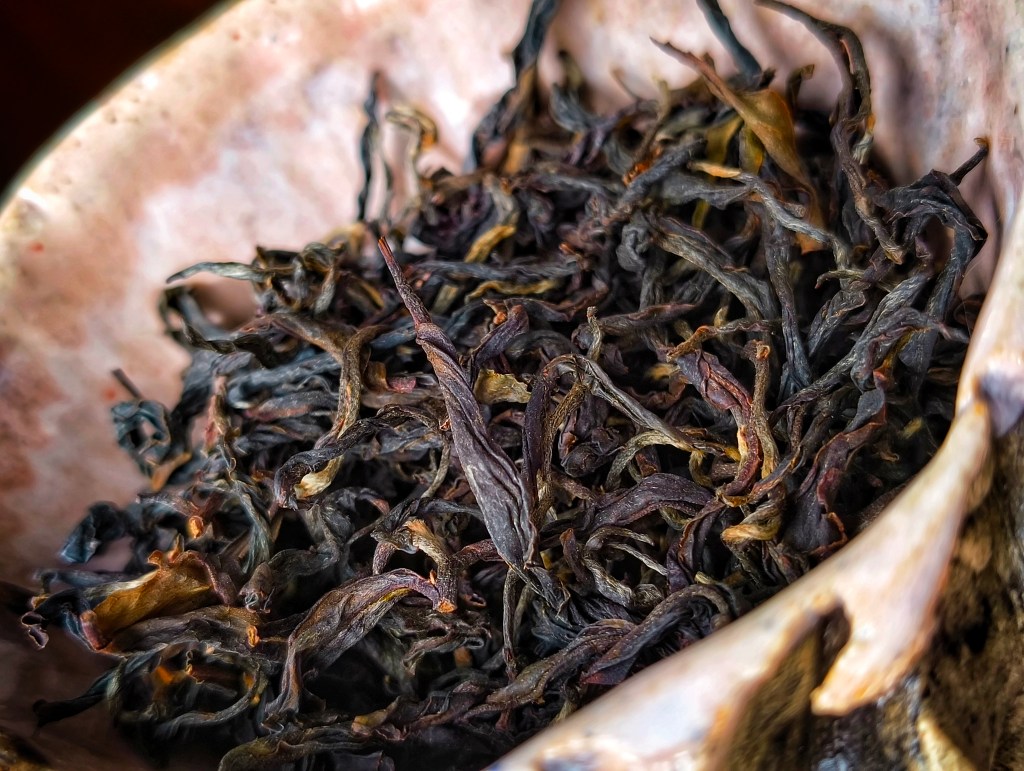
It’s a tea processed like an oolong, a futurist tea built on juxtapositions and clashes, where notes of moss, damask rose, and face powder emerge as if a performer had just walked past you, brushing against your shoulder, not by accident but with deliberate slowness. Then mango, verbena, polished wood, and tuberose shift in tangled succession.
As the sip moves forward, the intensity rises like a cab driver who refuses to acknowledge the existence of brakes; the mango grows richer with floral shades of geranium and violet, leaving a film of sugary sweetness on the palate and an obstinately long aromatic persistence.
It’s a tea that grabs you by the collar and drags you right back to the exact point where you stopped feeling alive, but with a new perspective.
 Wild Harvested