Tag: indian tea

  • The Hour Between Dog and Wolf – Summer 2025 Darjeeling Anarchy

    The Hour Between Dog and Wolf – Summer 2025 Darjeeling Anarchy

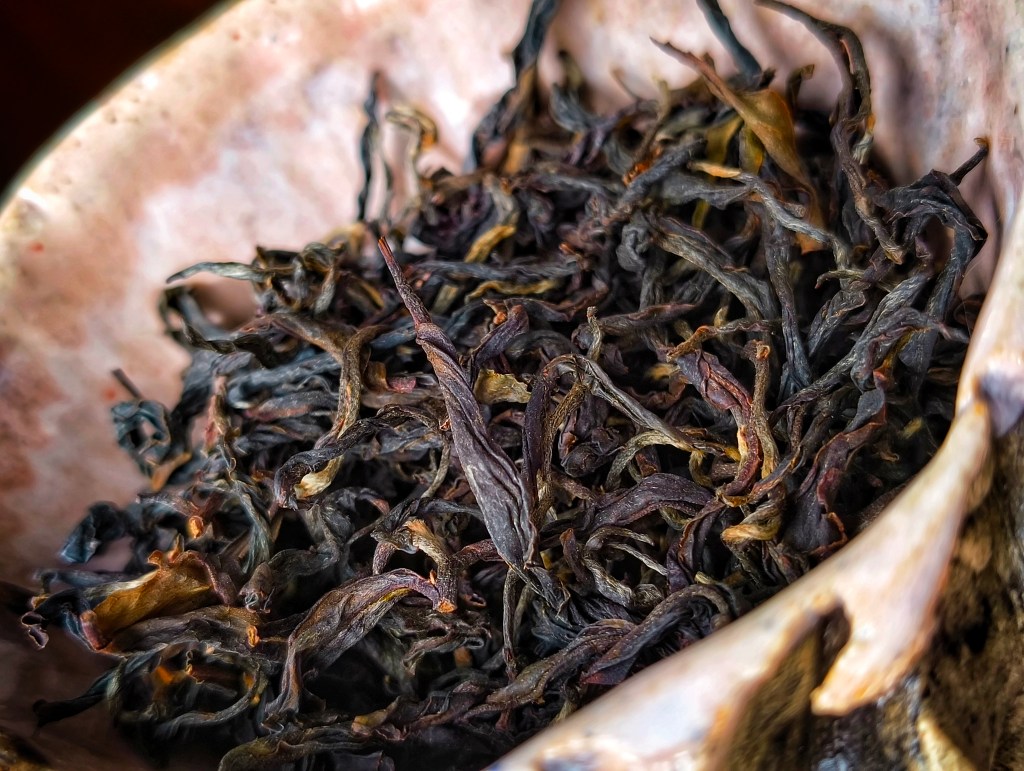
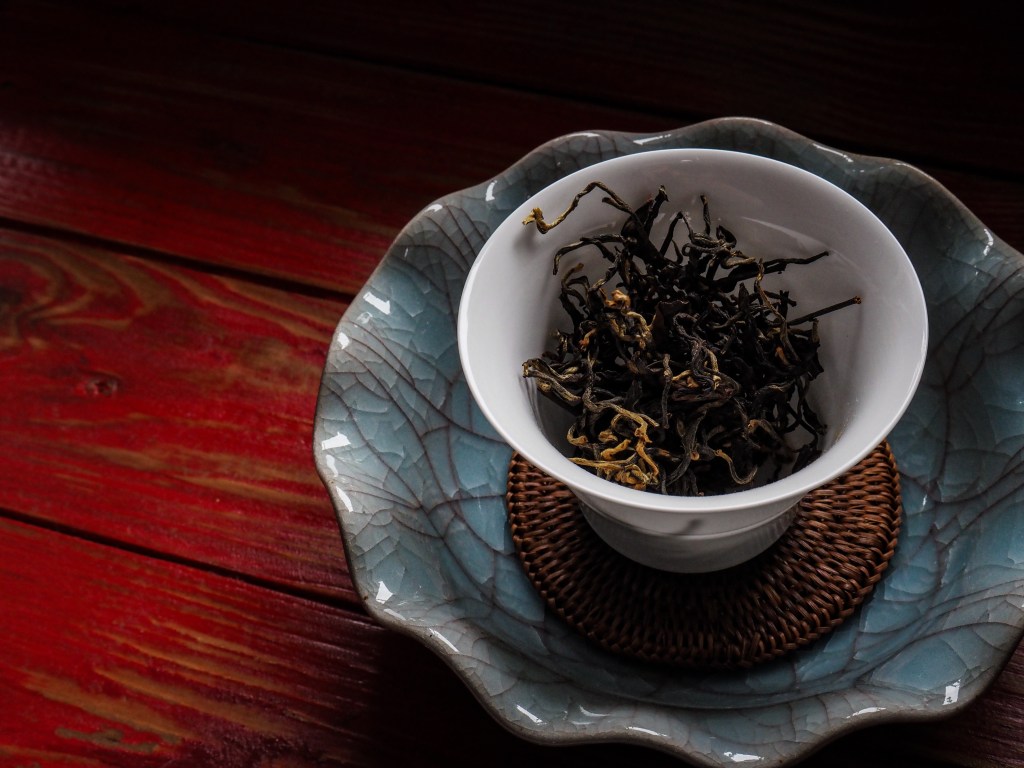
    Picture an August evening: the heat hangs motionless over the rooftops of SoHo, while the last pink reflection stretches itself along the Hudson River. It is precisely there that this tea storms the scene, sliding into the cup like a guest in a white tuxedo arriving at the very last minute.

    Anarchy is the stranger who begins his march across the entrance hall, a triumph of the will to make an extraordinary tea in Darjeeling in the face of no negligible opposition. It is a tea that ennobles any informal occasion, making me forget that I am alone in a dark room, seated at an old table assembled from lacquered pine beams of anything but generous span.

    Yet this tea deserves as much attention as the description on their website. Reading their prose is like passing the windows on Madison Avenue on Christmas Eve: every word, every literary allusion, whispers that mediocrity is no longer an option, that your palate and your mind deserve the same glamour as a rooftop party on the fortieth floor.

    The liquor glints with living gold, bright as the LEDs crowning the taxis along Lafayette Street.

    It has the febrile brilliance of an engagement ring lost in the drain of a bathroom at The Carlyle. On the palate it stages a chiaroscuro noir worthy of Alan J. Pakula.

    Imagine dawn along the West Side Highway, windows flung open and the river firing metallic sparks beyond the guardrail. The transistor radio on, the low hum of the radiator, the scent of a summer that smells of leather interiors swollen by heat and blistered tin.

    Lights stretching horizontally, reality compressed at the edges of the frame. The session unfolds like a sequence of shots captured through an anamorphic lens by a director who never knew fame. Its absurd aromatic complexity delivers an almost vibrating ecstasy, like a series of now-useless dampers whose only function is to transmit that nearly subterranean vibration that travels up from the asphalt, direct, straight to your molars.

    Notes of caramel, of fermented cocoa bean. Then, suddenly, a sigh of mango and spice, cut by an unpredictable blade of mahogany, like that trail of club smoke that approaches from behind and clings to your cuff links after an endless jazz set, extending the finish into a slow motion of dehydrated apricot and fruit out of season. Then a whisper of rosewater, faint enough to be sensual and at the same time muffling, like the perfume of a woman who has just left your hotel room moments before you walked in.
  • Why Are We Still Pretending Darjeeling Doesn’t Matter? – Seven Essence Darjeeling Ouroboros 2025

    Why Are We Still Pretending Darjeeling Doesn’t Matter? – Seven Essence Darjeeling Ouroboros 2025

    There are several reasons why I sometimes disappear and stop writing. A loss of imagination, a lack of interesting teas, and other times it’s simply my own bad habits sabotaging every functioning neuron like a broker gambling with other people’s money. And then there are a couple of reasons no one would care about anyway.

    But through all of this, I never stop reading.

    Still, I never seem to read enough about Darjeeling, about what happens up there, about its teas.

    I’ve always been a fanatic of the outcast and a chronic sentimentalist when it comes to shadowy corners, yet I can’t quite explain how, after twenty years of transformation, twenty years since Darjeeling was a caricature of itself, a withered tea ground into particles so fine they resembled the jaundiced, depressing version of the world’s most famous nose white powder. But now that this terroir is producing something extraordinary, even radical, it remains buried under a silence so thick it’s hard not to suspect that plenty of people prefer it that way.

    I mean, at this point Darjeeling has become like one of those old guitar shops where you walk in thinking you’ll just take a quick look and end up realizing that every instrument in the room has more personality than you do.
    And now they’ve even taken to crafting a flawless Yabukita, without kidnapping any Japanese makers or resorting to those “minor cultural seizures” the British used to call foreign policy when they royally screwed things up with China.

    Some time ago I met an art dealer who spent his days among some of humanity’s most astonishing paintings, only to return to an apartment with exposed meters, peeling plaster, cracks running across the walls like badly healed scars, and rugs riddled with cigarette burns. It was a hole carved out in the middle of urban chaos, the kind of place he’d only been able to afford back when interest rates were frozen. But to him, it was home. His emotional bunker. The private stage for his domestic follies.

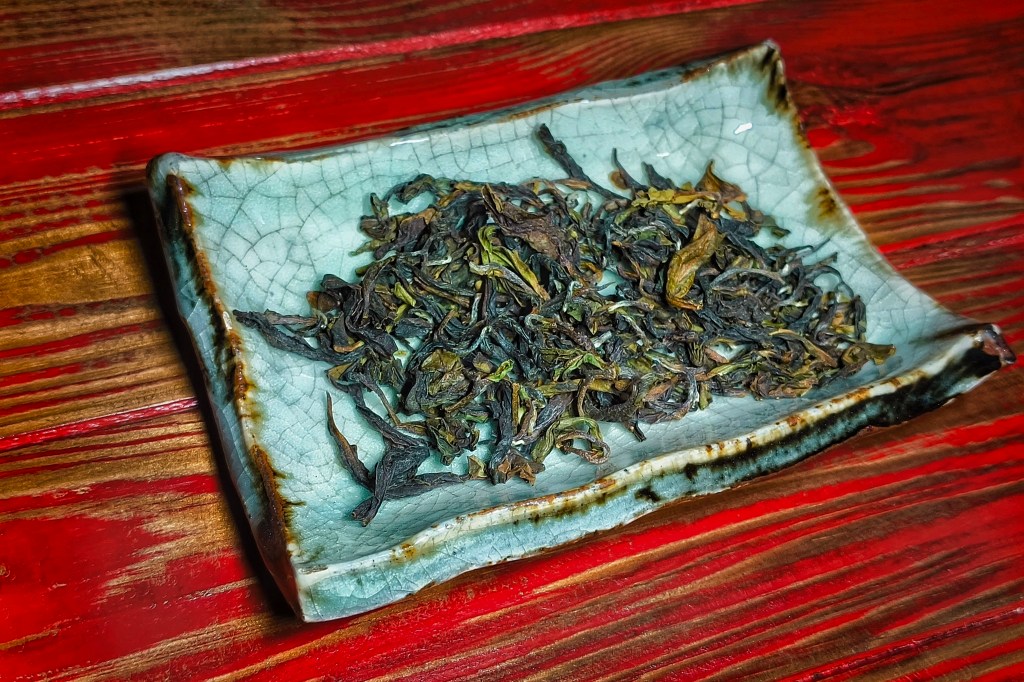
    Ouroboros, this Yabukita first flush, is more or less the same thing for me. A reset button, the kind you press only when you’ve officially run out of patience.

    The aroma of the wet leaves recalls the soft, dim sensuality that must have permeated the ridotti of nineteenth-century Venice, where the creaking parquet served as an unintentional soundtrack to the backstage vocal warm-ups, and the scent of stage makeup sold to actors and singers mingled with the smell of sex and the dusty, threadbare drapes.

    It’s a tea processed like an oolong, a futurist tea built on juxtapositions and clashes, where notes of moss, damask rose, and face powder emerge as if a performer had just walked past you, brushing against your shoulder, not by accident but with deliberate slowness. Then mango, verbena, polished wood, and tuberose shift in tangled succession.

    As the sip moves forward, the intensity rises like a cab driver who refuses to acknowledge the existence of brakes; the mango grows richer with floral shades of geranium and violet, leaving a film of sugary sweetness on the palate and an obstinately long aromatic persistence.

    It’s a tea that grabs you by the collar and drags you right back to the exact point where you stopped feeling alive, but with a new perspective.

  • The Design of Ephemeral Grace – Seven Essence 2025 Spring Quiescence

    The Design of Ephemeral Grace – Seven Essence 2025 Spring Quiescence

    Quiescence is the child of temptation, a tea that crashes in like Dean Moriarty’s wild, unhinged laughter, a tea that halts time, that fills empty spaces with the substance of life.
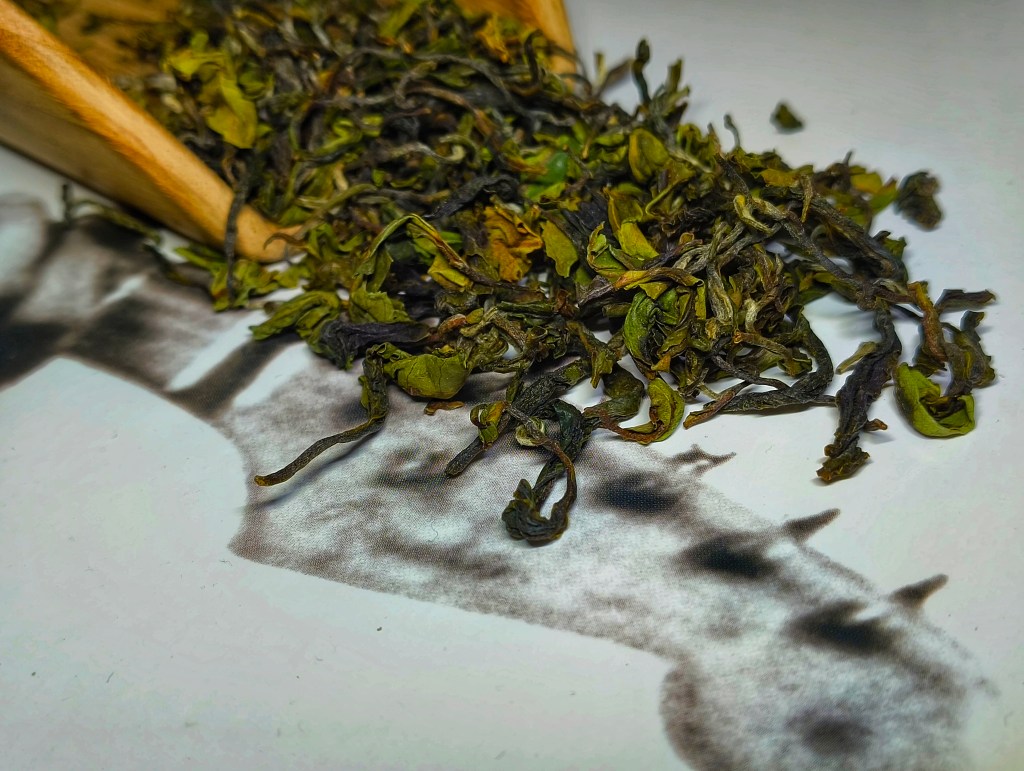
    It’s a spring harvest from cultivar B157, one of those rare works that appear once every four springs, refusing to exist in reflections, in mirrors, in repetition.

    The wet leaves smell of frangipani and vanilla, laced with the almost milky notes typical of Taiwanese oolongs. It feels like it fell from a Liberty canvas, dried in the dawn sun of Los Angeles, back when the light was still golden and the air almost liquid.

    It’s a hymn to creative impulse, to those destined to vanish, leaving behind only a trace,  like perfume on a pillow, or a copy of Les Fleurs du mal forgotten on a veneered nightstand, underlined, underlined everywhere.

    The sip is soft, pliant, sweet. It leaves a creamy, floral, almost cosmetic film on the tongue. You can sense the intent, the effort to craft an exceptional tea, every sharp edge softened like a minimalist organic vase. Its aromatic texture feels woven through an analytical, obsessive, surgical search for sensation.

    Sweet notes surface, mango custard, whipped cream, a whisper of osmanthus water. It’s the ultrasound of a happy childhood memory, evaporating into something denser, more designed.
    It lingers in the mouth, clinging to the palate, with a hauntingly familiar aftertaste of strawberry cream.

    There’s a quiet sense of luxury in all of this.
    It’s like stepping into a room decorated only in pale gold and French velvet, with bottles of Champagne scattered across the floor,  where nothing is left to chance, and even the dust participates in the choreography.

    It’s a layered, intentional experience. A reminder that 2025 is a truly remarkable year for Darjeeling.

  • On the Sidewalks of the Sacred and the Spent – Seven Essence Darjeeling Autumn Augury

    On the Sidewalks of the Sacred and the Spent – Seven Essence Darjeeling Autumn Augury

    Augury is a Seven Essence Darjeeling oolong conceived under a notion of tea-making that is almost Liberty-like, moved by a secular liturgy made of gestures, of manners, of repetitions never entirely identical to themselves. It is the progeny of a movement that knows no envelope, neither of the body nor of the imagination; it is a struggle against the terror of uniformity and constraint. It compels one to separate from judgment dictated by the flesh.


    Drinking it brings back memories of late nights, with the head resting against the wall in front of Casa Florio Nizza, a massive liberty building by Bellini, adorned with cast stone phytomorphic decorations, where the opacified windows let the light filter in like a profane cathedral. The wrought iron of the railings, twisted with almost conscious intent, seemed aware of being among the few survivors of an extinct architectural race.


    This tea brings back to my throat the mineral warmth of those walls, thoughts on the excesses of a life long past, on surrendering beauties, on the last cigarettes smoked standing among those fervent buildings, custodians of descents into hell and fleeting redemptions. A youth lived on worn-out sidewalks, eroded by the disheveled snobbery of its regulars. These were neighborhoods inhabited by angry adolescents, womanizing masons, criminal dandies, penniless but enlightened artists and inept silver spoon kids; people who, in any other context, would never have met.


    The cup appears like that neighborhood, a unifier of opposites, a place incapable of saving anyone, but at least able to ennoble our desire for consolation. With its scents of magnolia, orchard grass, fermented fruit and tuberose, it seems conceived by the olfactory extremism of Cavagna, but what strikes is not only its flamboyant sweetness, the total absence of bitterness, or its glyceric texture, but the verticality of the composition: a Dantean ladder climbing through wildflower honey and the early setting of gooseberries. There are notes of peach candy, guava nectar, coconut water, and pomelo, followed by an archetype of tropical fruit that closes on a fragrance of passion fruit, with an almost surreal intensity.