Tag: mengsong

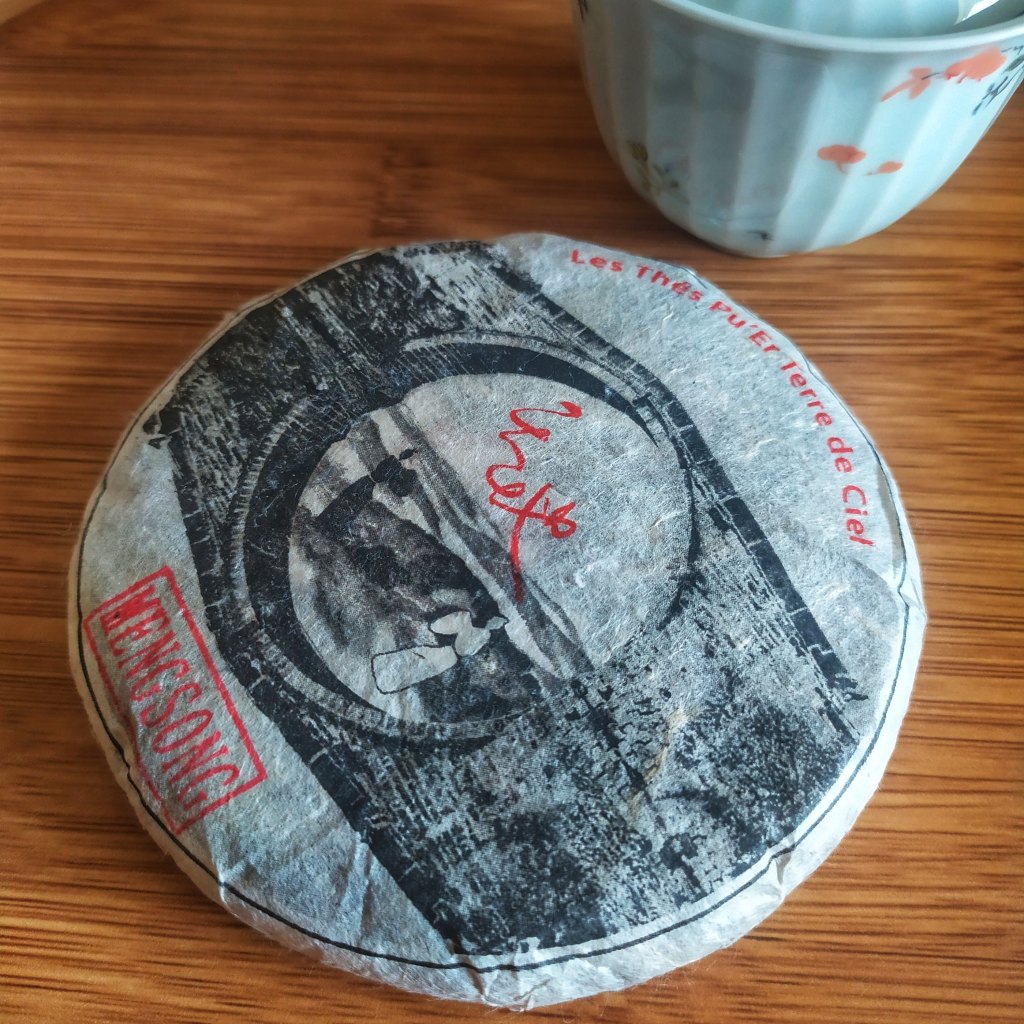
  • Mengsong and the Anatomy of a Relentless Huigan. TdC Sanmai Village Danzhu Sheng Pu’er Spring 2024

    Mengsong and the Anatomy of a Relentless Huigan. TdC Sanmai Village Danzhu Sheng Pu’er Spring 2024

    In Sanmai, the harvest embodies collective power, it remains there, sedimented, like the slow burn of an inexhaustible cultural fire. It reemerges in the ritual act, with the tension that grows as the air’s humidity rises, escalating like a migraine that starts at the base of the skull and radiates to the eyes. Hope mingles with the fear that the rain might arrive at the wrong moment, transforming the river into a clay demon and the crumbling mountain into an army of rock.

    Here, Mengsong seems to speak through the very stones of the houses. And what it says is not just a verb numbed by modernity, but an echo that comes from far away, from a larger world, perhaps lost, but still alive in the people. It kindles itself on the walls, becomes flesh, becomes identity. The fragile power of its tea is like the fire in Ella Fitzgerald’s voice resonating in the aorta. You cannot ignore it.

    These are not odes nor exercises in writing. This is ground zero of the attempt to understand. To truly come into contact with a tea that hides in sensory detail, that, like its land, wears you down and demands understanding at the edges of perception.

    This danzhu from Thés Terre de Ciel is a truly unexpected tea, unsettling in some respects. We are often accustomed to teas from Naka, Benglong, Bameng, with their floral, sometimes fruity, gentle characters. But Sanmai doesn’t play with gloves on. It is a clean, precise, yet powerful tea. The Qi is profoundly forest-like, dense, almost physical; it seems to influence every mechanoreceptor. You feel it in your hands, your legs, your stomach. It seeps into the nerve plexuses, as if the body were enhancing the perception of every distal extremity, of each of its boundaries.

    The huigan is long, incessant. It lingers. The bitterness is there, but it doesn’t last. It retreats quickly, making way for a mineral, almost effervescent, electric sensation that settles on the sides of the tongue, along with a sweetness that makes no compromises. Salivation is continuous, rhythmic, like waves that come without pause. Like the crowd at Glastonbury, a constant flow. Every infusion up to the twelfth is a tactile theater, alive, dense, full. No drop, no faltering.
  • Memories of chatting about Mengsong and an old Bameng friend with a 2007 Teasenz gushu

    Memories of chatting about Mengsong and an old Bameng friend with a 2007 Teasenz gushu

    I don’t think there can be any tea, any time, any sip without the people who bring with them the truth of a territory. One of the first tea maker I met was from Bameng, he worked for a factory in Mengsong and was nicknamed 小毛虫 “little caterpillar”. This name was given to him by his parents, when he used to sneak out of the woven wooden basket to observe spiders and insects while his family clung to the ancient trees for the harvest.

    Every time he picked up those yellow caterpillars he went back towards his mother’s legs crying, with his face full of mud and his hands swollen from the stinging substance of the insect. He had an immoderate passion for those caterpillars and an even greater stubbornness.
    His family’s teas were special, with that disarming power right in the mouth, his laughter when talking about the times now spent in his village were even more energetic.

    His nickname also referred to the ability of those insects to transform, as well as the growth that his parents hoped for him. He incessantly emphasized how his village had changed, how the people of that place had changed and with them their landscape. We talked about how tea had been an alibi for both dreams and reality, a substance of conversion capable of overturning eras and conditions, of extracting from things its opposite.

    We sipped pu’er talking about how the tea inherited its alchemical nature, as a transmutative substance and as a creator ex nihilo. The noise of the forest and of the harvest would always be the backdrop to his life and tea would always accompany him until the end of the sunset, until the last dance of the chrysalises.

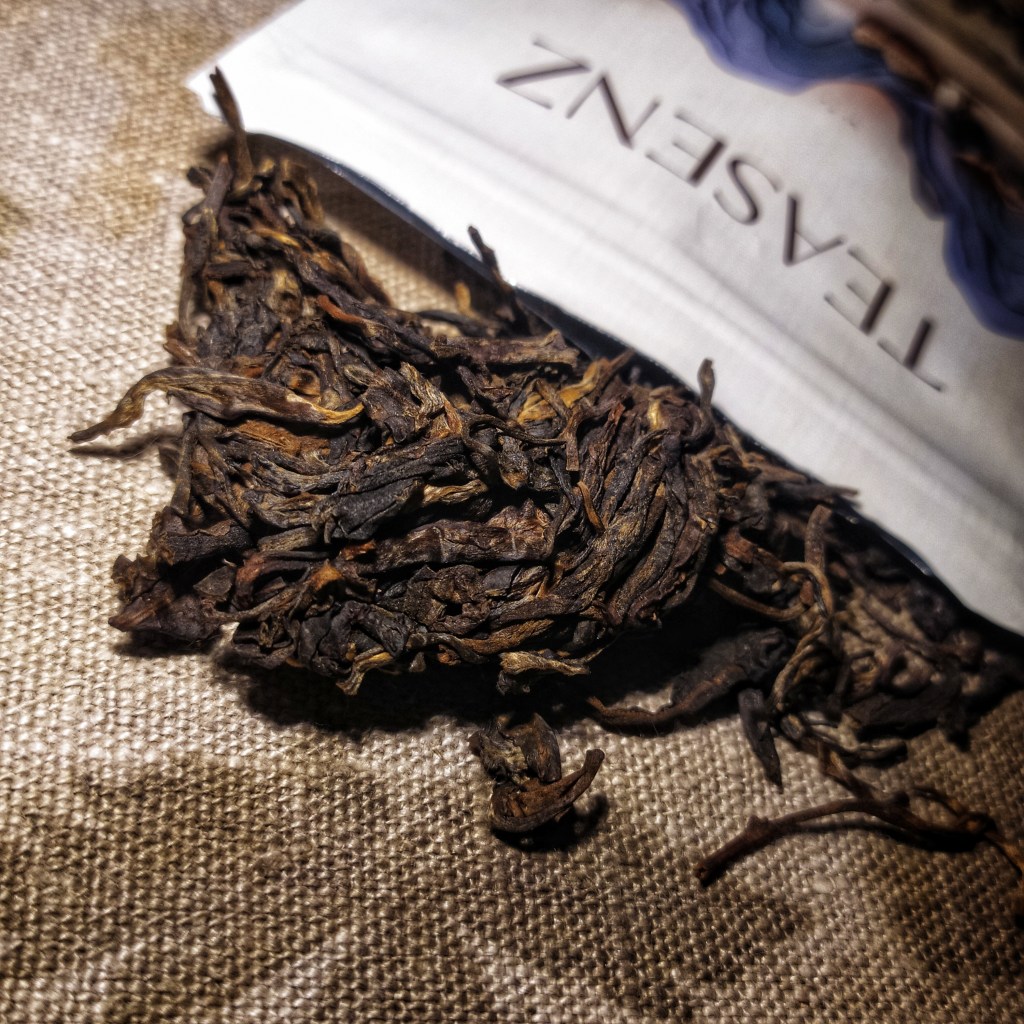
    This 2007 Mengsong Gushu by Teasenz reminds me of those chats, those powerful, intense and penetrating pu’er. The scent of wet leaves is reminiscent of leather boots, sundried plum, flambéed citrus peel together with the sensation of dried rose petals in the middle of an ancient book. Balsamic notes then appear, of turnips cooked over charcoal and in the background light nuances of an open tin of latakia tobacco placed on an old, slightly damp fir furniture.

    The sip is silky with a medium persistence and an excellent sweetness accompanied by a typical salty flavor that recalls a pleasant mineral sensation of rock. A good huigan is surrounded by notes of roots, rhododendron honey, rose hips, plum and leather, adorned with an orchestra of citrus notes, balsamic candy and light traces of cardamom.

  • A cup that smells like an orchard next to a creek. TTdC Sanmai 2013 sheng pu from hundred-year-old trees

    A cup that smells like an orchard next to a creek. TTdC Sanmai 2013 sheng pu from hundred-year-old trees

    The sheng pu of Thès Terre de Ciel is the reflection of an extraordinary terroir such as that of Sanmai, a village that follows the limelight of Mengsong teas, preserving its pure fruity appearance and sugary touch and at the same time sheltered from oracular exaltation and censorship which brought many teas from these areas at now crazy prices.

    Sanmai pu’er are nostalgic stimulants, a perpetual conversation with the hippocampus like opening an album of memories on your lap. This 2013, from old trees at 1600 meters above sea level, has the traits of someone who brings with him the first charms of the time while retaining that enlivening and exuberant youthful verve.

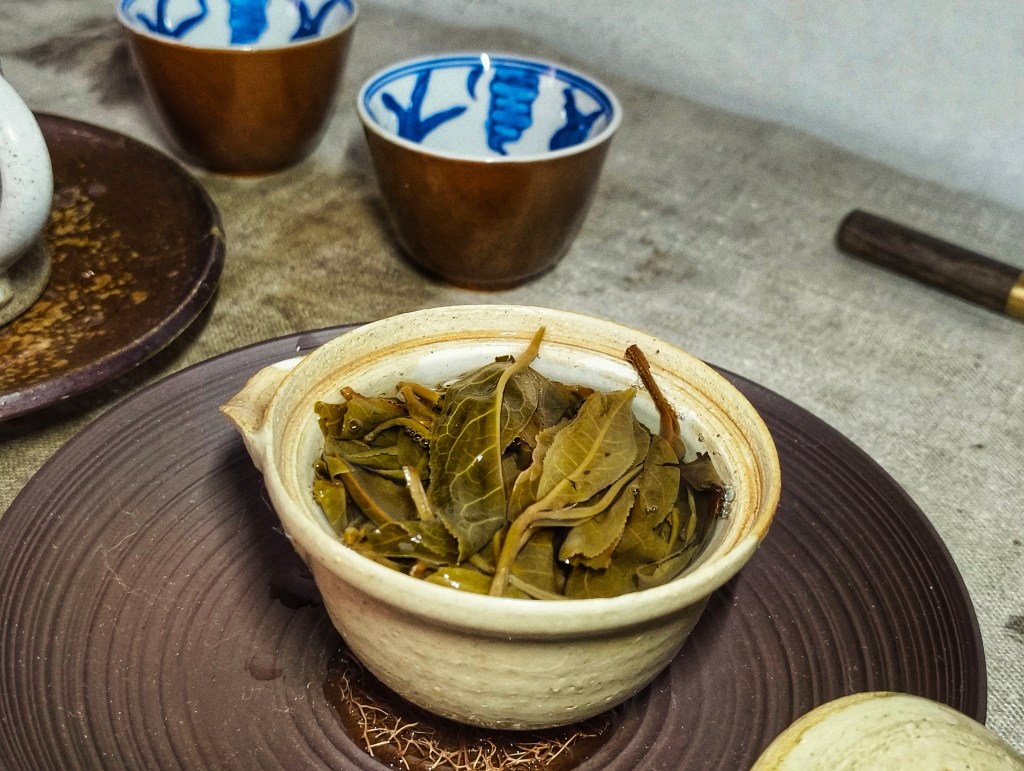
    The color of the liqueur is amber, the hints of the wet leaves echo peach jelly, dried plums, yellow rock sugar and custard cream. Its olfactory fervor is an unfolding of different layers of complexity, a swing of evolved notes and other more naive and fresh ones.
    The spectrum then turns to naturalism, with olfactory memories of pickled bamboo, of mountain flowers up to the progression of reminiscence first of undergrowth, then minerals and iodines, like an orchard next to a creek, enjoying dried tropical fruit and Moroccan biscuits.

    The aromatic approach in the mouth is that of a good, true pu’er, without excesses of fame or rhetoric. On the palate it is sweet and accommodating, with a practically absent bitterness and astringency. The sip is enveloping, of medium thickness, the sweetness of dark sugar and peach cream is integrated and it speeds it up, the note of pomelo zest is subservient to a set of bakery ad fruity aromas that recall a fruit tart. Excellent persistence of a finish with a fascinating floral and wild apple weaving.

  • Sanmai, the village in Mengsong where time seems to have stopped

    Sanmai, the village in Mengsong where time seems to have stopped

    Sanmai has gained more and more attention from pu’er enthusiasts in recent years, following the growing interest in the forests of Naka and the Mengsong area.

    It is surrounded by some of the most famous mountains in Menghai county, about an hour north of Banpo zhai in the Nannuo area, and an hour and a half south of Huazhuliangzi, reachable passing through the villages of Bameng and Baotang. The forests alternate with the taidicha like an ecological clash between human and nature,the primitive and forest scenarios intensify as you enter the trees towards the North, on the road to Sanmai Laozhai. Once in Sanmai Shangzhai there are only a few kilometers to walk towards the ancient gardens where the natural severity and the inexorability of the woods continues up to the gates of Nanben Laozhai.

    Some Mengsong areas seem to open up towards the immense, they consecrate themselves in that “Open” which for Heidegger was the condition in which things, places, people can appear for what they are and not for their numerical value. From the ancient gardens of Sanmai, the valley sloping down to Jinghong, it seems like a mirage that would have elicited a surprised smile, despite his countless trips, even at Frederic Edwin Church.

    The lichens and saprophytic plants embrace the shrubs in those slopes born from an insane verticalism, which forced the few pickers who bet part of their existence on tea to remain more anchored to the anxieties of concreteness, where the violet of their cheeks was the only chromatic hint among the shades of that primordial greenery.

    Beyond the narrow and steep road, the rugged gorges and the road surface in which every ravine seems an existential leap, the Hani have found a home for centuries, what was previously a settlement became a security hub in 1934 under the name of Nanben Hebao, for then seeing his own name, Sanmai, only in 1956. Caravans often interrupted their journey here, the rains broke in for days, the oxen slipping caused them to lose the equipment entrusted to them and hence the legend of the name Sanmai, or the place where the tools were tied forming a trellis in the saddle of the ox.

    In the ancient gardens tea trees are scattered, some tall yet young seem to converse with the conical bodies of Moso bamboo which often makes this forest look like the ecosystem of Huazhuliangzi.
    Here, on the contrary, the bamboo was planted artificially, when tea had not yet reached its current economic importance, as a cash crop for building and textile purposes, and to restore the excessive soil reclamation which led to extremely important erosive phenomena. However, now its removal and reconversion of the land is a problem that inhabitants are facing with difficulty.

    The descendants of those exiled souls who bet on the tea of Mengsong and Sanmai now reap the fruit of a legacy that expands beyond its disciplinary limits, to the point of involving the destiny of their own territory.

    The rural scenes give value to the time that has passed, the villages develop on the open ridges of the mountains,where the approximately 500 families, mainly Hani, still live mainly thanks to livestock and farming. During the Gatangpa festival you can smell the scent of glutinous rice cakes in the alleys, people walk along the beaten path to reach the place of offerings, and then gather with their families drinking tea and rice wine, even some hens seem busy running out of the old wooden sheds; the black of the ethnic clothes, adorned with silver and silk tassels and the colorful bandanas with geometric motifs offer the only chromatic contrast from the red of the clay soil, as if their smiles were in that instant the only color detail on a black and white background.

    Despite the growing awareness of the value of their tea, it seems that the jianghu forged by conflicts of personality and self-affirmation has not arrived here, their leaves still manage to offer an experience saturated with meaning, freed from economic conflicts and apocryphal slogans; they develop an extended atmosphere in which the link with a past emerges, with those identities, of those perceptions beyond time, which have the ability to bring the aesthetic experience of this village back to the dimension of the present in a different, imperceptible and at the same time sensitive in its liquid revelation.

  • All the fragrance of Naka

    All the fragrance of Naka

    Naka is one of those places whose tea manages to make the contemplative intent coexist with the liberation that accompanies a state of inebriation, of marked well-being. The teas from this mountain are often not famous for their complexity but rather enliven the experience with their persistent sweetness, an immediate sugary sensation that is almost palpable beyond the blanket of initial bitterness, a sip that returns a sensation that shines through as an existential parable where suffering and gratification alternate.

    Teas like those of Naka, Bingdao or Laobanzhang transport us to another dimension of thinking, more ancient and simple, the one that makes us grasp Holderlin’s vision of a “measure common to all”, the one removed from our evaluations, the one of a taste purity capable of embodying the reason and essence of a place.
    They are unique scenes, to which even if we don’t belong, we adopt as a spiritual homeland.

    Naka’s is perhaps the most representative of Mengsong’s teas; here the woods surround the village in which there are approximately 40-50 hectares of ancient tea trees, most between 300 and 500 years old. The 1660-meter high peak is located on the eastern slope of Huazhuliangzi, the ground is sandy and rocky, the climate is humid and rainfall is abundant and more frequent than in other areas.

    The small-leaf variety predominates along with the medium-sized variety, which is a unique condition in the Menghai area. From Da’an to Nongbeng, from Baotang to Damengsong each village here has its own microclimate and its own shrewdness in the processing of the leaves; Lahu and Han with their respective dialects and cultural traditions have lived together for centuries in these mountains where time seems to have stopped.

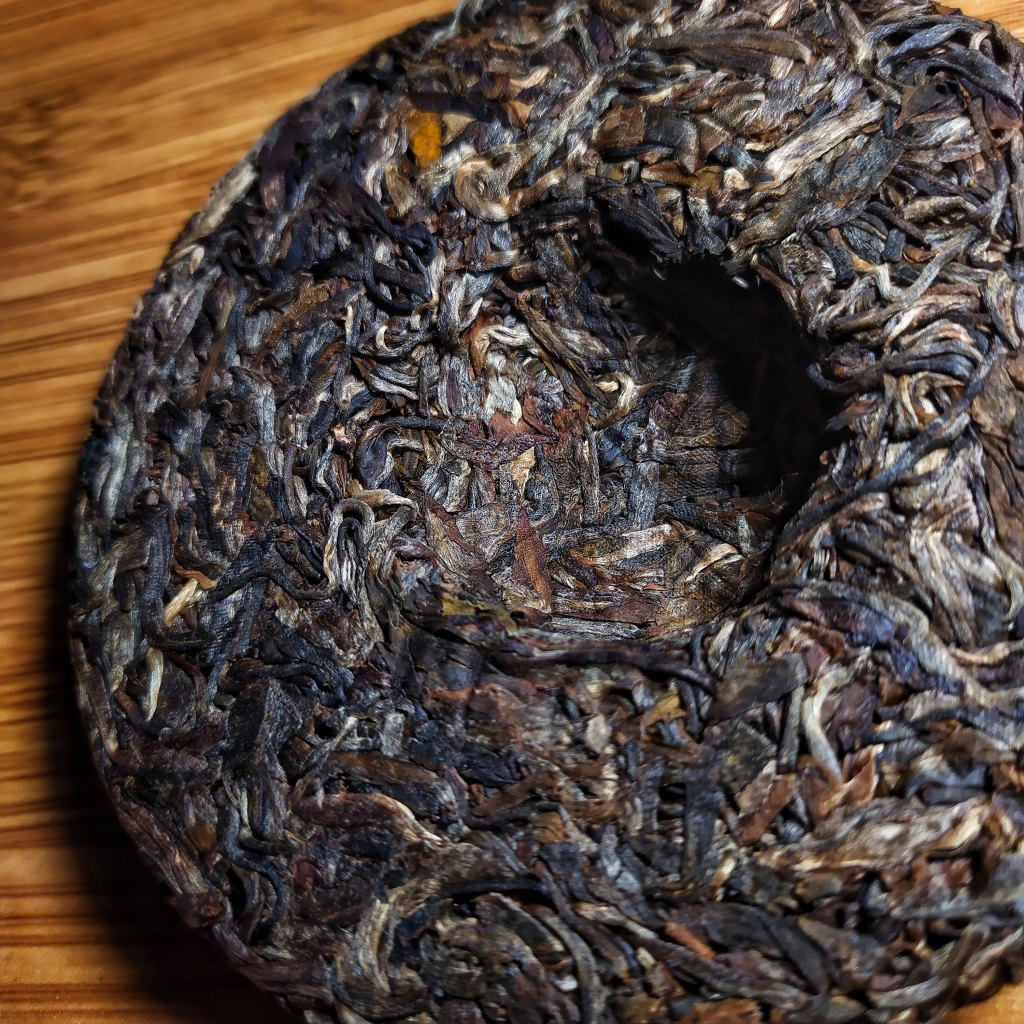
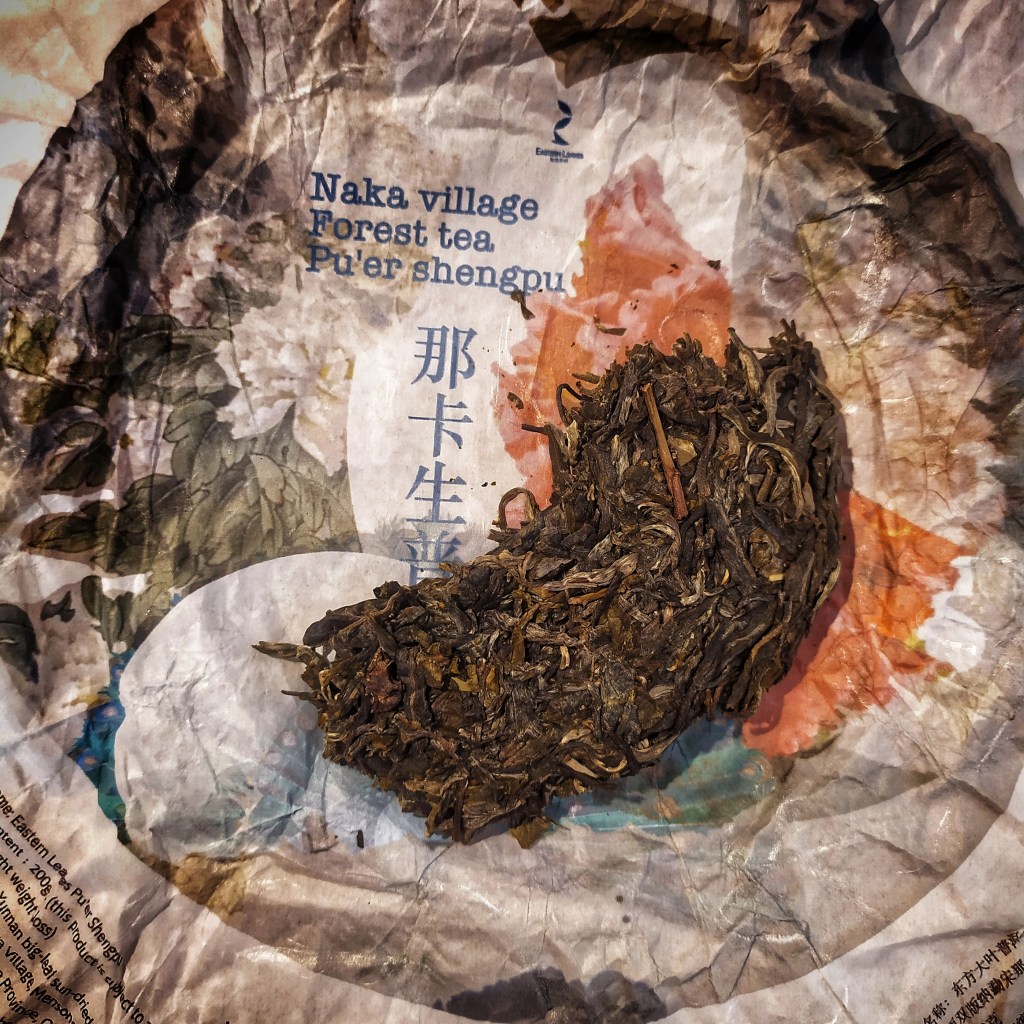
    This 2022 Eastern Leaves sheng pu is a tea that is not afraid of meditation or of the most convivial moonlight. The wet leaves are a unique journey just outside the village, the memory is that of a pastry shop in the middle of the forest where the scents of the woods and wet leaves envelop you, among the rocky tones you can perceive scents of apricot curd, peach , mountain flowers and citrus fruits.
    The liqueur has an antique gold dress; on the palate it is soft, enveloping, beautifully balanced and progressive in the bitter tones that quickly unfold in a sugary dimension, an endless sweetness that seems almost chewable. It is a tea with an excellent structure already in its youth but whose time can only act as its guardian.