Tag: moychay

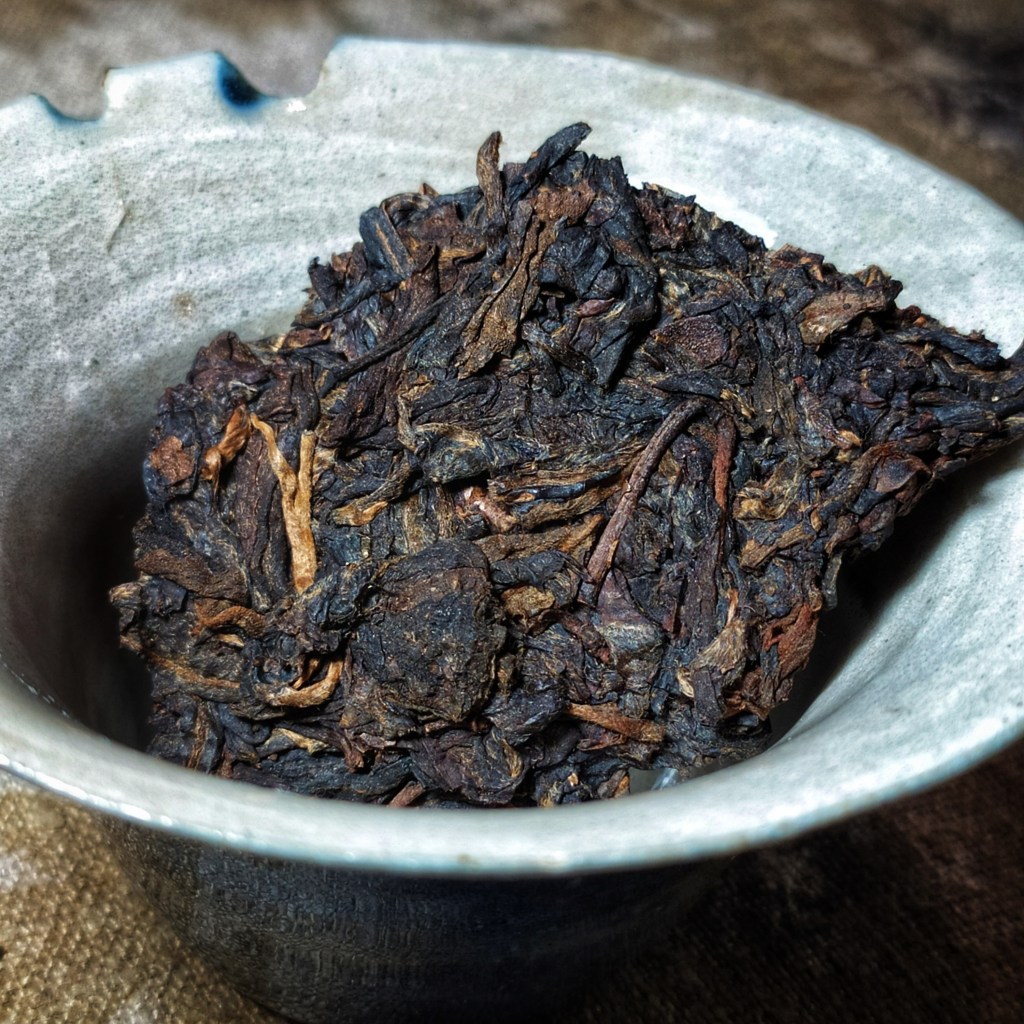
  • Making a true, authentic tea is sometimes a question of consciousness. Meng Tong Yin Shan Tea Factory Gǔ Xiāng sheng pu’er 2009

    Making a true, authentic tea is sometimes a question of consciousness. Meng Tong Yin Shan Tea Factory Gǔ Xiāng sheng pu’er 2009

    I happened to wake up this morning with a sense of nostalgia, that damned stinging feeling, that melancholic regret of what has passed or gone, or been lost. I headed to my “pharmacy,” that’s what I call the place where I keep that messy pile of leaves and ceramics that should appear to be a safe place for tea, but instead seems like the war front of a desperate need for order.

    I infused the leaves of a tea that had been sent to me some time ago by Moychay, a 2009 sheng from Meng Tong Yin Shan factory. Gǔ xiāng is its name, 古香, “the ancient fragrance”.

    Often we prefer not to delve into where the flesh hurts, pushed back to the surface by thought and the instinct of preservation, but I needed a tea that would anchor me to the present, that would satisfy my need to think, that would give sense to the moment. The sense, in its dual nature is able to indissolubly enclose the organ of sensitive experience and the intrinsic value, takes the ancient by the hand, and when there is truth, the authentic.

    Truth guides the authentic and the latter spontaneously translates into awareness of one’s vocation. Making a true, authentic tea is sometimes a question of consciousness and the need to resort to painful memories, it is not a question of ability but of understanding, of true, living style, of blood, an incorruptible visceral pact, symbol of the most ancient culture, of spontaneous creation, of generative power.

    Tea full of meaning is a tea that reminds us that this drink is not just form, it is not a mere concept, it constantly reminds us that expressing and evoking are different things. The aromatic traits also become gestures marked by an intention, they become an evocative act, we notice a development, the evolution of a melody that passes from one aromatic note to another, in which form and content emerge and subsist together.

    The ancient is distinguished from the old when the former had the opportunity to see the passing of time wrapped in the blanket of truth, of meaning, while the latter simply fades without leaving any memory, neither of itself nor of the intention that was at its origin.

    This is the reason why I chose this tea.

    Tea changes, it is a map of time and a saving substance, and like few others this Gǔ xiāng carries with it the traces of experience, of a changing form, in its ambivalence between notes of a fading freshness and those that place it ever more in a bygone era.

    From the leaves emerge scents of a winter countryside, mushrooms, undergrowth, camphor, surrounded by hints of cinchona and kola nut, nuances of dandelion root, tamarind and caramel wrapped in an unexpected, surprisingly strong blanket of vanilla. The scents of redcurrant, leather, moss on the trees, oak wood and orchid then become prevalent.

    The sip of medium softness, sweet but balanced by a light balsamic bitterness lowers the curtain on floral, woody tones, of angelica root, closing on aromas of vanilla pod and leather.

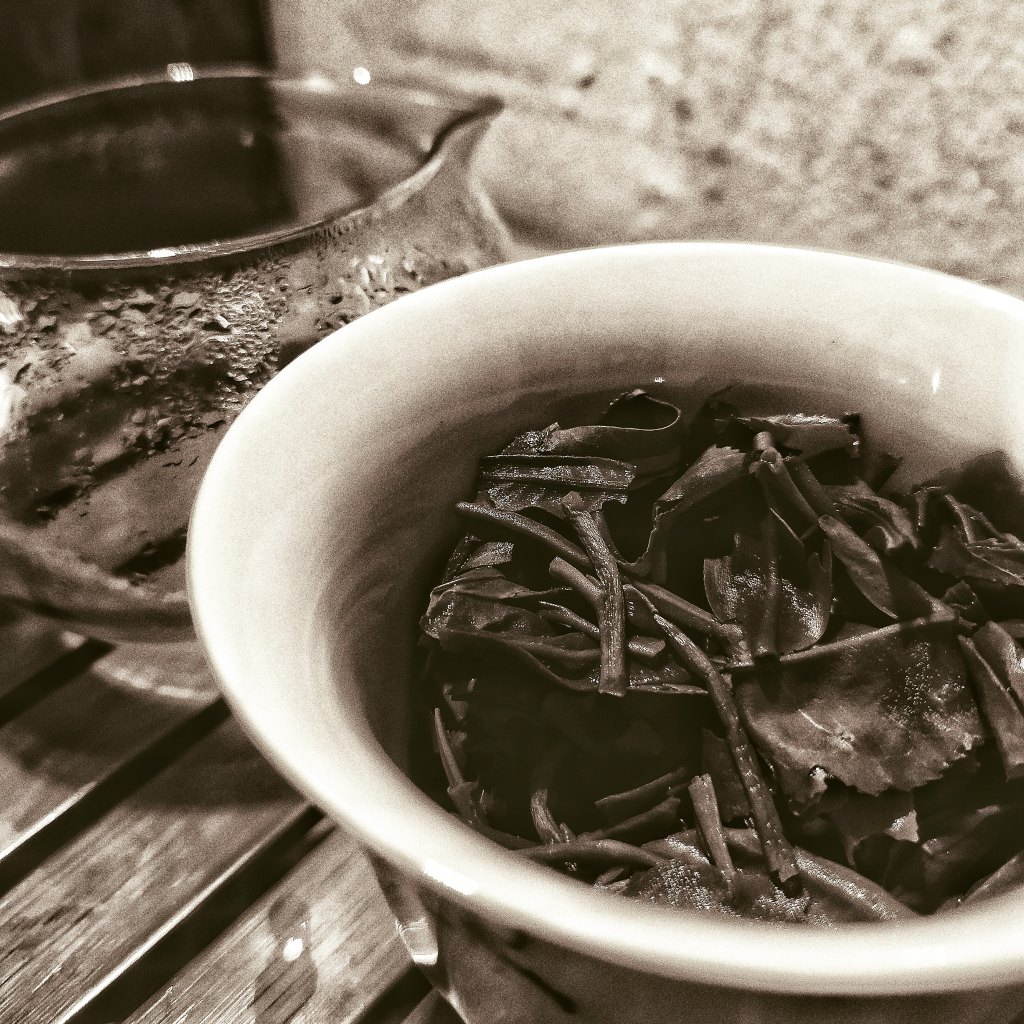
  • Metaphysics of Pu’er blend with Moychay 2022 Melting Reality sheng pu’er

    Metaphysics of Pu’er blend with Moychay 2022 Melting Reality sheng pu’er

    We live in an era where you can potentially know everything about a tea, the garden it comes from, the grower, the exact location of the trees, but the tea market has not always been like this. Blends were so popular in the past that there were few single-origin teas before the 2000s.

    Some of the greatest recipes to come out from the Dayi, Xiaguan and Rongshi factories or from the minds of pioneers like Ye Binghuai, Vesper Chan and Chen Huaiyuan who commissioned, produced or supervised them, were blends.

    But what can elevate a blend and bring the art of blending back to the forefront of consideration? I believe that when the condition of need and economy is overcome, the blend can become expression and genius, a journey into the unexplored, a domain without potential rules, a disorder channeled into the eternal overcoming of all the contradictions that compose it. But this is on condition that the raw material is of such extraordinary quality as to support the greatness of the intention.

    The blend is not a mere offspring of an uncoordinated material, it must be able to fuel the creation of other structures, of superstructures capable of capturing and interpreting the reality and the thoughts of those who create them, something also capable of escaping the premeditation and contingency of the possible and of making us forget those mixtures of leaves devoid of any persuasive power.

    The lack of rules and the impossibility of serving the leaves and erecting them as a symbol of a place brings technique and thinking to the limit and, as in art, to experiment the extreme ease of failure but also to the configuration of unique potential, since the technique can be exalted only where it manages to experiment its most radical impotence.

    In this Melting Reality, a Moychay 2022 blend, you can find that unexplored, that quality of the first time, of that reality so accentuated and exaggerated that it seems unreal. Like a Blanes painting the drink is stratified on more rural and dark tones of leather and maritime forest which alternate with other sweeter and brighter ones of gooseberry, dried figs, candied fruit and orange blossom as in a delicate play of lights.

    It is a liquor where the ephemeral and the real alternate, the light bitterness and medium softness integrate well with the good huigan and the hint of tamarind sauce that give bite and announce chaos in an incessant symphony of notes of candied cedar and honey, orange custard and cooked wheat.

  • The Shangkang festival, the reconciliation of civilization, a nostalgic tea. Thoughts through a 2021 Wengji sheng pu from Moychay

    The Shangkang festival, the reconciliation of civilization, a nostalgic tea. Thoughts through a 2021 Wengji sheng pu from Moychay

    People gathered at the Shankang festival, their predecessors were honored, the offerings placed at the foot of a distant past in which every year the memory revived. It was an occasion to dance, to be involved in a moment when time seemed to stop, saturated with a sense that was difficult to translate into words, where society was reconciled and perfected, new relationships were woven and in the dance a harmonious idea of freedom and order was restored.

    The intense emanation of life was palpable also through the negatives of the photographs still hanging to dry, in those images you could see the dynamism of movements, conversations, aspirations, through that dance was reconstituted a kind of social consciousness, a “to be for others” even through the individualism, an assignment of virtue reflected in rhythmic and modal imposition, in traditional customs, in emphasized forms of courtesy, creating a link between distance and proximity, freedom and respect, confidence and discipline.

    In an age of collective utopias, among the mountain forests of Wengji flourishes instead the sense of dwelling, tea is evocative of a feeling of belonging, a vital civilization supported by the ability to live for its territory and its history alongside its neighbors, a loyalty to its land and the narration of its importance.

    In the gaiwan there is a 2021 Wengji sheng pu from Moychay, a complex tea where the typical character of Jingmai emerges in the notes of honey and flowers, orange peel, caramelized apricot, cooked strawberry and pandolce, with more primitive nuances in the background. The body is medium thick, the aromas direct and defined, the huigan emerges early after the advance of a archetypical and balanced bitterness.