Tag: old trees

  • The Cup That Didn’t Need Your Approval – Viet Sun Tủa Chùa Spring 2024

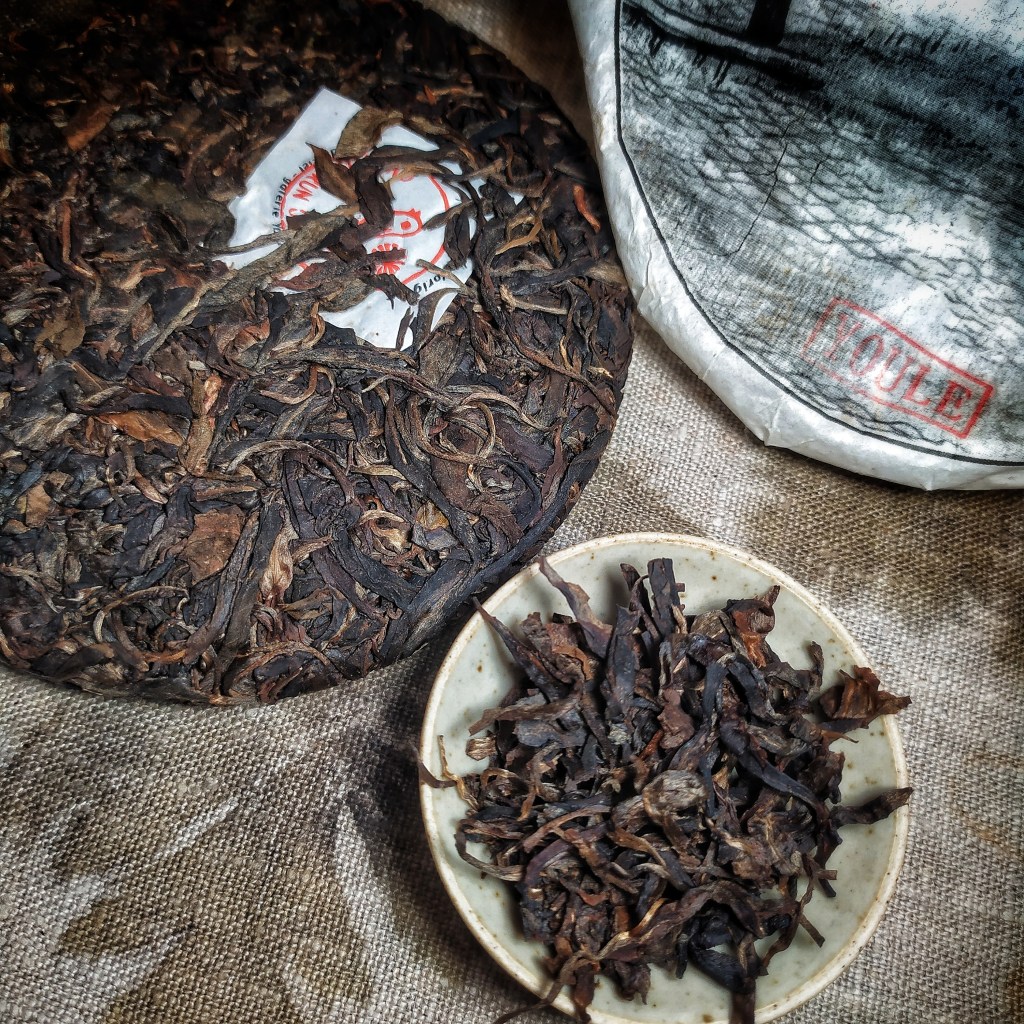
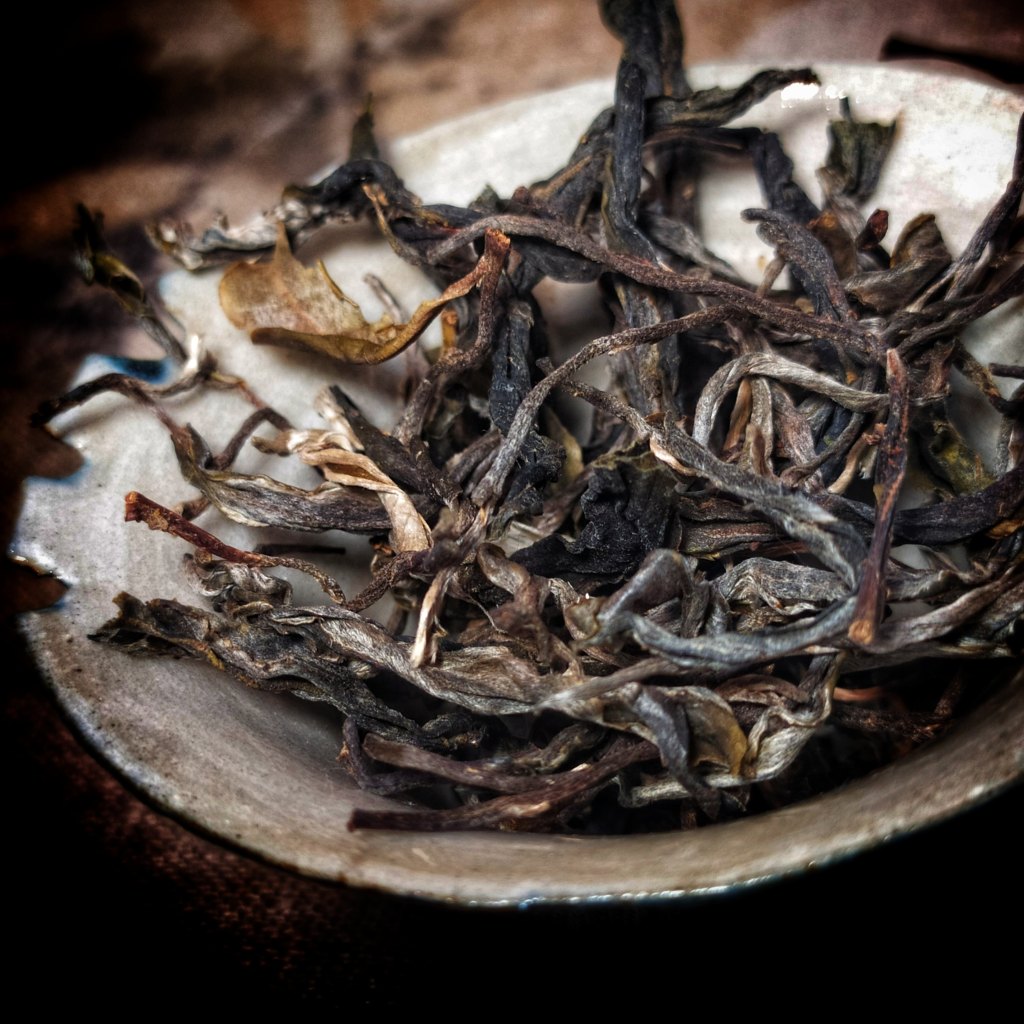
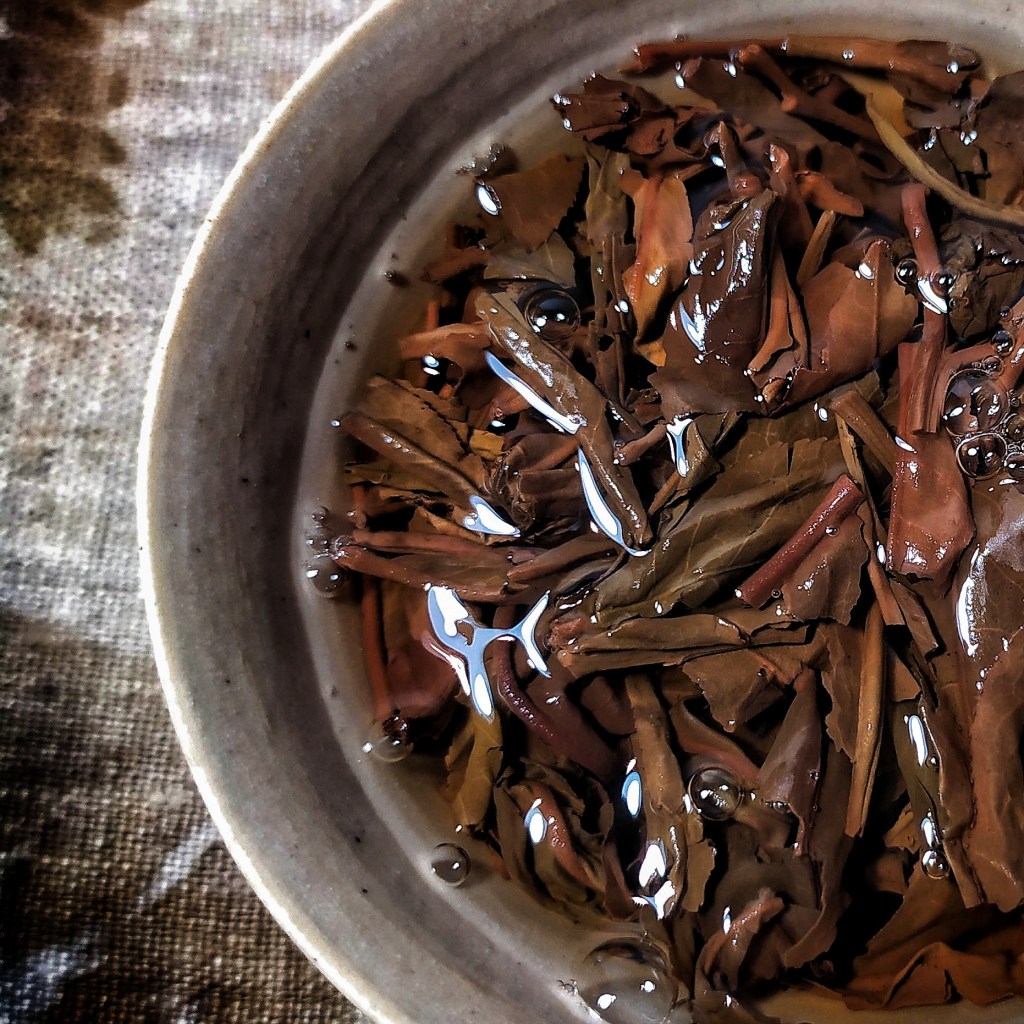
    The Cup That Didn’t Need Your Approval – Viet Sun Tủa Chùa Spring 2024

    We all know it: social networks always leave too much room for sensationalism. There’s endless space for anyone obsessed with sanctifying new brands and glorifying mind-blowing teas that promise an experience somewhere between spiritual awakening and a methamphetamine binge. A permanent pop-up of disposable enthusiasm. It’s the amusement park where anyone can feel like a prophet for a day, canonizing the newest square meter of the most remote village, where snakes, tigers, and giant beetles supposedly lurk ready to attack the tea pickers, only them, of course, not people practicing any other profession, before moving on without even bothering to stub out their cigarette in the ashtray of final verdicts.

    Everything seems to shine, everything seems harmless, everything promises miracles, at least until you realize it was only a reflection, not the source. That’s life.

    It has happened to me too: speaking too highly, too soon.
    But there is one terrain, one terroir, on which I’m not willing to make the slightest concession: Tủa Chùa.

    From a mountainous rear area near the Điện Biên Phủ valley, where in 1954 the decisive battle that ended French colonial rule was fought, this region has become an enclave capable of producing surprisingly accomplished Pu’er teas. Many areas once considered marginal and reactionary, such as Tủa Thàng, turned into revolutionary bases, as they combined geographic isolation with strong social cohesion. The karst plateau, with its steep mountains and paths invisible to outsiders, offered natural refuge to high-ranking officials of the Việt Minh. They took shelter in the homes of Hmong villages, protected by the population’s collective silence.

    The inhabitants knew the land intimately, guiding men, weapons, and messages along unmarked routes, avoiding French patrols and keeping the mountain areas connected to the Điện Biên valley. All of this unfolded in conditions of extreme poverty, yet they provided food, places to rest, and intelligence on enemy movements, accepting extraordinarily high risks. In those mountains, silence was a form of resistance, and the geography itself seemed to have taken sides.

    Now, back to the tea.

    If I had to explain to someone what true mineral, botanical, ancestral excellence means, if I had to make them understand what these trees are capable of, and why Vietnam today not only looks Yunnan straight in the eye but openly challenges its borders, I wouldn’t hesitate for a second. I’d pour them this tea. No preamble, no rhetorical acrobatics, no captions.

    The way this tea is evolving is sublime, truly the kind of harvest you get once every five years.

    I’m sorry to say it won’t deliver the tragic depth of Marina Abramović’s gaze, the high priestess of emotional intensity descending upon us mortals to elevate us by staring into our eyes like a corneal topographer.

    What it will give you is a perfect sip.

    This is a sheng with an almost exasperated intensity, like an overexposed photograph that somehow works. It lingers on orchid notes, though not like Jingmai, those notes seem wrapped in a dense, almost brooding forest aroma, the kind currently fashionable to flaunt when talking about Guafengzhai, but here they feel more arrogant, they slide under your skin with a needle’s quiet, deliberate precision, an elegance that’s both unsettling and strangely pleasant.

    On the palate it’s viscous, medium-bitter, with barely perceptible astringency. The huigan is quick, floral, so persistent it feels more like a reforming than a return.

    This isn’t a tea for fragrance addicts or niche perfume obsessives.

    The qi is the real point here.

    It’s a tea for those who recognize the exact moment when something slips in and changes you.

    You don’t keep drinking it just for the aroma, you do it because a part of you has already been pulled in, and now it wants to know what will happen if you keep filling the cup.

  • After the Metaphors – Viet Sun Cao Bồ Tall Trees Spring 2025

    After the Metaphors – Viet Sun Cao Bồ Tall Trees Spring 2025

    Usually, I would write about a place, a land, the wind disturbing the fragile balance of the hats of farmers bent by time and sciatica. I would use rhetorical tightrope acts that might seem almost contrived to some, or romantic and evocative to others.
    But this time I won’t do any of that, no recycled sensations, no stories about the battles in the Tây Côn Lĩnh mountains or about how this tea recalls that Eastern peace we like to import in small doses into our European afternoons, that peace found in watching Maggie Cheung walk under the rain while time slows down, when everyone holds their breath, diaphragm tensed, as absolutely nothing happens. Things that usually grant every tea a kind of added grandeur, a metropolitan dignity sweetened with a touch of neo-rural nostalgia.

    I’m not John O’Hara, and I don’t think people care to see every banal gesture described as a moral battlefield.
    So, this is a sheng. We’ve more or less all arrived there. And if I stopped here, I’d already be more honest than most of contemporary gastronomic documentary.

    But I believe this is one of those few Pu’er teas that doesn’t need me, or my words, or anyone else’s, to be understood. Roland Barthes saw in photography two fundamental aesthetic elements: the studium, the set of information one needs to know, and the punctum, the element that wounds, that seizes attention and couldn’t care less about the rest, about its translation into prose; it just arrives, contracted like a beast.

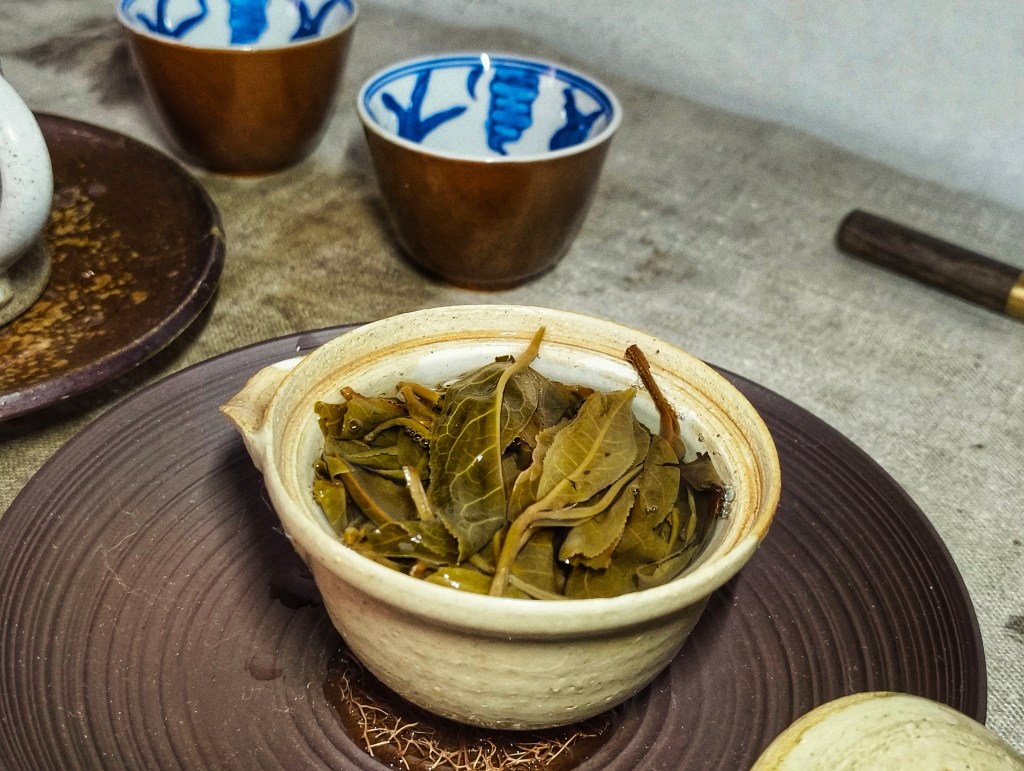
    It’s in its wet leaves, tremendously fruity and earthy at once, in that quarrel between magnolia, orchid, dandelion root, and Tellicherry pepper that the punctum arises. Barthes would say it’s in that absurd moment of unconditional pleasure that meaning breaks and truth seeps through, like a development flaw on a film roll.

    This ancient tall trees tea it’s a bomb wrapped in silk drapes, almost nervously delicate and at the same time powerful. It’s a sip of terroir served at a hundred degrees; it has everything that remains when you strip away the narrative.
    The texture is medium-soft; it tastes of pepper and wildflowers, white grapes, juniper, it tastes like that childhood photo with the grain too visible, the one you wish you had but that someone is now romanticizing somewhere on Netflix.

    The qi leaves you with a strange calm, almost clinical. The huigan is excellent; the bitterness is low, the astringency absent. The persistence is long, the sip seems to linger there, clinging to the squamous epithelium of your throat like a gentle remorse.

  • Mengsong and the Anatomy of a Relentless Huigan. TdC Sanmai Village Danzhu Sheng Pu’er Spring 2024

    Mengsong and the Anatomy of a Relentless Huigan. TdC Sanmai Village Danzhu Sheng Pu’er Spring 2024

    In Sanmai, the harvest embodies collective power, it remains there, sedimented, like the slow burn of an inexhaustible cultural fire. It reemerges in the ritual act, with the tension that grows as the air’s humidity rises, escalating like a migraine that starts at the base of the skull and radiates to the eyes. Hope mingles with the fear that the rain might arrive at the wrong moment, transforming the river into a clay demon and the crumbling mountain into an army of rock.

    Here, Mengsong seems to speak through the very stones of the houses. And what it says is not just a verb numbed by modernity, but an echo that comes from far away, from a larger world, perhaps lost, but still alive in the people. It kindles itself on the walls, becomes flesh, becomes identity. The fragile power of its tea is like the fire in Ella Fitzgerald’s voice resonating in the aorta. You cannot ignore it.

    These are not odes nor exercises in writing. This is ground zero of the attempt to understand. To truly come into contact with a tea that hides in sensory detail, that, like its land, wears you down and demands understanding at the edges of perception.

    This danzhu from Thés Terre de Ciel is a truly unexpected tea, unsettling in some respects. We are often accustomed to teas from Naka, Benglong, Bameng, with their floral, sometimes fruity, gentle characters. But Sanmai doesn’t play with gloves on. It is a clean, precise, yet powerful tea. The Qi is profoundly forest-like, dense, almost physical; it seems to influence every mechanoreceptor. You feel it in your hands, your legs, your stomach. It seeps into the nerve plexuses, as if the body were enhancing the perception of every distal extremity, of each of its boundaries.

    The huigan is long, incessant. It lingers. The bitterness is there, but it doesn’t last. It retreats quickly, making way for a mineral, almost effervescent, electric sensation that settles on the sides of the tongue, along with a sweetness that makes no compromises. Salivation is continuous, rhythmic, like waves that come without pause. Like the crowd at Glastonbury, a constant flow. Every infusion up to the twelfth is a tactile theater, alive, dense, full. No drop, no faltering.

  • Neo-Noir Infusion: Drinking Time in a 2007 Banzhang Cake

    Neo-Noir Infusion: Drinking Time in a 2007 Banzhang Cake

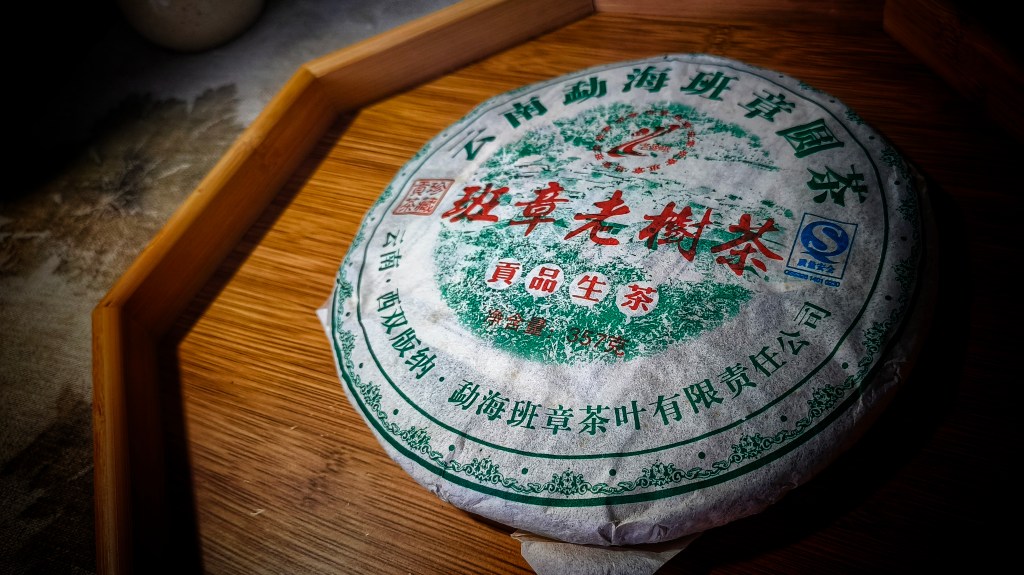
    Lao Man Er, a brand many are likely familiar with, produced this cake in 2007 using old trees leaves from the Banzhang area. I doubt it includes LBZ or Lao Man E, and I equally doubt there is a significant share of XBZ, but there is something intriguing here. Beyond the brands and trends, there are things—or teas, in this case—that offer a window into a space and time distinct from our own, tempting those caught in the compulsion of favoring only a preferred label to look elsewhere.

    With its undeniable urban bohemian verve, it teaches the perfect balance of wet and dry storage, revealing mature yet still vibrant aromas woven into a humid structure, neither weary nor depleted by the damp condensation of some Taiwanese basement.

    Through earthy undertones interwoven with hints of leather seats from an old E-Class and cognac-soaked cork, it conjures a muggy, far-from-perfect night inside a car, where buildings seem to jostle against each other to stay upright. What emerges is a metropolitan Erebus seen through the hyperreal cornea of Richard Estes, with the visual cortex overexposed to those nocturnal images of smoke and decay, a flickering interplay of light and shadow in the neo-noir outskirts of Hong Kong.

    The leaves evoke the metallic sheen of a puddle on warm asphalt, the dry sweetness of tobacco, a distant echo of spices and herbal tinctures. They also bring to mind fermented fruit, aged pomelo peels, the scent of old haberdashery furniture, and the leather-bound books of a forgotten bookstore hidden in the alleys of a city that never sleeps.

    The sip feels like a 35mm frame, with each scent of time etched into it, like a latent image forming on film, one catches a glimpse of a past spent in some chipped underground warehouse, as well as a more recent existence in a better-exposed shop in Guangdong, when notes of chestnut, dried plum, figs, and kombucha come alive, only to give way to a faint yet persistent huigan, dissolving slowly and gradually like the last cigarette left burning, like the night retreating at dawn.

  • A mystical, primordial village that gave refuge to outlaws, tea merchants, heroic loggers and ghosts. Huang Cao Ba told with a 2023 old trees sheng pu’er

    A mystical, primordial village that gave refuge to outlaws, tea merchants, heroic loggers and ghosts. Huang Cao Ba told with a 2023 old trees sheng pu’er

    Huang Cao Ba is a village of less than 800 souls, a respectable number considering the average of the nearby ones. Although it lives on a simple economy, based mostly on the production of food to be consumed on site, on livestock and agriculture, it can boast a certain basic well-being and the historical prestige of having a thousand-year history of tea production, with most of the relatively contiguous gardens planted in the middle and late Qing dynasty (1636-1912).

    The red and yellow dirt roads on which Huang Cao Ba based much of his social life were the edges of a wild peak in whose forests the boys dreamed of being explorers and daredevils. You could smell the rice paddies that overwhelms you like an army of silk bundles, you could smell the mud, the green bamboo swaying in the wind broken by the spring rainstorm and every kind of subtropical exhalation.

    Before those houses built with stone and clay bricks with sloping tin roofs, there was a traffic of information and documents, exchange of words and silences in that village which was a post station during the Nanzhao reign on the “刊木古道” the ancient timber cutting road which was a significant link for the foreign and military policy, the culture and the economy of the reign, which ran from Dali through Jingdong, Zhenyuan, Jinggu to Pu’er.

    The vegetation consists of evergreen mountain broadleaf and mixed coniferous forests covering the centuries-old tea trees, so dense that the first exploration team was sent from Jinggu County only in 2001. Even its name derives from the cultural ethnocentrism of the first men, who, unable to penetrate it with the same ease they encountered in other villages, hastily dismissed it with what they could see from afar, as the land of yellow grass.

    A mystical, primordial village that gave refuge to outlaws and fugitives during the Tang and Ming dynasties, a village of Yi healers and shamans and tea merchants on the Tea Horse Road, heroic loggers and ghosts of fallen workers, It is from its old trees that the leaves of this TdC 2023 sheng come. The leaves are wrapped in scents of peach jelly, cut grass and rock sugar, mango sherbet and orchid.

    In the mouth it is delicately soft, translating the wild genesis of the slopes from which it comes, incredibly sweet and persuasive in the aromas of candied fruit, hibiscus, ripe apricot, then hints of walnut, vanilla and citrus peel finish a sip of excellent persistence.

  • Making a true, authentic tea is sometimes a question of consciousness. Meng Tong Yin Shan Tea Factory Gǔ Xiāng sheng pu’er 2009

    Making a true, authentic tea is sometimes a question of consciousness. Meng Tong Yin Shan Tea Factory Gǔ Xiāng sheng pu’er 2009

    I happened to wake up this morning with a sense of nostalgia, that damned stinging feeling, that melancholic regret of what has passed or gone, or been lost. I headed to my “pharmacy,” that’s what I call the place where I keep that messy pile of leaves and ceramics that should appear to be a safe place for tea, but instead seems like the war front of a desperate need for order.

    I infused the leaves of a tea that had been sent to me some time ago by Moychay, a 2009 sheng from Meng Tong Yin Shan factory. Gǔ xiāng is its name, 古香, “the ancient fragrance”.

    Often we prefer not to delve into where the flesh hurts, pushed back to the surface by thought and the instinct of preservation, but I needed a tea that would anchor me to the present, that would satisfy my need to think, that would give sense to the moment. The sense, in its dual nature is able to indissolubly enclose the organ of sensitive experience and the intrinsic value, takes the ancient by the hand, and when there is truth, the authentic.

    Truth guides the authentic and the latter spontaneously translates into awareness of one’s vocation. Making a true, authentic tea is sometimes a question of consciousness and the need to resort to painful memories, it is not a question of ability but of understanding, of true, living style, of blood, an incorruptible visceral pact, symbol of the most ancient culture, of spontaneous creation, of generative power.

    Tea full of meaning is a tea that reminds us that this drink is not just form, it is not a mere concept, it constantly reminds us that expressing and evoking are different things. The aromatic traits also become gestures marked by an intention, they become an evocative act, we notice a development, the evolution of a melody that passes from one aromatic note to another, in which form and content emerge and subsist together.

    The ancient is distinguished from the old when the former had the opportunity to see the passing of time wrapped in the blanket of truth, of meaning, while the latter simply fades without leaving any memory, neither of itself nor of the intention that was at its origin.

    This is the reason why I chose this tea.

    Tea changes, it is a map of time and a saving substance, and like few others this Gǔ xiāng carries with it the traces of experience, of a changing form, in its ambivalence between notes of a fading freshness and those that place it ever more in a bygone era.

    From the leaves emerge scents of a winter countryside, mushrooms, undergrowth, camphor, surrounded by hints of cinchona and kola nut, nuances of dandelion root, tamarind and caramel wrapped in an unexpected, surprisingly strong blanket of vanilla. The scents of redcurrant, leather, moss on the trees, oak wood and orchid then become prevalent.

    The sip of medium softness, sweet but balanced by a light balsamic bitterness lowers the curtain on floral, woody tones, of angelica root, closing on aromas of vanilla pod and leather.

  • Gaoshan, the village between uncertainty and change. Bitterleaf “Vision” Gaoshan sheng 2023

    Gaoshan, the village between uncertainty and change. Bitterleaf “Vision” Gaoshan sheng 2023

    Gaoshan is a village in the Yiwu area, a place where about 100 families live, mostly Yi, more specifically Xiangtang. The first time I saw a photo of Gaoshan it portrayed a child under a table and a woman in her sixties with a basket of fruit in her hand, behind her house, she had a stern face sculpted by hardship and dark loose hair, without any hint of layers, as if it were cut with a razor. One of those people who seemed to have never changed their hairstyle in their life or residence.

    Every morning she fetched water from the well, collected wild herbs, walking tens of kilometers in that rippled gorge, where the road appears like a clay snake running through the forest.

    The photo collection also included the dense forest of tea trees and fruit trees, on a periwinkle-gray afternoon, the kind that precedes a storm. The boy, about five or six years old, was sitting on the floor under the large kitchen table, partially covered by the cloth drapes that were not long enough to hide him, but long enough to make him feel hidden.

    I believe that at the time neither the woman nor the child knew how profoundly their village would change in the next twenty-five years.

    Uncertainty and change are to Gaoshan as a bell tower is to its church, its teas are often among the truest in Mengla because they tell of their time without resorting to sweeteners or nefarious adornments, they are the fruit of the virtuous life of the settled person, who beautifies and sanctifies a place that is his, the natural result of having roots in the place that gave you the first dawn.

    The changing nature of this village can be found in this Bitterleaf Gaoshan sheng pu’er, where the aromatic fan seems to mark a new narrative trajectory every time we meet it in the gaiwan, the leaves are pervaded by a profusion of flowers in a wicker basket, but withered and in the process of changing clothes surrounded by a series of chiaroscuro, as only Rachel Ruysch would have imagined them, that battle of lights and shadows that package and give depth to the human experience.

    It is silky, complex, rich in notes of ripe fruit, such as white peach, mango, hibiscus, orchid, mineral sensations of wet lava stone, dried apples. From the first infusion you are enveloped by the honeyed and orchid sweetness typical of Gaoshan with a very nice huigan.
    The sip seems perfectly orchestrated in its essential elements but equally chaotic in its accessory elements, the way in which the aromas vary throughout the session creates a swing in which it seems to pass from one existential plane to another, from matter to concept, as in a mixture of science and spectacularization in which the result of the experiment is uncertain.

  • Discussing the contradictory essence of tea with a pu’er from the ancient land of elephants. TdC 2014 You Le Ya Nuo village sheng pu

    Discussing the contradictory essence of tea with a pu’er from the ancient land of elephants. TdC 2014 You Le Ya Nuo village sheng pu

    I am of the opinion that tea, good tea I mean, should always be accompanied by a good argument. I also remain firmly convinced that it itself must partly be the reason and urge for the conversation, and partly guide it.

    If we could reconstruct a sort of symposium evening I often think about which tea I would offer, and the more time passes the more I would like such a reconstruction to materialize.

    Between a Yiwu pu’er who exalts himself in his expensive robe, one from Naka on the gentle banks of Mengsong in the throes of self-satisfaction and one from Laobanzhang born under the gaze of God on the happiest mountains of China, the pu’er of You Le I’m sure would find a place without resorting to excesses of violence.

    Those of You Le, the ancient land of elephants, are teas with a noble soul that still retain a “bourgeois” trait, that dignified self-sufficiency which, if well channeled, results in the most refined form of intellect.

    At a table tea deserves the space it’s due because some of the great events of history are poured into it, the extraordinary possibilities that humans have been granted from era to era are dissolved in it. Because tea is a trail of great epics and immense tragedies, of rhetoric, imaginative experiences and speculations, the history of entire peoples distilled into a cup.

    Under the action of its metamorphic nature, tea resolves prose into verse and verse into song, calms the most abysmal dissonances without the need to silence them, rather it legitimizes and composes them.

    Because from the hard ground from which its trees arise, an innocent stream of fragile ambiguity can always flow, even in the midst of that jianghu, which it foments and nourishes; between rivers and lakes it doesn’t fear contradiction and is able to make every truth “always also false” and every falsehood “always also true”.

    The thoughtfulness of this spring 2014 sheng from Ya Nuo village old trees holds up its mountain’s fame. The aromas arrive with orchestral precision, opening on notes of tobacco and plum, earthy nuances, resin and musk.

    The leaves recall the scents of an old library with notes of mahogany and leather armchair, then red dates, raisins and light mentholated hints. The contribution of aging is balanced, with integrated notes of leather and of an old cigar box. The sip is coherent, with good softness but with adequate agility, low bitterness, balanced and with an excellent huigan. The long aftertaste is yet another proof of a dress sewn by a great hand.


    The future will give it charm even though it is a tea that does not require eternity to be appreciated, but the aspiration is more than legitimate and a decade of waiting will, in the end, be a splendid meeting.

  • Discovering Y Tý: Comparison of two Viet Sun sheng pu’er from a Dao and a H’Mông village

    Discovering Y Tý: Comparison of two Viet Sun sheng pu’er from a Dao and a H’Mông village

    A place of magnificent waterfalls, azaleas and wild peaches, the mountains background seems to give every gesture an additional majesty, a primordial dignity.
    The small mud-walled houses of Y Tý stand in the green and golden colors of the rice fields, offering rural nuances to that tranquility typical of the “cloudy” land, located at more than 1700 meters above sea level. Pyramid roofs, stone fences and terraced fields are symbols of the will, minds and hands of many generations in the highlands, created to interact and converse with the nature of the mountains and rivers.

    The Y Tý market meets every week and is a cultural place of exchange for Hà Nhì, H’Mông and Red Dao. Most of the stalls are run by Hà Nhì women in black and dark blue dresses, i remember the shy face of a young mother and her little girl, lying obediently in a gray jute sash on her chest. Her hair is tied back and almost glazed due to the effect of the sun on her coal black hair, the vivid gaze with her head tilted to the side as if she were listening to the voices in the wind.

    Tourists are busy buying vegetables, red peanuts and Pạ Phì. The road covered in red earth dust is full of rattan baskets, worn enough to indicate actual use of their contents and well enough maintained to suggest respect for the contents themselves.

    Higher up in the mountains, the landscape unravels lively between the fog, between the sandy and rocky soils of the Dao villages surrounded by the wild bamboo forest and the more clayey and fertile soils of the H’Mông villages. Those mountains that protected the soldiers on their way to the front, towards the place where the Lũng Pô creek meets the silt-tinged waters of the Hồng River, up to A Mú Sung, where they fought and fell to protect the border.

    Here it is as if tea is able to fit in with culture as well as nature and can make use of both as it pleases. The landscape seems like the unconscious of the earth and the teas that derive from it are its liquid consequence.

    After a more romantic first part, I will talk in a more technical and boring way about how a territory with an enormous potential now demonstrated like Vietnam can have that complexity of landscapes, that dramatic discrepancy of soil composition that is often associated with great terroirs, such as France and Italy for wine and Yunnan and Taiwan for tea.

    Vietnam often is in conditions of high humidity and high temperatures during the year, such as to hypothesize a much faster maturation of the soil than, for example, northern Asia or some areas of northern Yunnan. But in the mountains many things can change, here at over 1800 meters we can have leaching, erosive, frost phenomena and extremely variable contents of the organic fraction from mountain to mountain or even in the same mountain at different elevation levels.

    We can also notice typical results of the meteorological conditions of these areas, such as the deeply yellow and yellow-red color of the soil, indicative of a condition of water saturation. The soil environment is reduced and, under these conditions, the iron is reduced to the ferrous state (Fe2+), the color of the soil becomes lighter and yellower, with gleying and mottling sometimes. The iron will be in a more soluble state and therefore more available for chemical reactions.

    H’Mông village has very old and tall trees growing on the slopes near the border with China, the climate here is wetter, there is more forest cover, resulting in darker green leaves than in the Dao village. This is due to the shade and the greater capacity of water retention, less leaching and greater content of organic substance, typical conditions of a soil richer in clay and organic elements, the presence of sand and silt in surrounding areas also suggests a clayey but not asphyxiated soil, with a good potential for oxidation of organic matters. The leaves of the H’Mông village express themselves with greater roundness in the cup, with a persuasive softness and with more animal and leathery hints, with less citrusy but warmer and more mature fragrances.

    The tea area of Dao village overcomes a wild bamboo forest, there are many old and ancient trees, the climate is sunny and dry, and the soil is rocky-sandy, which will result in a possible slower growth rate of trees, given the possible greater difficulty for the soil to retain water, nutrients, greater leaching of minerals, erosive phenomena and loss of organic substance and this conformation is in line with a lower maturity of the soil given a lower presence of water. The leaves of the Dao village reveal more mineral and rocky accords, more citrus and herbaceous, a less imposing and soft body, more agile despite the medium thickness.

    This is an example of how at a short distance, pedogenesis and transformative climate phenomena can change drastically, returning a vastness of results that cannot be found in most other areas of the world and how this complexity does not derive only from the altitude, therefore also translating into extremely different teas in an area of a few kilometers.

    Mixing together the leaves of the two villages you get a concert of the unlikely son of Emily Dickinson and Rory Gallagher, the romantic essence with its disciplined lyricism and the annihilating chaos, the sublime that is the basis of great things.

    The ambivalent aromatic essence of the leaves is initially dark, bringing back Bruegel’s Flemish nature in the almost primitive woodland scents, with memories of a bonfire extinguished in the rain, undergrowth and slightly animal smells.

    Then the texture of tropical fruit and candied hibiscus, tomato leaf, orchard hay begins to emerge, supported by counterpoints of medicinal herbs, wild flowers and saltiness on the skin. On the sip it shows fullness, with notes of white mulberry, linden, apricot and slightly herbaceous hints. It is never prosaic and the thickness is sized and juxtaposed with freshness and minerality and a medium-low bitterness, which make drinking agile and never tiring.

    The strong and relaxing and at the same time almost lysergic qi accompanies a persistent and very present huigan from the first cups.

    You can find much more information on the Viet Sun website

  • Discussing again about Yiwu and authenticity with a 2003 CNNP “Sheng Tai Gu Shu cha” via Camellia Sinensis

    Discussing again about Yiwu and authenticity with a 2003 CNNP “Sheng Tai Gu Shu cha” via Camellia Sinensis

    Almost 20 years have passed since the declaration of Yiwu as a “Special tourist village of Yunnan”, the program which aimed to attract more and more people to a city which was growing economically at a spasmodic pace and which was obsessively trying to make its authenticity perceived.

    Often this intention came into conflict with the reality of a territory profoundly transformed, by wealth, by the introduction of QS, by the architectural disharmony caused by evident asymmetries in the urban development and modernization plan. Shortly thereafter, the rapid and unsustainable rise of the pu’er business would have collided with the bursting of the bubble, raising not only doubts about the economic future of families but also questions about the true authenticity of Yiwu tea which until then had faltered.

    Those were years in which the vision was different, although not too distant from the current one, in which the importance of the object was provided by its price and not by its value, the meaning of tea was given by its correspondence to the useful; the forests, despite the already present distinction between them and the taidicha, were already utilitarianistically defined even before their understanding. While many farmers fought for their authenticity, just as many others built the stereotypes of heroic naturalism and “nostalgic” as a symbol of an identity that can be regained through tea, and clearly through its profits. “The truth” was not explored but a proud surrogate was created to be put on sale.

    For this reason, my opinion of many teas from the early 2000s is less enthusiastic than what is out there, many although not all were soulless teas, on which was placed a fake effigy of cults and traditions. Without the soul and its intention there could be no authenticity, because in this way the past becomes irremediably past, the mythologies that have passed through it become dull and irremediably dead languages, or in any case incapable of supporting that subtle kinship that exists between thinking and memory, between memory and identity and between identity and the authentic.

    This is a 2003 Yiwu pu’er “Sheng Tai Gu Shu cha” via Camellia Sinensis, in a CNNP label different from the typical “white and red zhong cha”, probably the result of an anonymous packaging from a small producer.

    One of the testimonies in a “unknown soldier” version of an attempted reconquest of “the authentic”, of the traditional taste that does not come to terms with the conventional. The leaves bring with them smoky notes, of vetiver and seasoned cedar wood perfumes. From the gaiwan come the smells of an ancient lutherie and those of an old wooden church.

    The aromas are reminiscent of dried flowers inside a book, evolving olfactorily towards notes of leather, virginia tobacco, incense, dried rose hip and pepper. The medium-thick sip ends on hints of tamarind, dried longan, dandelion root and medical herbs, fading into an ancient sweetness and granting a strong and focusing qi.