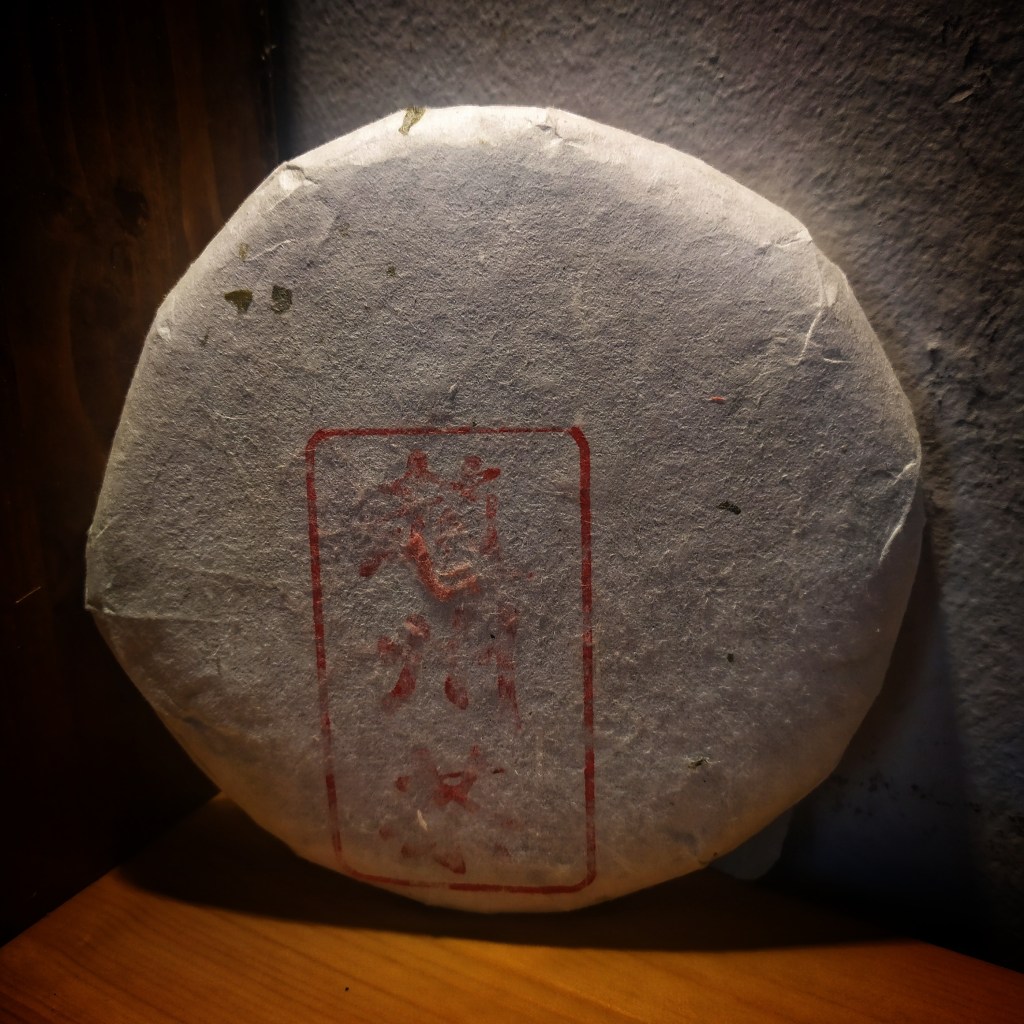
Tag: old trees

  • The primordial essence of Da Xue Shan in YongDe County

    The primordial essence of Da Xue Shan in YongDe County

    he subtropical scenery of the Nanting River, from the foot of the mountain to the northern view of the main peak, seems to capture all the splendor of the world. Daxue rises to over 3,400 meters, opposite the other peak of the Nu mountain range, Xiaoxueshan.

    Karst severity alternates with the chromatism of the tropical forest of broad-leaved trees, water and land, peaks and plains create an antithetical contrast. It is said that a mountain has 4 seasons but thousands of different skies, and in Daxue there is nothing more true.
    Primordial colourism is the home of the black crested gibbon, the beauty and brilliance of wild flowers interrupts the immensity of the mountain, the Wanzhangyan waterfall seems suspended, as if it fell from the sky.

    Some families of the valley floor who do not work in large cities graze animals, while others work in small laboratories that produce Mangtuan paper, a tissue paper with a history of over 600 years made by hand from a bark called Maisha in the Dai language, for centuries used to transcribe Buddhist scriptures, books and packaging. Still others are dedicated to the collection of tea leaves and of the rare fruit varieties of the county such as Xiaomengtong pears, Mengdi litchi, Minglang papayas and Yongkang mango.

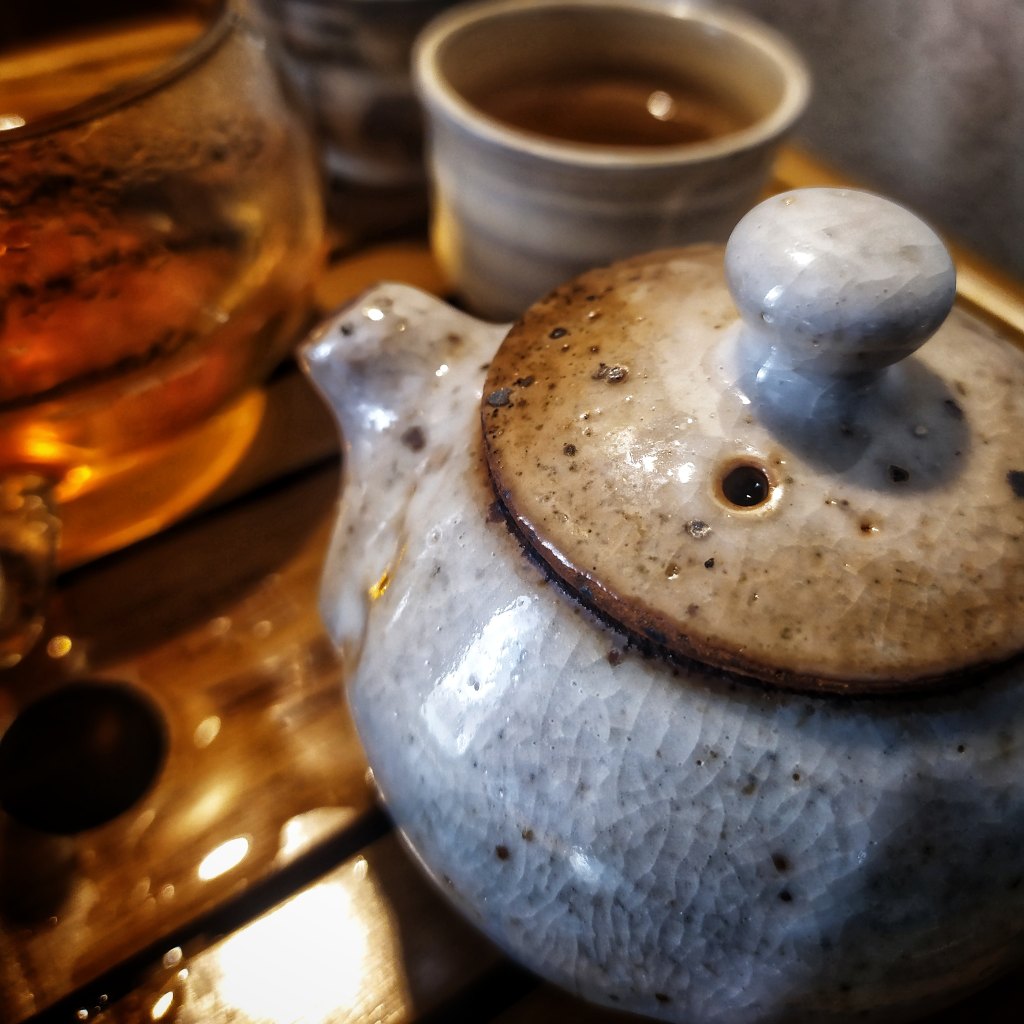
    The tea of Daxue, like its places, is addressed to the taster as a sincere lyric does with its auditorium, the distilled essence of a place is poured into our body giving it back its life while sweetness refluxes like childhood memories. His tea has quenched the thirst of poets and workers, revives memories of distant and primitive places as well as those of a work of art on a ceramic.

    Tea like those of Da Xue Shan are invested with a symbolic charge like few others, labaro of radical changes and that rise and fall from one existential plan to another that nothing is but the path of a rational being. Tea appropriates human nuances and analogies without resorting to forced anthropomorphism, it is imbued with a meaning that we ourselves put on it, it represents a momentary suspension where the ego meets in the cup its reflection.
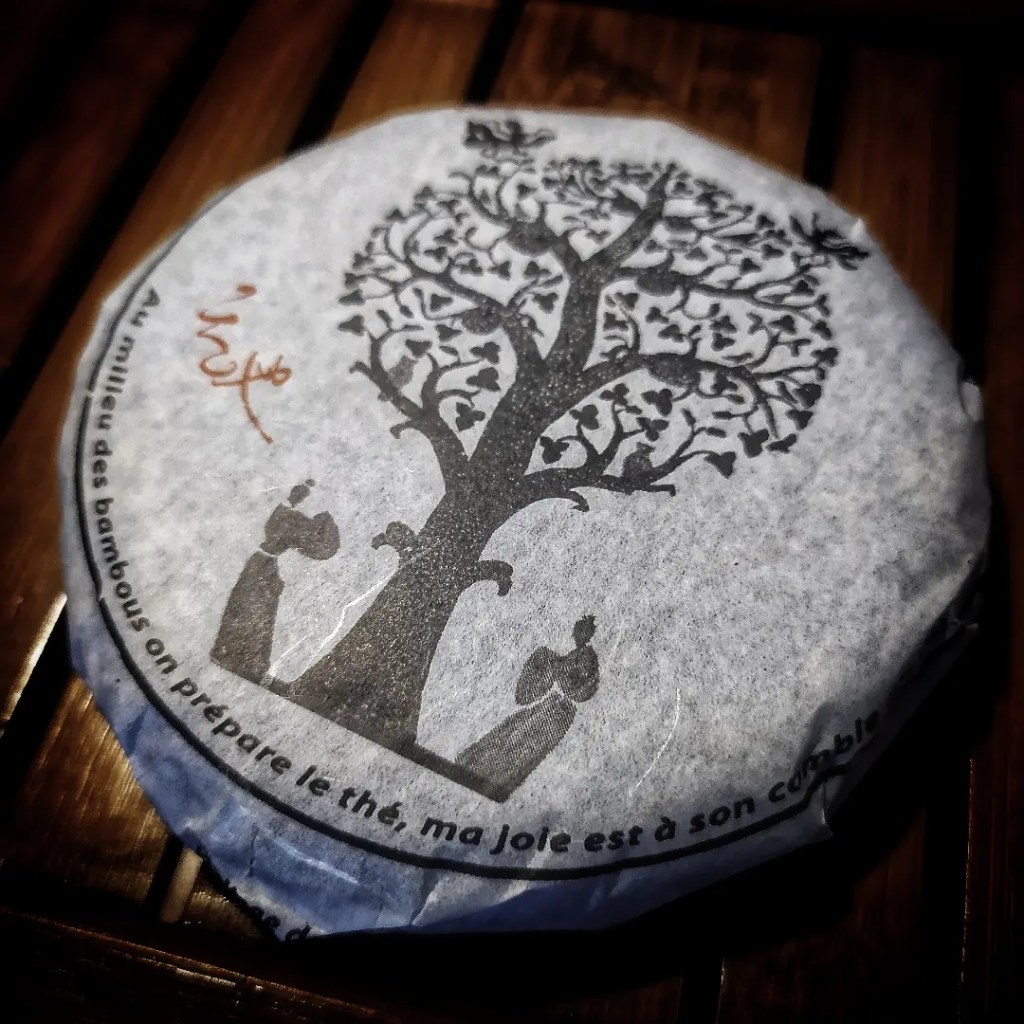
  • When Mahei was called Lù biān. Journey through the history of the village in the company of a 2020 Mahei dashu sheng pu

    When Mahei was called Lù biān. Journey through the history of the village in the company of a 2020 Mahei dashu sheng pu

    Travel 25 kilometers west of Guafengzhai, you will arrive in Mahei. This was the first stage of the ancient tea road on the journey from Laos to China. It is said that one of the original names of Mahei 麻 黑 was “路 边” Lù biān, “Roadside”, because Maheizhai is near the road leading to Laos. In the past, one could start from Laos towards Yiwu and settle the night at the “roadside”, the old Mahei.

    Although it is one of the areas that dictates the highest price in Yiwu, only in recent years has there been an incessant attention to the restoration of natural conditions with low interventionism in the tea forests, remedying the tough pruning approach of the 80s-90s in order to increase the yield of ancient trees. Many trees still exceed 300 years but today the mixed and indistinct collection of gushu, young trees and ancient pruned trees is very common and have a clear organoleptic distinction is very complicated. Old trees Mahei pu is much sought after and expensive and its taste embodies part of the soul of Yiwu.

    Roughly speaking, it can be said that Mahei tea from ancient wild trees has a softer sip, with a greater opening sweetness and a bitterness that acts as a splendid counterweight. The astringency orchestrates a balanced, lingering and memorable melody, the huigan is intense, powerful and comes quickly, the body is silky and refreshing in which the typical honeyed character is enriched by a complexity unrecoverable in some non-wild or shengtai material.

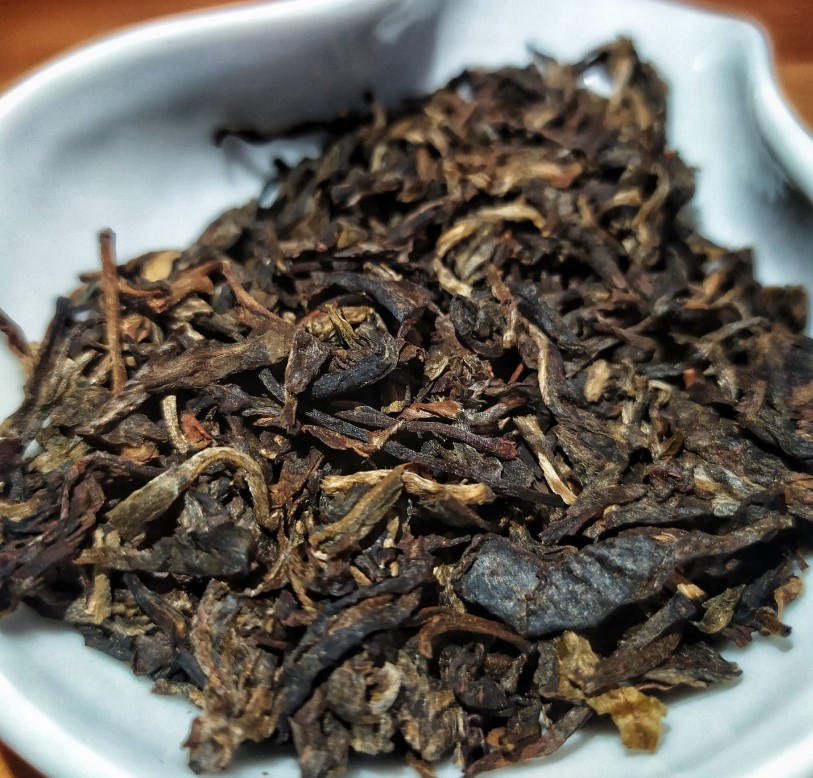
    This sheng pu by Thés terre de ciel comes from dashu trees, from material collected in the spring of 2020. In the wet leaves vegetal and wild hints of leather are combined with notes of honey, flowers and caramel, woody fragrances like those of raw mushrooms are the prelude to a sweet opera adorned with a bouquet of aromatic herbs, in which the background smells of petricore and wet vegetation.

    The sip has an excellent structure, the pleasant and indulgent bitterness typical of Mahei does not overshadow or obscure the other sensations but instead enhances the tea by contrasting with sweetness and a graceful astringency. The huigan is immediate, minerality makes the mouth water refreshing the palate in which progressively appear aromas of myrtle leaf, dried and candied apple, mango and mulberry. A good roundness accompanied by notes of acacia honey and manuka continue in a very lingering finish at the end of an antithetical taste experience, elegant and wild at the same time, still enlivened by a freshness and a vegetal nuance that herald its evolutionary intent.

  • Mahei, one of the best pu’er in Yiwu. But has it always been like this?

    Mahei, one of the best pu’er in Yiwu. But has it always been like this?

    The rains of mid-April break the drought of Mahei, but the race to the true maocha every year does not stop, as well as the rise in prices has not seen truce since 2007 to date. Maheizhai is a village of Yiwu, in Mengla county, almost 3 square kilometers of woods and trees between 1200 and 1500 meters above sea level.
    All 90 families are practically involved in the tea industry, gathered into those 330 hectares of ancient trees trying to seize what they can in a battle of wits and courage.

    Before 2008, Mahei and villages like Yibi, Sanheshe, Manxiu and Daxiu in the Yiwu area were all almost indistinct, except for the tea experts and buyers who came here in April to obsessively and meticulously look for the best material.
    Between 2005 and 2007 there is the appearance of some sporadic trace of the pu’er of Mahei, which also often merged the material of neighboring villages, including Guafengzhai, Mansa and Manxiu when they did not flow into the more common Yiwu Zheng Shan tea or blended with the leaves of the other six mountains. Around 2008-2009 a more methodical subdivision of villages and mountains began with a strong emphasis on searching for the old trees of these villages.

    Here are several gushu, but few are wild, in fact between the 80s and 90s heavy interventional practices have been seen, both with regard to the reduction of the size of the forest and the pruning techniques carried out in a more or less burdensome way.

    The introduction of extensive terraces in the late 70’s in the Yiwu area has also raised a veil of anxiety and concern for those who set out to find and market the tea of these villages, emphasizing their uniqueness.
    As always it is in the experience and in the trust to find the way of the truth, but once found and cleaned from the blanket of dust and individualism it is difficult to forget how it is.

  • Drunk soliloquies about Nannuo in the shadow of a gushu

    Drunk soliloquies about Nannuo in the shadow of a gushu

    On a day when the cold morning breach seemed to have taken away even the most weak semblance of chromatism, and with this the already remote desire to conclude something at the end of a dull sunrise, I decided to make a tea session with this 2016 Sheng Pu from Nannuo in the hope of rejoin me with the part of the brain that welcomes the tactile sensations.

    It was a greener puer in the past while today we can also found leaves processed with a longer period of withering, a shorter steaming, or a lower shaqing temperature but for a longer time, all factors that bring back to a more amber color than the pale yellow one to which history has accustomed us. But what does not change is its complexity wrapped in an introverted blanket, destricable only through the patience of the infusions, where the essence of tea seems to rest on one’s being, curled up in an aromatic profile that is shown in its becoming, revealing itself sip after sip in a sort of amniotic tranquility.

    In the 1950s, while the country was raised from the rubble of the Republic of China and the families looked to the future with the losses of the civil war behind them, at the same time on Mount Nannuo the foundations were laid for one of the most important tea research centers in Banna.
    Researchers such as Zhou Pengju, Cai Xitao and the team of the Nannuo Mountain Tea Research Institute contributed to identifying the area as one of the oldest in the tea cultivation panorama and to classify varieties such as the Nannuo Daye (Yunkang 10).

    Through the fog, above the red earth and below the blue sky, the history of an entire territory is consecrated through the infused leaves that in those years of reconstruction appeared as balconies of the heart, as disenchanting voices of each of those 30 villages that live in the mountain.

    This @zhaozhoutea tea is the sheng pu “No.833” from the spring of 2016 from Nannuo gushu trees. It is not only a very representative sheng of Nannuoshan, but it is an example of an evolution of the way to make tea in this area, a historical and mnemonic study from a tasting point of view.

    The wet leaves are extremely evocative, report the hints of a mountain caravan, with herbaceous perfumes, moss, wet rock, wild flowers and gooseberry. Inside it are perceived scent of bakery, lemon tarte, leather, white peach and thai mango. During the infusions, shades of tamarind, walnuts and quatre quarte cake appear while the tostated seeds crack on the wok.
    The golden liqueur highlights nuances of evolution and a contemporary conception of leaf processing, with medium astringency and bitterness. On the palate there is a coexistence between the herbaceous flavors and the fruity- citrousy ones of peach and orange zest. Huigan is pleasant and balanced, integrated with other taste sensations, not predominant as a Naka sheng to bring a comparison. The finish is persistent and articulated on notes of gardenia, persimmons, apple and creamy aromas, closing a session that becomes proportionally sweeter to its prolonging.

  • Xigui, the other side of Bangdong

    Xigui, the other side of Bangdong

    After talking about Mangfei, Yongde county, we travel along the G323 in a 2-hour journey through the pre-Western architecture of Heping village, passing Bangdong gardens, leaving Mangmai until we enter the wild forest to reach Xigui, the last village of the west bank of Lancangjiang.

    The roads are unpaved and where it meets the asphalt this is covered with a patina of red clay dust, the architecture underlines the rural context and the mere functionality of the buildings. Tea plants define the extra-urban landscape sloping down to the river that separates them from the Xiushai forest on the opposite bank. Here the inhabitants catch the fish and take it to the local inn, while on the other side the foragers with weathered faces give no rest, they welcome the leaves between their rough palms with their shoulders anteroverted in their cotton shirts, with arched backs, bent by the severity of the years. They are intent on collecting the material of that mountain, between 700 and 1400 meters, and working it until the sun goes down, until it sets in Lancang and the river bank disappears, so that space and time in Xigui appear in their absolute.

    The varieties are mainly Bangdong large-leaf and medium-leaf, with some small-leaf tree, which is a big difference from other Lincang teas. The forest, the plateau and the currents of Lancangjiang isolate the pedoclimatic context from the rest of the Linxiang district, making this tea unique.

    The 2007 Xigui pu from Zhaozhou comes from 200 year-old trees, which is almost the maximum age found in this area, and it is a tea that perfectly translates the character of this terroir, with its slopes, the soil rich in organic matter, the temperature range, the different biotypes. It denotes a composed exuberance rounded off by the years of aging, a sweetness that sets a soliloquy in a sensorial harmony where little space is given to bitterness and astringency, and like a good Xigui it shows a wild aromatic complexity that contrasts with an elegant and refined olfactory bouquet.

    The wet leaves range from apricot jam to spices, reminiscent of nectarine peach, petrichor, medicinal herbs, leather. Accompanies a light note of camphor, followed by vanilla, mineral fragrances, sandalwood, undergrowth, orchard, acacia’s honey, mushrooms and black pepper. The orange liqueur appears dense already to the eye, in the mouth it is round and less multidimensional than other Xigui, the sweetness takes over almost immediately, a characteristic also provided by the 15 years of refinement. The sip is syrupy, dense, enveloping, with sweet and fruity aromas, with jasmine and herbs flavors. The sweetness re-emerges wrapped in citrus notes while the qi is precocious and invigorating.

  • Geography of Mengku, a bit of history of the Shuangjiang factory and an excellent pu’er

    Geography of Mengku, a bit of history of the Shuangjiang factory and an excellent pu’er

    Yunnan’s soil is complex, as is the climate in its multidimensionality. In a single region we find a tropical climate or a mountain one, in the chromatism that envelops the observer, the eyes find both rest and the neurasthenia of the course of nature in a landscape that seems to be the meeting place between Cuyp’s Flemish vedutism painting and the almost brittle and super-ideal accuracy of Xiang Shengmo.

    But it is where this takes place in its verticality that we find the remnants of the history of the camellia, in the 18 villages between the peaks of Ma’an and Bangma, respectively east and west of the Nanmeng River.
    In the Middle Eastern areas we find the villages of Mangbeng, Banuo, Najiao, Bangdu, Nasai (including Zhengqitang and Xiaocun), Donglai, Manna and Chengzi; while in the mid-western area are included the villages of Bingdao, Baka, Tanguo, Dahusai, Gongnong, Banggai, Bingshan, Hudong, Daxueshan and Xiaohusai.

    It is mainly in the latter area that much of the material of the Shuangjiang factory of Mengku is concentrated, a company of the Rong family founded in 1993 but whose first generation dates back to 1935. Much of the material comes from the mountainous area of Mengku, especially from Daxueshan and Bingdao of which this factory was one of the forerunners. In 2005 the Rong family used the leaves of Bingdao, especially Laozhai and Nanpo, for the base of their “Mushu cha” which was followed by series dedicated to this area, as well as a lot called “Bingdao Cha” by professor Gao Zhao in 2006.

    Since the 1930s, the Shuangjiang factory has always focused on the art of blending, creating a standard of Mengku tea, a character that contrasted with the Yiwu and Bulang teas in the Jianghu of Puer in the early 2000s. The feature of the Mengku blends is that of a suspended cup, a tactile and gustatory return after the liqueur has left the oral cavity, a chewable sweetness that coexists with bitterness, almost creating a receptive antithesis in the same areas of the tongue. They are pleasant teas even in their youth despite their initial roughness, managing to relax elegantly without excessive dissonances in the evolutionary path.

    This 2011 pu’er from Shuangjiang factory is made from old trees leaves from different mountains in Mengku. The scents of dry leaves are reminiscent of an old mountain house, made of ancient, damp and slightly moldy wood, it almost recalls the smell of an old leather sofa. The wet leaves bring to mind earthy and woody notes, of wild mushrooms and undergrowth, wet wood and antique furniture. As the infusions pass the water dilutes the strongest odors, bringing back aromas of jujube, camphor, leather and virginia tobacco; it then evolves into a more fruity texture of apricots, stewed apples and madernassa pear poached in wine. The initially primordial and nostalgic character continues in the liqueur, with primarily animal smell on the nose, on the other hand notes of dates, wild oregano and dulsita sugar emerge in the mouth, a sugary sensation increases salivation together with the bitterness that takes possession of the sides and bottom of the tongue. The fruity notes close a complex, intense, soft, persistent and identifying sip.

  • Another soliloquy about Laobanzhang with a 2018 sheng pu from Tianhong tea factory

    Another soliloquy about Laobanzhang with a 2018 sheng pu from Tianhong tea factory

    Laobanzhang has long been an example of ambivalence. Its bitterness contrasts with the sweetness that pervades you a moment later, the exaltation of its essence opposed to the condemnation of the upheaval caused by its own greatness. Its leaves can be as bitter and severe in youth as they are sweet and complex as they age, teaching us that solemnity is not in the present and that it can never be enclosed once and for all. What drives us to buy what now seems so distant from reality? Yet as Sophocles said there is no life without pleasure but, above all, life is more beautiful when one does not think.

    This is Laobanzhang, a corner of the world where gods seem to have found refuge, a strip of 300 hectares of ancient trees that have seen the course of the ages so much as to survive the history of the village itself. There are about 120 families mostly of the Hani ethnic group who inhabit these mountains, about 500 people almost all involved in the tea market, that same tea that once animated their ancestors now seems to have took away the soul of their descendants. The radical change in lifestyle, the experimentation of mere materialism have placed the village in front of a test that is only partially overcoming. There are many examples of counterfeiting, of slightly above average tea, quality standards that are not always clear or respected. All at crazy and irrational prices.

    However, a sip of a real Laobanzhang is able to enrapture us to the point of blurring the language, words become superfluous and we are ready to resort to the credit card through a disintegration of self-control only to chase the memory of a tea which, when authentic, remains indelible in our memory.
    The problem is that by now we risk finding very little of that authenticity in the future and at that point the bitterness will take over even the sweetest of memories.

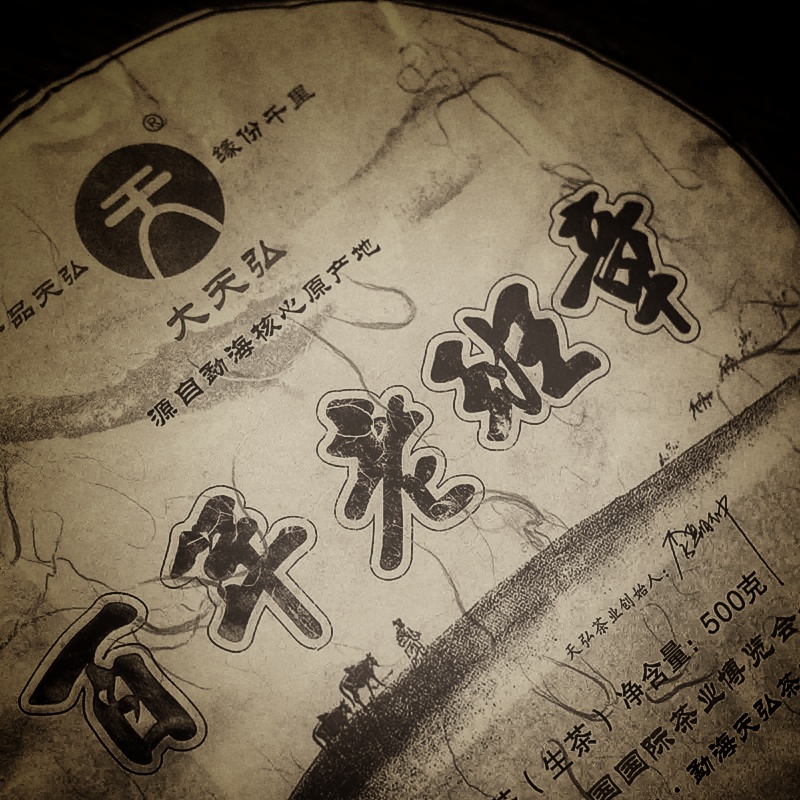
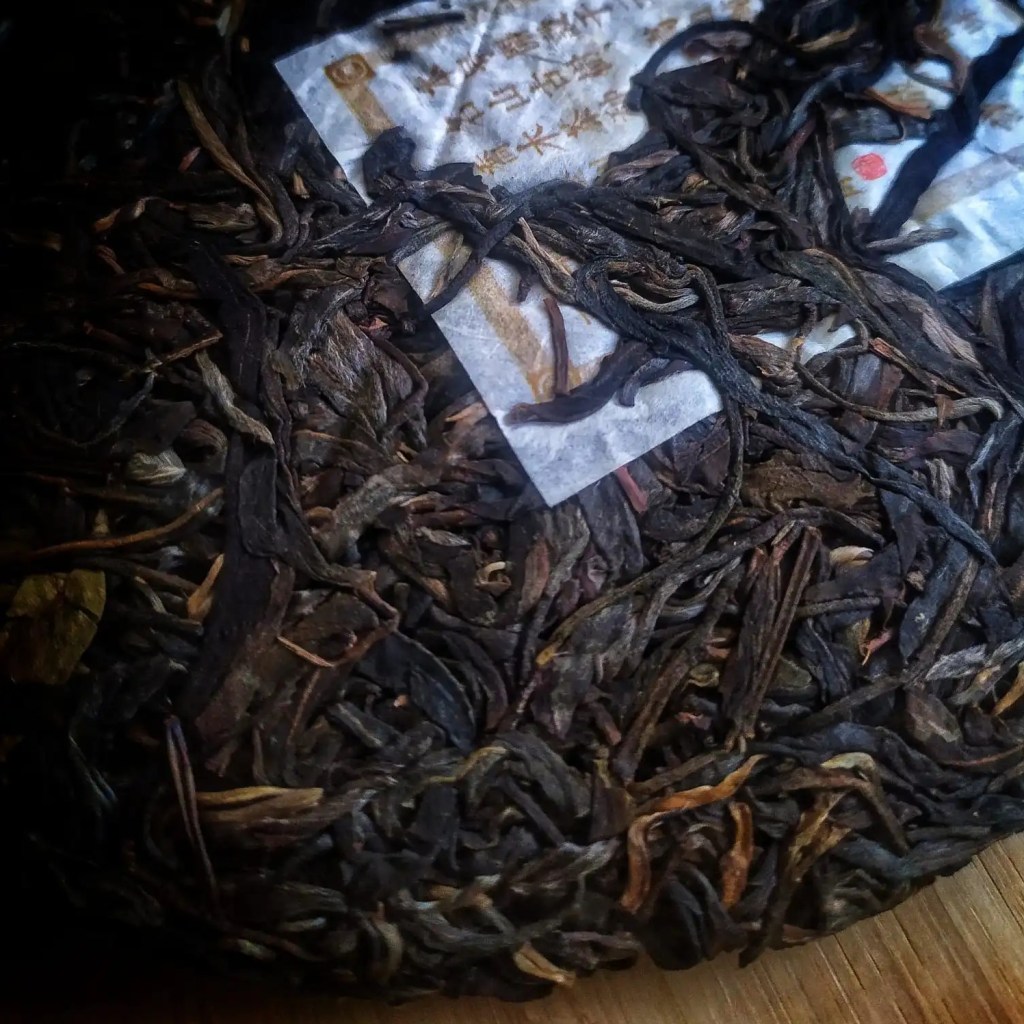
    That of the Tianhong Tea Factory is a centenary trees sheng pu from material collected in the spring of 2018 that contains all the ancient charm of a village. It appears in a brilliant golden color with pinkish undertones; notes of wood burning in the rain and nuances of ripe apricot emerge from the wet leaves than hints of cavendish tobacco, plum jam, light botanical-alcoholic fragrance along with reminiscences of wild flowers, caramelized citrus and subtle scent of violet candy.
    I think the measure of a good Laobanzhang is not only the sensory complexity, but the ability to stimulate the memory in a articulated and orderly sense, like an open book on the knees whose pages are nostalgically leafed through; that is what happened with this sheng. On the palate it has an extraordinary balance, the herbaceous flavor is wrapped in a honeyed sensation, the liqueur is thick, juicy, the bitterness allows the aromas to remain for an interminable time and the mouth to salivate while intrepidly awaiting the next sip. The qi is strong and the final notes close on a pleasantly floral and refreshing sensation.

  • Cai Mao Xing Jie tea factory Mang Fei sheng pu’er 2017

    Cai Mao Xing Jie tea factory Mang Fei sheng pu’er 2017

    Yongde county is a mountainous area, rich in forests, where nature seems to have had free will for most of the centuries, slopes and ancient trees surround Mangfeicun protecting it in a landscape and cultural amnioticism. In Yongde county alone there are at least 22 ethnic minorities, many of which are involved in harvesting, curing and processing tea. From the slopes it is possible to see the syncopated, wildly forested scenery that continues to Zhenkang county where history is intertwined with it.
    Mangfei’s post-modern puer shows sweeter and more graceful traits, even if the aromatic profile is green and oxidation kept under control, the sip, except in some vintages, is characterized by a greater pleasantness already in the early years, by ease of drinking , elegance and vegetal notes that hardly show that austerity of some young raw Mengku, but rather similar to the thick sip and creamy hints of Xigui puer, albeit with due exceptions.


    This 2017 sheng pu is produced by Cai Mao Xing Jie tea factory, probably dry stored; the straw-gold color of the liqueur is typical of the puer of Mangfei area, in which hints of camphor are revealed in the wet leaves, initially balsamic scents, then a subtle smokiness, alcohol macerated fruit, juniper and wild botanicals. The complexity is then revealed under tones of musk and manuka honey and continues consistently to the sip, sweet, fresh, of medium-light astringency, with musky and woody aromas and notes of bitter herbs that appear towards the fourth infusion. Floral, fruity and spicy sensations are contrasted, in an up and down of a sensorial score, where the gloomy taste unfolds on tones of cooked apple, white pepper and juniper before the appearance of creamy notes, of a lemon sablè tarte, of the sweetness that brings a compote of wild strawberries and mint and alpine herb candies. It is a tea with an exuberant qi, a sweet huigan and the continuous placing before and after the threshold of maturity makes it an extremely satisfying tea already in its youth.