Tag: oolong

  • On the Sidewalks of the Sacred and the Spent – Seven Essence Darjeeling Autumn Augury

    On the Sidewalks of the Sacred and the Spent – Seven Essence Darjeeling Autumn Augury

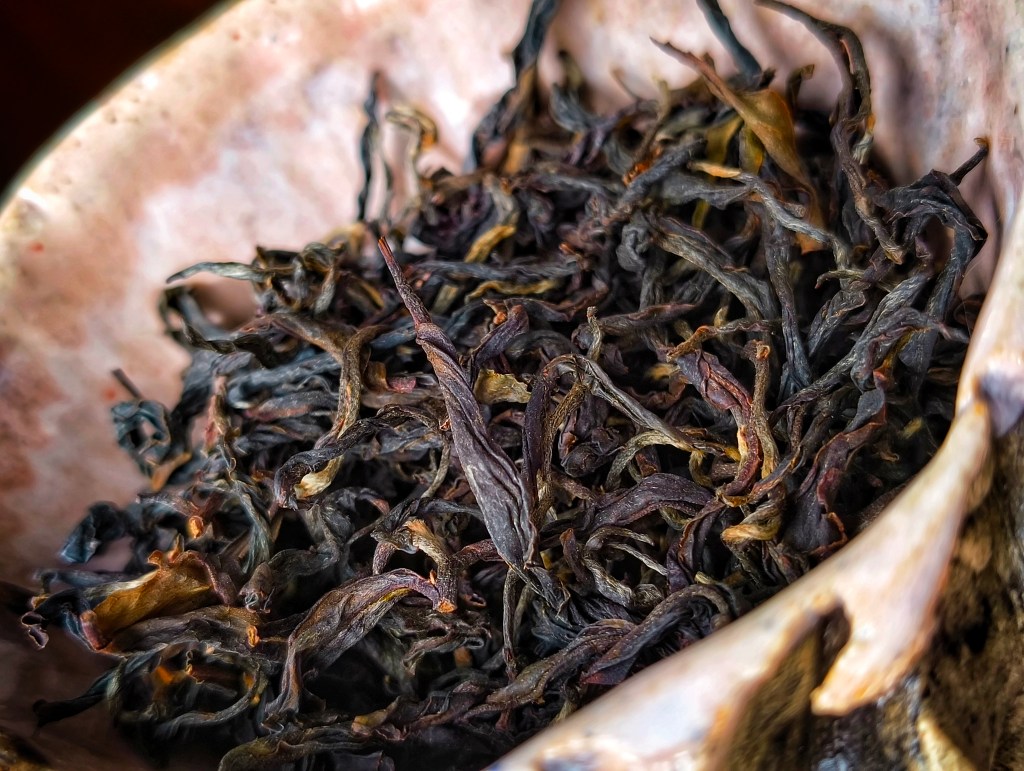
    Augury is a Seven Essence Darjeeling oolong conceived under a notion of tea-making that is almost Liberty-like, moved by a secular liturgy made of gestures, of manners, of repetitions never entirely identical to themselves. It is the progeny of a movement that knows no envelope, neither of the body nor of the imagination; it is a struggle against the terror of uniformity and constraint. It compels one to separate from judgment dictated by the flesh.


    Drinking it brings back memories of late nights, with the head resting against the wall in front of Casa Florio Nizza, a massive liberty building by Bellini, adorned with cast stone phytomorphic decorations, where the opacified windows let the light filter in like a profane cathedral. The wrought iron of the railings, twisted with almost conscious intent, seemed aware of being among the few survivors of an extinct architectural race.


    This tea brings back to my throat the mineral warmth of those walls, thoughts on the excesses of a life long past, on surrendering beauties, on the last cigarettes smoked standing among those fervent buildings, custodians of descents into hell and fleeting redemptions. A youth lived on worn-out sidewalks, eroded by the disheveled snobbery of its regulars. These were neighborhoods inhabited by angry adolescents, womanizing masons, criminal dandies, penniless but enlightened artists and inept silver spoon kids; people who, in any other context, would never have met.


    The cup appears like that neighborhood, a unifier of opposites, a place incapable of saving anyone, but at least able to ennoble our desire for consolation. With its scents of magnolia, orchard grass, fermented fruit and tuberose, it seems conceived by the olfactory extremism of Cavagna, but what strikes is not only its flamboyant sweetness, the total absence of bitterness, or its glyceric texture, but the verticality of the composition: a Dantean ladder climbing through wildflower honey and the early setting of gooseberries. There are notes of peach candy, guava nectar, coconut water, and pomelo, followed by an archetype of tropical fruit that closes on a fragrance of passion fruit, with an almost surreal intensity.

  • Seven Essence Darjeeling Masquerade

    Seven Essence Darjeeling Masquerade

    I believe there are few people on this earth for whom I have ever felt even a modicum of envy, and I do not say this out of vanity nor from some absurd, ultraterrene awareness. I’m simply indifferent to the allure that possession exerts on people, the resonance of an echo of absence, the trace of a denied desire. Yet Bubble and Abhijeet have a rare, transcendent empathy when it comes to tea, a quality that is either innate or remains scarcely graspable, one that probably I don’t even have. Their autumn collection attests, indisputably, to their status as the Vaughan brothers of the Darjeeling terroir and to the perception that selecting leaves is a virtuous act, a testament to aesthetic discernment.

    The election of the proper material is not a mere sorting process; rather, within it dwells that lyricism, that aphonic language in which what resides is lifted from its ordinary form, unfolding into a dizzying array of aromas and scents where time contracts and expands with a diaphragmatic cadence. To select leaves is an invocation of the sublime, a re-creation of the universal tension between order and chaos, wherein the structural opposition of what is utilitarian and what lies beyond utility is drawn and maintained open, rendering tea not merely a beverage but a vehicle of meanings.

    Masquerade is a Darjeeling oolong produced from the AV2 cultivar, a tea with a dense liquor, a chromatic snapshot vibrating between ancient gold and dusty amber. The leaves exude the fragrance of rose and jasmine, of olive oil and fruit tart. The infusion is sweet, soft and persistent, with hints of pear, pistachio and dried apricot. It is a sip of freshness, capable of rejuvenating even those weary nights, illuminated by the flashing lights of police cruisers deployed in one of those torrid, sleepless nights.

    Notes of chlorophyll, subtly vegetal, along with hints of olive leaf and mango, evoke an introspective road movie, laden with trembling shooting of hands brushing against corn stalks and bodies staggering in the sultriness, a spiral of rural unrest and youthful rage, of adolescent fights in the badlands, where typically nothing was too dear but everything cost too much.

  • Perhaps it’s time to ask what can be called Dancong

    Perhaps it’s time to ask what can be called Dancong

    Dancong tea is much more than an aromatic concentrate, it is not just a floral punch straight in the mouth capable of anesthetizing the taste buds with its fragrances.
    Fenghuang tea is often able to escape the intellect, but the leaves of those trees are able to bring the unintelligible into sensible form.

    Make a Dancong is not knowing how to orchestrate a set of fragrances, that is pure appearance. This Wulongs are an epitome of shanyun, the “charm of the mountain”, they seem to enclose a geographical empathy that is consecrated in a sip imbued with historical awareness that gives abode and memory to the course of events in a place, going beyond the material boundary of the drink . This condition derives from three main factors: the intrinsic uniqueness of each tree, the craftsmanship and the mountain terroir.
    But what happens when the liquor doesn’t convey a truthful reality?

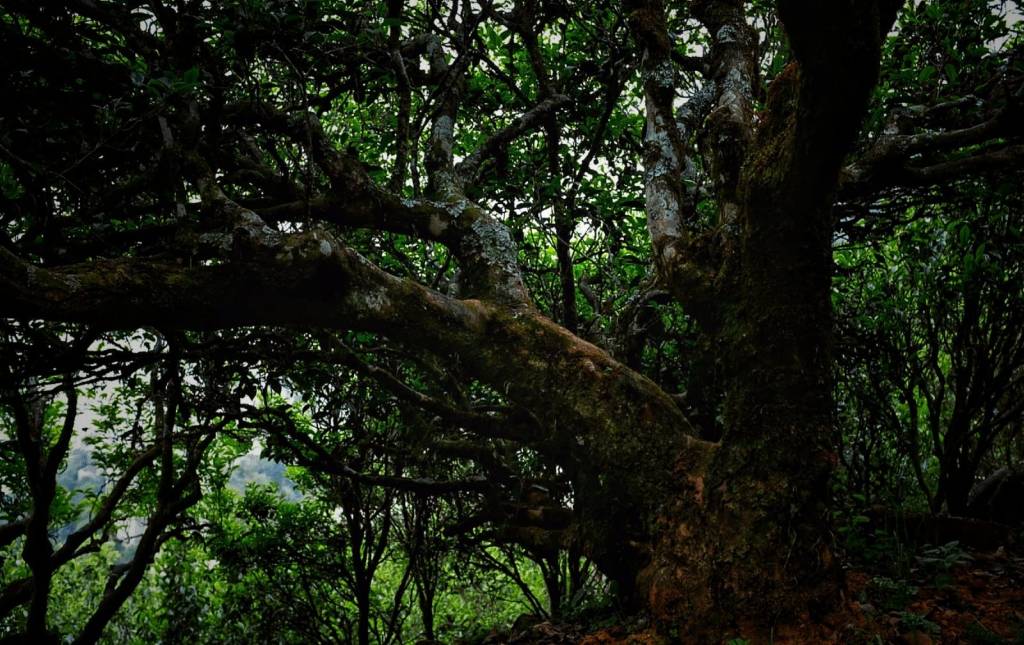
    Fenghuang is a small city of 30-40.000 inhabitants, an out of this world place with about 10,000 laocong of about 100 years and 3,000 trees of 200 years, and from these numbers it is enough to understand that many of the leaves from ancient trees that we find in the western market cannot come from here. The climate is difficult, extremely humid, the moss seems to envelop even the soul of those who pass through it, a very different condition from the neighboring areas.
    In Fenghuang village a distinction has always been made between the internal areas of the mountain (neishancha 内山茶) and the external areas (waishancha 外山茶), in order to underline a deep tradition and bond with one’s land.

    There are 30 tea towns in the administrative area under the current jurisdiction of Chaozhou City, and one of the problems is that as long as the tea is harvested and processed according to the DB44/T820-2010 standard within the city of Chaozhou all teas can obtain geographical protection marks, and therefore be called Phoenix Dancong.

    Fenghuang Dancong’s production method is mainly based on the family and there are no large enterprises comparable to those in Fujian or Yunnan, and it is what is sought to be preserved and must be protected. But every year on the market there are tons of teas at astronomical prices in the western market related to Fenguangshan cha without any territorial distinction, with little or no transparency. But the real dancong is only a small part of it.
    One wonders if it is worth spending more and more money to buy something that might not even be real Dancong or settle for a sip of happiness together with that money in case the tea is really good.