I’ve always loved investigative journalism but I’ve always hated those catastrophic clickbait headlines that always seem to make things bigger than they really are, but there’s a phenomenon in the pu’er world that’s been going on for a little too long to be simply buried like a dog with its bone.
Now, we all, or almost all, remember the bursting of the speculative bubble in 2007, where the pu’er market swelled exponentially overnight that spring only to falter in July and collapse over 70% by the end of the year, basically cutting the legs off an entire industry. Well, we may not be at those levels, but it doesn’t seem like the lesson has been learned, rather it seems like someone just put their shirt on inside out to hide the stain.
What were the causes? Well, to simplify, let’s consider that 70% of purchases were motivated by investment and not by real consumption, production quintupled in 4 years, saturating the market, to which we add fraudulent practices of counterfeiting, manipulation of markets and auctions and crisis of confidence in the product, the source and the quality due to opaque practices dictated by the absence of clear regulation that was convenient for everyone, then we obtain what is a self-destructive economic logic based on artificial growth, completely disconnected from the fundamentals of the product.
In the West we most likely think that Pu’er buyers have broken free from this dimension because we see a large part of them consuming the same tea they bought, which is partly true, but partly not. Many areas of Yunnan that have reached rationally unthinkable numbers, brands or editions that beat crazy prices have behind them a generative structure often of speculative nature that does not always have to do with scarcity, production costs or the quality of the tea.
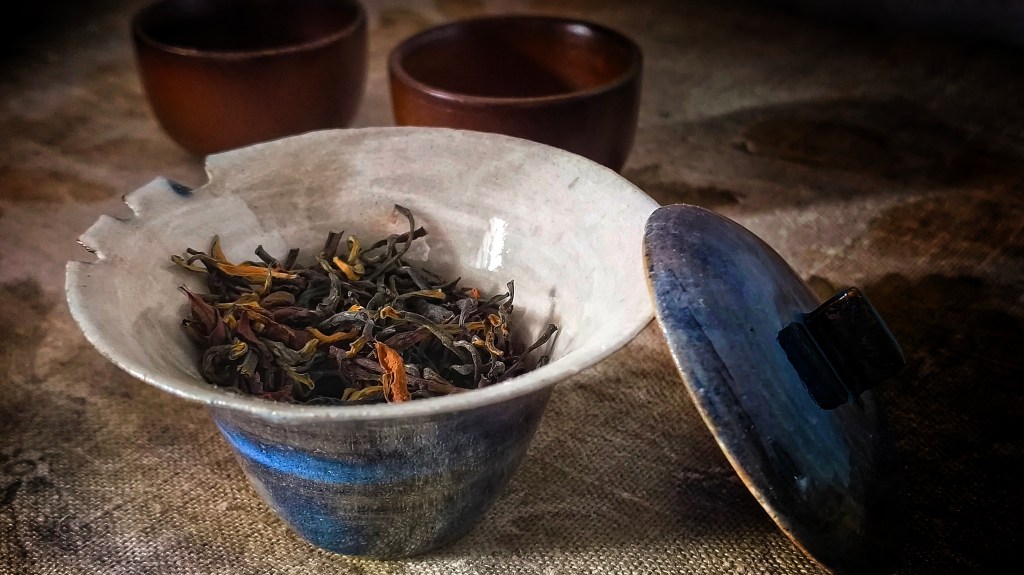
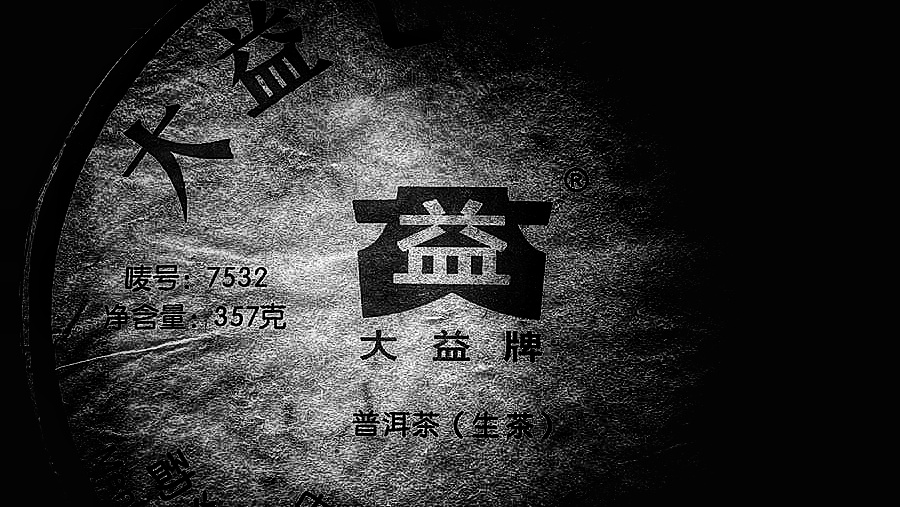
A while back I found myself tasting old samples or cakes from my collection that I had probably forgotten about. I tasted an old 2005 DaYi 7542, batch 501, along with some more recent production, a 2022 7542 and a 2022 Premium Peacock, both batch 01. I honestly can’t say they were bad teas, they were really good, but to what extent can you justify a crazy price, crazy especially when compared to those before 2015, for a basically “a little more than good” tea. This is not only true for DaYi, but let’s analyze for a moment the price trend of some famous productions. Among the most sought-after cakes in recent years there has been the 2003 Jin No.5 batch 201, in January 2021 its value was 1.45 million RMB/jiàn (84 cakes) while in January 2025 the value amounts to 1.1 million, lower than 5 years ago and above all far from the exorbitant price of 3.2 million in March 2021, same fate for the 2005 7542 (batch 501) which in February 2020 was 230.000 RMB /jiàn (84 cakes), reached 880.000 in February 2021 and then collapsed again at the beginning of this year to 300.000 RMB.
In recent years DaYi has marketed numerous other special and prestigious productions, such as the 2201 Premium Peacock or the 2021 Golden Rhyme to counteract the erosion of the pu’er market prices, but without much success, the first had a value of 118.000 RMB / 42 cakes now collapsed to 61.500 RMB while the second which had reached 152.000 RMB / 28 cakes now touches “only” 33.000 RMB.
So, in China there is a particular and complex economic situation and due to personal and corporate financial difficulties, those who invested in this type of goods have tried to divest from illiquid assets such as Pu’er. The tea market does not guarantee a quick sale (and this can be seen from the huge amount of cakes kept obsessively by those who bought them for this purpose) without even seeing a potential for short-term revaluation, and this has led to a greater supply than demand, which is why many recently produced cakes are and will be available in the future.
Added to this is the real estate crisis triggered by the collapse of Evergrande in 2021, the real estate sector has traditionally absorbed a huge share of savings from Chinese families, who now see the value of their properties deflate, which has caused an erosion of perceived wealth. The liquidation, even at a loss, of pu’er tea to quickly recover liquidity and move a part of immovable money can only worsen the price situation.
Let’s add a piece: in recent years some brands, attracted by demand, have pushed for an increase in production, not limiting themselves to a couple of pressing batches; with the drop in demand, the market is now flooded with a surplus of product and an inability of the market to absorb the supply.
But above all, wage stagnation, a lack of robust welfare for which the capital of families is concentrated more on pension, salary and educational expenses and a slowdown in redistributive policies slow down or cancel the entry of new buyers into the market, a situation that brings us back to the last problem of the analysis: The collapse of the speculative segment.
The cakes of large “investment” brands have suffered a 30-50% drop compared to the 2021-2022 peaks, especially for the post-2010 editions, a sign of the exhaustion of the speculative model, something already seen in 2007, but currently the situation is less dramatic. However, reliance on time is not a reassuring factor in the development of these phenomena, which can see prolonged stagnation as well as a sudden acceleration rather than their dissolution.
Now I get to the point. For years, the “investment” market has functioned with a pseudo-pyramidal scheme: investors bought new and old editions waiting for others to enter after them, driving up prices. When the absence of new players becomes apparent, the system simply collapses, as the first to arrive only gain if new buyers arrive willing to pay higher prices (those who know the world of fine wines are probably not unfamiliar with this game). So prices collapse because there is no longer real demand to support them.
The biggest problem with the collapse of speculative Pu’er is that as it increases in value it sometimes cause the price increase of raw material and “consumer” cakes even from small brands, it can have exactly the opposite impact on the local economy of the region, where many small producers depend on the sector, since the costs for harvesting, processing and storage of Pu’er increase accordingly, especially for the latter who do not benefit from economies of scale.
In addition, many young people seem to give up on this type of purchase and the crisis of confidence due to several allegedly rigged auctions have not helped the image of this sector which in itself is already a niche.
In this article, not all the main problems have been touched upon, for example, I have intentionally left out the problem of fakes (both new and old pu’er, both big brands and, especially currently, smaller brands) and that of fraud on the origin of the leaves, which represents a huge critical point.
As far as pu’er consumers are concerned, the only possible logic is to form and create a personal standard that is totally independent from the logic of price, fashion and advertising of brands and sellers. If it is true that a low price does not bode well, it is also true that a high price does not provide any a priori guarantee on its real quality or on the truthfulness of its origin, and this applies to both Asian retailers and European sellers. Trust in a shop and in the people who run it still remains a fundamental prerequisite, as well as fighting speculative logic through greater criticism and greater detachment from trends that contribute nothing to an authoritative and well-founded personal education, nor do any good to a market that certainly no longer needs speculative logic (also considering the polarity of speculation, which could occur in a unipolar way in the West thanks to some retailers without it actually occurring in Asia). All very familiar advice to those of you who have been out here a while, nothing new from the early 2000s.
To conclude, this trend of continuous increase in prices in a generalized way is not infinitely sustainable, and history unfortunately teaches this, especially in an uncertain global economic context. The future of the market will depend on the ability to balance price, quality and accessibility, avoiding speculative excesses and opening up to new consumers. If the sector is able to adapt, Pu’er will remain a valuable product, but with more balanced and less volatile prices. Companies must become ambassadors of transparency, for example by introducing blockchain certifications or declaring costs and margins so as to show how much is paid to farmers, as happens with some micro-roasteries in the coffee world. Consumers must act as ethical “gatekeepers” avoiding being carried away by the hype without evaluating the quality and institutions must guarantee clear, more stringent rules that absurdly no one seems to ask for (except to limit the use of fertilizers or other superficial environmental restrictions), clarify terms (e.g. gushu) so that they are internationally univocal and measurable as happens with European standards and denominations. All these things seem like utopia, but every now and then it’s good to say things out loud, they don’t even sound bad.
*All prices in the article were taken from donghetea.com



 Wild Harvested