Tag: sevenessence

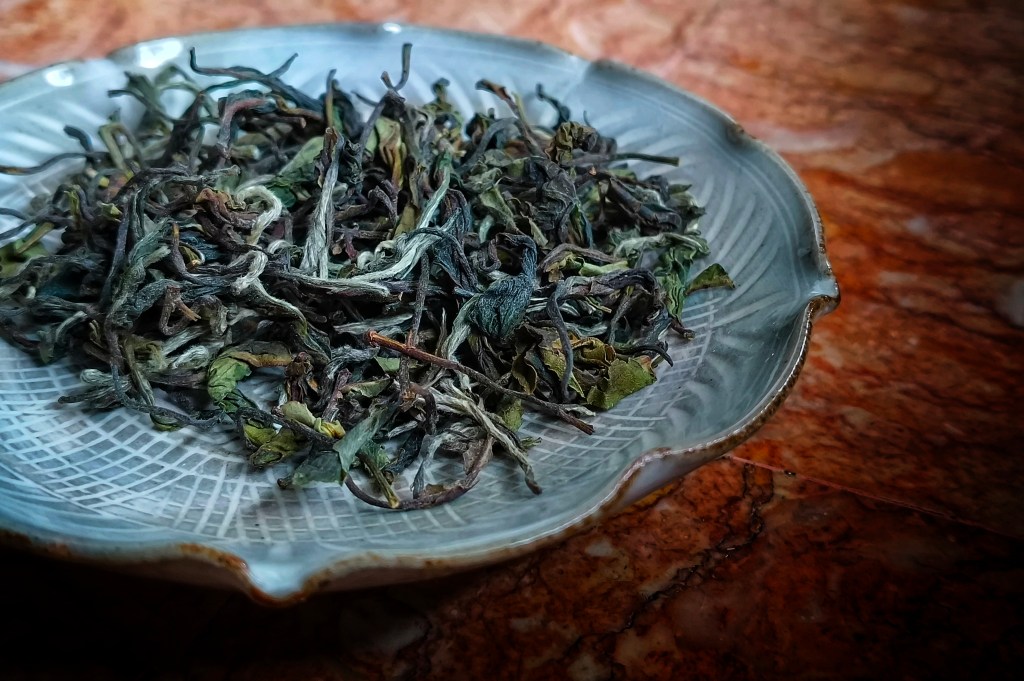
  • Dark Alleys, Bright Lies. Seven Essence Spring 2025 Darjeeling Petrichor

    Dark Alleys, Bright Lies. Seven Essence Spring 2025 Darjeeling Petrichor

    You never thought you’d find yourself at this hour of the morning in a place like this, and you wish you could appear to yourself less out of place than you actually are. You got there after immense vestibular struggles, tearing your jacket at the shoulder that had christened the walls of the whole 3rd Avenue, walls that were essential for you to keep an upright stance, while thinking about what it would be like to sit with your nose pressed against the condensation on the window, as outside the city swarmed in the intricate anthill of the metropolis’s underground.

    The hours slip away like scraps of time in the incessant rain, the night overcomes the inertia of time, and in that instant two o’clock turns implacably into five. The smell of water on asphalt enters through the door, filling your lungs. Within those four walls, where people seem intent on parading the abandonment of beauty as an ideal, human matter appears left in its larval, suffering state. And yet you decide, finally, to chase the storm. You leave that refuge of castoffs with cautious agility, pushing past the wreckage of bodies. The merciless daylight has not yet pierced you, but you sense that, if you dare to lift your gaze, you would discover the kind of sky Buñuel would have loved to film: bare, raw, condemning.

    The scent of petrichor comes as a diagnosis, a primordial odor of drowned cities and funerals. You fancy yourself a walk-on in Mastroianni’s La Dolce Vita, except there is no Anita Ekberg to redeem you, only empty taxis, memories soured by undigested alcohol, no vintage Italian cars, only graffiti, puddles shimmering metallic green, and a man clutching a handrail like Christ in Grünewald’s Crucifixion.

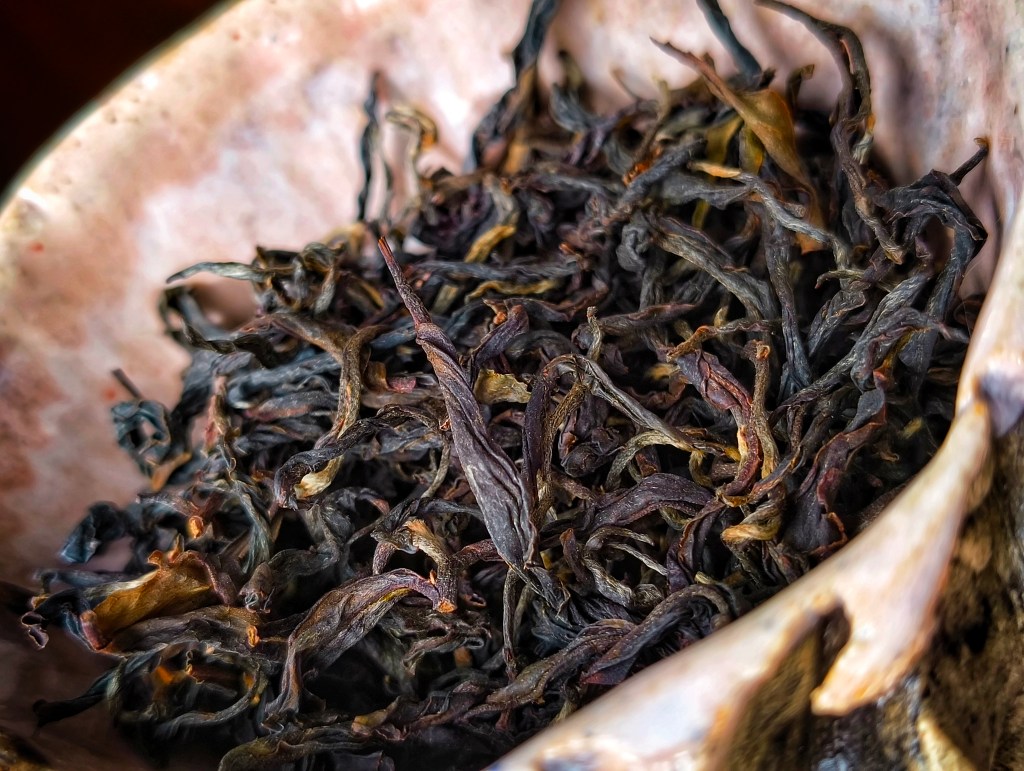
    And this Seven Essence tea, a 2025 Darjeeling first flush, is a confession of hidden memory, an echo from your compromised hippocampus able to grant grace even to one of these formless nights. It recalls the mineral scent of rock, buildings washed by a midsummer tropical rain, the dark humid nights spent cradling a glass; it carries that note of cake and caramelized fruit reminiscent of your mother’s tarte tatin at six in the morning, when you returned home sheepishly, with many good intentions and little balance. In this situation, the P312 cultivar seems to proclaim with satisfaction that nature manages to create grand works without pomp or excess. In its tones of aged wood and oat hay, echoes of moss and jasmine rise, preparing you for a perfect sip. one of those that seem to set things right, becoming a medical prescription for your attempt at redemption.

    This tea is a window onto the beyond, a buttery tincture, sweet and herbaceous, the liquefaction of a Salgado photograph with its exasperated structure. The sip is lushly viscous, the sweetness on the finish borders on obsessive, its complexity remarkable, and the persistence so strong that it makes you forget your last dinner in a seedy diner. But now that note of petrichor offers a way out of the city you had once chosen as the stage for your aspirations, a bandage on the broken promise of art that was meant to illuminate mankind, but which to your eyes now seems reduced to rancid ketchup and congealed mayonnaise.

  • The Design of Ephemeral Grace – Seven Essence 2025 Spring Quiescence

    The Design of Ephemeral Grace – Seven Essence 2025 Spring Quiescence

    Quiescence is the child of temptation, a tea that crashes in like Dean Moriarty’s wild, unhinged laughter, a tea that halts time, that fills empty spaces with the substance of life.
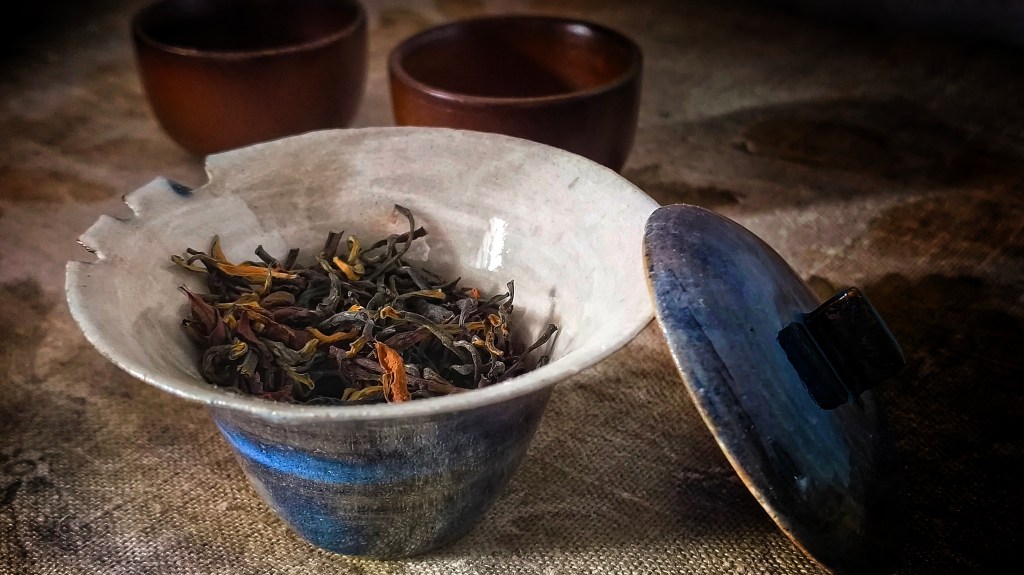
    It’s a spring harvest from cultivar B157, one of those rare works that appear once every four springs, refusing to exist in reflections, in mirrors, in repetition.

    The wet leaves smell of frangipani and vanilla, laced with the almost milky notes typical of Taiwanese oolongs. It feels like it fell from a Liberty canvas, dried in the dawn sun of Los Angeles, back when the light was still golden and the air almost liquid.

    It’s a hymn to creative impulse, to those destined to vanish, leaving behind only a trace,  like perfume on a pillow, or a copy of Les Fleurs du mal forgotten on a veneered nightstand, underlined, underlined everywhere.

    The sip is soft, pliant, sweet. It leaves a creamy, floral, almost cosmetic film on the tongue. You can sense the intent, the effort to craft an exceptional tea, every sharp edge softened like a minimalist organic vase. Its aromatic texture feels woven through an analytical, obsessive, surgical search for sensation.

    Sweet notes surface, mango custard, whipped cream, a whisper of osmanthus water. It’s the ultrasound of a happy childhood memory, evaporating into something denser, more designed.
    It lingers in the mouth, clinging to the palate, with a hauntingly familiar aftertaste of strawberry cream.

    There’s a quiet sense of luxury in all of this.
    It’s like stepping into a room decorated only in pale gold and French velvet, with bottles of Champagne scattered across the floor,  where nothing is left to chance, and even the dust participates in the choreography.

    It’s a layered, intentional experience. A reminder that 2025 is a truly remarkable year for Darjeeling.

  • First Flush, Final Breath: Drinking the Last of the Muses. Seven Essence 2025 FF Darjeeling Muse

    First Flush, Final Breath: Drinking the Last of the Muses. Seven Essence 2025 FF Darjeeling Muse

    At a time when humanity still seemed willing to believe in something beyond the mere surface of things, the Muses sat upon Mount Parnassus. It was an age when people were aware that art was something more than just a string of provocations with fluctuating budgets, something more than what you can now sort “from most to least expensive”. The nine daughters of Zeus and Mnemosyne guided the hands of painters; their voices stirred the blood that fed the cante jondo, urged demons to move T-Bone Walker’s left hand just a little more, whispered the six sonatas for violin and harpsichord into the ear of Vienna’s young prodigy. Today, I fear they no longer sit anywhere. Presumably locked away in some post-industrial loft in Milan, gagged with tape labeled “reconstructed identity” or some other bullshit straight out of the Damien Hirst playbook.

    Calliope, the one who once conversed with Cesare Pavese, has now ceded her place to seventeen seasons of some televised sobfest. Euterpe, on the other hand, is in despair, seeing a world that once resonated with the sublime tones of Giuditta Pasta now wander aimlessly with earbuds in, listening to some immersive composting sound experience, something for those who believe that rhythm is a new form of urban mysticism. Suffering is no longer catharsis, but mere reportage. Tragedy has become a type of therapy. Art is now a vehicle for delivering yet another saccharine confession that nobody asked for. The Muses have not been imprisoned by the market, but by contemporary philosophy itself, which has always denied their necessity.

    And yet, now and then, one of them escapes. And when that happens, a Christone Ingram appears. Or a Jordan Casteel. Or a Jacopo Cardillo. Someone who doesn’t need to prove that their kind of expression deserves a higher, transcendent status, because people don’t need to convince themselves that it does. They simply know it. Instinctively. No massively inflated price tag is required to protect their importance, because no price would ever be enough.

    Where once we invoked the austere beauty of Dreyer, or the sacred silence of Tarkovsky, today we exalt centrifugal narratives that refuse to come to any kind of conclusion, as if the unfinished were somehow more “true” than the completed. Perhaps I too am an asymptomatic carrier of this condition. I have a draft of a book sitting untouched in the upper left corner of my desktop for six months. I sometimes drink more than I should. I let Rory Gallagher depress me far too much. And I find myself sensing emotion in a throwaway work by Twombly.

    Before the whisper of a Muse, before hearing the chords of Erato’s lyre move the soul, before Melpomene offers her sword to face the tragic, it now feels almost more honest to linger in the unformed, a sort of beta version of the present that will, one day, receive its necessary update. We live in an age that collects fragments. Isolated sentences. Reels. Reels of reels. Everything must appear as something short enough to scroll past, yet long enough to suggest continuation, even if that continuation never comes. And this, I believe, applies to everything in our lives.

    And I believe it also applies to tea. Including the rare sparks of the extraordinary. It’s entirely possible that one of the Muses escaped into the Darjeeling region, slipping away for one spring from her confinement to the ruins of mythology, leaving strands of her robe in what this first flush has become today: the blooming of precocious talent, something you feel a desperate urge to consume, for fear that it may wither overnight.

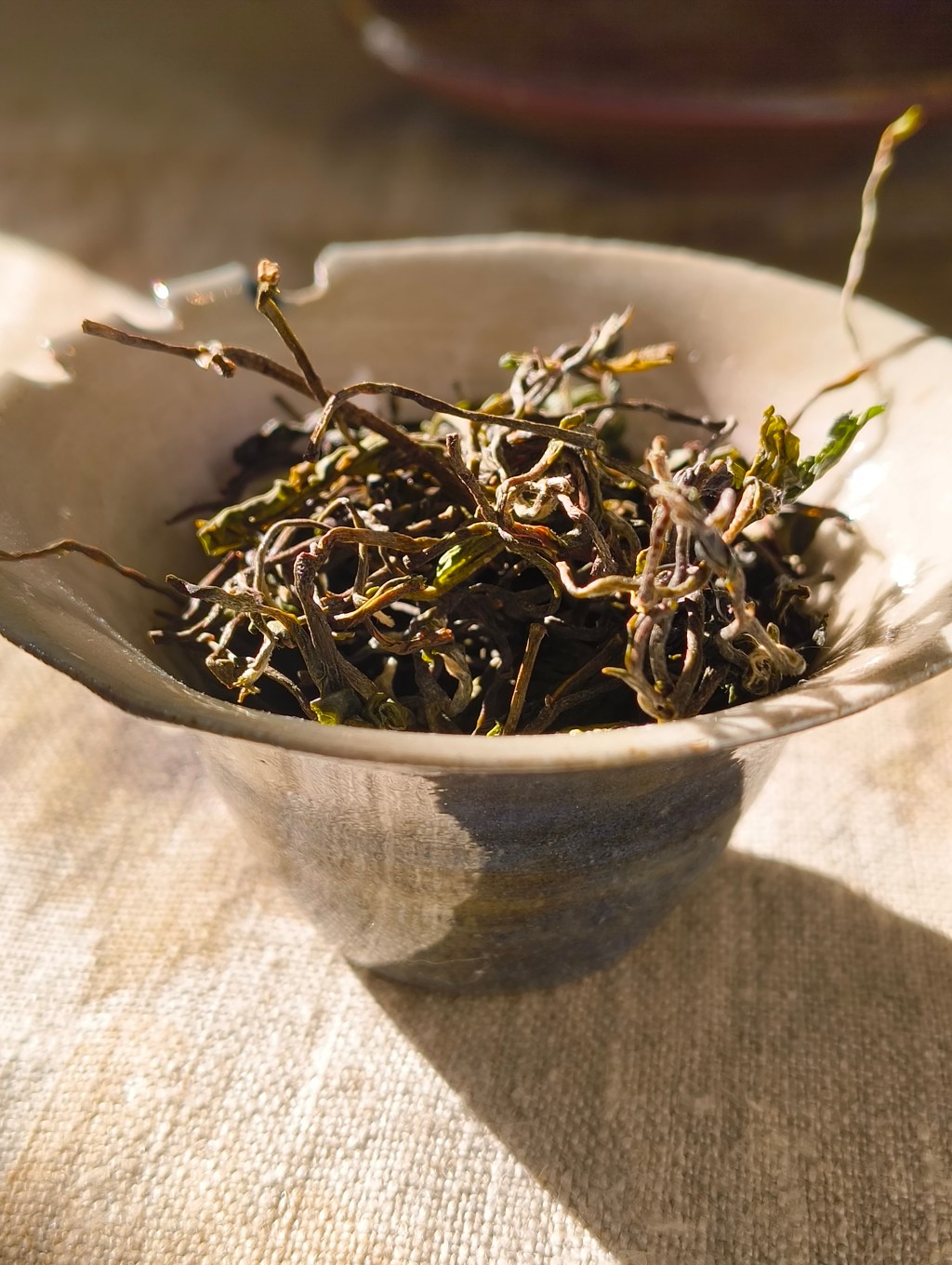
    Muse is a sublime tea, the kind I come across only once every three or four years, because evidently nature does not wish to give more than that. It’s a tea whose wet leaves smell of bison grass, soft French nougat, myrtle leaf, and mulberry gelato. At first, it seems accommodating, then it leaves the coasts of Occitania and dives into deeper waves of sweetness: guava, golden kiwi, and frangipani, lined with vegetal chords of cactus, then aloe, like in an art deco perfumery in Silver Lake. In the end, everything contracts into something foreign, citrusy. Pomelo. Sharp. Precise. Almost hostile.

    In the mouth, it’s soft, intensely sweet, but anything but commonplace. The flavors point to fig, vine leaf, traces of herb butter, something vaguely liqueur-like, maybe green acorn distillate, and then birch sap. It’s not a taste. It’s an image. Then it veers. Completely, into mulberry and grape.

    For anyone who believes Indian teas lack Qi, they need to try this. The sensation is stunning, abrupt like a flood of adrenaline rushing through the vena cava, like that chill running down your spine when something truly significant happens. Like all great teas, it lingers. It stays with you for hours, like a text message at 3 a.m. you wish you’d never read. You can push it through ten infusions, fifteen, but the flavor never leaves your mucosae. Muse persists, like nails tapping softly on a taut drumskin, quieter and quieter until nothing is heard anymore and the noise of the street comes through the window, and yet you know that something is still resonating in that absurd chaos.

  • On the Sidewalks of the Sacred and the Spent – Seven Essence Darjeeling Autumn Augury

    On the Sidewalks of the Sacred and the Spent – Seven Essence Darjeeling Autumn Augury

    Augury is a Seven Essence Darjeeling oolong conceived under a notion of tea-making that is almost Liberty-like, moved by a secular liturgy made of gestures, of manners, of repetitions never entirely identical to themselves. It is the progeny of a movement that knows no envelope, neither of the body nor of the imagination; it is a struggle against the terror of uniformity and constraint. It compels one to separate from judgment dictated by the flesh.


    Drinking it brings back memories of late nights, with the head resting against the wall in front of Casa Florio Nizza, a massive liberty building by Bellini, adorned with cast stone phytomorphic decorations, where the opacified windows let the light filter in like a profane cathedral. The wrought iron of the railings, twisted with almost conscious intent, seemed aware of being among the few survivors of an extinct architectural race.


    This tea brings back to my throat the mineral warmth of those walls, thoughts on the excesses of a life long past, on surrendering beauties, on the last cigarettes smoked standing among those fervent buildings, custodians of descents into hell and fleeting redemptions. A youth lived on worn-out sidewalks, eroded by the disheveled snobbery of its regulars. These were neighborhoods inhabited by angry adolescents, womanizing masons, criminal dandies, penniless but enlightened artists and inept silver spoon kids; people who, in any other context, would never have met.


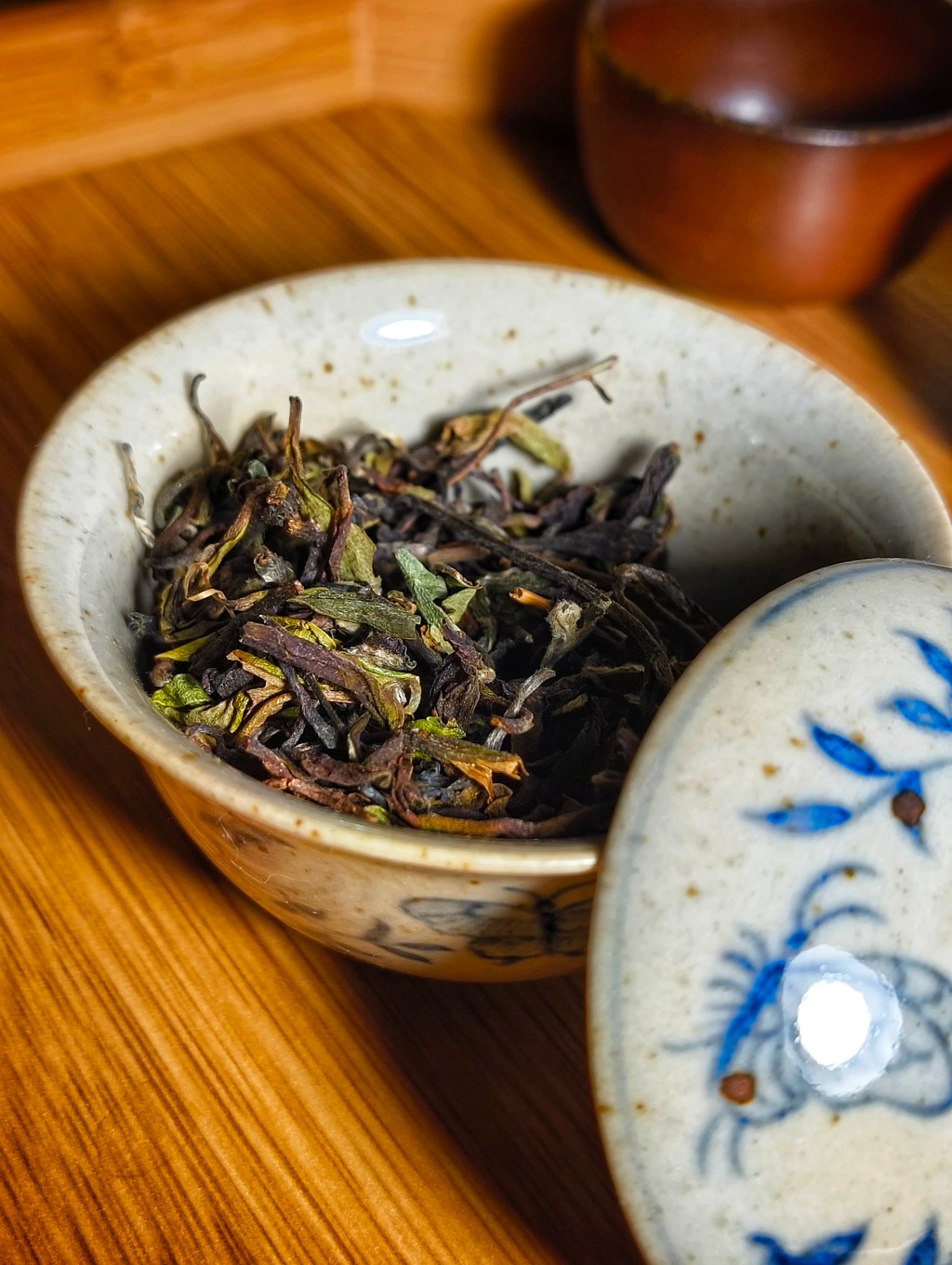
    The cup appears like that neighborhood, a unifier of opposites, a place incapable of saving anyone, but at least able to ennoble our desire for consolation. With its scents of magnolia, orchard grass, fermented fruit and tuberose, it seems conceived by the olfactory extremism of Cavagna, but what strikes is not only its flamboyant sweetness, the total absence of bitterness, or its glyceric texture, but the verticality of the composition: a Dantean ladder climbing through wildflower honey and the early setting of gooseberries. There are notes of peach candy, guava nectar, coconut water, and pomelo, followed by an archetype of tropical fruit that closes on a fragrance of passion fruit, with an almost surreal intensity.

  • Seven Essence Darjeeling Masquerade

    Seven Essence Darjeeling Masquerade

    I believe there are few people on this earth for whom I have ever felt even a modicum of envy, and I do not say this out of vanity nor from some absurd, ultraterrene awareness. I’m simply indifferent to the allure that possession exerts on people, the resonance of an echo of absence, the trace of a denied desire. Yet Bubble and Abhijeet have a rare, transcendent empathy when it comes to tea, a quality that is either innate or remains scarcely graspable, one that probably I don’t even have. Their autumn collection attests, indisputably, to their status as the Vaughan brothers of the Darjeeling terroir and to the perception that selecting leaves is a virtuous act, a testament to aesthetic discernment.

    The election of the proper material is not a mere sorting process; rather, within it dwells that lyricism, that aphonic language in which what resides is lifted from its ordinary form, unfolding into a dizzying array of aromas and scents where time contracts and expands with a diaphragmatic cadence. To select leaves is an invocation of the sublime, a re-creation of the universal tension between order and chaos, wherein the structural opposition of what is utilitarian and what lies beyond utility is drawn and maintained open, rendering tea not merely a beverage but a vehicle of meanings.

    Masquerade is a Darjeeling oolong produced from the AV2 cultivar, a tea with a dense liquor, a chromatic snapshot vibrating between ancient gold and dusty amber. The leaves exude the fragrance of rose and jasmine, of olive oil and fruit tart. The infusion is sweet, soft and persistent, with hints of pear, pistachio and dried apricot. It is a sip of freshness, capable of rejuvenating even those weary nights, illuminated by the flashing lights of police cruisers deployed in one of those torrid, sleepless nights.

    Notes of chlorophyll, subtly vegetal, along with hints of olive leaf and mango, evoke an introspective road movie, laden with trembling shooting of hands brushing against corn stalks and bodies staggering in the sultriness, a spiral of rural unrest and youthful rage, of adolescent fights in the badlands, where typically nothing was too dear but everything cost too much.

  • The Liquid Reflection of Civilization. Seven Essence Darjeeling Epilogue

    The Liquid Reflection of Civilization. Seven Essence Darjeeling Epilogue

    Years ago, I met a professor, one of those old, gruff Labour men, fond of humanity provided it was kept at a safe distance. He lived in permanent exile from pragmatic reality, an outcast who had sought refuge in erudition, guardian of a nation that had ceased to exist before he was even born.
    He listened to Mahler after his Darjeeling, but would only play it if the tea had truly satisfied him, perched on that Danish Art Nouveau oak stool with its black leather seat, with his fingers gripping the keys like ash roots burrowing into earth.

    Epilogue by Seven Essence brings him back to me, sitting in his study poised within the hypothetical temporal sliver between Hope’s Regency style and Ruhlmann’s Art Deco.
    He never chained tea to a fixed hour, nor did he treat it as a prelude to elitist drunkenness. To him, it was the liquid echo of ancient civilizations and their highest reasoning.

    The mahogany, varnish, sweet potato, petrichor, rye bread and cask notes, all wrapped in a cloak of earthy minerality, bring back that room drowning in bound pages and an excess of ebony. Watching it in the cup, I recall our conversations about Vermeer — the tea shines, releasing a warm light, as the one that illuminated the flesh-like surface of the Girl with a Pearl Earring, a radiance both earthly and sacred.

    The sip is rounded, neoclassical, sober yet embracing, with a warm, exuberant body, full of pepper, cocoa, violets and autumn fruit. The sip ends with a sugar cane sweetness almost severe, like the curtain closing on a Powell or Pressburger finale, those directors who knew how to grasp the soul of things without succumbing to sentimental drift.

    Epilogue reminded me of those cultured, discursive forays and how drinking tea itself is politics: a good, human politics that forces us to admit our dependence on the earth, on history, on the cultures of those far from us, in another time or place.
    Every cup is a choice. Drinking good tea is an act of resistance.

  • A Theatrical Infusion of Desire and Disorientation. Seven Essence Darjeeling Autumn Caprice

    A Theatrical Infusion of Desire and Disorientation. Seven Essence Darjeeling Autumn Caprice

    Seven Essence Caprice is the whim that comes from that land pushed to the edge of the sky, it’s the tea you wished you could offer to the stranger you met every morning on the subway, with that porcelain skin not exactly free from subtle traces of time, those perfectly arranged marks that made her attractively real and weave memories of encounters that never happened in your mind. But you never came up with the right words, only the absurd idea of the right tea to offer her, and that tea is this.

    The leaves, once wet, declare themselves on tones of magnolia, mango pulp and tomato. Then come marine notes with a Mediterranean accent-hints of salicornia, caper, green olives, and herbs butter. The extraordinary complexity reverberates in the mouth with aromas of millefeuille, white peach and cactus leaf to close a theatrical sip, sweet and at the same time salivating and refreshing.

    These notes are the orchestral delirium that connects Akita Tonburi with horseradish cream to the hysteria of strawberries with rose jam and frozen cherry blossoms at Eleven Madison, they are the trigger for a ecstatic dance in the middle of those buildings on the upper west side that stand like giant soldiers at the service of the stock market and you are leaning against the wall, rolling your tongue on the palate, trying to retrieve those aromas of mango, green plum and wild strawberries. Caprice is the highlight of the day before you disappear into the usual pre-war urban coffee shop between 6th Avenue and 8th Street, with late Art Deco interiors mixed with a sober mid-20th-century functionalism, with the reek of scrambled eggs and burnt fat in the air, the typical late-night aroma that smells of debt, perdition and broken promises useful for detoxing from the unbridled luxury of Caprice.

    It’s difficult to write about a tea like this without it seeming like an act of submissive flattery, I assure you that it’s not a simple narrative, but with some teas you don’t witness a simple act of tasting but rather a controlled hallucination, designed for those who seek disorientation and sudden revelation in taste, they are a sensorial vertigo, a chase in a context of constant perceptive tension.

  • The Last Sip Before the Wrong Choice. Seven Essence Darjeeling Patois

    The Last Sip Before the Wrong Choice. Seven Essence Darjeeling Patois

    I’ve often tried Seven Essence teas in recent months, and I’ve observed how they are able to construct a language that oscillates between lyricism and the most material pleasure, weaving a plot of formal innovation and human depth. I believe that Patois is no exception.

    Patois comes from the frozen AV2 buds of the autumn harvest. In that gaiwan, where the trembling light of yet another winter morning filters through, you can find a liquor that seems like liquid gold with shades of amber, giving off a disarming note of salty pistachio once the ceramic is heated. It’s one of those teas where, while you drink it, you find yourself absurdly in another place, torridly hot, watching the noisy and oscillating fan on the ceiling of a hotel room overlooking the bay, with curtains too heavy and the atmosphere influenced by the neurotic light of a neon sign now three-quarters off. And you, accustomed to the notes of green mango, basil, and wild thyme, wonder if the person still lying next to you thinks you’re crazy or is also feeling the liquid move in their mouth, soft as avocado melting on the tongue, with an aroma of magnolia and gooseberry jelly that enters the retronasal cavity like a promise.

    Teas like this are not for those who seek comfort in the warm steam of the broth your mother made when you couldn’t stand, nor the embrace of hot coffee the morning after a night out clubbing. Patois is the tea for those who stubbornly try to remember what they’ve never experienced, for those torn by nostalgia for a film that was only staged inside their mind.

    Patois is the tea Jay Gatsby would drink after a night staring at the green lighthouse, if only he were a tea person. It’s the sip that accompanies the suspended interlude before making the wrong choice. Patois is not for the faint of heart or hypochondriacs of disaster; it doesn’t comfort or warm. It leaves you there, feeding on that aphasia pregnant with suspension, which accompanies the gaze toward the trace of a Venetian coquetry-style perfume that you wish had been put on for you, but is now on the coat of someone who is too far away, fit to seduce someone else.

  • Seven Essence Darjeeling Scorsese red

    Seven Essence Darjeeling Scorsese red

    This was the last tea of 2024 and the first of the new year. It was a tough, exhausting year. Dealing with the pain of loss, with the sense of emptiness, of being unmoored from the warmth of everyday life and the luxury of the habit of affection, I believe is the greatest thing that nature can ask a human being to face. For the first time in ten years, tea was not at the center of a significant moment, it was a palliative, something secondary, the translation of the search for a cure.

    What had always fascinated me about tea and its aging, its ontological tension between existing in the moment and thriving in a higher dimension, its transitory nature suspended between being and dissolving, the form and its annihilation, from that moment also applied to human life in a cruder and crueler way than I had ever experienced.

    This tea, the @sevenessenceofficial Scorsese was a companion, a ferryman between the days that followed one another without apparent sense. Sipping it is like tasting the truth, it is like watching a painting by Francis Bacon come to life, built with one brushstroke of flesh and blood after another.

    With that note of Sacher and cinnamon, of burley tobacco, of wenge, of leather and smoke, it initially presents itself as a dark and gloomy shot governed by soft lighting, with a corner set up for a sweet Christmas, all mistletoe and songs, in a untidy apartment plastered with references to art deco in the hallucinatory New York seen through the alienated and feverish gaze of Travis in Taxi Driver.

    When the world seems too hard, when losses pile up and the weight becomes unbearable, tea I believe offers a refuge, which is a greater blessing than we are often granted. It is not an escape, but a return to what is essential, and in its cheering sip pervaded by the aromas of condensed milk, apricot, vanilla and chocolate is what this tea embodies, it is like us, it resists, it keeps us standing, it appears in our lives like diegetic music, as that stranger who suddenly puts on a swing piece in a now-dimmed room in the middle of a bad night, convincing us to give life a dance once again.

  • Climate crisis, Darjeeling and Sublime. Seven Essence Darjeeling summer Ochre

    Climate crisis, Darjeeling and Sublime. Seven Essence Darjeeling summer Ochre

    Despite the climate crises, landslides and hydrogeological disasters that have brought the Himalayas to their knees in the last decade, some corners of this land continue to surprise, returning results beyond the imagination, overcoming difficulties and uncertainties.

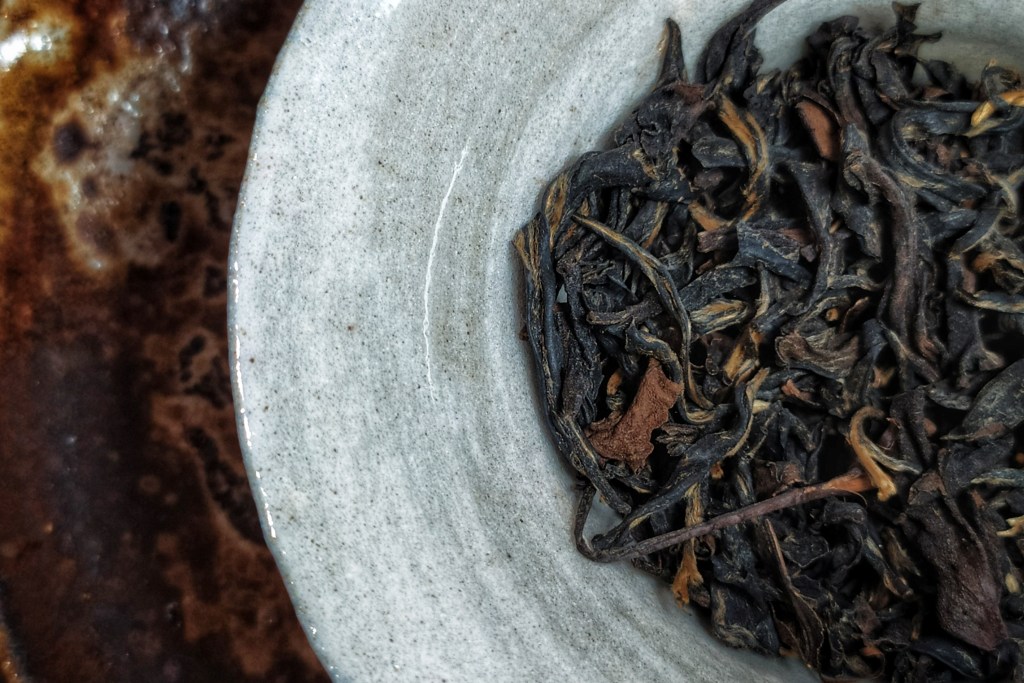
    Ochre is a Darjeeling tea, created using the AV2 cultivar, with golden leaves, twisted like the enigmatic smile of Klimt’s Judith, pleased in her languid gaze.
    Born from a thirsty summer, now the umpteenth, it reveals notes of cocoa, malt and buckwheat, then grants aromas of grilled beetroot, cherry brownies and maple syrup.

    Just like in Judith, in this tea lives that something that seduces but leaves a sense of uneasiness, showing that power, which was once attributed only to art, to evoke ambivalent sensations.
    Klimt transformed Judith’s heroic gesture, the killing of the Assyrian general Holofernes to free his people in an act that sublimates partly as a hedonic symbol and partly as a manifesto of an uncertain era and it is in these terms that Ochre places itself.

    The spring harvests are now the children of continuous cycles of drought and violent rains, an alternation of moments of climatic inactivity and destructive floods and in front of the intensity of teas like this I ask myself what and how much we risk losing, and the answer is things like these.

    The sublime is linked to terror, and terror is all the more terrible when linked to the worst fear for man, that is, loss. It takes us beyond the sensitive abyss and is the intersection between a sense of anguish that manifests itself as a shiver and that Laetitia as Schiller described it, that dazzling sense of bliss.

    And in part teas like these bring us back to this condition, to the fear that things like these may one day not be there or exist in such a different proportion that we forget what was there before.

    In its softness, in its caramelized, buttery and lactic aromas, this tea is an encounter between pleasure and meaning, between sensorial beauty and contemplative introspection, transforming its aromatic expression into an experience not only of taste, but of eternal beauty.