
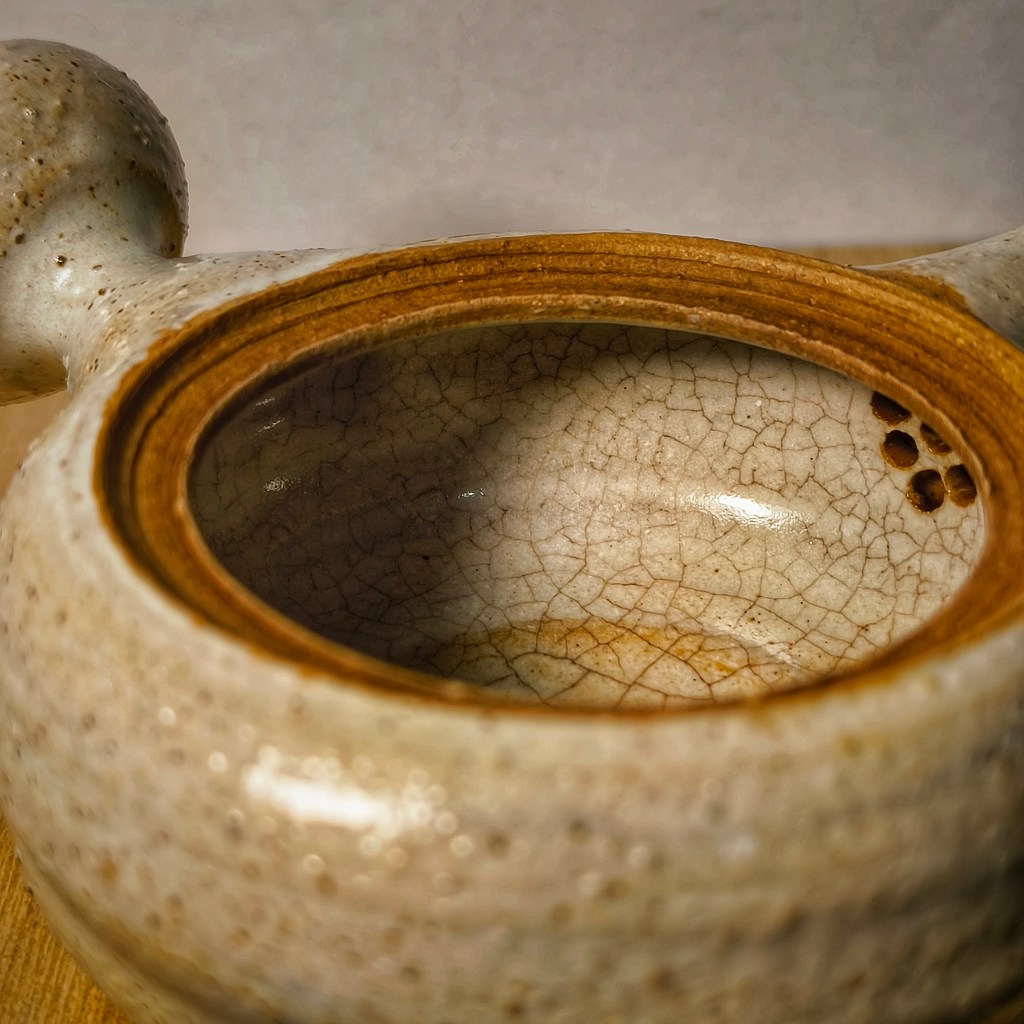
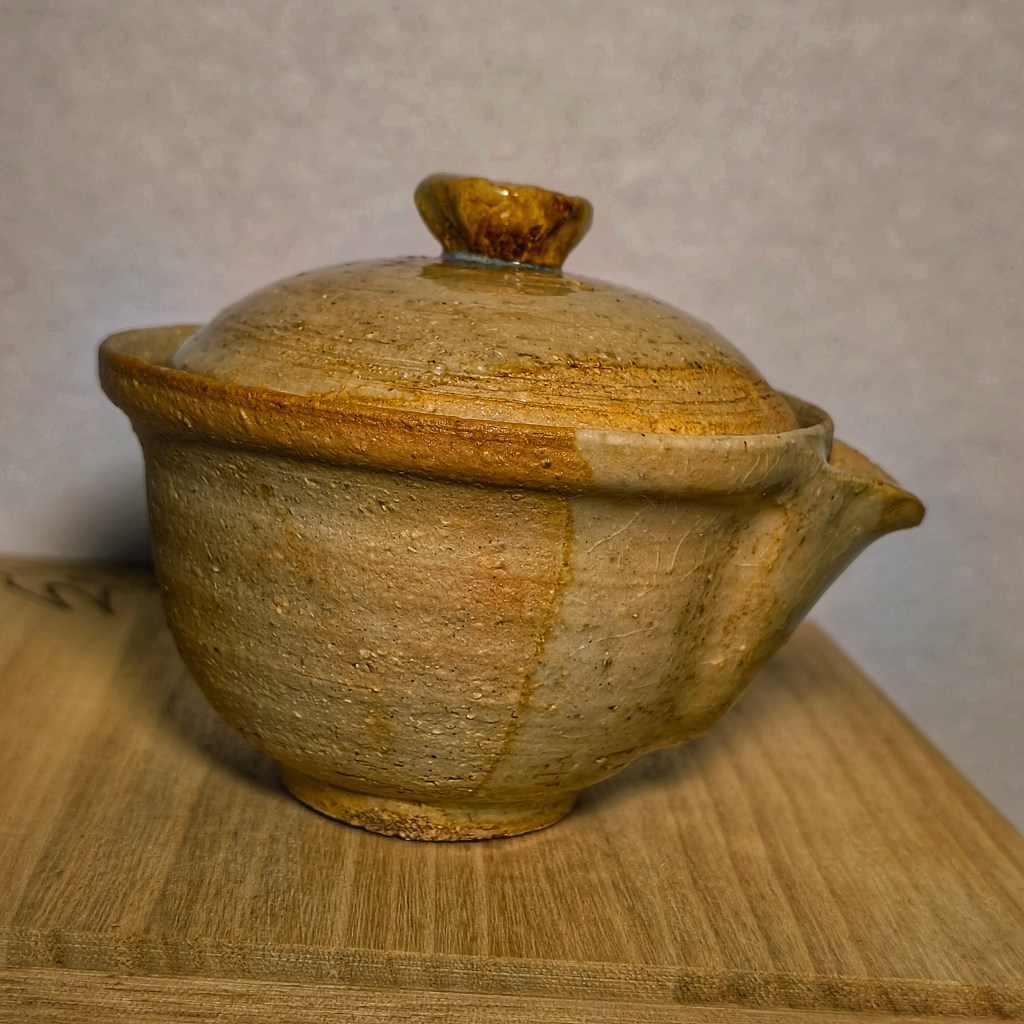
For some time now, I’ve been searching for old, uncelebrated, forgotten ceramics, those hidden in the attics of memory, which for some reason have never received the appreciation they deserve. Western and Eastern ceramics alike, which could rediscover their aesthetic essence by reconfiguring their functionality, taking part in the act of the tea ceremony, even in its informal variations, finding a new stage on which to perform once more.
There is an endless variety of maiolica from Caltagirone, Faenza, Deruta, Vietri; glazed ceramics and porcelain from Capodimonte, or porcelain from Venice and Doccia, which could easily harmonize with this practice. They are not merely objects, but fragments of a forgotten discourse, crafted by visionary masters who impressed upon ceramics a certain Oriental sensibility, without ever sacrificing tradition.
I believe the same is true for many regions of the Far East take, for instance, Arita ceramics: symbols of memoryless porcelain, cupboard-bound relics, victims of that senseless Western compulsion to hang plates on walls in a misplaced pursuit of verticality. They became simulacra of the European bourgeoisie, who ravenously hunted down ‘chinoiseries’ without often asking what it was they truly held in their hands. Absurdly, those hands never truly held them at all, since the objects were bought and placed somewhere as mere installations, losing the tactility that is vital to the ceramic experience.
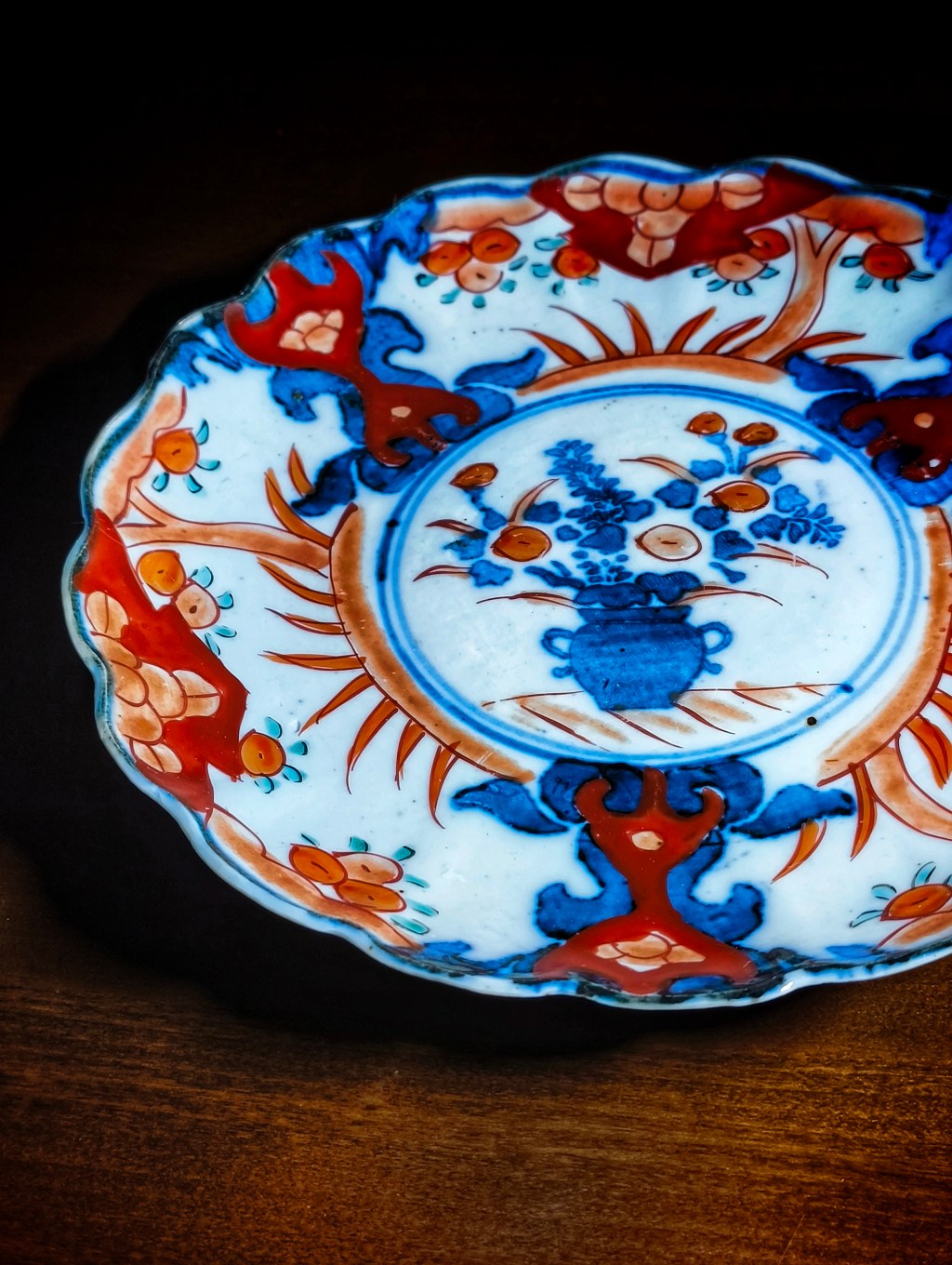
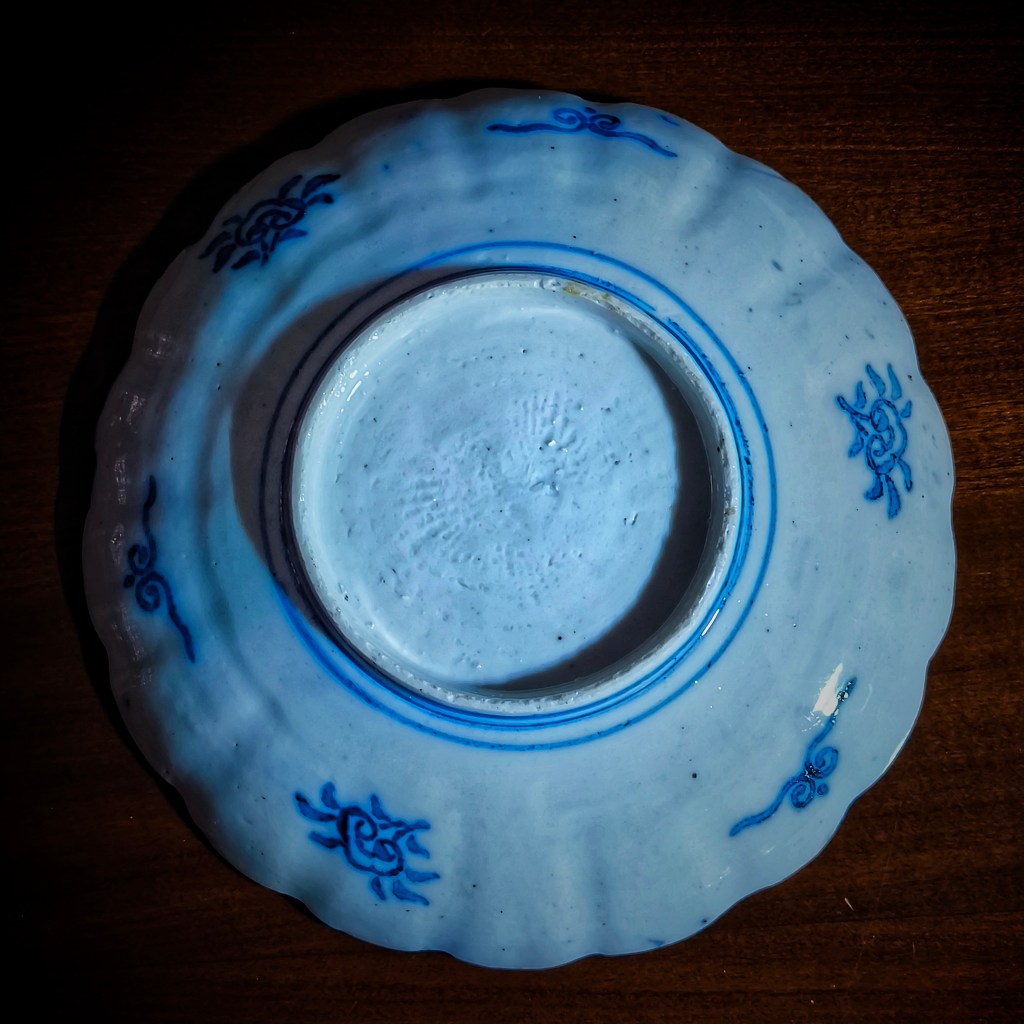
I have recently recovered this Imari plate, one that, by some stroke of fate, had eluded the fetishism of early orientalists and exoticism-hunters of the last century. It dates to late Edo, probably to the Bakumatsu period, when Japan was witnessing the twilight of a civilization that had reached the heights of formal refinement, just before the dawn of the Meiji era. With the easing of foreign policy tensions, Imari porcelain quickly found its way into the gilded interiors of the West, winning over the Victorian era with its chromatic flamboyance and a kind of baroque opulence.
This plate reveals the traditional essence of Arita porcelain: consistent with its era are its hard-paste composition, its floral patterns, arabesques, and phytomorphic motifs which, along with the linear strokes form the typical centripetal composition. The use of color evokes the Nabeshima style without betraying the tripartite chromatic scheme: The dominance of underglaze cobalt blue and iron red, applied in a delicate third firing, is rendered through a contracted, almost restrained brushwork, in stark contrast to the broader, more relaxed strokes usually expected.
However, unlike many later Imari pieces which, in their object-show essence, still cry out ‘I am Japan’ while whispering ‘buy me please’, this plate betrays that schematic sobriety and export-bound fate, instead offering a work that is more instinctive, more raw, and at times childlike. It does not conform to the contrived rhetoric of ‘imperfection’; rather, in my view, it unveils a kind of emotive gestural truth, which, along with the worn glaze and the makeshift repair, reanimates the idea of a fading beauty, so near to the Japanese mindset.
The West, so deeply enamored with chiaroscuro, with play of light, with order and meaning, has often overlooked more bidimensional, introverted, and seemingly naïve forms. This is a plate that ‘tells a story’, as Longhi might say, but here, it rises up, grows loud, proclaiming ‘I am the East the West never truly understood.’
Many Japanese masters of the 19th century experimented without the obsessive pursuit of serial perfection. They created without rigid boundaries, like thoughts left to mature. They stood apart from the Tokoname factory mentality, from the tyranny of repetition and the logic of hourly production.
I am convinced of its beauty, without forcibly seeking it, just as I am resolute in saying this plate is a true witness of its age, in its instinct, in its excess, it recalls the time of antique taste, having paid the price with the loss of its vitreous glaze, it has survived the consumerist years of mass-exported, mechanized works and commissioned art. This is a work that demands to be lived and explored in its materiality. And in doing so, it reconnects us to a past in which beauty could be functional, yet functionality was not a limitation. It is a survivor of artisanal vitality, erudite and refined, which, even when facing its artistic senescence, ensures that the clumsiness of its gesture does not embarrass, but rather allows a sincere and almost moving grace to emerge.

 Wild Harvested