
If you ask many people what their favorite production area is, they’ll probably start listing off famous terroirs, Bingdao for its body, Laobanzhang for its qi, Naka for its fragrance, and some remote shack in a forgotten Yiwu village, which never hurts to name-drop. In short, a litany of names, as if it were a medical prescription for some trivial pathology to be handled with grave care. Or perhaps just another way to show how worn out the magnetic stripe on their credit card has become.
Jinggu likely won’t even cross their lips, not even by accident. This area is surrounded by mountains on three sides, an enclave where the best gardens are often inaccessible, and where the obsession with naming every single rooftop (as in Yiwu) is quickly anesthetized by a lack of roads and the even greater lack of desire to build them. Here, not even the clunky two-ton electric behemoths at the service of Western merchants can climb their way up.
I agree that vast expanses of flat land, dull stretches of agricultural functionality, are today brutally carpeted with Da Bai Cha, as in the flatlands of Wen Shan Ding. A cultivar that acts like a funerary carpet, its tea merely a collateral damage, a distillate of hardship and credit requests, with a hint of bank loan in the aftertaste. But if you start climbing and forget all that, you’ll reach over 2,000 meters at Kuzhu Shan. There, ancient trees stretch in swathes; in some spots, they’re even Teng Tiao, like in Banuo, but with a slightly different aromatic profile, less delicate, more fragrant, impactful, and mineral. Less mannered, and more Felliniesque, to put it simply.
Some time ago, I met a Pu’er expert, a merchant from Lincang whose main business revolved around the Fangcun market. I asked him why he thought people considered teas from Jinggu less worthy, almost like children of a lesser god, tolerated but avoided, like the uncle with a drinking problem at Christmas dinner. He was a big man, with hands the size of shovels. He stared at me for a moment, with his huge, isochoric pupils, maybe the largest I’ve seen on someone from Yunnan, wide like those of an Australian owl photographed by Joel Sartore, performing tiny mechanical micro-adjustments every time you locked eyes with him, as if missing an autofocus. He answered in monosyllables, he looked like someone who read Anna Karenina just to root for Vronsky. He smiled too, but it seemed like his facial muscles were slightly jammed from decades of monsoon rains. And yet, he was one of the most knowledgeable people on Pu’er I’ve met.
It took him a while, then he said something, I don’t quite remember what. I was too busy noticing the irrelevant details I’d later include in this article. But the meaning behind his cocktail of anthropology and Moutai was clear: Jinggu was guilty of not being immediate enough. Too real, too unavailable. Add to that the fact that the era when people chased uniqueness has been over for a couple of decades. They discovered the villages of Yiwu, Laobanzhang, Bingdao, a few others in between, and the punch bowl quickly ran dry. Because, you see, he said, the markets want exclusivity. The consumers who arrive in polished shoes at the edge of the forest, who slip on plastic sandals before posing in front of an ancient tree, are looking for tea like they’re looking for sushi in Berlin.
And he was right. Some want only the illusion of a mysterious narrative, not the truth of the land. They prefer a tea that behaves like a cool, aloof actor, properly trained to play the silent type, the tormented one, the aged-in-a-hut-with-a-hidden-past role, rather than someone, or something, that simply tastes like what it is.
Jinggu teas aren’t for complexity maniacs. They’re rather blunt, direct, break through your guard with a few solid punches, enveloping you in sweetness and asserting themselves through their huigan and bodily sensation.
In the Kuzhu and Tang Fang Liang Zi areas, you’ll find real forest coverage where tea is harvested, like some portion of Yiwu, the northwestern edges of Laos and Vietnam, or the forested zones of Guogan in Myanmar. Here, the trees grow close to and inside the forest. The soil is clay-based with a good amount of rock, confirming the tea’s mineral and sweet character. The plants are spaced well apart, and younger trees are left to grow naturally. You won’t see any drastic pruning, only containment cuts.
It’s a complex terroir. In one cup, you’ll think you’ve stumbled into Jingmai. Drive twenty kilometers and drink again, you might swear you’re tasting Yiwu. Walk another ten, parched and hopeful, and you’ll find bitter cultivars whose huigan is so forceful, so magnetic, it makes some Bulang teas feel like passive-aggressive outbursts by comparison.
Here, like in Laoman’e, bitter and sweet varietals sometimes coexist in the same natural amphitheater. The former, known as kucha, often dominates the more remote slopes, but it’s never overwhelmingly bitter, never out of place or chaotic. It soon turns its cheek to a wild sweetness, like a fist on the table that prepares the caress. If the sweet variety is a well-composed, harmonic melody, the bitter one is drama and catharsis, leaving every door open for further development. These are teas that, even years later, remain an enigma. Tasting them again over time is like revisiting a neighborhood in daylight where you partied in the night before. You barely recognize it, and the sunlight seems to restore a grace you previously failed to notice.
In both cases, what stands out is an oily, umami-like sip and a genuine, full-bodied chaqi, it feels like it thins your tissues, filling your chest and pushing every muscle fiber up against your skin. A tea with a soul that doesn’t scream, but also doesn’t compromise. A tea you don’t expect, and which, especially in the case of ancient trees, hasn’t been tamed to soften its impact.
Southwest of Jinggu Town lies Jiu Tai Po, one of the most expensive and coveted areas, graced with the elegance of something that knows how to stay hidden. Few signs, no selfie points, no desire to be disturbed more than necessary. The village itself, small and vaguely adrift in agricultural amniotism, has little tea directly surrounding it; most of it is in the forest zone, along the ridges or on the opposite slopes. Road access is practically nonexistent, and like Guafengzhai, it takes hours of hiking to reach the tea trees. These aren’t roads for people in Italian leather shoes, and a camo cap won’t get you to the top. The landscape feels like a James Cameron set, shot with Kubrick’s cinematography and directed by a mood-swinging park ranger. There, the leaves aren’t picked by good boys, but by madmen, neurotics howling at the moon, yelling into the western wind, and probably monks armed with faith and an unearthly amount of patience. Climbing up there feels like trying to earn a glance from Maria Callas, flailing pathetically to grasp the corner of her eye, she ignores you, and you thank her anyway.
In recent years, Jinggu has had its big moments, times when even the cynics had to admit that yes, even from those mountains often relegated to Act Two of the Pu’er narrative, something remarkable could emerge. Like the Pu’er from Tang Fang Liang Zi by Farmer Leaf, especially the single tree series that reads like an elegant lithograph set by De Chirico; the 2017 Chawangdi or the 2016 You Shang from Chawang Shop, perhaps among the Western forerunners of Jinggu’s nouvelle vague, to the 2007 Shang Pin by Xi Zi Hao or the old relics from Changtai, old-school, decadent, like an old house with silk on the walls, with the scent of leather and creaking parquet.
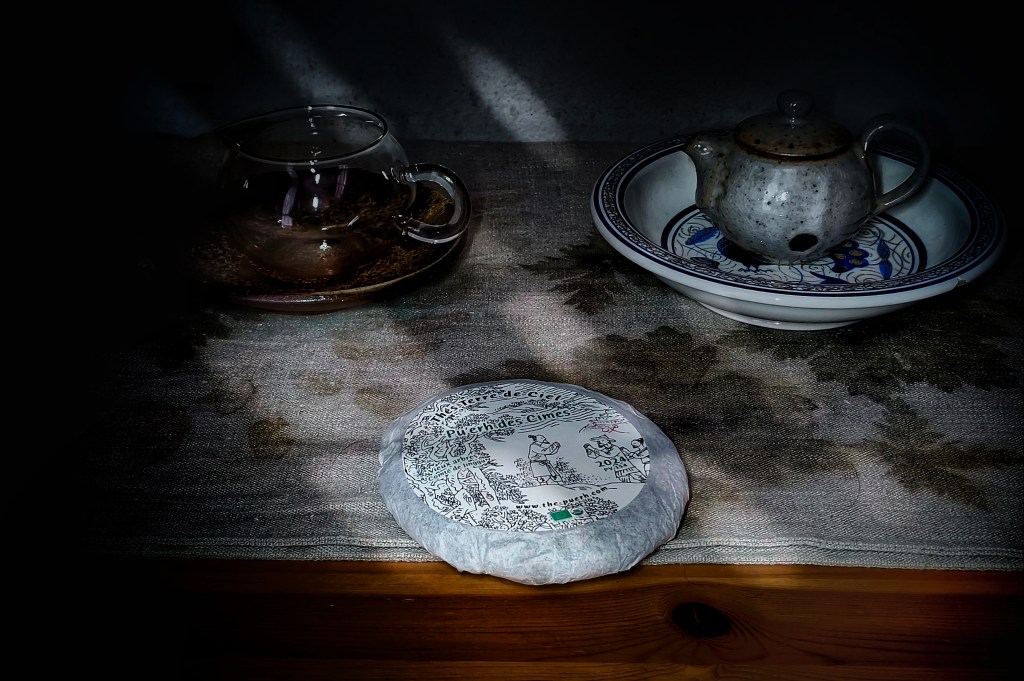
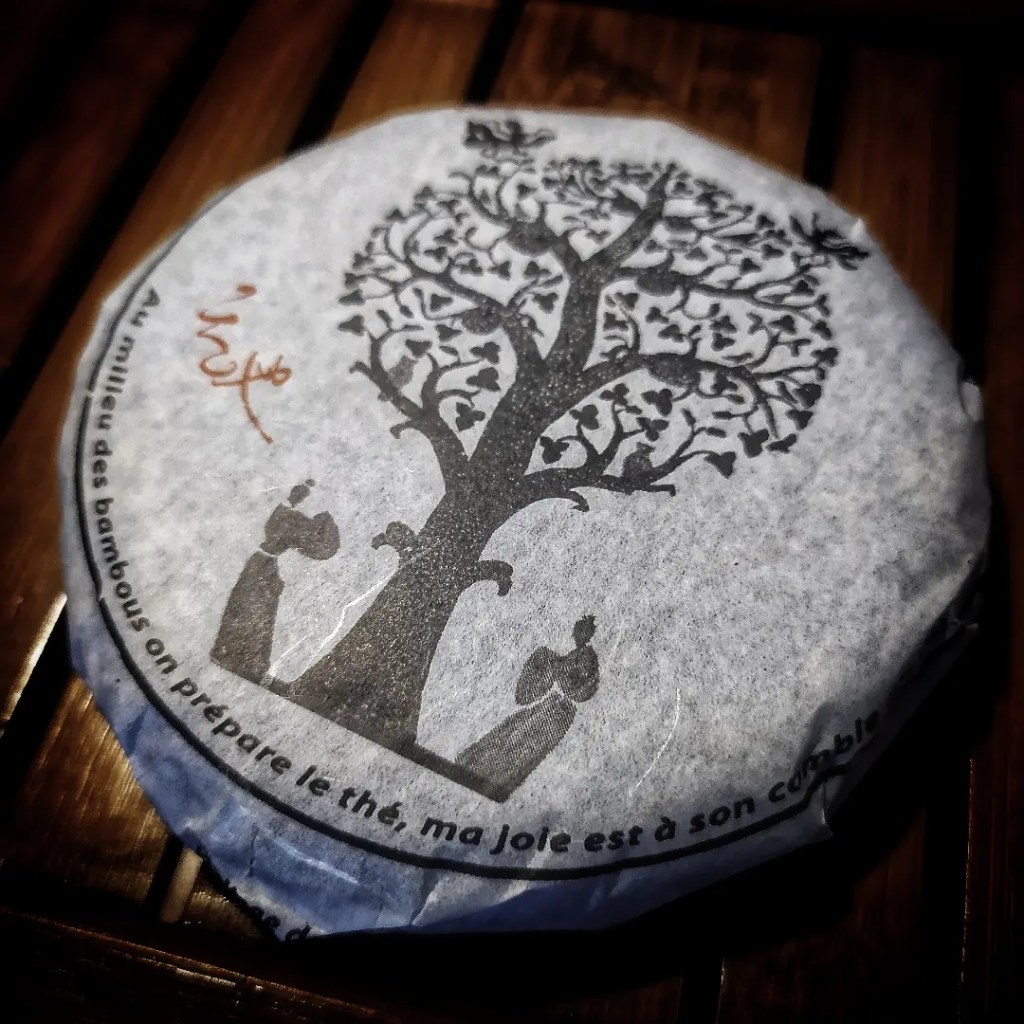
But today, I’ll focus on two other excellent sheng Pu’er by Thés Terre de Ciel, both from old-ancient trees.
TdC Spring 2024 Xiao Jinggu Puerh des Cimes
I’ve always had a soft spot for the Pu’er of Jinggu, for their remoteness, their distance from the inflated rhetoric about the primordial nature of its landscapes, for from the market wars over taste profiles and terroir cred. Jinggu teas owe nothing to expectation; they answer only to themselves.
This is one of those teas. The kind with no prefabricated image, no guiding archetype. Nothing to anchor your imagination, no Muse whispering interpretation in your ear, as Hesiod might have hoped. Just you and the leaf. No crib sheet. No narrative. Only the moment.
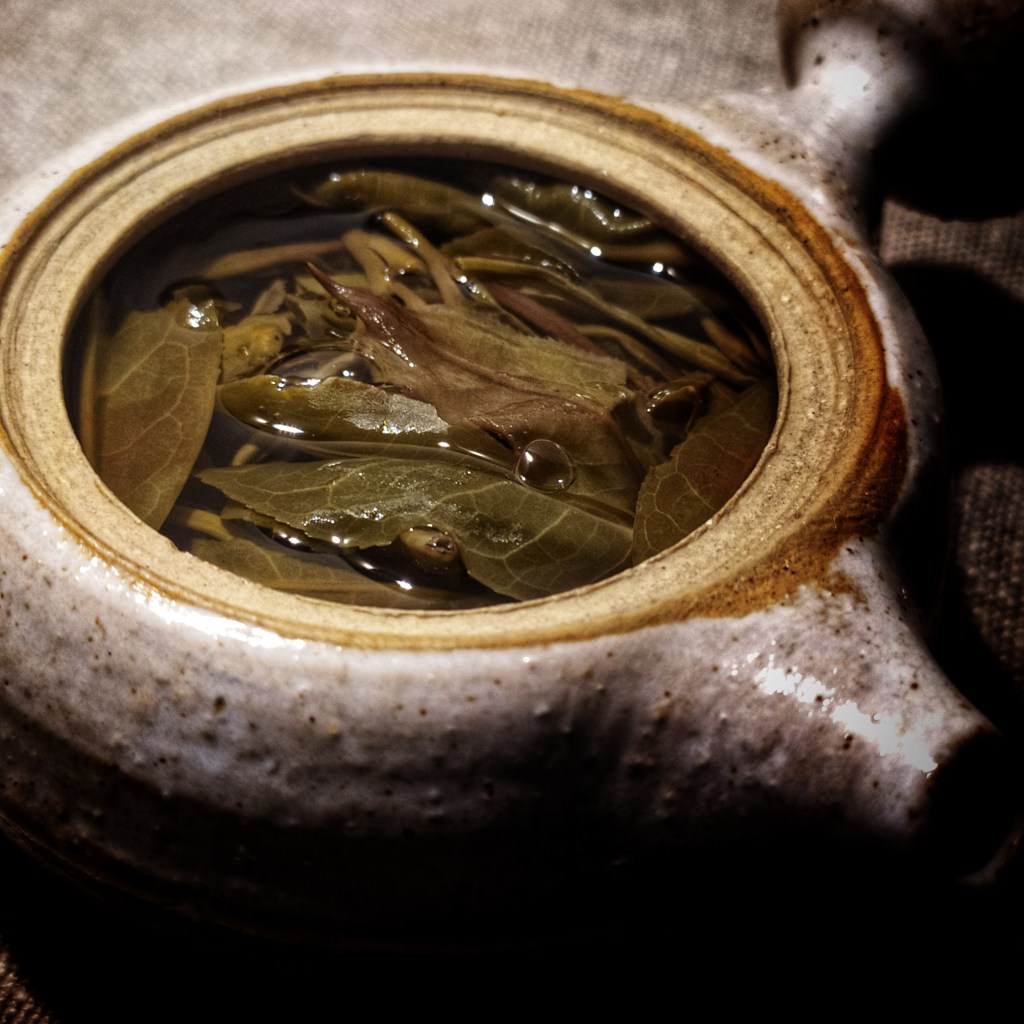
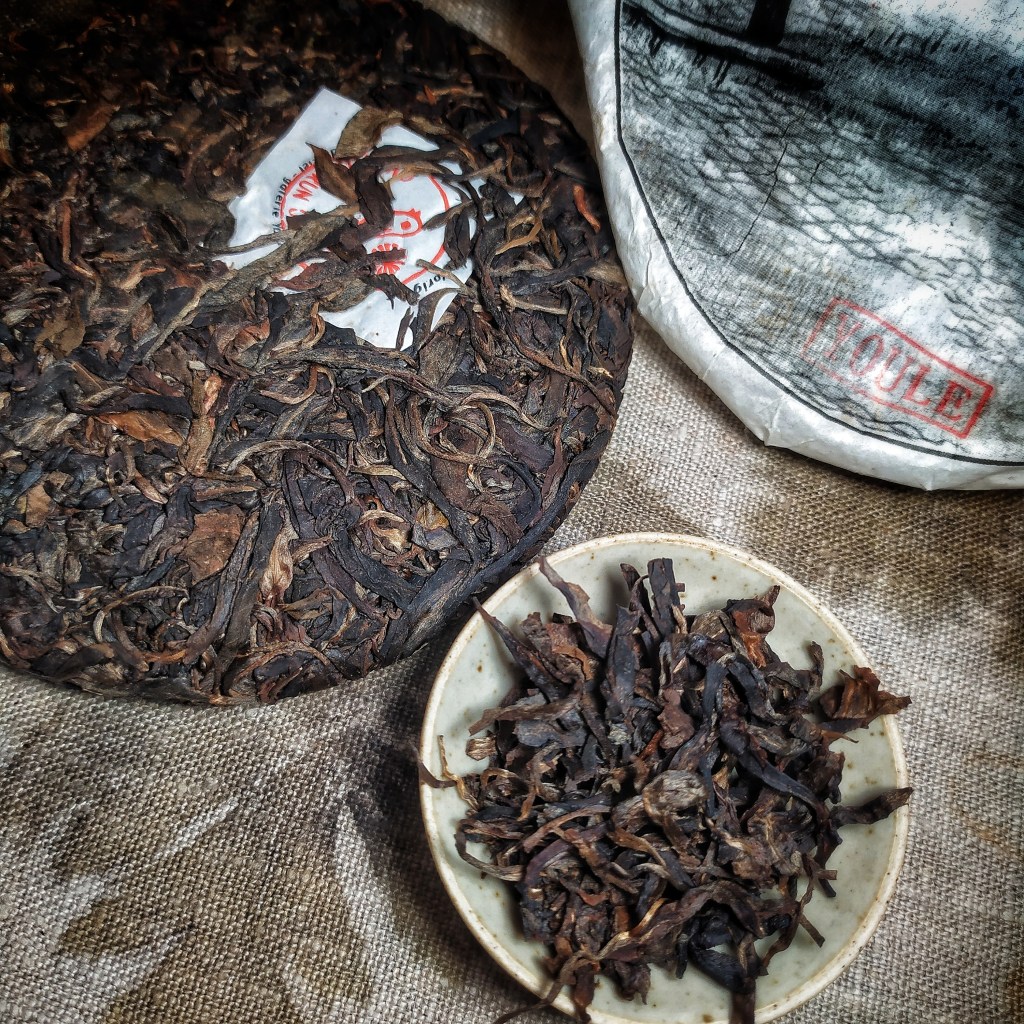
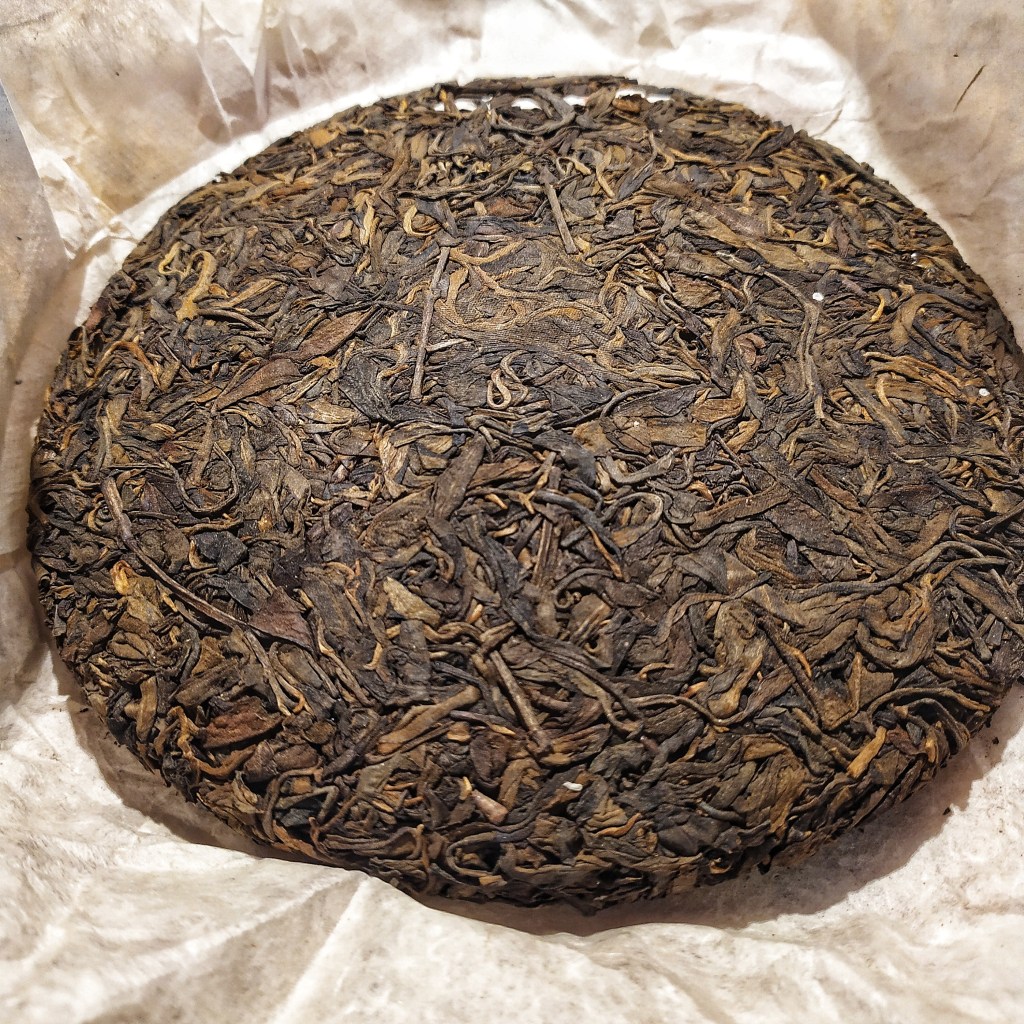
The leaves are twisted, dark green. The sip is viscous, with a round, sticky umami reminiscent of chicken broth from a market stall in Chongqing. There’s a sweetness too, unopposed and undistracted, a sensory monologue rich in subtext. The huigan lays itself across the tongue like a seamless silk blanket. Bitterness exits the discussion early.
The Qi is delicate, but it moves under your skin, subtly shifting your posture, your pace, your pulse. The salivation it provokes becomes a kind of gustatory capital. The sensation is almost organic-minimalist, like an alabaster vase with no sharp edges, revealing more intentions than it cares to admit. The intensity of the peach note approaches something like an orchestral delirium, building in a near-psychedelic crescendo, and that out-of-the-ordinary umami makes it feel less like a beverage, and more like a pre-dessert at L’Arpège.
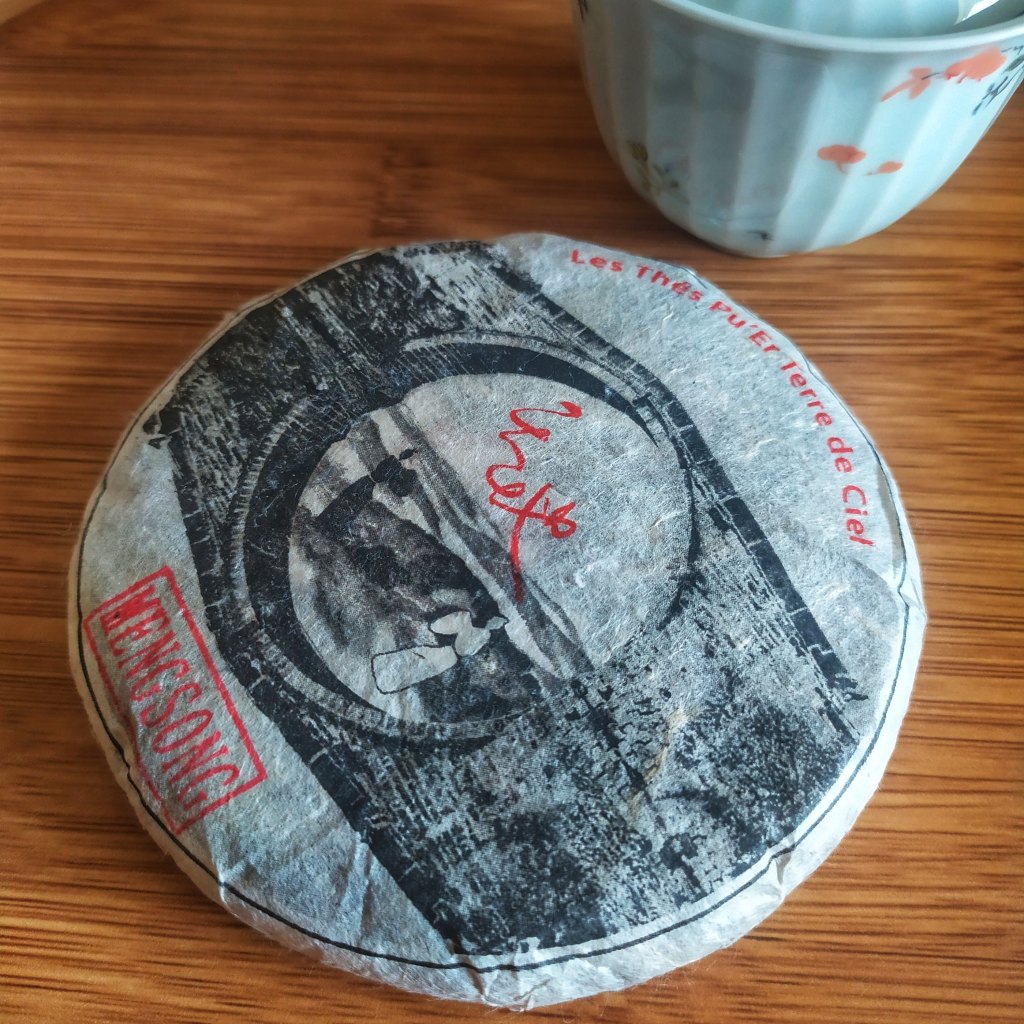
TdC Spring 2023 Kuzhu Shan
This Pu’er from Kuzhu Shan seems like it emerged straight out of a
William Morris wallpaper, drawn after two glasses of fine Vin Jaune. Alienated, eclectic, remote, saturated with organic vitality. The dry leaves exude hints of light tropical fruit, citrus, and wildflowers. As expected, this is not a tea that lingers in a labyrinthine dimension of complexity, but that’s not the terrain where Kuzhu teas show their hand.
The true opera magna takes place in the mouth, which becomes the theater for a clash and debate between a pronounced yet agreeable bitterness and a sweetness that follows quickly, almost antithetical to it. It’s a generative tension that drives this medium-bodied sip to evolve, to layer itself, each new sensory stratum tearing apart, cannibalizing the one laid down before it.
The tasting unfolds as a kind of sensorial acceleration, like a Baz Luhrmann film, abrupt cuts, frenetic pacing, a hyperactive montage, leading to a terribly refreshing, surreal sensation with an unmistakable note of tonic water.
It’s a Gin & Tonic stripped of its damnation, as Nick Carraway might say while struggling with his addiction. This is a vividly alive liquid, whose finish is so enduring it seems pointless to measure. It unwinds slowly on notes of ginger beer, candied lemon peel, and rhubarb, while your tongue’s receptors are still stunned by the mineral lash it dealt twenty minutes earlier.
Usually, when I drink a Pu’er, I think about its aging potential, its price-to-quality ratio, I imagine derivatives and equations, risk and return curves, asking myself whether it’s better to keep it for the medium or long term. I make a lot of projections, hypotheses, even metaphysical guesses.
But the truth is, this is one of the few teas where none of that matters. I drink it because it’s simply really good. Whether it lasts twenty years or disappears in two days, for once, I really don’t care.
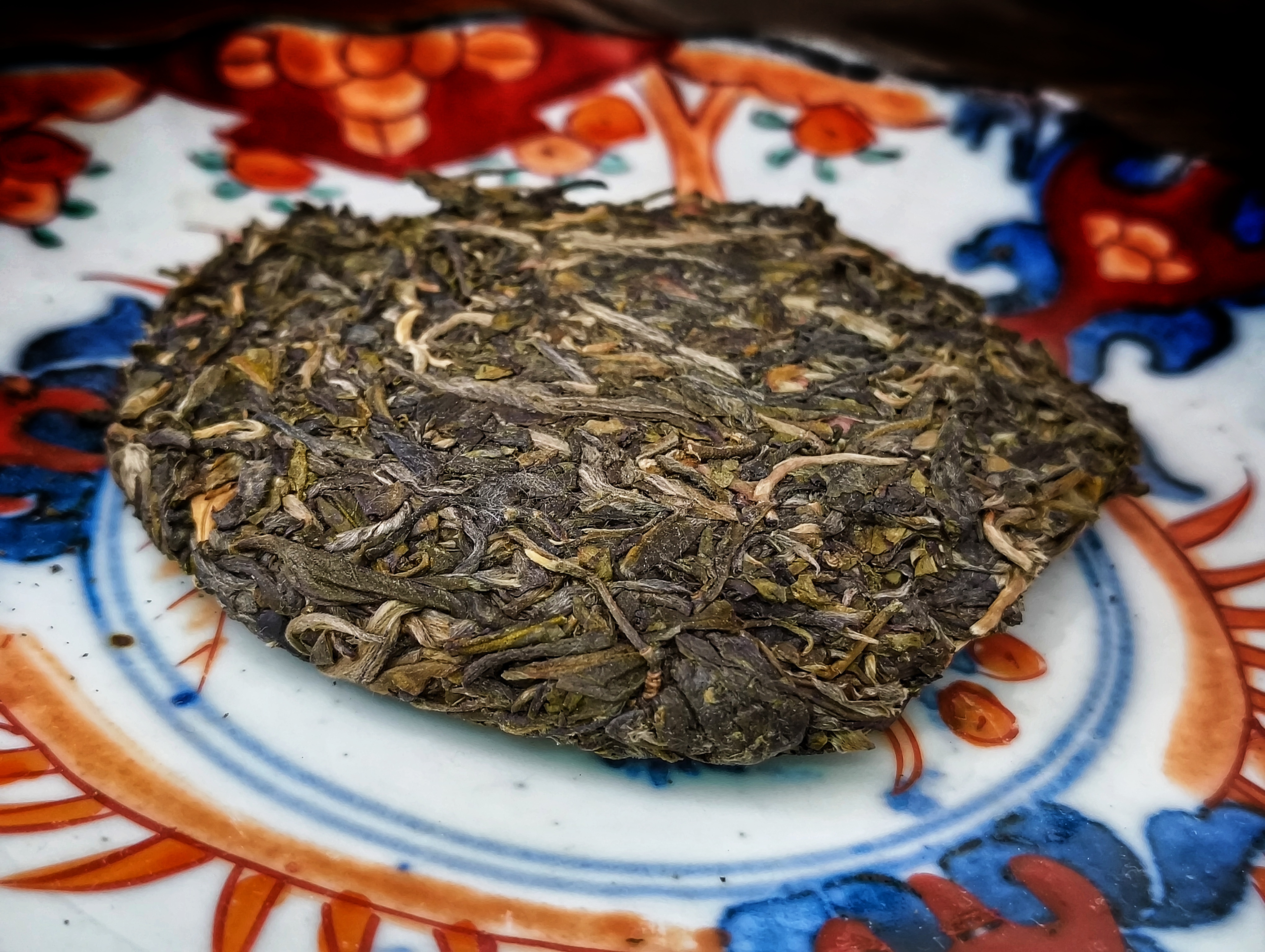
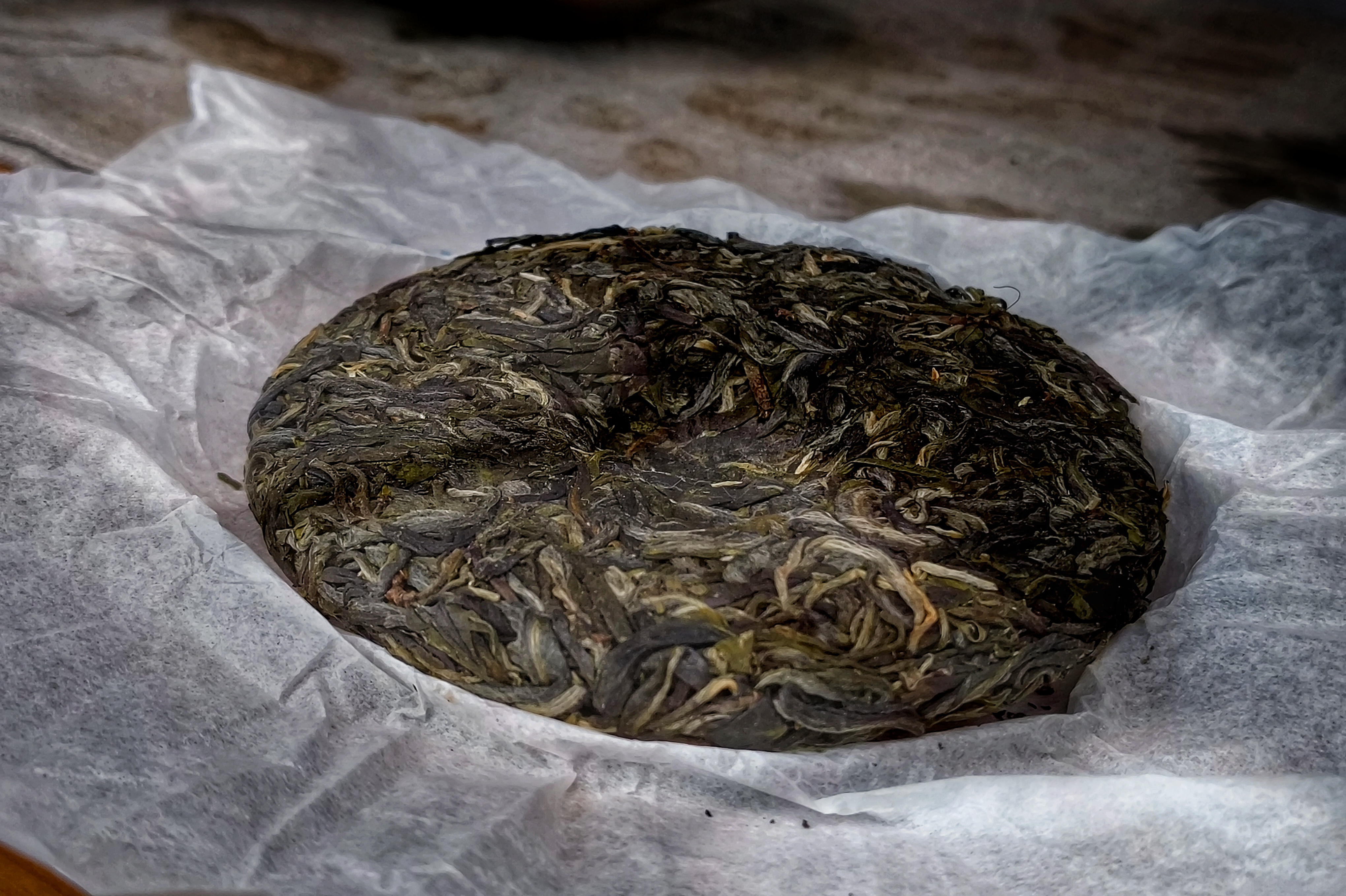
Left: 2023 Kuzhu Shan
Right: 2024 Xiao Jinggu

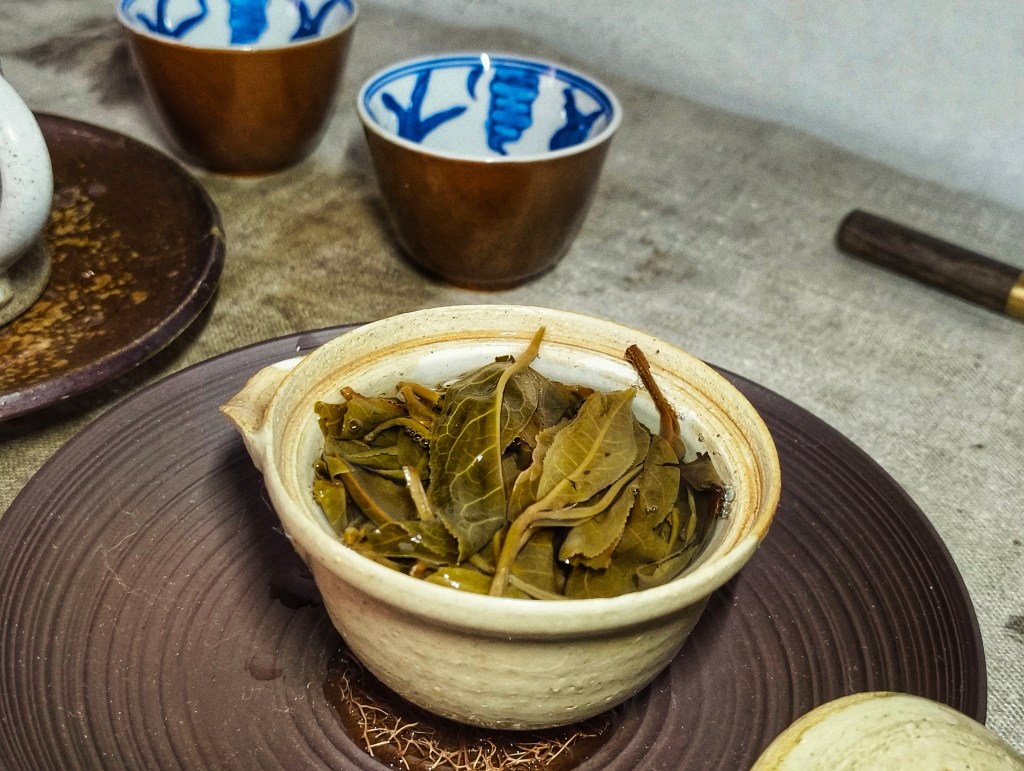
 Wild Harvested