We all know it: social networks always leave too much room for sensationalism. There’s endless space for anyone obsessed with sanctifying new brands and glorifying mind-blowing teas that promise an experience somewhere between spiritual awakening and a methamphetamine binge. A permanent pop-up of disposable enthusiasm. It’s the amusement park where anyone can feel like a prophet for a day, canonizing the newest square meter of the most remote village, where snakes, tigers, and giant beetles supposedly lurk ready to attack the tea pickers, only them, of course, not people practicing any other profession, before moving on without even bothering to stub out their cigarette in the ashtray of final verdicts.
Everything seems to shine, everything seems harmless, everything promises miracles, at least until you realize it was only a reflection, not the source. That’s life.
It has happened to me too: speaking too highly, too soon. But there is one terrain, one terroir, on which I’m not willing to make the slightest concession: Tủa Chùa.
From a mountainous rear area near the Điện Biên Phủ valley, where in 1954 the decisive battle that ended French colonial rule was fought, this region has become an enclave capable of producing surprisingly accomplished Pu’er teas. Many areas once considered marginal and reactionary, such as Tủa Thàng, turned into revolutionary bases, as they combined geographic isolation with strong social cohesion. The karst plateau, with its steep mountains and paths invisible to outsiders, offered natural refuge to high-ranking officials of the Việt Minh. They took shelter in the homes of Hmong villages, protected by the population’s collective silence.
The inhabitants knew the land intimately, guiding men, weapons, and messages along unmarked routes, avoiding French patrols and keeping the mountain areas connected to the Điện Biên valley. All of this unfolded in conditions of extreme poverty, yet they provided food, places to rest, and intelligence on enemy movements, accepting extraordinarily high risks. In those mountains, silence was a form of resistance, and the geography itself seemed to have taken sides.
Now, back to the tea.
If I had to explain to someone what true mineral, botanical, ancestral excellence means, if I had to make them understand what these trees are capable of, and why Vietnam today not only looks Yunnan straight in the eye but openly challenges its borders, I wouldn’t hesitate for a second. I’d pour them this tea. No preamble, no rhetorical acrobatics, no captions.
The way this tea is evolving is sublime, truly the kind of harvest you get once every five years.
I’m sorry to say it won’t deliver the tragic depth of Marina Abramović’s gaze, the high priestess of emotional intensity descending upon us mortals to elevate us by staring into our eyes like a corneal topographer.
What it will give you is a perfect sip.
This is a sheng with an almost exasperated intensity, like an overexposed photograph that somehow works. It lingers on orchid notes, though not like Jingmai, those notes seem wrapped in a dense, almost brooding forest aroma, the kind currently fashionable to flaunt when talking about Guafengzhai, but here they feel more arrogant, they slide under your skin with a needle’s quiet, deliberate precision, an elegance that’s both unsettling and strangely pleasant.
On the palate it’s viscous, medium-bitter, with barely perceptible astringency. The huigan is quick, floral, so persistent it feels more like a reforming than a return.
This isn’t a tea for fragrance addicts or niche perfume obsessives.
The qi is the real point here.
It’s a tea for those who recognize the exact moment when something slips in and changes you.
You don’t keep drinking it just for the aroma, you do it because a part of you has already been pulled in, and now it wants to know what will happen if you keep filling the cup.
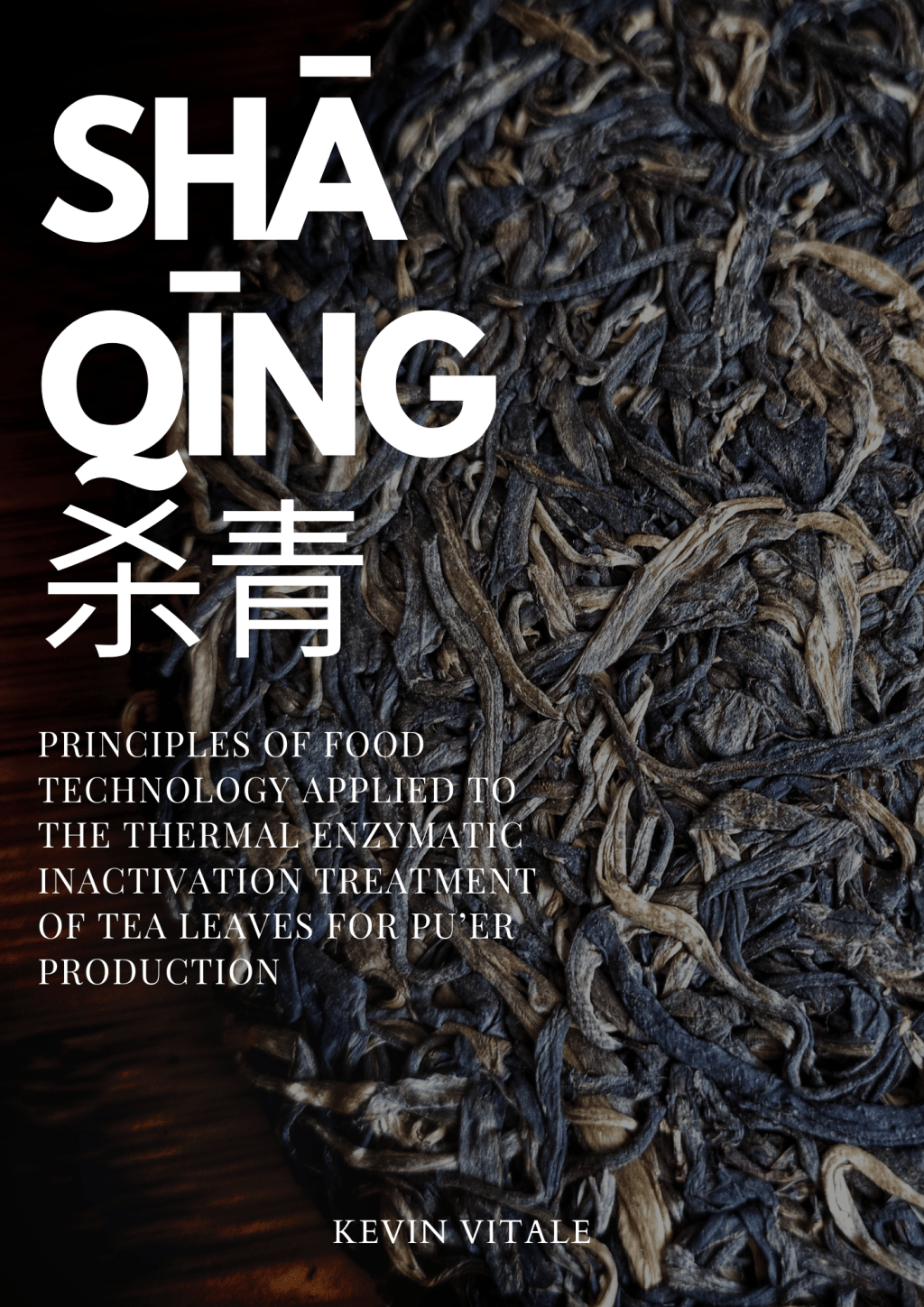
With this post, I would like to share the result of a project that has accompanied me over the past few months: a publication born from the desire to present, in an ordered and comprehensible form, the most significant insights I have gathered about the world of fermented teas.
More than a year ago, I began collecting material for a book that would include a wide range of information concerning the engineering, microbiology, and biochemistry of fermented teas. Given the complexity of the project, and unsure whether it would ever see the light of day, I decided to publish a preview dedicated exclusively to shaqing.
There are not many publications capable of addressing tea processing with clarity and rigor; even fewer do so in a way that is accessible and free from economic barriers. This work attempts, at least in part, to fill that gap by offering a starting point for understanding the complexity of production processes, particularly those of Pu’er and fermented teas.
I have always believed that knowledge, to be genuine, must be offered without ostentation; that it should serve as a space for connection rather than exclusion. For this reason, I wanted this excerpt to be freely available.
It is a gesture of gratitude toward those who have stood by me, toward those who are no longer with us, toward all who have contributed to the creation of this work, and naturally toward tea itself and the people whom, thanks to it, I have been fortunate enough to meet.
If you choose to read it, I hope you will find within these pages not only information, but also a measure of the care and passion I have tried to pour into them, and that you may feel inspired to share it with as many people as possible.
In the end, as often happens with traditions that endure, what truly matters is not merely knowledge itself, but the community that forms around it.
Below you will find the downloadable file, available in both Italian and English.
I sometimes think we take far too much for granted just how complicated it is to make a truly good tea, especially a good black tea. It’s treated as a Pavlovian reflex, a gesture made without thought, like pouring yourself another glass of prosecco when the guests’ conversation has already descended into collective complaint.
We grow used to the idea of that same black tea we’ve known since childhood, the one we dip into hot water, pressing it against the bottom of the cup with a spoon as though drowning an enemy soldier, then lifting it out in an act of sheer mercy, waiting for answers that will never come. But how difficult is it, really, to make a tea that isn’t just another instrument of urban survival, like the burnt acid coffee of a NOLA diner where Truman Capote used to sleep off his drunk?
Crafting an excellent black tea can be a perilous act, a poorly calculated risk, a climatic roulette. The best terroirs, in Yunnan, Vietnam, and Thailand, where the best Dianhong and wild black teas are born, are surreal, high-mountain subtropical zones with humidity often above 80% and violent diurnal temperature shifts. Many varieties from these regions, particularly the wild non-sinensis sinensis types, bear large, waxy leaves with thicker cell walls requiring greater mechanical force to rupture. And in cold, damp environments such as Lào Cai, leaf plasticity itself changes with temperature, creating irregular breaks that result in uneven oxidation.
During withering and oxidation, intracellular water regulates enzymatic kinetics and oxygen diffusion; therefore, the microstructure of the leaf, guided by the degree of mechanical rolling and the residual moisture content, controls the access of O₂ to phenolic substrates. In large, thick-cuticle leaves, diffusion is limited, and mechanical rolling, by potentially breaking cells unevenly, can create micro-anoxic zones that produce grassy notes alongside over-oxidized regions responsible for bitter flavors.
To make matters worse, these varieties exhibit a polyphenol oxidase activity significantly higher than that of sinensis sinensis cultivars, sometimes two to three times greater. This causes a much faster initial rate of oxidation and a greater release of heat, since these reactions are strongly exothermic. The result is a local rise in temperature within the leaf pile and extreme sensitivity to even the slightest thermal or oxygen fluctuations. A gradient of merely ±5 °C between surface and core can produce differences of 20–30% in the local oxidation rate, turning the process into a blind sprint toward excess.
The pronounced diurnal temperature range triggers metabolic oscillations, leading to unstable enzymatic activity. Add to that the high humidity and the coincidence of the rainy season during harvest and processing, and the withering can drag on for hours and hours. Moreover, even the final natural drying can prove impossible and storage can turn into a logistical nightmare. All this leads to the constant risk of unwanted chromatic heterogeneity, partial over-oxidation, and distorted aromatic profiles, dominated by earthy and metallic tones, mouthfeel stripped of viscosity, and a finish that is absent, unpleasantly vegetal-oxidized, laced with the taste of missed opportunity and lost money.
And yet, this Lào Cai Deep Forest 2025 by Viet Sun tells another story. Its wet leaves smell of a kind of wildness that would even coax a smile from Eduardo Kohn, of forest berries, amber, and guava. The olfactory profile deepens through the corroded cortex of a nostalgic old Tory: leather and forgotten colonial furniture, oak aged Pedro Ximénez, and the memory of a wilted rose.
On the palate, it is soft, seductive, with a sugarcane sweetness and flavors of wild berries, dried flowers, and dehydrated cherry. It’s a difficult tea, one whose making requires traversing a desert of problems, an act of resistance against mechanization itself. But perhaps that is the price to pay for something potentially extraordinary.
Kerouac once wrote that “problems are the general definition of the things in which God exists.” And here, God is probably caked with mud, smokes Saigon Red, and occasionally takes refuge in the hands of those who still believe in difficulty.
Usually, I would write about a place, a land, the wind disturbing the fragile balance of the hats of farmers bent by time and sciatica. I would use rhetorical tightrope acts that might seem almost contrived to some, or romantic and evocative to others. But this time I won’t do any of that, no recycled sensations, no stories about the battles in the Tây Côn Lĩnh mountains or about how this tea recalls that Eastern peace we like to import in small doses into our European afternoons, that peace found in watching Maggie Cheung walk under the rain while time slows down, when everyone holds their breath, diaphragm tensed, as absolutely nothing happens. Things that usually grant every tea a kind of added grandeur, a metropolitan dignity sweetened with a touch of neo-rural nostalgia.
I’m not John O’Hara, and I don’t think people care to see every banal gesture described as a moral battlefield. So, this is a sheng. We’ve more or less all arrived there. And if I stopped here, I’d already be more honest than most of contemporary gastronomic documentary.
But I believe this is one of those few Pu’er teas that doesn’t need me, or my words, or anyone else’s, to be understood. Roland Barthes saw in photography two fundamental aesthetic elements: the studium, the set of information one needs to know, and the punctum, the element that wounds, that seizes attention and couldn’t care less about the rest, about its translation into prose; it just arrives, contracted like a beast.
It’s in its wet leaves, tremendously fruity and earthy at once, in that quarrel between magnolia, orchid, dandelion root, and Tellicherry pepper that the punctum arises. Barthes would say it’s in that absurd moment of unconditional pleasure that meaning breaks and truth seeps through, like a development flaw on a film roll.
This ancient tall trees tea it’s a bomb wrapped in silk drapes, almost nervously delicate and at the same time powerful. It’s a sip of terroir served at a hundred degrees; it has everything that remains when you strip away the narrative. The texture is medium-soft; it tastes of pepper and wildflowers, white grapes, juniper, it tastes like that childhood photo with the grain too visible, the one you wish you had but that someone is now romanticizing somewhere on Netflix.
The qi leaves you with a strange calm, almost clinical. The huigan is excellent; the bitterness is low, the astringency absent. The persistence is long, the sip seems to linger there, clinging to the squamous epithelium of your throat like a gentle remorse.
With A Comparative Journey Through Two Traditional Viet Sun Sheng Pu’er
When I first saw Steve’s photos, his Vietnam, made of fiery red sunsets, emerald pastures, and motorcycles whose tire treads were mere memories, I was left hanging in a sense of emptiness, of existential incompleteness tied to never having visited those places. Looking at those shots felt like peering into a parallel world, embraced by a sort of ontological nostalgia.
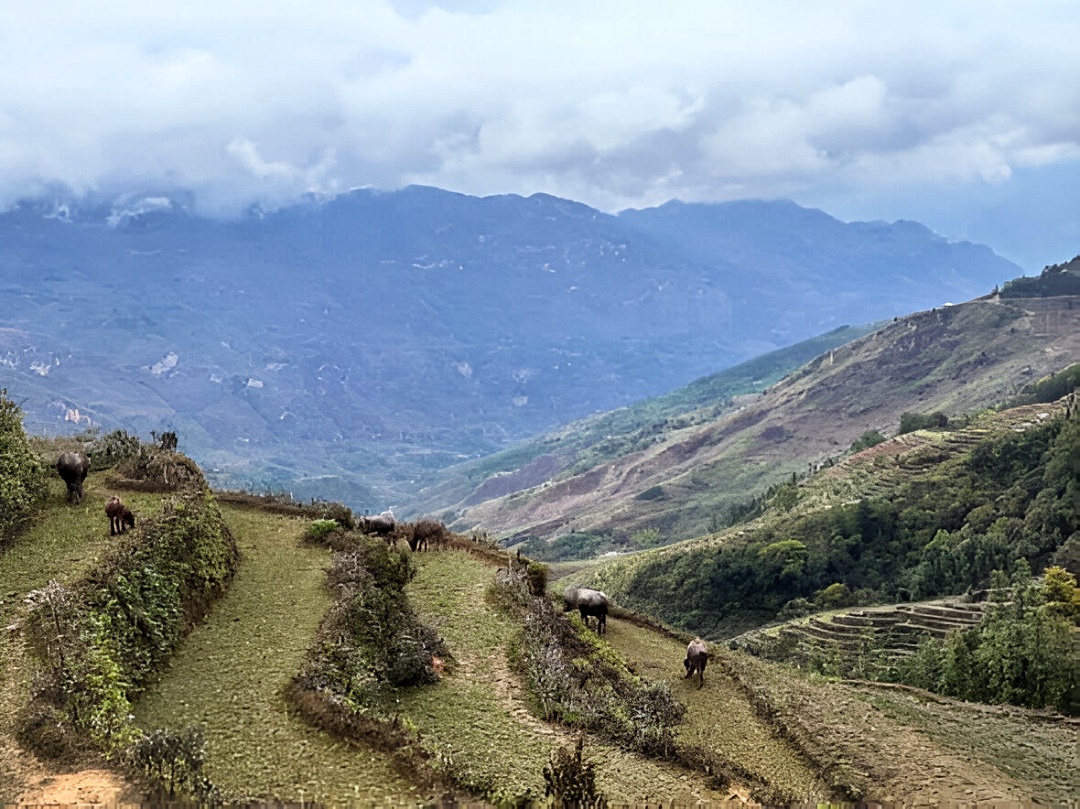
The snapshots of Tả Củ Tỷ, the “Big Rice Field,” reveal the truth of a borderland world, of earth and blood, behind the major cities, whose distant lights appear like a sarcastic smile with pearl-white teeth. Then the horizon arches, growing increasingly vertical, rising further along the crumbling clay arteries, beyond the rice paddies, moments ago drained, now swollen with rain and reflecting the vastness of the sky.
Here, every tree, every tea leaf, every sensory experience is an imperfect shadow of an eternal idea. This is where one of the best Pu’er teas in Vietnam is made, loaded with a near-theological sincerity, vibrant in every vintage, soft, flowery, and endlessly mineral. The shengs of Tả Củ Tỷ are like the Rieslings of the Mosel, a form of resistance against the trials the gods impose through the elements. They express the same minerality and layered memory. But while Riesling whispers sweet notes and sings praises like a Romantic poet on a summer evening surrounded by Viennese Jugendstil, the Pu’er of Tả Củ Tỷ elegantly drags you down a muddy mule path under relentless monsoon rain. In both, there is the same sharp and ruthless beauty, but whereas the Mosel wines evoke the rarefied skies of Chagall, suspended in uncorrupted blue, in Tả Củ Tỷ the image offers no redemption, it demands confrontation. Time here doesn’t pass, it presses. The landscapes are those painted by Turner, but not the sublime, ethereal artist of the Dover sea, rather the feverish, visionary Turner of his final years, where light shatters into curls of shadow and smoke, and the scene dissolves into an intensified, nebulous inner reality.
The province of Lào Cai hosts a pedological diversity of rare complexity, the result of interactions between lithology, comprising metamorphic and sedimentary bedrocks, and a harsh topography shaped by steep slopes and variable altitudes ranging from the Red River’s lowlands to peaks shrouded in mist. In this living landscape, far from documentary clichés, ten major soil groups intertwine, distributed into around thirty subcategories, reflecting an extreme variety of geomorphological, climatic, and land-use conditions. In this mosaic, most fall into the categories of alluvial soils, minimally developed, fertile, fine-textured, laid across the Red River’s floodplains. As elevation rises, submontane zones host deep ferralitic soils, with aggressive pedoenvironments and reddish-brown hues. Then come humic soils on red-yellow parent rock, which inhabit the gentler slopes of the Sa Pa and Bắc Hà districts, ideal for mountain orchards and medicinal plants, the same ones that Dao grandmothers will grant you for a spider bite, heartbreak, or to recover quicker from the drunken night before. Higher still, where the air thins, the sun burns your skin, and geology shifts from academic subject to a lesson in humility, you find the brown, acidic forest soils typical of high-altitude tea forests, marked by thick organic horizons and excellent water retention, where the labor is real, marketing fades, and matter begins. The higher you go, the more essential the soil becomes, and the mountain strips you of every excess you thought you needed.
Since ancient times, the region now known as Lào Cai has been a living tapestry of peoples from the H’Mông–Dao (including Mông, Dao, and Phù Lá) and the Kra-Dai groups (including Tày and Nùng). The Phù Lá migrated from Yunnan during the waves of the 15th and 17th centuries and opened the Lào Cai–Hekou pass, a crossroads for southern Chinese merchants and Tibetan fugitives, military settlers, and Tonkinese textile makers. Salt, tea, silk, and livestock crossed gorges and cliffs towards the Red River Delta, in exchange for rice, gourds, rare spices, and La Chi cotton fabrics. The trade route stayed open for five centuries, until the war with China in 1979. Tả Củ Tỷ and the entire Bắc Hà highland area have always been a “slippery edge” of the Vietnamese empire: formally part of Đại Việt, but in practice governed by local clan leaders and traversed by cross-border trade routes. Only with the expansion of the Nguyễn dynasty and, later, the arrival of the French, did state control become more pervasive. But that’s another story.
The forests of Tả Củ Tỷ possess a mad, honest allure. The color palette feels like something conjured by a cosmic hangover, while the mist moves slowly, like cigarette smoke drifting in a closed room. Its radiance isn’t the kind choreographed by a cheerful smile or Caribbean hues, but rather the disarming kind of beauty of a woman who’s cried all night and then looks at you at dawn, bare-faced. A fleeting moment of rare grace, allowed to linger briefly in the interlude of suffering, the kind of incorruptible, visceral visual rapture that doesn’t let you lie.
These dusty clay paths have been trodden by pack leaders, smugglers, and warriors. They’ve witnessed rites of passage and the initiations of Dao and Mông shamans, the veneration and sacred songs of the Tày, and offered shelter for markets and negotiations, for secrets traded with Xôi ngũ sắc, and for boisterous jokes between bowls of Thang Cọ and glasses of rice wine.
From this thread of bare earth echoes the sound of an absolute beauty that refracts through the contingent, like a bridge between the transitory and the infinite. I could be among them now, being filmed as I say that it is in the resilient rurality of these villages that Heidegger’s concept of Gelassenheit unfolds, that is, a spiritual disposition of letting-be, an openness to the essence of things, and, as he interprets in his Parmenides, how it reveals itself through history and daily life. But at some point, a scooter would honk to urge me out of the way, and it would be right to do so. So, thousands of kilometers away, I conclude by saying that there, people have never betrayed their own history, even while embracing change, reminding us that the truth of a place is not measured by the order of its exotic scenery, nor through a mere anthropological lens. Especially not in that land, Vietnam, daughter of the sky, immersed in the dreamlike dimension of its eternity.
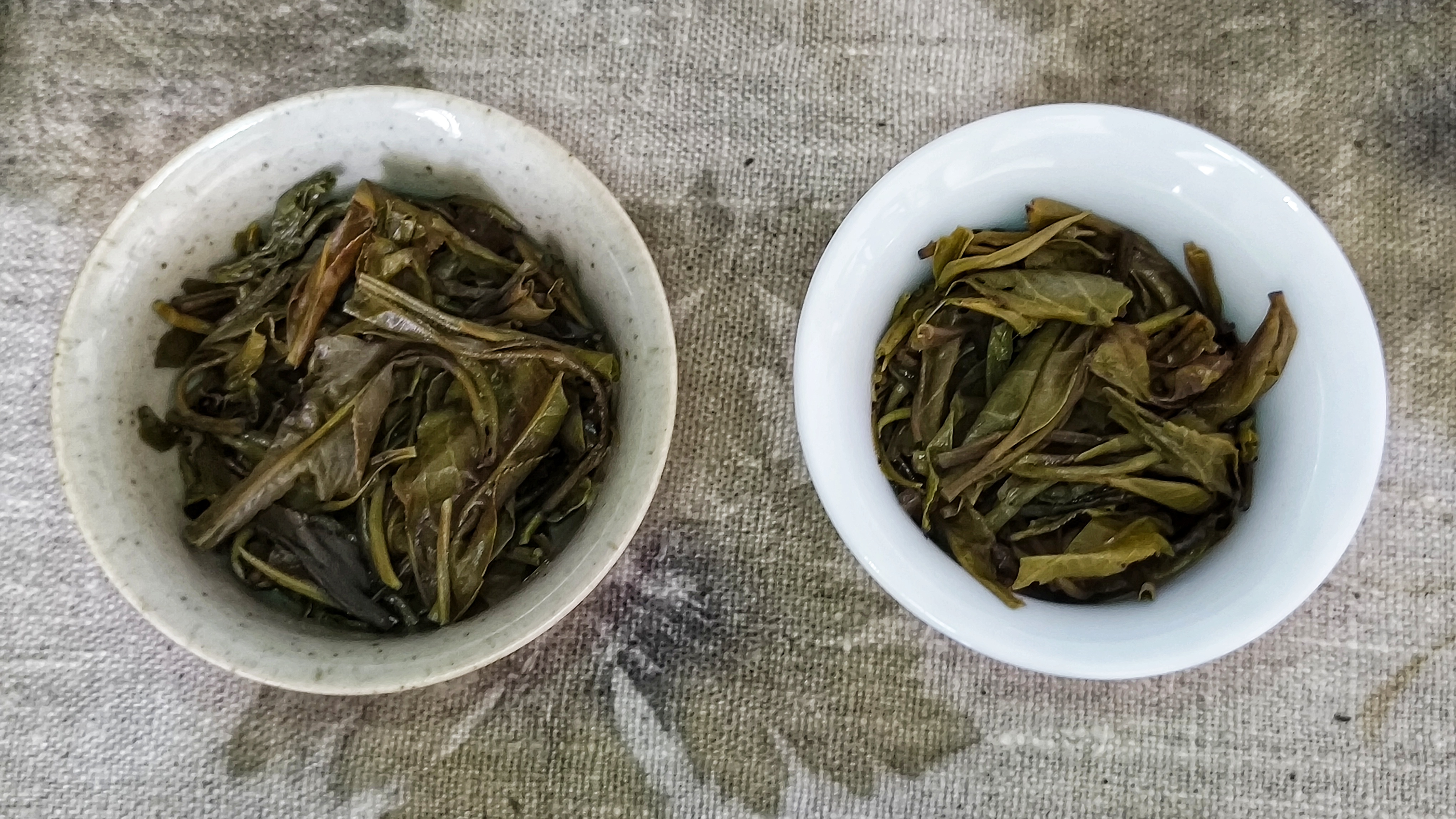
On the left: Tả Củ Tỷ Sheng Pu’er Autumn 2023, medium aged, old and ancient trees On the right: Tả Củ Tỷ Sheng Pu’er Spring 2024, old and ancient trees
Viet Sun Tả Củ Tỷ Sheng Pu’er Autumn 2023
The autumn version comes from a mixture of medium-aged, old, and ancient trees growing at different altitudes and on diverse soils. It presents itself with a mature register, more oxidized, and the difference from the spring version is indeed perceptible. The autumn leaves are darker, as confirmed by the liquor, a decidedly golden hue, with shades that recall Turner’s Goethe’s Theory, to stay on theme. While the wet leaves retain a line of continuity with the orchid and apricot notes typical of the spring harvest, here honeyed tones and hazelnut hints emerge more clearly, intertwined with musky nuances, dried fruit and pan-fried greens memories, with lightly buttery accents.
Although vibrant, the sip is clearly more fragile, with a more hesitant body compared to the spring tea. Its huigan is more restrained and immediate, with sharper astringency, although the impression remains of a sweet brew with well-calibrated bitterness. Rather than floral aspects, the palate leans more toward raisin, apricot, and unmistakably honeyed flavors. The mouthfeel is less viscous, with more modest intensity and persistence, yet it remains decidedly interesting for this theater of contrasts between warm, comforting fragrances and still grassy notes, between roundness and sharpness. It is a tea that certainly holds aging potential, but is already quite enjoyable in its youth.
Viet Sun Tả Củ Tỷ Sheng Pu’er Spring 2024
I believe there are four essential elements that make a Pu’er good, if I were pressed to summarize: aroma, the taste of the mountain, excellent viscosity and huigan. And all of them are here. There are no substantial altitude differences compared to the autumn counterpart, but here we have leaves only from old and ancient trees. They appear lighter, less reddened, the liquor takes on a straw-yellow hue, and the aroma recalls that of orchid, not the florist’s kind, but the wild one you stumble upon between the cracks of limestone, with scents of an intensely floral field and apricots.
Framing it is a very light smoky note that fades quickly over the course of the session, while a constant forest-like tone remains, along with wet stone elements that greatly define the olfactory texture. The character is decidedly more intense, more subtly grassy and floral, geared toward evolution over time. The liquor is beautifully smooth, sustained by light bitterness and astringency, which pave the way for a huigan that is reactive, quick, enveloping, and progressively expands from throat to palate.
As the session continues, it constantly reminds me of some Pu’er from Gedeng, but even more boldly floral and with a distinctly mineral signature. The huigan and the persistence of the aftertaste are undoubtedly the pillars of the tasting experience, two traits that make you forget many gushu from beyond the border.
Note: All the stunning photos of the passages were taken by Steve(Viet Sun)
I think there is immense value in dwelling on the traditions that tie us to the past. We live in an age that has forgotten the importance of living time, of the slow maturation of ideas and things. Rather than living, we grope in a era that tends at times to reduce life to mere mechanisms of action and compensation, to power relations, to a set of derivations and summary assumptions. And yet, our daily experience recalls something much deeper: the desire for meaning, the search for truth, the will to give meaning to time and to recognize the sacred.
This morning I reached back into my pharmacy, getting a 2016 sheng cake out of that mess, it comes from Thương Sơn, one of those places where the past intertwines with a vibrant and complex present, which seems to hold the secret to eternity. Here, ethnic and cultural plurality merge into a living mosaic, the rice paddies wrap the mountains like an emerald scarf, contrasted by the pink-purple waves of autumn buckwheat flowers, those flowers that are said to have been sent by the gods as a sign of recognition.
Each leaf is a fragment of a narrative that has developed over centuries, Thương Sơn is rich in ancient trees that produce teas like this, whose aromas recall the cold winter with the spirit of an austere old father wrapped in his leather armchair, immersed in the cloud of an evening cigar.
The sip is enveloping, deep, mineral with hints of Montecristo cigar, leather, dried Moroccan plum, camphor and cloves, it is a constant reminder that true pleasure requires patience. The aromas then sublimate into a dimension of labdanum accords, apricot in alcohol, gentian liqueur and incense. The intense huigan and strong qi revive the image of the crazy and primordial harmony of places like this, so typical of traditional places, a cup we could define as an “accumulated wisdom”.
Teas like these, places like Thương Sơn, through understanding the bond with their own tradition, with their own history, teach that there is an order, a truth that transcends human contingency, and a tea like this that ages is a trace of that truth, a witness, a collector of past eras, a contract between generations.
More than 70 years have passed since the battle of Điện Biên, since the retreat, the rice fields dyed red, the pain everywhere. Our men arrived in that area on old Royal Air Cambodia “Caravelle” flown by Taiwanese pilots who shuttled between Bangkok and Phnom Penh. They jumped on with ever more heartpounding, more and more uncertain about the possibility of landing. They often did it at night where the quiet wasn’t interrupted by the clanking of clutches, the noise of the brakes of those metal carcasses or the dull bangs of the firing pins.
It must have been those dense nights, tinged with that frightening absence of chromatism, one of those in which probably a Kerouac character would have screamed at that dark eastern wall or howled at the moon interrupting the silence and the monologue of the wind even though the tension could be cut with a razor. There wasn’t much hope to project into the future, it seemed that things weren’t made to last but simply to survive another day, where folk didn’t have time to become aware of their identity as a people because the land they inhabited was already a foreign land from the very beginning.
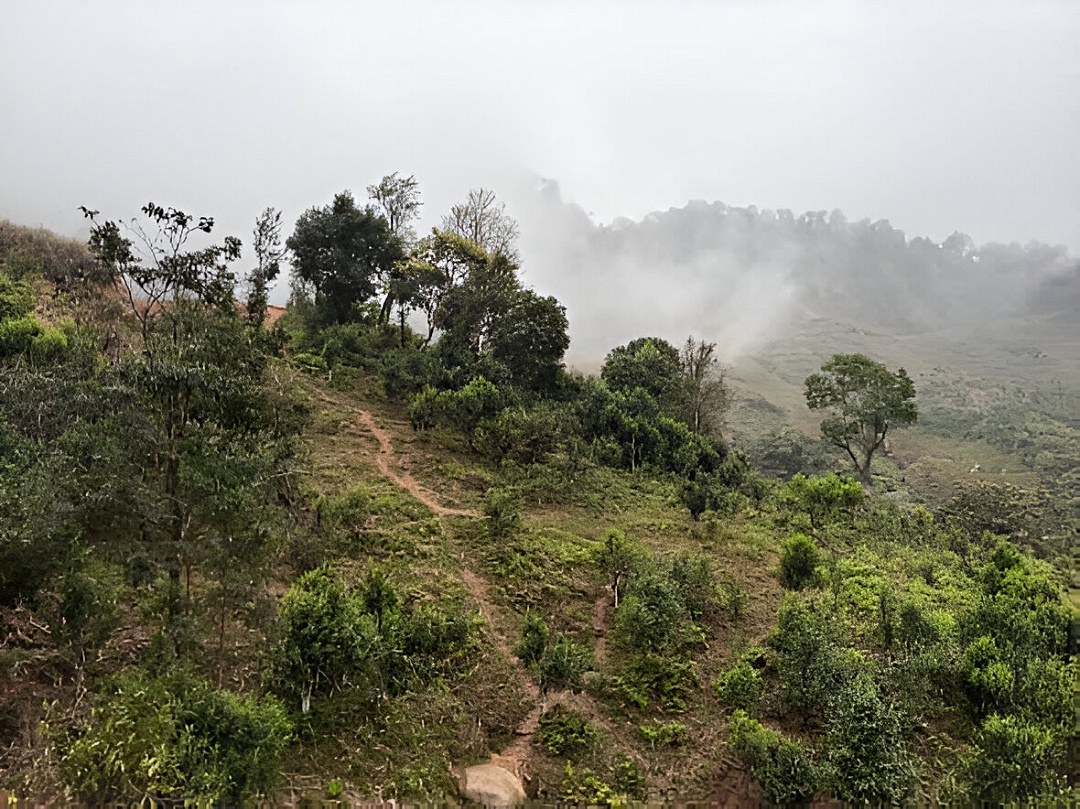
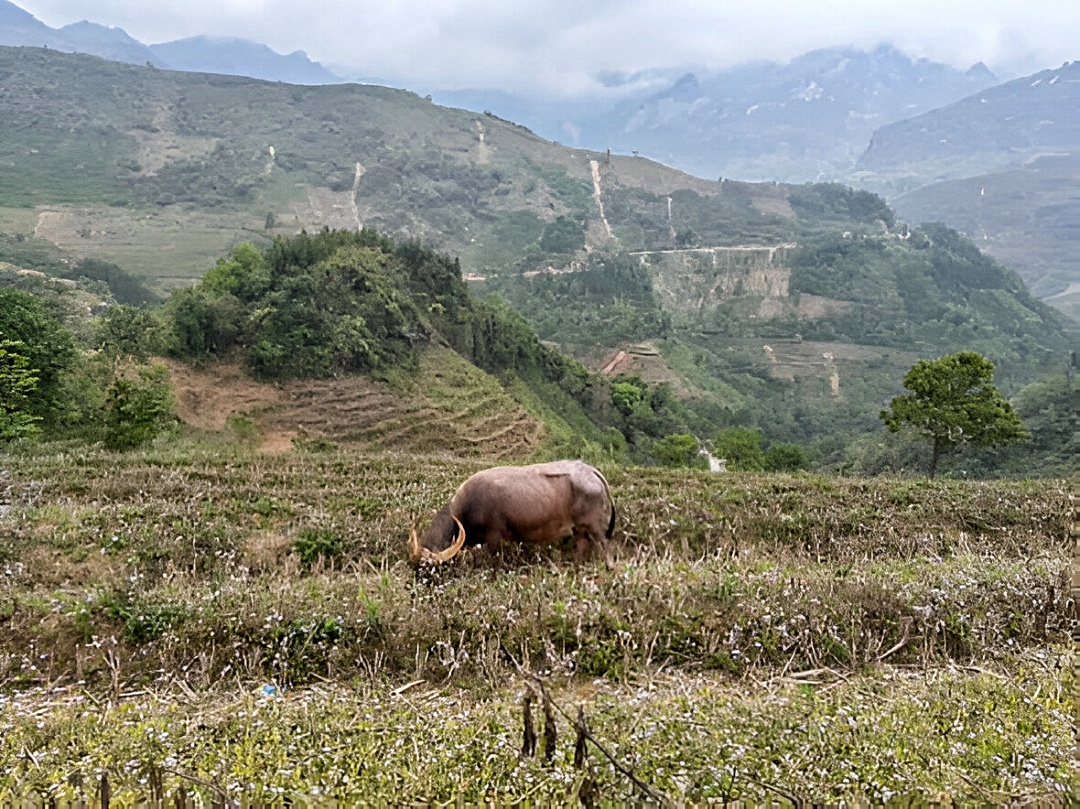
Tủa Chùa is less than 100km from that war front, one of those mountain places where thunder strikes a sacred fear, where on humid days you can see nothing but misty trees and dark and wild slopes rising towards the sky. The tea in the photo comes from those peaks, from Xín Chải ancient trees, are leaves that recall that “suspended” of its land, capable of escaping every premonition; every other prefiguration and prediction, if there had been one, becomes irrelevant.
This is a visceral, deep, unexpected sheng. It’s a place where faint hints of white peach, orchid and leather lie contracted, tones of tobacco and forest notes of undergrowth indulge but this is different every time because it seems in continuous change, a plot open in time, like an eternal improvisation. In the mouth it’s soft sweet and with a qi that alone could give meaning to the sip. The huigan takes control of the throat in an instant and every attempt at description from this moment seems a vain attempt by language to exhaust what is worth experiencing.
A place of magnificent waterfalls, azaleas and wild peaches, the mountains background seems to give every gesture an additional majesty, a primordial dignity. The small mud-walled houses of Y Tý stand in the green and golden colors of the rice fields, offering rural nuances to that tranquility typical of the “cloudy” land, located at more than 1700 meters above sea level. Pyramid roofs, stone fences and terraced fields are symbols of the will, minds and hands of many generations in the highlands, created to interact and converse with the nature of the mountains and rivers.
The Y Tý market meets every week and is a cultural place of exchange for Hà Nhì, H’Mông and Red Dao. Most of the stalls are run by Hà Nhì women in black and dark blue dresses, i remember the shy face of a young mother and her little girl, lying obediently in a gray jute sash on her chest. Her hair is tied back and almost glazed due to the effect of the sun on her coal black hair, the vivid gaze with her head tilted to the side as if she were listening to the voices in the wind.
Tourists are busy buying vegetables, red peanuts and Pạ Phì. The road covered in red earth dust is full of rattan baskets, worn enough to indicate actual use of their contents and well enough maintained to suggest respect for the contents themselves.
Higher up in the mountains, the landscape unravels lively between the fog, between the sandy and rocky soils of the Dao villages surrounded by the wild bamboo forest and the more clayey and fertile soils of the H’Mông villages. Those mountains that protected the soldiers on their way to the front, towards the place where the Lũng Pô creek meets the silt-tinged waters of the Hồng River, up to A Mú Sung, where they fought and fell to protect the border.
Here it is as if tea is able to fit in with culture as well as nature and can make use of both as it pleases. The landscape seems like the unconscious of the earth and the teas that derive from it are its liquid consequence.
After a more romantic first part, I will talk in a more technical and boring way about how a territory with an enormous potential now demonstrated like Vietnam can have that complexity of landscapes, that dramatic discrepancy of soil composition that is often associated with great terroirs, such as France and Italy for wine and Yunnan and Taiwan for tea.
Vietnam often is in conditions of high humidity and high temperatures during the year, such as to hypothesize a much faster maturation of the soil than, for example, northern Asia or some areas of northern Yunnan. But in the mountains many things can change, here at over 1800 meters we can have leaching, erosive, frost phenomena and extremely variable contents of the organic fraction from mountain to mountain or even in the same mountain at different elevation levels.
We can also notice typical results of the meteorological conditions of these areas, such as the deeply yellow and yellow-red color of the soil, indicative of a condition of water saturation. The soil environment is reduced and, under these conditions, the iron is reduced to the ferrous state (Fe2+), the color of the soil becomes lighter and yellower, with gleying and mottling sometimes. The iron will be in a more soluble state and therefore more available for chemical reactions.
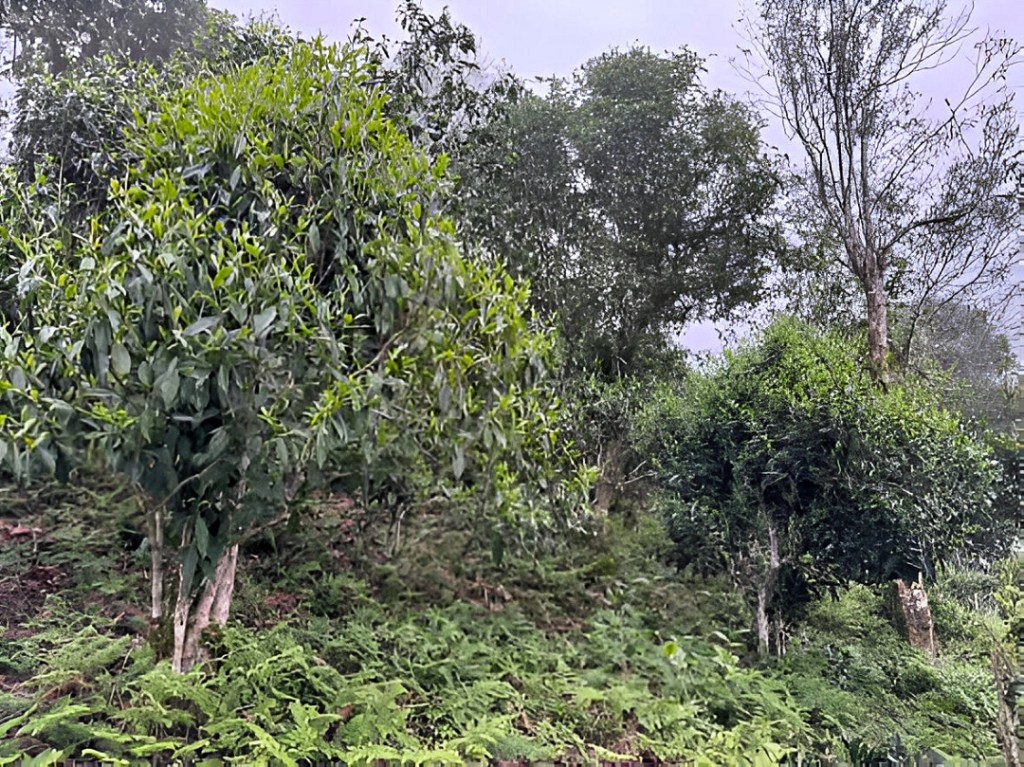
H’Mông village has very old and tall trees growing on the slopes near the border with China, the climate here is wetter, there is more forest cover, resulting in darker green leaves than in the Dao village. This is due to the shade and the greater capacity of water retention, less leaching and greater content of organic substance, typical conditions of a soil richer in clay and organic elements, the presence of sand and silt in surrounding areas also suggests a clayey but not asphyxiated soil, with a good potential for oxidation of organic matters. The leaves of the H’Mông village express themselves with greater roundness in the cup, with a persuasive softness and with more animal and leathery hints, with less citrusy but warmer and more mature fragrances.
The tea area of Dao village overcomes a wild bamboo forest, there are many old and ancient trees, the climate is sunny and dry, and the soil is rocky-sandy, which will result in a possible slower growth rate of trees, given the possible greater difficulty for the soil to retain water, nutrients, greater leaching of minerals, erosive phenomena and loss of organic substance and this conformation is in line with a lower maturity of the soil given a lower presence of water. The leaves of the Dao village reveal more mineral and rocky accords, more citrus and herbaceous, a less imposing and soft body, more agile despite the medium thickness.
This is an example of how at a short distance, pedogenesis and transformative climate phenomena can change drastically, returning a vastness of results that cannot be found in most other areas of the world and how this complexity does not derive only from the altitude, therefore also translating into extremely different teas in an area of a few kilometers.
Mixing together the leaves of the two villages you get a concert of the unlikely son of Emily Dickinson and Rory Gallagher, the romantic essence with its disciplined lyricism and the annihilating chaos, the sublime that is the basis of great things.
The ambivalent aromatic essence of the leaves is initially dark, bringing back Bruegel’s Flemish nature in the almost primitive woodland scents, with memories of a bonfire extinguished in the rain, undergrowth and slightly animal smells.
Then the texture of tropical fruit and candied hibiscus, tomato leaf, orchard hay begins to emerge, supported by counterpoints of medicinal herbs, wild flowers and saltiness on the skin. On the sip it shows fullness, with notes of white mulberry, linden, apricot and slightly herbaceous hints. It is never prosaic and the thickness is sized and juxtaposed with freshness and minerality and a medium-low bitterness, which make drinking agile and never tiring.
The strong and relaxing and at the same time almost lysergic qi accompanies a persistent and very present huigan from the first cups.
You can find much more information on the Viet Sun website
Giàng Pằng, it was the discovery of this village and its history, its culture and the ancestral nature of its landscapes that began what would be the focus of my attention for the last two years.
If we were in other parts of the world people would be there taking photos, absorbed, writing farewell poems about the transience of some exotic flower and the ephemeral duration of youth, but here there are only people, real people bent over by fatigue, with their colorful bandanas, clinging to their tenacity and resilience.
The streets are harsh, steep, the cinnamon bark is exposed to the sun, the tea is drying on bamboo mats, even the chickens think of the ephemerality of youth perched on wooden beams.
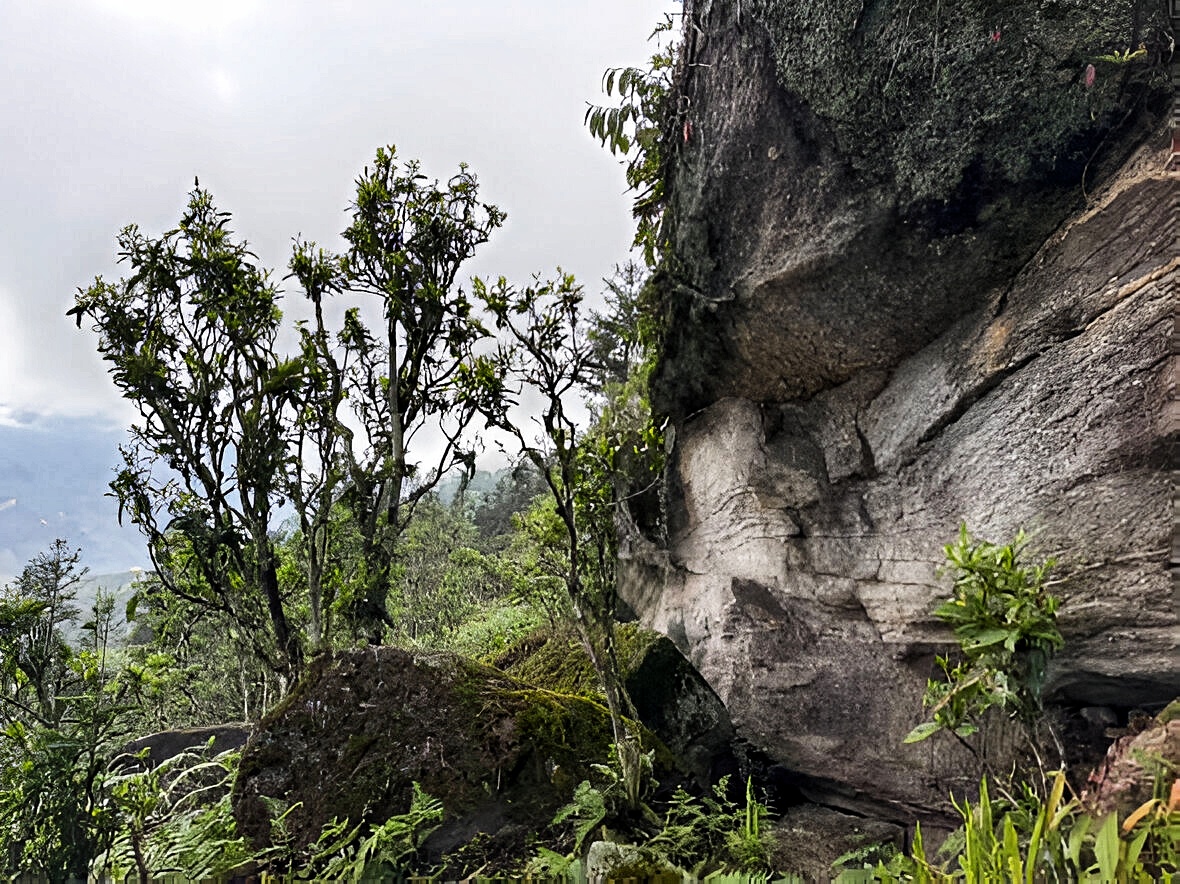
Here where not even the setting sun seems to find rest, the old tea trees appear like lignified bodies in an archaic dance, in a land that loves no middle ground. The clouds and rains rage in a despotic manner while the fog calms down giving a conciliatory impression, each element is in a disorderly way part of an atavistic work, a fragment of the dawn of the ages.
An anti-geometric vision where modernity barely finds space, where the succession of mountains in the distance creates its own rhythm in a primordial and perpetual order.
This is where VN tea becomes great and it can only be like this, because like every other mountain where the gods have found refuge, great things do not happen on slopes that do not bring suffering.
This Viet Sun teacomes from a batch processed by Steve, from a single big tree, in the spring of 2024, and is the juxtaposition between verticality and softness, between flesh, bone and soul.
The leaves are reminiscent of wild sour green plums, dehydrated longan with a slightly smoky streak, the aromas then focus on the undergrowth, apple wood and then give way to plum, aromatic herbs and light leathery nuances.
The sip is sartorially silky, measuredly round, with light bitterness and light astringency that ends with an excellent huigan. The strong qi accompanies an aromatic playground that goes from green melon to persimmons, in a continuous evolution infusion after infusion until it fades into accords of plum jam and alpine flowers bouquet.
You could hear the army advancing among the ancient tea trees, the march on the wet ground through those wooden body embraced by moss interrupted the solemn silence, the metallic noises of the pots and pans being brought along and that of the rifle shells dictated the rhythm of a macabre dance. The H’Mông children looked at the soldiers, seeing every last remnant of soul in their eyes, acts of tenderness could still be observed on those difficult paths where the yellow grass interrupted the recurring reddish texture of the soaked clay, and so on for kilometers up to Phình Hồ accompanied by the abiding humidity that penetrated the bones and the scent of cinnamon trees mixed with that of the grease of damp weapons, and finally to Giàng Pằng.
This must be what Tô Hoài saw on his travels to Sùng Đô, Giàng Pằng, a village above the clouds whose houses at night, lit by fire, appeared to him like the fervent eyes of a young revolutionary woman, and when the fog vanished was like lifting the thin veil that covered her countenance.
Surrounded around the fire, the crackling of the bonfires reverberates on the branches above, producing a melody consecrating images and sounds of another world; the gaze turned to the forest of those who produce tea here seems persuaded by the same lifeblood of the camellia, of those who, despite the suffering and pain of loss, manage to live the “here and now” of their being without anything else, those who manage, despite it all, to consist in the last act of present.
Only in recent years the government tried to enhance this forest and the resilience and tenacity of its inhabitants, an attempt to return a product that is a reflection of the extraordinary uniqueness of its primordial topography and of its territory, rich in ancient tea trees and with an unimaginable potential.
The leaves of this 2023 spring sheng pu’er are harvested in Giàng Pằng, Yên Bái province, at 1400 m altitude. It is a mountain tea whose aromas unfold creating an ascension itinerary to the summit, the wet leaves begin with notes of wild flowers and medlars, enveloped in the scents of a pot in which peach jam is cooking. The interesting complexity develops in a crescendo of fermentative notes and macerated plum, tomato sauce and a bouquet of aromatic herbs accompanied by typical bread-making scents. The sip has a medium thickness, is vibrant, fresh and surprisingly sweet, with low bitterness and astringency, adorned with a pleasant floral component and supported by a good huigan and a slight tang of wild berries.





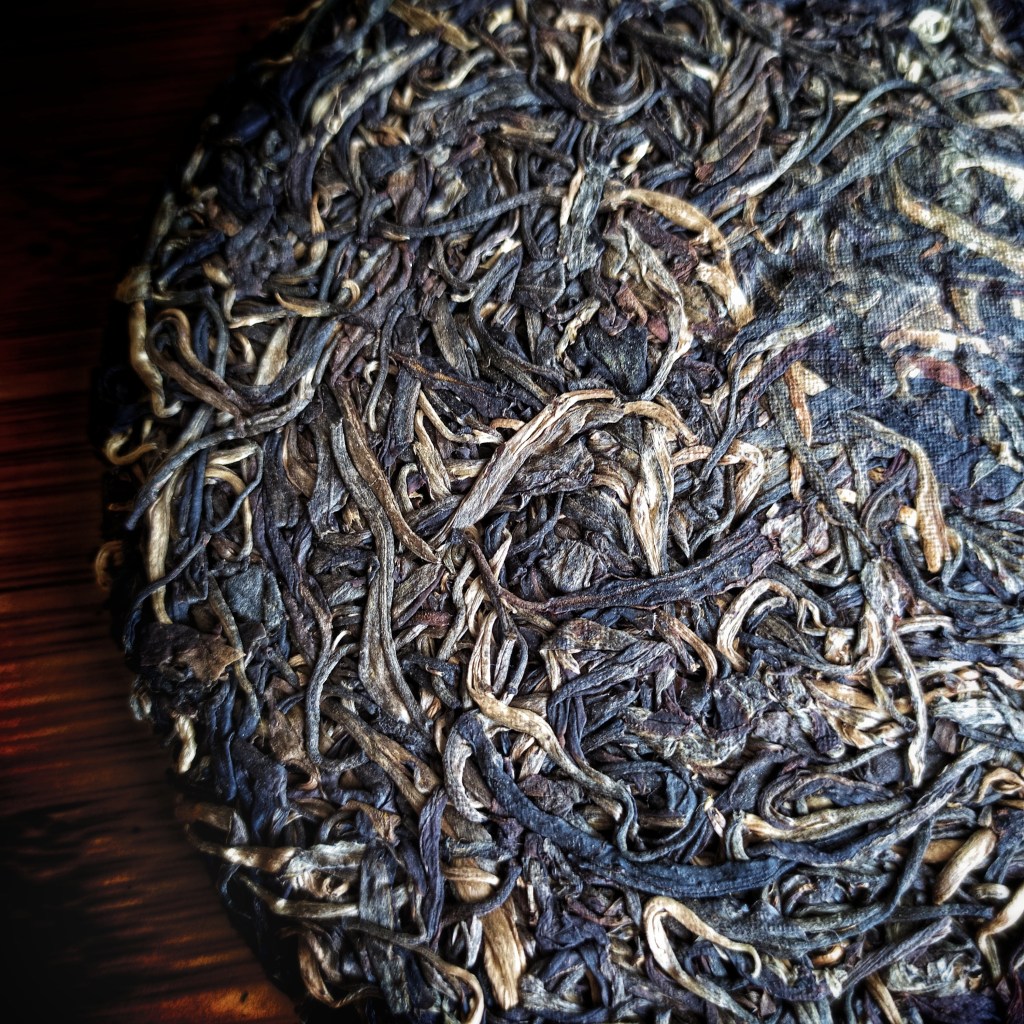
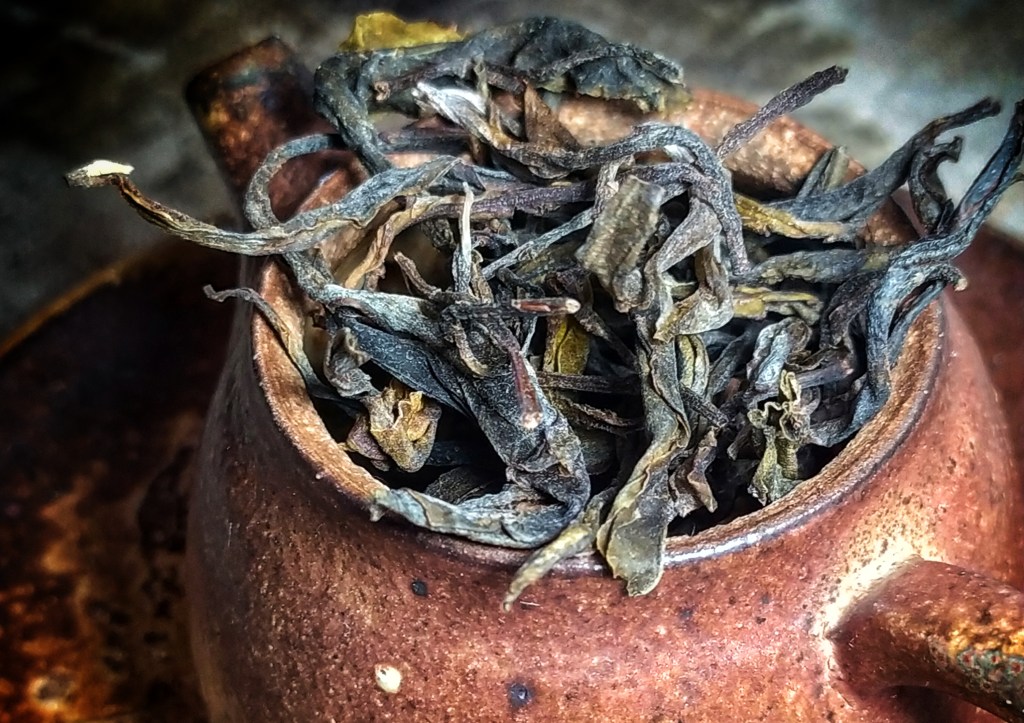
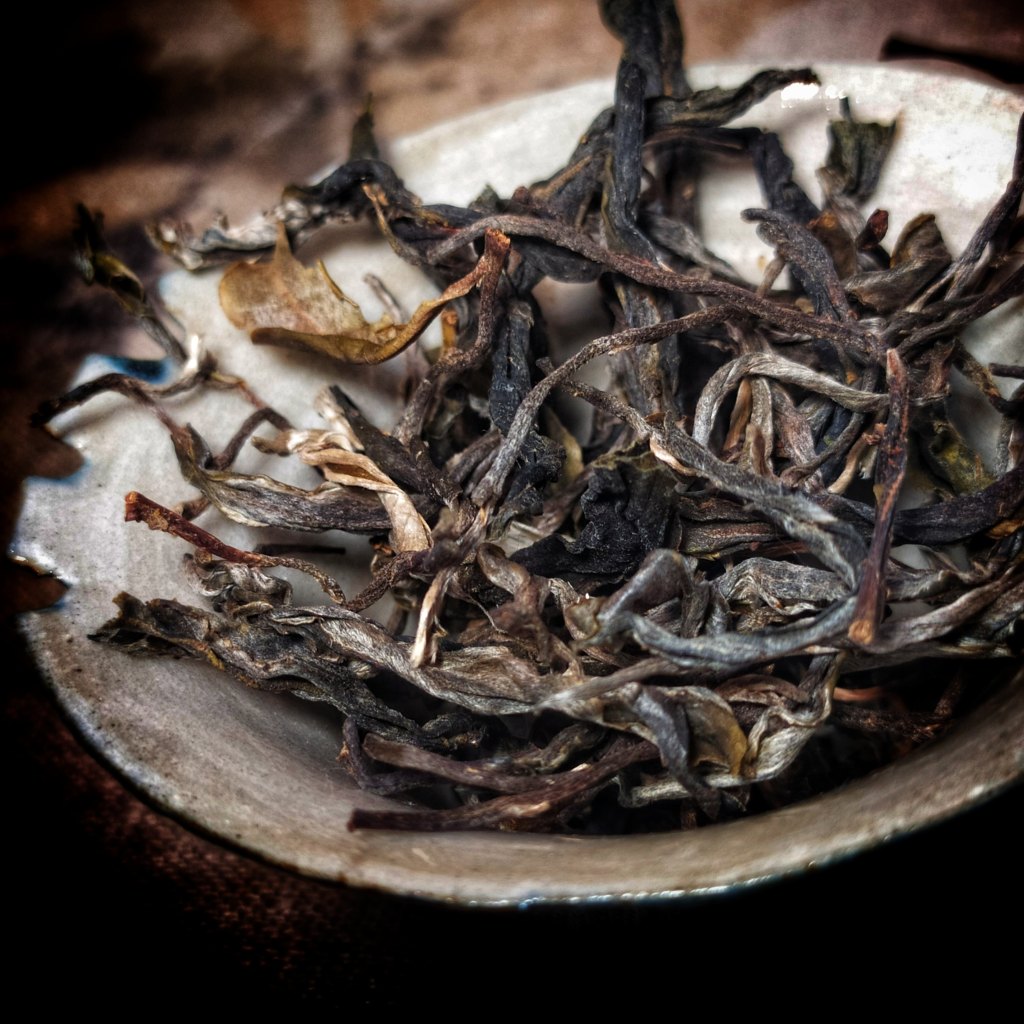
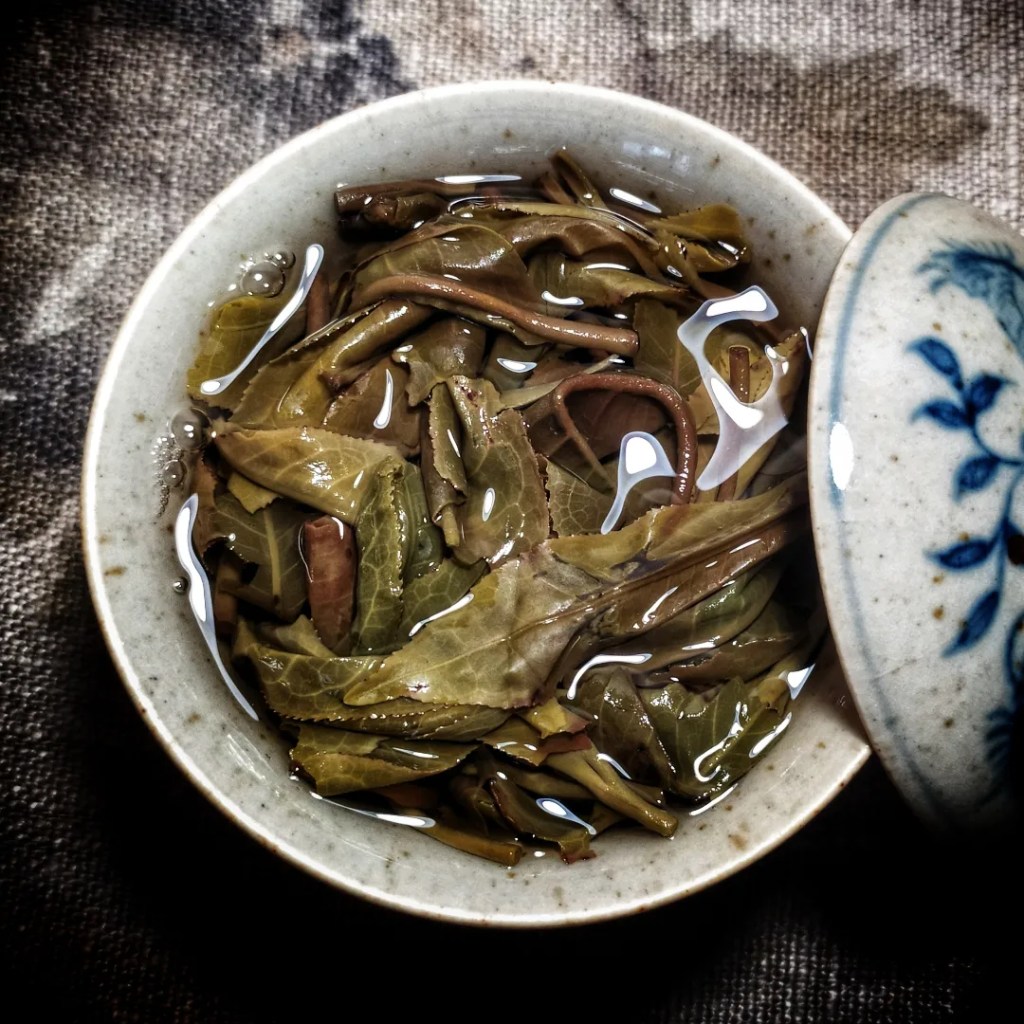

 Wild Harvested