
A long time has passed, from Chinese cultural domination, from French colonization, from the 30 years of struggle for independence, the time necessary for the rain to give respite to the memory from the pain of the loss. But tea in Vietnam resisted everything as an observer of events, as a symbol of the zeitgeist, the spirit of the time and as such able to invest every era, to be reflected in literature and philosophy, in arts and everyday practice.
Tea here is not a subject of dispute, the object of a claimed originality, of authenticity, but it is a symbol of restoration and self-affirmation, of a common thread with the past through a new way of doing things, it is a narrator of epics and tragedies, epitome of imaginative experiences of past places, of the old shops of Hanoi, of the narrow and terraced architecture leaning against the alleys full of vendors and trucks, of the old agricultural research stations abandoned and rebuilt in the late 70’s.
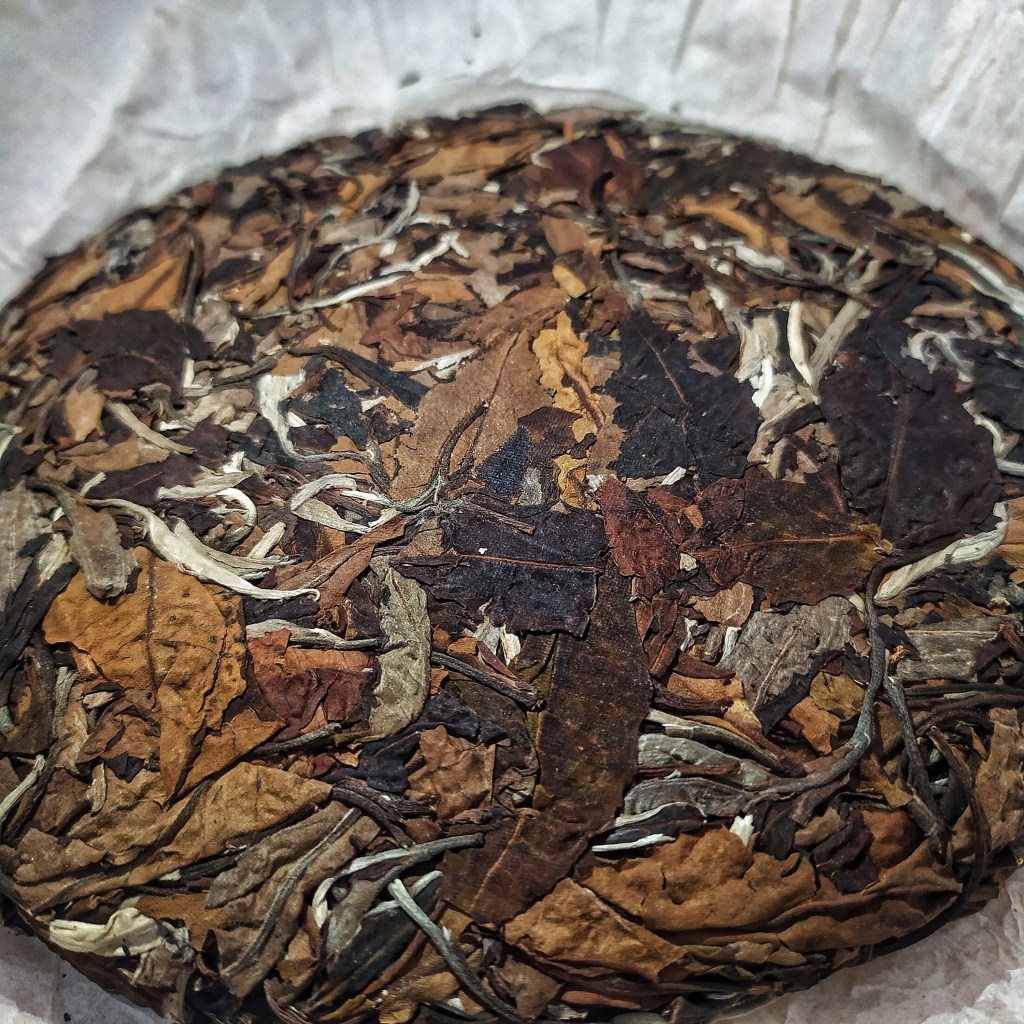
The laobaicha of Viet Sun comes from material of 2022 collected from centenary trees in the area of Lùng Vài, Ha Giang, in the district of Vị Xuyên, at an altitude of 1000-1100 m. Vị Xuyên was the scene of one of the saddest battles that Vietnam saw in its history, a war that until 1985 repelled hundreds of thousands of soldiers, but which is now the district of one of the most interesting productive areas of the country. Tea in this case is a distillate of its place of origin, so expressive as to bear an almost salvific garment for a place, to extract from it its opposite, to exercise their ancient alchemical propositions of transmutation and renewal and at the same time to preserve and protect the scents of an original flowering.
This is a white tea that gives a perfect daily drink, saturated with sense and without unnecessary garments. Its character is punctuated by ancestral scents, the olfactory notes recall those of a bouquet of roses resting on an antique piece of furniture, in which woody scents are linked to the fragrances of fresh and withered flowers, emerge the fragrance of apricots and kumquats stored in a bamboo basket, while those of spices and leather complete an intense and decadent picture, enlivened by a mnemonic expressiveness not always so frequently experienced.
The mouthfeel is medium-thick, enveloping, lingering and balanced, distinctive and not similar to any other, enriched with spicy notes and ripe fruit, rhubarb and medicinal herbs. I thank Vietsun project for having contributed greatly to the in-depth discovery of Vietnamese teas, providing excellent material and information for the study of this country, its terroir and its history.
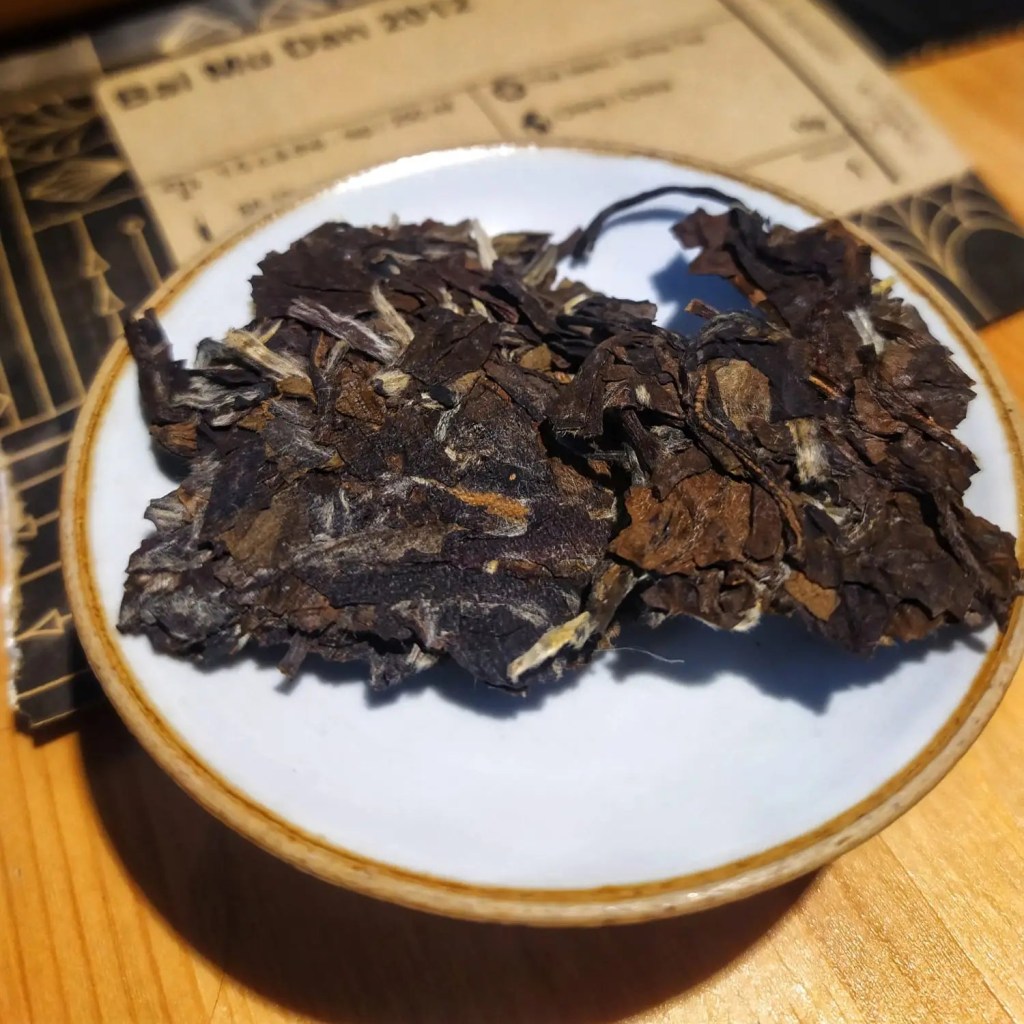
 Wild Harvested