Tag: xishuangbanna

  • Reaching the highest peak, where the air is more rarefied, where the silence of the place becomes a virtue. Tribute to Huazhuliangzi.

    Reaching the highest peak, where the air is more rarefied, where the silence of the place becomes a virtue. Tribute to Huazhuliangzi.

    To the northeast of Menghaizhen we follow the dirt roads that lead to the highest point, the peak of Banna, between the fog that seems palpable and the city behind us at every point the eyes find rest wherever you look. The old trees covered in moss and xylophagous saprophytes draw attention, among the rocky outcrops they look like lignified souls, guardians of a place that does not seem to have been disfigured by urban compulsion. Leaving Baotang and Luotang we continue in the direction of Bameng, towards the peaks of Huazhuliangzi, where the air is more rarefied, the silence of the place becomes a virtue as we cling to those slopes above 2000 meters.

    On the top the climate is cool, drama dissipates in front of a gaiwan, the smell is that of the surrounding vegetation while you exhale the steam of the kettle which pervades the room; tea welcomes as an implicit idea of manifestation of a greatness able to overcome the transience of events, it is the pride that relieved from the burden of living in a premeditated order when the civil conflict had just ended and the desire for reconstruction took refuge in time, the one necessary to the rain to bury a war that at its resolution allowed only that smell of oils and fuel of the first trucks.

    These mountains are the home of the Hani, Lahu and Han people, mainly settled in the areas of Baotang (Xinzhai and Laozhai), Benglong and Bamen. The tea trees here are mixed with wild bamboo and other native arboreal species, the tea varieties of Huazhuliangzi are the broadleaf typical of Menghai County.
    The Huazhuliangzi teas seem far from a prescriptible attitude, the unique character of these leaves welcomes in itself that sometimes antinomic but inescapably linked relationship between the contingent and the sacred, between sky and earth, between human science and nature.

    Easter Leaves Huazhuliangzi 2021 sheng pu masterfully exemplifies the character of this area, there is a mountainous and wild charm in it, a composed sweetness postpones an evident and brief astringent sensation that leaves the mouth in seconds, without stagnation, and the aftertaste it is incredibly persistent.

    he infused leaves recall notes of mango, ripe peach, aromas of melon and peach gums. The musky notes blend with the fruity sweetness recalling the Moscato passito, combining childhood recalls such as ramassin and rosehip.
    The sip flows easily along the throat refreshing the palate, the aromas are reminiscent of white melon, lemongrass and sorrel. The vegetal acidity seems almost chewable, animates the tea exalting an already complex experience, adorned with aromas of peach and white cherry, continuing incessantly in its silky and endless texture.
  • Drunk soliloquies about Nannuo in the shadow of a gushu

    Drunk soliloquies about Nannuo in the shadow of a gushu

    On a day when the cold morning breach seemed to have taken away even the most weak semblance of chromatism, and with this the already remote desire to conclude something at the end of a dull sunrise, I decided to make a tea session with this 2016 Sheng Pu from Nannuo in the hope of rejoin me with the part of the brain that welcomes the tactile sensations.

    It was a greener puer in the past while today we can also found leaves processed with a longer period of withering, a shorter steaming, or a lower shaqing temperature but for a longer time, all factors that bring back to a more amber color than the pale yellow one to which history has accustomed us. But what does not change is its complexity wrapped in an introverted blanket, destricable only through the patience of the infusions, where the essence of tea seems to rest on one’s being, curled up in an aromatic profile that is shown in its becoming, revealing itself sip after sip in a sort of amniotic tranquility.

    In the 1950s, while the country was raised from the rubble of the Republic of China and the families looked to the future with the losses of the civil war behind them, at the same time on Mount Nannuo the foundations were laid for one of the most important tea research centers in Banna.
    Researchers such as Zhou Pengju, Cai Xitao and the team of the Nannuo Mountain Tea Research Institute contributed to identifying the area as one of the oldest in the tea cultivation panorama and to classify varieties such as the Nannuo Daye (Yunkang 10).

    Through the fog, above the red earth and below the blue sky, the history of an entire territory is consecrated through the infused leaves that in those years of reconstruction appeared as balconies of the heart, as disenchanting voices of each of those 30 villages that live in the mountain.

    This @zhaozhoutea tea is the sheng pu “No.833” from the spring of 2016 from Nannuo gushu trees. It is not only a very representative sheng of Nannuoshan, but it is an example of an evolution of the way to make tea in this area, a historical and mnemonic study from a tasting point of view.

    The wet leaves are extremely evocative, report the hints of a mountain caravan, with herbaceous perfumes, moss, wet rock, wild flowers and gooseberry. Inside it are perceived scent of bakery, lemon tarte, leather, white peach and thai mango. During the infusions, shades of tamarind, walnuts and quatre quarte cake appear while the tostated seeds crack on the wok.
    The golden liqueur highlights nuances of evolution and a contemporary conception of leaf processing, with medium astringency and bitterness. On the palate there is a coexistence between the herbaceous flavors and the fruity- citrousy ones of peach and orange zest. Huigan is pleasant and balanced, integrated with other taste sensations, not predominant as a Naka sheng to bring a comparison. The finish is persistent and articulated on notes of gardenia, persimmons, apple and creamy aromas, closing a session that becomes proportionally sweeter to its prolonging.

  • All the fragrance of Naka

    All the fragrance of Naka

    Naka is one of those places whose tea manages to make the contemplative intent coexist with the liberation that accompanies a state of inebriation, of marked well-being. The teas from this mountain are often not famous for their complexity but rather enliven the experience with their persistent sweetness, an immediate sugary sensation that is almost palpable beyond the blanket of initial bitterness, a sip that returns a sensation that shines through as an existential parable where suffering and gratification alternate.

    Teas like those of Naka, Bingdao or Laobanzhang transport us to another dimension of thinking, more ancient and simple, the one that makes us grasp Holderlin’s vision of a “measure common to all”, the one removed from our evaluations, the one of a taste purity capable of embodying the reason and essence of a place.
    They are unique scenes, to which even if we don’t belong, we adopt as a spiritual homeland.

    Naka’s is perhaps the most representative of Mengsong’s teas; here the woods surround the village in which there are approximately 40-50 hectares of ancient tea trees, most between 300 and 500 years old. The 1660-meter high peak is located on the eastern slope of Huazhuliangzi, the ground is sandy and rocky, the climate is humid and rainfall is abundant and more frequent than in other areas.

    The small-leaf variety predominates along with the medium-sized variety, which is a unique condition in the Menghai area. From Da’an to Nongbeng, from Baotang to Damengsong each village here has its own microclimate and its own shrewdness in the processing of the leaves; Lahu and Han with their respective dialects and cultural traditions have lived together for centuries in these mountains where time seems to have stopped.

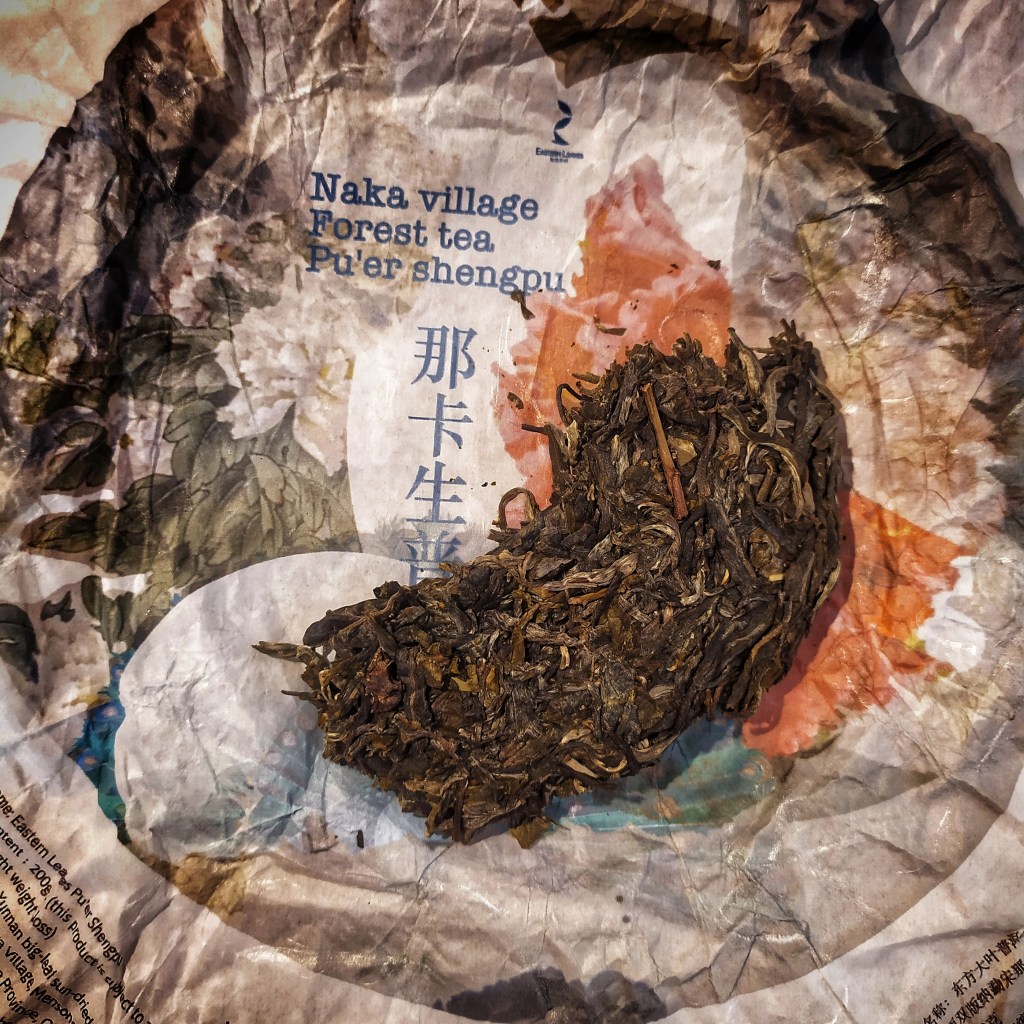
    This 2022 Eastern Leaves sheng pu is a tea that is not afraid of meditation or of the most convivial moonlight. The wet leaves are a unique journey just outside the village, the memory is that of a pastry shop in the middle of the forest where the scents of the woods and wet leaves envelop you, among the rocky tones you can perceive scents of apricot curd, peach , mountain flowers and citrus fruits.
    The liqueur has an antique gold dress; on the palate it is soft, enveloping, beautifully balanced and progressive in the bitter tones that quickly unfold in a sugary dimension, an endless sweetness that seems almost chewable. It is a tea with an excellent structure already in its youth but whose time can only act as its guardian.

  • Another soliloquy about Laobanzhang with a 2018 sheng pu from Tianhong tea factory

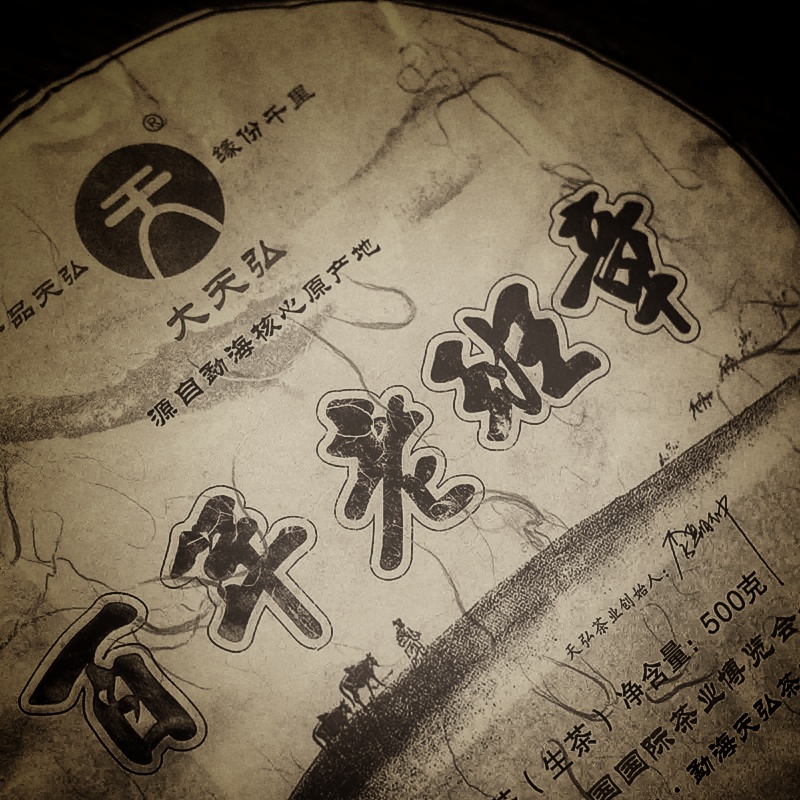
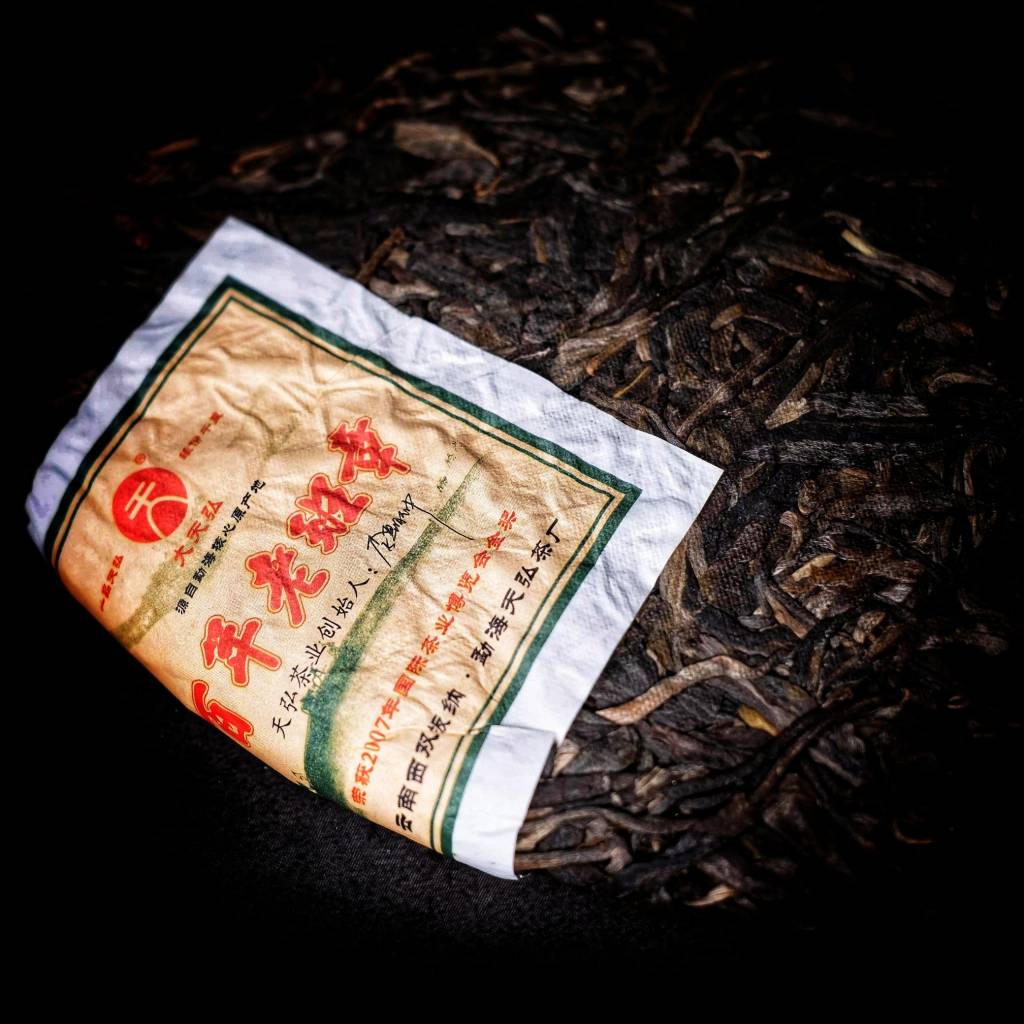
    Another soliloquy about Laobanzhang with a 2018 sheng pu from Tianhong tea factory

    Laobanzhang has long been an example of ambivalence. Its bitterness contrasts with the sweetness that pervades you a moment later, the exaltation of its essence opposed to the condemnation of the upheaval caused by its own greatness. Its leaves can be as bitter and severe in youth as they are sweet and complex as they age, teaching us that solemnity is not in the present and that it can never be enclosed once and for all. What drives us to buy what now seems so distant from reality? Yet as Sophocles said there is no life without pleasure but, above all, life is more beautiful when one does not think.

    This is Laobanzhang, a corner of the world where gods seem to have found refuge, a strip of 300 hectares of ancient trees that have seen the course of the ages so much as to survive the history of the village itself. There are about 120 families mostly of the Hani ethnic group who inhabit these mountains, about 500 people almost all involved in the tea market, that same tea that once animated their ancestors now seems to have took away the soul of their descendants. The radical change in lifestyle, the experimentation of mere materialism have placed the village in front of a test that is only partially overcoming. There are many examples of counterfeiting, of slightly above average tea, quality standards that are not always clear or respected. All at crazy and irrational prices.

    However, a sip of a real Laobanzhang is able to enrapture us to the point of blurring the language, words become superfluous and we are ready to resort to the credit card through a disintegration of self-control only to chase the memory of a tea which, when authentic, remains indelible in our memory.
    The problem is that by now we risk finding very little of that authenticity in the future and at that point the bitterness will take over even the sweetest of memories.

    That of the Tianhong Tea Factory is a centenary trees sheng pu from material collected in the spring of 2018 that contains all the ancient charm of a village. It appears in a brilliant golden color with pinkish undertones; notes of wood burning in the rain and nuances of ripe apricot emerge from the wet leaves than hints of cavendish tobacco, plum jam, light botanical-alcoholic fragrance along with reminiscences of wild flowers, caramelized citrus and subtle scent of violet candy.
    I think the measure of a good Laobanzhang is not only the sensory complexity, but the ability to stimulate the memory in a articulated and orderly sense, like an open book on the knees whose pages are nostalgically leafed through; that is what happened with this sheng. On the palate it has an extraordinary balance, the herbaceous flavor is wrapped in a honeyed sensation, the liqueur is thick, juicy, the bitterness allows the aromas to remain for an interminable time and the mouth to salivate while intrepidly awaiting the next sip. The qi is strong and the final notes close on a pleasantly floral and refreshing sensation.

  • Reflections about the pu’er market and Laobanzhang

    Reflections about the pu’er market and Laobanzhang

    Everything about tea is born from an initial effort and suffering, and through these it is consecrated in a sort of spiritual life that is strengthened over time, in its determined and individual character. Tea is not the immediate gift of nature. Immediacy in tea always comes at a high price.

    Laobanzhang is experimenting a pattern already seen in areas where previously a deep famine reigned; now money is spent in the most disparate ways, new contemporary-style buildings arise and what comes from the past is quickly supplanted by the well-being of a conscience that appears liberated from the oppressive spirit of the previous period.

    The new generations are not destined to experience that effort and suffering, the natural rhythm of things, the process that brought Laobanzhang tea to what it is even before the invisible hand of Yunnan moved prices in the spring of 2007.
    Everything happened very quickly, in 20 years a main road capable of connecting all the villages once disconnected from the world was built, new branches were opened, new investment funds and capital arrived from holding companies which saw a safe source of investment. All of this is reminiscent of a situation before the burst of the speculative bubble, but it is not, all of this is the present.
    The price of raw tea has gone from 8 yuan/kg to 1800 in the famous spring of 2007, up to exceeding 13000 today, an escalation that does not seem to stop.

    The tea leaves are sold to the shops before they are processed most of the time without any intermediary, just as en primeur wines are sold in Bordeaux before they end up in the bottle. This is what has been happening for years now in these mountains and which has led many merchants to abandon them, in what we can define as the third emigration of Laobanzhang.

    How much of the real Laobanzhang is left today and how much it is still worthwhile for tea merchants to look for a product that no longer lives for its uniqueness and soul? How much the economic value of a place can become a burning glass of its greatness and how long will we wait before another crash of the speculative bubble?

  • Trip to Yiwu mountain through a 2006 classic blend

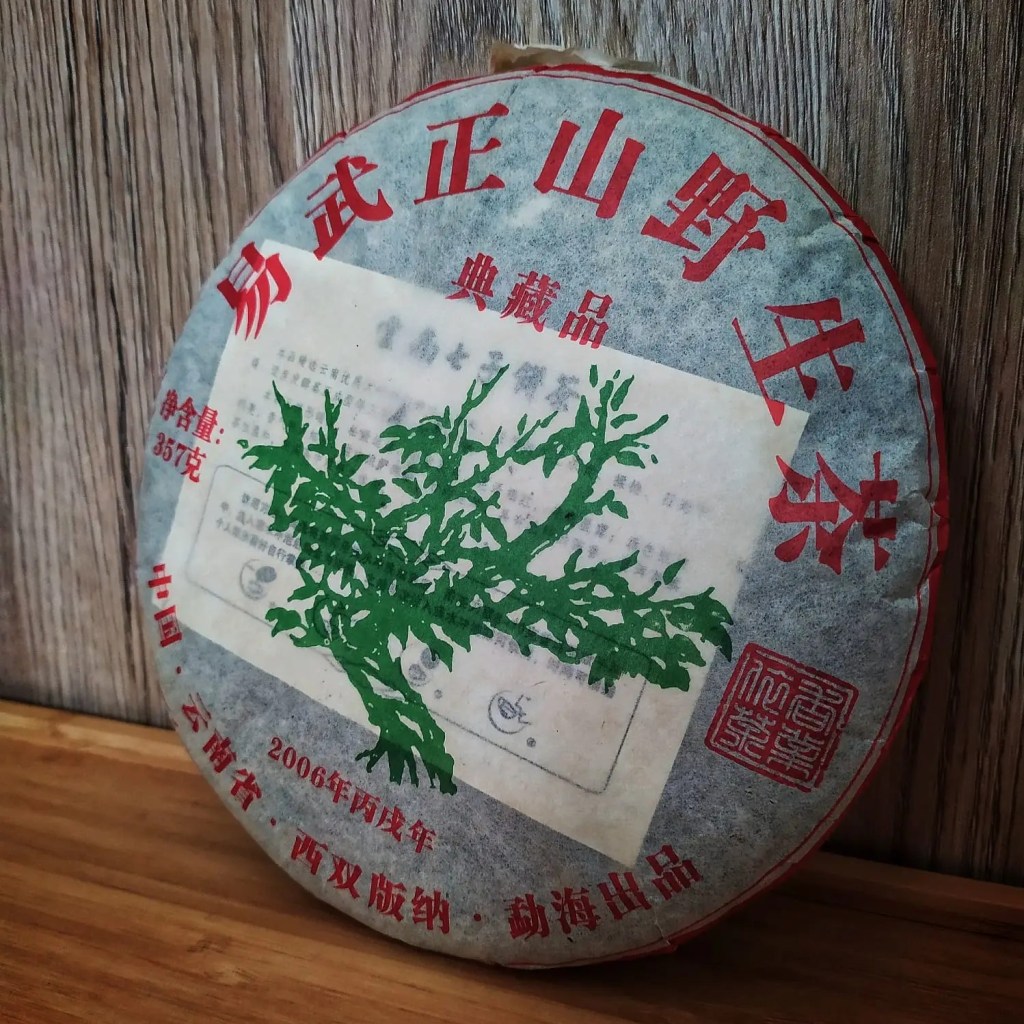
    Trip to Yiwu mountain through a 2006 classic blend

    In the recent past of Pu’er we have often witnessed a forced association of tea with its most narcissistic and aesthetic-economic dimension, to then observe the deflagration of this concept by those who sought more the practicality of taste and pleasantness in its more utilitarian sense. Without recalling how much before and after the events of 2008 contributed to forging these factions, in front of certain teas we can remember how much Pu’er can escape mere sensoriality, from being a simple pleasure of the palate to rejoin its real aesthetic dimension, that sensitive incarnation that translates an idea, a territory, a community.

    Teas like those of Yiwu manage to reconnect us with that part of ourself which, while searching for information, tends at the same time to suspend from practical sense, making us experience the sensible, the experience in its essence. This cake immediately brings to mind the selections of Mr. Ye Binghuai, the “Big green Tree”, whose story will probably be the subject of future posts, but it suffices to know that it made a good part of history among enthusiasts at the end of the 20th century, as well as having led many Hong Kong auctions with his ’99 selection.

    The harvest dates back to 2006 from wild trees throughout the Yiwushan area, a sensory complexity achieved thanks to the assemblage of several mountain villages. Because from Mahei to Guafengzhai to Yiwu village we are witnessing a radical change in the composition of the soils, a pH that goes from 4.5 for the most acidic to 6.5, an altitude range that goes from the summit, above 2000 meters above sea level, to the 730 m of Nametian with its taidicha and xiangjiaocha, which in antithesis almost seem to offer a gateway to the compulsive modernism that previously struggled to take root among those camellias that looked like imposing bodies, lignified in their dynamism.

    This wild tree puer comes from some of the shengtai areas that flank the mountain villages, leaves that when wet release scents typical of these places and quite similar to those of other vintages chosen by Ye Binghuai, notes of cedar wood, camphor and dehydrated longan, with an almost smoky, balsamic personality while advancing a memory of peat very similar to that of a good Mezcal rather than a Scotch.
    Drinking proceeds in a calm and relaxed tone, one can perceive the scents of a pine forest after the rain, vegetal, musk, peach and floral as a background. Suggestions of banana leaves, Lemet in particular, the yucca cooked in water wrapped in banana leaves, together with spicy, woody and slightly smoky tones similar to those that Mizunara gives to Japanese whiskeys.
    The liqueur is coherent, initially introverted, of a golden-amber colour, slightly lighter than expected but able to develop over time animal, musky and fruity aromas, almost of raisin muscatel, with a qi that gradually becomes evident and pleasant. The sip is juicy, thick, balanced in its medium bitterness and medium sweetness, of good persistance and ending on notes of charcoal-cooked tropical fruit.

  • Eastern Leaves Nannuo wild forest sheng pu’er 2020

    Eastern Leaves Nannuo wild forest sheng pu’er 2020

    Nannuoshan is located halfway between two large cities of Xishuangbanna, Menghai and Jinghong, and has long been a destination for tourists and enthusiasts who crave the cakes of this mountain, who hike the summit in the day and return home with tea bought for be given to family and friends. Now it’s always good to remember that in areas where teas are sold by themselves, those intended almost for Eucharistic acts, there’s an obligation to search for the truth in those leaves, which are translated into a corresponding liquid that doesn’t tell of simple poeticisms, but which as a disembodied voice tells of who is there and who has been there, of millenary soils, extreme climates and plants that seem to keep time.

    This Eastern Leaves Pu’er sheng comes from wild trees at 1800 meters above sea level, in a tremendously difficult year characterized by a long drought. Here we find not only the floral notes that distinguish Nannuo pu’er, but an olfactory complexity that develops right from the wet leaves an evanescent smoky suggestion as a background for hints of wet rock, citrus of green oranges and vegetal like cut grass, to evolve towards hints of exotic fruit and apple compote. The sip is full, round and at the same time agile, with medium bitterness and minerality, as an excellent Nannuo tea should be.
    Aromas of persimmon and chinchona, bitter orange and medicinal herbs appear and continue in the aftertaste, counteracting sweeter memories of strawberry custard, creating a tasting stratification, in which infusion after infusion a typical and satisfying huigan emerges.