
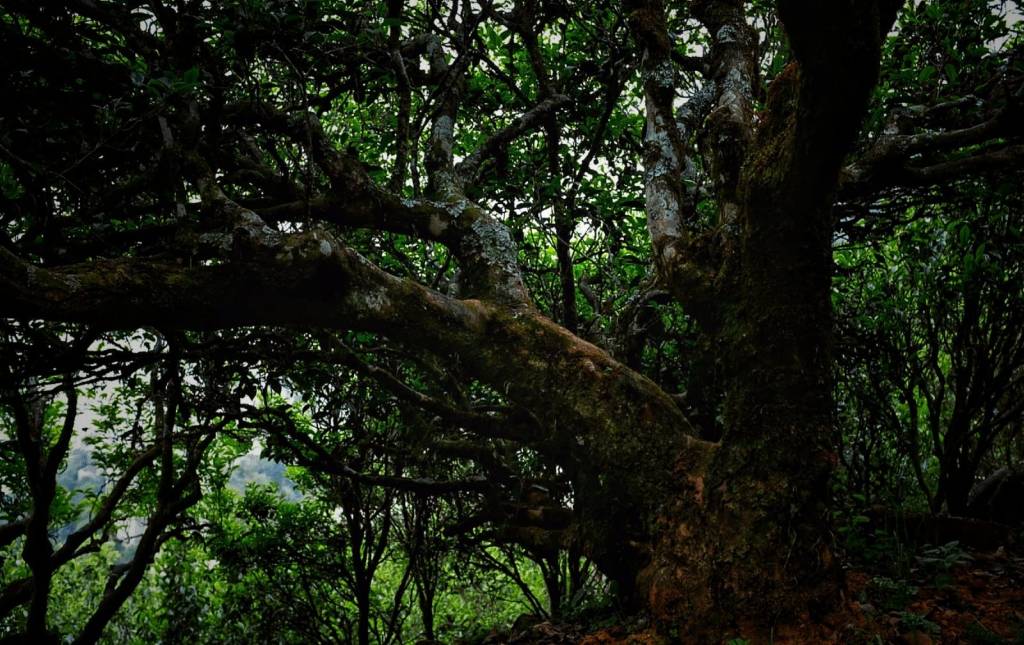
Dancong tea is much more than an aromatic concentrate, it is not just a floral punch straight in the mouth capable of anesthetizing the taste buds with its fragrances.
Fenghuang tea is often able to escape the intellect, but the leaves of those trees are able to bring the unintelligible into sensible form.
Make a Dancong is not knowing how to orchestrate a set of fragrances, that is pure appearance. This Wulongs are an epitome of shanyun, the “charm of the mountain”, they seem to enclose a geographical empathy that is consecrated in a sip imbued with historical awareness that gives abode and memory to the course of events in a place, going beyond the material boundary of the drink . This condition derives from three main factors: the intrinsic uniqueness of each tree, the craftsmanship and the mountain terroir.
But what happens when the liquor doesn’t convey a truthful reality?
Fenghuang is a small city of 30-40.000 inhabitants, an out of this world place with about 10,000 laocong of about 100 years and 3,000 trees of 200 years, and from these numbers it is enough to understand that many of the leaves from ancient trees that we find in the western market cannot come from here. The climate is difficult, extremely humid, the moss seems to envelop even the soul of those who pass through it, a very different condition from the neighboring areas.
In Fenghuang village a distinction has always been made between the internal areas of the mountain (neishancha 内山茶) and the external areas (waishancha 外山茶), in order to underline a deep tradition and bond with one’s land.
There are 30 tea towns in the administrative area under the current jurisdiction of Chaozhou City, and one of the problems is that as long as the tea is harvested and processed according to the DB44/T820-2010 standard within the city of Chaozhou all teas can obtain geographical protection marks, and therefore be called Phoenix Dancong.
Fenghuang Dancong’s production method is mainly based on the family and there are no large enterprises comparable to those in Fujian or Yunnan, and it is what is sought to be preserved and must be protected. But every year on the market there are tons of teas at astronomical prices in the western market related to Fenguangshan cha without any territorial distinction, with little or no transparency. But the real dancong is only a small part of it.
One wonders if it is worth spending more and more money to buy something that might not even be real Dancong or settle for a sip of happiness together with that money in case the tea is really good.
 Wild Harvested
Leave a comment