Author: wildharvestedtea

  • When the predecessors will enjoy the sight of civilization the descendants will enjoy their blessings

    When the predecessors will enjoy the sight of civilization the descendants will enjoy their blessings

    Everything has remained much as it was in many Sichuan villages along the Chama Gudao, or so it seems. The architecture changes radically from Chengdu to Kangming, from Yading along the Yangtze to Lushi where this image originates. In some areas everything seems unchanged, some seem to have survived the urban ravages of the Sino-Japanese war, those of the popular cultural revolution and the compulsive modernist urbanism of the last century.

    Everything seems as it was because much of what has been lost has been rebuilt through a backward historical course rather than a mere urbanistic assumption, utilitarianism or a simple expressive intent. This happens by showing the truth of the spiritual condition of a period and permanently incorporating it into our conscience, like a continuous reminder of history and of those who have departed with it, reviving a sense of belonging. Tea is able to address the drinker like the vernacular residential architectures of western Sichuan address their inhabitants.

    In Yunnan along the Dian Zang the architectural residues are now enclosed within new walls that pursue the same aesthetic sentiment just as tea, in my opinion, should transcribe their territory and cultural heritage and pursue the truth more than they did in the past.

    With architecture as a metaphor for the world of tea, it is clear how existential it is today to enjoy the vitality of history, that vitality that does not come from the work of a privileged group but from that of humble artisans, an evolutionary tissue of civilization and culture in which order seems to emerge spontaneously, where beyond the political ablations a primordial impulse of belonging arises.

    When the predecessors will enjoy the sight of civilization the descendants will enjoy their blessings is what was explained to me about this image. Tea must thus be a symbol and witness of a people, of obligations and of an identity that define our place on earth.
  • Along the road to Lhasa: a break with Eastern Leaves’ Huangxiaocha 2022

    Along the road to Lhasa: a break with Eastern Leaves’ Huangxiaocha 2022

    Mengdingshan is one of the areas of Sichuan best known to tea enthusiasts, a universe of its own, an almost oracular function of a system apparently disconnected from the world with gardens immersed in the clouds that cover them creating an intense environmental and philosophical contrast, a metaphor for the history of this region which was the cradle of the civilization of the camellia sinensis, of its taming and of being the guardian of time.

    But as true of civilization throughout history as it is of the tea plant, while sky covers the earth sustains, with the great fertility of the eastern plains that open beyond Chengdu as a source of sustenance during times of famine and wars, but it is beyond the mountains of Ya’an, on the road that leads to Kangding, on the slopes at an altitude of 3000 m whose paths lead to Garze and finally to Lhasa that the cultural heritage and identity of an entire people must be sought. It is among the peaks Jingquanfeng, Qingfeng, Lingjiaofeng Ganlufeng, Yanufeng that the Mengdingshan imperial tea was harvested before Qingmingjie and sent to the imperial court, it is here that the present is reconciled with history, where the order of things meets natural disorder, where earth and sky become organs of that Heraclitean measure that escapes being cadenced by human planning.

    Eastern Leaves Huangxiaocha was harvested at the end of March 2022 on Mengding Mountain. The dried leaves express buttery, biscuity and hazelnut chocolate hints. When infused, they take on nuances of white truffles, chestnuts, then biscuit and cooked vegetables hints until they become floral with wild flowers scents before the occurrence of toasted pumpkin seeds and orchard hay memories. The sip is coherent, balanced, soft with a sugary thickness and a sweeter sensations the more you continue with the infusions. Aromas of shortbread and cane sugar, toasted seeds and hazelnut emerge in a lingering finish that leaves the palate sweet with an extremely satisfying sensory sensation

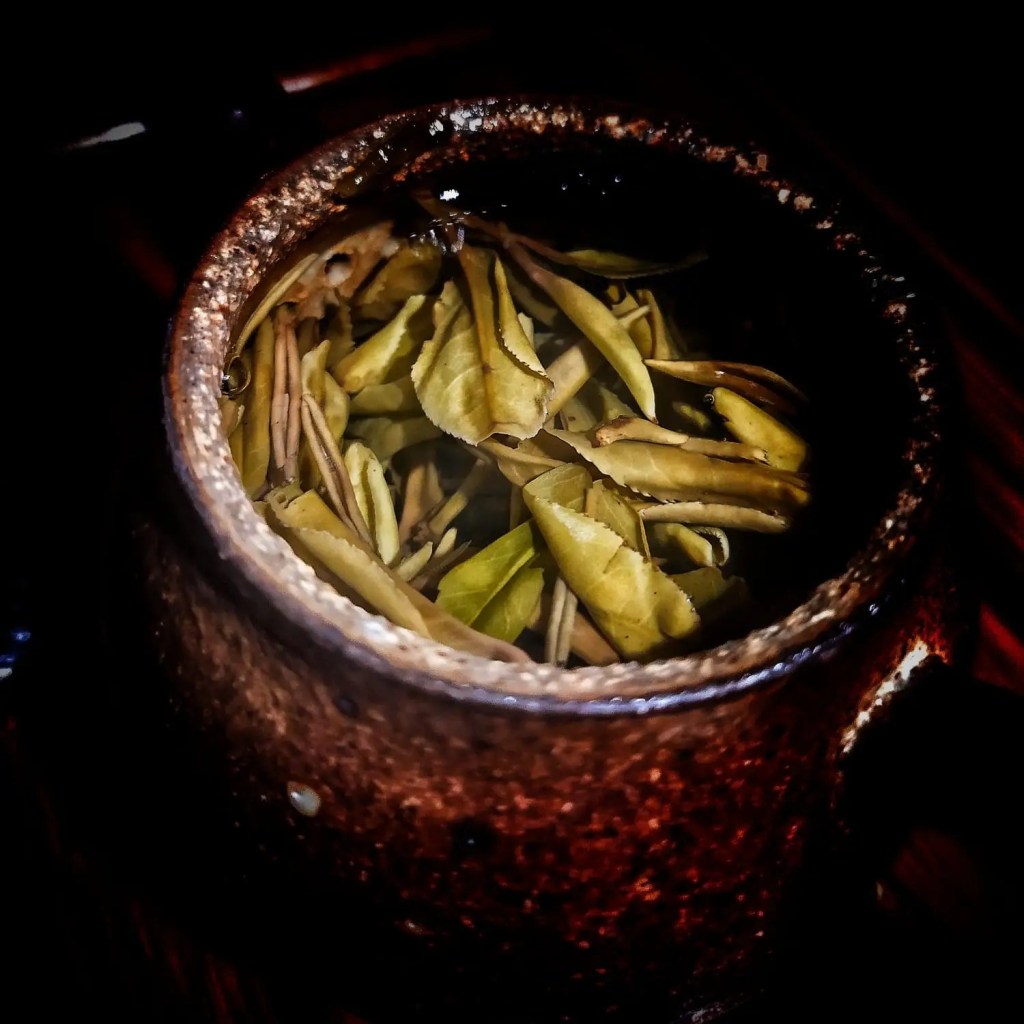
  • Cai Mao Xing Jie tea factory Mang Fei sheng pu’er 2017

    Cai Mao Xing Jie tea factory Mang Fei sheng pu’er 2017

    Yongde county is a mountainous area, rich in forests, where nature seems to have had free will for most of the centuries, slopes and ancient trees surround Mangfeicun protecting it in a landscape and cultural amnioticism. In Yongde county alone there are at least 22 ethnic minorities, many of which are involved in harvesting, curing and processing tea. From the slopes it is possible to see the syncopated, wildly forested scenery that continues to Zhenkang county where history is intertwined with it.
    Mangfei’s post-modern puer shows sweeter and more graceful traits, even if the aromatic profile is green and oxidation kept under control, the sip, except in some vintages, is characterized by a greater pleasantness already in the early years, by ease of drinking , elegance and vegetal notes that hardly show that austerity of some young raw Mengku, but rather similar to the thick sip and creamy hints of Xigui puer, albeit with due exceptions.


    This 2017 sheng pu is produced by Cai Mao Xing Jie tea factory, probably dry stored; the straw-gold color of the liqueur is typical of the puer of Mangfei area, in which hints of camphor are revealed in the wet leaves, initially balsamic scents, then a subtle smokiness, alcohol macerated fruit, juniper and wild botanicals. The complexity is then revealed under tones of musk and manuka honey and continues consistently to the sip, sweet, fresh, of medium-light astringency, with musky and woody aromas and notes of bitter herbs that appear towards the fourth infusion. Floral, fruity and spicy sensations are contrasted, in an up and down of a sensorial score, where the gloomy taste unfolds on tones of cooked apple, white pepper and juniper before the appearance of creamy notes, of a lemon sablè tarte, of the sweetness that brings a compote of wild strawberries and mint and alpine herb candies. It is a tea with an exuberant qi, a sweet huigan and the continuous placing before and after the threshold of maturity makes it an extremely satisfying tea already in its youth.

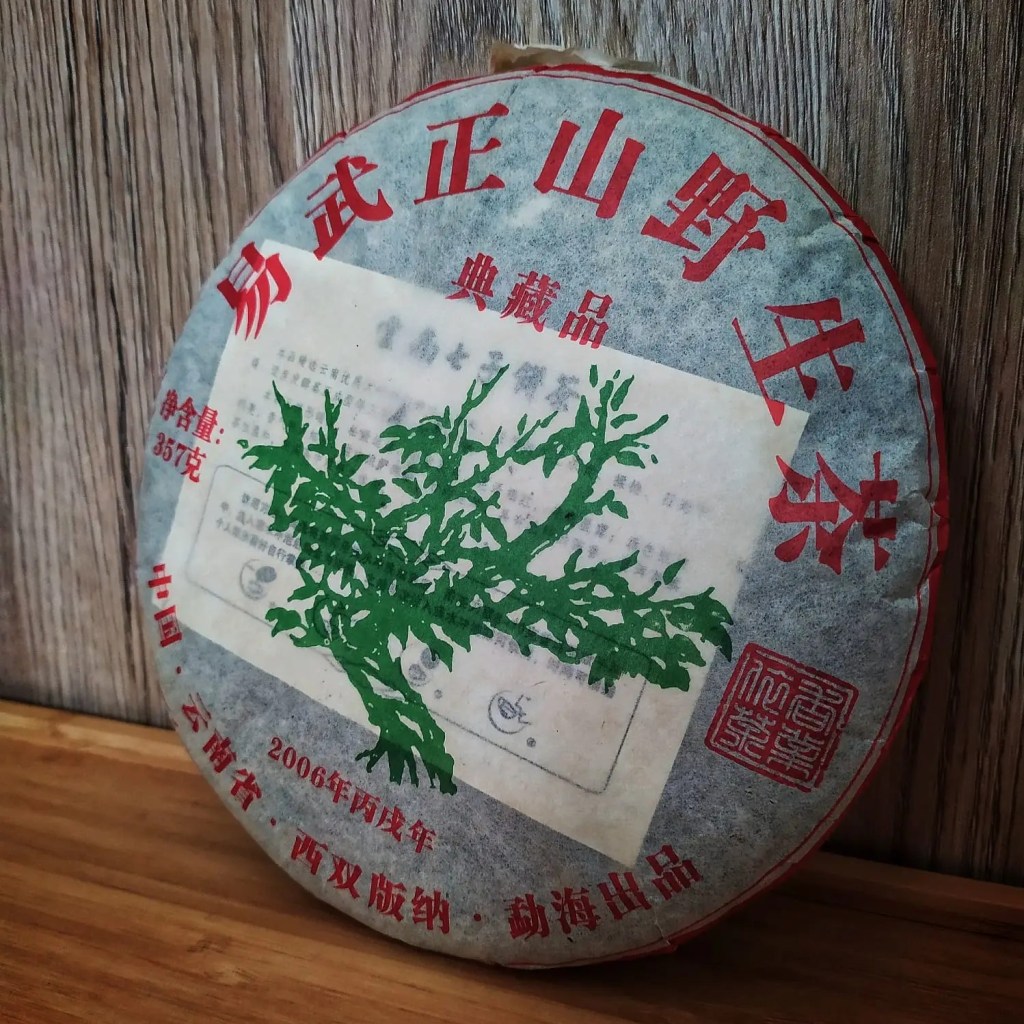
  • Trip to Yiwu mountain through a 2006 classic blend

    Trip to Yiwu mountain through a 2006 classic blend

    In the recent past of Pu’er we have often witnessed a forced association of tea with its most narcissistic and aesthetic-economic dimension, to then observe the deflagration of this concept by those who sought more the practicality of taste and pleasantness in its more utilitarian sense. Without recalling how much before and after the events of 2008 contributed to forging these factions, in front of certain teas we can remember how much Pu’er can escape mere sensoriality, from being a simple pleasure of the palate to rejoin its real aesthetic dimension, that sensitive incarnation that translates an idea, a territory, a community.

    Teas like those of Yiwu manage to reconnect us with that part of ourself which, while searching for information, tends at the same time to suspend from practical sense, making us experience the sensible, the experience in its essence. This cake immediately brings to mind the selections of Mr. Ye Binghuai, the “Big green Tree”, whose story will probably be the subject of future posts, but it suffices to know that it made a good part of history among enthusiasts at the end of the 20th century, as well as having led many Hong Kong auctions with his ’99 selection.

    The harvest dates back to 2006 from wild trees throughout the Yiwushan area, a sensory complexity achieved thanks to the assemblage of several mountain villages. Because from Mahei to Guafengzhai to Yiwu village we are witnessing a radical change in the composition of the soils, a pH that goes from 4.5 for the most acidic to 6.5, an altitude range that goes from the summit, above 2000 meters above sea level, to the 730 m of Nametian with its taidicha and xiangjiaocha, which in antithesis almost seem to offer a gateway to the compulsive modernism that previously struggled to take root among those camellias that looked like imposing bodies, lignified in their dynamism.

    This wild tree puer comes from some of the shengtai areas that flank the mountain villages, leaves that when wet release scents typical of these places and quite similar to those of other vintages chosen by Ye Binghuai, notes of cedar wood, camphor and dehydrated longan, with an almost smoky, balsamic personality while advancing a memory of peat very similar to that of a good Mezcal rather than a Scotch.
    Drinking proceeds in a calm and relaxed tone, one can perceive the scents of a pine forest after the rain, vegetal, musk, peach and floral as a background. Suggestions of banana leaves, Lemet in particular, the yucca cooked in water wrapped in banana leaves, together with spicy, woody and slightly smoky tones similar to those that Mizunara gives to Japanese whiskeys.
    The liqueur is coherent, initially introverted, of a golden-amber colour, slightly lighter than expected but able to develop over time animal, musky and fruity aromas, almost of raisin muscatel, with a qi that gradually becomes evident and pleasant. The sip is juicy, thick, balanced in its medium bitterness and medium sweetness, of good persistance and ending on notes of charcoal-cooked tropical fruit.

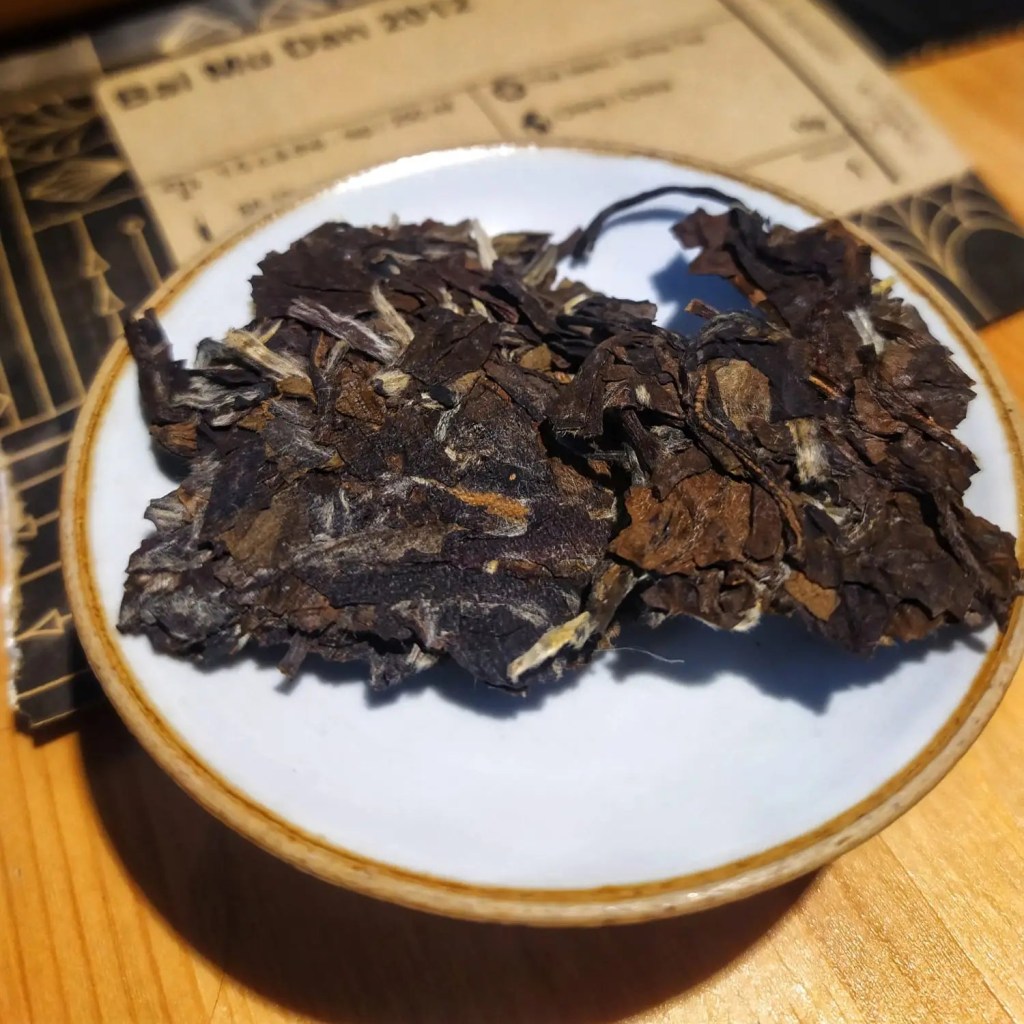
  • Camellia Sinensis Zhenghe aged Baimudan 2012

    Camellia Sinensis Zhenghe aged Baimudan 2012

    Extraordinary teas are born in the hills of Zhenghe, and I am not referring to the subtle and aristocratic traits of a Bai Hao Yin Zhen, but to the more rustic and bourgeois ones of Bai Mu Dan and Shoumei, teas whose time is only able to give decadent splendor unattainable for virtuous tea who do not see the rain, inviting to exercises of reflection and mnemonic recall.


    The trees are low-growing, the Zhenghe Dabai is also a broad-leaved cultivar, on average longer and narrower and with heavier shoots than that of Fuding; typical is the green-yellow color of the shoots with thick hair and a brown-purple contrast.
    Mr.Yang and his family produce this tea near Gaoluntou, 900m altitude, above most Zhenghe and Fuding gardens. Their work celebrates the coexistence between earth and human, sanctifies a type of tea that was typical of a middle class who, like wine, wondered how to get their hands on earthly gratification while holding on to the money of a working day and their status as a dignified self-sufficiency. Time passed, pressing into cakes was convenient for storing tea in piles, and the leaves changed, sealing in them the aromas of an entire village.


    The last leaves of this Bai mu dan from 2012 highlight a fascination given by the passing of the years, which seems to have increased with them even with some elements that give the impression to diverge and have taken their own course, but that for some perverse reason we seem to like it at the point of not being able to exclude it anymore, like the rural scents of an aged baicha, the almost ferrous note of some shoumei or the lips of Dolly Parton.
    The wet leaves bring back memories of ancient flowers, raisins, cider-fermented apple and candied fruit. During the infusion, perfumes of chestnut cake, woody hints of apricot and lotus root emerge, floral echoes arrive with hints of rose during the session. The liqueur is orange, the sip is ethereal, juicy, thick and refreshing. Aromas of distilled pear, magnolia and wild strawberries follow each other harmoniously. On the palate blows of jujube and citrus scents accompany an interminable finish.

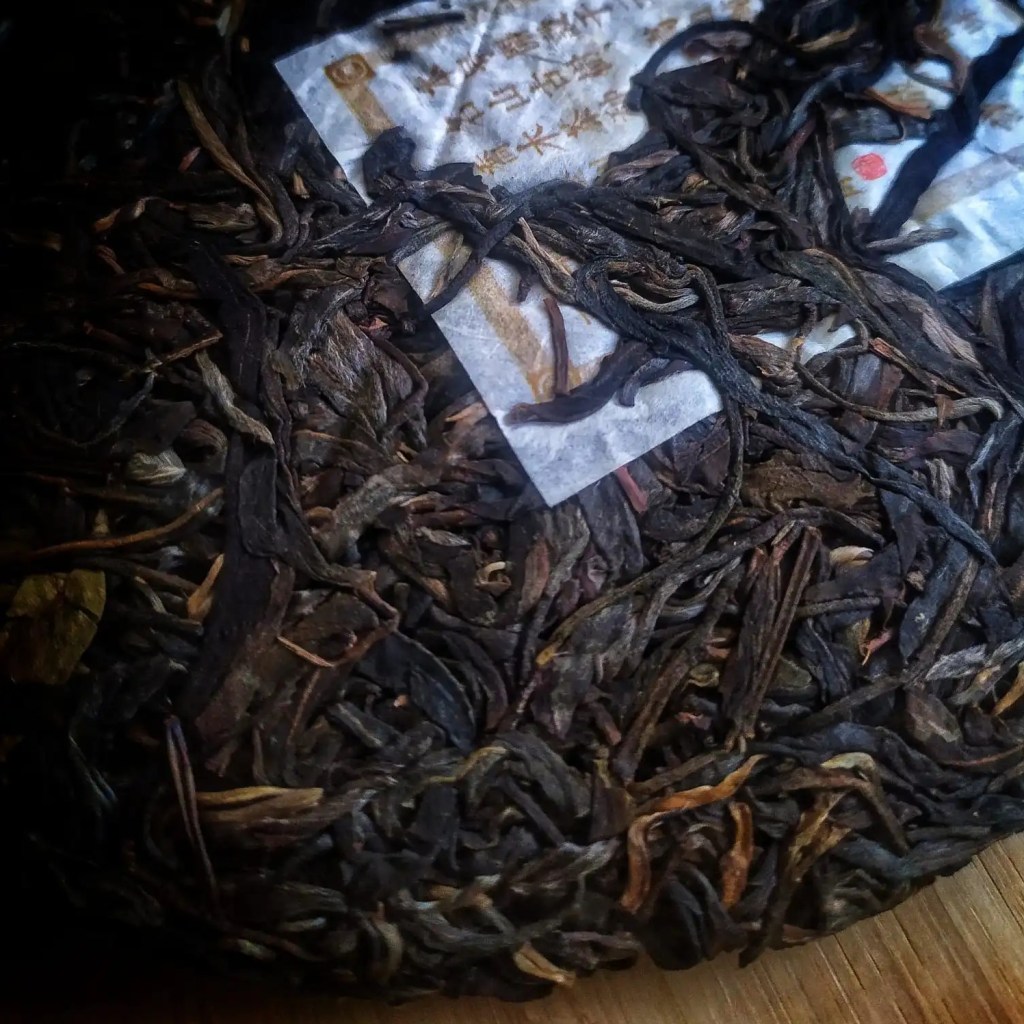
  • Eastern Leaves Nannuo wild forest sheng pu’er 2020

    Eastern Leaves Nannuo wild forest sheng pu’er 2020

    Nannuoshan is located halfway between two large cities of Xishuangbanna, Menghai and Jinghong, and has long been a destination for tourists and enthusiasts who crave the cakes of this mountain, who hike the summit in the day and return home with tea bought for be given to family and friends. Now it’s always good to remember that in areas where teas are sold by themselves, those intended almost for Eucharistic acts, there’s an obligation to search for the truth in those leaves, which are translated into a corresponding liquid that doesn’t tell of simple poeticisms, but which as a disembodied voice tells of who is there and who has been there, of millenary soils, extreme climates and plants that seem to keep time.

    This Eastern Leaves Pu’er sheng comes from wild trees at 1800 meters above sea level, in a tremendously difficult year characterized by a long drought. Here we find not only the floral notes that distinguish Nannuo pu’er, but an olfactory complexity that develops right from the wet leaves an evanescent smoky suggestion as a background for hints of wet rock, citrus of green oranges and vegetal like cut grass, to evolve towards hints of exotic fruit and apple compote. The sip is full, round and at the same time agile, with medium bitterness and minerality, as an excellent Nannuo tea should be.
    Aromas of persimmon and chinchona, bitter orange and medicinal herbs appear and continue in the aftertaste, counteracting sweeter memories of strawberry custard, creating a tasting stratification, in which infusion after infusion a typical and satisfying huigan emerges.