Category: Articles

  • Pu’er Price Collapse, Are We Heading For A New Crash?

    Pu’er Price Collapse, Are We Heading For A New Crash?

    I’ve always loved investigative journalism but I’ve always hated those catastrophic clickbait headlines that always seem to make things bigger than they really are, but there’s a phenomenon in the pu’er world that’s been going on for a little too long to be simply buried like a dog with its bone.

    Now, we all, or almost all, remember the bursting of the speculative bubble in 2007, where the pu’er market swelled exponentially overnight that spring only to falter in July and collapse over 70% by the end of the year, basically cutting the legs off an entire industry. Well, we may not be at those levels, but it doesn’t seem like the lesson has been learned, rather it seems like someone just put their shirt on inside out to hide the stain.

    What were the causes? Well, to simplify, let’s consider that 70% of purchases were motivated by investment and not by real consumption, production quintupled in 4 years, saturating the market, to which we add fraudulent practices of counterfeiting, manipulation of markets and auctions and crisis of confidence in the product, the source and the quality due to opaque practices dictated by the absence of clear regulation that was convenient for everyone, then we obtain what is a self-destructive economic logic based on artificial growth, completely disconnected from the fundamentals of the product.

    In the West we most likely think that Pu’er buyers have broken free from this dimension because we see a large part of them consuming the same tea they bought, which is partly true, but partly not. Many areas of Yunnan that have reached rationally unthinkable numbers, brands or editions that beat crazy prices have behind them a generative structure often of speculative nature that does not always have to do with scarcity, production costs or the quality of the tea.

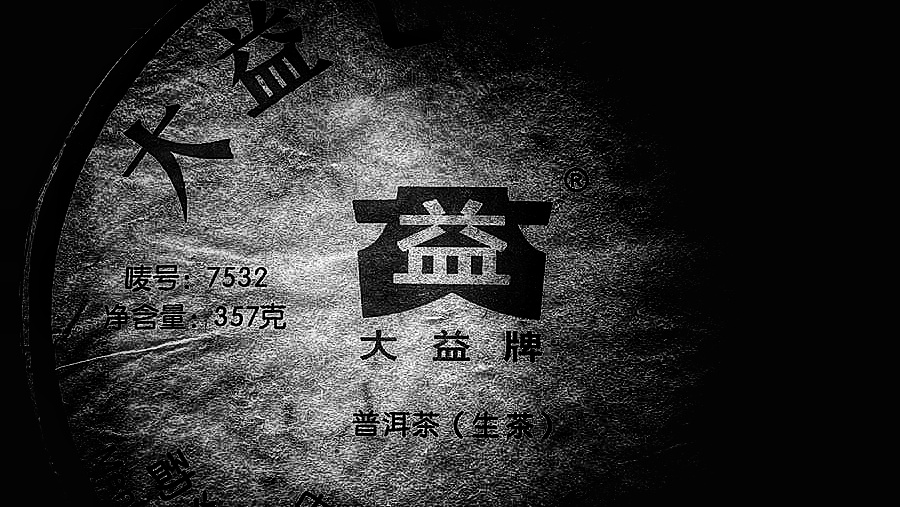
    A while back I found myself tasting old samples or cakes from my collection that I had probably forgotten about. I tasted an old 2005 DaYi 7542, batch 501, along with some more recent production, a 2022 7542 and a 2022 Premium Peacock, both batch 01. I honestly can’t say they were bad teas, they were really good, but to what extent can you justify a crazy price, crazy especially when compared to those before 2015, for a basically “a little more than good” tea. This is not only true for DaYi, but let’s analyze for a moment the price trend of some famous productions. Among the most sought-after cakes in recent years there has been the 2003 Jin No.5 batch 201, in January 2021 its value was 1.45 million RMB/jiàn (84 cakes) while in January 2025 the value amounts to 1.1 million, lower than 5 years ago and above all far from the exorbitant price of 3.2 million in March 2021, same fate for the 2005 7542 (batch 501) which in February 2020 was 230.000 RMB /jiàn (84 cakes), reached 880.000 in February 2021 and then collapsed again at the beginning of this year to 300.000 RMB.

    In recent years DaYi has marketed numerous other special and prestigious productions, such as the 2201 Premium Peacock or the 2021 Golden Rhyme to counteract the erosion of the pu’er market prices, but without much success, the first had a value of 118.000 RMB / 42 cakes now collapsed to 61.500 RMB while the second which had reached 152.000 RMB / 28 cakes now touches “only” 33.000 RMB.

    So, in China there is a particular and complex economic situation and due to personal and corporate financial difficulties, those who invested in this type of goods have tried to divest from illiquid assets such as Pu’er. The tea market does not guarantee a quick sale (and this can be seen from the huge amount of cakes kept obsessively by those who bought them for this purpose) without even seeing a potential for short-term revaluation, and this has led to a greater supply than demand, which is why many recently produced cakes are and will be available in the future.

    Added to this is the real estate crisis triggered by the collapse of Evergrande in 2021, the real estate sector has traditionally absorbed a huge share of savings from Chinese families, who now see the value of their properties deflate, which has caused an erosion of perceived wealth. The liquidation, even at a loss, of pu’er tea to quickly recover liquidity and move a part of immovable money can only worsen the price situation.

    Let’s add a piece: in recent years some brands, attracted by demand, have pushed for an increase in production, not limiting themselves to a couple of pressing batches; with the drop in demand, the market is now flooded with a surplus of product and an inability of the market to absorb the supply.

    But above all, wage stagnation, a lack of robust welfare for which the capital of families is concentrated more on pension, salary and educational expenses and a slowdown in redistributive policies slow down or cancel the entry of new buyers into the market, a situation that brings us back to the last problem of the analysis: The collapse of the speculative segment.

    The cakes of large “investment” brands have suffered a 30-50% drop compared to the 2021-2022 peaks, especially for the post-2010 editions, a sign of the exhaustion of the speculative model, something already seen in 2007, but currently the situation is less dramatic. However, reliance on time is not a reassuring factor in the development of these phenomena, which can see prolonged stagnation as well as a sudden acceleration rather than their dissolution.

    Now I get to the point. For years, the “investment” market has functioned with a pseudo-pyramidal scheme: investors bought new and old editions waiting for others to enter after them, driving up prices. When the absence of new players becomes apparent, the system simply collapses, as the first to arrive only gain if new buyers arrive willing to pay higher prices (those who know the world of fine wines are probably not unfamiliar with this game). So prices collapse because there is no longer real demand to support them.

    The biggest problem with the collapse of speculative Pu’er is that as it increases in value it sometimes cause the price increase of raw material and “consumer” cakes even from small brands, it can have exactly the opposite impact on the local economy of the region, where many small producers depend on the sector, since the costs for harvesting, processing and storage of Pu’er increase accordingly, especially for the latter who do not benefit from economies of scale.

    In addition, many young people seem to give up on this type of purchase and the crisis of confidence due to several allegedly rigged auctions have not helped the image of this sector which in itself is already a niche.

    In this article, not all the main problems have been touched upon, for example, I have intentionally left out the problem of fakes (both new and old pu’er, both big brands and, especially currently, smaller brands) and that of fraud on the origin of the leaves, which represents a huge critical point.

    As far as pu’er consumers are concerned, the only possible logic is to form and create a personal standard that is totally independent from the logic of price, fashion and advertising of brands and sellers. If it is true that a low price does not bode well, it is also true that a high price does not provide any a priori guarantee on its real quality or on the truthfulness of its origin, and this applies to both Asian retailers and European sellers. Trust in a shop and in the people who run it still remains a fundamental prerequisite, as well as fighting speculative logic through greater criticism and greater detachment from trends that contribute nothing to an authoritative and well-founded personal education, nor do any good to a market that certainly no longer needs speculative logic (also considering the polarity of speculation, which could occur in a unipolar way in the West thanks to some retailers without it actually occurring in Asia). All very familiar advice to those of you who have been out here a while, nothing new from the early 2000s.

    To conclude, this trend of continuous increase in prices in a generalized way is not infinitely sustainable, and history unfortunately teaches this, especially in an uncertain global economic context. The future of the market will depend on the ability to balance price, quality and accessibility, avoiding speculative excesses and opening up to new consumers. If the sector is able to adapt, Pu’er will remain a valuable product, but with more balanced and less volatile prices. Companies must become ambassadors of transparency, for example by introducing blockchain certifications or declaring costs and margins so as to show how much is paid to farmers, as happens with some micro-roasteries in the coffee world. Consumers must act as ethical “gatekeepers” avoiding being carried away by the hype without evaluating the quality and institutions must guarantee clear, more stringent rules that absurdly no one seems to ask for (except to limit the use of fertilizers or other superficial environmental restrictions), clarify terms (e.g. gushu) so that they are internationally univocal and measurable as happens with European standards and denominations. All these things seem like utopia, but every now and then it’s good to say things out loud, they don’t even sound bad.

    *All prices in the article were taken from donghetea.com

  • Echoes of Tea Lyricism Part 1: “Bay Meng Yu and The Rise and Fall of the Nannuo Shan Tea Factory”

    Echoes of Tea Lyricism Part 1: “Bay Meng Yu and The Rise and Fall of the Nannuo Shan Tea Factory”

    The Instagram story from a few days ago about Bai Meng Yu and the radical mid-century shift in the mechanization of tea production in Nannuo has gotten more attention than I thought, and I thank you so much for that. So on this chilly morning, drinking a 2003 Nannuo sheng, it seems conceivable that I would be talking to you about pu’er, about a historic change in its production. But no, or at least not really.

    This is because the factory I will talk about did not exactly produce pu’er, in the 30s there was a different concept than the modern one, not all mountains produced pu’er tea and consumed it with the same frequency. The tea produced was mainly sundried green, a sort of primordial maocha. Let’s remember that the era was still that of the ancient pu’er, few mountains managed to have a pseudo-continuous production, often interrupted by internal conflicts, and the price of a cake was extraordinarily high, while the production volume remained exceptionally low. At the time 800 cakes were a big deal and satisfied almost all of Hong Kong’s internal demand. Production was mostly attributable to private family brands where tea was sometimes just a collateral part of their farm, often focused on rice, soy, sorghum and other grains. The period is that of brands such as Jingchang Hao, Fuyuangchang Hao, Songpin Hao, Tongqing Hao and others. But what was pioneering and unprecedented on such a scale was the establishment of Nannuo’s first factory in Shi Tou Zhai.

    Bai was born Bai Liang Cheng, later nicknamed Meng Yu and Lian Fu, in 1893. He was a Muslim of Hui ethnicity and lived in Shadian before undertaking business trips to more than 20 provinces across the country in 1936 and 1937 to analyze the tea market, and finally to conduct studies in Japan and India on processing technology. Upon his return to Menghai, he was put under the spotlight by the Yunnan provincial government. It was early 1938, and the provincial institutions were determined to invest in the creation of the Yunnan Si Pu District Experimental Tea Factory, appointing Bai Meng Yu as its director. He had always been impressed by Nannuo, had a special predilection for that mountain, and when he took over the project he opened a branch there. He was among the first to understand the historical, cultural and geographical complexity of that mountain, of that place that was and would be the cradle of tea lyricism for centuries.

    Bai’s vision was not only about productive efficiency but also about building a sense of community, a sense of responsibility that transcended mere economic considerations. He persuaded local farmers to plant over 100,000 tea trees, establishing a lasting resource of socio-economic value. This initiative was not just a pioneering agricultural operation, but an act of cultural preservation and reconstitution, a pact that would bind generations, establishing deep roots both in the soil and in the spirit of the community.

    There he set up a hospital for the staff, a basketball court, housing for the workers, entertainment rooms and a building for the autonomous production of energy. What was innovative was the particular form of conservative design chosen for the construction, the modern plant was built directly on the summit, designed not to detonate any part of the mountain; the loading system and the vertical structuring of the work were reminiscent of those of the old wine presses on Etna: the fresh tea was weighed on the upper floor, dried and sent to the first floor for the rolling phase through a gravity system with trapdoors located on the work surfaces and on the floor. The final drying took place in the sun, in the shaihong style. Since each phase progressed from top to bottom, the process could be significantly accelerated and the workload per individual worker substantially reduced. At that time, the factory had fewer than 60 workers and could produce more than 20 tons of tea per day.

    The factory was officially operational in January 1941, mainly producing black tea and maocha whose leaves were sourced only from Nannuo farmers, mainly sold to Hong Kong, Myanmar, India as well as locally. In this way, it not only secured the province the precious foreign exchange it desperately needed, but also laid a solid foundation for the future mechanized production of quality tea, probably before Menghai, Dali, Fengqing, Mengku, and not only in Yunnan but also beyond the country’s borders, leaving an imprint that would echo in the global tea landscape.

    The narrative surrounding the procurement of the tea processing machinery is instead shrouded in an almost epic aura, worthy of a time when industrial progress was rarely seen in those parts. The machines are believed to have been imported from the United Kingdom, shipped by sea to Myanmar, transported by land to Jingdong and through a grueling pilgrimage of trucks and mules to their destination.

    There is, however, another version of the facts, more prosaic and less romantic, of those who think that the machinery was more likely purchased in India, in Calcutta, where Bai had been some time before and where many companies selling such equipment were based, such as Marshall, Sons & Co. and Brown & Co. but above all the Ceylon Tea Machinery Company and that of Sir William Jackson, a Scotsman whose mechanical genius had revolutionised the tea industry, who worked for his brother’s company in Assam, the Scottish Assam Tea Co. His inventions included the Excelsior, probably the first rolling machine, as well as the Victoria, Venetian and Britannia driers.

    What is truer, however, regardless of the version of the story, is the enormous human effort that made the installation of the equipment on the mountain possible. 10 carts were involved, each pulled by 3 oxen under the supervision of 15 workers to reach the top of the construction site, advancing in all conditions for 2km a day, cutting down trees, breaking rocks, building drainage systems and closing ditches. For six exhausting months the men worked tirelessly, challenging that harsh and previously inaccessible land, completing an unexpected and anachronistic work.

    But right in the middle of a major plan to modernize and expand markets, the Japanese army invaded southern Yunnan. The Burmese highway was bombed by enemy planes and traffic was paralyzed. Tea destined to Myanmar, a key hub, could no longer be transported, and teahouses and factories soon began to cease production and convert many of their plants to war production facilities. The crisis congested the entire nation and Bai decided to take an active part in the conflict. He helped build a reception center in Jinghong, organized the construction of dozens of bamboo rafts to help soldiers deployed across the border return home. Together with other officials, he trained tea factory workers, turning them into guerrilla fighters against the Japanese occupation, ensuring that each of them was armed and financing their equipment. However, the climate became even more incendiary and the economy collapsed even further towards the beginning of 1948, the Nannuo factory closed permanently and Bai Meng Yu was forced to leave Menghai, moving first to Myanmar and then to Chiang Mai, where a large community of Chinese Muslim immigrants resided, dedicating his last years to literary activity until August 1965, year of his death.

    After the founding of the People’s Republic of China, the government organized its restoration and reconstruction in 1953 and the following year it was merged with the Fohai Tea Factory (the predecessor of the Menghai Tea Factory), with which Bai had a strong rivalry at the time and whose director was Fan Hejun, another cornerstone of the tea industry during the last century. The Nannuo Factory remained under the leadership of Yang Kai Dang until 1994.

    With the reform and opening of markets, tea production and sales were liberalized. Private tea factories emerged, while state-owned ones struggled to keep up. By the early 2000s, the Nannuo Factory was gradually ceasing production amidst the turbulence of an industry undergoing profound and unimaginable changes at an unprecedented speed. A glorious era that had paved the way for modern tea was now fading.

  • Seven Essence Darjeeling Scorsese red

    Seven Essence Darjeeling Scorsese red

    This was the last tea of 2024 and the first of the new year. It was a tough, exhausting year. Dealing with the pain of loss, with the sense of emptiness, of being unmoored from the warmth of everyday life and the luxury of the habit of affection, I believe is the greatest thing that nature can ask a human being to face. For the first time in ten years, tea was not at the center of a significant moment, it was a palliative, something secondary, the translation of the search for a cure.

    What had always fascinated me about tea and its aging, its ontological tension between existing in the moment and thriving in a higher dimension, its transitory nature suspended between being and dissolving, the form and its annihilation, from that moment also applied to human life in a cruder and crueler way than I had ever experienced.

    This tea, the @sevenessenceofficial Scorsese was a companion, a ferryman between the days that followed one another without apparent sense. Sipping it is like tasting the truth, it is like watching a painting by Francis Bacon come to life, built with one brushstroke of flesh and blood after another.

    With that note of Sacher and cinnamon, of burley tobacco, of wenge, of leather and smoke, it initially presents itself as a dark and gloomy shot governed by soft lighting, with a corner set up for a sweet Christmas, all mistletoe and songs, in a untidy apartment plastered with references to art deco in the hallucinatory New York seen through the alienated and feverish gaze of Travis in Taxi Driver.

    When the world seems too hard, when losses pile up and the weight becomes unbearable, tea I believe offers a refuge, which is a greater blessing than we are often granted. It is not an escape, but a return to what is essential, and in its cheering sip pervaded by the aromas of condensed milk, apricot, vanilla and chocolate is what this tea embodies, it is like us, it resists, it keeps us standing, it appears in our lives like diegetic music, as that stranger who suddenly puts on a swing piece in a now-dimmed room in the middle of a bad night, convincing us to give life a dance once again.

  • Climate crisis, Darjeeling and Sublime. Seven Essence Darjeeling summer Ochre

    Climate crisis, Darjeeling and Sublime. Seven Essence Darjeeling summer Ochre

    Despite the climate crises, landslides and hydrogeological disasters that have brought the Himalayas to their knees in the last decade, some corners of this land continue to surprise, returning results beyond the imagination, overcoming difficulties and uncertainties.

    Ochre is a Darjeeling tea, created using the AV2 cultivar, with golden leaves, twisted like the enigmatic smile of Klimt’s Judith, pleased in her languid gaze.
    Born from a thirsty summer, now the umpteenth, it reveals notes of cocoa, malt and buckwheat, then grants aromas of grilled beetroot, cherry brownies and maple syrup.

    Just like in Judith, in this tea lives that something that seduces but leaves a sense of uneasiness, showing that power, which was once attributed only to art, to evoke ambivalent sensations.
    Klimt transformed Judith’s heroic gesture, the killing of the Assyrian general Holofernes to free his people in an act that sublimates partly as a hedonic symbol and partly as a manifesto of an uncertain era and it is in these terms that Ochre places itself.

    The spring harvests are now the children of continuous cycles of drought and violent rains, an alternation of moments of climatic inactivity and destructive floods and in front of the intensity of teas like this I ask myself what and how much we risk losing, and the answer is things like these.

    The sublime is linked to terror, and terror is all the more terrible when linked to the worst fear for man, that is, loss. It takes us beyond the sensitive abyss and is the intersection between a sense of anguish that manifests itself as a shiver and that Laetitia as Schiller described it, that dazzling sense of bliss.

    And in part teas like these bring us back to this condition, to the fear that things like these may one day not be there or exist in such a different proportion that we forget what was there before.

    In its softness, in its caramelized, buttery and lactic aromas, this tea is an encounter between pleasure and meaning, between sensorial beauty and contemplative introspection, transforming its aromatic expression into an experience not only of taste, but of eternal beauty.

  • Beyond the ordinary concept of craftsmanship. Seven Essence Darjeeling Gossamer

    Beyond the ordinary concept of craftsmanship. Seven Essence Darjeeling Gossamer

    There are teas that are indifferent, inexpressive, flat, that simply fill a cup and others that nourish the soul, an expression of the genius loci, resistant, a symbol of those who bear witness to a story, to a place, to bring tea to its highest expression.

    Darjeeling has suffered in the last twenty years from the abuse of its name, from that condition of dissatisfaction for its unexpressed potential, from the awareness of being able to openly declare itself as one of the best terroirs in the world but that for a commercializing inspiration such a condition was denied.

    But to paraphrase Jasper, just as we don’t think of the disease of the shell when admiring its pearl, so when faced with the vital force of the work we don’t think of the cause, the agony that are perhaps the condition of its birth.

    Teas like Gossamer are not just a drink, but an expression of the soul of the terroir, the sublimation of a commitment that goes beyond the ordinary concept of “craftsmanship”, each sip is a meditation on the essence of beauty: the struggle between time and the moment, the fleetingness of a pleasure that persists only as a memory, a retro-olfactory photograph of everything that matters in that instant.

    Plucked from the B157 cultivar, its perfume is complex, polyhedric, like a work of art that always reveals new details with every attempt to decipher its chromatism. It immediately shows an almost ethereal tone that announces its subtle finesse. The aromas of chamomile blend with those of olive oil, lavender and a mango sorbet, then a bouquet opens up characterized by the scent of Aleppo soap, chrysanthemum, orchard grass, water spinach.

    The sip is persuasive, creamy, persistent with an incorruptible freshness and lets a clear return of sweetness emerge, that sweetness that consecrates a Darjeeling tea at the peak of its expression.

  • An echo of a higher truth. MST old master Dong Ding spring 2024

    An echo of a higher truth. MST old master Dong Ding spring 2024

    Taiwan is a mountainous land, rich in those peaks that seem to incessantly support the weight of the world, they are the vertebrae of the backbone of a country, the reflection of a collective history written on the skin of the earth.
    The island has a completely autonomous historical path compared to what is thought and has been affected over the centuries by flows of different cultures whose destinies have been inextricably intertwined with those of the aboriginal populations.

    Nantou is the county that has perhaps been the home of this intricate cultural fabric more than any other, hosting the tattooed faces of the Tàiyǎ, the Shào zú animal and head hunters, the Bùnóng with their polyvocal music and the Zōu with their hats adorned with eagle and blue pheasants feathers.

    In the main village of Dong Ding there is an 80-year-old master still able to work the enchantment, to orchestrate that transformation born of time and tradition, of those invisible threads that bind the present generation to those who have seen the last sunset and those who have not yet been nourished by the first dawn, to create a tea that would have made even Edmund Burke smile more than once.

    When I tasted this Mountain Stream Teas roasted QingXin small batch oolong for the first time I found that magic, that alchemical matrix that Oakeshott defined as “practical knowledge”, a form of knowledge that cannot be explained or reduced to explicit rules but that manifests itself in doing, acting and being. Making a tea like this is not only a work of technical mastery but is a delicate art that feeds on habits, abnegation and rites, it is an order that transcends mere human will, an echo of a higher truth.

    The sip, which finds its roots in those sedimentary and volcanic soils, has a deeply complex character, with hints of mango, wild honey and light resinous nuances. In those subsoils rich in silicates, feldspars and volcanic clay, the concept of tea as a symbolic substance is shaped, leaves like these are imbued with poetry, they become ceremonies of knowledge, extracts of life, and it is this poetic principle that restores the pleasure of existence to sacrifice.

    In its notes of chestnuts, poached pears, cooked lychees the taste shows off a plastic clarity that does not allow itself to be intimidated by any rhetorical exercise, it shows an almost unexpected, vibrant, sharp purity, a sort of historiography of the soul, silent and secret.

  • Darjeeling, a refuge of perpetual change. Seven Essence Darjeeling Villanelle

    Darjeeling, a refuge of perpetual change. Seven Essence Darjeeling Villanelle

    Among those mountains where even the fogs seem to recognize themselves, always the same, the sun makes its way over the peaks of Darjeeling in that way that only northern India can do, with those sunsets stained with scarlet red as if a cup of tea had spilled in the skies.

    Among the big brands, the massive and hypertrophic estates, it is hard to believe that there is a world of artists in constant ferment. In Darjeeling, breathing is instead punctuated by two incredibly deep breaths, one is that of tradition, the other is that of an unprecedented contemporaneity, creator of teas that have become a symbol of the new future: bold, powerful, and often, undeniably, modern.

    Spring teas like Villanelle hold within them the extraordinary nature of spring, in its scents of dried magnolia, citrus, hydrangea and winter melon they seem to reconstruct the triumph of Rubens and Brueghel the Elder’s Eden, an explosion of renewed vegetation, an aromatic encyclopedia of the natural world accompanied by that body, that powerful carnal plasticity of the baroque season.

    While teas like this one consecrate the cup as the theatre of the sublime, they remind us that in these lands it is not easy to emerge, that creative flair and freedom of expression are not common or taken for granted and that spring, despite its splendor, cannot erase the bitter aftertaste of this eternal struggle.

    The sip has a good thickness, with an almost watery sweetness typical of melon that supports the weave of elderflower and orange blossom syrup, thickening in the aromas of taro mochi and acacia honey. It proves to be a vertical tea, ascending in its tension between freshness and maturity, it shows to be a path to follow, a turning point by placing a door in front of the past that must never be reopened.

    In the past decades Darjeeling has been like a vagabond in the world, a terroir of extraordinary complexity and a potential only minimally explored, but it is as if the truth has continually escaped. But now tea and producers like these are establishing a new route, a new pact with their land, a hymn to the highest genius, to the craziest tea, refuge of perpetual change.

  • When a great pu’er become an elegy. Eastern Leaves Lunan Mountain ancient trees 2020

    When a great pu’er become an elegy. Eastern Leaves Lunan Mountain ancient trees 2020

    For generations, caravans laden with pu’er have traversed the steep paths of Lunan, eluding the harsh karst landscape, leaving it behind them, slowly advancing towards Tibet.

    The muleteers, with their faces hollowed by frost and fatigue, relied on themselves, on their companions, on the tenacity of their horses, following the paths traced by their ancestors, where every bend concealed stories of exchange, trade and survival.

    Pasha seems to have been able to overcome everything, from the destruction that occurred with the Panthay rebellion to the wreck of traditionalism and the collectivization of the Cultural Revolution, to the persecution of the Red Guards.

    Hölderlin wrote “where there is danger, what saves also grows,” and so it is here that natural beauty and spiritual aspirations intertwine into a rich and vibrant cultural cloth, and teas like this, with their dense depth of flavors of vanilla, candied fruit, nuts and persimmons, take us into a dimension of time that we cannot easily grasp, a place where tradition is not only preserved, but continually recreated.

    With its silky sip, honeyed sweetness, musky and citrus tones, the cup becomes a sort of refuge, a bridge rather than an end.

    When we sip a cup of pu’er like this we are entering into a dialogue with the past, it reminds us that not all is lost, that in its slow and patient aging lies both a concession and a resistance to time.

    A great pu’er becomes an elegy, not only a lyric of sadness for what is lost but a celebration of the intrinsic value of what has been. In its leaves pervaded by scents of red dates, walnuts and toasted pumpkin seeds, of withered broom flowers, its elegiac essence revived through a call to the earth, to history, to the culture, every sip becomes an existential plan, a way of inhabiting time with consciousness.

    It offers us a key to a further, more saturated dimension of time, in which loss is not an obstacle to overcome but nourishment for our being. Both, the elegy and the pu’er make memory a cure, an antidote to oblivion, reminding us that the past is not a wound to be closed, but a legacy to draw from.

  • An Antidote to Boredom. Seven Essence Darjeeling Ennui

    An Antidote to Boredom. Seven Essence Darjeeling Ennui

    Ennui, boredom, the name of this tea, the strange sensation that overwhelms you when nothing happens, when everything forces you to remain still, like an old wreck of a bus stopped in the middle of nowhere, and you there, with an empty gaze, with a half-extinguished cigarette between your fingers, without knowing where you will go or what you will do. Boredom is the slow rain that beats on the windshield while you wait for a level crossing to close, waiting for a train that will never pass.

    It is with you wherever you go, like an old battered suitcase that you can’t forget anywhere. According to Heidegger and Schopenhauer, boredom is a sign of a more significant absence, that of an authentic connection with reality, the feeling associated with the unsatisfiability of worldly things. But boredom can be seen as a crisis of meaning, which opens up new possibilities of existence, it makes you feel as if time is a trap, a kind of dead end, but things like culture, rituals and traditions provide an antidote through their ability to live time and experience through values that transcend the individual.

    Teas like Ennui are authentic expressions of civilization, they not only entertain but give shape to a moment. They are those true teas, shaped by high altitudes, by the hard, merciless soil, those peaks that teach you freedom and coexistence with emptiness.

    Its leaves enclose that sense of limit, of transcendence, where boredom has no space. Between the notes of chestnut honey, peach and turmeric, accords of tuberose and Bulgarian rose, jasmine and ylang ylang make their way, accompanied by the scents of birch wood and face powder as in an overlapping of works by Rachael McCampbell exhibited in an old venetian coquetry.

    And if the antidote to boredom is culture and tradition, tea, from this perspective, is a sort of Aristotelian mimesis: it imitates and returns, in the form of a sensitive experience, the nature and culture of the place from which it comes. And so in its soft and sweet sip, aromas of grapes, moss, spices and rose weave the memory of a glass of moscato passito in the middle of summer, consecrating a tea of incredible persistence.

  • Tea as a contrast to immediacy and as an aid to living time. Viet Sun Thương Sơn sheng pu’er 2016

    Tea as a contrast to immediacy and as an aid to living time. Viet Sun Thương Sơn sheng pu’er 2016

    I think there is immense value in dwelling on the traditions that tie us to the past. We live in an age that has forgotten the importance of living time, of the slow maturation of ideas and things. Rather than living, we grope in a era that tends at times to reduce life to mere mechanisms of action and compensation, to power relations, to a set of derivations and summary assumptions. And yet, our daily experience recalls something much deeper: the desire for meaning, the search for truth, the will to give meaning to time and to recognize the sacred.

    This morning I reached back into my pharmacy, getting a 2016 sheng cake out of that mess, it comes from Thương Sơn, one of those places where the past intertwines with a vibrant and complex present, which seems to hold the secret to eternity. Here, ethnic and cultural plurality merge into a living mosaic, the rice paddies wrap the mountains like an emerald scarf, contrasted by the pink-purple waves of autumn buckwheat flowers, those flowers that are said to have been sent by the gods as a sign of recognition.


    Each leaf is a fragment of a narrative that has developed over centuries, Thương Sơn is rich in ancient trees that produce teas like this, whose aromas recall the cold winter with the spirit of an austere old father wrapped in his leather armchair, immersed in the cloud of an evening cigar.

    The sip is enveloping, deep, mineral with hints of Montecristo cigar, leather, dried Moroccan plum, camphor and cloves, it is a constant reminder that true pleasure requires patience. The aromas then sublimate into a dimension of labdanum accords, apricot in alcohol, gentian liqueur and incense. The intense huigan and strong qi revive the image of the crazy and primordial harmony of places like this, so typical of traditional places, a cup we could define as an “accumulated wisdom”.

    Teas like these, places like Thương Sơn, through understanding the bond with their own tradition, with their own history, teach that there is an order, a truth that transcends human contingency, and a tea like this that ages is a trace of that truth, a witness, a collector of past eras, a contract between generations.