Category: Articles

  • An emotional tea along Xiangling Highway. Mr Quen Cun An and his early 2000’s Manzhuan pu’er

    An emotional tea along Xiangling Highway. Mr Quen Cun An and his early 2000’s Manzhuan pu’er

    Along the Xianglun Highway, the entrances to the forest alternate with those of the taidicha, a single main road connects the village of Manzhuang to that of Manlin. The primeval essence of the tropical forest can be seen from the few patches of bare earth left; the age, mineralogy and extensive leaching of acrisol, which have led to low levels of plant nutrients, counteract the silt-clay undertones of the iron- and aluminum-rich ferrarsol in which the camellia has found its home.

    In the teahouses you drink the liquid consequence of a territory and its time, of a history of sacrifices and the search for the truest self-assertion. They become a place to find a family, a group or a simple shelter where one can abstract oneself from taxes or from any contradiction of contingencies, where every soul, even if tacit, does not wander alone, but together with other worn out and thirsty souls.

    Mr. Quen’s Manzhuan sheng pu’er expresses the charm of the lived, it is the example of those teas that seem to simplify what is most hidden and arcane and complicate what is simpler, making a set of organoleptic notes a complex symphony and a vivid image.

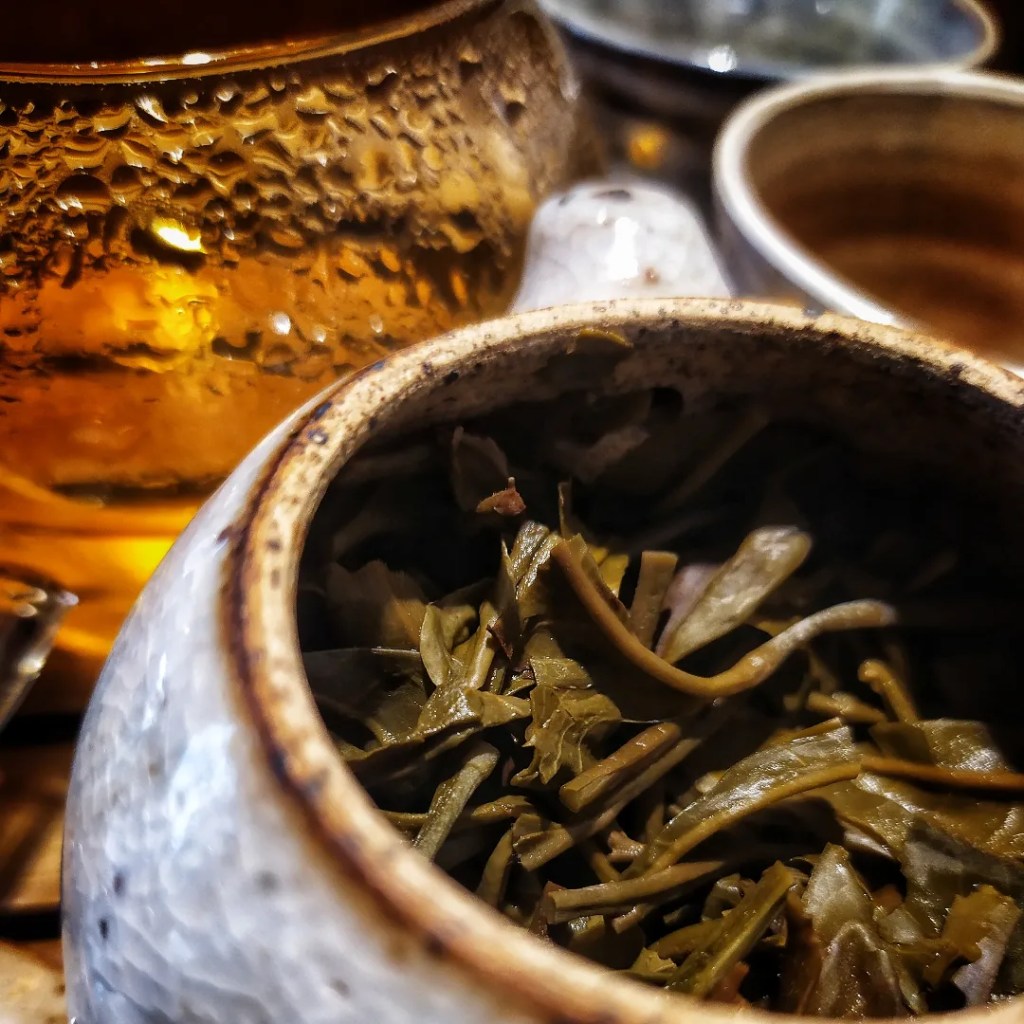
    The liqueur has a reddish color with orange reflections, reminiscent of the nuances of a tawny port. The scents of the wet leaves enriched with jinhua bring back memories of raw and primitive landscapes as Bruegel the Elder would have imagined them, with notes of damp earth, dried mushrooms, undergrowth, leading to a wood cabin under the rain, with the smell of aged mahogany, old books and a bouquet of faded flowers. Light balsamic tones take over in the background, together with those of burnt wood, laurel, dried plums, piloto tobacco, black pepper and dried longan.

    The gloomy evening atmosphere becomes more vivid with the appearance of notes of leather, cognac and typical hints of aging in oak barrels.
    The body is medium thick, the sip has notes of walnut, dried plums and aromatic herbs which are the prelude to the nuances of leather, old wood, cinchona, dried citrus peel and filter coffee.

    It is a sheng of great balance and sensory complexity, the bitterness is now perfectly integrated and not very perceptible as is the astringency, excellent huigan and remarkable persistence.
    Material from Ba Zhong Zhai village, Manzhuan area, family garden of Quen Cun An.

  • As long as the root is still there, everything is still there. A few words about Manzhuan

    As long as the root is still there, everything is still there. A few words about Manzhuan

    “只要根还在,一切都还在”
    Before the advent of a group of Taiwanese tea explorers in 1994, Manzhuan was a heavily rural area, dominated by vegetation surrounding classical Han architecture. Residents of Manzhuang, Manlin and Manqian were still recovering from the war that decimated many families, the losses due to the famine and class sacrifices of the Maoist era, especially between the 50s and 70s, brought the area of Manzhuang to count less than a hundred people, the sale of tea was almost impossible and agriculture was not even enough for self-sustaining.

    Social regimentation had devastated the existence of a place, disfigured the quiet by imposing an artificial order irreconcilable to it. But history soon revealed a whole other future, and from the mid 70s onwards the production and sale of tea was resumed, many centuries-old trees were pruned to increase production and answer an ever-increasing demand. This happened until the early 2000s, when the effects of the Taiwanese expedition and the explosion of the pu’er market made sure to return to a policy of conservation and preservation of their land, reliving their past.
    As long as the root is still there, everything is still there “只要根还在,一切都还在”.

    Manzhuang is one of those few remaining places that detract from humanity the superficial, in which between man and earth there is not a mere utilitarian link as between an animal and a drinking trough, but rather existential as the one between the world and God. It is here that trees distill the air full of herbs and wild fruits and man becomes able to transform it into the liquid painting of a land that still resists modernization, taking root in its primordial essence.

    Drinking Manzhuan pu’er like Mr. Quen’s is like letting a sip of reconstruction run down your throat, giving you the keys to a hard-earned identity. They are teas that allow to go beyond the material nature of the object, a liquid synthesis of the historical complexity of a region that has been the cradle of tea lyricism and incubator of a natural heritage for more than a thousand years.

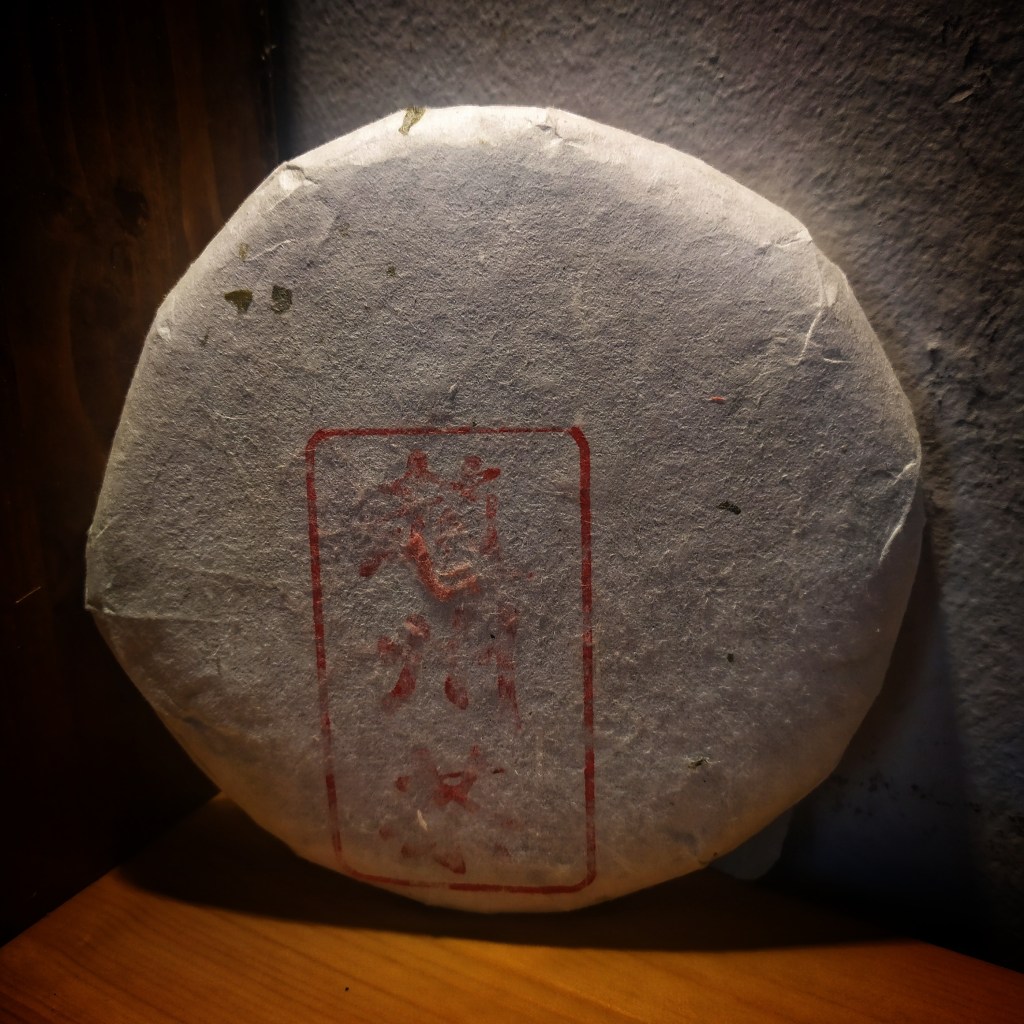
    P.S. the cake in the photo, although produced in Yibang, bears the symbol and style of the productions of Mr. Quen Cun An’s family (Quanjihao tea factory), who manage gardens throughout the Six Mountains, including Manzhuan.

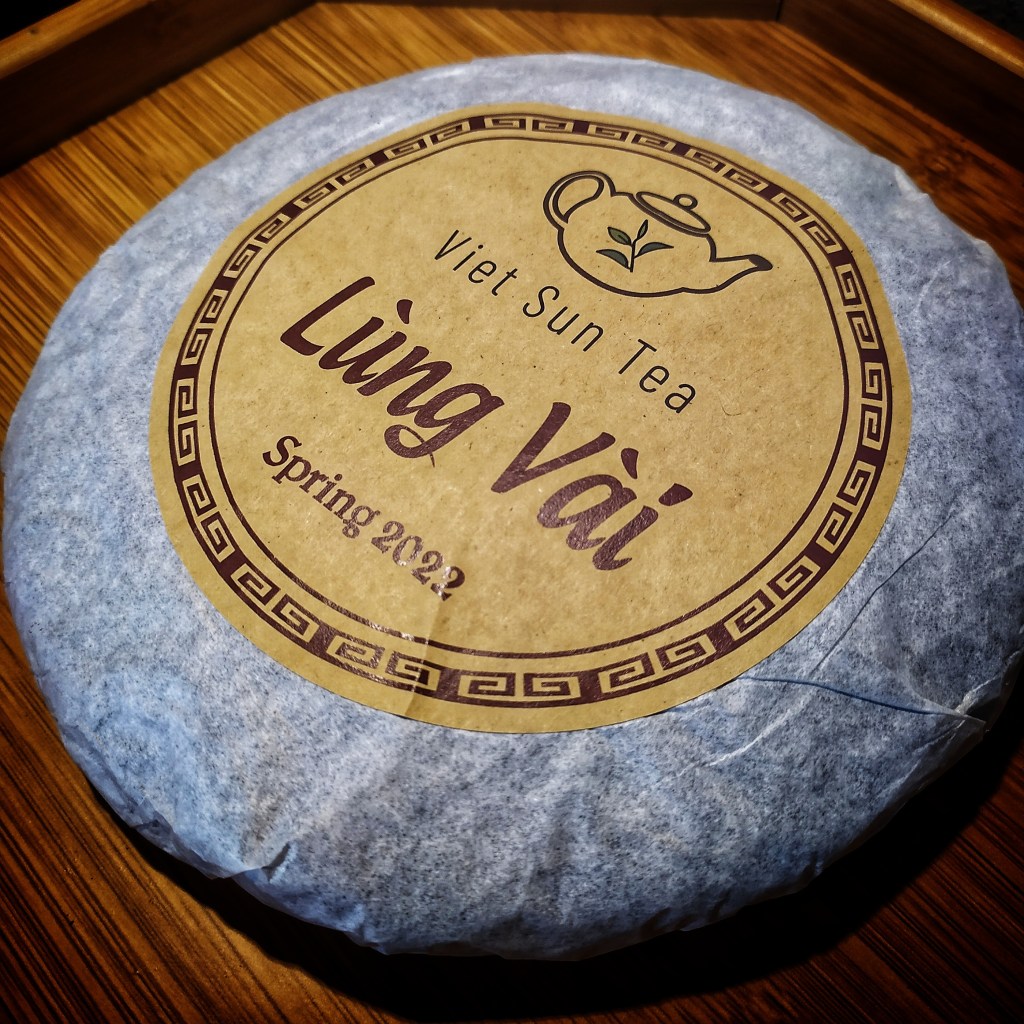
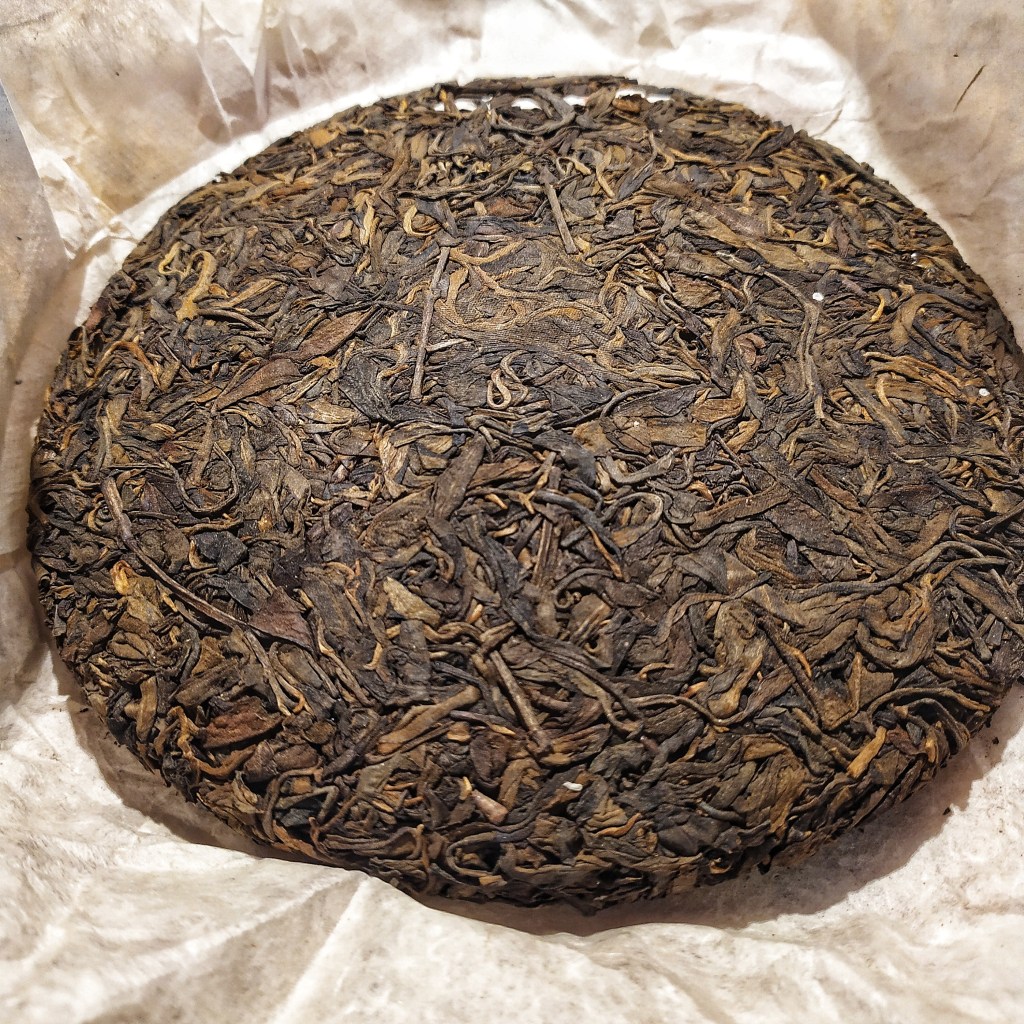
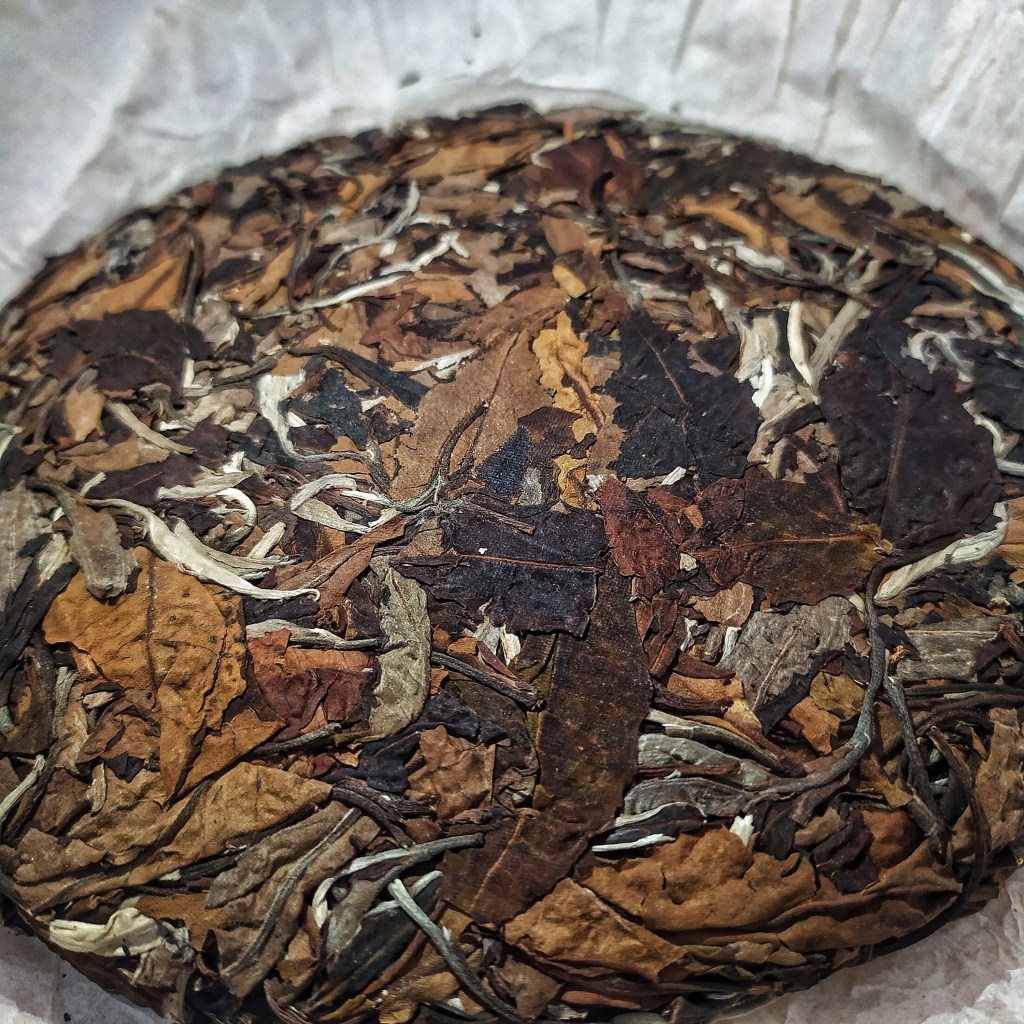
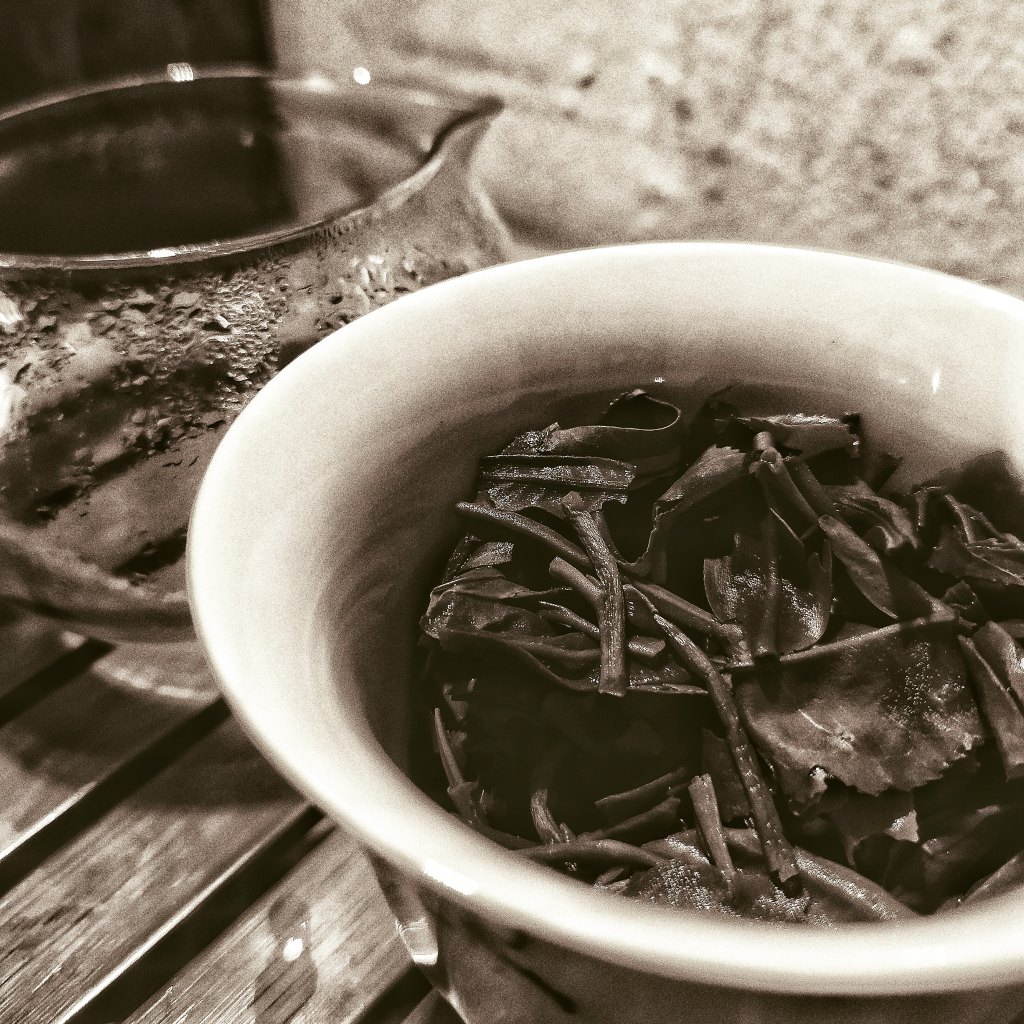
  • A tea that is a symbol of redemption, of radical change and self-determination. Viet Sun Lùng Vài pressed white tea 2022

    A tea that is a symbol of redemption, of radical change and self-determination. Viet Sun Lùng Vài pressed white tea 2022

    A long time has passed, from Chinese cultural domination, from French colonization, from the 30 years of struggle for independence, the time necessary for the rain to give respite to the memory from the pain of the loss. But tea in Vietnam resisted everything as an observer of events, as a symbol of the zeitgeist, the spirit of the time and as such able to invest every era, to be reflected in literature and philosophy, in arts and everyday practice.

    Tea here is not a subject of dispute, the object of a claimed originality, of authenticity, but it is a symbol of restoration and self-affirmation, of a common thread with the past through a new way of doing things, it is a narrator of epics and tragedies, epitome of imaginative experiences of past places, of the old shops of Hanoi, of the narrow and terraced architecture leaning against the alleys full of vendors and trucks, of the old agricultural research stations abandoned and rebuilt in the late 70’s.

    The laobaicha of Viet Sun comes from material of 2022 collected from centenary trees in the area of Lùng Vài, Ha Giang, in the district of Vị Xuyên, at an altitude of 1000-1100 m. Vị Xuyên was the scene of one of the saddest battles that Vietnam saw in its history, a war that until 1985 repelled hundreds of thousands of soldiers, but which is now the district of one of the most interesting productive areas of the country. Tea in this case is a distillate of its place of origin, so expressive as to bear an almost salvific garment for a place, to extract from it its opposite, to exercise their ancient alchemical propositions of transmutation and renewal and at the same time to preserve and protect the scents of an original flowering.

    This is a white tea that gives a perfect daily drink, saturated with sense and without unnecessary garments. Its character is punctuated by ancestral scents, the olfactory notes recall those of a bouquet of roses resting on an antique piece of furniture, in which woody scents are linked to the fragrances of fresh and withered flowers, emerge the fragrance of apricots and kumquats stored in a bamboo basket, while those of spices and leather complete an intense and decadent picture, enlivened by a mnemonic expressiveness not always so frequently experienced.

    The mouthfeel is medium-thick, enveloping, lingering and balanced, distinctive and not similar to any other, enriched with spicy notes and ripe fruit, rhubarb and medicinal herbs. I thank Vietsun project for having contributed greatly to the in-depth discovery of Vietnamese teas, providing excellent material and information for the study of this country, its terroir and its history.

  • The Shangkang festival, the reconciliation of civilization, a nostalgic tea. Thoughts through a 2021 Wengji sheng pu from Moychay

    The Shangkang festival, the reconciliation of civilization, a nostalgic tea. Thoughts through a 2021 Wengji sheng pu from Moychay

    People gathered at the Shankang festival, their predecessors were honored, the offerings placed at the foot of a distant past in which every year the memory revived. It was an occasion to dance, to be involved in a moment when time seemed to stop, saturated with a sense that was difficult to translate into words, where society was reconciled and perfected, new relationships were woven and in the dance a harmonious idea of freedom and order was restored.

    The intense emanation of life was palpable also through the negatives of the photographs still hanging to dry, in those images you could see the dynamism of movements, conversations, aspirations, through that dance was reconstituted a kind of social consciousness, a “to be for others” even through the individualism, an assignment of virtue reflected in rhythmic and modal imposition, in traditional customs, in emphasized forms of courtesy, creating a link between distance and proximity, freedom and respect, confidence and discipline.

    In an age of collective utopias, among the mountain forests of Wengji flourishes instead the sense of dwelling, tea is evocative of a feeling of belonging, a vital civilization supported by the ability to live for its territory and its history alongside its neighbors, a loyalty to its land and the narration of its importance.

    In the gaiwan there is a 2021 Wengji sheng pu from Moychay, a complex tea where the typical character of Jingmai emerges in the notes of honey and flowers, orange peel, caramelized apricot, cooked strawberry and pandolce, with more primitive nuances in the background. The body is medium thick, the aromas direct and defined, the huigan emerges early after the advance of a archetypical and balanced bitterness.

  • The primordial essence of Da Xue Shan in YongDe County

    The primordial essence of Da Xue Shan in YongDe County

    he subtropical scenery of the Nanting River, from the foot of the mountain to the northern view of the main peak, seems to capture all the splendor of the world. Daxue rises to over 3,400 meters, opposite the other peak of the Nu mountain range, Xiaoxueshan.

    Karst severity alternates with the chromatism of the tropical forest of broad-leaved trees, water and land, peaks and plains create an antithetical contrast. It is said that a mountain has 4 seasons but thousands of different skies, and in Daxue there is nothing more true.
    Primordial colourism is the home of the black crested gibbon, the beauty and brilliance of wild flowers interrupts the immensity of the mountain, the Wanzhangyan waterfall seems suspended, as if it fell from the sky.

    Some families of the valley floor who do not work in large cities graze animals, while others work in small laboratories that produce Mangtuan paper, a tissue paper with a history of over 600 years made by hand from a bark called Maisha in the Dai language, for centuries used to transcribe Buddhist scriptures, books and packaging. Still others are dedicated to the collection of tea leaves and of the rare fruit varieties of the county such as Xiaomengtong pears, Mengdi litchi, Minglang papayas and Yongkang mango.

    The tea of Daxue, like its places, is addressed to the taster as a sincere lyric does with its auditorium, the distilled essence of a place is poured into our body giving it back its life while sweetness refluxes like childhood memories. His tea has quenched the thirst of poets and workers, revives memories of distant and primitive places as well as those of a work of art on a ceramic.

    Tea like those of Da Xue Shan are invested with a symbolic charge like few others, labaro of radical changes and that rise and fall from one existential plan to another that nothing is but the path of a rational being. Tea appropriates human nuances and analogies without resorting to forced anthropomorphism, it is imbued with a meaning that we ourselves put on it, it represents a momentary suspension where the ego meets in the cup its reflection.

  • When Mahei was called Lù biān. Journey through the history of the village in the company of a 2020 Mahei dashu sheng pu

    When Mahei was called Lù biān. Journey through the history of the village in the company of a 2020 Mahei dashu sheng pu

    Travel 25 kilometers west of Guafengzhai, you will arrive in Mahei. This was the first stage of the ancient tea road on the journey from Laos to China. It is said that one of the original names of Mahei 麻 黑 was “路 边” Lù biān, “Roadside”, because Maheizhai is near the road leading to Laos. In the past, one could start from Laos towards Yiwu and settle the night at the “roadside”, the old Mahei.

    Although it is one of the areas that dictates the highest price in Yiwu, only in recent years has there been an incessant attention to the restoration of natural conditions with low interventionism in the tea forests, remedying the tough pruning approach of the 80s-90s in order to increase the yield of ancient trees. Many trees still exceed 300 years but today the mixed and indistinct collection of gushu, young trees and ancient pruned trees is very common and have a clear organoleptic distinction is very complicated. Old trees Mahei pu is much sought after and expensive and its taste embodies part of the soul of Yiwu.

    Roughly speaking, it can be said that Mahei tea from ancient wild trees has a softer sip, with a greater opening sweetness and a bitterness that acts as a splendid counterweight. The astringency orchestrates a balanced, lingering and memorable melody, the huigan is intense, powerful and comes quickly, the body is silky and refreshing in which the typical honeyed character is enriched by a complexity unrecoverable in some non-wild or shengtai material.

    This sheng pu by Thés terre de ciel comes from dashu trees, from material collected in the spring of 2020. In the wet leaves vegetal and wild hints of leather are combined with notes of honey, flowers and caramel, woody fragrances like those of raw mushrooms are the prelude to a sweet opera adorned with a bouquet of aromatic herbs, in which the background smells of petricore and wet vegetation.

    The sip has an excellent structure, the pleasant and indulgent bitterness typical of Mahei does not overshadow or obscure the other sensations but instead enhances the tea by contrasting with sweetness and a graceful astringency. The huigan is immediate, minerality makes the mouth water refreshing the palate in which progressively appear aromas of myrtle leaf, dried and candied apple, mango and mulberry. A good roundness accompanied by notes of acacia honey and manuka continue in a very lingering finish at the end of an antithetical taste experience, elegant and wild at the same time, still enlivened by a freshness and a vegetal nuance that herald its evolutionary intent.

  • Mahei, one of the best pu’er in Yiwu. But has it always been like this?

    Mahei, one of the best pu’er in Yiwu. But has it always been like this?

    The rains of mid-April break the drought of Mahei, but the race to the true maocha every year does not stop, as well as the rise in prices has not seen truce since 2007 to date. Maheizhai is a village of Yiwu, in Mengla county, almost 3 square kilometers of woods and trees between 1200 and 1500 meters above sea level.
    All 90 families are practically involved in the tea industry, gathered into those 330 hectares of ancient trees trying to seize what they can in a battle of wits and courage.

    Before 2008, Mahei and villages like Yibi, Sanheshe, Manxiu and Daxiu in the Yiwu area were all almost indistinct, except for the tea experts and buyers who came here in April to obsessively and meticulously look for the best material.
    Between 2005 and 2007 there is the appearance of some sporadic trace of the pu’er of Mahei, which also often merged the material of neighboring villages, including Guafengzhai, Mansa and Manxiu when they did not flow into the more common Yiwu Zheng Shan tea or blended with the leaves of the other six mountains. Around 2008-2009 a more methodical subdivision of villages and mountains began with a strong emphasis on searching for the old trees of these villages.

    Here are several gushu, but few are wild, in fact between the 80s and 90s heavy interventional practices have been seen, both with regard to the reduction of the size of the forest and the pruning techniques carried out in a more or less burdensome way.

    The introduction of extensive terraces in the late 70’s in the Yiwu area has also raised a veil of anxiety and concern for those who set out to find and market the tea of these villages, emphasizing their uniqueness.
    As always it is in the experience and in the trust to find the way of the truth, but once found and cleaned from the blanket of dust and individualism it is difficult to forget how it is.

  • Reaching the highest peak, where the air is more rarefied, where the silence of the place becomes a virtue. Tribute to Huazhuliangzi.

    Reaching the highest peak, where the air is more rarefied, where the silence of the place becomes a virtue. Tribute to Huazhuliangzi.

    To the northeast of Menghaizhen we follow the dirt roads that lead to the highest point, the peak of Banna, between the fog that seems palpable and the city behind us at every point the eyes find rest wherever you look. The old trees covered in moss and xylophagous saprophytes draw attention, among the rocky outcrops they look like lignified souls, guardians of a place that does not seem to have been disfigured by urban compulsion. Leaving Baotang and Luotang we continue in the direction of Bameng, towards the peaks of Huazhuliangzi, where the air is more rarefied, the silence of the place becomes a virtue as we cling to those slopes above 2000 meters.

    On the top the climate is cool, drama dissipates in front of a gaiwan, the smell is that of the surrounding vegetation while you exhale the steam of the kettle which pervades the room; tea welcomes as an implicit idea of manifestation of a greatness able to overcome the transience of events, it is the pride that relieved from the burden of living in a premeditated order when the civil conflict had just ended and the desire for reconstruction took refuge in time, the one necessary to the rain to bury a war that at its resolution allowed only that smell of oils and fuel of the first trucks.

    These mountains are the home of the Hani, Lahu and Han people, mainly settled in the areas of Baotang (Xinzhai and Laozhai), Benglong and Bamen. The tea trees here are mixed with wild bamboo and other native arboreal species, the tea varieties of Huazhuliangzi are the broadleaf typical of Menghai County.
    The Huazhuliangzi teas seem far from a prescriptible attitude, the unique character of these leaves welcomes in itself that sometimes antinomic but inescapably linked relationship between the contingent and the sacred, between sky and earth, between human science and nature.

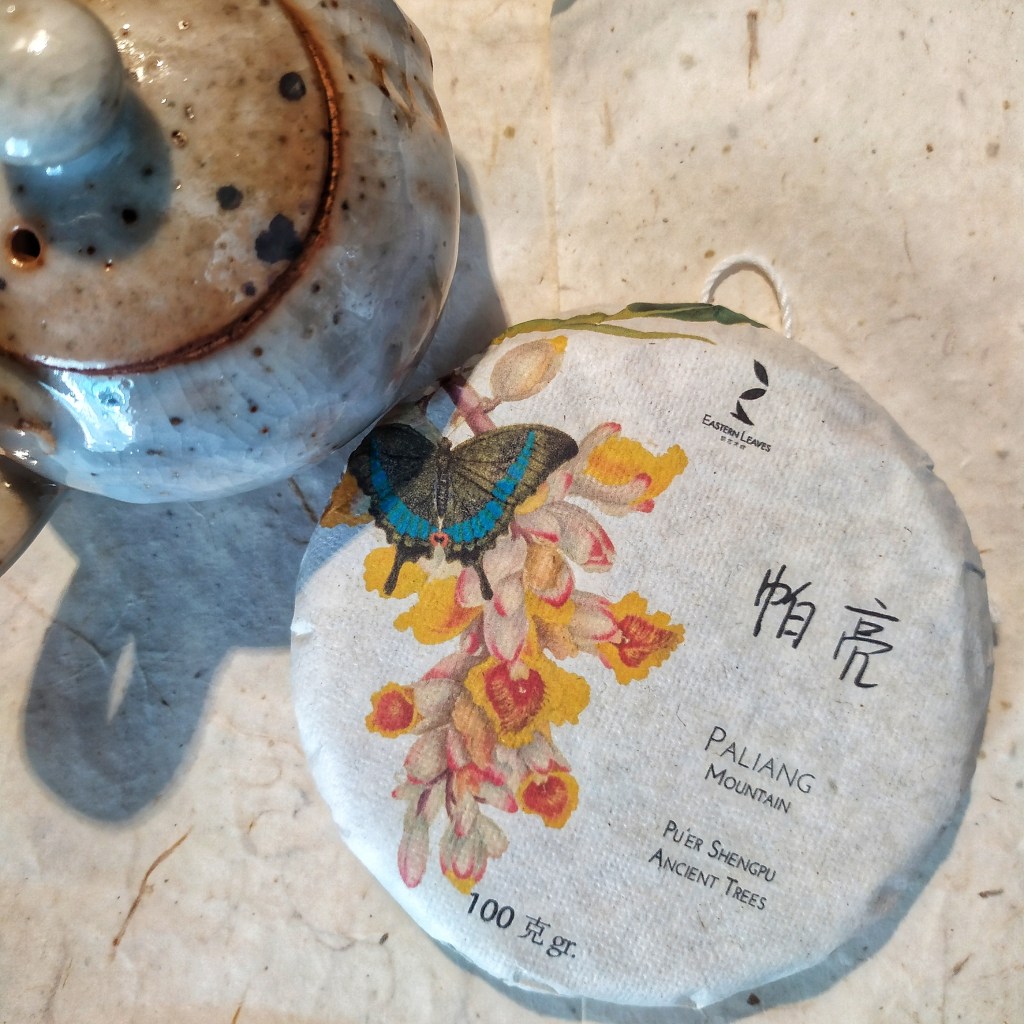
    Easter Leaves Huazhuliangzi 2021 sheng pu masterfully exemplifies the character of this area, there is a mountainous and wild charm in it, a composed sweetness postpones an evident and brief astringent sensation that leaves the mouth in seconds, without stagnation, and the aftertaste it is incredibly persistent.

    he infused leaves recall notes of mango, ripe peach, aromas of melon and peach gums. The musky notes blend with the fruity sweetness recalling the Moscato passito, combining childhood recalls such as ramassin and rosehip.
    The sip flows easily along the throat refreshing the palate, the aromas are reminiscent of white melon, lemongrass and sorrel. The vegetal acidity seems almost chewable, animates the tea exalting an already complex experience, adorned with aromas of peach and white cherry, continuing incessantly in its silky and endless texture.

  • Epitome of Fuzhuan fermentation: Eurotium cristatum, the hero of Anhua

    Epitome of Fuzhuan fermentation: Eurotium cristatum, the hero of Anhua

    Despite my passion for history, anthropology and philosophy, my training background in daily life has always concerned scientific world; in particular agronomic and food technology studies have led me to be fascinated by microbiology of tea, which in the western world, however, is a subject with which we find ourselves dealing too little often.

    I will not investigate the oxidative and fermentative processes, which will be the subject of other posts, but I will speak in particular of a fungus, an extraordinary being, what I would describe as the microbiological hero of Fuzhuan. Eurotium cristatum is a very vigorous ascomycota, typical of the Hunan region, able to survive at relatively high temperatures and in situations of high osmolarity. The origin of Fuzhuan brick tea is still very controversial today, but it can probably be traced back to the Ming dynasty. Already in ancient times the jin hua, the golden flowers due to the populations of E. cristatum, were used as a quality standard for heicha bricks.

    This “flowering”, the Fa Hua, unavailable elsewhere, is a process due to the uniqueness of the microclimate of Hunan, and owes its color to the golden-yellow hue of the ascocarp of the fungus. But how does this condition arise, and how does it affect the taste of the tea?

    The creation of Fucha is one of the most complicated production processes among dark teas, which involves three particular fermentation stages that differentiate it from the others. Once the rolling phase (sometimes 2 rolling phases) of the leaves has been completed, which favors the rupture of the cell membranes favoring the biological processes, the leaves are processed at a temperature between 100-200°C (depending on whether it is pile steaming or other methods), creating a selective condition (about 90% of fungi and bacteria are killed).

    Follows a piling phase, a pre-fermentation phase in which the leaves are placed in piles and the temperature is lowered below 60°C and moisture content of 65% to 68% to favor microbial proliferation, creating an initial selection for some species of microorganisms.

    The loose leaf tea is therefore left as raw material stage, the pile is turned at certain intervals. The reactions will take place and will develop the scent of the tea, such as various types of degradation of amino acids or hydrocarbons, Strecker degradation, enzyme-mediated oxidation and hydrolysis, as well as non-enzymatic degradation and oxidation. The pile fermented leaves were then dried; in old days the drying process was done in an oven with pinewood at around 70°C. Raw Fucha is now ready.

    All this will end with the subsequent steam heating of the leaves at around 80°C and piled up again throughout the night, to make them suitable for pressing and further determine a selective environmental condition. At this point the pressing in bricks will take place once the temperature has reached 50°C and the bricks stored so that the third phase can begin, the flowering phase, known as fahua, under controlled moisture and temperature for at least 15–25 days, which marks the post-fermentation events.

    We always keep in mind that these procedures, times and temperatures can vary according to the recipe and the various traditional methods.

    Phases of a typical production process: (1) Fresh tea leaves, (2) Shaqing, (3) First rolling, (4) Pile fermentation, (5) Possible Second rolling, (6) Drying, Raw Fucha is ready, (7) Screening and sorting, (8) Blending, (9) Pile steaming, (10) Second short pile fermentation, (11) Pressing, (12) Fa Hua, Microbial fermentation, (13) Packaging and storage

    E. cristatum together with other microbial agents acts on tea leaf molecules thanks to the activity of extracellular enzymes produced by fungal fermentation, such as α-amylases, polyphenol oxidase, cellulase, pectinase, xylanase, proteases and hemicellulase oxidase, contributing to the change of volatile substances and bioactive components during the fermentation process.

    The dominant genres of microorganisms identified were Eurotium, Debaryomyces and Aspergillus, and three genres of bacteria such as Klebsiella, Lactococcus and Bacillus. Although all microorganisms contribute to the flavor profile, Eurotium cristatum was found to be deeply characterizing.

    The degradation of proteins and polyphenols, as well as the production of metabolites, carbonaceous and nitrogenous compounds due to the action of E. cristatum and associated microorganisms lead to the formation of the distinguishable fungal and woody aroma of Fuzhuan tea, of stale, mentholated and undergrowth perception.

    Furthermore, the traditional brick form must not be understood as a casual or merely hedonistic and cultural process, it has in fact emerged that the differences in the structure of the bacterial community between the different types of Fucha can be in part mainly attributed to the different degree of compression of the material.

    Notable differences emerged in the microbial community in its taxonomic diversity and population size, in loose, unpressed, lightly pressed, hand-pressed, or machine-pressed Fuzhuan tea leaves. They all influenced the fermentative development in their own way, creating different tissue damage, thus modifying the release of leaf cell contents. This in turn plays an important role in influencing the subsequent fermentation stage.

    The results consistently indicated that machine-pressed Fuzhuan tea contained the highest abundance and diversity of microorganisms.
    The excessive mechanical damage caused by the strong pressing causes a greater degree of rupture of the membranes which is followed by a considerable release of the intracellular contents, as well as affected the humidity and air circulation inside the brick, significantly promoting the growth and the development of colonies of microorganisms.

    The result is that the endogenous enzymatic and non-enzymatic action of the leaves, and to a greater extent the exogenous one of the microorganisms, leads to polyphenolic oxidation with a consequent greater production of thearubigins which characterizes the dark color of this heicha; the reactions involving polyphenols, carbohydrates and amino acids affect the silky texture and volatile compounds, as well as the oxidation of fatty acids.

    The metabolic activity of eurotium cristatum and of the other microorganisms attenuates the green, herbaceous sensations, being replaced by floral, woody, stale ones towards the last part of fermentation, due to molecules such as methyl salicylate, derivatives of hexanol and of trimethoxybenzene. Furthermore, the gustatory characteristics are also changed.

    Cathechins like EGCG, GCG, EGC, CG are positively correlated to the sensation of astringency, acidity and bitterness. It has been seen that during the fermentation process these substances tend to decrease proportionally to the microbial development and its metabolic activity, it can therefore be deduced that the latter is related to greater softness, less astringency and a higher sweetness with the continuation of the tea aging.

    We have reached the end of this scientific journey into the world of this little golden wonder.

    I remain available for further curiosities or material in case you want to learn more about the topic.

  • Drunk soliloquies about Nannuo in the shadow of a gushu

    Drunk soliloquies about Nannuo in the shadow of a gushu

    On a day when the cold morning breach seemed to have taken away even the most weak semblance of chromatism, and with this the already remote desire to conclude something at the end of a dull sunrise, I decided to make a tea session with this 2016 Sheng Pu from Nannuo in the hope of rejoin me with the part of the brain that welcomes the tactile sensations.

    It was a greener puer in the past while today we can also found leaves processed with a longer period of withering, a shorter steaming, or a lower shaqing temperature but for a longer time, all factors that bring back to a more amber color than the pale yellow one to which history has accustomed us. But what does not change is its complexity wrapped in an introverted blanket, destricable only through the patience of the infusions, where the essence of tea seems to rest on one’s being, curled up in an aromatic profile that is shown in its becoming, revealing itself sip after sip in a sort of amniotic tranquility.

    In the 1950s, while the country was raised from the rubble of the Republic of China and the families looked to the future with the losses of the civil war behind them, at the same time on Mount Nannuo the foundations were laid for one of the most important tea research centers in Banna.
    Researchers such as Zhou Pengju, Cai Xitao and the team of the Nannuo Mountain Tea Research Institute contributed to identifying the area as one of the oldest in the tea cultivation panorama and to classify varieties such as the Nannuo Daye (Yunkang 10).

    Through the fog, above the red earth and below the blue sky, the history of an entire territory is consecrated through the infused leaves that in those years of reconstruction appeared as balconies of the heart, as disenchanting voices of each of those 30 villages that live in the mountain.

    This @zhaozhoutea tea is the sheng pu “No.833” from the spring of 2016 from Nannuo gushu trees. It is not only a very representative sheng of Nannuoshan, but it is an example of an evolution of the way to make tea in this area, a historical and mnemonic study from a tasting point of view.

    The wet leaves are extremely evocative, report the hints of a mountain caravan, with herbaceous perfumes, moss, wet rock, wild flowers and gooseberry. Inside it are perceived scent of bakery, lemon tarte, leather, white peach and thai mango. During the infusions, shades of tamarind, walnuts and quatre quarte cake appear while the tostated seeds crack on the wok.
    The golden liqueur highlights nuances of evolution and a contemporary conception of leaf processing, with medium astringency and bitterness. On the palate there is a coexistence between the herbaceous flavors and the fruity- citrousy ones of peach and orange zest. Huigan is pleasant and balanced, integrated with other taste sensations, not predominant as a Naka sheng to bring a comparison. The finish is persistent and articulated on notes of gardenia, persimmons, apple and creamy aromas, closing a session that becomes proportionally sweeter to its prolonging.