Category: Articles

  • Epitome of Fuzhuan fermentation: Eurotium cristatum, the hero of Anhua

    Epitome of Fuzhuan fermentation: Eurotium cristatum, the hero of Anhua

    Despite my passion for history, anthropology and philosophy, my training background in daily life has always concerned scientific world; in particular agronomic and food technology studies have led me to be fascinated by microbiology of tea, which in the western world, however, is a subject with which we find ourselves dealing too little often.

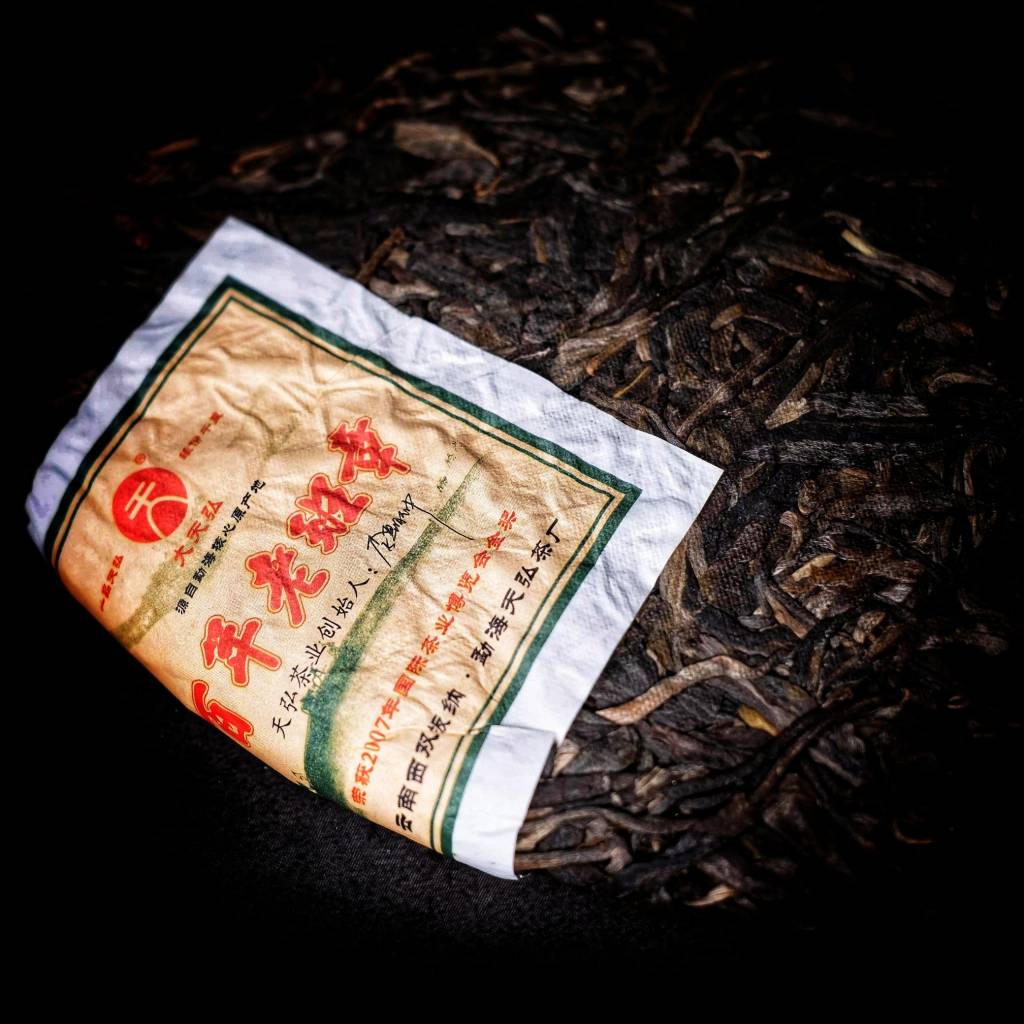
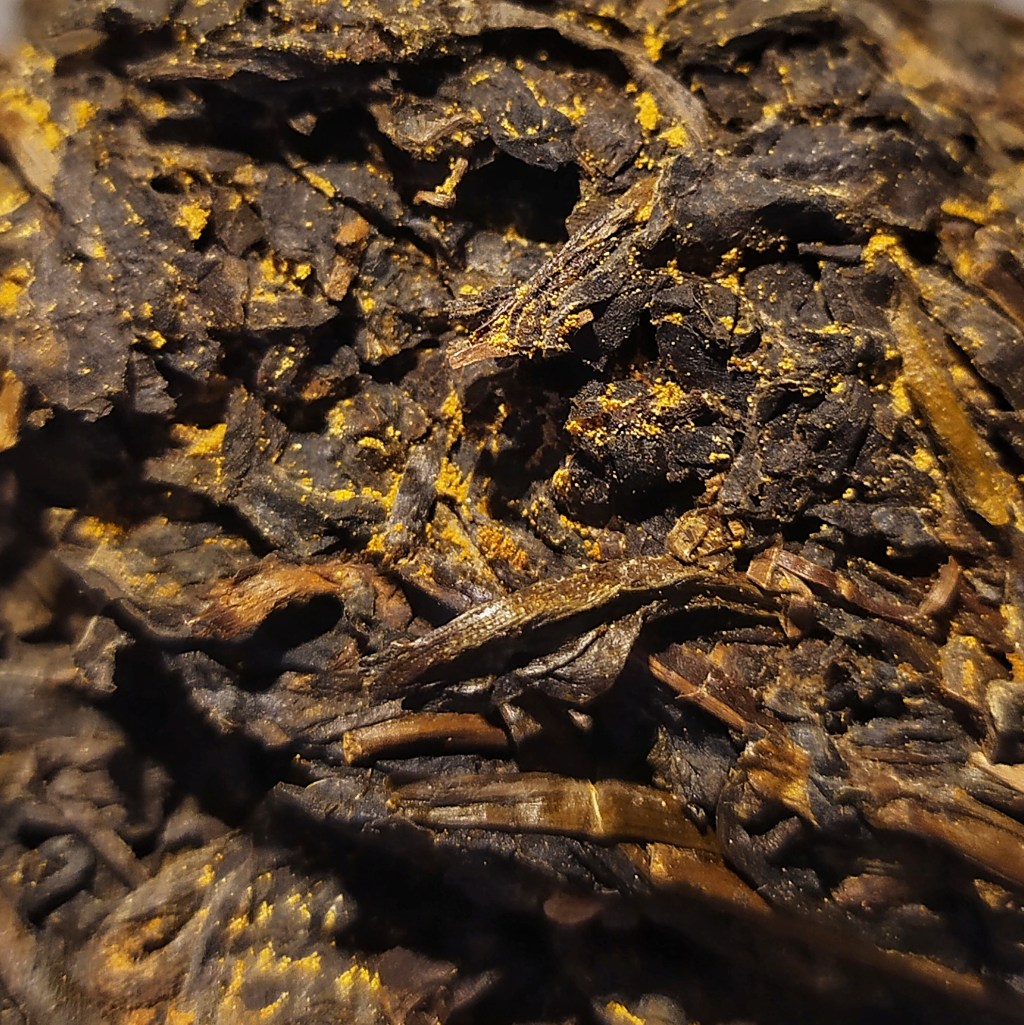
    I will not investigate the oxidative and fermentative processes, which will be the subject of other posts, but I will speak in particular of a fungus, an extraordinary being, what I would describe as the microbiological hero of Fuzhuan. Eurotium cristatum is a very vigorous ascomycota, typical of the Hunan region, able to survive at relatively high temperatures and in situations of high osmolarity. The origin of Fuzhuan brick tea is still very controversial today, but it can probably be traced back to the Ming dynasty. Already in ancient times the jin hua, the golden flowers due to the populations of E. cristatum, were used as a quality standard for heicha bricks.

    This “flowering”, the Fa Hua, unavailable elsewhere, is a process due to the uniqueness of the microclimate of Hunan, and owes its color to the golden-yellow hue of the ascocarp of the fungus. But how does this condition arise, and how does it affect the taste of the tea?

    The creation of Fucha is one of the most complicated production processes among dark teas, which involves three particular fermentation stages that differentiate it from the others. Once the rolling phase (sometimes 2 rolling phases) of the leaves has been completed, which favors the rupture of the cell membranes favoring the biological processes, the leaves are processed at a temperature between 100-200°C (depending on whether it is pile steaming or other methods), creating a selective condition (about 90% of fungi and bacteria are killed).

    Follows a piling phase, a pre-fermentation phase in which the leaves are placed in piles and the temperature is lowered below 60°C and moisture content of 65% to 68% to favor microbial proliferation, creating an initial selection for some species of microorganisms.

    The loose leaf tea is therefore left as raw material stage, the pile is turned at certain intervals. The reactions will take place and will develop the scent of the tea, such as various types of degradation of amino acids or hydrocarbons, Strecker degradation, enzyme-mediated oxidation and hydrolysis, as well as non-enzymatic degradation and oxidation. The pile fermented leaves were then dried; in old days the drying process was done in an oven with pinewood at around 70°C. Raw Fucha is now ready.

    All this will end with the subsequent steam heating of the leaves at around 80°C and piled up again throughout the night, to make them suitable for pressing and further determine a selective environmental condition. At this point the pressing in bricks will take place once the temperature has reached 50°C and the bricks stored so that the third phase can begin, the flowering phase, known as fahua, under controlled moisture and temperature for at least 15–25 days, which marks the post-fermentation events.

    We always keep in mind that these procedures, times and temperatures can vary according to the recipe and the various traditional methods.

    Phases of a typical production process: (1) Fresh tea leaves, (2) Shaqing, (3) First rolling, (4) Pile fermentation, (5) Possible Second rolling, (6) Drying, Raw Fucha is ready, (7) Screening and sorting, (8) Blending, (9) Pile steaming, (10) Second short pile fermentation, (11) Pressing, (12) Fa Hua, Microbial fermentation, (13) Packaging and storage

    E. cristatum together with other microbial agents acts on tea leaf molecules thanks to the activity of extracellular enzymes produced by fungal fermentation, such as α-amylases, polyphenol oxidase, cellulase, pectinase, xylanase, proteases and hemicellulase oxidase, contributing to the change of volatile substances and bioactive components during the fermentation process.

    The dominant genres of microorganisms identified were Eurotium, Debaryomyces and Aspergillus, and three genres of bacteria such as Klebsiella, Lactococcus and Bacillus. Although all microorganisms contribute to the flavor profile, Eurotium cristatum was found to be deeply characterizing.

    The degradation of proteins and polyphenols, as well as the production of metabolites, carbonaceous and nitrogenous compounds due to the action of E. cristatum and associated microorganisms lead to the formation of the distinguishable fungal and woody aroma of Fuzhuan tea, of stale, mentholated and undergrowth perception.

    Furthermore, the traditional brick form must not be understood as a casual or merely hedonistic and cultural process, it has in fact emerged that the differences in the structure of the bacterial community between the different types of Fucha can be in part mainly attributed to the different degree of compression of the material.

    Notable differences emerged in the microbial community in its taxonomic diversity and population size, in loose, unpressed, lightly pressed, hand-pressed, or machine-pressed Fuzhuan tea leaves. They all influenced the fermentative development in their own way, creating different tissue damage, thus modifying the release of leaf cell contents. This in turn plays an important role in influencing the subsequent fermentation stage.

    The results consistently indicated that machine-pressed Fuzhuan tea contained the highest abundance and diversity of microorganisms.
    The excessive mechanical damage caused by the strong pressing causes a greater degree of rupture of the membranes which is followed by a considerable release of the intracellular contents, as well as affected the humidity and air circulation inside the brick, significantly promoting the growth and the development of colonies of microorganisms.

    The result is that the endogenous enzymatic and non-enzymatic action of the leaves, and to a greater extent the exogenous one of the microorganisms, leads to polyphenolic oxidation with a consequent greater production of thearubigins which characterizes the dark color of this heicha; the reactions involving polyphenols, carbohydrates and amino acids affect the silky texture and volatile compounds, as well as the oxidation of fatty acids.

    The metabolic activity of eurotium cristatum and of the other microorganisms attenuates the green, herbaceous sensations, being replaced by floral, woody, stale ones towards the last part of fermentation, due to molecules such as methyl salicylate, derivatives of hexanol and of trimethoxybenzene. Furthermore, the gustatory characteristics are also changed.

    Cathechins like EGCG, GCG, EGC, CG are positively correlated to the sensation of astringency, acidity and bitterness. It has been seen that during the fermentation process these substances tend to decrease proportionally to the microbial development and its metabolic activity, it can therefore be deduced that the latter is related to greater softness, less astringency and a higher sweetness with the continuation of the tea aging.

    We have reached the end of this scientific journey into the world of this little golden wonder.

    I remain available for further curiosities or material in case you want to learn more about the topic.
  • Drunk soliloquies about Nannuo in the shadow of a gushu

    Drunk soliloquies about Nannuo in the shadow of a gushu

    On a day when the cold morning breach seemed to have taken away even the most weak semblance of chromatism, and with this the already remote desire to conclude something at the end of a dull sunrise, I decided to make a tea session with this 2016 Sheng Pu from Nannuo in the hope of rejoin me with the part of the brain that welcomes the tactile sensations.

    It was a greener puer in the past while today we can also found leaves processed with a longer period of withering, a shorter steaming, or a lower shaqing temperature but for a longer time, all factors that bring back to a more amber color than the pale yellow one to which history has accustomed us. But what does not change is its complexity wrapped in an introverted blanket, destricable only through the patience of the infusions, where the essence of tea seems to rest on one’s being, curled up in an aromatic profile that is shown in its becoming, revealing itself sip after sip in a sort of amniotic tranquility.

    In the 1950s, while the country was raised from the rubble of the Republic of China and the families looked to the future with the losses of the civil war behind them, at the same time on Mount Nannuo the foundations were laid for one of the most important tea research centers in Banna.
    Researchers such as Zhou Pengju, Cai Xitao and the team of the Nannuo Mountain Tea Research Institute contributed to identifying the area as one of the oldest in the tea cultivation panorama and to classify varieties such as the Nannuo Daye (Yunkang 10).

    Through the fog, above the red earth and below the blue sky, the history of an entire territory is consecrated through the infused leaves that in those years of reconstruction appeared as balconies of the heart, as disenchanting voices of each of those 30 villages that live in the mountain.

    This @zhaozhoutea tea is the sheng pu “No.833” from the spring of 2016 from Nannuo gushu trees. It is not only a very representative sheng of Nannuoshan, but it is an example of an evolution of the way to make tea in this area, a historical and mnemonic study from a tasting point of view.

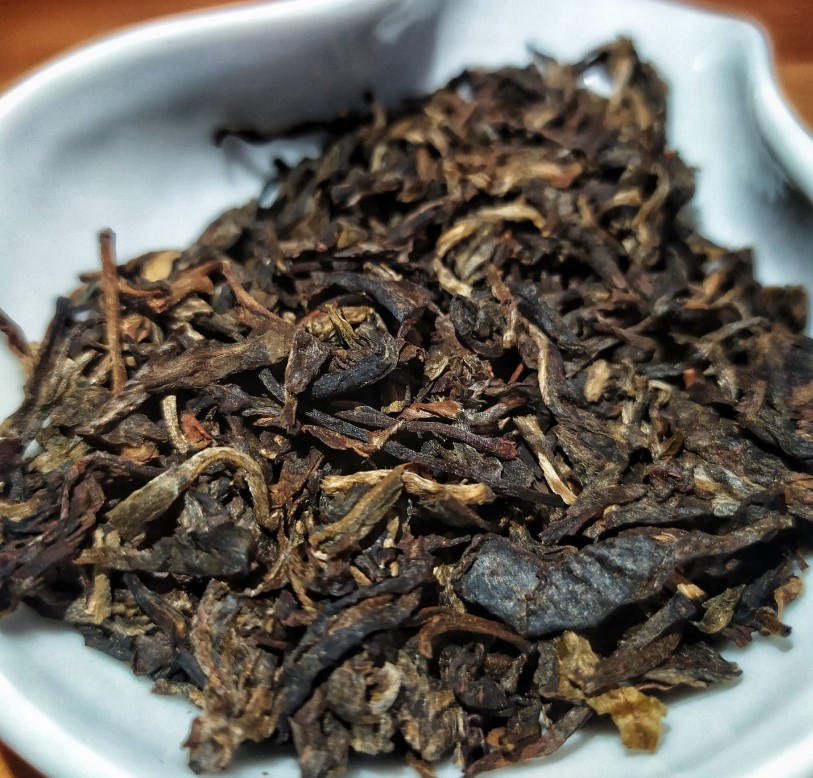
    The wet leaves are extremely evocative, report the hints of a mountain caravan, with herbaceous perfumes, moss, wet rock, wild flowers and gooseberry. Inside it are perceived scent of bakery, lemon tarte, leather, white peach and thai mango. During the infusions, shades of tamarind, walnuts and quatre quarte cake appear while the tostated seeds crack on the wok.
    The golden liqueur highlights nuances of evolution and a contemporary conception of leaf processing, with medium astringency and bitterness. On the palate there is a coexistence between the herbaceous flavors and the fruity- citrousy ones of peach and orange zest. Huigan is pleasant and balanced, integrated with other taste sensations, not predominant as a Naka sheng to bring a comparison. The finish is persistent and articulated on notes of gardenia, persimmons, apple and creamy aromas, closing a session that becomes proportionally sweeter to its prolonging.

  • Xigui, the other side of Bangdong

    Xigui, the other side of Bangdong

    After talking about Mangfei, Yongde county, we travel along the G323 in a 2-hour journey through the pre-Western architecture of Heping village, passing Bangdong gardens, leaving Mangmai until we enter the wild forest to reach Xigui, the last village of the west bank of Lancangjiang.

    The roads are unpaved and where it meets the asphalt this is covered with a patina of red clay dust, the architecture underlines the rural context and the mere functionality of the buildings. Tea plants define the extra-urban landscape sloping down to the river that separates them from the Xiushai forest on the opposite bank. Here the inhabitants catch the fish and take it to the local inn, while on the other side the foragers with weathered faces give no rest, they welcome the leaves between their rough palms with their shoulders anteroverted in their cotton shirts, with arched backs, bent by the severity of the years. They are intent on collecting the material of that mountain, between 700 and 1400 meters, and working it until the sun goes down, until it sets in Lancang and the river bank disappears, so that space and time in Xigui appear in their absolute.

    The varieties are mainly Bangdong large-leaf and medium-leaf, with some small-leaf tree, which is a big difference from other Lincang teas. The forest, the plateau and the currents of Lancangjiang isolate the pedoclimatic context from the rest of the Linxiang district, making this tea unique.

    The 2007 Xigui pu from Zhaozhou comes from 200 year-old trees, which is almost the maximum age found in this area, and it is a tea that perfectly translates the character of this terroir, with its slopes, the soil rich in organic matter, the temperature range, the different biotypes. It denotes a composed exuberance rounded off by the years of aging, a sweetness that sets a soliloquy in a sensorial harmony where little space is given to bitterness and astringency, and like a good Xigui it shows a wild aromatic complexity that contrasts with an elegant and refined olfactory bouquet.

    The wet leaves range from apricot jam to spices, reminiscent of nectarine peach, petrichor, medicinal herbs, leather. Accompanies a light note of camphor, followed by vanilla, mineral fragrances, sandalwood, undergrowth, orchard, acacia’s honey, mushrooms and black pepper. The orange liqueur appears dense already to the eye, in the mouth it is round and less multidimensional than other Xigui, the sweetness takes over almost immediately, a characteristic also provided by the 15 years of refinement. The sip is syrupy, dense, enveloping, with sweet and fruity aromas, with jasmine and herbs flavors. The sweetness re-emerges wrapped in citrus notes while the qi is precocious and invigorating.

  • Where does a real Lao Tie come from?

    Where does a real Lao Tie come from?

    Anxi is where time dwells, where the artistic breath of Chinese classicism reverberates among the residues of the cultural revolution along the road that leads to Ganze, with the purplish sunset that adorns the skyscrapers of Quanzhou behind it. The landscape alternates the expressive intensity of nature with the works of human activity; where the army of the people’s republic marched during the liberation of Anxi in 1949 you can see tea gardens, a centenary amphitheater of ideological and cultural battles.

    Since after the great economic growth of the 90s which saw Anxi become one of the richest counties in China, a progressive phase of contraction in demand has begun since 2010. The Tieguanyin which for years has driven the progress of transforming oolongs has ended up giving way to instrumental and utilitarian dynamics, a tea drunk mainly by automatism, the soulless product of a feeling which in recent decades has forced nature to simply bend to a condition of predictability and mere manipulability.

    It is also for this reason that the search for truth has led many producers to detach themselves from this vision by taking up artisanal production methods, rational agronomic management, rediscovering the sense of truth through what existed before this condition, reconstituting a state in which they could have expressive freedom through their product in an era where the flattening of images and mere technical reproducibility are rampant everywhere. True lao tie 老铁 is a rare tea, it often represents a family stock or a tea that was posthumously sold in limited quantities to compensate for the decrease in sales in certain periods.

    This old artisan nongxiang comes from a small batch, from leaves harvested in Anxi in 2005. The typical fruity profile emerges from the first infusion, you are enveloped in aromas of roasting and dried fruit, hazelnut, jujube, raisins, dehydrated prunes and walnuts.

    The olfactory complexity then unfolds on scents of orchid and osmanthus, sweeter nuances of caramelized sugar, raisin wine and panettone. Towards the third infusion, citrus notes, fragrances of ancient wood, balsamic hints and macerated wild herbs appear. The sip is fluid, sweet, of medium softness. The texture is subtle and elegant, the slight acidity invites you to take the next sip while aromas of plum and flowers persist in the mouth wrapped in an incessant and palpable sweetness.

  • Geography of Mengku, a bit of history of the Shuangjiang factory and an excellent pu’er

    Geography of Mengku, a bit of history of the Shuangjiang factory and an excellent pu’er

    Yunnan’s soil is complex, as is the climate in its multidimensionality. In a single region we find a tropical climate or a mountain one, in the chromatism that envelops the observer, the eyes find both rest and the neurasthenia of the course of nature in a landscape that seems to be the meeting place between Cuyp’s Flemish vedutism painting and the almost brittle and super-ideal accuracy of Xiang Shengmo.

    But it is where this takes place in its verticality that we find the remnants of the history of the camellia, in the 18 villages between the peaks of Ma’an and Bangma, respectively east and west of the Nanmeng River.
    In the Middle Eastern areas we find the villages of Mangbeng, Banuo, Najiao, Bangdu, Nasai (including Zhengqitang and Xiaocun), Donglai, Manna and Chengzi; while in the mid-western area are included the villages of Bingdao, Baka, Tanguo, Dahusai, Gongnong, Banggai, Bingshan, Hudong, Daxueshan and Xiaohusai.

    It is mainly in the latter area that much of the material of the Shuangjiang factory of Mengku is concentrated, a company of the Rong family founded in 1993 but whose first generation dates back to 1935. Much of the material comes from the mountainous area of Mengku, especially from Daxueshan and Bingdao of which this factory was one of the forerunners. In 2005 the Rong family used the leaves of Bingdao, especially Laozhai and Nanpo, for the base of their “Mushu cha” which was followed by series dedicated to this area, as well as a lot called “Bingdao Cha” by professor Gao Zhao in 2006.

    Since the 1930s, the Shuangjiang factory has always focused on the art of blending, creating a standard of Mengku tea, a character that contrasted with the Yiwu and Bulang teas in the Jianghu of Puer in the early 2000s. The feature of the Mengku blends is that of a suspended cup, a tactile and gustatory return after the liqueur has left the oral cavity, a chewable sweetness that coexists with bitterness, almost creating a receptive antithesis in the same areas of the tongue. They are pleasant teas even in their youth despite their initial roughness, managing to relax elegantly without excessive dissonances in the evolutionary path.

    This 2011 pu’er from Shuangjiang factory is made from old trees leaves from different mountains in Mengku. The scents of dry leaves are reminiscent of an old mountain house, made of ancient, damp and slightly moldy wood, it almost recalls the smell of an old leather sofa. The wet leaves bring to mind earthy and woody notes, of wild mushrooms and undergrowth, wet wood and antique furniture. As the infusions pass the water dilutes the strongest odors, bringing back aromas of jujube, camphor, leather and virginia tobacco; it then evolves into a more fruity texture of apricots, stewed apples and madernassa pear poached in wine. The initially primordial and nostalgic character continues in the liqueur, with primarily animal smell on the nose, on the other hand notes of dates, wild oregano and dulsita sugar emerge in the mouth, a sugary sensation increases salivation together with the bitterness that takes possession of the sides and bottom of the tongue. The fruity notes close a complex, intense, soft, persistent and identifying sip.

  • Bingdao, its aura, its mysticism. Maybe it’s all undeserved?

    Bingdao, its aura, its mysticism. Maybe it’s all undeserved?

    The price that Bingdao tea has reached has attracted much attention from Western countries, covering it with that mysticism reserved for the great names in Bordeaux or Burgundy winemaking, an aura that cannot guarantee that the taster’s opinion do not deform in front of it. But what makes Bingdao teas so? Where does the search for truth end in an area that sells the fresh leaves of its gushu at more than 30,000 yuan/kg (2700€/kg) and how can all the tea on the western market present itself as authentic Bingdao tea if is there so small production in certain years and at such crazy prices that even the local merchants give up?

    In an objective sense we should look at the aminophenolic ratio, pedogenetic, climatic and altimetric characteristics, as well as the age of the plants. Yet on paper the puer of Bingdao do not win in this respect, which remains only mere conceptualism.
    Often, when tea from a certain small production area reaches a certain level of quality, its market valuation gradually has nothing to do with quality. Often the disappointment that accompanies the tasting of sheng pu such as those of Bingdao or Laobanzhang is due to this phenomenon exactly as is the ecstasy that we build inside ourselves when a neurasthenic grimace appears on our face when we realize we have spent a quarter salary in a mediocre tea.
    And this is the real focal point.

    The tasting of teas such as the sheng of Bingdao, Laobanzhang, Laoman’e, Xigui aggregate the objective with the subjective, the hypothetical and the ideal condition, they are a set of antinomies that cannot be relegated to the simple obsession with categorization.

    The dynamism of the market means that when an area is hit by an almost oracular mystification, many resources and capital gather in it. The increased pressure due to a high degree of visibility, the highest attention and the best technical ability will be poured into it, and after its own transitory course, the tea of that area could become one of the best with a high probability.
    Why is it just probability? Because this is a simple hypothesis, idealistic and summary.

    In support of this I was able to experience how it is impossible to separate pure matter from spiritualism when you are drinking tea, therefore to say that tea is the expression of the earth in the strict sense is as misleading as it is dimensionless, it means making it descend into the order of empiricism by depriving it of its aura.

    Rather, tea represents the ground as much as a church bell tower is idealized by the village below, a border traced by our ability to grasp the residue of time, of a people and its spirit, to consecrate it in a higher dimension than a liquid translation of mere immanence. This is because it is what is sacred and immutable that creates a bridge between generations, a stable and lasting relationship between those who have passed away and those who have not yet been born, in that real identity that is independent of the present and the economic value.

    Stubbornly objectifying the act of tasting tea like those of Bingdao is like mechanically listening to Strauss’s Metamorphosen without understanding the poignant pity of the loss combined with the fragmentation of the dignity of an entire people. In short words, what can be lost is what is most true and least intelligible.

    Don’t get me wrong, quality is an objective datum and as such it must not be exploited or overwhelmed by unreal fairy tales, but relying solely on it one only runs the risk of being disappointed and deprived with an experience that escapes the most cultured languages.

  • All the fragrance of Naka

    All the fragrance of Naka

    Naka is one of those places whose tea manages to make the contemplative intent coexist with the liberation that accompanies a state of inebriation, of marked well-being. The teas from this mountain are often not famous for their complexity but rather enliven the experience with their persistent sweetness, an immediate sugary sensation that is almost palpable beyond the blanket of initial bitterness, a sip that returns a sensation that shines through as an existential parable where suffering and gratification alternate.

    Teas like those of Naka, Bingdao or Laobanzhang transport us to another dimension of thinking, more ancient and simple, the one that makes us grasp Holderlin’s vision of a “measure common to all”, the one removed from our evaluations, the one of a taste purity capable of embodying the reason and essence of a place.
    They are unique scenes, to which even if we don’t belong, we adopt as a spiritual homeland.

    Naka’s is perhaps the most representative of Mengsong’s teas; here the woods surround the village in which there are approximately 40-50 hectares of ancient tea trees, most between 300 and 500 years old. The 1660-meter high peak is located on the eastern slope of Huazhuliangzi, the ground is sandy and rocky, the climate is humid and rainfall is abundant and more frequent than in other areas.

    The small-leaf variety predominates along with the medium-sized variety, which is a unique condition in the Menghai area. From Da’an to Nongbeng, from Baotang to Damengsong each village here has its own microclimate and its own shrewdness in the processing of the leaves; Lahu and Han with their respective dialects and cultural traditions have lived together for centuries in these mountains where time seems to have stopped.

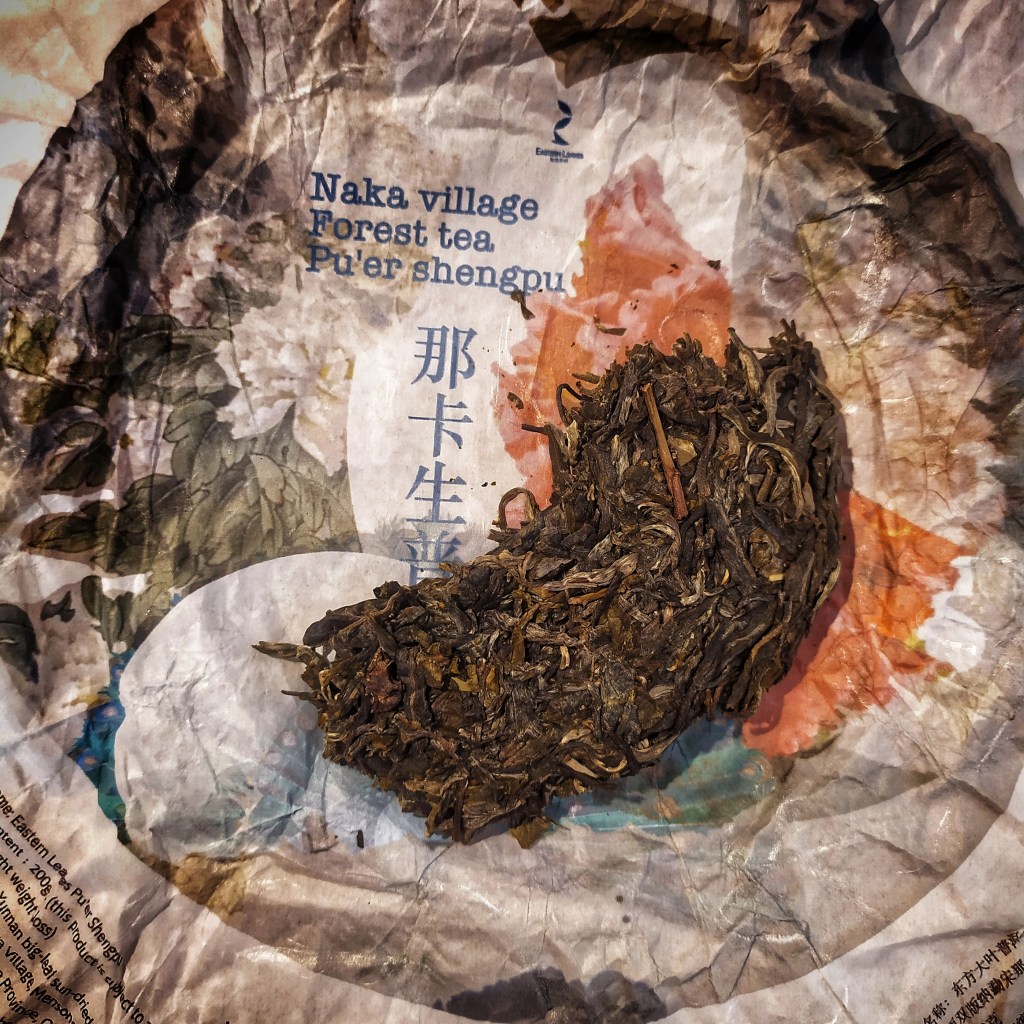
    This 2022 Eastern Leaves sheng pu is a tea that is not afraid of meditation or of the most convivial moonlight. The wet leaves are a unique journey just outside the village, the memory is that of a pastry shop in the middle of the forest where the scents of the woods and wet leaves envelop you, among the rocky tones you can perceive scents of apricot curd, peach , mountain flowers and citrus fruits.
    The liqueur has an antique gold dress; on the palate it is soft, enveloping, beautifully balanced and progressive in the bitter tones that quickly unfold in a sugary dimension, an endless sweetness that seems almost chewable. It is a tea with an excellent structure already in its youth but whose time can only act as its guardian.

  • Perhaps it’s time to ask what can be called Dancong

    Perhaps it’s time to ask what can be called Dancong

    Dancong tea is much more than an aromatic concentrate, it is not just a floral punch straight in the mouth capable of anesthetizing the taste buds with its fragrances.
    Fenghuang tea is often able to escape the intellect, but the leaves of those trees are able to bring the unintelligible into sensible form.

    Make a Dancong is not knowing how to orchestrate a set of fragrances, that is pure appearance. This Wulongs are an epitome of shanyun, the “charm of the mountain”, they seem to enclose a geographical empathy that is consecrated in a sip imbued with historical awareness that gives abode and memory to the course of events in a place, going beyond the material boundary of the drink . This condition derives from three main factors: the intrinsic uniqueness of each tree, the craftsmanship and the mountain terroir.
    But what happens when the liquor doesn’t convey a truthful reality?

    Fenghuang is a small city of 30-40.000 inhabitants, an out of this world place with about 10,000 laocong of about 100 years and 3,000 trees of 200 years, and from these numbers it is enough to understand that many of the leaves from ancient trees that we find in the western market cannot come from here. The climate is difficult, extremely humid, the moss seems to envelop even the soul of those who pass through it, a very different condition from the neighboring areas.
    In Fenghuang village a distinction has always been made between the internal areas of the mountain (neishancha 内山茶) and the external areas (waishancha 外山茶), in order to underline a deep tradition and bond with one’s land.

    There are 30 tea towns in the administrative area under the current jurisdiction of Chaozhou City, and one of the problems is that as long as the tea is harvested and processed according to the DB44/T820-2010 standard within the city of Chaozhou all teas can obtain geographical protection marks, and therefore be called Phoenix Dancong.

    Fenghuang Dancong’s production method is mainly based on the family and there are no large enterprises comparable to those in Fujian or Yunnan, and it is what is sought to be preserved and must be protected. But every year on the market there are tons of teas at astronomical prices in the western market related to Fenguangshan cha without any territorial distinction, with little or no transparency. But the real dancong is only a small part of it.
    One wonders if it is worth spending more and more money to buy something that might not even be real Dancong or settle for a sip of happiness together with that money in case the tea is really good.

  • Another soliloquy about Laobanzhang with a 2018 sheng pu from Tianhong tea factory

    Another soliloquy about Laobanzhang with a 2018 sheng pu from Tianhong tea factory

    Laobanzhang has long been an example of ambivalence. Its bitterness contrasts with the sweetness that pervades you a moment later, the exaltation of its essence opposed to the condemnation of the upheaval caused by its own greatness. Its leaves can be as bitter and severe in youth as they are sweet and complex as they age, teaching us that solemnity is not in the present and that it can never be enclosed once and for all. What drives us to buy what now seems so distant from reality? Yet as Sophocles said there is no life without pleasure but, above all, life is more beautiful when one does not think.

    This is Laobanzhang, a corner of the world where gods seem to have found refuge, a strip of 300 hectares of ancient trees that have seen the course of the ages so much as to survive the history of the village itself. There are about 120 families mostly of the Hani ethnic group who inhabit these mountains, about 500 people almost all involved in the tea market, that same tea that once animated their ancestors now seems to have took away the soul of their descendants. The radical change in lifestyle, the experimentation of mere materialism have placed the village in front of a test that is only partially overcoming. There are many examples of counterfeiting, of slightly above average tea, quality standards that are not always clear or respected. All at crazy and irrational prices.

    However, a sip of a real Laobanzhang is able to enrapture us to the point of blurring the language, words become superfluous and we are ready to resort to the credit card through a disintegration of self-control only to chase the memory of a tea which, when authentic, remains indelible in our memory.
    The problem is that by now we risk finding very little of that authenticity in the future and at that point the bitterness will take over even the sweetest of memories.

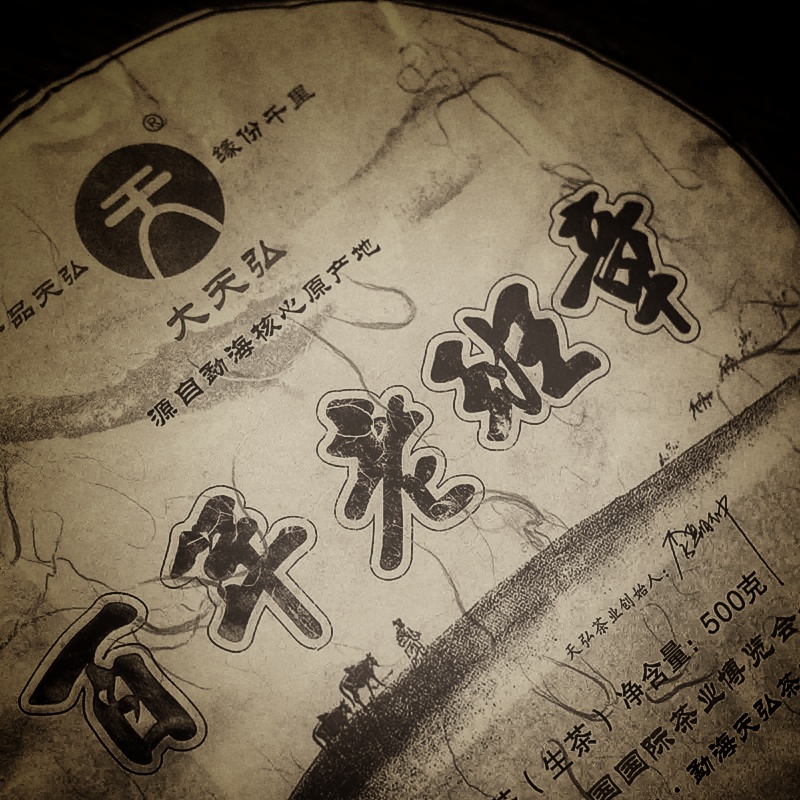
    That of the Tianhong Tea Factory is a centenary trees sheng pu from material collected in the spring of 2018 that contains all the ancient charm of a village. It appears in a brilliant golden color with pinkish undertones; notes of wood burning in the rain and nuances of ripe apricot emerge from the wet leaves than hints of cavendish tobacco, plum jam, light botanical-alcoholic fragrance along with reminiscences of wild flowers, caramelized citrus and subtle scent of violet candy.
    I think the measure of a good Laobanzhang is not only the sensory complexity, but the ability to stimulate the memory in a articulated and orderly sense, like an open book on the knees whose pages are nostalgically leafed through; that is what happened with this sheng. On the palate it has an extraordinary balance, the herbaceous flavor is wrapped in a honeyed sensation, the liqueur is thick, juicy, the bitterness allows the aromas to remain for an interminable time and the mouth to salivate while intrepidly awaiting the next sip. The qi is strong and the final notes close on a pleasantly floral and refreshing sensation.

  • Reflections about the pu’er market and Laobanzhang

    Reflections about the pu’er market and Laobanzhang

    Everything about tea is born from an initial effort and suffering, and through these it is consecrated in a sort of spiritual life that is strengthened over time, in its determined and individual character. Tea is not the immediate gift of nature. Immediacy in tea always comes at a high price.

    Laobanzhang is experimenting a pattern already seen in areas where previously a deep famine reigned; now money is spent in the most disparate ways, new contemporary-style buildings arise and what comes from the past is quickly supplanted by the well-being of a conscience that appears liberated from the oppressive spirit of the previous period.

    The new generations are not destined to experience that effort and suffering, the natural rhythm of things, the process that brought Laobanzhang tea to what it is even before the invisible hand of Yunnan moved prices in the spring of 2007.
    Everything happened very quickly, in 20 years a main road capable of connecting all the villages once disconnected from the world was built, new branches were opened, new investment funds and capital arrived from holding companies which saw a safe source of investment. All of this is reminiscent of a situation before the burst of the speculative bubble, but it is not, all of this is the present.
    The price of raw tea has gone from 8 yuan/kg to 1800 in the famous spring of 2007, up to exceeding 13000 today, an escalation that does not seem to stop.

    The tea leaves are sold to the shops before they are processed most of the time without any intermediary, just as en primeur wines are sold in Bordeaux before they end up in the bottle. This is what has been happening for years now in these mountains and which has led many merchants to abandon them, in what we can define as the third emigration of Laobanzhang.

    How much of the real Laobanzhang is left today and how much it is still worthwhile for tea merchants to look for a product that no longer lives for its uniqueness and soul? How much the economic value of a place can become a burning glass of its greatness and how long will we wait before another crash of the speculative bubble?