Category: Uncategorized

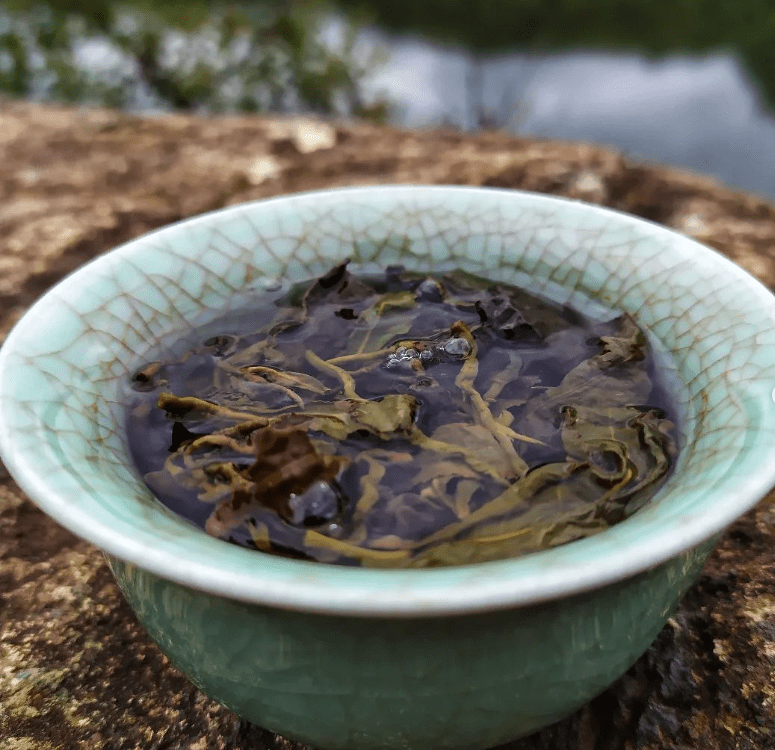
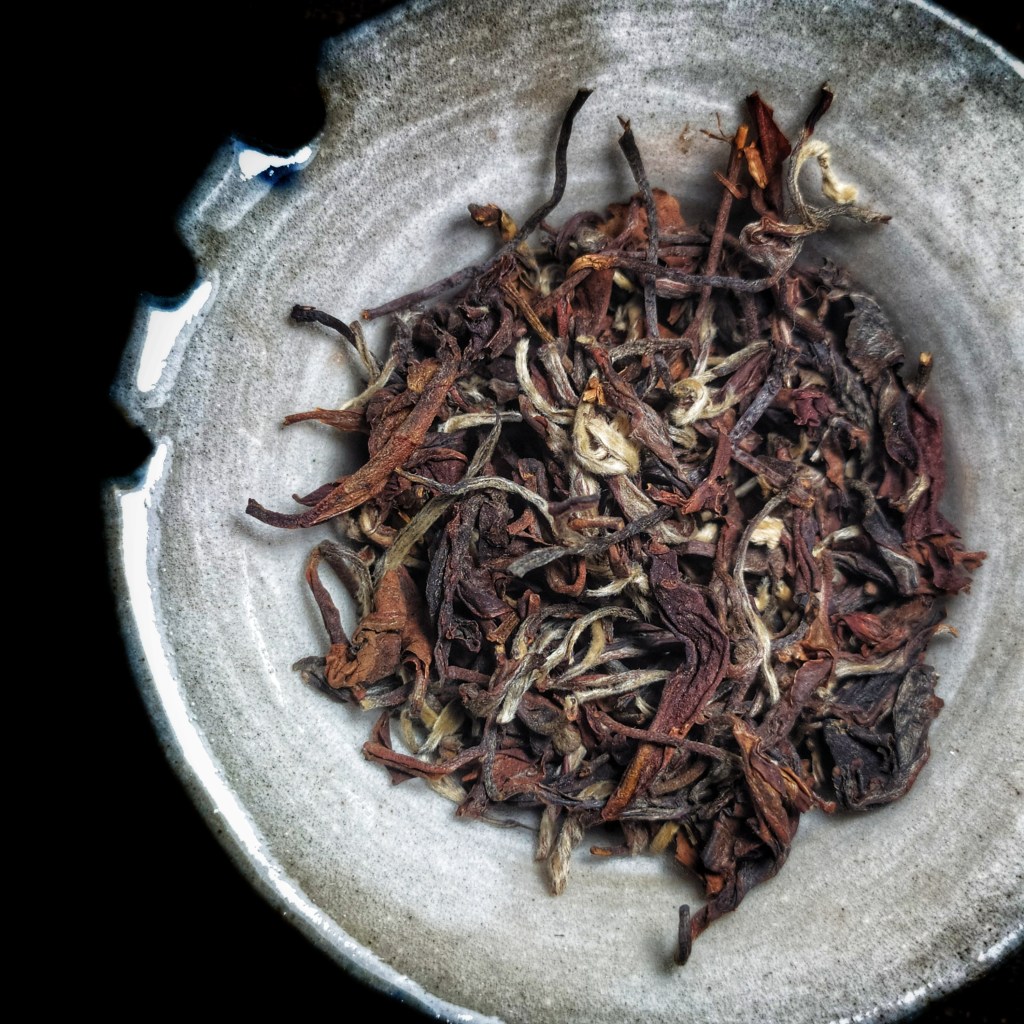
  • Darjeeling, a refuge of perpetual change. Seven Essence Darjeeling Villanelle

    Darjeeling, a refuge of perpetual change. Seven Essence Darjeeling Villanelle

    Among those mountains where even the fogs seem to recognize themselves, always the same, the sun makes its way over the peaks of Darjeeling in that way that only northern India can do, with those sunsets stained with scarlet red as if a cup of tea had spilled in the skies.

    Among the big brands, the massive and hypertrophic estates, it is hard to believe that there is a world of artists in constant ferment. In Darjeeling, breathing is instead punctuated by two incredibly deep breaths, one is that of tradition, the other is that of an unprecedented contemporaneity, creator of teas that have become a symbol of the new future: bold, powerful, and often, undeniably, modern.

    Spring teas like Villanelle hold within them the extraordinary nature of spring, in its scents of dried magnolia, citrus, hydrangea and winter melon they seem to reconstruct the triumph of Rubens and Brueghel the Elder’s Eden, an explosion of renewed vegetation, an aromatic encyclopedia of the natural world accompanied by that body, that powerful carnal plasticity of the baroque season.

    While teas like this one consecrate the cup as the theatre of the sublime, they remind us that in these lands it is not easy to emerge, that creative flair and freedom of expression are not common or taken for granted and that spring, despite its splendor, cannot erase the bitter aftertaste of this eternal struggle.

    The sip has a good thickness, with an almost watery sweetness typical of melon that supports the weave of elderflower and orange blossom syrup, thickening in the aromas of taro mochi and acacia honey. It proves to be a vertical tea, ascending in its tension between freshness and maturity, it shows to be a path to follow, a turning point by placing a door in front of the past that must never be reopened.

    In the past decades Darjeeling has been like a vagabond in the world, a terroir of extraordinary complexity and a potential only minimally explored, but it is as if the truth has continually escaped. But now tea and producers like these are establishing a new route, a new pact with their land, a hymn to the highest genius, to the craziest tea, refuge of perpetual change.

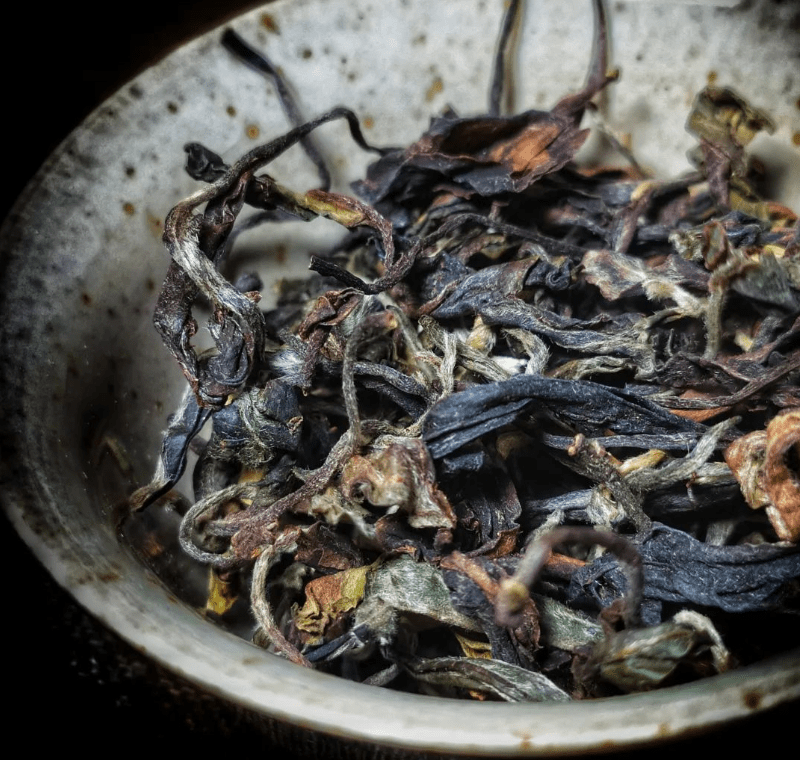
  • When a great pu’er become an elegy. Eastern Leaves Lunan Mountain ancient trees 2020

    When a great pu’er become an elegy. Eastern Leaves Lunan Mountain ancient trees 2020

    For generations, caravans laden with pu’er have traversed the steep paths of Lunan, eluding the harsh karst landscape, leaving it behind them, slowly advancing towards Tibet.

    The muleteers, with their faces hollowed by frost and fatigue, relied on themselves, on their companions, on the tenacity of their horses, following the paths traced by their ancestors, where every bend concealed stories of exchange, trade and survival.

    Pasha seems to have been able to overcome everything, from the destruction that occurred with the Panthay rebellion to the wreck of traditionalism and the collectivization of the Cultural Revolution, to the persecution of the Red Guards.

    Hölderlin wrote “where there is danger, what saves also grows,” and so it is here that natural beauty and spiritual aspirations intertwine into a rich and vibrant cultural cloth, and teas like this, with their dense depth of flavors of vanilla, candied fruit, nuts and persimmons, take us into a dimension of time that we cannot easily grasp, a place where tradition is not only preserved, but continually recreated.

    With its silky sip, honeyed sweetness, musky and citrus tones, the cup becomes a sort of refuge, a bridge rather than an end.

    When we sip a cup of pu’er like this we are entering into a dialogue with the past, it reminds us that not all is lost, that in its slow and patient aging lies both a concession and a resistance to time.

    A great pu’er becomes an elegy, not only a lyric of sadness for what is lost but a celebration of the intrinsic value of what has been. In its leaves pervaded by scents of red dates, walnuts and toasted pumpkin seeds, of withered broom flowers, its elegiac essence revived through a call to the earth, to history, to the culture, every sip becomes an existential plan, a way of inhabiting time with consciousness.

    It offers us a key to a further, more saturated dimension of time, in which loss is not an obstacle to overcome but nourishment for our being. Both, the elegy and the pu’er make memory a cure, an antidote to oblivion, reminding us that the past is not a wound to be closed, but a legacy to draw from.

  • An Antidote to Boredom. Seven Essence Darjeeling Ennui

    An Antidote to Boredom. Seven Essence Darjeeling Ennui

    Ennui, boredom, the name of this tea, the strange sensation that overwhelms you when nothing happens, when everything forces you to remain still, like an old wreck of a bus stopped in the middle of nowhere, and you there, with an empty gaze, with a half-extinguished cigarette between your fingers, without knowing where you will go or what you will do. Boredom is the slow rain that beats on the windshield while you wait for a level crossing to close, waiting for a train that will never pass.

    It is with you wherever you go, like an old battered suitcase that you can’t forget anywhere. According to Heidegger and Schopenhauer, boredom is a sign of a more significant absence, that of an authentic connection with reality, the feeling associated with the unsatisfiability of worldly things. But boredom can be seen as a crisis of meaning, which opens up new possibilities of existence, it makes you feel as if time is a trap, a kind of dead end, but things like culture, rituals and traditions provide an antidote through their ability to live time and experience through values that transcend the individual.

    Teas like Ennui are authentic expressions of civilization, they not only entertain but give shape to a moment. They are those true teas, shaped by high altitudes, by the hard, merciless soil, those peaks that teach you freedom and coexistence with emptiness.

    Its leaves enclose that sense of limit, of transcendence, where boredom has no space. Between the notes of chestnut honey, peach and turmeric, accords of tuberose and Bulgarian rose, jasmine and ylang ylang make their way, accompanied by the scents of birch wood and face powder as in an overlapping of works by Rachael McCampbell exhibited in an old venetian coquetry.

    And if the antidote to boredom is culture and tradition, tea, from this perspective, is a sort of Aristotelian mimesis: it imitates and returns, in the form of a sensitive experience, the nature and culture of the place from which it comes. And so in its soft and sweet sip, aromas of grapes, moss, spices and rose weave the memory of a glass of moscato passito in the middle of summer, consecrating a tea of incredible persistence.

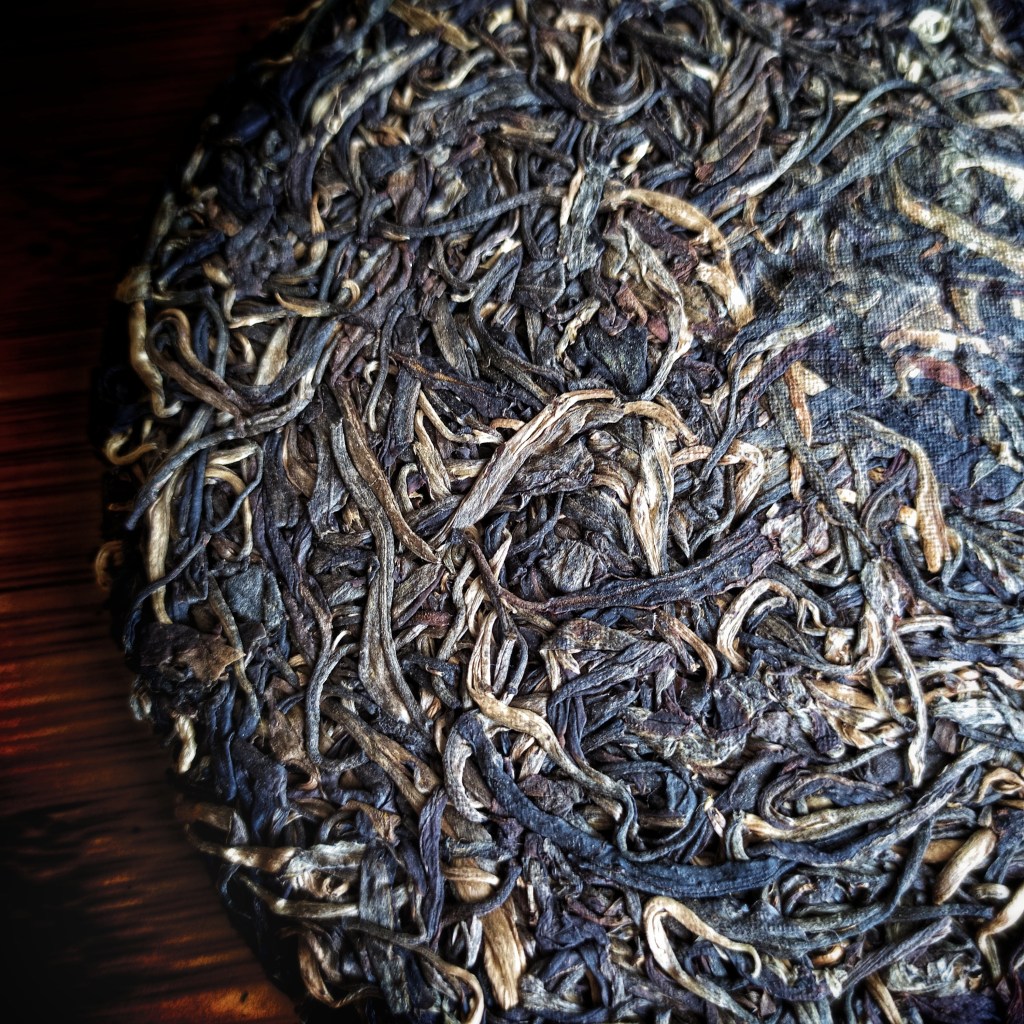
  • Tea as a contrast to immediacy and as an aid to living time. Viet Sun Thương Sơn sheng pu’er 2016

    Tea as a contrast to immediacy and as an aid to living time. Viet Sun Thương Sơn sheng pu’er 2016

    I think there is immense value in dwelling on the traditions that tie us to the past. We live in an age that has forgotten the importance of living time, of the slow maturation of ideas and things. Rather than living, we grope in a era that tends at times to reduce life to mere mechanisms of action and compensation, to power relations, to a set of derivations and summary assumptions. And yet, our daily experience recalls something much deeper: the desire for meaning, the search for truth, the will to give meaning to time and to recognize the sacred.

    This morning I reached back into my pharmacy, getting a 2016 sheng cake out of that mess, it comes from Thương Sơn, one of those places where the past intertwines with a vibrant and complex present, which seems to hold the secret to eternity. Here, ethnic and cultural plurality merge into a living mosaic, the rice paddies wrap the mountains like an emerald scarf, contrasted by the pink-purple waves of autumn buckwheat flowers, those flowers that are said to have been sent by the gods as a sign of recognition.


    Each leaf is a fragment of a narrative that has developed over centuries, Thương Sơn is rich in ancient trees that produce teas like this, whose aromas recall the cold winter with the spirit of an austere old father wrapped in his leather armchair, immersed in the cloud of an evening cigar.

    The sip is enveloping, deep, mineral with hints of Montecristo cigar, leather, dried Moroccan plum, camphor and cloves, it is a constant reminder that true pleasure requires patience. The aromas then sublimate into a dimension of labdanum accords, apricot in alcohol, gentian liqueur and incense. The intense huigan and strong qi revive the image of the crazy and primordial harmony of places like this, so typical of traditional places, a cup we could define as an “accumulated wisdom”.

    Teas like these, places like Thương Sơn, through understanding the bond with their own tradition, with their own history, teach that there is an order, a truth that transcends human contingency, and a tea like this that ages is a trace of that truth, a witness, a collector of past eras, a contract between generations.

  • A mystical, primordial village that gave refuge to outlaws, tea merchants, heroic loggers and ghosts. Huang Cao Ba told with a 2023 old trees sheng pu’er

    A mystical, primordial village that gave refuge to outlaws, tea merchants, heroic loggers and ghosts. Huang Cao Ba told with a 2023 old trees sheng pu’er

    Huang Cao Ba is a village of less than 800 souls, a respectable number considering the average of the nearby ones. Although it lives on a simple economy, based mostly on the production of food to be consumed on site, on livestock and agriculture, it can boast a certain basic well-being and the historical prestige of having a thousand-year history of tea production, with most of the relatively contiguous gardens planted in the middle and late Qing dynasty (1636-1912).

    The red and yellow dirt roads on which Huang Cao Ba based much of his social life were the edges of a wild peak in whose forests the boys dreamed of being explorers and daredevils. You could smell the rice paddies that overwhelms you like an army of silk bundles, you could smell the mud, the green bamboo swaying in the wind broken by the spring rainstorm and every kind of subtropical exhalation.

    Before those houses built with stone and clay bricks with sloping tin roofs, there was a traffic of information and documents, exchange of words and silences in that village which was a post station during the Nanzhao reign on the “刊木古道” the ancient timber cutting road which was a significant link for the foreign and military policy, the culture and the economy of the reign, which ran from Dali through Jingdong, Zhenyuan, Jinggu to Pu’er.

    The vegetation consists of evergreen mountain broadleaf and mixed coniferous forests covering the centuries-old tea trees, so dense that the first exploration team was sent from Jinggu County only in 2001. Even its name derives from the cultural ethnocentrism of the first men, who, unable to penetrate it with the same ease they encountered in other villages, hastily dismissed it with what they could see from afar, as the land of yellow grass.

    A mystical, primordial village that gave refuge to outlaws and fugitives during the Tang and Ming dynasties, a village of Yi healers and shamans and tea merchants on the Tea Horse Road, heroic loggers and ghosts of fallen workers, It is from its old trees that the leaves of this TdC 2023 sheng come. The leaves are wrapped in scents of peach jelly, cut grass and rock sugar, mango sherbet and orchid.

    In the mouth it is delicately soft, translating the wild genesis of the slopes from which it comes, incredibly sweet and persuasive in the aromas of candied fruit, hibiscus, ripe apricot, then hints of walnut, vanilla and citrus peel finish a sip of excellent persistence.

  • A “cante jondo” between emotions and rationality. Seven Essence FF Darjeeling “Duende”

    A “cante jondo” between emotions and rationality. Seven Essence FF Darjeeling “Duende”

    Duende is the name of this tea, that duende which is a place ex-nihilo where there is no map or exercise, principle of creation, of generative power, it’s the mental dress worn by the restless, of those who renounce deep sleep by remaining in the temporal foil between the traveled path and the dreamed, of those who are willing to put aside the smile to travel the streets of disquietude.

    Through this tea in its scents of mango, green melon, among the nuances of cut grass, of late summer rain, Darjeeling rediscovers itself in a new, unique form. There are those who said that this land would not granted anything more than what has already been seen, but there are those who among the mists understood the spirit of time, who become the interpreter of that restlessness, that fertile suffering that fuses the forms, which is the matrix of the extraordinary.

    In its tones of roots, bergamot leaf, suede, pumpkin seeds and cocoa butter it translates into liquid that power of primordial vigor, of a subterranean force that destabilizes habit and consecrates itself in the new. “The arrival of the duende always presupposes a radical change of every form with respect to old plans, it gives sensations of freshness that are completely new” and it’s then that are revealed the faces of men and women who support the weight of the uncertainty, in which are configured the struggle of contrasts, the incongruence of thoughts, the refusal of the safe learned geometries to pursue the discovery of tacit truths.

    In the mouth it’s soft, buttery, contrasted by a Champagne citrus freshness, the steam brings to mind that morning breeze of Reims before the harvest, surrounded by earthy and humid aromas. They become the foundation of a deep melody of perfumes, a “cante jondo” between emotions and rationality, between ancient ports and new routes.

    But it must be tried, there is no way to explain leaves like those of Duende without resorting to a paradoxical language, because their taste, their tactile descending path towards the throat and directed to the soul cannot be adequately articulated by tired descriptors and words, but must be grasped in its sensitive experience

  • Love for Country, Reconstruction and Tea. A few words about Yi Bang and Man Gong Village with a 2023 Gushu

    Love for Country, Reconstruction and Tea. A few words about Yi Bang and Man Gong Village with a 2023 Gushu

    What was the land of the emperor’s tea in the 18th century and a trading circle between Myanmar, Calcutta, Kalimpong and Sikkim in the 19th century soon became dust and ashes in the middle of the 1900. The refoundation of Yibang and its prestige started from that old road paved with mud and stone, the only thing that did not bend to human will, the connection with the Tea Horse Road, the bridge with its past.

    Many now predict the disappearance of our civilization in the “disaffection”, but in times in which remembering, thinking, writing poetry, praying, living together are barely advancing, there are still places where that duende resides, that thrill in which the call to the land comes to mind. That innate affection that associates us with a land, that binds us to a place, weaves bonds and founds a culture that we feel ours, of which we feel a part, of which we are heirs, children and parents.

    Tea works in this place as in those where there has been devastation as a material to give new form, the continuous permanence of what has been, something to live up to and to rebuild on the principle of belonging.

    In the village of Mangong, bamboo in those tribes of children was always in adequate supplies, because the canes that swayed in the April sky were a surprising threat to those young fighters painted in every color.

    While the young besieged the forest, each adult would bring his own tea to the threshold of an agreed upon house, chosen according to glances and silences in the first hours of light. They would settle under the roof and sometimes even on the edge of the mats that saw the drying of the collected leaves, to form a precise audience, drinking the essence of the forest. It was then that the conditions for a new hearth were created, which made those afternoon gatherings a sort of extension of the homes, an expression of those social situations that are possible only in places where the house and the forest are not yet different and opposing realities, but different verbal intonations of the same meaning.

    This Meng Hai Yun He Tea Factory sheng pu comes from Mangong village, spring 2023, from centuries-old trees at 1300 meters above sea level. The notes of wild plum and orchid follow the exuberant sweetness of rock sugar and toffee, the sip is geographical, of great finesse despite the hot year, everything is refined, is in its place, the finesse in the cup reaches a level of purity that puts the language to the test. The sip is sweet, with good huigan, in which you are invested by the “vanitas” of the de Heem fruit, still intact and preserving its natural integrity. It is a tea capable of quieting every mind, of suspending every haughty soliloquy

  • The Battle of Điện Biên, the retreats, the ancient tea trees. A sip of historical consciousness with Viet Sun Tủa Chùa sheng pu’er 2024

    The Battle of Điện Biên, the retreats, the ancient tea trees. A sip of historical consciousness with Viet Sun Tủa Chùa sheng pu’er 2024

    More than 70 years have passed since the battle of Điện Biên, since the retreat, the rice fields dyed red, the pain everywhere. Our men arrived in that area on old Royal Air Cambodia “Caravelle” flown by Taiwanese pilots who shuttled between Bangkok and Phnom Penh. They jumped on with ever more heartpounding, more and more uncertain about the possibility of landing. They often did it at night where the quiet wasn’t interrupted by the clanking of clutches, the noise of the brakes of those metal carcasses or the dull bangs of the firing pins.

    It must have been those dense nights, tinged with that frightening absence of chromatism, one of those in which probably a Kerouac character would have screamed at that dark eastern wall or howled at the moon interrupting the silence and the monologue of the wind even though the tension could be cut with a razor. There wasn’t much hope to project into the future, it seemed that things weren’t made to last but simply to survive another day, where folk didn’t have time to become aware of their identity as a people because the land they inhabited was already a foreign land from the very beginning.

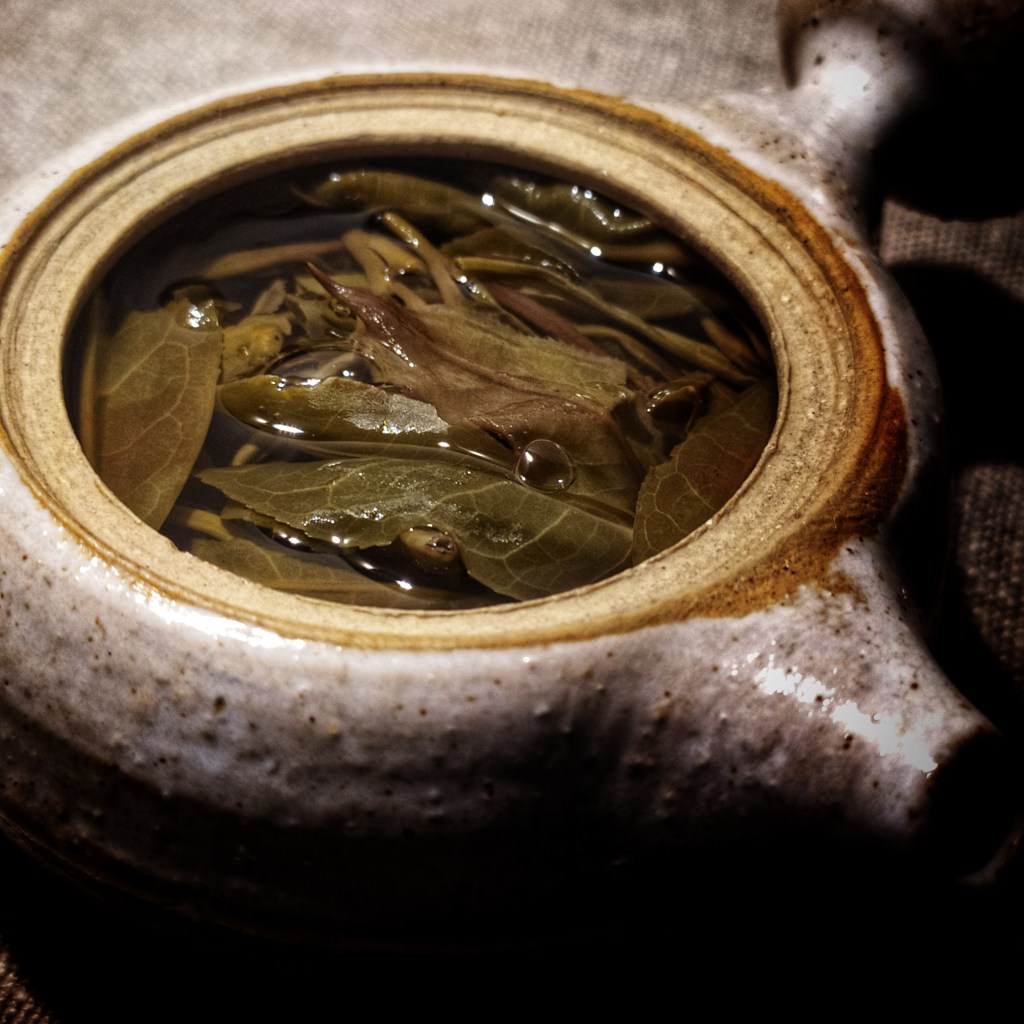
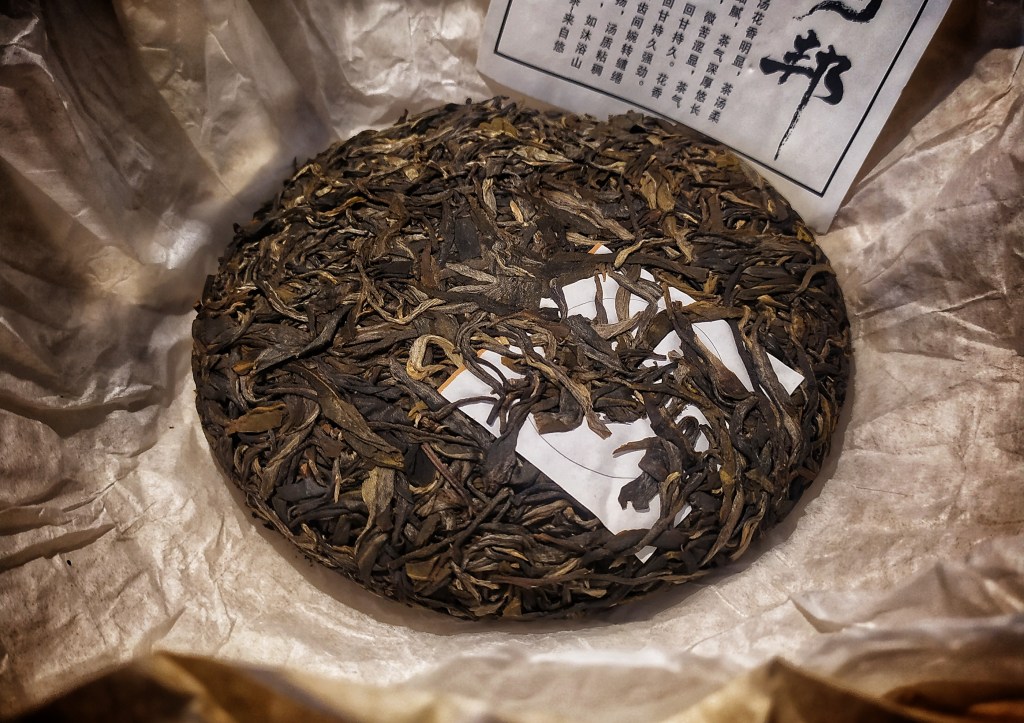
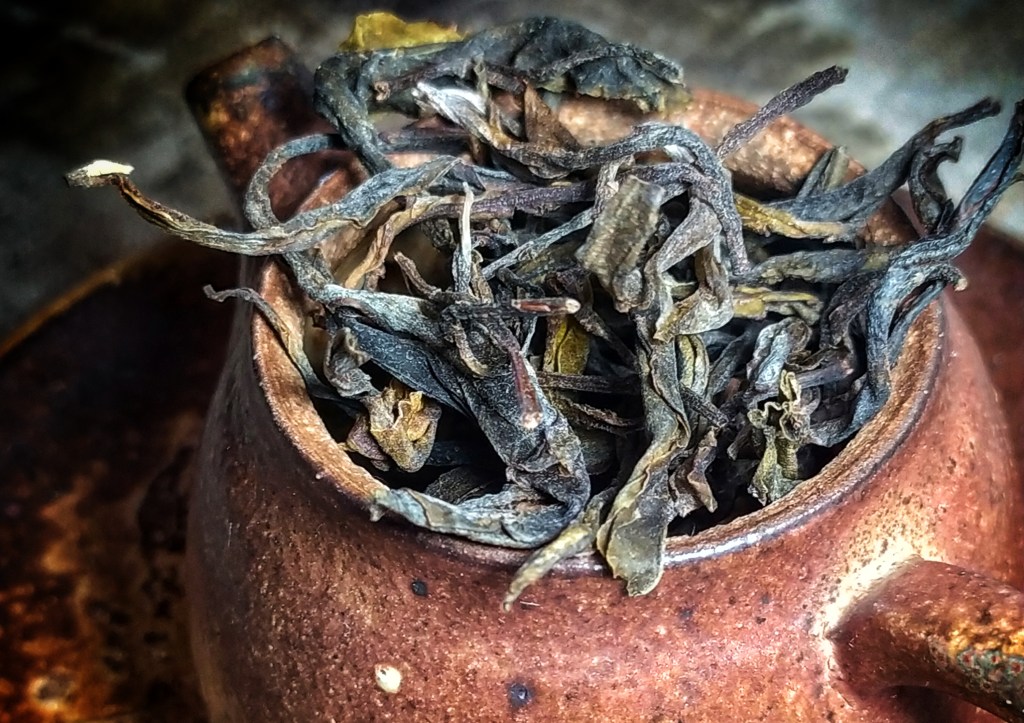
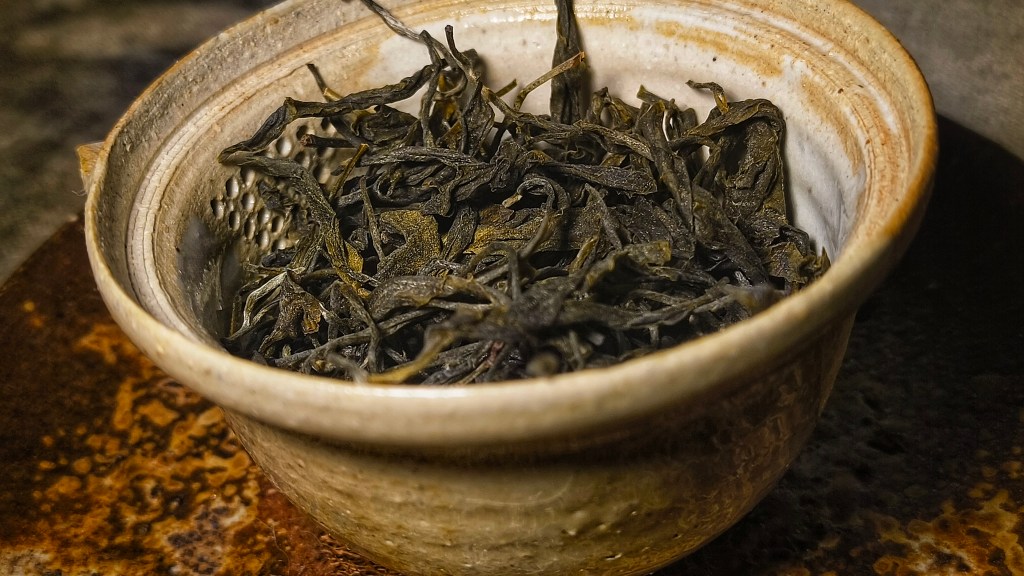
    Tủa Chùa is less than 100km from that war front, one of those mountain places where thunder strikes a sacred fear, where on humid days you can see nothing but misty trees and dark and wild slopes rising towards the sky. The tea in the photo comes from those peaks, from Xín Chải ancient trees, are leaves that recall that “suspended” of its land, capable of escaping every premonition; every other prefiguration and prediction, if there had been one, becomes irrelevant.

    This is a visceral, deep, unexpected sheng. It’s a place where faint hints of white peach, orchid and leather lie contracted, tones of tobacco and forest notes of undergrowth indulge but this is different every time because it seems in continuous change, a plot open in time, like an eternal improvisation. In the mouth it’s soft sweet and with a qi that alone could give meaning to the sip. The huigan takes control of the throat in an instant and every attempt at description from this moment seems a vain attempt by language to exhaust what is worth experiencing.

  • Making a true, authentic tea is sometimes a question of consciousness. Meng Tong Yin Shan Tea Factory Gǔ Xiāng sheng pu’er 2009

    Making a true, authentic tea is sometimes a question of consciousness. Meng Tong Yin Shan Tea Factory Gǔ Xiāng sheng pu’er 2009

    I happened to wake up this morning with a sense of nostalgia, that damned stinging feeling, that melancholic regret of what has passed or gone, or been lost. I headed to my “pharmacy,” that’s what I call the place where I keep that messy pile of leaves and ceramics that should appear to be a safe place for tea, but instead seems like the war front of a desperate need for order.

    I infused the leaves of a tea that had been sent to me some time ago by Moychay, a 2009 sheng from Meng Tong Yin Shan factory. Gǔ xiāng is its name, 古香, “the ancient fragrance”.

    Often we prefer not to delve into where the flesh hurts, pushed back to the surface by thought and the instinct of preservation, but I needed a tea that would anchor me to the present, that would satisfy my need to think, that would give sense to the moment. The sense, in its dual nature is able to indissolubly enclose the organ of sensitive experience and the intrinsic value, takes the ancient by the hand, and when there is truth, the authentic.

    Truth guides the authentic and the latter spontaneously translates into awareness of one’s vocation. Making a true, authentic tea is sometimes a question of consciousness and the need to resort to painful memories, it is not a question of ability but of understanding, of true, living style, of blood, an incorruptible visceral pact, symbol of the most ancient culture, of spontaneous creation, of generative power.

    Tea full of meaning is a tea that reminds us that this drink is not just form, it is not a mere concept, it constantly reminds us that expressing and evoking are different things. The aromatic traits also become gestures marked by an intention, they become an evocative act, we notice a development, the evolution of a melody that passes from one aromatic note to another, in which form and content emerge and subsist together.

    The ancient is distinguished from the old when the former had the opportunity to see the passing of time wrapped in the blanket of truth, of meaning, while the latter simply fades without leaving any memory, neither of itself nor of the intention that was at its origin.

    This is the reason why I chose this tea.

    Tea changes, it is a map of time and a saving substance, and like few others this Gǔ xiāng carries with it the traces of experience, of a changing form, in its ambivalence between notes of a fading freshness and those that place it ever more in a bygone era.

    From the leaves emerge scents of a winter countryside, mushrooms, undergrowth, camphor, surrounded by hints of cinchona and kola nut, nuances of dandelion root, tamarind and caramel wrapped in an unexpected, surprisingly strong blanket of vanilla. The scents of redcurrant, leather, moss on the trees, oak wood and orchid then become prevalent.

    The sip of medium softness, sweet but balanced by a light balsamic bitterness lowers the curtain on floral, woody tones, of angelica root, closing on aromas of vanilla pod and leather.

  • Gaoshan, the village between uncertainty and change. Bitterleaf “Vision” Gaoshan sheng 2023

    Gaoshan, the village between uncertainty and change. Bitterleaf “Vision” Gaoshan sheng 2023

    Gaoshan is a village in the Yiwu area, a place where about 100 families live, mostly Yi, more specifically Xiangtang. The first time I saw a photo of Gaoshan it portrayed a child under a table and a woman in her sixties with a basket of fruit in her hand, behind her house, she had a stern face sculpted by hardship and dark loose hair, without any hint of layers, as if it were cut with a razor. One of those people who seemed to have never changed their hairstyle in their life or residence.

    Every morning she fetched water from the well, collected wild herbs, walking tens of kilometers in that rippled gorge, where the road appears like a clay snake running through the forest.

    The photo collection also included the dense forest of tea trees and fruit trees, on a periwinkle-gray afternoon, the kind that precedes a storm. The boy, about five or six years old, was sitting on the floor under the large kitchen table, partially covered by the cloth drapes that were not long enough to hide him, but long enough to make him feel hidden.

    I believe that at the time neither the woman nor the child knew how profoundly their village would change in the next twenty-five years.

    Uncertainty and change are to Gaoshan as a bell tower is to its church, its teas are often among the truest in Mengla because they tell of their time without resorting to sweeteners or nefarious adornments, they are the fruit of the virtuous life of the settled person, who beautifies and sanctifies a place that is his, the natural result of having roots in the place that gave you the first dawn.

    The changing nature of this village can be found in this Bitterleaf Gaoshan sheng pu’er, where the aromatic fan seems to mark a new narrative trajectory every time we meet it in the gaiwan, the leaves are pervaded by a profusion of flowers in a wicker basket, but withered and in the process of changing clothes surrounded by a series of chiaroscuro, as only Rachel Ruysch would have imagined them, that battle of lights and shadows that package and give depth to the human experience.

    It is silky, complex, rich in notes of ripe fruit, such as white peach, mango, hibiscus, orchid, mineral sensations of wet lava stone, dried apples. From the first infusion you are enveloped by the honeyed and orchid sweetness typical of Gaoshan with a very nice huigan.
    The sip seems perfectly orchestrated in its essential elements but equally chaotic in its accessory elements, the way in which the aromas vary throughout the session creates a swing in which it seems to pass from one existential plane to another, from matter to concept, as in a mixture of science and spectacularization in which the result of the experiment is uncertain.