Tag: gushu

  • Tả Củ Tỷ & the Weight of the Mist: Aesthetics and Ontology of the Big Rice Field

    Tả Củ Tỷ & the Weight of the Mist: Aesthetics and Ontology of the Big Rice Field

    With A Comparative Journey Through Two Traditional Viet Sun Sheng Pu’er

    When I first saw Steve’s photos, his Vietnam, made of fiery red sunsets, emerald pastures, and motorcycles whose tire treads were mere memories, I was left hanging in a sense of emptiness, of existential incompleteness tied to never having visited those places. Looking at those shots felt like peering into a parallel world, embraced by a sort of ontological nostalgia.

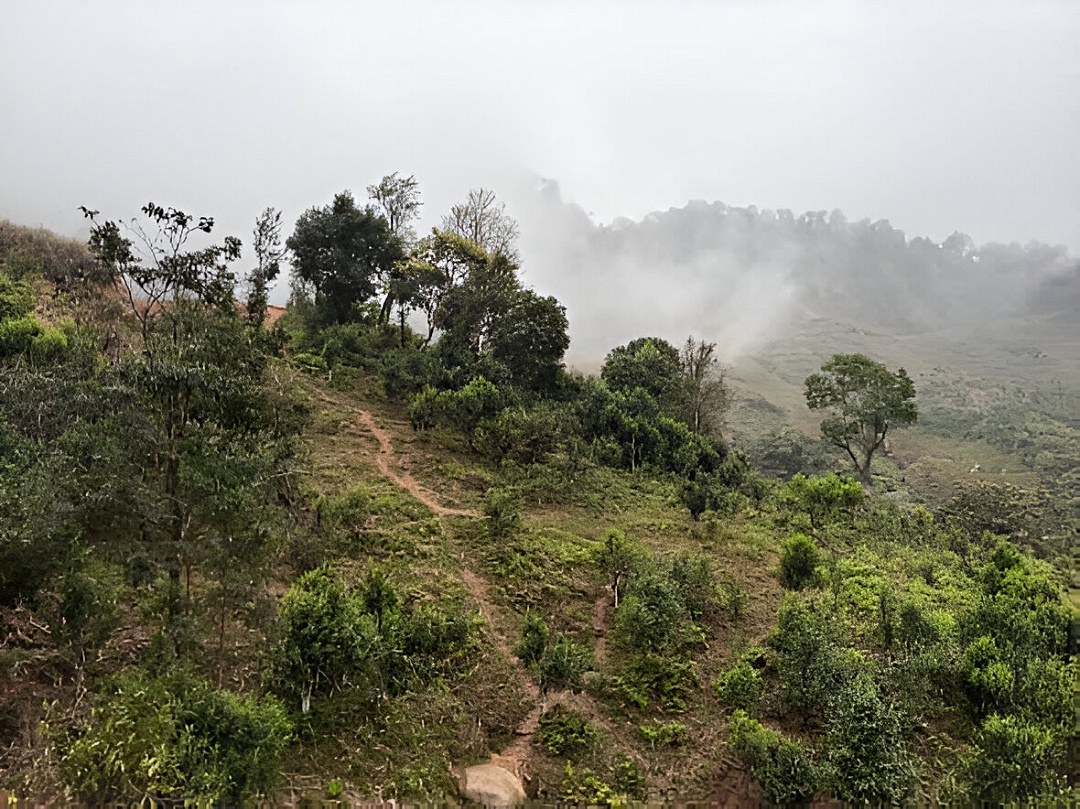
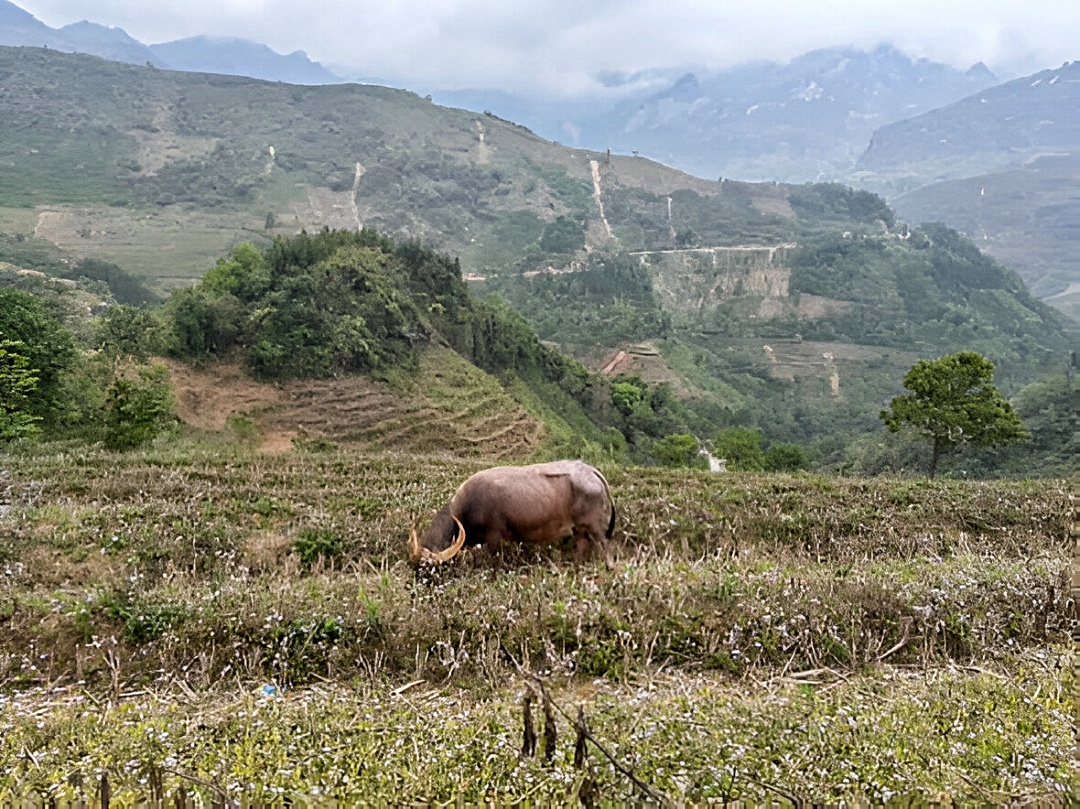
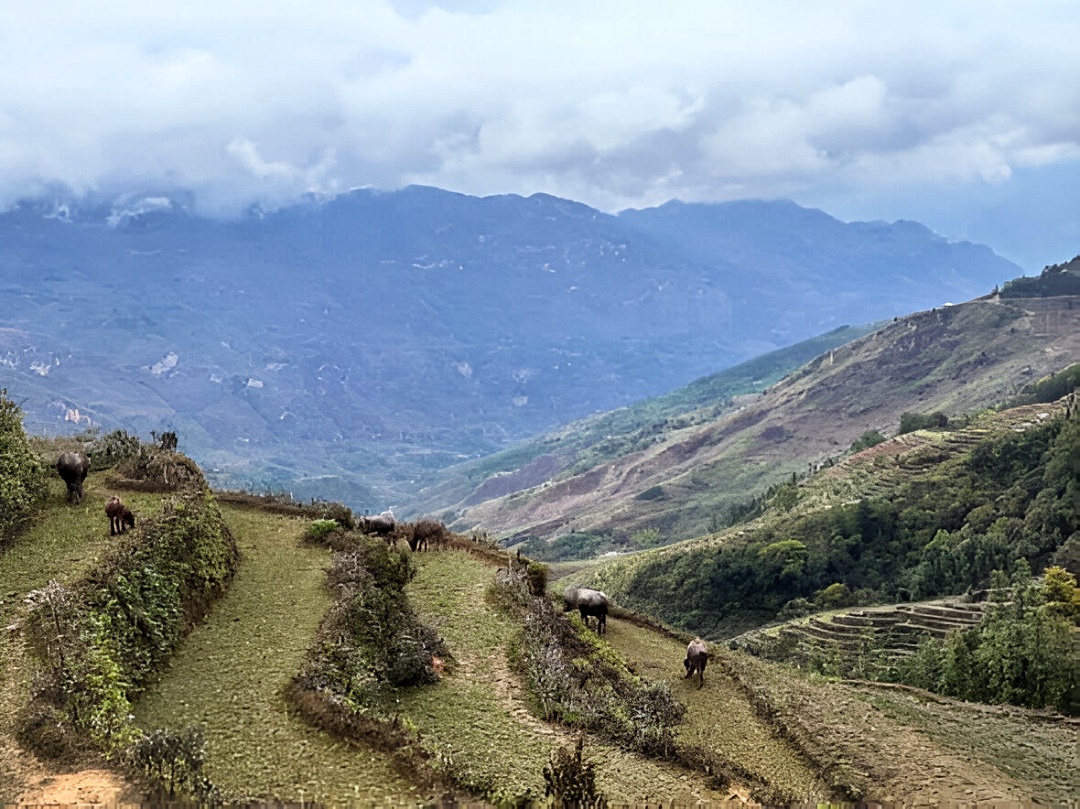
    The snapshots of Tả Củ Tỷ, the “Big Rice Field,” reveal the truth of a borderland world, of earth and blood, behind the major cities, whose distant lights appear like a sarcastic smile with pearl-white teeth. Then the horizon arches, growing increasingly vertical, rising further along the crumbling clay arteries, beyond the rice paddies, moments ago drained, now swollen with rain and reflecting the vastness of the sky.

    Here, every tree, every tea leaf, every sensory experience is an imperfect shadow of an eternal idea. This is where one of the best Pu’er teas in Vietnam is made, loaded with a near-theological sincerity, vibrant in every vintage, soft, flowery, and endlessly mineral. The shengs of Tả Củ Tỷ are like the Rieslings of the Mosel, a form of resistance against the trials the gods impose through the elements. They express the same minerality and layered memory. But while Riesling whispers sweet notes and sings praises like a Romantic poet on a summer evening surrounded by Viennese Jugendstil, the Pu’er of Tả Củ Tỷ elegantly drags you down a muddy mule path under relentless monsoon rain. In both, there is the same sharp and ruthless beauty, but whereas the Mosel wines evoke the rarefied skies of Chagall, suspended in uncorrupted blue, in Tả Củ Tỷ the image offers no redemption, it demands confrontation. Time here doesn’t pass, it presses. The landscapes are those painted by Turner, but not the sublime, ethereal artist of the Dover sea, rather the feverish, visionary Turner of his final years, where light shatters into curls of shadow and smoke, and the scene dissolves into an intensified, nebulous inner reality.

    The province of Lào Cai hosts a pedological diversity of rare complexity, the result of interactions between lithology, comprising metamorphic and sedimentary bedrocks, and a harsh topography shaped by steep slopes and variable altitudes ranging from the Red River’s lowlands to peaks shrouded in mist. In this living landscape, far from documentary clichés, ten major soil groups intertwine, distributed into around thirty subcategories, reflecting an extreme variety of geomorphological, climatic, and land-use conditions. In this mosaic, most fall into the categories of alluvial soils, minimally developed, fertile, fine-textured, laid across the Red River’s floodplains. As elevation rises, submontane zones host deep ferralitic soils, with aggressive pedoenvironments and reddish-brown hues. Then come humic soils on red-yellow parent rock, which inhabit the gentler slopes of the Sa Pa and Bắc Hà districts, ideal for mountain orchards and medicinal plants, the same ones that Dao grandmothers will grant you for a spider bite, heartbreak, or to recover quicker from the drunken night before. Higher still, where the air thins, the sun burns your skin, and geology shifts from academic subject to a lesson in humility, you find the brown, acidic forest soils typical of high-altitude tea forests, marked by thick organic horizons and excellent water retention, where the labor is real, marketing fades, and matter begins. The higher you go, the more essential the soil becomes, and the mountain strips you of every excess you thought you needed.

    Since ancient times, the region now known as Lào Cai has been a living tapestry of peoples from the H’Mông–Dao (including Mông, Dao, and Phù Lá) and the Kra-Dai groups (including Tày and Nùng). The Phù Lá migrated from Yunnan during the waves of the 15th and 17th centuries and opened the Lào Cai–Hekou pass, a crossroads for southern Chinese merchants and Tibetan fugitives, military settlers, and Tonkinese textile makers. Salt, tea, silk, and livestock crossed gorges and cliffs towards the Red River Delta, in exchange for rice, gourds, rare spices, and La Chi cotton fabrics. The trade route stayed open for five centuries, until the war with China in 1979. Tả Củ Tỷ and the entire Bắc Hà highland area have always been a “slippery edge” of the Vietnamese empire: formally part of Đại Việt, but in practice governed by local clan leaders and traversed by cross-border trade routes. Only with the expansion of the Nguyễn dynasty and, later, the arrival of the French, did state control become more pervasive. But that’s another story.

    The forests of Tả Củ Tỷ possess a mad, honest allure. The color palette feels like something conjured by a cosmic hangover, while the mist moves slowly, like cigarette smoke drifting in a closed room. Its radiance isn’t the kind choreographed by a cheerful smile or Caribbean hues, but rather the disarming kind of beauty of a woman who’s cried all night and then looks at you at dawn, bare-faced. A fleeting moment of rare grace, allowed to linger briefly in the interlude of suffering, the kind of incorruptible, visceral visual rapture that doesn’t let you lie.

    These dusty clay paths have been trodden by pack leaders, smugglers, and warriors. They’ve witnessed rites of passage and the initiations of Dao and Mông shamans, the veneration and sacred songs of the Tày, and offered shelter for markets and negotiations, for secrets traded with Xôi ngũ sắc, and for boisterous jokes between bowls of Thang Cọ and glasses of rice wine.

    From this thread of bare earth echoes the sound of an absolute beauty that refracts through the contingent, like a bridge between the transitory and the infinite. I could be among them now, being filmed as I say that it is in the resilient rurality of these villages that Heidegger’s concept of Gelassenheit unfolds, that is, a spiritual disposition of letting-be, an openness to the essence of things, and, as he interprets in his Parmenides, how it reveals itself through history and daily life. But at some point, a scooter would honk to urge me out of the way, and it would be right to do so. So, thousands of kilometers away, I conclude by saying that there, people have never betrayed their own history, even while embracing change, reminding us that the truth of a place is not measured by the order of its exotic scenery, nor through a mere anthropological lens. Especially not in that land, Vietnam, daughter of the sky, immersed in the dreamlike dimension of its eternity.

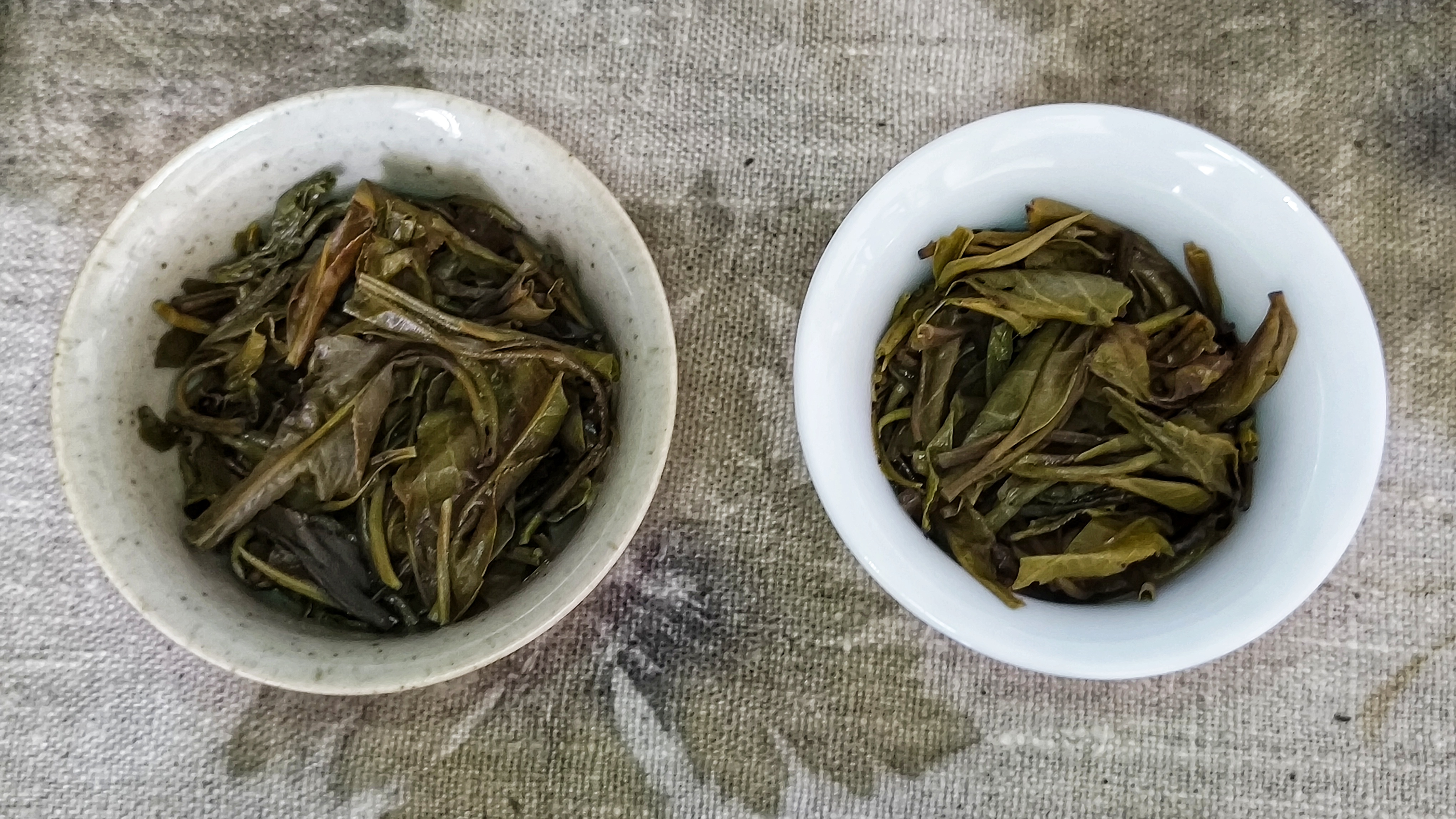
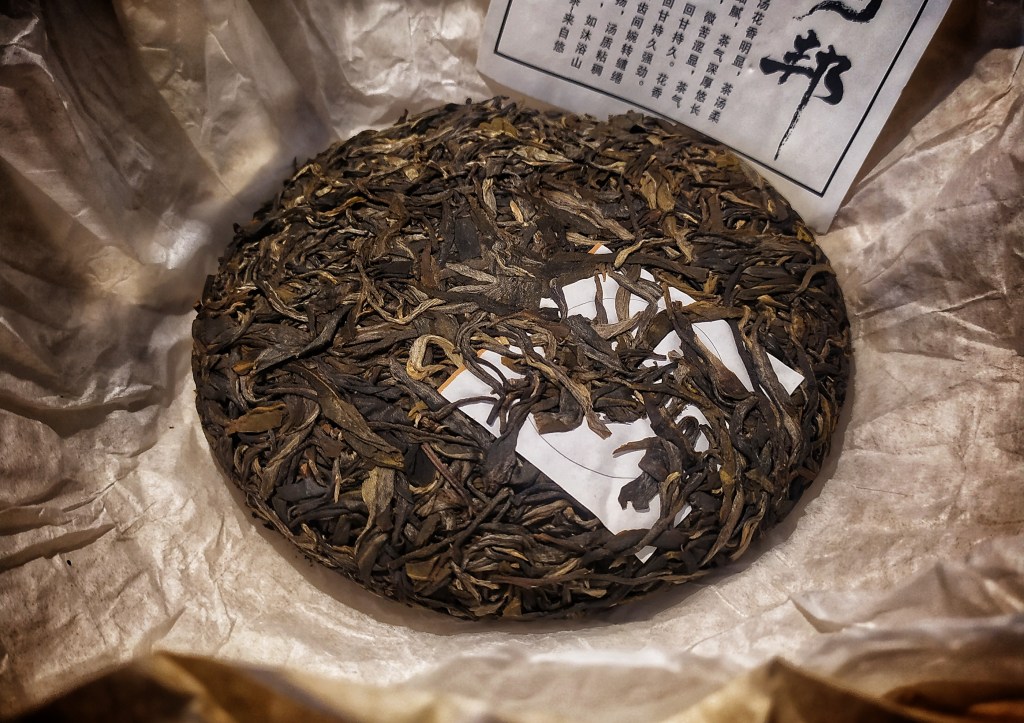
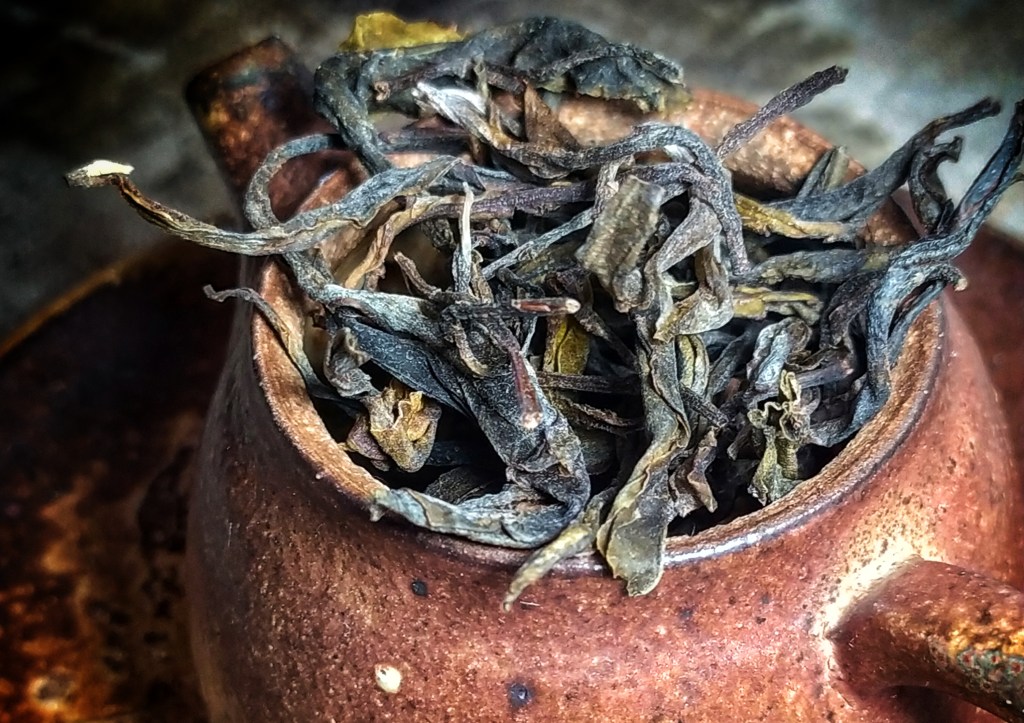
    On the left: Tả Củ Tỷ Sheng Pu’er Autumn 2023, medium aged, old and ancient trees
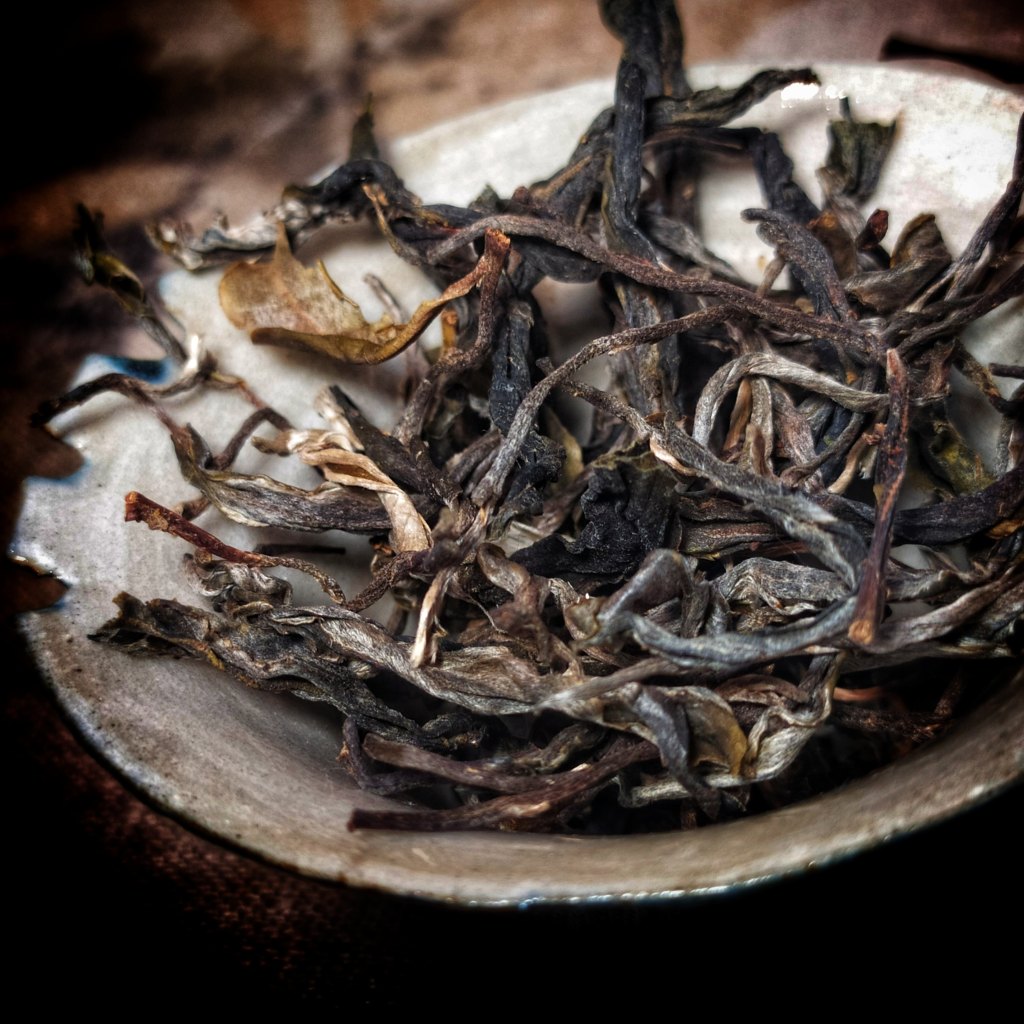
    On the right: Tả Củ Tỷ Sheng Pu’er Spring 2024, old and ancient trees


    Viet Sun Tả Củ Tỷ Sheng Pu’er Autumn 2023

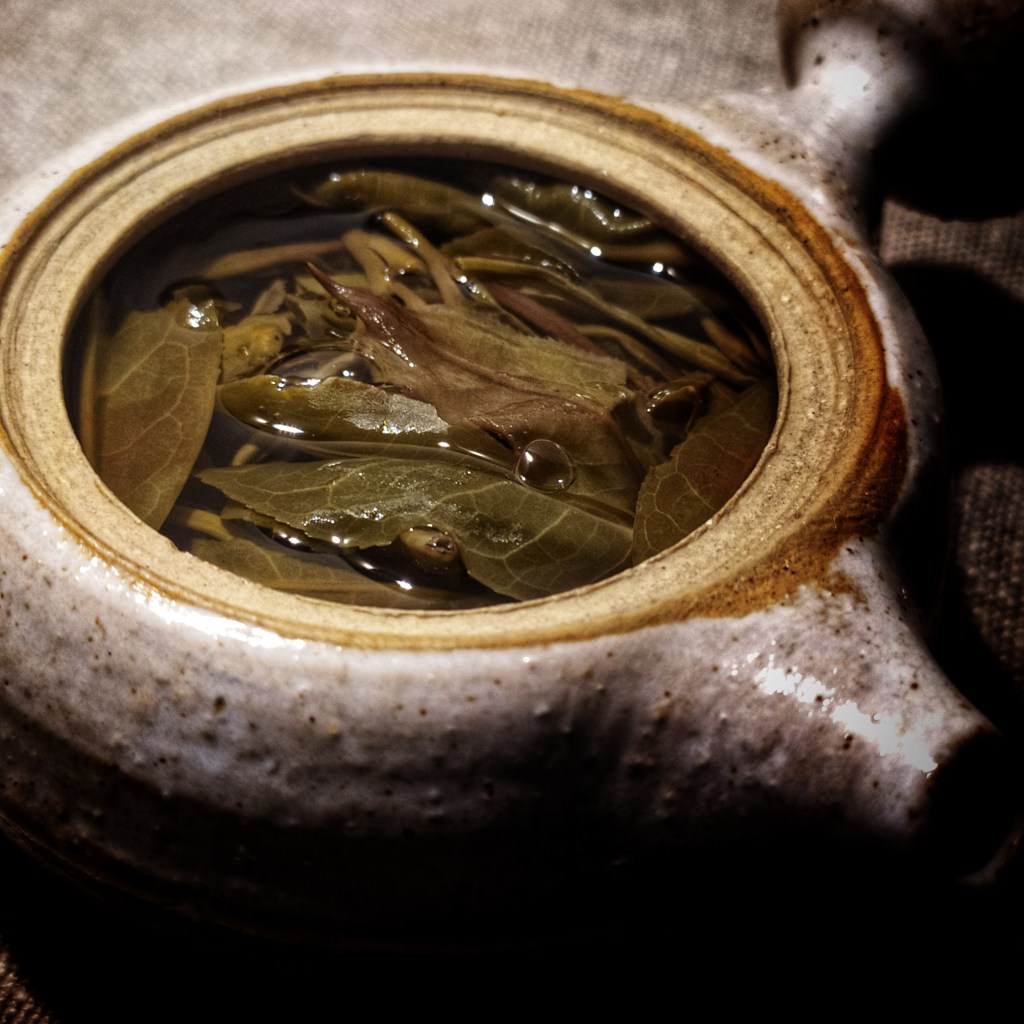
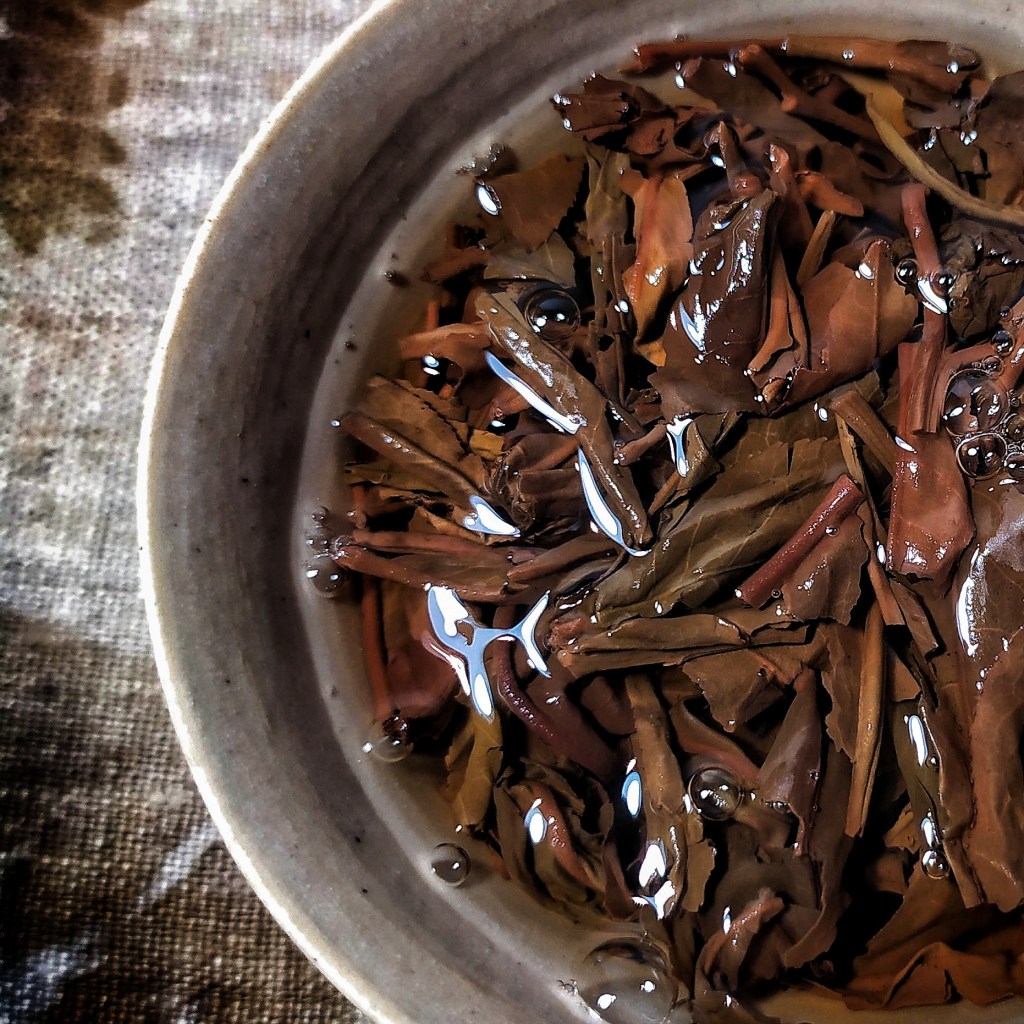
    The autumn version comes from a mixture of medium-aged, old, and ancient trees growing at different altitudes and on diverse soils. It presents itself with a mature register, more oxidized, and the difference from the spring version is indeed perceptible. The autumn leaves are darker, as confirmed by the liquor, a decidedly golden hue, with shades that recall Turner’s Goethe’s Theory, to stay on theme. While the wet leaves retain a line of continuity with the orchid and apricot notes typical of the spring harvest, here honeyed tones and hazelnut hints emerge more clearly, intertwined with musky nuances, dried fruit and pan-fried greens memories, with lightly buttery accents.

    Although vibrant, the sip is clearly more fragile, with a more hesitant body compared to the spring tea. Its huigan is more restrained and immediate, with sharper astringency, although the impression remains of a sweet brew with well-calibrated bitterness. Rather than floral aspects, the palate leans more toward raisin, apricot, and unmistakably honeyed flavors. The mouthfeel is less viscous, with more modest intensity and persistence, yet it remains decidedly interesting for this theater of contrasts between warm, comforting fragrances and still grassy notes, between roundness and sharpness. It is a tea that certainly holds aging potential, but is already quite enjoyable in its youth.


    Viet Sun Tả Củ Tỷ Sheng Pu’er Spring 2024

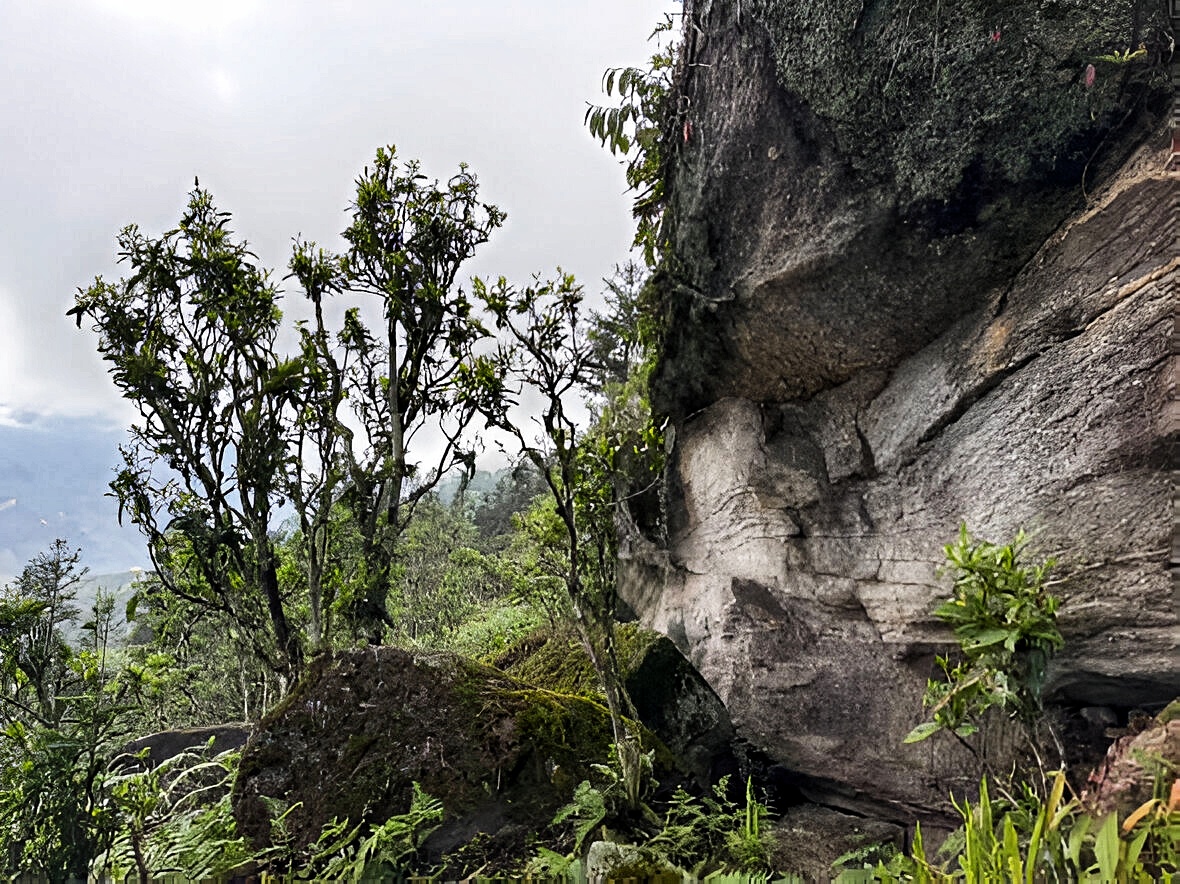
    I believe there are four essential elements that make a Pu’er good, if I were pressed to summarize: aroma, the taste of the mountain, excellent viscosity and huigan. And all of them are here. There are no substantial altitude differences compared to the autumn counterpart, but here we have leaves only from old and ancient trees. They appear lighter, less reddened, the liquor takes on a straw-yellow hue, and the aroma recalls that of orchid, not the florist’s kind, but the wild one you stumble upon between the cracks of limestone, with scents of an intensely floral field and apricots.

    Framing it is a very light smoky note that fades quickly over the course of the session, while a constant forest-like tone remains, along with wet stone elements that greatly define the olfactory texture. The character is decidedly more intense, more subtly grassy and floral, geared toward evolution over time. The liquor is beautifully smooth, sustained by light bitterness and astringency, which pave the way for a huigan that is reactive, quick, enveloping, and progressively expands from throat to palate.

    As the session continues, it constantly reminds me of some Pu’er from Gedeng, but even more boldly floral and with a distinctly mineral signature. The huigan and the persistence of the aftertaste are undoubtedly the pillars of the tasting experience, two traits that make you forget many gushu from beyond the border.


    Note: All the stunning photos of the passages were taken by Steve (Viet Sun)

  • The Price of Inconsistency: The State of the Market and Why an Uncontrolled Price Increase is So Dangerous

    The Price of Inconsistency: The State of the Market and Why an Uncontrolled Price Increase is So Dangerous

    A few days ago, a couple of videos by Farmer Leaf were published on the situation of leaves prices in Yunnan, with some insights similar to an article I posted back in late January, written with a slight tone of historical catastrophism, which, rereading it now, almost feels like a premonition. But that happens because history repeats itself in a damnably perpetual way, and I take no credit for that. Now, I don’t think William needs my promotion, I’ve never even spoken to him, to be honest, but I believe he’s one of the people with the most complete, intellectually solid, and sincere vision of the Pu’er landscape, at least on the western side, and, most importantly, capable of combining field experience with analytical clarity, not only because he lives and produces tea in Yunnan. After all, a heart patient is not automatically a great cardiologist, right? For this reason, I would like to ideally connect to what was said in the videos, and perhaps push the boundaries of the discussion a bit further. I know this might seem like an idle exercise, especially now that we’re on the threshold of a season that in many areas hasn’t yet shown itself for what it will be, but I believe the world of tea is already saturated with misleading narratives, or overly bent towards consumption and function-driven logic, so I think many can still tolerate one more.

    In some areas like Jingmai, but also in the whole Lincang region, Wuliang, and many parts of Bulang, for example, we have seen a significant depreciation. Not all in the same way, as the price of Yiwu leaves has remained almost unchanged in the famous villages, likewise in Bingdao, although I’ve heard of at least a 10% drop in surrounding villages. The forecast is that plantation and old trees materials from less famous areas, including gushu from some terroirs, will be the most affected. It’s no secret that Pu’er has become almost a superhuman niche game in the last 10-12 years, but was this scenario so unpredictable?

    The last discussions on this topic were buried by me in 2014 when more and more people, myself included, became involved with Pu’er, along with a sinking fleet of capital supporters still rushing towards creditors because they considered it a good investment. The growth of the sector was predicted to be unstoppable, which indeed happened for the next ten years. But now it’s no longer like that. The signs have been there for a long time, just like they were present in 2007, although I stand by my previous position, namely that today the situation doesn’t verge on tragedy as it did back then.

    What is truly tragic is that Pu’er has reached ridiculously high prices, and in economic terms, this doesn’t mean that people can no longer afford it, which is the point that many emphasize, as if saying that there will always be people willing to spend; the problem lies in the willingness. When the price of a good drastically exceeds its perceived or utilitarian value, cognitive dissonance occurs in consumers, leading to a drop in demand despite the availability of money, simply due to economic rationality. The opportunity cost (what one gives up) becomes too high compared to the perceived benefit. This is in line both with prospect theory, which suggests people react to losses by perceiving an excessive price as “unfair,” and with the luxury paradox. Luxury, which has often been used as a justification for the monstrous figures requested, actually operates in a paradoxical way where some goods lose their appeal if they become too accessible or even too exclusive. A good loses its appeal as a status symbol if its accessibility (real or perceived) collapses.

    Price is not just a number; it is a psychological signal, and the breaking point is not universal. Exceptions are represented, for example, by works of art: they maintain high prices for centuries because they embody the brilliance of human genius, something that transcends mere consumption; they do not extinguish or exhaust in the face of the tangible, as they serve no purpose other than themselves. Their value transcends consistency, even while having physical effectiveness; it’s a status that no other thing in the world possesses. But for most goods, including Pu’er, when the price loses all connection to the economic, cultural, or functional reality, the market simply collapses.

    I remember that a while ago, people often debated the origins of capitalism, the rise of the West, and how it had overshadowed the Eastern economy in some ways, contributing to a geopolitical gap that is now not so clear. It was in this context that Pomeranz’s “Great Divergence” concept emerged. This was later placed in an economic context by Robert Shiller, who understood it as a situation where financial prices deviate too far from the real economy, creating imbalances destined to correct themselves, often traumatically. The way to identify this phenomenon comes from observing its three main drivers:

    – Economic narratives: shared cultural constructions that influence collective economic behavior, often independent of fundamentals. These narratives, such as “the tea from this mountain is liquid gold,” “only here can you find true gushu from 3,000-year-old trees,” “the stock of this Sheng keeps increasing in value,” or “this is the last chance to buy before prices explode,” act as psychological catalysts, amplifying expectations and contributing to speculative communication. The power of a narrative lies in its ability to be replicated and spread, much like a virus.

    – Positive feedback loop: a dynamic mechanism where an increase in the price of a financial asset attracts further investment, which in turn drives prices even higher. This process can generate a self-reinforcing spiral disconnected from fundamental values, further fueling the underlying narrative. It’s a recurring dynamic in speculative markets, often a precursor to a correction.

    – Imitative behaviors: the tendency of economic actors to replicate others’ decisions rather than base their choices on an independent analysis of available information. This behavior arises from both cognitive (reducing uncertainty) and social (fear of being excluded from collective gain or consumption) incentives, and is one of the main forces amplifying the effects of dominant narratives in markets.

    The key point to understand is that no divergence between prices and reality can last forever, none. You might ask, “What about works of art?” Works of art don’t enter into this context because they don’t have divergence. This sets in when the vicious cycle becomes unstable, because goods like tea are always subject to physical constraints, like having a house on the side of a hill in an area that is perpetually at risk of earthquakes. For real goods, final demand always depends on tangible utility, whether it’s for dwelling, consuming, or earning. If this function is lost in products that naturally possess it, the market collapses in the end.

    The significant difference from wine is that in the latter, entire areas have seen an increase in land cost and corresponding product beyond imagination, like Pu’er, but there are still labels that are more accessible and others totally out of reach for 90% of people, and both contribute to maintaining the peak of that specific terroir, which remains accessible but sufficiently elitist. In Pu’er, this doesn’t happen, which leads everything to a single standardized dimension. But it isn’t the same for quality. An example can be that all Bingdao shengs are expensive, some more prohibitive than others, but all are excessively costly and generally inaccessible, even the mediocre ones. The quality of raw material can differ even within the same micro-territorial context, but, above all, the hand of the producer is often unknown in the world of Pu’er, reducing everything to a blind purchase if you go outside your small circle of trusted producers or traders. According to this mechanism, if one producer in Montrachet makes a mediocre wine, it’s an isolated case; if someone sprays herbicides every Friday or produces low-level Pu’er in Yi Shan Mo, everyone risks being affected.

    Secondly, there is the crisis of trust, which arises when investors realize that the price is an “empty promise” in terms of missed capitalization or, at the same time, in terms of unfulfilled organoleptic quality, no matter how high it may be. Furthermore, the crisis of trust sets in when uncertainty exceeds average tolerance thresholds. Rigged auctions, counterfeits, false claims about the region and age of the trees — all factors contributing to the genesis of distrust. Have you ever seen cakes that looked ordinary, wrapped in plain white paper, always nibbled by the chewing apparatus of some friendly larva, with a damp stain, deliberately present to legitimize a supposed date, affixed a line before a price with 3 or 4 digits? If you were to sell a Chateau d’Yquem, pick any vintage as long as it’s not the 2008, to a wine expert, but that Sauternes were in a naked bottle, without a label, do you think they’d be willing to give you $600 on trust alone? Without clear traceability, strict controls based also on biochemical analysis, do you think people would spend a fortune on any Burgundy wine? In these contexts, people self-report among neighbors, whereas with Pu’er, there still seem to be actors who want that jianghu, that shadow line that seemingly benefits everyone. Wine is clearly different and not all concepts can be applied to tea, as it’s a different raw material. But why is it that everything becomes tolerable for Pu’er?

    Finally, there are external interventions, or regulatory agents that trigger corrections, which in this case can be merchants or investors. The money flow stops, and the machine halts, and this is the third reason for the unsustainability of the divergence.

    All these factors are usually monitored by financial experts to assess the health of the current market but also to avoid excessive financialization. If a good loses sight of its utility principle, it becomes an asset detached from what makes it itself, turning into a tool for speculation. So, I ask once again: why is there such a desperate effort in Pu’er to gamble and push itself to the edge of this condition?

    Complicit in all these self-flagellation efforts are surely all those photos, those beautiful live postcards with tea trees standing like soldiers at attention, ready to go to war to satisfy our palates, slaves to a huigan, an authenticity and a cha qi at $2/g findable only there, and I mean only there in those 5 square meters of land immortalized, because only there, according to the seller, God has cast his gaze, good tea is made only at that spot, everything else has obviously been planted to shade that little patch of earth, not to be harvested and sold. What they might not show you is how the person taking the photo might be standing on a guardrail next to the highway, and maybe the grass burnt by pesticides gets cut out with editing, as well as the poorly pruned trees (sometimes they don’t even hide those), or other similar things. Or, simply, the tea doesn’t even come from that patch of earth, because let’s be honest, buying tea is often not just an act of trust, it’s entirely an act of faith. This doesn’t apply to everyone, but it’s a concept that applies to many.

    There are no certifications to guarantee the maintenance of a supply chain, nor that a fair price is paid to the producer or farmer, nor control over denominations like in wines. There are chemometric authentication methods through the analysis of stable isotope ratios to trace the origin and harvest year, but I’m smiling just thinking about it. $400 for 357 grams of pure “maybe” seems a bit too much. Half would still be too much. As you can see, the problem is not whether one can afford it or not, for once the problem isn’t money. The problem is the physiological rejection, that immune response of my body against the enormous “if” that resides in my cup, which I’m about to swallow, hoping that the huigan will overwhelm me so I don’t have to engage in psychomanipulative strategies and explain to myself why I spent yet another boatload of money on something that’s barely worth a third of what I paid for it. Usually when there is asymmetry of information between the buyer and the seller, an average price is paid due to the lack of knowledge of one of the two parties. But in Pu’er this does not happen.

    And having mentioned authenticity, I’ll refer to the next crazy price-justifying argument. I remember an interesting article by Shuenn-Der Yu, an anthropologist from Academia Sinica in Taipei, who concluded by saying, “Ironically, the story of Puer tea demonstrates that the concern for authenticity may have reached a state where no one cares what Puer really is, so long as the current version of the tradition generates profits.” And here comes another bitter pill to swallow. The campaign for understanding what is authentic in the world of Pu’er has been going on for at least 50 years, and today we are still at the same point, the starting point. Authenticity has moved through the debate between wet and dry storage, between terrace tea and forest tea, until reaching the exasperation of single-origin, which cannot be guaranteed, and the compulsive search for gushu. The search for authenticity has poured into the desire to know the exact location of the bathroom closest to the wok that generated the leaves of that cake from the Banpo forest and the need for those trees to date back to the Qinghai campaign of 1723. Otherwise, you’ll never know what authentic Pu’er tastes like. It’s not a communicative strategy adopted by everyone, but there’s always someone ready to pull out the sign saying “I have the real gushu, the others are fake.”

    From the late Qing period, blending (pinpei, 拼配) was considered a refined skill, the result of long training and experience, not unlike, in rigor and sensitivity, the art of blending in whisky or tobacco. This technique continued to represent an essential component of production, both for shenh ad shou Pu’er, continuing its evolution even within large state-owned companies in modern times. But today, authenticity resides in the single village, in the extreme representation of terroir, in tasting the locality, an invitation to the sage of purity and a claim to a place, as happens with French crus or Italian MGA. Too bad that in Pu’er there is nothing similar, neither in historical documentation nor in tradition, nor, again, in the concept of denomination. And without denominations and identity controls, which terroir are we talking about exactly? We can talk about it when we are in that mountain, in that forest, tasting the tea that comes from it because we know who worked it or picked it. But hundreds or thousands of kilometers away, how does that certainty remain intact?

    Apart from the controls in some areas, in other parts no one will tell you the truth about what’s happening. Ten years ago, MarshalN wrote, “If you think about it, nothing stops a seller from going to the nearest Chinatown supermarket, buying a bunch of tea cans that cost $5 each, emptying them, repackaging them as quality tea, and reselling them at a 4x markup,” and what has changed in 10 years? Nothing.

    The marketing of Pu’er tea has for many years been a choreographed performance, orchestrated through often incomplete contracts that leave excessive room for opportunistic behavior. This modus operandi can be rationalized by observing three harmful symptoms: the sanctification of space, the providential narrative, and the pseudo-religious iconography. All of these are present and exposed above. The Pu’er market has been plundered by what should be the true agronomic meaning and sense of terroir, which deserves true protection, not mere commercialization. What should be the core of authenticity becomes the passive accomplice of an economy of hope.

    “It’s normal for people to always want more and earn more; it’s useless to play the morality crusader,” is a typical phrase I hear in debates about situations like these, and it is the natural response many would wield in face of this article. Therefore, I would conclude by reaffirming the reasons that constitute the danger of such a perverse economic cycle.

    In the relentless pursuit of higher margins, many areas have converted their crops, with reductions in many cases of more than 40% of the land cultivated for essential foods, increasing vulnerability in case of external imbalances. To expand or maintain production, many farmers have taken out high-interest loans, which, naturally, are also increasing, as the bet was based on a continuously rising price for Pu’er, thus increasing pressure on the credit system and families. Now, if the price of raw tea continues to decline in the coming seasons, these farmers would find themselves in technical default. I read somewhere years ago that rural banks in Yunnan had about 40% of their loan portfolio tied to the Pu’er sector: if producers could no longer repay the loans, there would be a risk of chain insolvencies, similar to a mini subprime mortgage crisis:

    Farmers → insolvency → rural banks → credit freeze → collapse of local businesses → slow return to normalcy.

    So, the point is not just to lower prices, but to rebuild a network of trust. Continuing the speculative system would not only lead to critical adjustments for honest farmers and intermediaries but also to credit rationing phenomena that would prevent rapid recovery or mere subsistence even after the true outbreak of the crisis. Banks and credit institutions could limit loans to avoid adverse selection risks, like financing risky projects, favoring only the large intermediaries and leaving smaller entities behind. And this is a frequent thing that nobody ever talks about.

    Moreover, most of the workforce in rural Yunnan is directly or indirectly involved in the sector: farmers, processors, vendors, tea-related tourism employees. With another market crisis, what transferable skills would hundreds of thousands of potential unemployed people have? Economic restructuring is not possible in the short term to cope with a potential crisis, given the absence of industrial alternatives. To conclude this excessively dramatic view, even with a collapse in the value of Pu’er, rents and mortgages would not fall, since for a good initial period, land and properties would still be valued based on high-return expectations, and families would remain trapped in a stagflation trap (despite some sectoral deflation): high production, high costs, falling income, rising underemployment, and declining consumption. I don’t believe Yunnan is in this situation, despite some sectoral deflation and possible inflationary rigidity of essential goods and fixed costs, nor do I think it will get there soon. But this article is an investigation into various perspectives, so it is necessary to describe even extreme but possible conditions.

    Essentially, the Pu’er sector, grown under a model of accumulation and continuous speculative expectations, is now facing its structural limits:

    • Inflated prices → distorted rents → inefficient resource allocation.
    • Dependency on a single product → systemic vulnerability.
    • Lack of diversification and resilience → risk of regional social and economic crisis.

    The Pu’er market has evolved into a microcosm of financialized capitalism, where the described drivers create a deadly divergence between price and reality. The correction is painful but necessary, as only by anchoring the price to real values (quality more closely correlated with price, an ethical and certified supply chain, cultural utility) can we avoid the trap of the “Great Divergence.” As Galbraith wrote: “Everyone thinks they can leave the party before the punch bowl runs dry. But the punch always runs dry suddenly.”

    In light of the above, the solutions – though complex and not immediately applicable – must include a selective revision of price levels, especially in areas that have experienced the sharpest increases in recent years. This recalibration would help to rise quality, to reduce the entry barriers that currently discourage new operators and consumers in a sector characterized by volatile and often unstable preferences.

    It is true that there is a niche of loyal consumers, deeply connected to Pu’er from both a cultural and taste perspective; however, most consumers show high price sensitivity, and in the event of compromised accessibility, they will drastically reduce consumption or migrate towards alternative tea varieties, or turn to other Pu’er production areas such as Laos, Thailand, and Vietnam, which are more economically sustainable and are now producing excellent teas.

    As also highlighted by William in his videos, another key strategy is diversification: particularly the development of sustainable and integrated tourism (ecotourism) and the reintegration of agricultural crops suited not only for human consumption but also functional for renewable energy production, such as biomass for biogas, or alternative crops like coffee, given the growing prestige of the Menghai region, where extremely high-quality varieties like Gesha are now being successfully grown, representing promising ways to free local communities from the near-exclusive dependence on tea monoculture.

    At the same time, the introduction of a mandatory certification system for Pu’er is necessary as a tool to restore market trust and strengthen the perception of the product’s intrinsic value. The cheerful postcards will not be enough sooner or later. In this regard, the use of blockchain technology – to ensure traceability and transparency – together with the formal recognition of local designations of origin, represents an essential step towards a credible and sustainable revaluation of the entire sector.

    From a macroeconomic and credit perspective, if the market continues to show rigidity and an absence of adaptive capacity, it will be inevitable to implement extraordinary intervention tools. Among these, it will be crucial to begin systematic monitoring of essential goods prices in the most affected areas, to contain the regressive effects of the crisis on the most vulnerable households. It will be necessary to consider the possibility of activating public debt moratoriums for small producers, as well as, with extreme caution, evaluating the partial conversion of debt into equity instruments. Although this measure would provide immediate financial relief and potentially facilitate access to certification programs and technical support, it carries significant structural risks: among them, the potential for abuses, the excessive commercialization of production logics, and the disproportionate cession of land-use rights in relation to debts that might be overestimated or poorly contracted.

    Those who know me or have had the chance to read what I usually write on my profile know how attached I am to Yunnan and China, and they perfectly understand my language, saturated with admiration for an irreducible people. However, I believe that poetic phrasing, lyrical tones, and romantic philosophy are no longer enough. On the contrary, I think a more critical, aware, and participatory approach is needed: a form of shared responsibility toward a market that has proven extremely fragile and that requires more balance and transparency, for the good of all, those who live there and those, like us, who observe, love, and frequent that world.

  • Pu’er Price Collapse, Are We Heading For A New Crash?

    Pu’er Price Collapse, Are We Heading For A New Crash?

    I’ve always loved investigative journalism but I’ve always hated those catastrophic clickbait headlines that always seem to make things bigger than they really are, but there’s a phenomenon in the pu’er world that’s been going on for a little too long to be simply buried like a dog with its bone.

    Now, we all, or almost all, remember the bursting of the speculative bubble in 2007, where the pu’er market swelled exponentially overnight that spring only to falter in July and collapse over 70% by the end of the year, basically cutting the legs off an entire industry. Well, we may not be at those levels, but it doesn’t seem like the lesson has been learned, rather it seems like someone just put their shirt on inside out to hide the stain.

    What were the causes? Well, to simplify, let’s consider that 70% of purchases were motivated by investment and not by real consumption, production quintupled in 4 years, saturating the market, to which we add fraudulent practices of counterfeiting, manipulation of markets and auctions and crisis of confidence in the product, the source and the quality due to opaque practices dictated by the absence of clear regulation that was convenient for everyone, then we obtain what is a self-destructive economic logic based on artificial growth, completely disconnected from the fundamentals of the product.

    In the West we most likely think that Pu’er buyers have broken free from this dimension because we see a large part of them consuming the same tea they bought, which is partly true, but partly not. Many areas of Yunnan that have reached rationally unthinkable numbers, brands or editions that beat crazy prices have behind them a generative structure often of speculative nature that does not always have to do with scarcity, production costs or the quality of the tea.

    A while back I found myself tasting old samples or cakes from my collection that I had probably forgotten about. I tasted an old 2005 DaYi 7542, batch 501, along with some more recent production, a 2022 7542 and a 2022 Premium Peacock, both batch 01. I honestly can’t say they were bad teas, they were really good, but to what extent can you justify a crazy price, crazy especially when compared to those before 2015, for a basically “a little more than good” tea. This is not only true for DaYi, but let’s analyze for a moment the price trend of some famous productions. Among the most sought-after cakes in recent years there has been the 2003 Jin No.5 batch 201, in January 2021 its value was 1.45 million RMB/jiàn (84 cakes) while in January 2025 the value amounts to 1.1 million, lower than 5 years ago and above all far from the exorbitant price of 3.2 million in March 2021, same fate for the 2005 7542 (batch 501) which in February 2020 was 230.000 RMB /jiàn (84 cakes), reached 880.000 in February 2021 and then collapsed again at the beginning of this year to 300.000 RMB.

    In recent years DaYi has marketed numerous other special and prestigious productions, such as the 2201 Premium Peacock or the 2021 Golden Rhyme to counteract the erosion of the pu’er market prices, but without much success, the first had a value of 118.000 RMB / 42 cakes now collapsed to 61.500 RMB while the second which had reached 152.000 RMB / 28 cakes now touches “only” 33.000 RMB.

    So, in China there is a particular and complex economic situation and due to personal and corporate financial difficulties, those who invested in this type of goods have tried to divest from illiquid assets such as Pu’er. The tea market does not guarantee a quick sale (and this can be seen from the huge amount of cakes kept obsessively by those who bought them for this purpose) without even seeing a potential for short-term revaluation, and this has led to a greater supply than demand, which is why many recently produced cakes are and will be available in the future.

    Added to this is the real estate crisis triggered by the collapse of Evergrande in 2021, the real estate sector has traditionally absorbed a huge share of savings from Chinese families, who now see the value of their properties deflate, which has caused an erosion of perceived wealth. The liquidation, even at a loss, of pu’er tea to quickly recover liquidity and move a part of immovable money can only worsen the price situation.

    Let’s add a piece: in recent years some brands, attracted by demand, have pushed for an increase in production, not limiting themselves to a couple of pressing batches; with the drop in demand, the market is now flooded with a surplus of product and an inability of the market to absorb the supply.

    But above all, wage stagnation, a lack of robust welfare for which the capital of families is concentrated more on pension, salary and educational expenses and a slowdown in redistributive policies slow down or cancel the entry of new buyers into the market, a situation that brings us back to the last problem of the analysis: The collapse of the speculative segment.

    The cakes of large “investment” brands have suffered a 30-50% drop compared to the 2021-2022 peaks, especially for the post-2010 editions, a sign of the exhaustion of the speculative model, something already seen in 2007, but currently the situation is less dramatic. However, reliance on time is not a reassuring factor in the development of these phenomena, which can see prolonged stagnation as well as a sudden acceleration rather than their dissolution.

    Now I get to the point. For years, the “investment” market has functioned with a pseudo-pyramidal scheme: investors bought new and old editions waiting for others to enter after them, driving up prices. When the absence of new players becomes apparent, the system simply collapses, as the first to arrive only gain if new buyers arrive willing to pay higher prices (those who know the world of fine wines are probably not unfamiliar with this game). So prices collapse because there is no longer real demand to support them.

    The biggest problem with the collapse of speculative Pu’er is that as it increases in value it sometimes cause the price increase of raw material and “consumer” cakes even from small brands, it can have exactly the opposite impact on the local economy of the region, where many small producers depend on the sector, since the costs for harvesting, processing and storage of Pu’er increase accordingly, especially for the latter who do not benefit from economies of scale.

    In addition, many young people seem to give up on this type of purchase and the crisis of confidence due to several allegedly rigged auctions have not helped the image of this sector which in itself is already a niche.

    In this article, not all the main problems have been touched upon, for example, I have intentionally left out the problem of fakes (both new and old pu’er, both big brands and, especially currently, smaller brands) and that of fraud on the origin of the leaves, which represents a huge critical point.

    As far as pu’er consumers are concerned, the only possible logic is to form and create a personal standard that is totally independent from the logic of price, fashion and advertising of brands and sellers. If it is true that a low price does not bode well, it is also true that a high price does not provide any a priori guarantee on its real quality or on the truthfulness of its origin, and this applies to both Asian retailers and European sellers. Trust in a shop and in the people who run it still remains a fundamental prerequisite, as well as fighting speculative logic through greater criticism and greater detachment from trends that contribute nothing to an authoritative and well-founded personal education, nor do any good to a market that certainly no longer needs speculative logic (also considering the polarity of speculation, which could occur in a unipolar way in the West thanks to some retailers without it actually occurring in Asia). All very familiar advice to those of you who have been out here a while, nothing new from the early 2000s.

    To conclude, this trend of continuous increase in prices in a generalized way is not infinitely sustainable, and history unfortunately teaches this, especially in an uncertain global economic context. The future of the market will depend on the ability to balance price, quality and accessibility, avoiding speculative excesses and opening up to new consumers. If the sector is able to adapt, Pu’er will remain a valuable product, but with more balanced and less volatile prices. Companies must become ambassadors of transparency, for example by introducing blockchain certifications or declaring costs and margins so as to show how much is paid to farmers, as happens with some micro-roasteries in the coffee world. Consumers must act as ethical “gatekeepers” avoiding being carried away by the hype without evaluating the quality and institutions must guarantee clear, more stringent rules that absurdly no one seems to ask for (except to limit the use of fertilizers or other superficial environmental restrictions), clarify terms (e.g. gushu) so that they are internationally univocal and measurable as happens with European standards and denominations. All these things seem like utopia, but every now and then it’s good to say things out loud, they don’t even sound bad.

    *All prices in the article were taken from donghetea.com

  • When a great pu’er become an elegy. Eastern Leaves Lunan Mountain ancient trees 2020

    When a great pu’er become an elegy. Eastern Leaves Lunan Mountain ancient trees 2020

    For generations, caravans laden with pu’er have traversed the steep paths of Lunan, eluding the harsh karst landscape, leaving it behind them, slowly advancing towards Tibet.

    The muleteers, with their faces hollowed by frost and fatigue, relied on themselves, on their companions, on the tenacity of their horses, following the paths traced by their ancestors, where every bend concealed stories of exchange, trade and survival.

    Pasha seems to have been able to overcome everything, from the destruction that occurred with the Panthay rebellion to the wreck of traditionalism and the collectivization of the Cultural Revolution, to the persecution of the Red Guards.

    Hölderlin wrote “where there is danger, what saves also grows,” and so it is here that natural beauty and spiritual aspirations intertwine into a rich and vibrant cultural cloth, and teas like this, with their dense depth of flavors of vanilla, candied fruit, nuts and persimmons, take us into a dimension of time that we cannot easily grasp, a place where tradition is not only preserved, but continually recreated.

    With its silky sip, honeyed sweetness, musky and citrus tones, the cup becomes a sort of refuge, a bridge rather than an end.

    When we sip a cup of pu’er like this we are entering into a dialogue with the past, it reminds us that not all is lost, that in its slow and patient aging lies both a concession and a resistance to time.

    A great pu’er becomes an elegy, not only a lyric of sadness for what is lost but a celebration of the intrinsic value of what has been. In its leaves pervaded by scents of red dates, walnuts and toasted pumpkin seeds, of withered broom flowers, its elegiac essence revived through a call to the earth, to history, to the culture, every sip becomes an existential plan, a way of inhabiting time with consciousness.

    It offers us a key to a further, more saturated dimension of time, in which loss is not an obstacle to overcome but nourishment for our being. Both, the elegy and the pu’er make memory a cure, an antidote to oblivion, reminding us that the past is not a wound to be closed, but a legacy to draw from.

  • Tea as a contrast to immediacy and as an aid to living time. Viet Sun Thương Sơn sheng pu’er 2016

    Tea as a contrast to immediacy and as an aid to living time. Viet Sun Thương Sơn sheng pu’er 2016

    I think there is immense value in dwelling on the traditions that tie us to the past. We live in an age that has forgotten the importance of living time, of the slow maturation of ideas and things. Rather than living, we grope in a era that tends at times to reduce life to mere mechanisms of action and compensation, to power relations, to a set of derivations and summary assumptions. And yet, our daily experience recalls something much deeper: the desire for meaning, the search for truth, the will to give meaning to time and to recognize the sacred.

    This morning I reached back into my pharmacy, getting a 2016 sheng cake out of that mess, it comes from Thương Sơn, one of those places where the past intertwines with a vibrant and complex present, which seems to hold the secret to eternity. Here, ethnic and cultural plurality merge into a living mosaic, the rice paddies wrap the mountains like an emerald scarf, contrasted by the pink-purple waves of autumn buckwheat flowers, those flowers that are said to have been sent by the gods as a sign of recognition.


    Each leaf is a fragment of a narrative that has developed over centuries, Thương Sơn is rich in ancient trees that produce teas like this, whose aromas recall the cold winter with the spirit of an austere old father wrapped in his leather armchair, immersed in the cloud of an evening cigar.

    The sip is enveloping, deep, mineral with hints of Montecristo cigar, leather, dried Moroccan plum, camphor and cloves, it is a constant reminder that true pleasure requires patience. The aromas then sublimate into a dimension of labdanum accords, apricot in alcohol, gentian liqueur and incense. The intense huigan and strong qi revive the image of the crazy and primordial harmony of places like this, so typical of traditional places, a cup we could define as an “accumulated wisdom”.

    Teas like these, places like Thương Sơn, through understanding the bond with their own tradition, with their own history, teach that there is an order, a truth that transcends human contingency, and a tea like this that ages is a trace of that truth, a witness, a collector of past eras, a contract between generations.

  • A mystical, primordial village that gave refuge to outlaws, tea merchants, heroic loggers and ghosts. Huang Cao Ba told with a 2023 old trees sheng pu’er

    A mystical, primordial village that gave refuge to outlaws, tea merchants, heroic loggers and ghosts. Huang Cao Ba told with a 2023 old trees sheng pu’er

    Huang Cao Ba is a village of less than 800 souls, a respectable number considering the average of the nearby ones. Although it lives on a simple economy, based mostly on the production of food to be consumed on site, on livestock and agriculture, it can boast a certain basic well-being and the historical prestige of having a thousand-year history of tea production, with most of the relatively contiguous gardens planted in the middle and late Qing dynasty (1636-1912).

    The red and yellow dirt roads on which Huang Cao Ba based much of his social life were the edges of a wild peak in whose forests the boys dreamed of being explorers and daredevils. You could smell the rice paddies that overwhelms you like an army of silk bundles, you could smell the mud, the green bamboo swaying in the wind broken by the spring rainstorm and every kind of subtropical exhalation.

    Before those houses built with stone and clay bricks with sloping tin roofs, there was a traffic of information and documents, exchange of words and silences in that village which was a post station during the Nanzhao reign on the “刊木古道” the ancient timber cutting road which was a significant link for the foreign and military policy, the culture and the economy of the reign, which ran from Dali through Jingdong, Zhenyuan, Jinggu to Pu’er.

    The vegetation consists of evergreen mountain broadleaf and mixed coniferous forests covering the centuries-old tea trees, so dense that the first exploration team was sent from Jinggu County only in 2001. Even its name derives from the cultural ethnocentrism of the first men, who, unable to penetrate it with the same ease they encountered in other villages, hastily dismissed it with what they could see from afar, as the land of yellow grass.

    A mystical, primordial village that gave refuge to outlaws and fugitives during the Tang and Ming dynasties, a village of Yi healers and shamans and tea merchants on the Tea Horse Road, heroic loggers and ghosts of fallen workers, It is from its old trees that the leaves of this TdC 2023 sheng come. The leaves are wrapped in scents of peach jelly, cut grass and rock sugar, mango sherbet and orchid.

    In the mouth it is delicately soft, translating the wild genesis of the slopes from which it comes, incredibly sweet and persuasive in the aromas of candied fruit, hibiscus, ripe apricot, then hints of walnut, vanilla and citrus peel finish a sip of excellent persistence.

  • Love for Country, Reconstruction and Tea. A few words about Yi Bang and Man Gong Village with a 2023 Gushu

    Love for Country, Reconstruction and Tea. A few words about Yi Bang and Man Gong Village with a 2023 Gushu

    What was the land of the emperor’s tea in the 18th century and a trading circle between Myanmar, Calcutta, Kalimpong and Sikkim in the 19th century soon became dust and ashes in the middle of the 1900. The refoundation of Yibang and its prestige started from that old road paved with mud and stone, the only thing that did not bend to human will, the connection with the Tea Horse Road, the bridge with its past.

    Many now predict the disappearance of our civilization in the “disaffection”, but in times in which remembering, thinking, writing poetry, praying, living together are barely advancing, there are still places where that duende resides, that thrill in which the call to the land comes to mind. That innate affection that associates us with a land, that binds us to a place, weaves bonds and founds a culture that we feel ours, of which we feel a part, of which we are heirs, children and parents.

    Tea works in this place as in those where there has been devastation as a material to give new form, the continuous permanence of what has been, something to live up to and to rebuild on the principle of belonging.

    In the village of Mangong, bamboo in those tribes of children was always in adequate supplies, because the canes that swayed in the April sky were a surprising threat to those young fighters painted in every color.

    While the young besieged the forest, each adult would bring his own tea to the threshold of an agreed upon house, chosen according to glances and silences in the first hours of light. They would settle under the roof and sometimes even on the edge of the mats that saw the drying of the collected leaves, to form a precise audience, drinking the essence of the forest. It was then that the conditions for a new hearth were created, which made those afternoon gatherings a sort of extension of the homes, an expression of those social situations that are possible only in places where the house and the forest are not yet different and opposing realities, but different verbal intonations of the same meaning.

    This Meng Hai Yun He Tea Factory sheng pu comes from Mangong village, spring 2023, from centuries-old trees at 1300 meters above sea level. The notes of wild plum and orchid follow the exuberant sweetness of rock sugar and toffee, the sip is geographical, of great finesse despite the hot year, everything is refined, is in its place, the finesse in the cup reaches a level of purity that puts the language to the test. The sip is sweet, with good huigan, in which you are invested by the “vanitas” of the de Heem fruit, still intact and preserving its natural integrity. It is a tea capable of quieting every mind, of suspending every haughty soliloquy

  • The Battle of Điện Biên, the retreats, the ancient tea trees. A sip of historical consciousness with Viet Sun Tủa Chùa sheng pu’er 2024

    The Battle of Điện Biên, the retreats, the ancient tea trees. A sip of historical consciousness with Viet Sun Tủa Chùa sheng pu’er 2024

    More than 70 years have passed since the battle of Điện Biên, since the retreat, the rice fields dyed red, the pain everywhere. Our men arrived in that area on old Royal Air Cambodia “Caravelle” flown by Taiwanese pilots who shuttled between Bangkok and Phnom Penh. They jumped on with ever more heartpounding, more and more uncertain about the possibility of landing. They often did it at night where the quiet wasn’t interrupted by the clanking of clutches, the noise of the brakes of those metal carcasses or the dull bangs of the firing pins.

    It must have been those dense nights, tinged with that frightening absence of chromatism, one of those in which probably a Kerouac character would have screamed at that dark eastern wall or howled at the moon interrupting the silence and the monologue of the wind even though the tension could be cut with a razor. There wasn’t much hope to project into the future, it seemed that things weren’t made to last but simply to survive another day, where folk didn’t have time to become aware of their identity as a people because the land they inhabited was already a foreign land from the very beginning.

    Tủa Chùa is less than 100km from that war front, one of those mountain places where thunder strikes a sacred fear, where on humid days you can see nothing but misty trees and dark and wild slopes rising towards the sky. The tea in the photo comes from those peaks, from Xín Chải ancient trees, are leaves that recall that “suspended” of its land, capable of escaping every premonition; every other prefiguration and prediction, if there had been one, becomes irrelevant.

    This is a visceral, deep, unexpected sheng. It’s a place where faint hints of white peach, orchid and leather lie contracted, tones of tobacco and forest notes of undergrowth indulge but this is different every time because it seems in continuous change, a plot open in time, like an eternal improvisation. In the mouth it’s soft sweet and with a qi that alone could give meaning to the sip. The huigan takes control of the throat in an instant and every attempt at description from this moment seems a vain attempt by language to exhaust what is worth experiencing.

  • Discovering Y Tý: Comparison of two Viet Sun sheng pu’er from a Dao and a H’Mông village

    Discovering Y Tý: Comparison of two Viet Sun sheng pu’er from a Dao and a H’Mông village

    A place of magnificent waterfalls, azaleas and wild peaches, the mountains background seems to give every gesture an additional majesty, a primordial dignity.
    The small mud-walled houses of Y Tý stand in the green and golden colors of the rice fields, offering rural nuances to that tranquility typical of the “cloudy” land, located at more than 1700 meters above sea level. Pyramid roofs, stone fences and terraced fields are symbols of the will, minds and hands of many generations in the highlands, created to interact and converse with the nature of the mountains and rivers.

    The Y Tý market meets every week and is a cultural place of exchange for Hà Nhì, H’Mông and Red Dao. Most of the stalls are run by Hà Nhì women in black and dark blue dresses, i remember the shy face of a young mother and her little girl, lying obediently in a gray jute sash on her chest. Her hair is tied back and almost glazed due to the effect of the sun on her coal black hair, the vivid gaze with her head tilted to the side as if she were listening to the voices in the wind.

    Tourists are busy buying vegetables, red peanuts and Pạ Phì. The road covered in red earth dust is full of rattan baskets, worn enough to indicate actual use of their contents and well enough maintained to suggest respect for the contents themselves.

    Higher up in the mountains, the landscape unravels lively between the fog, between the sandy and rocky soils of the Dao villages surrounded by the wild bamboo forest and the more clayey and fertile soils of the H’Mông villages. Those mountains that protected the soldiers on their way to the front, towards the place where the Lũng Pô creek meets the silt-tinged waters of the Hồng River, up to A Mú Sung, where they fought and fell to protect the border.

    Here it is as if tea is able to fit in with culture as well as nature and can make use of both as it pleases. The landscape seems like the unconscious of the earth and the teas that derive from it are its liquid consequence.

    After a more romantic first part, I will talk in a more technical and boring way about how a territory with an enormous potential now demonstrated like Vietnam can have that complexity of landscapes, that dramatic discrepancy of soil composition that is often associated with great terroirs, such as France and Italy for wine and Yunnan and Taiwan for tea.

    Vietnam often is in conditions of high humidity and high temperatures during the year, such as to hypothesize a much faster maturation of the soil than, for example, northern Asia or some areas of northern Yunnan. But in the mountains many things can change, here at over 1800 meters we can have leaching, erosive, frost phenomena and extremely variable contents of the organic fraction from mountain to mountain or even in the same mountain at different elevation levels.

    We can also notice typical results of the meteorological conditions of these areas, such as the deeply yellow and yellow-red color of the soil, indicative of a condition of water saturation. The soil environment is reduced and, under these conditions, the iron is reduced to the ferrous state (Fe2+), the color of the soil becomes lighter and yellower, with gleying and mottling sometimes. The iron will be in a more soluble state and therefore more available for chemical reactions.

    H’Mông village has very old and tall trees growing on the slopes near the border with China, the climate here is wetter, there is more forest cover, resulting in darker green leaves than in the Dao village. This is due to the shade and the greater capacity of water retention, less leaching and greater content of organic substance, typical conditions of a soil richer in clay and organic elements, the presence of sand and silt in surrounding areas also suggests a clayey but not asphyxiated soil, with a good potential for oxidation of organic matters. The leaves of the H’Mông village express themselves with greater roundness in the cup, with a persuasive softness and with more animal and leathery hints, with less citrusy but warmer and more mature fragrances.

    The tea area of Dao village overcomes a wild bamboo forest, there are many old and ancient trees, the climate is sunny and dry, and the soil is rocky-sandy, which will result in a possible slower growth rate of trees, given the possible greater difficulty for the soil to retain water, nutrients, greater leaching of minerals, erosive phenomena and loss of organic substance and this conformation is in line with a lower maturity of the soil given a lower presence of water. The leaves of the Dao village reveal more mineral and rocky accords, more citrus and herbaceous, a less imposing and soft body, more agile despite the medium thickness.

    This is an example of how at a short distance, pedogenesis and transformative climate phenomena can change drastically, returning a vastness of results that cannot be found in most other areas of the world and how this complexity does not derive only from the altitude, therefore also translating into extremely different teas in an area of a few kilometers.

    Mixing together the leaves of the two villages you get a concert of the unlikely son of Emily Dickinson and Rory Gallagher, the romantic essence with its disciplined lyricism and the annihilating chaos, the sublime that is the basis of great things.

    The ambivalent aromatic essence of the leaves is initially dark, bringing back Bruegel’s Flemish nature in the almost primitive woodland scents, with memories of a bonfire extinguished in the rain, undergrowth and slightly animal smells.

    Then the texture of tropical fruit and candied hibiscus, tomato leaf, orchard hay begins to emerge, supported by counterpoints of medicinal herbs, wild flowers and saltiness on the skin. On the sip it shows fullness, with notes of white mulberry, linden, apricot and slightly herbaceous hints. It is never prosaic and the thickness is sized and juxtaposed with freshness and minerality and a medium-low bitterness, which make drinking agile and never tiring.

    The strong and relaxing and at the same time almost lysergic qi accompanies a persistent and very present huigan from the first cups.

    You can find much more information on the Viet Sun website

  • Discussing again about Yiwu and authenticity with a 2003 CNNP “Sheng Tai Gu Shu cha” via Camellia Sinensis

    Discussing again about Yiwu and authenticity with a 2003 CNNP “Sheng Tai Gu Shu cha” via Camellia Sinensis

    Almost 20 years have passed since the declaration of Yiwu as a “Special tourist village of Yunnan”, the program which aimed to attract more and more people to a city which was growing economically at a spasmodic pace and which was obsessively trying to make its authenticity perceived.

    Often this intention came into conflict with the reality of a territory profoundly transformed, by wealth, by the introduction of QS, by the architectural disharmony caused by evident asymmetries in the urban development and modernization plan. Shortly thereafter, the rapid and unsustainable rise of the pu’er business would have collided with the bursting of the bubble, raising not only doubts about the economic future of families but also questions about the true authenticity of Yiwu tea which until then had faltered.

    Those were years in which the vision was different, although not too distant from the current one, in which the importance of the object was provided by its price and not by its value, the meaning of tea was given by its correspondence to the useful; the forests, despite the already present distinction between them and the taidicha, were already utilitarianistically defined even before their understanding. While many farmers fought for their authenticity, just as many others built the stereotypes of heroic naturalism and “nostalgic” as a symbol of an identity that can be regained through tea, and clearly through its profits. “The truth” was not explored but a proud surrogate was created to be put on sale.

    For this reason, my opinion of many teas from the early 2000s is less enthusiastic than what is out there, many although not all were soulless teas, on which was placed a fake effigy of cults and traditions. Without the soul and its intention there could be no authenticity, because in this way the past becomes irremediably past, the mythologies that have passed through it become dull and irremediably dead languages, or in any case incapable of supporting that subtle kinship that exists between thinking and memory, between memory and identity and between identity and the authentic.

    This is a 2003 Yiwu pu’er “Sheng Tai Gu Shu cha” via Camellia Sinensis, in a CNNP label different from the typical “white and red zhong cha”, probably the result of an anonymous packaging from a small producer.

    One of the testimonies in a “unknown soldier” version of an attempted reconquest of “the authentic”, of the traditional taste that does not come to terms with the conventional. The leaves bring with them smoky notes, of vetiver and seasoned cedar wood perfumes. From the gaiwan come the smells of an ancient lutherie and those of an old wooden church.

    The aromas are reminiscent of dried flowers inside a book, evolving olfactorily towards notes of leather, virginia tobacco, incense, dried rose hip and pepper. The medium-thick sip ends on hints of tamarind, dried longan, dandelion root and medical herbs, fading into an ancient sweetness and granting a strong and focusing qi.