Tag: gushu

  • Viet Sun Giàng Pằng 1 Big Tree sheng pu’er spring 2024

    Viet Sun Giàng Pằng 1 Big Tree sheng pu’er spring 2024

    Giàng Pằng, it was the discovery of this village and its history, its culture and the ancestral nature of its landscapes that began what would be the focus of my attention for the last two years.

    If we were in other parts of the world people would be there taking photos, absorbed, writing farewell poems about the transience of some exotic flower and the ephemeral duration of youth, but here there are only people, real people bent over by fatigue, with their colorful bandanas, clinging to their tenacity and resilience.

    The streets are harsh, steep, the cinnamon bark is exposed to the sun, the tea is drying on bamboo mats, even the chickens think of the ephemerality of youth perched on wooden beams.

    Here where not even the setting sun seems to find rest, the old tea trees appear like lignified bodies in an archaic dance, in a land that loves no middle ground. The clouds and rains rage in a despotic manner while the fog calms down giving a conciliatory impression, each element is in a disorderly way part of an atavistic work, a fragment of the dawn of the ages.

    An anti-geometric vision where modernity barely finds space, where the succession of mountains in the distance creates its own rhythm in a primordial and perpetual order.

    This is where VN tea becomes great and it can only be like this, because like every other mountain where the gods have found refuge, great things do not happen on slopes that do not bring suffering.

    This Viet Sun teacomes from a batch processed by Steve, from a single big tree, in the spring of 2024, and is the juxtaposition between verticality and softness, between flesh, bone and soul.

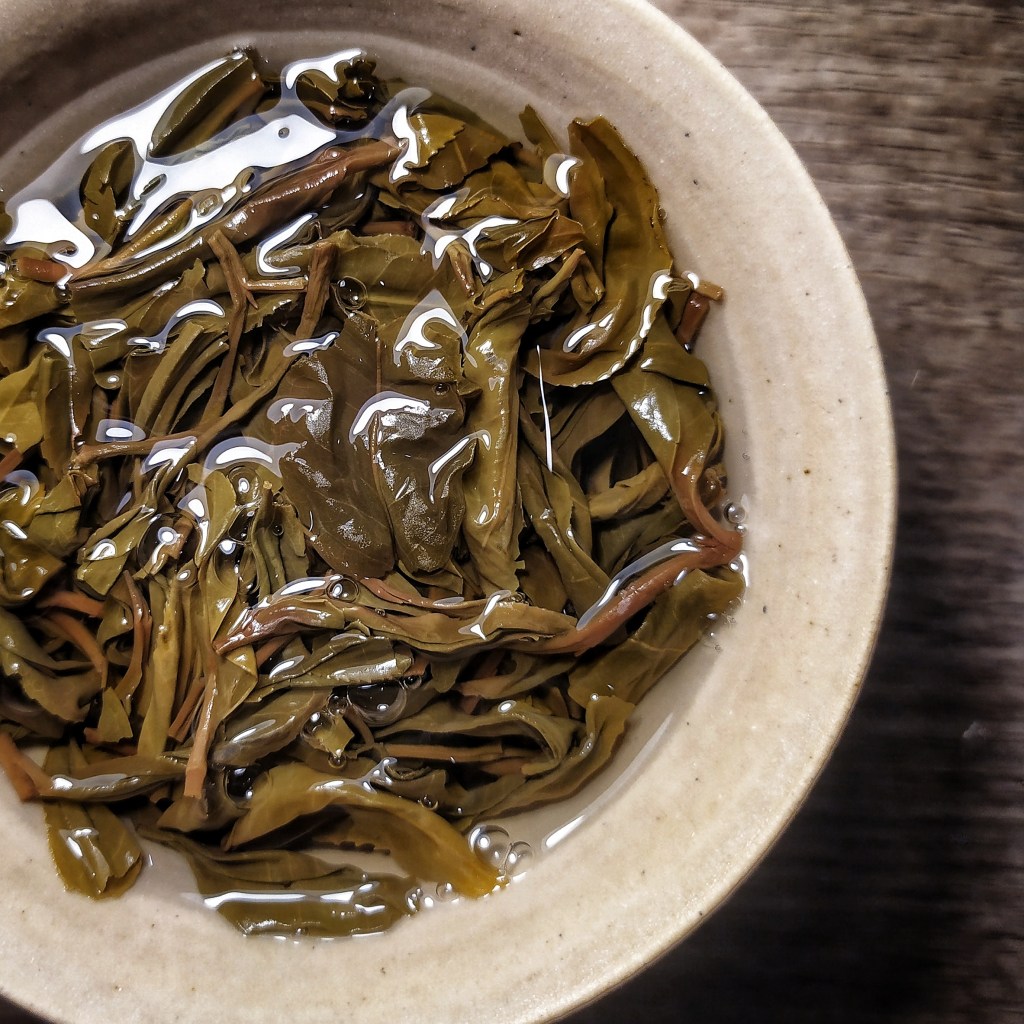
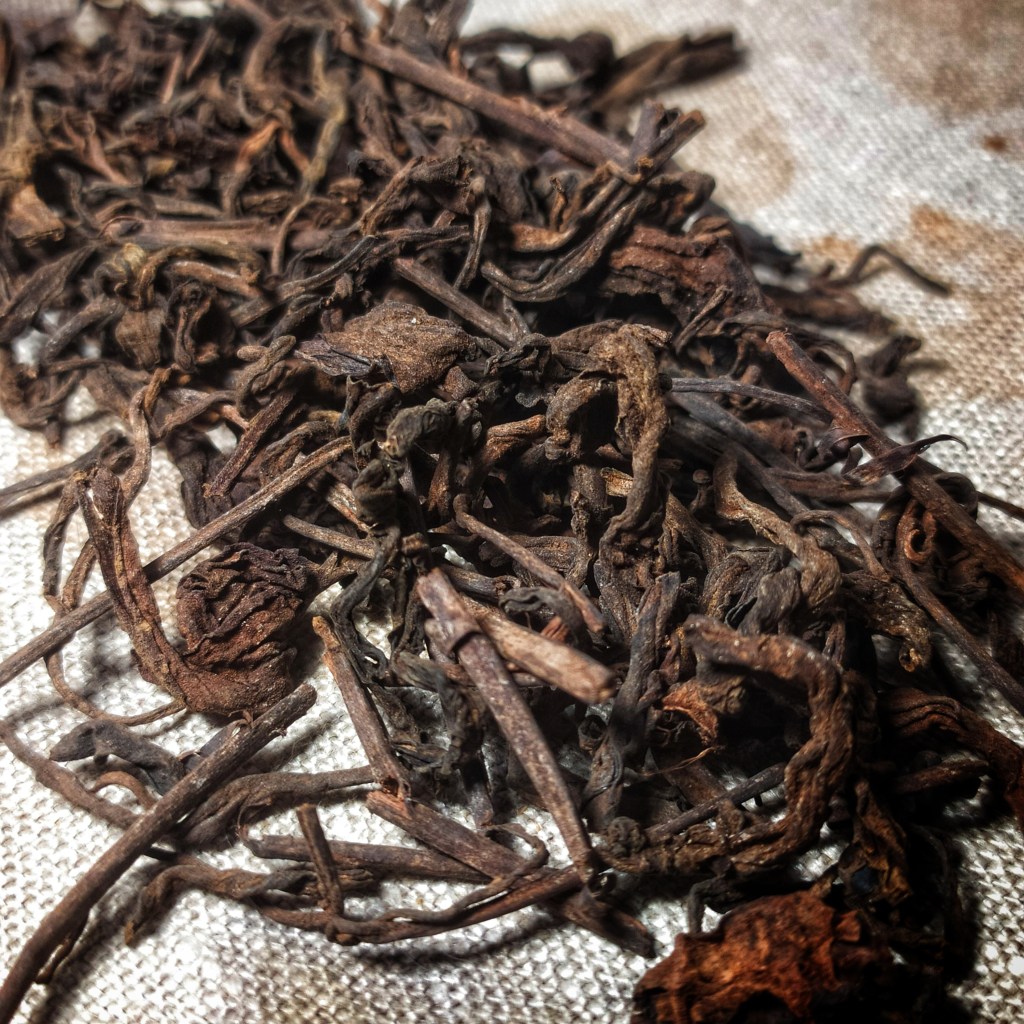
    The leaves are reminiscent of wild sour green plums, dehydrated longan with a slightly smoky streak, the aromas then focus on the undergrowth, apple wood and then give way to plum, aromatic herbs and light leathery nuances.


    The sip is sartorially silky, measuredly round, with light bitterness and light astringency that ends with an excellent huigan. The strong qi accompanies an aromatic playground that goes from green melon to persimmons, in a continuous evolution infusion after infusion until it fades into accords of plum jam and alpine flowers bouquet.

  • Unbound by fragrance – The tea of Ba Nuo through a 2022 teng tiao gushu

    Unbound by fragrance – The tea of Ba Nuo through a 2022 teng tiao gushu

    In recent years I have repeatedly had the pleasure of trying Ba Nuo teas, it is one of the places that perhaps more than others has taught me to free myself from the “aromatic” dimension of tea and to concentrate on the sip, on the tactile sensations, on the physicality of the brew.

    Ba Nuo is a village accessible via narrow, dirt roads, you can still see the old houses, some with sheet metal roofs, flanked by other newer and larger ones, the result of overbuilding and the rush to compulsive urbanism that followed the economic growth of the tea villages.
    Ba Nuo is located at 1900 meters above sea level, located on the eastern mountain range of Mengku, Dong Ban Shan, populated by around 300 families of the Han and Lahu ethnic groups, practically all of whom work in the tea industry. From the top you can see the villages on the western side, the Xi Ban Shan range, Dong Guo, Xiao Hu Sai, Da Hu Sai, Baka, as if immersed in a Bierstadt painting.

    The soils contain a good amount of clay and organic matter, are acidic or sub-acid, with no stones on the surface, but what is striking are the Teng Tiao, also called “vine trees”, which appear like bony and lignified hands dating back to soil, without other plants to counteract them. Pruning the lateral branches favors the apical dominance of the plant, which will develop very elongated branching and leaves placed only on the tips.

    Yang, a farmer from Ba Nuo, explained to me how it is not a natural way of cultivation, the land has been prepared, even weeded up to 15 years ago, the surrounding forest has been partly cut down to allow the tea trees to receive more light. Many trees were planted by the Lahu people as early as 300 years ago but the influence of the Han and modernization over time led to the development of this type of cultivation.

    Despite the altitude, the agronomic peculiarities, it is not a tea that impresses with its aromas, it is not a complacent palliative for the slaves of fragrance. It took me five months to revisit this tea, perhaps among the most misunderstood in Yunnan, but also one of the most particular.

    This Teasenz sheng was harvested in spring 2022 from teng tiao gushu, after being aged 7 months as maocha. I waited 5 months before trying it again, stored at 65% RH, slightly lower than what I store my teas at (68-69% RH).
    Timidly the leaves began to advance notes of orchid, dandelion root, wood and toasted cereals. The sip was soft, with aromas of honey, chrysanthemum, apricot, but where it really struck was the qi. It wasn’t a sip that simply came and went, but it came again and again, it continually returned after each infusion and continued even far from the cup, the huigan accentuated the honeyed sweetness even more, surrounded by a light minerality that made the sip every time more pleasant.

  • Reflections on ripe pu’er and an alchemical potion from Vietnam – Viet Sun Thượng Sơn Gushu Ripe 2017

    Reflections on ripe pu’er and an alchemical potion from Vietnam – Viet Sun Thượng Sơn Gushu Ripe 2017

    I have always loved ripe pu’er fermented in small batches, artisanal productions that made me forget those old hypertrophic factories of Menghai, with those endless expanses of concrete on which the leaves are turned over and battered with old rusty construction shovels.

    However, I hate many contemporary shu hyper-fermented in piles as tall as buildings, so thick that you struggle to move them with the tongue in your mouth and whose swallowing simulates an attempted suffocation.

    Because for me a great tea is a cultural fact as well as a substance, which still represents people and territories, something that according to Dumas should be drunk on knees and with bare heads, which responds to the order of its terroir and not vice versa, a distillate of that perspective that the Greeks called aidos, the honest recognition that other things and people are more important than ourselves and not something to be lumped together until the bacteria perform some kind of transubstantiation.

    This 2017 @vietsuntea pu’er comes from gushu in Thượng Sơn and it is more than a great tea, it is a remedy, an alchemical potion, an extract of those sunsets whose light reflected by the rice fields seems to create an apparent contrast between two skies.

    It presents itself with a dark leather brown colour, the scent pervade the room with hints of molasses, rice pudding, hong dou sha, leavening dough, cocoa beans and dried fruit, all enveloped in hints of leather, antique wood and fermented leaves.

    The liqueur is also peculiar, it is creamy, enveloping, silky but without that excessive thickness resulting from a fetishism for the jaw fatigue of some post-modern yunnanese shu. The sip is firm, old-fashioned, with a nostalgic sweetness of those times when the bitterness of Lao Man E was considered even slightly vulgar.

    The qi is frighteningly tangible, the aromas almost recall those of a 30 year old Hermitage, the hint of licorice tells of a Greece it has never been to and the earthy and ricey accords gather with them the whole soul of its people. Around the world in a cup.

  • Finesse as redemption for Fengqing pu’er. Xiangzhuqing gushu sheng pu 2019 by Li Yu Lu

    Finesse as redemption for Fengqing pu’er. Xiangzhuqing gushu sheng pu 2019 by Li Yu Lu

    Hiking in Fengqing it is impossible not to arrive at what is perhaps the oldest tea tree in the world after drinking liters of that Fengqing 58 which is served in every single restaurant in the prefecture. But climbing higher up, towards 2000 meters beyond the taidicha and rice fields that continue northwards, near the villages of Chajia and Hedicun, you arrive at Xiangzhuqing, a small village at the foot of the peak with a fair amount of ancient trees around the village.

    The air is cleaner, more humid, the heat stops in the Fengqing lowland and the rains fall timidly on the light sandy-ferrous soils of the mountain.
    The extensive drainage, the scarcity of nutrients towards the surface layer creates a clear distinction with Mengku trees, environment and in the concentration of biocomponents in tea leaves.

    Although it is assumed to be the same variety, Xiangzhuqing pu’er are lighter, floral and with almost no astringency and bitterness. They essentially seem like the less hypochondriac counterpart of some Yiwu teas on the Gaoshan side.

    Encountering this 2019 gushu sheng from Mr. Li Yu Lu is a direct response to the arrhythmic advancement of Fengqing pu’er onto the market; fine, delicate teas that showcase Lincang in a new, renewed light.

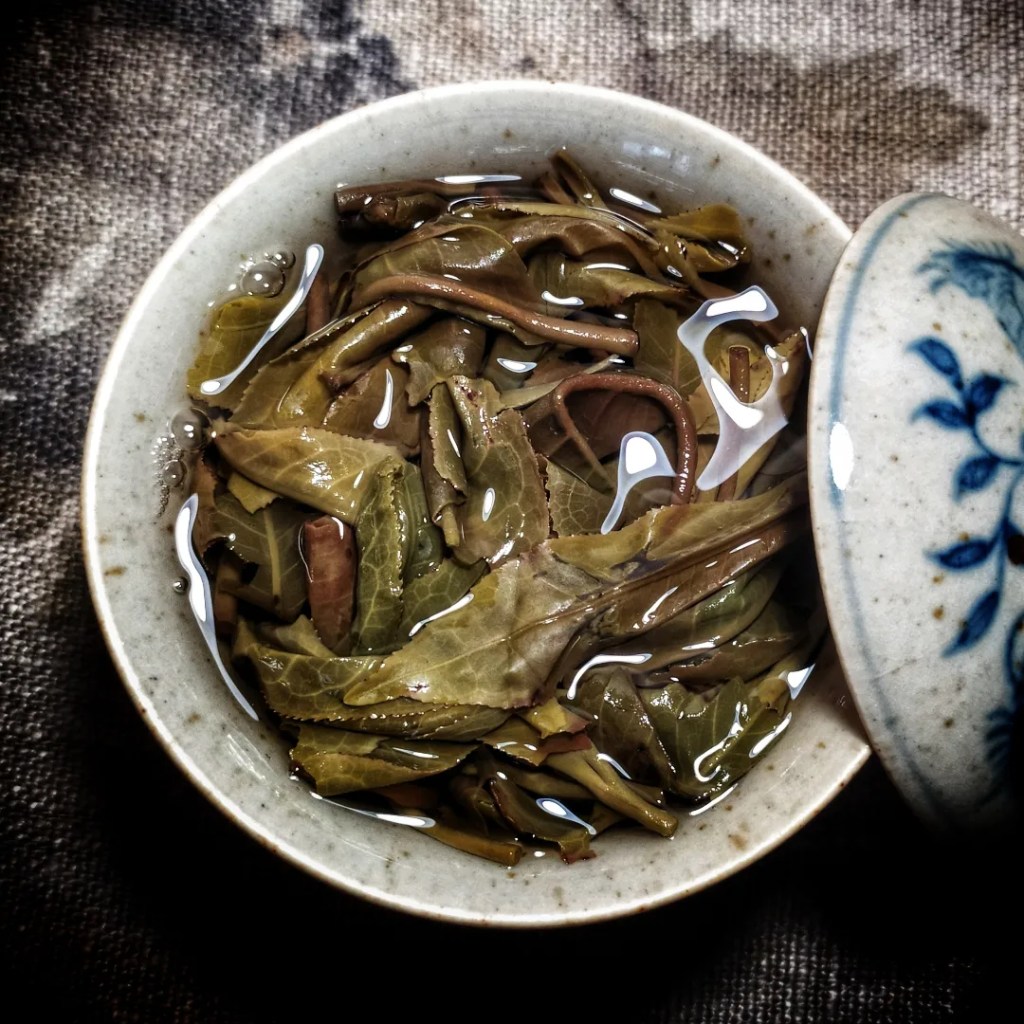
    The wet leaves seem to revive memories of a hot summer, with notes of persimmon, papaya, orange peel, in which balsamic tones and nuances of peach toffee candy, green melon, hay and dried apple alternate composedly. They are counterbalanced by floral hints of osmanthus, elderberry and scents of a walk in a freshly mown lavender field. More sharp fragrances emerge later such as rubber tree, juniper and black pepper.

    The sip is at times monotonous but enlivened by a pleasant mineral verve, it is sugary, medium-bodied with a typical absence of astringency and bitterness, ending on juicy aromas of persimmon, mango jam and elderberry.

  • The primordial essence of Da Xue Shan in YongDe County

    The primordial essence of Da Xue Shan in YongDe County

    he subtropical scenery of the Nanting River, from the foot of the mountain to the northern view of the main peak, seems to capture all the splendor of the world. Daxue rises to over 3,400 meters, opposite the other peak of the Nu mountain range, Xiaoxueshan.

    Karst severity alternates with the chromatism of the tropical forest of broad-leaved trees, water and land, peaks and plains create an antithetical contrast. It is said that a mountain has 4 seasons but thousands of different skies, and in Daxue there is nothing more true.
    Primordial colourism is the home of the black crested gibbon, the beauty and brilliance of wild flowers interrupts the immensity of the mountain, the Wanzhangyan waterfall seems suspended, as if it fell from the sky.

    Some families of the valley floor who do not work in large cities graze animals, while others work in small laboratories that produce Mangtuan paper, a tissue paper with a history of over 600 years made by hand from a bark called Maisha in the Dai language, for centuries used to transcribe Buddhist scriptures, books and packaging. Still others are dedicated to the collection of tea leaves and of the rare fruit varieties of the county such as Xiaomengtong pears, Mengdi litchi, Minglang papayas and Yongkang mango.

    The tea of Daxue, like its places, is addressed to the taster as a sincere lyric does with its auditorium, the distilled essence of a place is poured into our body giving it back its life while sweetness refluxes like childhood memories. His tea has quenched the thirst of poets and workers, revives memories of distant and primitive places as well as those of a work of art on a ceramic.

    Tea like those of Da Xue Shan are invested with a symbolic charge like few others, labaro of radical changes and that rise and fall from one existential plan to another that nothing is but the path of a rational being. Tea appropriates human nuances and analogies without resorting to forced anthropomorphism, it is imbued with a meaning that we ourselves put on it, it represents a momentary suspension where the ego meets in the cup its reflection.

  • Drunk soliloquies about Nannuo in the shadow of a gushu

    Drunk soliloquies about Nannuo in the shadow of a gushu

    On a day when the cold morning breach seemed to have taken away even the most weak semblance of chromatism, and with this the already remote desire to conclude something at the end of a dull sunrise, I decided to make a tea session with this 2016 Sheng Pu from Nannuo in the hope of rejoin me with the part of the brain that welcomes the tactile sensations.

    It was a greener puer in the past while today we can also found leaves processed with a longer period of withering, a shorter steaming, or a lower shaqing temperature but for a longer time, all factors that bring back to a more amber color than the pale yellow one to which history has accustomed us. But what does not change is its complexity wrapped in an introverted blanket, destricable only through the patience of the infusions, where the essence of tea seems to rest on one’s being, curled up in an aromatic profile that is shown in its becoming, revealing itself sip after sip in a sort of amniotic tranquility.

    In the 1950s, while the country was raised from the rubble of the Republic of China and the families looked to the future with the losses of the civil war behind them, at the same time on Mount Nannuo the foundations were laid for one of the most important tea research centers in Banna.
    Researchers such as Zhou Pengju, Cai Xitao and the team of the Nannuo Mountain Tea Research Institute contributed to identifying the area as one of the oldest in the tea cultivation panorama and to classify varieties such as the Nannuo Daye (Yunkang 10).

    Through the fog, above the red earth and below the blue sky, the history of an entire territory is consecrated through the infused leaves that in those years of reconstruction appeared as balconies of the heart, as disenchanting voices of each of those 30 villages that live in the mountain.

    This @zhaozhoutea tea is the sheng pu “No.833” from the spring of 2016 from Nannuo gushu trees. It is not only a very representative sheng of Nannuoshan, but it is an example of an evolution of the way to make tea in this area, a historical and mnemonic study from a tasting point of view.

    The wet leaves are extremely evocative, report the hints of a mountain caravan, with herbaceous perfumes, moss, wet rock, wild flowers and gooseberry. Inside it are perceived scent of bakery, lemon tarte, leather, white peach and thai mango. During the infusions, shades of tamarind, walnuts and quatre quarte cake appear while the tostated seeds crack on the wok.
    The golden liqueur highlights nuances of evolution and a contemporary conception of leaf processing, with medium astringency and bitterness. On the palate there is a coexistence between the herbaceous flavors and the fruity- citrousy ones of peach and orange zest. Huigan is pleasant and balanced, integrated with other taste sensations, not predominant as a Naka sheng to bring a comparison. The finish is persistent and articulated on notes of gardenia, persimmons, apple and creamy aromas, closing a session that becomes proportionally sweeter to its prolonging.