Tag: pu’er

  • Making a true, authentic tea is sometimes a question of consciousness. Meng Tong Yin Shan Tea Factory Gǔ Xiāng sheng pu’er 2009

    Making a true, authentic tea is sometimes a question of consciousness. Meng Tong Yin Shan Tea Factory Gǔ Xiāng sheng pu’er 2009

    I happened to wake up this morning with a sense of nostalgia, that damned stinging feeling, that melancholic regret of what has passed or gone, or been lost. I headed to my “pharmacy,” that’s what I call the place where I keep that messy pile of leaves and ceramics that should appear to be a safe place for tea, but instead seems like the war front of a desperate need for order.

    I infused the leaves of a tea that had been sent to me some time ago by Moychay, a 2009 sheng from Meng Tong Yin Shan factory. Gǔ xiāng is its name, 古香, “the ancient fragrance”.

    Often we prefer not to delve into where the flesh hurts, pushed back to the surface by thought and the instinct of preservation, but I needed a tea that would anchor me to the present, that would satisfy my need to think, that would give sense to the moment. The sense, in its dual nature is able to indissolubly enclose the organ of sensitive experience and the intrinsic value, takes the ancient by the hand, and when there is truth, the authentic.

    Truth guides the authentic and the latter spontaneously translates into awareness of one’s vocation. Making a true, authentic tea is sometimes a question of consciousness and the need to resort to painful memories, it is not a question of ability but of understanding, of true, living style, of blood, an incorruptible visceral pact, symbol of the most ancient culture, of spontaneous creation, of generative power.

    Tea full of meaning is a tea that reminds us that this drink is not just form, it is not a mere concept, it constantly reminds us that expressing and evoking are different things. The aromatic traits also become gestures marked by an intention, they become an evocative act, we notice a development, the evolution of a melody that passes from one aromatic note to another, in which form and content emerge and subsist together.

    The ancient is distinguished from the old when the former had the opportunity to see the passing of time wrapped in the blanket of truth, of meaning, while the latter simply fades without leaving any memory, neither of itself nor of the intention that was at its origin.

    This is the reason why I chose this tea.

    Tea changes, it is a map of time and a saving substance, and like few others this Gǔ xiāng carries with it the traces of experience, of a changing form, in its ambivalence between notes of a fading freshness and those that place it ever more in a bygone era.

    From the leaves emerge scents of a winter countryside, mushrooms, undergrowth, camphor, surrounded by hints of cinchona and kola nut, nuances of dandelion root, tamarind and caramel wrapped in an unexpected, surprisingly strong blanket of vanilla. The scents of redcurrant, leather, moss on the trees, oak wood and orchid then become prevalent.

    The sip of medium softness, sweet but balanced by a light balsamic bitterness lowers the curtain on floral, woody tones, of angelica root, closing on aromas of vanilla pod and leather.

  • Gaoshan, the village between uncertainty and change. Bitterleaf “Vision” Gaoshan sheng 2023

    Gaoshan, the village between uncertainty and change. Bitterleaf “Vision” Gaoshan sheng 2023

    Gaoshan is a village in the Yiwu area, a place where about 100 families live, mostly Yi, more specifically Xiangtang. The first time I saw a photo of Gaoshan it portrayed a child under a table and a woman in her sixties with a basket of fruit in her hand, behind her house, she had a stern face sculpted by hardship and dark loose hair, without any hint of layers, as if it were cut with a razor. One of those people who seemed to have never changed their hairstyle in their life or residence.

    Every morning she fetched water from the well, collected wild herbs, walking tens of kilometers in that rippled gorge, where the road appears like a clay snake running through the forest.

    The photo collection also included the dense forest of tea trees and fruit trees, on a periwinkle-gray afternoon, the kind that precedes a storm. The boy, about five or six years old, was sitting on the floor under the large kitchen table, partially covered by the cloth drapes that were not long enough to hide him, but long enough to make him feel hidden.

    I believe that at the time neither the woman nor the child knew how profoundly their village would change in the next twenty-five years.

    Uncertainty and change are to Gaoshan as a bell tower is to its church, its teas are often among the truest in Mengla because they tell of their time without resorting to sweeteners or nefarious adornments, they are the fruit of the virtuous life of the settled person, who beautifies and sanctifies a place that is his, the natural result of having roots in the place that gave you the first dawn.

    The changing nature of this village can be found in this Bitterleaf Gaoshan sheng pu’er, where the aromatic fan seems to mark a new narrative trajectory every time we meet it in the gaiwan, the leaves are pervaded by a profusion of flowers in a wicker basket, but withered and in the process of changing clothes surrounded by a series of chiaroscuro, as only Rachel Ruysch would have imagined them, that battle of lights and shadows that package and give depth to the human experience.

    It is silky, complex, rich in notes of ripe fruit, such as white peach, mango, hibiscus, orchid, mineral sensations of wet lava stone, dried apples. From the first infusion you are enveloped by the honeyed and orchid sweetness typical of Gaoshan with a very nice huigan.
    The sip seems perfectly orchestrated in its essential elements but equally chaotic in its accessory elements, the way in which the aromas vary throughout the session creates a swing in which it seems to pass from one existential plane to another, from matter to concept, as in a mixture of science and spectacularization in which the result of the experiment is uncertain.

  • Metaphysics of Pu’er blend with Moychay 2022 Melting Reality sheng pu’er

    Metaphysics of Pu’er blend with Moychay 2022 Melting Reality sheng pu’er

    We live in an era where you can potentially know everything about a tea, the garden it comes from, the grower, the exact location of the trees, but the tea market has not always been like this. Blends were so popular in the past that there were few single-origin teas before the 2000s.

    Some of the greatest recipes to come out from the Dayi, Xiaguan and Rongshi factories or from the minds of pioneers like Ye Binghuai, Vesper Chan and Chen Huaiyuan who commissioned, produced or supervised them, were blends.

    But what can elevate a blend and bring the art of blending back to the forefront of consideration? I believe that when the condition of need and economy is overcome, the blend can become expression and genius, a journey into the unexplored, a domain without potential rules, a disorder channeled into the eternal overcoming of all the contradictions that compose it. But this is on condition that the raw material is of such extraordinary quality as to support the greatness of the intention.

    The blend is not a mere offspring of an uncoordinated material, it must be able to fuel the creation of other structures, of superstructures capable of capturing and interpreting the reality and the thoughts of those who create them, something also capable of escaping the premeditation and contingency of the possible and of making us forget those mixtures of leaves devoid of any persuasive power.

    The lack of rules and the impossibility of serving the leaves and erecting them as a symbol of a place brings technique and thinking to the limit and, as in art, to experiment the extreme ease of failure but also to the configuration of unique potential, since the technique can be exalted only where it manages to experiment its most radical impotence.

    In this Melting Reality, a Moychay 2022 blend, you can find that unexplored, that quality of the first time, of that reality so accentuated and exaggerated that it seems unreal. Like a Blanes painting the drink is stratified on more rural and dark tones of leather and maritime forest which alternate with other sweeter and brighter ones of gooseberry, dried figs, candied fruit and orange blossom as in a delicate play of lights.

    It is a liquor where the ephemeral and the real alternate, the light bitterness and medium softness integrate well with the good huigan and the hint of tamarind sauce that give bite and announce chaos in an incessant symphony of notes of candied cedar and honey, orange custard and cooked wheat.

  • When Pu’er gone in a single day. Dialogue on the present, the past and rites with a 2006 CNNP “Yellow Mark”

    When Pu’er gone in a single day. Dialogue on the present, the past and rites with a 2006 CNNP “Yellow Mark”

    When the fragile walls of the pu’er business were crumbling in the early 2000s, many people stood in front of the screens in the Kunming tea market, crystallizing an evocative image, a shared moment of sadness, like those who see their home demolished, those who see their expectations burned, like smokers outside the doors of a hospital, staring at their affliction in the smoke while waiting for some unexpected good news.

    And so the pu’er gone in a single morning, as if all the wealth accumulated up to that point was worth as much as a bright day that tries to make us forget that dark, but much more natural, light from which we defend ourselves at every moment.

    Dark like the soul of this shou, with a frowning and crepuscular essence, with aromas that come from the shadows, from the underground warehouses of humid cities, from the decadence of nature in autumn.

    In those years, pu’er was sold as a commodity capable of accumulating value and in which to find authenticity. In a country in total growth, there was a frantic search for an identity, for its rediscovery and subsequent affirmation, through rites, the ostentation of them and gambling. But not so much of the true rites but rather a plasticization of them to compensate for the sense of loss that nostalgia brings with it.

    In the ritual, in the tea, those who waited, resisted and dared found refuge, they survived because it is the ritual that acts as a contrasting agent thanks to which our present takes on clearer contours even in the darkest night, they fulfill the function of a revealing bath capable of showing the latent image of identity through the reduction of the superfluous.

    In the recovery of the ritual one struggles with oneself and the struggle takes shape when one compares the old action with the new action, with the dynamics that are emerging, when one places the travelled path alongside the new scenario.

    In ritual opera, things are not consumed or used but rather lived, so that they can age and bear witness. Tea was thus able to recover its place in rituality and with it the integrity of its experience that the period of compulsive enrichment had tried to hide.

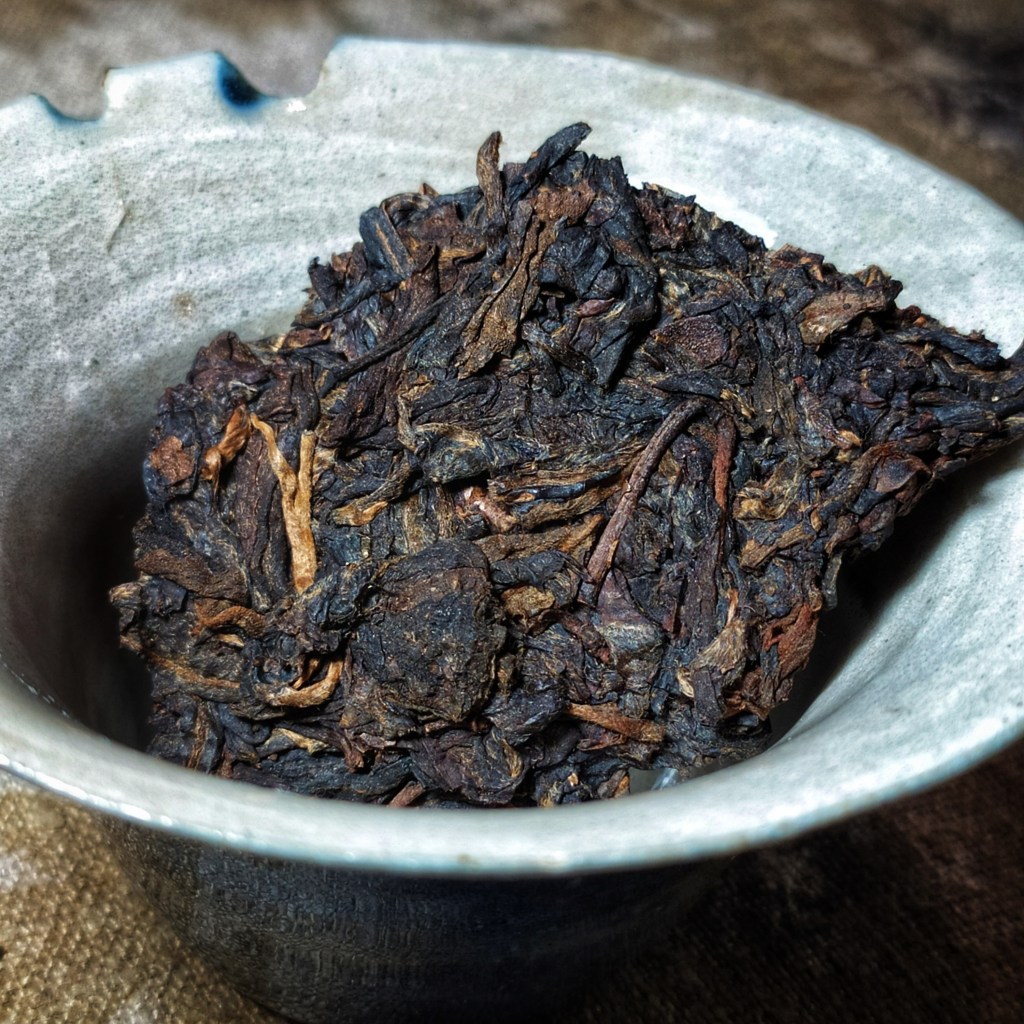
    This 2006 CNNP yellow mark embodies the residue of that incendiary period, you find that something in it that is not destined to survive but which nevertheless resists and remains. It wears the color of an old vintage Port and in its fragrances of tobacco, old leather, humid wood, lacquered mahogany and jujube you find that pain of uncertainty that constitutes the matrix, the deep layer of something true, intentional, positive.

    The light fermentation has allowed it to survive the banality of many of its peers, to escape the hermetic isolation of immediacy that the over-dense, black as tar and hyper-fermented shou demand. In the mouth it’s silky, of proportionate sweetness with aromas of malted brown bread, raisins, butter cream, chinese herbs, brown sugar and ancient wood.

    Tea by Le meilleur the de chine

  • Discussing the contradictory essence of tea with a pu’er from the ancient land of elephants. TdC 2014 You Le Ya Nuo village sheng pu

    Discussing the contradictory essence of tea with a pu’er from the ancient land of elephants. TdC 2014 You Le Ya Nuo village sheng pu

    I am of the opinion that tea, good tea I mean, should always be accompanied by a good argument. I also remain firmly convinced that it itself must partly be the reason and urge for the conversation, and partly guide it.

    If we could reconstruct a sort of symposium evening I often think about which tea I would offer, and the more time passes the more I would like such a reconstruction to materialize.

    Between a Yiwu pu’er who exalts himself in his expensive robe, one from Naka on the gentle banks of Mengsong in the throes of self-satisfaction and one from Laobanzhang born under the gaze of God on the happiest mountains of China, the pu’er of You Le I’m sure would find a place without resorting to excesses of violence.

    Those of You Le, the ancient land of elephants, are teas with a noble soul that still retain a “bourgeois” trait, that dignified self-sufficiency which, if well channeled, results in the most refined form of intellect.

    At a table tea deserves the space it’s due because some of the great events of history are poured into it, the extraordinary possibilities that humans have been granted from era to era are dissolved in it. Because tea is a trail of great epics and immense tragedies, of rhetoric, imaginative experiences and speculations, the history of entire peoples distilled into a cup.

    Under the action of its metamorphic nature, tea resolves prose into verse and verse into song, calms the most abysmal dissonances without the need to silence them, rather it legitimizes and composes them.

    Because from the hard ground from which its trees arise, an innocent stream of fragile ambiguity can always flow, even in the midst of that jianghu, which it foments and nourishes; between rivers and lakes it doesn’t fear contradiction and is able to make every truth “always also false” and every falsehood “always also true”.

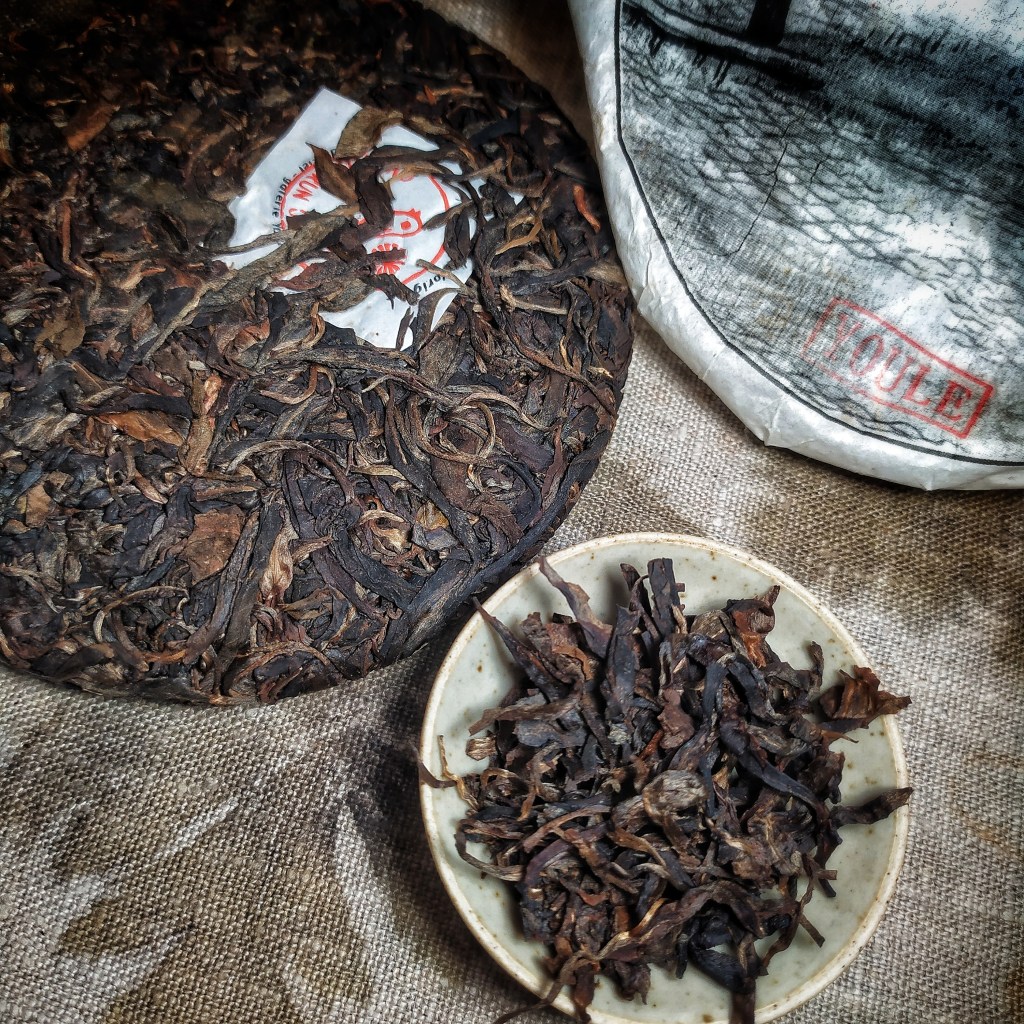
    The thoughtfulness of this spring 2014 sheng from Ya Nuo village old trees holds up its mountain’s fame. The aromas arrive with orchestral precision, opening on notes of tobacco and plum, earthy nuances, resin and musk.

    The leaves recall the scents of an old library with notes of mahogany and leather armchair, then red dates, raisins and light mentholated hints. The contribution of aging is balanced, with integrated notes of leather and of an old cigar box. The sip is coherent, with good softness but with adequate agility, low bitterness, balanced and with an excellent huigan. The long aftertaste is yet another proof of a dress sewn by a great hand.


    The future will give it charm even though it is a tea that does not require eternity to be appreciated, but the aspiration is more than legitimate and a decade of waiting will, in the end, be a splendid meeting.

  • Discovering Y Tý: Comparison of two Viet Sun sheng pu’er from a Dao and a H’Mông village

    Discovering Y Tý: Comparison of two Viet Sun sheng pu’er from a Dao and a H’Mông village

    A place of magnificent waterfalls, azaleas and wild peaches, the mountains background seems to give every gesture an additional majesty, a primordial dignity.
    The small mud-walled houses of Y Tý stand in the green and golden colors of the rice fields, offering rural nuances to that tranquility typical of the “cloudy” land, located at more than 1700 meters above sea level. Pyramid roofs, stone fences and terraced fields are symbols of the will, minds and hands of many generations in the highlands, created to interact and converse with the nature of the mountains and rivers.

    The Y Tý market meets every week and is a cultural place of exchange for Hà Nhì, H’Mông and Red Dao. Most of the stalls are run by Hà Nhì women in black and dark blue dresses, i remember the shy face of a young mother and her little girl, lying obediently in a gray jute sash on her chest. Her hair is tied back and almost glazed due to the effect of the sun on her coal black hair, the vivid gaze with her head tilted to the side as if she were listening to the voices in the wind.

    Tourists are busy buying vegetables, red peanuts and Pạ Phì. The road covered in red earth dust is full of rattan baskets, worn enough to indicate actual use of their contents and well enough maintained to suggest respect for the contents themselves.

    Higher up in the mountains, the landscape unravels lively between the fog, between the sandy and rocky soils of the Dao villages surrounded by the wild bamboo forest and the more clayey and fertile soils of the H’Mông villages. Those mountains that protected the soldiers on their way to the front, towards the place where the Lũng Pô creek meets the silt-tinged waters of the Hồng River, up to A Mú Sung, where they fought and fell to protect the border.

    Here it is as if tea is able to fit in with culture as well as nature and can make use of both as it pleases. The landscape seems like the unconscious of the earth and the teas that derive from it are its liquid consequence.

    After a more romantic first part, I will talk in a more technical and boring way about how a territory with an enormous potential now demonstrated like Vietnam can have that complexity of landscapes, that dramatic discrepancy of soil composition that is often associated with great terroirs, such as France and Italy for wine and Yunnan and Taiwan for tea.

    Vietnam often is in conditions of high humidity and high temperatures during the year, such as to hypothesize a much faster maturation of the soil than, for example, northern Asia or some areas of northern Yunnan. But in the mountains many things can change, here at over 1800 meters we can have leaching, erosive, frost phenomena and extremely variable contents of the organic fraction from mountain to mountain or even in the same mountain at different elevation levels.

    We can also notice typical results of the meteorological conditions of these areas, such as the deeply yellow and yellow-red color of the soil, indicative of a condition of water saturation. The soil environment is reduced and, under these conditions, the iron is reduced to the ferrous state (Fe2+), the color of the soil becomes lighter and yellower, with gleying and mottling sometimes. The iron will be in a more soluble state and therefore more available for chemical reactions.

    H’Mông village has very old and tall trees growing on the slopes near the border with China, the climate here is wetter, there is more forest cover, resulting in darker green leaves than in the Dao village. This is due to the shade and the greater capacity of water retention, less leaching and greater content of organic substance, typical conditions of a soil richer in clay and organic elements, the presence of sand and silt in surrounding areas also suggests a clayey but not asphyxiated soil, with a good potential for oxidation of organic matters. The leaves of the H’Mông village express themselves with greater roundness in the cup, with a persuasive softness and with more animal and leathery hints, with less citrusy but warmer and more mature fragrances.

    The tea area of Dao village overcomes a wild bamboo forest, there are many old and ancient trees, the climate is sunny and dry, and the soil is rocky-sandy, which will result in a possible slower growth rate of trees, given the possible greater difficulty for the soil to retain water, nutrients, greater leaching of minerals, erosive phenomena and loss of organic substance and this conformation is in line with a lower maturity of the soil given a lower presence of water. The leaves of the Dao village reveal more mineral and rocky accords, more citrus and herbaceous, a less imposing and soft body, more agile despite the medium thickness.

    This is an example of how at a short distance, pedogenesis and transformative climate phenomena can change drastically, returning a vastness of results that cannot be found in most other areas of the world and how this complexity does not derive only from the altitude, therefore also translating into extremely different teas in an area of a few kilometers.

    Mixing together the leaves of the two villages you get a concert of the unlikely son of Emily Dickinson and Rory Gallagher, the romantic essence with its disciplined lyricism and the annihilating chaos, the sublime that is the basis of great things.

    The ambivalent aromatic essence of the leaves is initially dark, bringing back Bruegel’s Flemish nature in the almost primitive woodland scents, with memories of a bonfire extinguished in the rain, undergrowth and slightly animal smells.

    Then the texture of tropical fruit and candied hibiscus, tomato leaf, orchard hay begins to emerge, supported by counterpoints of medicinal herbs, wild flowers and saltiness on the skin. On the sip it shows fullness, with notes of white mulberry, linden, apricot and slightly herbaceous hints. It is never prosaic and the thickness is sized and juxtaposed with freshness and minerality and a medium-low bitterness, which make drinking agile and never tiring.

    The strong and relaxing and at the same time almost lysergic qi accompanies a persistent and very present huigan from the first cups.

    You can find much more information on the Viet Sun website

  • Discussing again about Yiwu and authenticity with a 2003 CNNP “Sheng Tai Gu Shu cha” via Camellia Sinensis

    Discussing again about Yiwu and authenticity with a 2003 CNNP “Sheng Tai Gu Shu cha” via Camellia Sinensis

    Almost 20 years have passed since the declaration of Yiwu as a “Special tourist village of Yunnan”, the program which aimed to attract more and more people to a city which was growing economically at a spasmodic pace and which was obsessively trying to make its authenticity perceived.

    Often this intention came into conflict with the reality of a territory profoundly transformed, by wealth, by the introduction of QS, by the architectural disharmony caused by evident asymmetries in the urban development and modernization plan. Shortly thereafter, the rapid and unsustainable rise of the pu’er business would have collided with the bursting of the bubble, raising not only doubts about the economic future of families but also questions about the true authenticity of Yiwu tea which until then had faltered.

    Those were years in which the vision was different, although not too distant from the current one, in which the importance of the object was provided by its price and not by its value, the meaning of tea was given by its correspondence to the useful; the forests, despite the already present distinction between them and the taidicha, were already utilitarianistically defined even before their understanding. While many farmers fought for their authenticity, just as many others built the stereotypes of heroic naturalism and “nostalgic” as a symbol of an identity that can be regained through tea, and clearly through its profits. “The truth” was not explored but a proud surrogate was created to be put on sale.

    For this reason, my opinion of many teas from the early 2000s is less enthusiastic than what is out there, many although not all were soulless teas, on which was placed a fake effigy of cults and traditions. Without the soul and its intention there could be no authenticity, because in this way the past becomes irremediably past, the mythologies that have passed through it become dull and irremediably dead languages, or in any case incapable of supporting that subtle kinship that exists between thinking and memory, between memory and identity and between identity and the authentic.

    This is a 2003 Yiwu pu’er “Sheng Tai Gu Shu cha” via Camellia Sinensis, in a CNNP label different from the typical “white and red zhong cha”, probably the result of an anonymous packaging from a small producer.

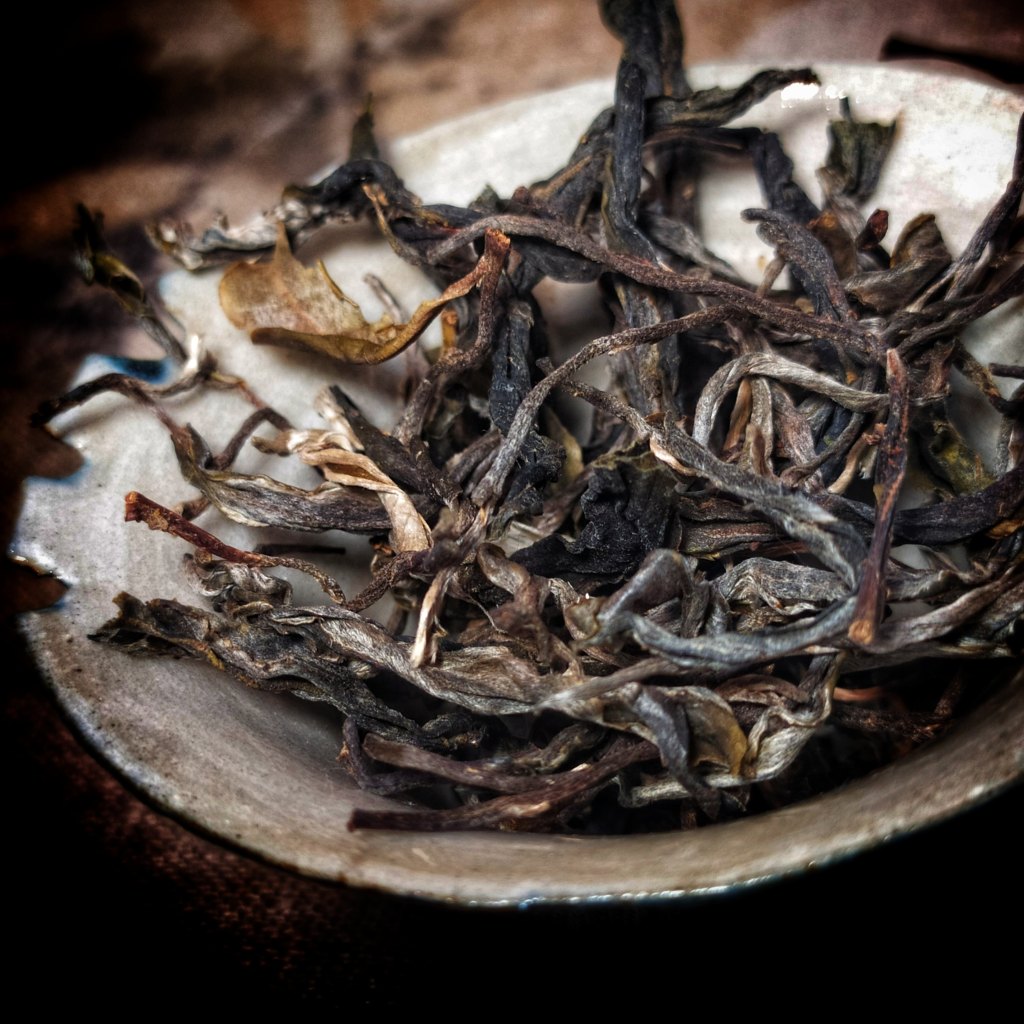
    One of the testimonies in a “unknown soldier” version of an attempted reconquest of “the authentic”, of the traditional taste that does not come to terms with the conventional. The leaves bring with them smoky notes, of vetiver and seasoned cedar wood perfumes. From the gaiwan come the smells of an ancient lutherie and those of an old wooden church.

    The aromas are reminiscent of dried flowers inside a book, evolving olfactorily towards notes of leather, virginia tobacco, incense, dried rose hip and pepper. The medium-thick sip ends on hints of tamarind, dried longan, dandelion root and medical herbs, fading into an ancient sweetness and granting a strong and focusing qi.

  • Viet Sun Giàng Pằng 1 Big Tree sheng pu’er spring 2024

    Viet Sun Giàng Pằng 1 Big Tree sheng pu’er spring 2024

    Giàng Pằng, it was the discovery of this village and its history, its culture and the ancestral nature of its landscapes that began what would be the focus of my attention for the last two years.

    If we were in other parts of the world people would be there taking photos, absorbed, writing farewell poems about the transience of some exotic flower and the ephemeral duration of youth, but here there are only people, real people bent over by fatigue, with their colorful bandanas, clinging to their tenacity and resilience.

    The streets are harsh, steep, the cinnamon bark is exposed to the sun, the tea is drying on bamboo mats, even the chickens think of the ephemerality of youth perched on wooden beams.

    Here where not even the setting sun seems to find rest, the old tea trees appear like lignified bodies in an archaic dance, in a land that loves no middle ground. The clouds and rains rage in a despotic manner while the fog calms down giving a conciliatory impression, each element is in a disorderly way part of an atavistic work, a fragment of the dawn of the ages.

    An anti-geometric vision where modernity barely finds space, where the succession of mountains in the distance creates its own rhythm in a primordial and perpetual order.

    This is where VN tea becomes great and it can only be like this, because like every other mountain where the gods have found refuge, great things do not happen on slopes that do not bring suffering.

    This Viet Sun teacomes from a batch processed by Steve, from a single big tree, in the spring of 2024, and is the juxtaposition between verticality and softness, between flesh, bone and soul.

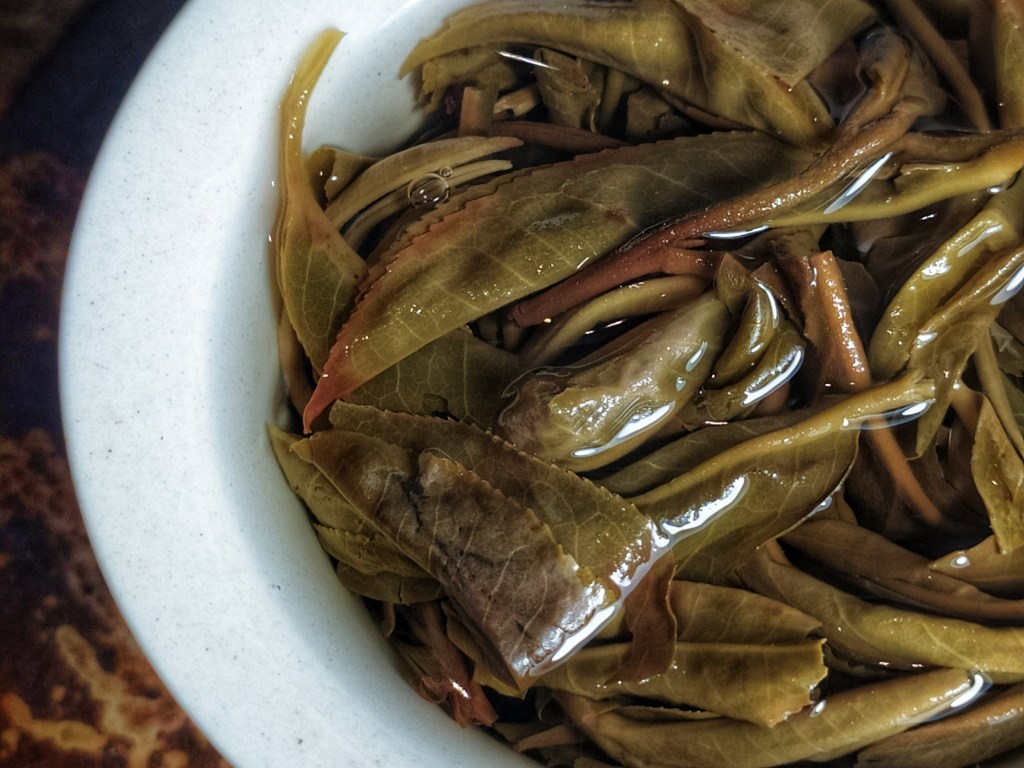
    The leaves are reminiscent of wild sour green plums, dehydrated longan with a slightly smoky streak, the aromas then focus on the undergrowth, apple wood and then give way to plum, aromatic herbs and light leathery nuances.


    The sip is sartorially silky, measuredly round, with light bitterness and light astringency that ends with an excellent huigan. The strong qi accompanies an aromatic playground that goes from green melon to persimmons, in a continuous evolution infusion after infusion until it fades into accords of plum jam and alpine flowers bouquet.

  • Unbound by fragrance – The tea of Ba Nuo through a 2022 teng tiao gushu

    Unbound by fragrance – The tea of Ba Nuo through a 2022 teng tiao gushu

    In recent years I have repeatedly had the pleasure of trying Ba Nuo teas, it is one of the places that perhaps more than others has taught me to free myself from the “aromatic” dimension of tea and to concentrate on the sip, on the tactile sensations, on the physicality of the brew.

    Ba Nuo is a village accessible via narrow, dirt roads, you can still see the old houses, some with sheet metal roofs, flanked by other newer and larger ones, the result of overbuilding and the rush to compulsive urbanism that followed the economic growth of the tea villages.
    Ba Nuo is located at 1900 meters above sea level, located on the eastern mountain range of Mengku, Dong Ban Shan, populated by around 300 families of the Han and Lahu ethnic groups, practically all of whom work in the tea industry. From the top you can see the villages on the western side, the Xi Ban Shan range, Dong Guo, Xiao Hu Sai, Da Hu Sai, Baka, as if immersed in a Bierstadt painting.

    The soils contain a good amount of clay and organic matter, are acidic or sub-acid, with no stones on the surface, but what is striking are the Teng Tiao, also called “vine trees”, which appear like bony and lignified hands dating back to soil, without other plants to counteract them. Pruning the lateral branches favors the apical dominance of the plant, which will develop very elongated branching and leaves placed only on the tips.

    Yang, a farmer from Ba Nuo, explained to me how it is not a natural way of cultivation, the land has been prepared, even weeded up to 15 years ago, the surrounding forest has been partly cut down to allow the tea trees to receive more light. Many trees were planted by the Lahu people as early as 300 years ago but the influence of the Han and modernization over time led to the development of this type of cultivation.

    Despite the altitude, the agronomic peculiarities, it is not a tea that impresses with its aromas, it is not a complacent palliative for the slaves of fragrance. It took me five months to revisit this tea, perhaps among the most misunderstood in Yunnan, but also one of the most particular.

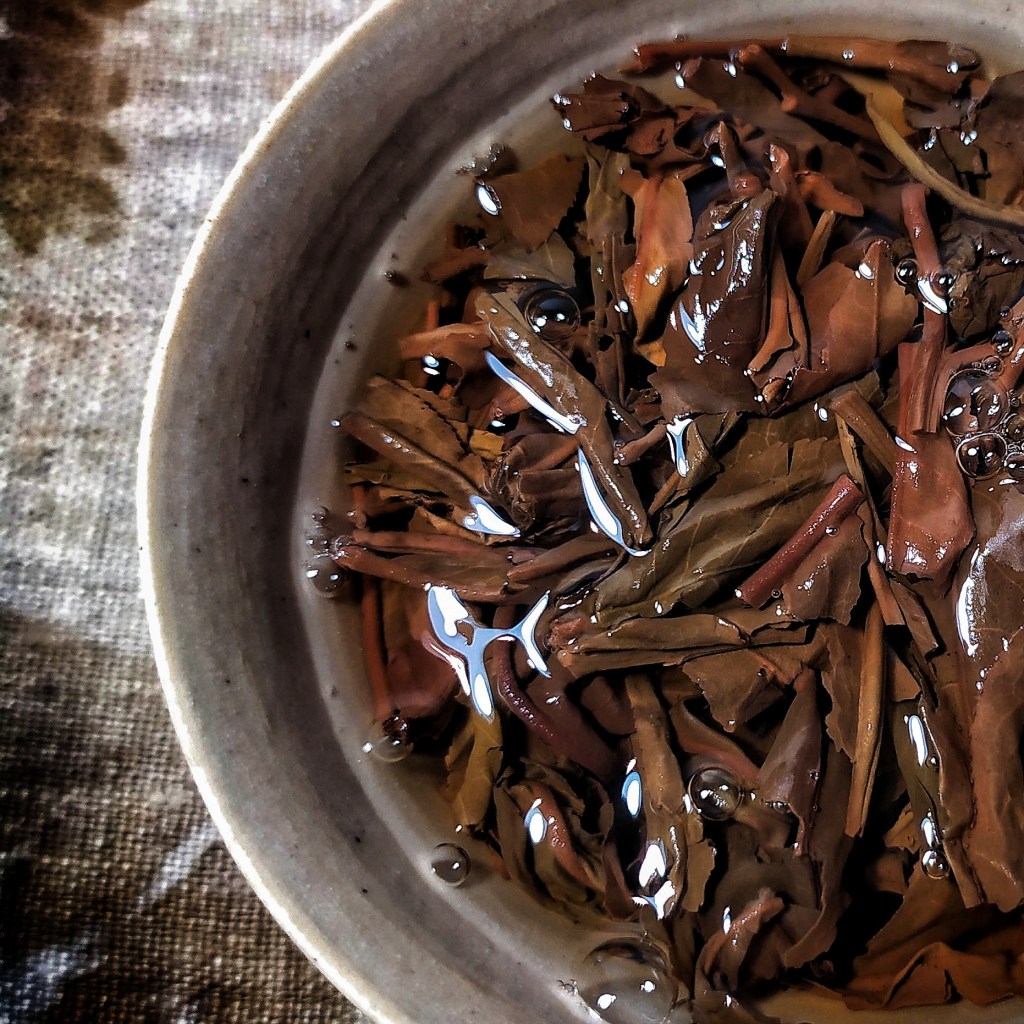
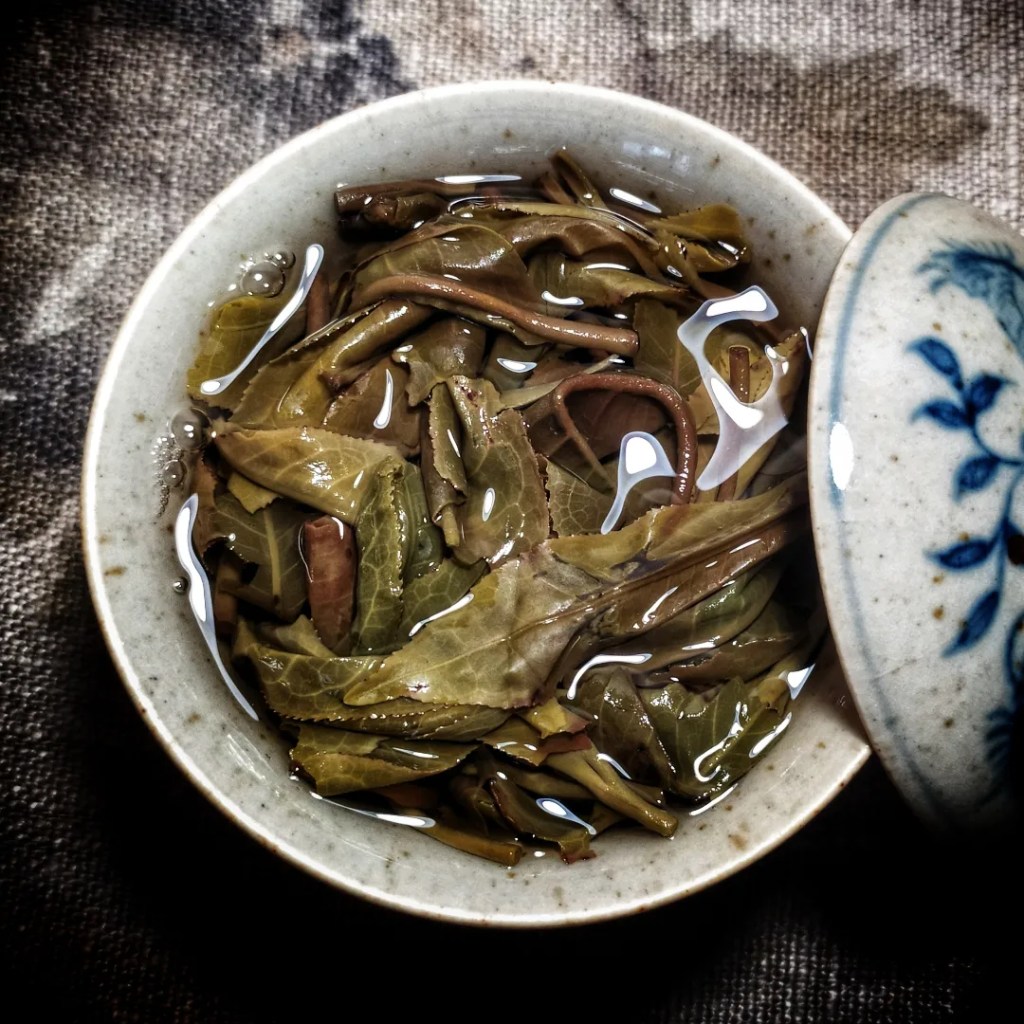
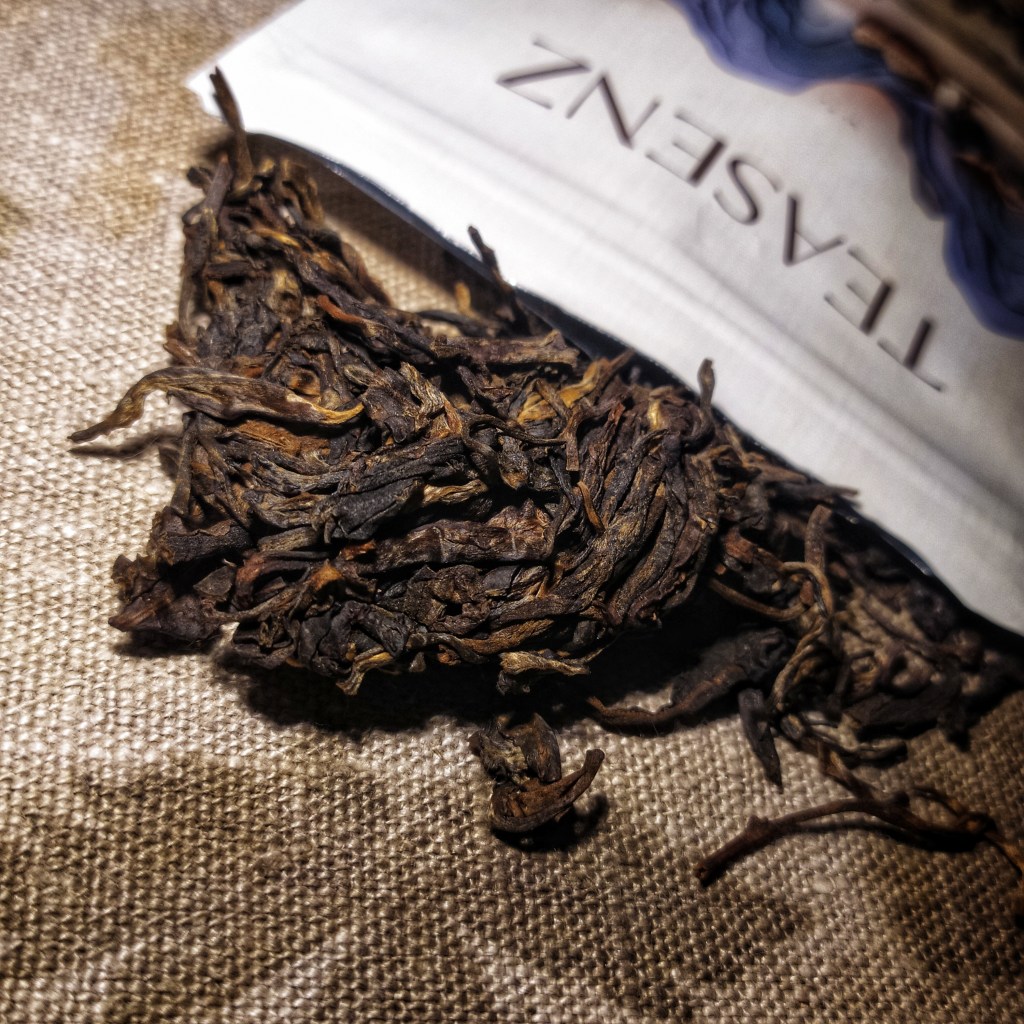
    This Teasenz sheng was harvested in spring 2022 from teng tiao gushu, after being aged 7 months as maocha. I waited 5 months before trying it again, stored at 65% RH, slightly lower than what I store my teas at (68-69% RH).
    Timidly the leaves began to advance notes of orchid, dandelion root, wood and toasted cereals. The sip was soft, with aromas of honey, chrysanthemum, apricot, but where it really struck was the qi. It wasn’t a sip that simply came and went, but it came again and again, it continually returned after each infusion and continued even far from the cup, the huigan accentuated the honeyed sweetness even more, surrounded by a light minerality that made the sip every time more pleasant.

  • Memories of chatting about Mengsong and an old Bameng friend with a 2007 Teasenz gushu

    Memories of chatting about Mengsong and an old Bameng friend with a 2007 Teasenz gushu

    I don’t think there can be any tea, any time, any sip without the people who bring with them the truth of a territory. One of the first tea maker I met was from Bameng, he worked for a factory in Mengsong and was nicknamed 小毛虫 “little caterpillar”. This name was given to him by his parents, when he used to sneak out of the woven wooden basket to observe spiders and insects while his family clung to the ancient trees for the harvest.

    Every time he picked up those yellow caterpillars he went back towards his mother’s legs crying, with his face full of mud and his hands swollen from the stinging substance of the insect. He had an immoderate passion for those caterpillars and an even greater stubbornness.
    His family’s teas were special, with that disarming power right in the mouth, his laughter when talking about the times now spent in his village were even more energetic.

    His nickname also referred to the ability of those insects to transform, as well as the growth that his parents hoped for him. He incessantly emphasized how his village had changed, how the people of that place had changed and with them their landscape. We talked about how tea had been an alibi for both dreams and reality, a substance of conversion capable of overturning eras and conditions, of extracting from things its opposite.

    We sipped pu’er talking about how the tea inherited its alchemical nature, as a transmutative substance and as a creator ex nihilo. The noise of the forest and of the harvest would always be the backdrop to his life and tea would always accompany him until the end of the sunset, until the last dance of the chrysalises.

    This 2007 Mengsong Gushu by Teasenz reminds me of those chats, those powerful, intense and penetrating pu’er. The scent of wet leaves is reminiscent of leather boots, sundried plum, flambéed citrus peel together with the sensation of dried rose petals in the middle of an ancient book. Balsamic notes then appear, of turnips cooked over charcoal and in the background light nuances of an open tin of latakia tobacco placed on an old, slightly damp fir furniture.

    The sip is silky with a medium persistence and an excellent sweetness accompanied by a typical salty flavor that recalls a pleasant mineral sensation of rock. A good huigan is surrounded by notes of roots, rhododendron honey, rose hips, plum and leather, adorned with an orchestra of citrus notes, balsamic candy and light traces of cardamom.