Tag: reflections

  • Seven Essence Darjeeling Masquerade

    Seven Essence Darjeeling Masquerade

    I believe there are few people on this earth for whom I have ever felt even a modicum of envy, and I do not say this out of vanity nor from some absurd, ultraterrene awareness. I’m simply indifferent to the allure that possession exerts on people, the resonance of an echo of absence, the trace of a denied desire. Yet Bubble and Abhijeet have a rare, transcendent empathy when it comes to tea, a quality that is either innate or remains scarcely graspable, one that probably I don’t even have. Their autumn collection attests, indisputably, to their status as the Vaughan brothers of the Darjeeling terroir and to the perception that selecting leaves is a virtuous act, a testament to aesthetic discernment.

    The election of the proper material is not a mere sorting process; rather, within it dwells that lyricism, that aphonic language in which what resides is lifted from its ordinary form, unfolding into a dizzying array of aromas and scents where time contracts and expands with a diaphragmatic cadence. To select leaves is an invocation of the sublime, a re-creation of the universal tension between order and chaos, wherein the structural opposition of what is utilitarian and what lies beyond utility is drawn and maintained open, rendering tea not merely a beverage but a vehicle of meanings.

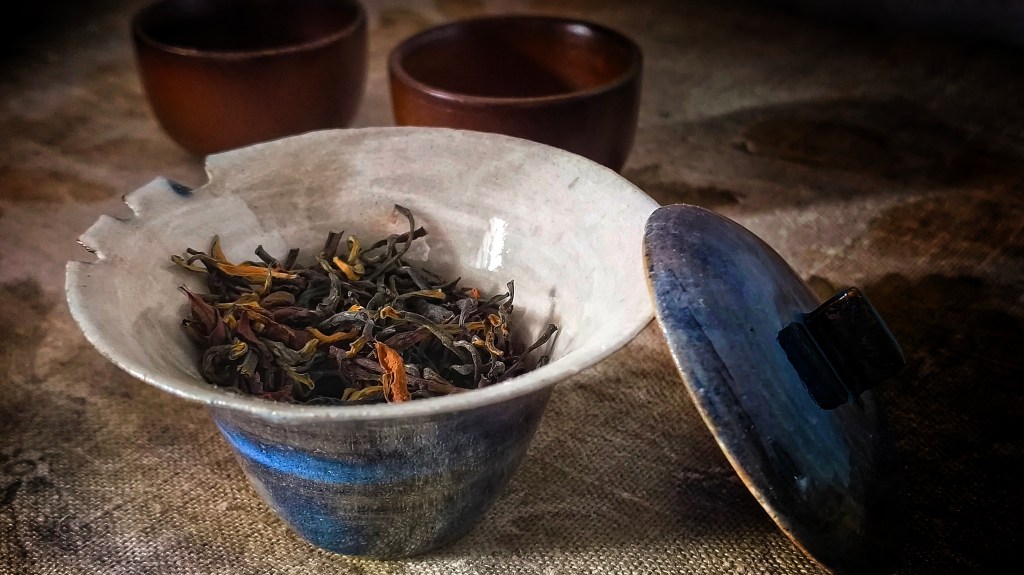
    Masquerade is a Darjeeling oolong produced from the AV2 cultivar, a tea with a dense liquor, a chromatic snapshot vibrating between ancient gold and dusty amber. The leaves exude the fragrance of rose and jasmine, of olive oil and fruit tart. The infusion is sweet, soft and persistent, with hints of pear, pistachio and dried apricot. It is a sip of freshness, capable of rejuvenating even those weary nights, illuminated by the flashing lights of police cruisers deployed in one of those torrid, sleepless nights.

    Notes of chlorophyll, subtly vegetal, along with hints of olive leaf and mango, evoke an introspective road movie, laden with trembling shooting of hands brushing against corn stalks and bodies staggering in the sultriness, a spiral of rural unrest and youthful rage, of adolescent fights in the badlands, where typically nothing was too dear but everything cost too much.

  • Rethinking Changtai’s Legacy: Are post-2004 Productions Really That Bad?

    Rethinking Changtai’s Legacy: Are post-2004 Productions Really That Bad?

    The postmodern saga of Changtai is a mélange of nostalgia and decadent retrospection—a journey that began as an escape route, full of fleeting glimmers and vibrant lights, from the state-dominated gloom of the ’80s, soon became a conceptual reimagining of State Road 9, with its kilometers of pitted asphalt and half-lit motel signs sliding anonymously past the car window. They were riding the Pu’er epic, where every tong was marketed as if it were the Rosebud of Citizen Kane, that elusive treasure everyone sought to understand and possess. Nowadays, according to many aficionados, the tale of Changtai resembles the narrative of Bas Jan Ader’s brazen, smiling bike ride right before his humiliating crash. “If you want Changtai, look for it before 2005…”—one of the most overused phrases of the past decade. But is that really true?

    Founded in ’99 in Yiwu by the will of Chen Shihuai, Changtai began selling its tea under the brand Yi Chang Hao, carving out a niche much like an indie rock band holding what seemed to be the perfect record, before the industry ruined everything. After YCH, they went on to produce numerous successful series sourced from single terroirs, such as Chen Hong Chang and Chang Tai Hao—exclusive teas crafted to last, to age like the finest Chateau Margaux. Yet, a few years later, something broke.

    The Pu’er market of the 2000s was not unlike the realm of contemporary art: suddenly, money flooded in, investors arrived, critics lost their impartiality by getting drunk with the artists, and everyone wanted a slice of the cake. Demand exploded, prices soared, tea was even planted at lower altitudes, and factories ramped up production. Pu’er was no longer merely a tea, it had transformed into a financial asset.

    In 2004, the factory reorganized as Changtai Tea Group, and with it came a change in approach: economies of scale took precedence, there was a greater reliance on plantation-grown material, more commercialized sourcing, less meticulously managed fermentations, and a reduced attention to detail. The overarching idea was to produce volumes, to churn out new batches for collectors who scarcely understood what they were buying—all while fierce competition for the best leaves intensified. Quality became diluted, much like a Warhol reproduced ad infinitum.

    At the onset of my own economic tragedy, when I first began acquiring cakes, I, too, partly embraced this notion.

    Comparing a Yiwu from ‘99 with one from 2006 felt like plunging from one metaphysical plane into another. The former was silky, layered, opulent and clear, while the latter was sparse, tediously sober, its complexity shackled by an almost ascetic organoleptic austerity and a finish that fizzled out too quickly, like a film abruptly cut before the climax. Yet over the years, I questioned whether this was universally true for all Changtai teas and how much weight these few general observations really carried—perhaps too cursory to be definitive. Thus, I granted them another degree of judgment.

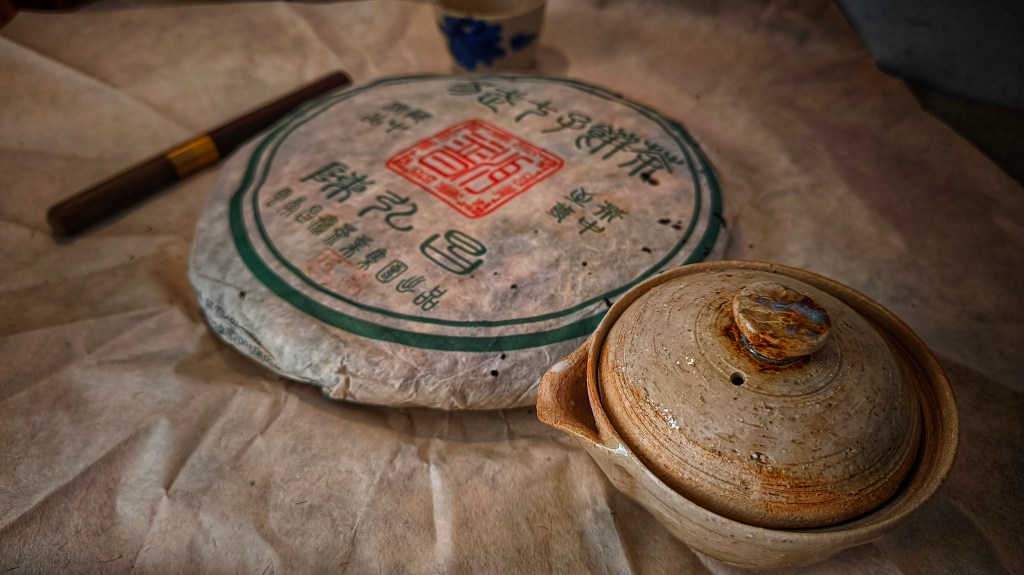
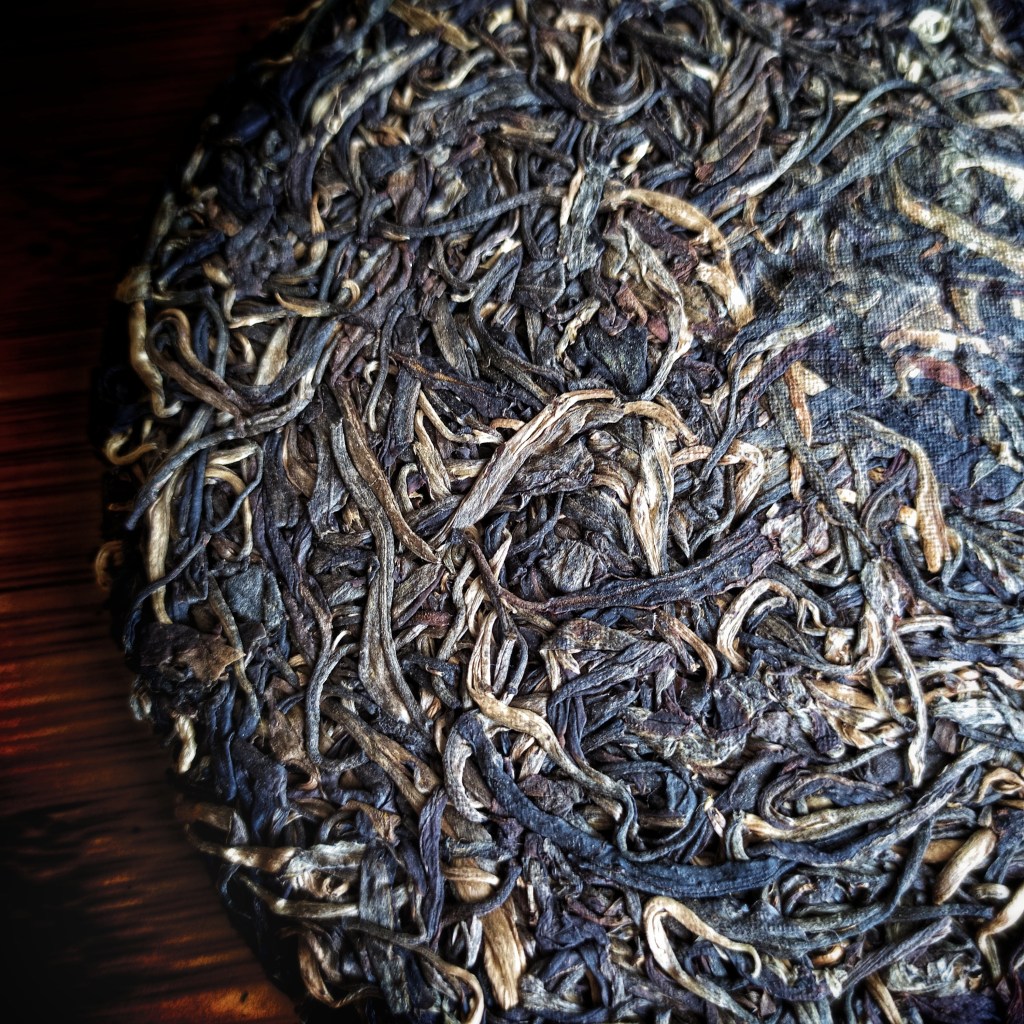
    I compared dozens of Changtai cakes each year—an obsession, really—and indeed, something had shifted, at least in trend. However, about five years ago, as I revisited that graveyard of samples I had set aside, I was stunned. The productions between 1999 and 2003 were undoubtedly remarkable, but those of 2005 and 2006 were not so far removed from their predecessors. I mean, hundreds upon hundreds of grams tasted in blind comparisons over ten years, two epochs that were supposed to be worlds apart and with an extra zero in the price tag, should have belonged to entirely different existential planes. But they weren’t, or at least not as much as public opinion, and my own mind, insisted. Production had indeed changed; however, certain elements of those iconic batches survived the onslaught of serial reproducibility, escaping the cynical, clinical gigantism of enormous, hypertrophic factories. Although these later productions underwent adaptations that created some detachment from their predecessors, cakes like the one in the photo, and others from 2005 and 2006, cannot, simply by that fact, be equated with the banality of a uniform proliferation, the child of that industrial era so often lamented.

    This supposedly inglorious decline was cemented when a course correction was made, delineating a sociological divide between tradition (what peoples craft for themselves) and folkloric reproposition (destined for mass consumption), which, though appealing, remains distant from the truth that governs the opus traditum, the craftsmanship of remote ancestry. But how much truth lies in all of this? How much tradition truly remained in Changtai after 2004?

    What shocked me most was the disparity in storage conditions among the various references, a factor that skewed the objectivity of judgment far more than any real qualitative gap. The cakes from the end of the last century through 2003 are genuinely of a high caliber, achievements that later productions can hardly aspire to match. In the 2003–2005 period, I found no absurd differences, certainly not enough to justify the price differentials from one year to the next. Often, excessively humid aging had irreparably ruined even excellent signatures—like a ’99 Yi Chang or a Mr. Wang Red Chang Tai Hao—trivializing their brilliance.

    Therefore, I believe that the environment in which these cakes have spent their lives is far more important than determining whether a 2005 Chen Hong Chang measures up to one from 2000, and that much of their economic and organoleptic value lies precisely there—in the climate, in the place in which they have dwelled—probably more than in the origin of the leaves, which counts for nothing compared to a twenty-year period spent in a humid warehouse, left to sour and reduced to nothing more than a basement squeeze.

    Moreover, finding well-preserved cakes to make such comparisons has become increasingly rare. Therefore, my modest piece of advice—if you haven’t sampled what you intend to buy beforehand—is to drink; take 2005 cakes without prejudice, provided they come from a reliable source. It is not entirely true that quality plummeted drastically after 2004; these issues emerged slightly later, and I may expound on the reasons in a subsequent article. In any case, if you are lucky, you’ll have secured a small masterpiece at a quarter of the price—one that, with high probability, isn’t a fake. If things don’t go your way, you’ll have gained a daily drink that is surely better than having burned a fortune, blindly thinking you’d closed a deal for a Romanée-Conti that, in reality, tastes like an old fisherman’s boot; or worse, a counterfeit, because the seller’s reliability wasn’t factored into the equation.

  • The Liquid Reflection of Civilization. Seven Essence Darjeeling Epilogue

    The Liquid Reflection of Civilization. Seven Essence Darjeeling Epilogue

    Years ago, I met a professor, one of those old, gruff Labour men, fond of humanity provided it was kept at a safe distance. He lived in permanent exile from pragmatic reality, an outcast who had sought refuge in erudition, guardian of a nation that had ceased to exist before he was even born.
    He listened to Mahler after his Darjeeling, but would only play it if the tea had truly satisfied him, perched on that Danish Art Nouveau oak stool with its black leather seat, with his fingers gripping the keys like ash roots burrowing into earth.

    Epilogue by Seven Essence brings him back to me, sitting in his study poised within the hypothetical temporal sliver between Hope’s Regency style and Ruhlmann’s Art Deco.
    He never chained tea to a fixed hour, nor did he treat it as a prelude to elitist drunkenness. To him, it was the liquid echo of ancient civilizations and their highest reasoning.

    The mahogany, varnish, sweet potato, petrichor, rye bread and cask notes, all wrapped in a cloak of earthy minerality, bring back that room drowning in bound pages and an excess of ebony. Watching it in the cup, I recall our conversations about Vermeer — the tea shines, releasing a warm light, as the one that illuminated the flesh-like surface of the Girl with a Pearl Earring, a radiance both earthly and sacred.

    The sip is rounded, neoclassical, sober yet embracing, with a warm, exuberant body, full of pepper, cocoa, violets and autumn fruit. The sip ends with a sugar cane sweetness almost severe, like the curtain closing on a Powell or Pressburger finale, those directors who knew how to grasp the soul of things without succumbing to sentimental drift.

    Epilogue reminded me of those cultured, discursive forays and how drinking tea itself is politics: a good, human politics that forces us to admit our dependence on the earth, on history, on the cultures of those far from us, in another time or place.
    Every cup is a choice. Drinking good tea is an act of resistance.

  • A Theatrical Infusion of Desire and Disorientation. Seven Essence Darjeeling Autumn Caprice

    A Theatrical Infusion of Desire and Disorientation. Seven Essence Darjeeling Autumn Caprice

    Seven Essence Caprice is the whim that comes from that land pushed to the edge of the sky, it’s the tea you wished you could offer to the stranger you met every morning on the subway, with that porcelain skin not exactly free from subtle traces of time, those perfectly arranged marks that made her attractively real and weave memories of encounters that never happened in your mind. But you never came up with the right words, only the absurd idea of the right tea to offer her, and that tea is this.

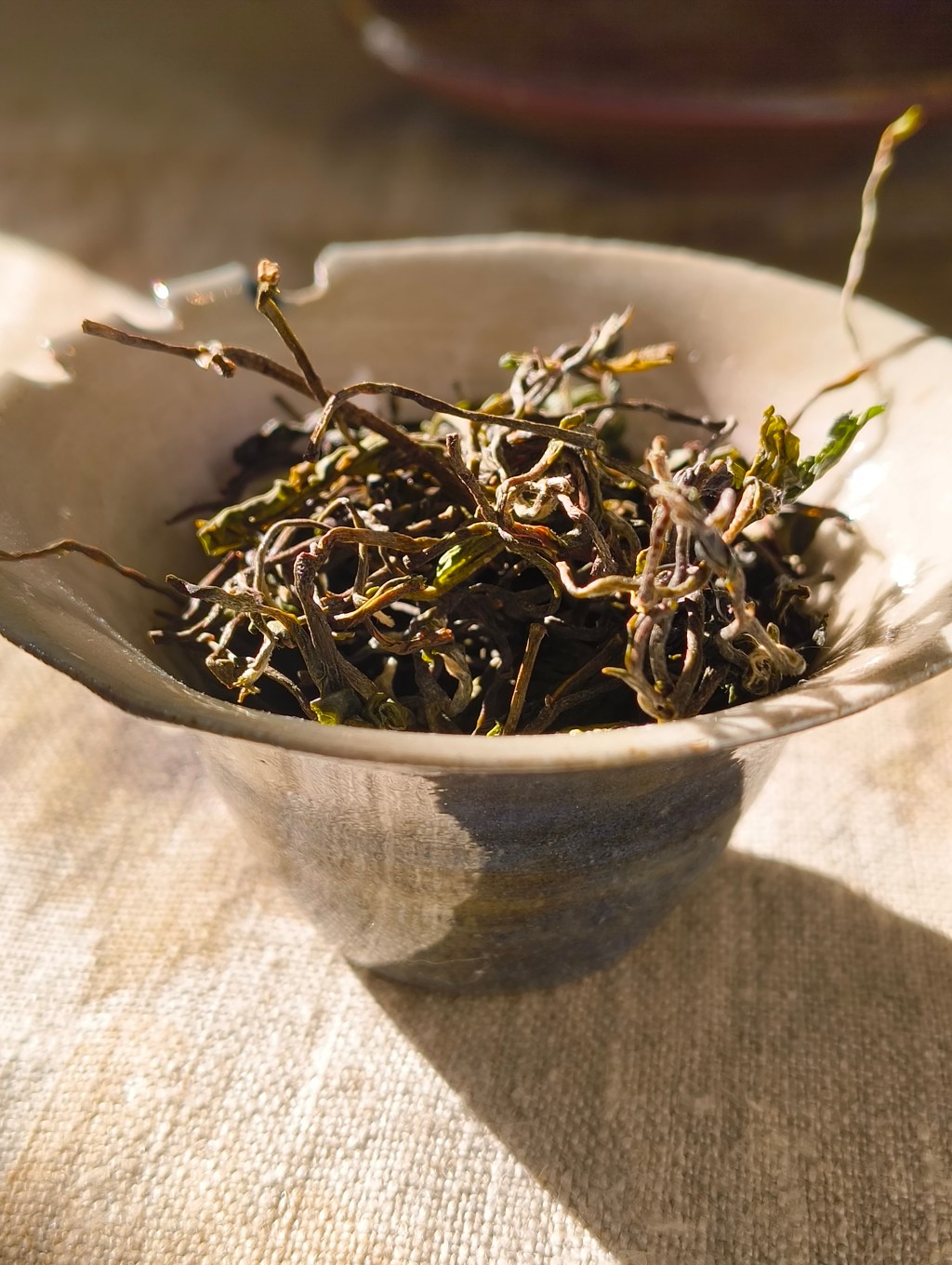
    The leaves, once wet, declare themselves on tones of magnolia, mango pulp and tomato. Then come marine notes with a Mediterranean accent-hints of salicornia, caper, green olives, and herbs butter. The extraordinary complexity reverberates in the mouth with aromas of millefeuille, white peach and cactus leaf to close a theatrical sip, sweet and at the same time salivating and refreshing.

    These notes are the orchestral delirium that connects Akita Tonburi with horseradish cream to the hysteria of strawberries with rose jam and frozen cherry blossoms at Eleven Madison, they are the trigger for a ecstatic dance in the middle of those buildings on the upper west side that stand like giant soldiers at the service of the stock market and you are leaning against the wall, rolling your tongue on the palate, trying to retrieve those aromas of mango, green plum and wild strawberries. Caprice is the highlight of the day before you disappear into the usual pre-war urban coffee shop between 6th Avenue and 8th Street, with late Art Deco interiors mixed with a sober mid-20th-century functionalism, with the reek of scrambled eggs and burnt fat in the air, the typical late-night aroma that smells of debt, perdition and broken promises useful for detoxing from the unbridled luxury of Caprice.

    It’s difficult to write about a tea like this without it seeming like an act of submissive flattery, I assure you that it’s not a simple narrative, but with some teas you don’t witness a simple act of tasting but rather a controlled hallucination, designed for those who seek disorientation and sudden revelation in taste, they are a sensorial vertigo, a chase in a context of constant perceptive tension.

  • The Last Sip Before the Wrong Choice. Seven Essence Darjeeling Patois

    The Last Sip Before the Wrong Choice. Seven Essence Darjeeling Patois

    I’ve often tried Seven Essence teas in recent months, and I’ve observed how they are able to construct a language that oscillates between lyricism and the most material pleasure, weaving a plot of formal innovation and human depth. I believe that Patois is no exception.

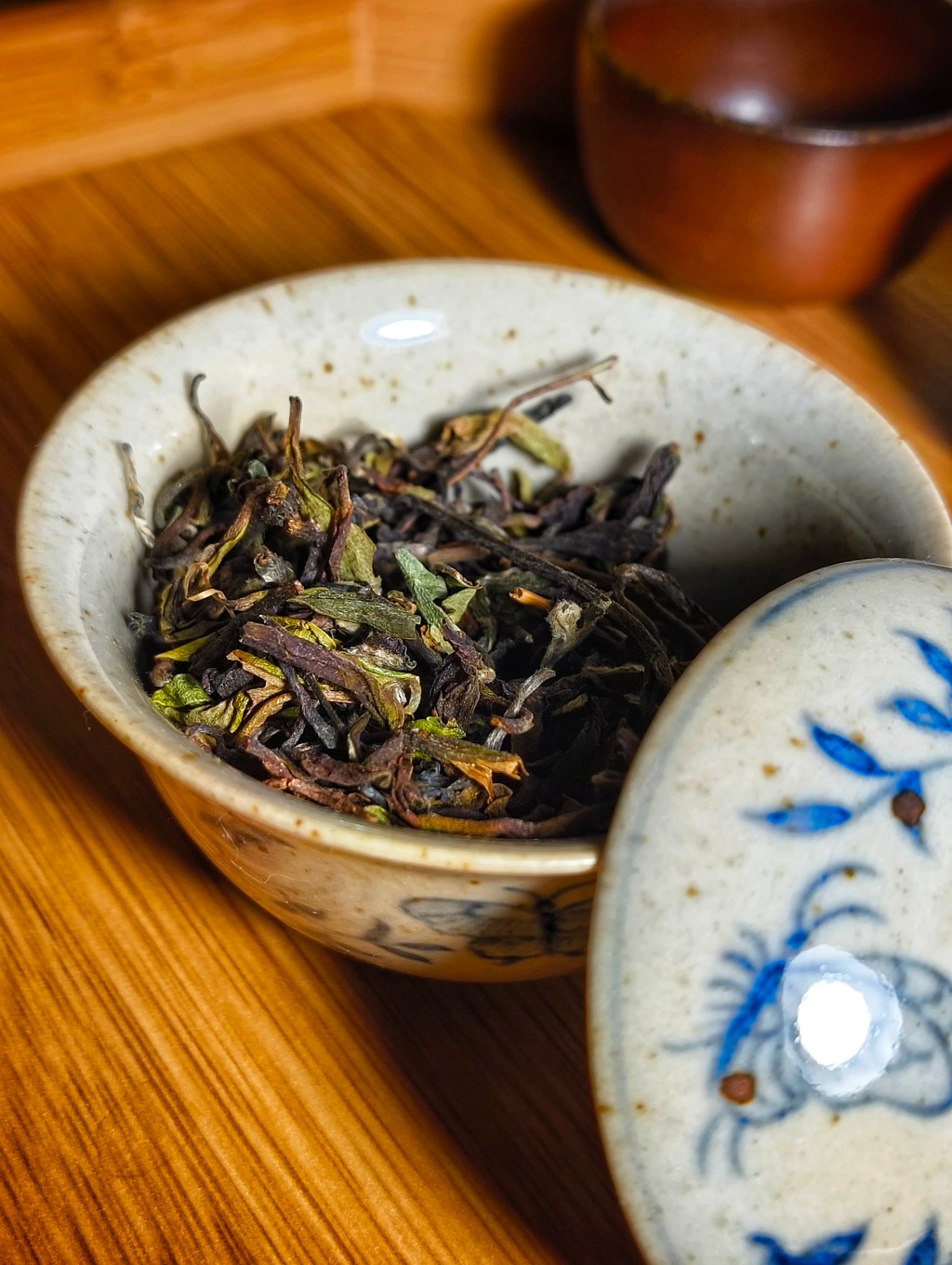
    Patois comes from the frozen AV2 buds of the autumn harvest. In that gaiwan, where the trembling light of yet another winter morning filters through, you can find a liquor that seems like liquid gold with shades of amber, giving off a disarming note of salty pistachio once the ceramic is heated. It’s one of those teas where, while you drink it, you find yourself absurdly in another place, torridly hot, watching the noisy and oscillating fan on the ceiling of a hotel room overlooking the bay, with curtains too heavy and the atmosphere influenced by the neurotic light of a neon sign now three-quarters off. And you, accustomed to the notes of green mango, basil, and wild thyme, wonder if the person still lying next to you thinks you’re crazy or is also feeling the liquid move in their mouth, soft as avocado melting on the tongue, with an aroma of magnolia and gooseberry jelly that enters the retronasal cavity like a promise.

    Teas like this are not for those who seek comfort in the warm steam of the broth your mother made when you couldn’t stand, nor the embrace of hot coffee the morning after a night out clubbing. Patois is the tea for those who stubbornly try to remember what they’ve never experienced, for those torn by nostalgia for a film that was only staged inside their mind.

    Patois is the tea Jay Gatsby would drink after a night staring at the green lighthouse, if only he were a tea person. It’s the sip that accompanies the suspended interlude before making the wrong choice. Patois is not for the faint of heart or hypochondriacs of disaster; it doesn’t comfort or warm. It leaves you there, feeding on that aphasia pregnant with suspension, which accompanies the gaze toward the trace of a Venetian coquetry-style perfume that you wish had been put on for you, but is now on the coat of someone who is too far away, fit to seduce someone else.

  • Pu’er Price Collapse, Are We Heading For A New Crash?

    Pu’er Price Collapse, Are We Heading For A New Crash?

    I’ve always loved investigative journalism but I’ve always hated those catastrophic clickbait headlines that always seem to make things bigger than they really are, but there’s a phenomenon in the pu’er world that’s been going on for a little too long to be simply buried like a dog with its bone.

    Now, we all, or almost all, remember the bursting of the speculative bubble in 2007, where the pu’er market swelled exponentially overnight that spring only to falter in July and collapse over 70% by the end of the year, basically cutting the legs off an entire industry. Well, we may not be at those levels, but it doesn’t seem like the lesson has been learned, rather it seems like someone just put their shirt on inside out to hide the stain.

    What were the causes? Well, to simplify, let’s consider that 70% of purchases were motivated by investment and not by real consumption, production quintupled in 4 years, saturating the market, to which we add fraudulent practices of counterfeiting, manipulation of markets and auctions and crisis of confidence in the product, the source and the quality due to opaque practices dictated by the absence of clear regulation that was convenient for everyone, then we obtain what is a self-destructive economic logic based on artificial growth, completely disconnected from the fundamentals of the product.

    In the West we most likely think that Pu’er buyers have broken free from this dimension because we see a large part of them consuming the same tea they bought, which is partly true, but partly not. Many areas of Yunnan that have reached rationally unthinkable numbers, brands or editions that beat crazy prices have behind them a generative structure often of speculative nature that does not always have to do with scarcity, production costs or the quality of the tea.

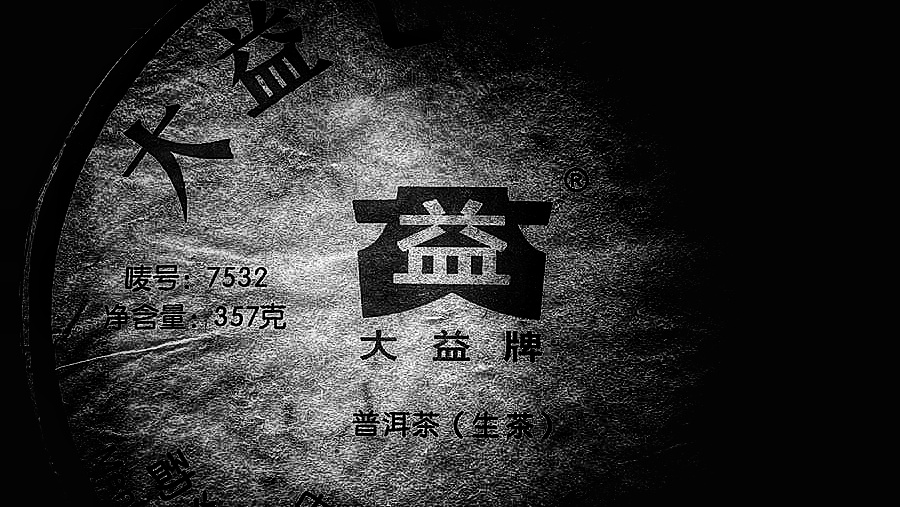
    A while back I found myself tasting old samples or cakes from my collection that I had probably forgotten about. I tasted an old 2005 DaYi 7542, batch 501, along with some more recent production, a 2022 7542 and a 2022 Premium Peacock, both batch 01. I honestly can’t say they were bad teas, they were really good, but to what extent can you justify a crazy price, crazy especially when compared to those before 2015, for a basically “a little more than good” tea. This is not only true for DaYi, but let’s analyze for a moment the price trend of some famous productions. Among the most sought-after cakes in recent years there has been the 2003 Jin No.5 batch 201, in January 2021 its value was 1.45 million RMB/jiàn (84 cakes) while in January 2025 the value amounts to 1.1 million, lower than 5 years ago and above all far from the exorbitant price of 3.2 million in March 2021, same fate for the 2005 7542 (batch 501) which in February 2020 was 230.000 RMB /jiàn (84 cakes), reached 880.000 in February 2021 and then collapsed again at the beginning of this year to 300.000 RMB.

    In recent years DaYi has marketed numerous other special and prestigious productions, such as the 2201 Premium Peacock or the 2021 Golden Rhyme to counteract the erosion of the pu’er market prices, but without much success, the first had a value of 118.000 RMB / 42 cakes now collapsed to 61.500 RMB while the second which had reached 152.000 RMB / 28 cakes now touches “only” 33.000 RMB.

    So, in China there is a particular and complex economic situation and due to personal and corporate financial difficulties, those who invested in this type of goods have tried to divest from illiquid assets such as Pu’er. The tea market does not guarantee a quick sale (and this can be seen from the huge amount of cakes kept obsessively by those who bought them for this purpose) without even seeing a potential for short-term revaluation, and this has led to a greater supply than demand, which is why many recently produced cakes are and will be available in the future.

    Added to this is the real estate crisis triggered by the collapse of Evergrande in 2021, the real estate sector has traditionally absorbed a huge share of savings from Chinese families, who now see the value of their properties deflate, which has caused an erosion of perceived wealth. The liquidation, even at a loss, of pu’er tea to quickly recover liquidity and move a part of immovable money can only worsen the price situation.

    Let’s add a piece: in recent years some brands, attracted by demand, have pushed for an increase in production, not limiting themselves to a couple of pressing batches; with the drop in demand, the market is now flooded with a surplus of product and an inability of the market to absorb the supply.

    But above all, wage stagnation, a lack of robust welfare for which the capital of families is concentrated more on pension, salary and educational expenses and a slowdown in redistributive policies slow down or cancel the entry of new buyers into the market, a situation that brings us back to the last problem of the analysis: The collapse of the speculative segment.

    The cakes of large “investment” brands have suffered a 30-50% drop compared to the 2021-2022 peaks, especially for the post-2010 editions, a sign of the exhaustion of the speculative model, something already seen in 2007, but currently the situation is less dramatic. However, reliance on time is not a reassuring factor in the development of these phenomena, which can see prolonged stagnation as well as a sudden acceleration rather than their dissolution.

    Now I get to the point. For years, the “investment” market has functioned with a pseudo-pyramidal scheme: investors bought new and old editions waiting for others to enter after them, driving up prices. When the absence of new players becomes apparent, the system simply collapses, as the first to arrive only gain if new buyers arrive willing to pay higher prices (those who know the world of fine wines are probably not unfamiliar with this game). So prices collapse because there is no longer real demand to support them.

    The biggest problem with the collapse of speculative Pu’er is that as it increases in value it sometimes cause the price increase of raw material and “consumer” cakes even from small brands, it can have exactly the opposite impact on the local economy of the region, where many small producers depend on the sector, since the costs for harvesting, processing and storage of Pu’er increase accordingly, especially for the latter who do not benefit from economies of scale.

    In addition, many young people seem to give up on this type of purchase and the crisis of confidence due to several allegedly rigged auctions have not helped the image of this sector which in itself is already a niche.

    In this article, not all the main problems have been touched upon, for example, I have intentionally left out the problem of fakes (both new and old pu’er, both big brands and, especially currently, smaller brands) and that of fraud on the origin of the leaves, which represents a huge critical point.

    As far as pu’er consumers are concerned, the only possible logic is to form and create a personal standard that is totally independent from the logic of price, fashion and advertising of brands and sellers. If it is true that a low price does not bode well, it is also true that a high price does not provide any a priori guarantee on its real quality or on the truthfulness of its origin, and this applies to both Asian retailers and European sellers. Trust in a shop and in the people who run it still remains a fundamental prerequisite, as well as fighting speculative logic through greater criticism and greater detachment from trends that contribute nothing to an authoritative and well-founded personal education, nor do any good to a market that certainly no longer needs speculative logic (also considering the polarity of speculation, which could occur in a unipolar way in the West thanks to some retailers without it actually occurring in Asia). All very familiar advice to those of you who have been out here a while, nothing new from the early 2000s.

    To conclude, this trend of continuous increase in prices in a generalized way is not infinitely sustainable, and history unfortunately teaches this, especially in an uncertain global economic context. The future of the market will depend on the ability to balance price, quality and accessibility, avoiding speculative excesses and opening up to new consumers. If the sector is able to adapt, Pu’er will remain a valuable product, but with more balanced and less volatile prices. Companies must become ambassadors of transparency, for example by introducing blockchain certifications or declaring costs and margins so as to show how much is paid to farmers, as happens with some micro-roasteries in the coffee world. Consumers must act as ethical “gatekeepers” avoiding being carried away by the hype without evaluating the quality and institutions must guarantee clear, more stringent rules that absurdly no one seems to ask for (except to limit the use of fertilizers or other superficial environmental restrictions), clarify terms (e.g. gushu) so that they are internationally univocal and measurable as happens with European standards and denominations. All these things seem like utopia, but every now and then it’s good to say things out loud, they don’t even sound bad.

    *All prices in the article were taken from donghetea.com

  • Tea as a contrast to immediacy and as an aid to living time. Viet Sun Thương Sơn sheng pu’er 2016

    Tea as a contrast to immediacy and as an aid to living time. Viet Sun Thương Sơn sheng pu’er 2016

    I think there is immense value in dwelling on the traditions that tie us to the past. We live in an age that has forgotten the importance of living time, of the slow maturation of ideas and things. Rather than living, we grope in a era that tends at times to reduce life to mere mechanisms of action and compensation, to power relations, to a set of derivations and summary assumptions. And yet, our daily experience recalls something much deeper: the desire for meaning, the search for truth, the will to give meaning to time and to recognize the sacred.

    This morning I reached back into my pharmacy, getting a 2016 sheng cake out of that mess, it comes from Thương Sơn, one of those places where the past intertwines with a vibrant and complex present, which seems to hold the secret to eternity. Here, ethnic and cultural plurality merge into a living mosaic, the rice paddies wrap the mountains like an emerald scarf, contrasted by the pink-purple waves of autumn buckwheat flowers, those flowers that are said to have been sent by the gods as a sign of recognition.


    Each leaf is a fragment of a narrative that has developed over centuries, Thương Sơn is rich in ancient trees that produce teas like this, whose aromas recall the cold winter with the spirit of an austere old father wrapped in his leather armchair, immersed in the cloud of an evening cigar.

    The sip is enveloping, deep, mineral with hints of Montecristo cigar, leather, dried Moroccan plum, camphor and cloves, it is a constant reminder that true pleasure requires patience. The aromas then sublimate into a dimension of labdanum accords, apricot in alcohol, gentian liqueur and incense. The intense huigan and strong qi revive the image of the crazy and primordial harmony of places like this, so typical of traditional places, a cup we could define as an “accumulated wisdom”.

    Teas like these, places like Thương Sơn, through understanding the bond with their own tradition, with their own history, teach that there is an order, a truth that transcends human contingency, and a tea like this that ages is a trace of that truth, a witness, a collector of past eras, a contract between generations.

  • Making a true, authentic tea is sometimes a question of consciousness. Meng Tong Yin Shan Tea Factory Gǔ Xiāng sheng pu’er 2009

    Making a true, authentic tea is sometimes a question of consciousness. Meng Tong Yin Shan Tea Factory Gǔ Xiāng sheng pu’er 2009

    I happened to wake up this morning with a sense of nostalgia, that damned stinging feeling, that melancholic regret of what has passed or gone, or been lost. I headed to my “pharmacy,” that’s what I call the place where I keep that messy pile of leaves and ceramics that should appear to be a safe place for tea, but instead seems like the war front of a desperate need for order.

    I infused the leaves of a tea that had been sent to me some time ago by Moychay, a 2009 sheng from Meng Tong Yin Shan factory. Gǔ xiāng is its name, 古香, “the ancient fragrance”.

    Often we prefer not to delve into where the flesh hurts, pushed back to the surface by thought and the instinct of preservation, but I needed a tea that would anchor me to the present, that would satisfy my need to think, that would give sense to the moment. The sense, in its dual nature is able to indissolubly enclose the organ of sensitive experience and the intrinsic value, takes the ancient by the hand, and when there is truth, the authentic.

    Truth guides the authentic and the latter spontaneously translates into awareness of one’s vocation. Making a true, authentic tea is sometimes a question of consciousness and the need to resort to painful memories, it is not a question of ability but of understanding, of true, living style, of blood, an incorruptible visceral pact, symbol of the most ancient culture, of spontaneous creation, of generative power.

    Tea full of meaning is a tea that reminds us that this drink is not just form, it is not a mere concept, it constantly reminds us that expressing and evoking are different things. The aromatic traits also become gestures marked by an intention, they become an evocative act, we notice a development, the evolution of a melody that passes from one aromatic note to another, in which form and content emerge and subsist together.

    The ancient is distinguished from the old when the former had the opportunity to see the passing of time wrapped in the blanket of truth, of meaning, while the latter simply fades without leaving any memory, neither of itself nor of the intention that was at its origin.

    This is the reason why I chose this tea.

    Tea changes, it is a map of time and a saving substance, and like few others this Gǔ xiāng carries with it the traces of experience, of a changing form, in its ambivalence between notes of a fading freshness and those that place it ever more in a bygone era.

    From the leaves emerge scents of a winter countryside, mushrooms, undergrowth, camphor, surrounded by hints of cinchona and kola nut, nuances of dandelion root, tamarind and caramel wrapped in an unexpected, surprisingly strong blanket of vanilla. The scents of redcurrant, leather, moss on the trees, oak wood and orchid then become prevalent.

    The sip of medium softness, sweet but balanced by a light balsamic bitterness lowers the curtain on floral, woody tones, of angelica root, closing on aromas of vanilla pod and leather.

  • Metaphysics of Pu’er blend with Moychay 2022 Melting Reality sheng pu’er

    Metaphysics of Pu’er blend with Moychay 2022 Melting Reality sheng pu’er

    We live in an era where you can potentially know everything about a tea, the garden it comes from, the grower, the exact location of the trees, but the tea market has not always been like this. Blends were so popular in the past that there were few single-origin teas before the 2000s.

    Some of the greatest recipes to come out from the Dayi, Xiaguan and Rongshi factories or from the minds of pioneers like Ye Binghuai, Vesper Chan and Chen Huaiyuan who commissioned, produced or supervised them, were blends.

    But what can elevate a blend and bring the art of blending back to the forefront of consideration? I believe that when the condition of need and economy is overcome, the blend can become expression and genius, a journey into the unexplored, a domain without potential rules, a disorder channeled into the eternal overcoming of all the contradictions that compose it. But this is on condition that the raw material is of such extraordinary quality as to support the greatness of the intention.

    The blend is not a mere offspring of an uncoordinated material, it must be able to fuel the creation of other structures, of superstructures capable of capturing and interpreting the reality and the thoughts of those who create them, something also capable of escaping the premeditation and contingency of the possible and of making us forget those mixtures of leaves devoid of any persuasive power.

    The lack of rules and the impossibility of serving the leaves and erecting them as a symbol of a place brings technique and thinking to the limit and, as in art, to experiment the extreme ease of failure but also to the configuration of unique potential, since the technique can be exalted only where it manages to experiment its most radical impotence.

    In this Melting Reality, a Moychay 2022 blend, you can find that unexplored, that quality of the first time, of that reality so accentuated and exaggerated that it seems unreal. Like a Blanes painting the drink is stratified on more rural and dark tones of leather and maritime forest which alternate with other sweeter and brighter ones of gooseberry, dried figs, candied fruit and orange blossom as in a delicate play of lights.

    It is a liquor where the ephemeral and the real alternate, the light bitterness and medium softness integrate well with the good huigan and the hint of tamarind sauce that give bite and announce chaos in an incessant symphony of notes of candied cedar and honey, orange custard and cooked wheat.

  • When Pu’er gone in a single day. Dialogue on the present, the past and rites with a 2006 CNNP “Yellow Mark”

    When Pu’er gone in a single day. Dialogue on the present, the past and rites with a 2006 CNNP “Yellow Mark”

    When the fragile walls of the pu’er business were crumbling in the early 2000s, many people stood in front of the screens in the Kunming tea market, crystallizing an evocative image, a shared moment of sadness, like those who see their home demolished, those who see their expectations burned, like smokers outside the doors of a hospital, staring at their affliction in the smoke while waiting for some unexpected good news.

    And so the pu’er gone in a single morning, as if all the wealth accumulated up to that point was worth as much as a bright day that tries to make us forget that dark, but much more natural, light from which we defend ourselves at every moment.

    Dark like the soul of this shou, with a frowning and crepuscular essence, with aromas that come from the shadows, from the underground warehouses of humid cities, from the decadence of nature in autumn.

    In those years, pu’er was sold as a commodity capable of accumulating value and in which to find authenticity. In a country in total growth, there was a frantic search for an identity, for its rediscovery and subsequent affirmation, through rites, the ostentation of them and gambling. But not so much of the true rites but rather a plasticization of them to compensate for the sense of loss that nostalgia brings with it.

    In the ritual, in the tea, those who waited, resisted and dared found refuge, they survived because it is the ritual that acts as a contrasting agent thanks to which our present takes on clearer contours even in the darkest night, they fulfill the function of a revealing bath capable of showing the latent image of identity through the reduction of the superfluous.

    In the recovery of the ritual one struggles with oneself and the struggle takes shape when one compares the old action with the new action, with the dynamics that are emerging, when one places the travelled path alongside the new scenario.

    In ritual opera, things are not consumed or used but rather lived, so that they can age and bear witness. Tea was thus able to recover its place in rituality and with it the integrity of its experience that the period of compulsive enrichment had tried to hide.

    This 2006 CNNP yellow mark embodies the residue of that incendiary period, you find that something in it that is not destined to survive but which nevertheless resists and remains. It wears the color of an old vintage Port and in its fragrances of tobacco, old leather, humid wood, lacquered mahogany and jujube you find that pain of uncertainty that constitutes the matrix, the deep layer of something true, intentional, positive.

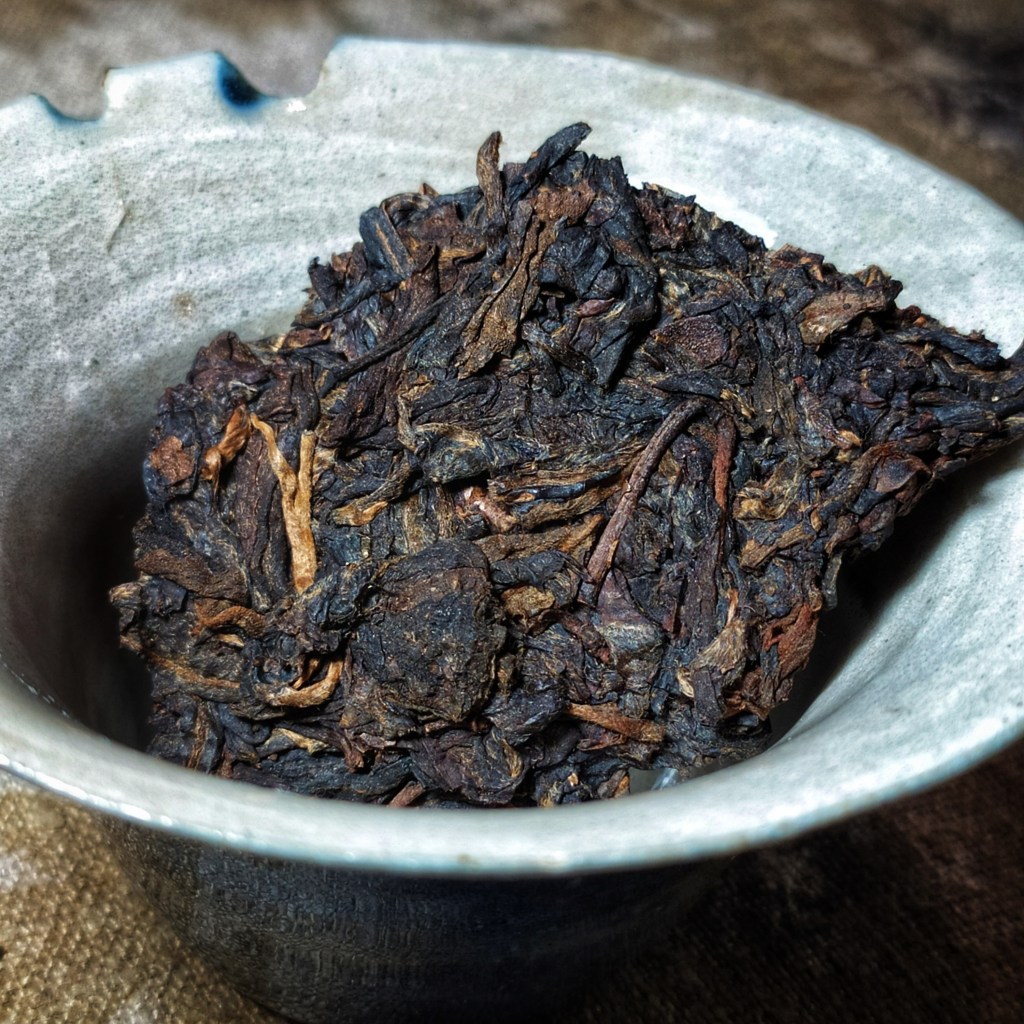
    The light fermentation has allowed it to survive the banality of many of its peers, to escape the hermetic isolation of immediacy that the over-dense, black as tar and hyper-fermented shou demand. In the mouth it’s silky, of proportionate sweetness with aromas of malted brown bread, raisins, butter cream, chinese herbs, brown sugar and ancient wood.

    Tea by Le meilleur the de chine