Tag: reflections

  • The forest of Hoàng Su Phì and reconciliation with the truth. Soliloquy with Viet Sun black tea from ancient trees

    The forest of Hoàng Su Phì and reconciliation with the truth. Soliloquy with Viet Sun black tea from ancient trees

    The sound of the horn in the Dao rituals dictates the rhythm of a place that seems alive in the eternal instant of a perpetual past, the thunders are rhythmic like the steps of the Jade Emperor on his journey to earth.

    The people do their utmost in the preparation of the traditional ceremony in their black tunic whose red drapes blown by the wind seem to give them a permanent dynamism, while their clothes and the folds on their faces seem to merge with the sky broken by lightning, letting the viewer try to understand the silent emotions they express.

    Places like Hoàng Su Phì revive that pure, almost mythological naturalism, saving it from being a mere memory. The paths seem a return to the eras of myths and magic, spiritualism, tenacity and subsistence, far from the paved road of self-flagellation materialism. It is those paths that force us to reformulate contingency, those smells of an extinct nature that ask us, as Derrida said, to rethink our relationship with the truth. They are forests where not only the camellia orchestrate a unique opéra in harvest time, but they are real metaphysical theater for find again time and conciliation with history, acts of rediscovery of a lost essentiality.

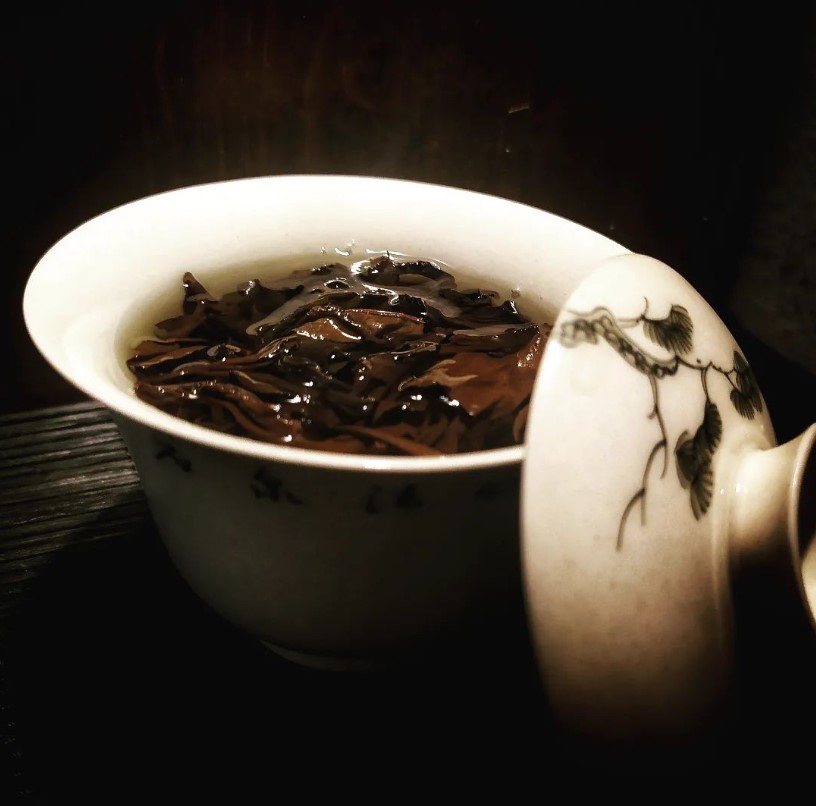
    A particularly interesting Viet Sun tea from 2022, sourced from ancient trees in the Hoàng Su Phì forest in Hà Giang province. The notes of the wet leaves are extremely special, aromas of chestnut honey, cocoa and malt biscuits are perceptible, accompanied by dried sour cherries combined with more floral nuances of violet and lilac. A more particular weaving approaches timidly, in the background you can feel the dried straw, tamarind sauce and dry cranberry, to then arrange on very clear memories of distilled grape skin, muscat grappa and notes of old, freshly waxed wood.

    The sip is coherent, medium-bodied, sensations of cocoa combine beautifully with those of malted barley and honey, enlivened by a never tiring, balanced and persistent sweetness.

  • As long as the root is still there, everything is still there. A few words about Manzhuan

    As long as the root is still there, everything is still there. A few words about Manzhuan

    “只要根还在,一切都还在”
    Before the advent of a group of Taiwanese tea explorers in 1994, Manzhuan was a heavily rural area, dominated by vegetation surrounding classical Han architecture. Residents of Manzhuang, Manlin and Manqian were still recovering from the war that decimated many families, the losses due to the famine and class sacrifices of the Maoist era, especially between the 50s and 70s, brought the area of Manzhuang to count less than a hundred people, the sale of tea was almost impossible and agriculture was not even enough for self-sustaining.

    Social regimentation had devastated the existence of a place, disfigured the quiet by imposing an artificial order irreconcilable to it. But history soon revealed a whole other future, and from the mid 70s onwards the production and sale of tea was resumed, many centuries-old trees were pruned to increase production and answer an ever-increasing demand. This happened until the early 2000s, when the effects of the Taiwanese expedition and the explosion of the pu’er market made sure to return to a policy of conservation and preservation of their land, reliving their past.
    As long as the root is still there, everything is still there “只要根还在,一切都还在”.

    Manzhuang is one of those few remaining places that detract from humanity the superficial, in which between man and earth there is not a mere utilitarian link as between an animal and a drinking trough, but rather existential as the one between the world and God. It is here that trees distill the air full of herbs and wild fruits and man becomes able to transform it into the liquid painting of a land that still resists modernization, taking root in its primordial essence.

    Drinking Manzhuan pu’er like Mr. Quen’s is like letting a sip of reconstruction run down your throat, giving you the keys to a hard-earned identity. They are teas that allow to go beyond the material nature of the object, a liquid synthesis of the historical complexity of a region that has been the cradle of tea lyricism and incubator of a natural heritage for more than a thousand years.

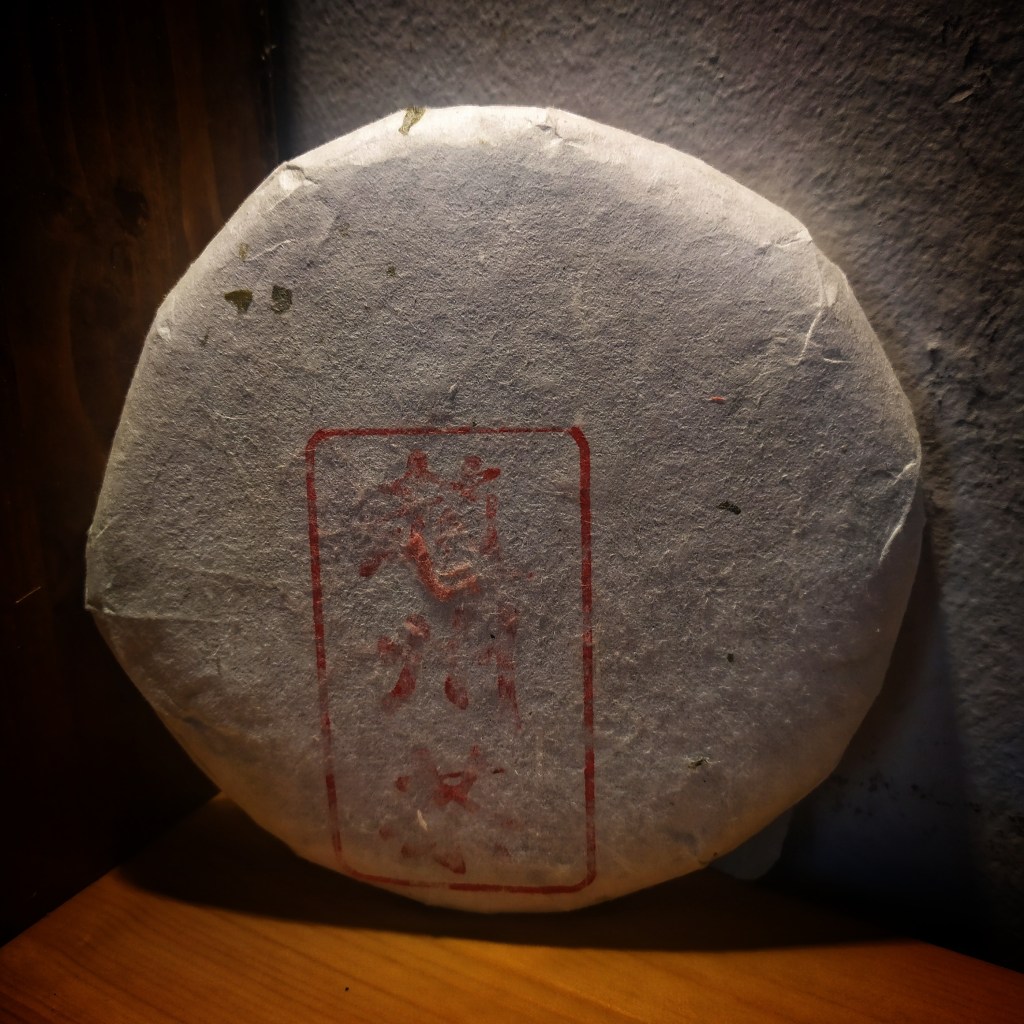
    P.S. the cake in the photo, although produced in Yibang, bears the symbol and style of the productions of Mr. Quen Cun An’s family (Quanjihao tea factory), who manage gardens throughout the Six Mountains, including Manzhuan.

  • The Shangkang festival, the reconciliation of civilization, a nostalgic tea. Thoughts through a 2021 Wengji sheng pu from Moychay

    The Shangkang festival, the reconciliation of civilization, a nostalgic tea. Thoughts through a 2021 Wengji sheng pu from Moychay

    People gathered at the Shankang festival, their predecessors were honored, the offerings placed at the foot of a distant past in which every year the memory revived. It was an occasion to dance, to be involved in a moment when time seemed to stop, saturated with a sense that was difficult to translate into words, where society was reconciled and perfected, new relationships were woven and in the dance a harmonious idea of freedom and order was restored.

    The intense emanation of life was palpable also through the negatives of the photographs still hanging to dry, in those images you could see the dynamism of movements, conversations, aspirations, through that dance was reconstituted a kind of social consciousness, a “to be for others” even through the individualism, an assignment of virtue reflected in rhythmic and modal imposition, in traditional customs, in emphasized forms of courtesy, creating a link between distance and proximity, freedom and respect, confidence and discipline.

    In an age of collective utopias, among the mountain forests of Wengji flourishes instead the sense of dwelling, tea is evocative of a feeling of belonging, a vital civilization supported by the ability to live for its territory and its history alongside its neighbors, a loyalty to its land and the narration of its importance.

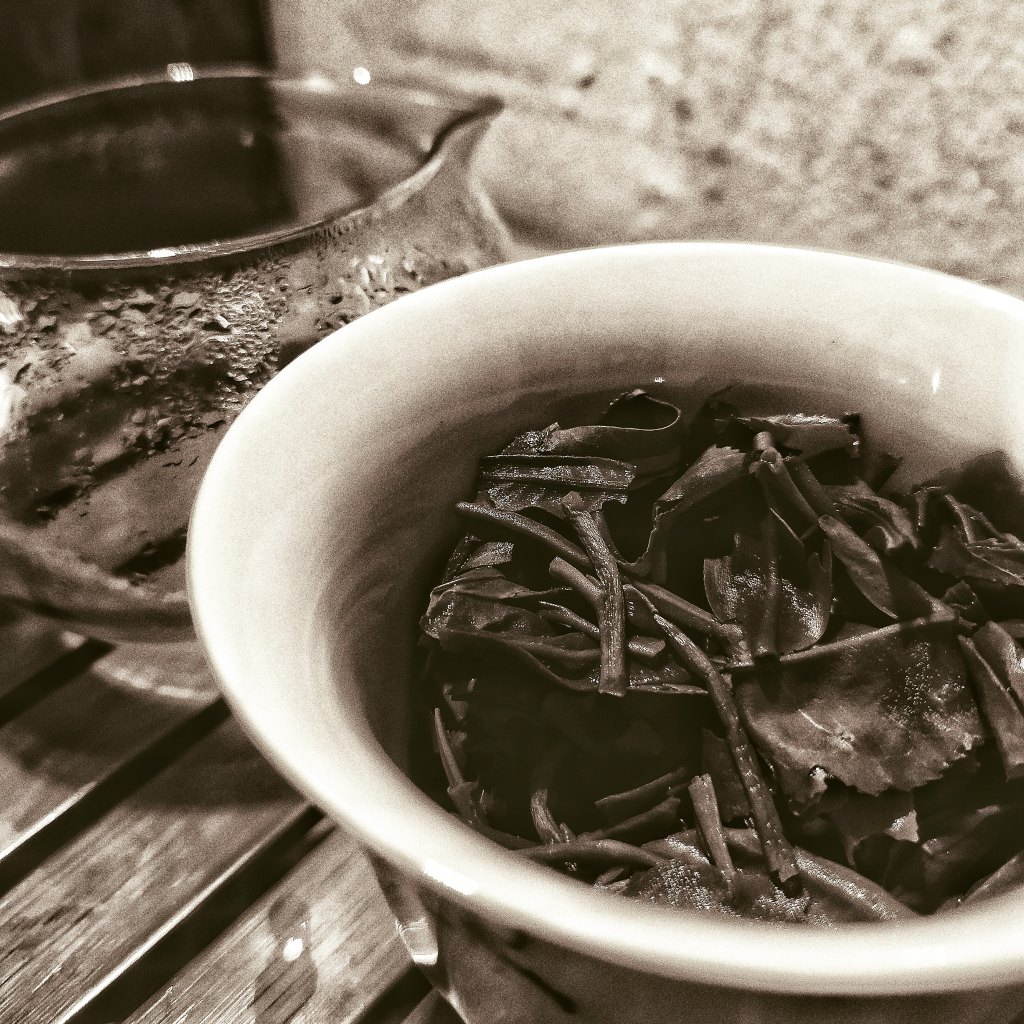
    In the gaiwan there is a 2021 Wengji sheng pu from Moychay, a complex tea where the typical character of Jingmai emerges in the notes of honey and flowers, orange peel, caramelized apricot, cooked strawberry and pandolce, with more primitive nuances in the background. The body is medium thick, the aromas direct and defined, the huigan emerges early after the advance of a archetypical and balanced bitterness.

  • The primordial essence of Da Xue Shan in YongDe County

    The primordial essence of Da Xue Shan in YongDe County

    he subtropical scenery of the Nanting River, from the foot of the mountain to the northern view of the main peak, seems to capture all the splendor of the world. Daxue rises to over 3,400 meters, opposite the other peak of the Nu mountain range, Xiaoxueshan.

    Karst severity alternates with the chromatism of the tropical forest of broad-leaved trees, water and land, peaks and plains create an antithetical contrast. It is said that a mountain has 4 seasons but thousands of different skies, and in Daxue there is nothing more true.
    Primordial colourism is the home of the black crested gibbon, the beauty and brilliance of wild flowers interrupts the immensity of the mountain, the Wanzhangyan waterfall seems suspended, as if it fell from the sky.

    Some families of the valley floor who do not work in large cities graze animals, while others work in small laboratories that produce Mangtuan paper, a tissue paper with a history of over 600 years made by hand from a bark called Maisha in the Dai language, for centuries used to transcribe Buddhist scriptures, books and packaging. Still others are dedicated to the collection of tea leaves and of the rare fruit varieties of the county such as Xiaomengtong pears, Mengdi litchi, Minglang papayas and Yongkang mango.

    The tea of Daxue, like its places, is addressed to the taster as a sincere lyric does with its auditorium, the distilled essence of a place is poured into our body giving it back its life while sweetness refluxes like childhood memories. His tea has quenched the thirst of poets and workers, revives memories of distant and primitive places as well as those of a work of art on a ceramic.

    Tea like those of Da Xue Shan are invested with a symbolic charge like few others, labaro of radical changes and that rise and fall from one existential plan to another that nothing is but the path of a rational being. Tea appropriates human nuances and analogies without resorting to forced anthropomorphism, it is imbued with a meaning that we ourselves put on it, it represents a momentary suspension where the ego meets in the cup its reflection.

  • Mahei, one of the best pu’er in Yiwu. But has it always been like this?

    Mahei, one of the best pu’er in Yiwu. But has it always been like this?

    The rains of mid-April break the drought of Mahei, but the race to the true maocha every year does not stop, as well as the rise in prices has not seen truce since 2007 to date. Maheizhai is a village of Yiwu, in Mengla county, almost 3 square kilometers of woods and trees between 1200 and 1500 meters above sea level.
    All 90 families are practically involved in the tea industry, gathered into those 330 hectares of ancient trees trying to seize what they can in a battle of wits and courage.

    Before 2008, Mahei and villages like Yibi, Sanheshe, Manxiu and Daxiu in the Yiwu area were all almost indistinct, except for the tea experts and buyers who came here in April to obsessively and meticulously look for the best material.
    Between 2005 and 2007 there is the appearance of some sporadic trace of the pu’er of Mahei, which also often merged the material of neighboring villages, including Guafengzhai, Mansa and Manxiu when they did not flow into the more common Yiwu Zheng Shan tea or blended with the leaves of the other six mountains. Around 2008-2009 a more methodical subdivision of villages and mountains began with a strong emphasis on searching for the old trees of these villages.

    Here are several gushu, but few are wild, in fact between the 80s and 90s heavy interventional practices have been seen, both with regard to the reduction of the size of the forest and the pruning techniques carried out in a more or less burdensome way.

    The introduction of extensive terraces in the late 70’s in the Yiwu area has also raised a veil of anxiety and concern for those who set out to find and market the tea of these villages, emphasizing their uniqueness.
    As always it is in the experience and in the trust to find the way of the truth, but once found and cleaned from the blanket of dust and individualism it is difficult to forget how it is.

  • Bingdao, its aura, its mysticism. Maybe it’s all undeserved?

    Bingdao, its aura, its mysticism. Maybe it’s all undeserved?

    The price that Bingdao tea has reached has attracted much attention from Western countries, covering it with that mysticism reserved for the great names in Bordeaux or Burgundy winemaking, an aura that cannot guarantee that the taster’s opinion do not deform in front of it. But what makes Bingdao teas so? Where does the search for truth end in an area that sells the fresh leaves of its gushu at more than 30,000 yuan/kg (2700€/kg) and how can all the tea on the western market present itself as authentic Bingdao tea if is there so small production in certain years and at such crazy prices that even the local merchants give up?

    In an objective sense we should look at the aminophenolic ratio, pedogenetic, climatic and altimetric characteristics, as well as the age of the plants. Yet on paper the puer of Bingdao do not win in this respect, which remains only mere conceptualism.
    Often, when tea from a certain small production area reaches a certain level of quality, its market valuation gradually has nothing to do with quality. Often the disappointment that accompanies the tasting of sheng pu such as those of Bingdao or Laobanzhang is due to this phenomenon exactly as is the ecstasy that we build inside ourselves when a neurasthenic grimace appears on our face when we realize we have spent a quarter salary in a mediocre tea.
    And this is the real focal point.

    The tasting of teas such as the sheng of Bingdao, Laobanzhang, Laoman’e, Xigui aggregate the objective with the subjective, the hypothetical and the ideal condition, they are a set of antinomies that cannot be relegated to the simple obsession with categorization.

    The dynamism of the market means that when an area is hit by an almost oracular mystification, many resources and capital gather in it. The increased pressure due to a high degree of visibility, the highest attention and the best technical ability will be poured into it, and after its own transitory course, the tea of that area could become one of the best with a high probability.
    Why is it just probability? Because this is a simple hypothesis, idealistic and summary.

    In support of this I was able to experience how it is impossible to separate pure matter from spiritualism when you are drinking tea, therefore to say that tea is the expression of the earth in the strict sense is as misleading as it is dimensionless, it means making it descend into the order of empiricism by depriving it of its aura.

    Rather, tea represents the ground as much as a church bell tower is idealized by the village below, a border traced by our ability to grasp the residue of time, of a people and its spirit, to consecrate it in a higher dimension than a liquid translation of mere immanence. This is because it is what is sacred and immutable that creates a bridge between generations, a stable and lasting relationship between those who have passed away and those who have not yet been born, in that real identity that is independent of the present and the economic value.

    Stubbornly objectifying the act of tasting tea like those of Bingdao is like mechanically listening to Strauss’s Metamorphosen without understanding the poignant pity of the loss combined with the fragmentation of the dignity of an entire people. In short words, what can be lost is what is most true and least intelligible.

    Don’t get me wrong, quality is an objective datum and as such it must not be exploited or overwhelmed by unreal fairy tales, but relying solely on it one only runs the risk of being disappointed and deprived with an experience that escapes the most cultured languages.

  • Perhaps it’s time to ask what can be called Dancong

    Perhaps it’s time to ask what can be called Dancong

    Dancong tea is much more than an aromatic concentrate, it is not just a floral punch straight in the mouth capable of anesthetizing the taste buds with its fragrances.
    Fenghuang tea is often able to escape the intellect, but the leaves of those trees are able to bring the unintelligible into sensible form.

    Make a Dancong is not knowing how to orchestrate a set of fragrances, that is pure appearance. This Wulongs are an epitome of shanyun, the “charm of the mountain”, they seem to enclose a geographical empathy that is consecrated in a sip imbued with historical awareness that gives abode and memory to the course of events in a place, going beyond the material boundary of the drink . This condition derives from three main factors: the intrinsic uniqueness of each tree, the craftsmanship and the mountain terroir.
    But what happens when the liquor doesn’t convey a truthful reality?

    Fenghuang is a small city of 30-40.000 inhabitants, an out of this world place with about 10,000 laocong of about 100 years and 3,000 trees of 200 years, and from these numbers it is enough to understand that many of the leaves from ancient trees that we find in the western market cannot come from here. The climate is difficult, extremely humid, the moss seems to envelop even the soul of those who pass through it, a very different condition from the neighboring areas.
    In Fenghuang village a distinction has always been made between the internal areas of the mountain (neishancha 内山茶) and the external areas (waishancha 外山茶), in order to underline a deep tradition and bond with one’s land.

    There are 30 tea towns in the administrative area under the current jurisdiction of Chaozhou City, and one of the problems is that as long as the tea is harvested and processed according to the DB44/T820-2010 standard within the city of Chaozhou all teas can obtain geographical protection marks, and therefore be called Phoenix Dancong.

    Fenghuang Dancong’s production method is mainly based on the family and there are no large enterprises comparable to those in Fujian or Yunnan, and it is what is sought to be preserved and must be protected. But every year on the market there are tons of teas at astronomical prices in the western market related to Fenguangshan cha without any territorial distinction, with little or no transparency. But the real dancong is only a small part of it.
    One wonders if it is worth spending more and more money to buy something that might not even be real Dancong or settle for a sip of happiness together with that money in case the tea is really good.

  • Another soliloquy about Laobanzhang with a 2018 sheng pu from Tianhong tea factory

    Another soliloquy about Laobanzhang with a 2018 sheng pu from Tianhong tea factory

    Laobanzhang has long been an example of ambivalence. Its bitterness contrasts with the sweetness that pervades you a moment later, the exaltation of its essence opposed to the condemnation of the upheaval caused by its own greatness. Its leaves can be as bitter and severe in youth as they are sweet and complex as they age, teaching us that solemnity is not in the present and that it can never be enclosed once and for all. What drives us to buy what now seems so distant from reality? Yet as Sophocles said there is no life without pleasure but, above all, life is more beautiful when one does not think.

    This is Laobanzhang, a corner of the world where gods seem to have found refuge, a strip of 300 hectares of ancient trees that have seen the course of the ages so much as to survive the history of the village itself. There are about 120 families mostly of the Hani ethnic group who inhabit these mountains, about 500 people almost all involved in the tea market, that same tea that once animated their ancestors now seems to have took away the soul of their descendants. The radical change in lifestyle, the experimentation of mere materialism have placed the village in front of a test that is only partially overcoming. There are many examples of counterfeiting, of slightly above average tea, quality standards that are not always clear or respected. All at crazy and irrational prices.

    However, a sip of a real Laobanzhang is able to enrapture us to the point of blurring the language, words become superfluous and we are ready to resort to the credit card through a disintegration of self-control only to chase the memory of a tea which, when authentic, remains indelible in our memory.
    The problem is that by now we risk finding very little of that authenticity in the future and at that point the bitterness will take over even the sweetest of memories.

    That of the Tianhong Tea Factory is a centenary trees sheng pu from material collected in the spring of 2018 that contains all the ancient charm of a village. It appears in a brilliant golden color with pinkish undertones; notes of wood burning in the rain and nuances of ripe apricot emerge from the wet leaves than hints of cavendish tobacco, plum jam, light botanical-alcoholic fragrance along with reminiscences of wild flowers, caramelized citrus and subtle scent of violet candy.
    I think the measure of a good Laobanzhang is not only the sensory complexity, but the ability to stimulate the memory in a articulated and orderly sense, like an open book on the knees whose pages are nostalgically leafed through; that is what happened with this sheng. On the palate it has an extraordinary balance, the herbaceous flavor is wrapped in a honeyed sensation, the liqueur is thick, juicy, the bitterness allows the aromas to remain for an interminable time and the mouth to salivate while intrepidly awaiting the next sip. The qi is strong and the final notes close on a pleasantly floral and refreshing sensation.

  • Reflections about the pu’er market and Laobanzhang

    Reflections about the pu’er market and Laobanzhang

    Everything about tea is born from an initial effort and suffering, and through these it is consecrated in a sort of spiritual life that is strengthened over time, in its determined and individual character. Tea is not the immediate gift of nature. Immediacy in tea always comes at a high price.

    Laobanzhang is experimenting a pattern already seen in areas where previously a deep famine reigned; now money is spent in the most disparate ways, new contemporary-style buildings arise and what comes from the past is quickly supplanted by the well-being of a conscience that appears liberated from the oppressive spirit of the previous period.

    The new generations are not destined to experience that effort and suffering, the natural rhythm of things, the process that brought Laobanzhang tea to what it is even before the invisible hand of Yunnan moved prices in the spring of 2007.
    Everything happened very quickly, in 20 years a main road capable of connecting all the villages once disconnected from the world was built, new branches were opened, new investment funds and capital arrived from holding companies which saw a safe source of investment. All of this is reminiscent of a situation before the burst of the speculative bubble, but it is not, all of this is the present.
    The price of raw tea has gone from 8 yuan/kg to 1800 in the famous spring of 2007, up to exceeding 13000 today, an escalation that does not seem to stop.

    The tea leaves are sold to the shops before they are processed most of the time without any intermediary, just as en primeur wines are sold in Bordeaux before they end up in the bottle. This is what has been happening for years now in these mountains and which has led many merchants to abandon them, in what we can define as the third emigration of Laobanzhang.

    How much of the real Laobanzhang is left today and how much it is still worthwhile for tea merchants to look for a product that no longer lives for its uniqueness and soul? How much the economic value of a place can become a burning glass of its greatness and how long will we wait before another crash of the speculative bubble?

  • When the predecessors will enjoy the sight of civilization the descendants will enjoy their blessings

    When the predecessors will enjoy the sight of civilization the descendants will enjoy their blessings

    Everything has remained much as it was in many Sichuan villages along the Chama Gudao, or so it seems. The architecture changes radically from Chengdu to Kangming, from Yading along the Yangtze to Lushi where this image originates. In some areas everything seems unchanged, some seem to have survived the urban ravages of the Sino-Japanese war, those of the popular cultural revolution and the compulsive modernist urbanism of the last century.

    Everything seems as it was because much of what has been lost has been rebuilt through a backward historical course rather than a mere urbanistic assumption, utilitarianism or a simple expressive intent. This happens by showing the truth of the spiritual condition of a period and permanently incorporating it into our conscience, like a continuous reminder of history and of those who have departed with it, reviving a sense of belonging. Tea is able to address the drinker like the vernacular residential architectures of western Sichuan address their inhabitants.

    In Yunnan along the Dian Zang the architectural residues are now enclosed within new walls that pursue the same aesthetic sentiment just as tea, in my opinion, should transcribe their territory and cultural heritage and pursue the truth more than they did in the past.

    With architecture as a metaphor for the world of tea, it is clear how existential it is today to enjoy the vitality of history, that vitality that does not come from the work of a privileged group but from that of humble artisans, an evolutionary tissue of civilization and culture in which order seems to emerge spontaneously, where beyond the political ablations a primordial impulse of belonging arises.

    When the predecessors will enjoy the sight of civilization the descendants will enjoy their blessings is what was explained to me about this image. Tea must thus be a symbol and witness of a people, of obligations and of an identity that define our place on earth.