Tag: xishuangbanna

  • Bought It for the Feed. Paid for the Myth?

    Bought It for the Feed. Paid for the Myth?

    When a person starts consuming a lot of tea, and at the same time begins spending significant amounts of money, creating those situations where every online purchase takes on, in their mind, the aura of a bid at Christie’s for a Rubens painting, sooner or later, the people around them will pose the classic question:
    “That 20-year-old tea, aged, stale, with a questionable aroma to many, costing $3 per gram, is it really worth that much?”

    As I wrote in a previous article, we are all touched by the rough hand of “the psychopolitics of consumption.” Whether we like to admit it or not, price becomes a revealer of a kind of pseudo-truth, colonizing our sensations and emotions to the point that we start believing that the object bearing that price tag is somehow from a higher reality, a vehicle of a superior sensory condition.

    In recent years, I’ve noticed a certain invasion of the market by cakes from producers like Xi Zi Hao, Bao Hong Yin Ji, Chen Yuan Hao, and all these boutique brands you’ll see featured in at least two or three posts a day on your Instagram feed. These aren’t brands that appeared yesterday, to be clear, but lately there seems to be a kind of viral obsession around them, adorned with a certain propensity for sensationalism.

    During a tea session I attended a few days ago, many people expressed an almost frantic desire to purchase cakes from these brands, like Bingdao and Bohetang from these brands, which often sell for at least $1,500-2,000 per cake. The central discussions weren’t about their quality, but rather about how to access them: where to find the best deals, how to split the tea, as if divvying up the pages of a first edition King James Bible. At a certain point, that room full of tense faces had turned into a kind of collective purgatory, where everyone was trying to convince themselves they had enough credit to justify the expense and finally ascend. In that moment, we all could’ve been perfect subjects for an Eve Arnold photo series titled Misery and Desperation.

    Now, setting aside this acute exposure syndrome toward certain brands, many were convinced that these teas would be a kind of revelation, finally pulling back the curtain on some mystical conspiracy, offering access to the long-hidden “truth of gushu”. These Pu’er teas are expected to be two or three times better than anything previously experienced, but at ten times the price. Throw in some old Red and Green Mark cakes, and you can add another zero to the figure.

    So, is it really worth it? Judging by this ratio, apparently not. But if we followed this logic consistently, we’d never do anything but embalm ourselves while waiting for the final sunset.

    So my answer would be: it depends on your income. If you’re not wealthy, live in a place where inflation is sky-high, and the price of a cake equals a month’s salary, then maybe you should think twice. For that same amount, I could buy an 1800s ceramic piece, plan a vacation, purchase an incredibly satisfying tea, and get my girlfriend a gift, all at once. The point is: while there are plenty of mediocre teas out there, there are also vendors offering both aged and fresh teas at human prices with truly excellent quality. A lot has changed in the past 10 years.

    Why do I say this? Because over the past decade, I’ve simply come to understand that buying tea shouldn’t be a personal financial shipwreck.

    It’s true that, like many other things, tea is subject to imitation behaviors. Many chase after a brand like starving wolves, simply because someone deemed “credible” for whatever reason says it’s good. The risk of confusing what we genuinely desire with what we’re unconsciously pressured to desire is always lurking, especially in an era where desires are not allowed to settle, to decant, to shed the tension of ownership imposed by a third party. A hobby always risks becoming a vice, a dependency. But tea doesn’t have to be that. We need a lateral approach, not in opposition to the market logic, but in deconstructing it and using it more consciously.

    Mixing a bit of Baudrillard with a touch of Byung-Chul Han, we get an answer to this exhausted system of tasting, not of tea, but of signs. By always chasing the newest tea, the most expensive one, the one from the most remote and romantic village, fueling our hunger for the “authentic taste”, we risk entering into the realm of simulation, where the experience isn’t real but positional. One drinks something not for the experience itself, but to feel like someone in comparison to others, to position ourselves next to those who told us this tea would open our minds. Only to eventually realize, of course, that it’s just tea. Most of the time, it will always just be tea, excellent, magnificent even, but no price or opinion will dictate how much it will truly move you, or how good or special you’ll find it.

    With time, you might discover that the most special, moving teas, you won’t even remember how much you paid for them. But your spouse will remember that -$2,700 transaction on June 10, 2013, for 357 grams of an obsession even you can’t explain. They’ll remember it better than your wedding anniversary, regardless of how wealthy you are. In that moment, You, Me and Dupree starts to seem like an overly optimistic romantic comedy compared to your personal film: You, Me, and a 2006 Yang Qing Hao Chawangshu, a title too long for Netflix, and too depressing to laugh at, accompanied by the muffled sound of the kettle and the silent judgment of someone who loves you despite everything. DESPITE everything.

    On top of that, there’s a mechanism I find frankly perverse. Maybe it exists, maybe it’s just a product of my twisted, overly analytical mind, fueled by neurotic narcissists and the wrong reads, but it might be interesting to consider what Zygmunt Bauman described as planned obsolescence. According to this concept, a prepackaged emotional state is created, leading to affirmations like:
    “This tea will be the one.”
    “This time I’ll understand.”
    “This time I’ll be worthy of grasping ancient tree Pu’er.”
    “This time… this time…” and so on.

    This generates a renewable insecurity, where every piece of information, every certainty, has an expiry date. You feel the need to try an endless number of ultra-expensive teas, each one meant to construct a kind of symbolic refuge. It’s a sneaky and refined mechanism, if you think about it. It creates a form of outsourced desire, where you move from wanting to know to desperately seeking new stimuli and confirmations, eventually imposing upon yourself the need to desire, becoming a co-author of your own subjugation.

    You’re not forced to want the $2,000 tea. You convince yourself that it’s your mission, because you need to feed that pit bull that is your craving for apparent knowledge.

    Of course, this doesn’t apply to everyone, but I think it helps explain many of the neuroses people have in the tea world, especially at the beginning, and particularly when they don’t have a lot of money to spend.

    I’ve tried many of those teas over the years. Some were excellent and are now gone forever, many I don’t even remember drinking, and others are still there, parked like a lover in the usual hotel room, who’ll never see you walk in again. That’s because, more often than not, I end up choosing something comforting and far less expensive, something that doesn’t require a transcendent atmosphere to enjoy a dozen infusions. Something that, for many reasons, some even objective, I enjoy more.

    I don’t think I’ve reached that “ethics of conscious consumption” Bauman might have described, but I’ve simply chosen to be happy drinking great tea without going broke. I’ve discovered there is no upstairs level of happiness hidden behind those cakes. Their Qi is not an LSD trip, their huigan won’t unlock some little door to enlightenment, like a Mulholland Drive sequence where everything suddenly makes sense and terrifies you, and their great health benefits won’t cure your diabetes.

    For some, seeing one of those ultra-fancy cakes resting on an expensive rosewood table is akin to a primal carnivorous urge, like spotting a wounded animal lying on the ground. But I think I’ve become disenchanted with that kind of thing, I’ve, shall we say, gone vegan.

    These days, I find much more pleasure in discovering unknown names, new vendors, trying teas from new regions and countries, things without pedigree but with substance, without external contamination, without info sheets or anything that triggers my annoying jaw tic that accompanies every sip of a $50/session tea.

    Maybe that’s what marks the transition from novice to some kind of post-adolescent maturity in tea drinking. Or maybe it’s just the prelude to the collapse of my mental health, and soon I’ll be sipping mallow infusions in the grip of some hormone-fueled delirium. But I’ve found that this approach lets me evaluate teas more freely, more objectively, and in many ways, even more scientifically.
    And above all: it’s made me happier.
  • The Changing Mountains – Part 2: Economic Perspectives of Traditional Architecture

    The Changing Mountains – Part 2: Economic Perspectives of Traditional Architecture

    The question most of you are probably asking after the philosophical and ideological discourse of the first part is: how important can the implementation of a system based on rural architecture be in economic terms?

    Quite frankly, I am not an expert in land finance, nor do I wish to replace those who work in that field. I’m a food technologist: I work with food, I analyze problems and find solutions related to it. By nature, I tend to understand why mechanisms jam and how to intervene to restore their proper function. So what follows is an analysis based on much of the literature I’ve explored over the past few years, not professionally, but driven by a genuine desire to understand and a deep personal curiosity. I’ve never liked pointing out problems and then standing back while others fix them, even when I had no idea where to start to piece things together. That’s why you won’t find ready-made solutions here, but rather some reference points for building your own awareness, an awareness that can only grow.

    Before understanding how vital it is to support rural architecture and safeguard architectural cultural heritage, we must grasp how important the real estate market is for China’s economic growth.

    China’s economic development has always followed a dual-track system. Without public housing, no “transformation” would have been feasible or even conceivable. In this model, the tracks are not parallel but sequential: public housing comes first, followed by the market. As a result, the health of the second depends entirely on the first. This is the main difference between China and Singapore, or China and the rest of the world and it explains why housing policy has had such a strong impact in China. It also helps us understand how the greatest forms of resilience, whether in the face of internal crises or external shocks, were triggered by shifts in the central government’s approach to real estate. First in 1990, with the provisional regulation regarding the granting and transfer of state land-use rights in urban areas; then the 1998 housing reform that allowed a huge number of families to acquire necessary goods, including homes, laying the foundations for the current urban middle class. Finally, the pre-2008 policies that prevented China from being swallowed up by the global financial crisis, such as the mandatory implementation of the “831” policy on land sold through public bidding, which brought hundreds of billions of RMB in land revenues to the central and local governments in just a few years.

    The potential economic benefits of preserving rural ecology and traditional building go beyond increasing real estate value, with a possible 15–25% per-square-meter increase in value (Prince’s Foundation). Neighborhoods designed with traditional planning approaches also tend to maintain or increase in value during times of crisis (New Urbanism Report).

    We know that China is currently experiencing a serious real estate crash. Do you remember an old article I wrote about the Pu’er tea price crisis this past spring? There might be a connection, and I’ll briefly get to the point.

    The link between China’s real estate crisis and the issue of rural architecture and place-based value, though seemingly distant, is actually a deep and structural connection. It touches the very foundations of the economy, society and the relationship between built space and capital. The key lies in how value is created through space. Modern China built its economic miracle on the urban real estate market; now, to overcome the crisis, it must find a new paradigm for value creation, one that could partially come from rural areas. To be clear, real estate speculation is a necessary evil*, albeit one that should be pursued with containment logic. But in rural contexts, this is often not the core issue.

    In the article mentioned earlier, I highlighted some potential dangers generated by unchecked price speculation in the Pu’er market, such as a chain of farmer defaults that could cause banks and lenders to restrict credit in an effort to avoid adverse selection (i.e. funding risky projects). That said, there is often a mistaken perception that the essence of real estate lies solely in the buying and selling of land and homes. In reality, the core function of the sector is not so much direct investment, but its ability to generate credit. Any economic initiative can obtain financing if supported by adequate cash flows (as has been the case with Pu’er-related activities over the past two decades); however, the actual ability to secure capital largely depends on having tangible collateral. In this context, real estate plays a crucial role as an asset suitable to serve as a guarantee. Therefore, the fundamental function of the real estate market is to attribute value to real assets and give them liquidity, making them effective tools for activating financial circuits. Equipping villages with targeted credit logic, cultural rootedness, and non-speculative real estate enhancement can thus be a form of resilience in less prosperous times.

    We also know that tourism in well-preserved rural Chinese villages (e.g., Hongcun, Xidi, Zhouzhuang, as well as traditional urban contexts in Yunnan such as Wengji, Nuogan, Shaxi) has led to significant increases in local GDP (China Statistical Yearbook, 2023). The use of native raw materials promotes agricultural biodiversity and increases productivity in mixed systems (agroforestry), while boosting employment in traditional crafts, if supported by local policies that are decoupled from the tea market. All of this fits perfectly within the problematic context of regions heavily reliant on a single crop, where workers often lack transferable skills and economic diversification is limited. When only one productive asset exists (like Pu’er), price volatility threatens not just income but also families’ access to credit, potentially leading to systemic financial exclusion. In this sense, rural architecture represents a form of territorial capital that generates tangible, enduring value, fostering access to local microcredit, creating jobs in restoration, craftsmanship, and tourism, and supporting integrated development. It serves as a catalyst for growth that respects cultural identity without exploiting or commercializing it.

    *
    Speculation is a necessary evil: to increase the housing supply, real estate must be a profitable investment and that means accepting a certain level of speculation: those who build or buy to resell must earn a profit. Also, there is a need to make real estate more liquid, in a sense, it must become a tradable asset and form of collateral. It doesn’t matter whether housing prices are soaring or steadily increasing; what matters is that there’s a sufficient perception of that trend. Without this logic, no one would invest in housing on a large scale. If speculation is curbed too strictly (to protect the right to housing), it disincentivizes investment in the real estate sector. As a result, less capital is deployed, construction slows, employment drops and the economy suffers. Whether the State or the market seeks to ensure housing for all, it often does so through financial instruments like incentives, mortgages, subsidies, market liberalization or low interest rates. This leads to a dilemma: the more accessible you try to make housing, the more you expose it to speculative forces. Therefore, a certain degree of speculation must be acknowledged and managed but not entirely eliminated, otherwise the system risks coming to a standstill. And that is one of the key issues behind China’s current real estate short-circuit.

  • Rethinking Changtai’s Legacy: Are post-2004 Productions Really That Bad?

    Rethinking Changtai’s Legacy: Are post-2004 Productions Really That Bad?

    The postmodern saga of Changtai is a mélange of nostalgia and decadent retrospection—a journey that began as an escape route, full of fleeting glimmers and vibrant lights, from the state-dominated gloom of the ’80s, soon became a conceptual reimagining of State Road 9, with its kilometers of pitted asphalt and half-lit motel signs sliding anonymously past the car window. They were riding the Pu’er epic, where every tong was marketed as if it were the Rosebud of Citizen Kane, that elusive treasure everyone sought to understand and possess. Nowadays, according to many aficionados, the tale of Changtai resembles the narrative of Bas Jan Ader’s brazen, smiling bike ride right before his humiliating crash. “If you want Changtai, look for it before 2005…”—one of the most overused phrases of the past decade. But is that really true?

    Founded in ’99 in Yiwu by the will of Chen Shihuai, Changtai began selling its tea under the brand Yi Chang Hao, carving out a niche much like an indie rock band holding what seemed to be the perfect record, before the industry ruined everything. After YCH, they went on to produce numerous successful series sourced from single terroirs, such as Chen Hong Chang and Chang Tai Hao—exclusive teas crafted to last, to age like the finest Chateau Margaux. Yet, a few years later, something broke.

    The Pu’er market of the 2000s was not unlike the realm of contemporary art: suddenly, money flooded in, investors arrived, critics lost their impartiality by getting drunk with the artists, and everyone wanted a slice of the cake. Demand exploded, prices soared, tea was even planted at lower altitudes, and factories ramped up production. Pu’er was no longer merely a tea, it had transformed into a financial asset.

    In 2004, the factory reorganized as Changtai Tea Group, and with it came a change in approach: economies of scale took precedence, there was a greater reliance on plantation-grown material, more commercialized sourcing, less meticulously managed fermentations, and a reduced attention to detail. The overarching idea was to produce volumes, to churn out new batches for collectors who scarcely understood what they were buying—all while fierce competition for the best leaves intensified. Quality became diluted, much like a Warhol reproduced ad infinitum.

    At the onset of my own economic tragedy, when I first began acquiring cakes, I, too, partly embraced this notion.

    Comparing a Yiwu from ‘99 with one from 2006 felt like plunging from one metaphysical plane into another. The former was silky, layered, opulent and clear, while the latter was sparse, tediously sober, its complexity shackled by an almost ascetic organoleptic austerity and a finish that fizzled out too quickly, like a film abruptly cut before the climax. Yet over the years, I questioned whether this was universally true for all Changtai teas and how much weight these few general observations really carried—perhaps too cursory to be definitive. Thus, I granted them another degree of judgment.

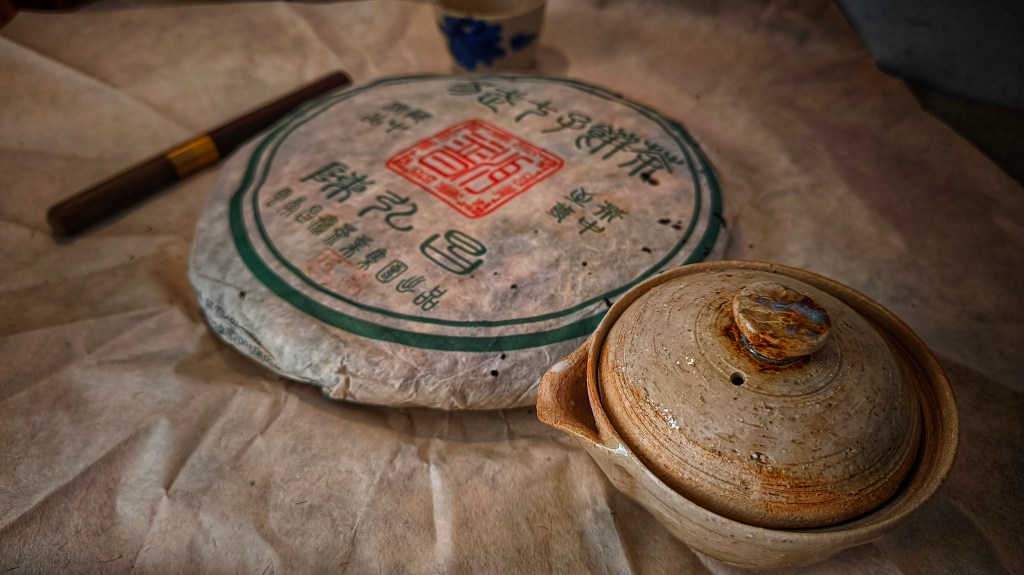
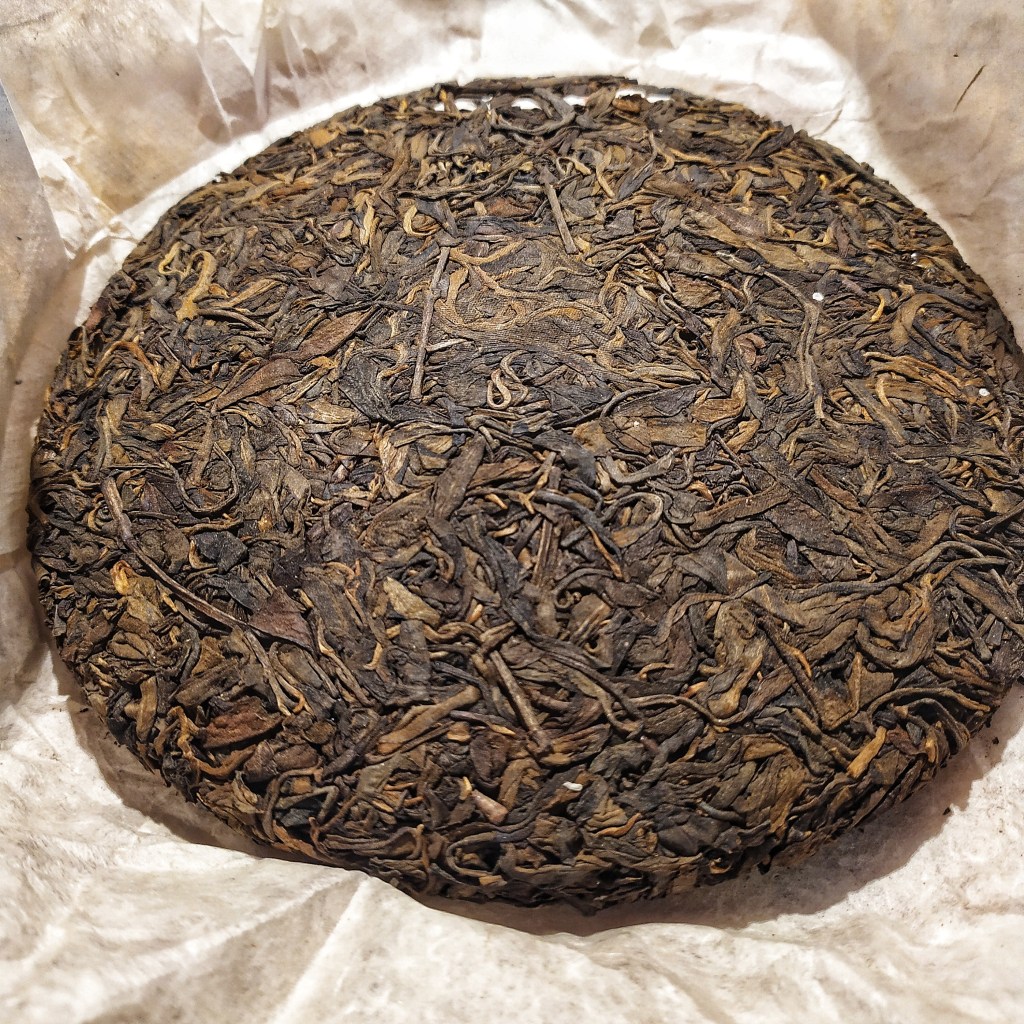
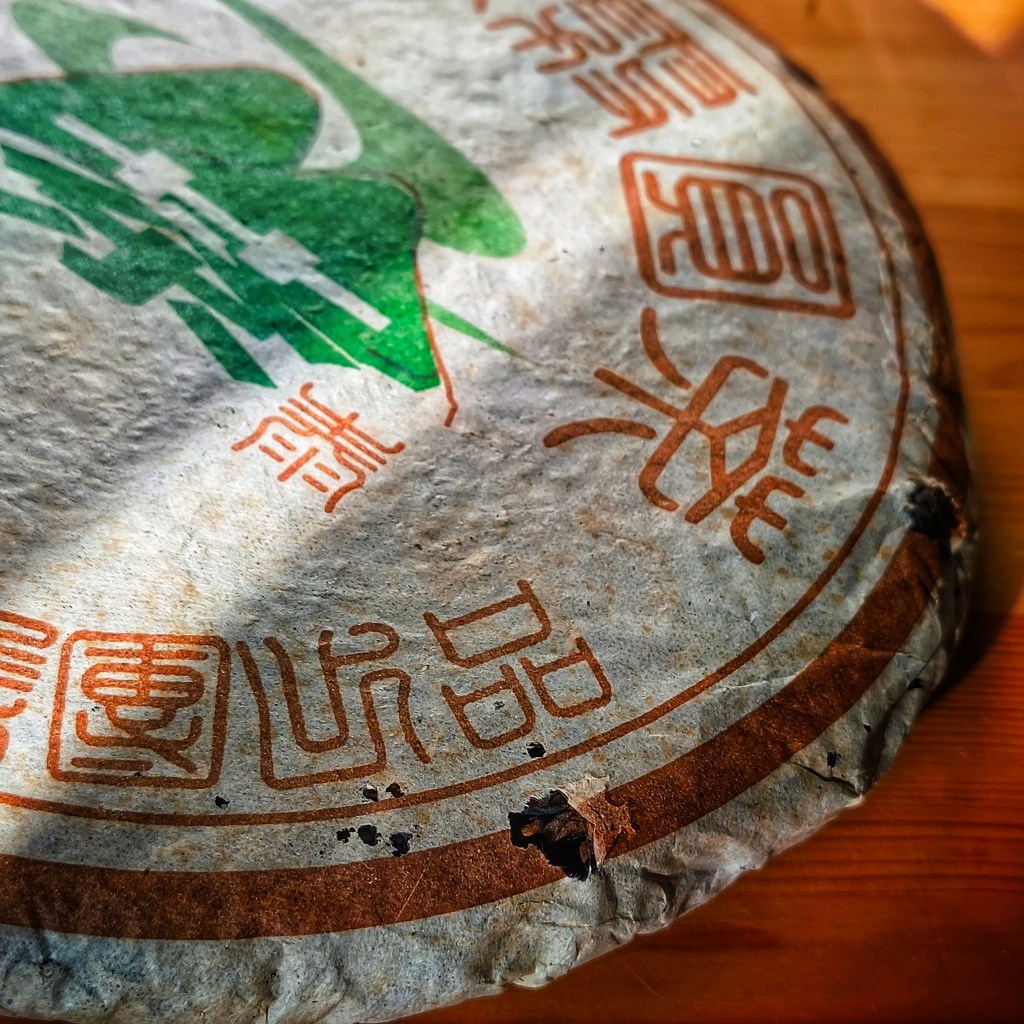
    I compared dozens of Changtai cakes each year—an obsession, really—and indeed, something had shifted, at least in trend. However, about five years ago, as I revisited that graveyard of samples I had set aside, I was stunned. The productions between 1999 and 2003 were undoubtedly remarkable, but those of 2005 and 2006 were not so far removed from their predecessors. I mean, hundreds upon hundreds of grams tasted in blind comparisons over ten years, two epochs that were supposed to be worlds apart and with an extra zero in the price tag, should have belonged to entirely different existential planes. But they weren’t, or at least not as much as public opinion, and my own mind, insisted. Production had indeed changed; however, certain elements of those iconic batches survived the onslaught of serial reproducibility, escaping the cynical, clinical gigantism of enormous, hypertrophic factories. Although these later productions underwent adaptations that created some detachment from their predecessors, cakes like the one in the photo, and others from 2005 and 2006, cannot, simply by that fact, be equated with the banality of a uniform proliferation, the child of that industrial era so often lamented.

    This supposedly inglorious decline was cemented when a course correction was made, delineating a sociological divide between tradition (what peoples craft for themselves) and folkloric reproposition (destined for mass consumption), which, though appealing, remains distant from the truth that governs the opus traditum, the craftsmanship of remote ancestry. But how much truth lies in all of this? How much tradition truly remained in Changtai after 2004?

    What shocked me most was the disparity in storage conditions among the various references, a factor that skewed the objectivity of judgment far more than any real qualitative gap. The cakes from the end of the last century through 2003 are genuinely of a high caliber, achievements that later productions can hardly aspire to match. In the 2003–2005 period, I found no absurd differences, certainly not enough to justify the price differentials from one year to the next. Often, excessively humid aging had irreparably ruined even excellent signatures—like a ’99 Yi Chang or a Mr. Wang Red Chang Tai Hao—trivializing their brilliance.

    Therefore, I believe that the environment in which these cakes have spent their lives is far more important than determining whether a 2005 Chen Hong Chang measures up to one from 2000, and that much of their economic and organoleptic value lies precisely there—in the climate, in the place in which they have dwelled—probably more than in the origin of the leaves, which counts for nothing compared to a twenty-year period spent in a humid warehouse, left to sour and reduced to nothing more than a basement squeeze.

    Moreover, finding well-preserved cakes to make such comparisons has become increasingly rare. Therefore, my modest piece of advice—if you haven’t sampled what you intend to buy beforehand—is to drink; take 2005 cakes without prejudice, provided they come from a reliable source. It is not entirely true that quality plummeted drastically after 2004; these issues emerged slightly later, and I may expound on the reasons in a subsequent article. In any case, if you are lucky, you’ll have secured a small masterpiece at a quarter of the price—one that, with high probability, isn’t a fake. If things don’t go your way, you’ll have gained a daily drink that is surely better than having burned a fortune, blindly thinking you’d closed a deal for a Romanée-Conti that, in reality, tastes like an old fisherman’s boot; or worse, a counterfeit, because the seller’s reliability wasn’t factored into the equation.

  • Echoes of Tea Lyricism Part 1: “Bay Meng Yu and The Rise and Fall of the Nannuo Shan Tea Factory”

    Echoes of Tea Lyricism Part 1: “Bay Meng Yu and The Rise and Fall of the Nannuo Shan Tea Factory”

    The Instagram story from a few days ago about Bai Meng Yu and the radical mid-century shift in the mechanization of tea production in Nannuo has gotten more attention than I thought, and I thank you so much for that. So on this chilly morning, drinking a 2003 Nannuo sheng, it seems conceivable that I would be talking to you about pu’er, about a historic change in its production. But no, or at least not really.

    This is because the factory I will talk about did not exactly produce pu’er, in the 30s there was a different concept than the modern one, not all mountains produced pu’er tea and consumed it with the same frequency. The tea produced was mainly sundried green, a sort of primordial maocha. Let’s remember that the era was still that of the ancient pu’er, few mountains managed to have a pseudo-continuous production, often interrupted by internal conflicts, and the price of a cake was extraordinarily high, while the production volume remained exceptionally low. At the time 800 cakes were a big deal and satisfied almost all of Hong Kong’s internal demand. Production was mostly attributable to private family brands where tea was sometimes just a collateral part of their farm, often focused on rice, soy, sorghum and other grains. The period is that of brands such as Jingchang Hao, Fuyuangchang Hao, Songpin Hao, Tongqing Hao and others. But what was pioneering and unprecedented on such a scale was the establishment of Nannuo’s first factory in Shi Tou Zhai.

    Bai was born Bai Liang Cheng, later nicknamed Meng Yu and Lian Fu, in 1893. He was a Muslim of Hui ethnicity and lived in Shadian before undertaking business trips to more than 20 provinces across the country in 1936 and 1937 to analyze the tea market, and finally to conduct studies in Japan and India on processing technology. Upon his return to Menghai, he was put under the spotlight by the Yunnan provincial government. It was early 1938, and the provincial institutions were determined to invest in the creation of the Yunnan Si Pu District Experimental Tea Factory, appointing Bai Meng Yu as its director. He had always been impressed by Nannuo, had a special predilection for that mountain, and when he took over the project he opened a branch there. He was among the first to understand the historical, cultural and geographical complexity of that mountain, of that place that was and would be the cradle of tea lyricism for centuries.

    Bai’s vision was not only about productive efficiency but also about building a sense of community, a sense of responsibility that transcended mere economic considerations. He persuaded local farmers to plant over 100,000 tea trees, establishing a lasting resource of socio-economic value. This initiative was not just a pioneering agricultural operation, but an act of cultural preservation and reconstitution, a pact that would bind generations, establishing deep roots both in the soil and in the spirit of the community.

    There he set up a hospital for the staff, a basketball court, housing for the workers, entertainment rooms and a building for the autonomous production of energy. What was innovative was the particular form of conservative design chosen for the construction, the modern plant was built directly on the summit, designed not to detonate any part of the mountain; the loading system and the vertical structuring of the work were reminiscent of those of the old wine presses on Etna: the fresh tea was weighed on the upper floor, dried and sent to the first floor for the rolling phase through a gravity system with trapdoors located on the work surfaces and on the floor. The final drying took place in the sun, in the shaihong style. Since each phase progressed from top to bottom, the process could be significantly accelerated and the workload per individual worker substantially reduced. At that time, the factory had fewer than 60 workers and could produce more than 20 tons of tea per day.

    The factory was officially operational in January 1941, mainly producing black tea and maocha whose leaves were sourced only from Nannuo farmers, mainly sold to Hong Kong, Myanmar, India as well as locally. In this way, it not only secured the province the precious foreign exchange it desperately needed, but also laid a solid foundation for the future mechanized production of quality tea, probably before Menghai, Dali, Fengqing, Mengku, and not only in Yunnan but also beyond the country’s borders, leaving an imprint that would echo in the global tea landscape.

    The narrative surrounding the procurement of the tea processing machinery is instead shrouded in an almost epic aura, worthy of a time when industrial progress was rarely seen in those parts. The machines are believed to have been imported from the United Kingdom, shipped by sea to Myanmar, transported by land to Jingdong and through a grueling pilgrimage of trucks and mules to their destination.

    There is, however, another version of the facts, more prosaic and less romantic, of those who think that the machinery was more likely purchased in India, in Calcutta, where Bai had been some time before and where many companies selling such equipment were based, such as Marshall, Sons & Co. and Brown & Co. but above all the Ceylon Tea Machinery Company and that of Sir William Jackson, a Scotsman whose mechanical genius had revolutionised the tea industry, who worked for his brother’s company in Assam, the Scottish Assam Tea Co. His inventions included the Excelsior, probably the first rolling machine, as well as the Victoria, Venetian and Britannia driers.

    What is truer, however, regardless of the version of the story, is the enormous human effort that made the installation of the equipment on the mountain possible. 10 carts were involved, each pulled by 3 oxen under the supervision of 15 workers to reach the top of the construction site, advancing in all conditions for 2km a day, cutting down trees, breaking rocks, building drainage systems and closing ditches. For six exhausting months the men worked tirelessly, challenging that harsh and previously inaccessible land, completing an unexpected and anachronistic work.

    But right in the middle of a major plan to modernize and expand markets, the Japanese army invaded southern Yunnan. The Burmese highway was bombed by enemy planes and traffic was paralyzed. Tea destined to Myanmar, a key hub, could no longer be transported, and teahouses and factories soon began to cease production and convert many of their plants to war production facilities. The crisis congested the entire nation and Bai decided to take an active part in the conflict. He helped build a reception center in Jinghong, organized the construction of dozens of bamboo rafts to help soldiers deployed across the border return home. Together with other officials, he trained tea factory workers, turning them into guerrilla fighters against the Japanese occupation, ensuring that each of them was armed and financing their equipment. However, the climate became even more incendiary and the economy collapsed even further towards the beginning of 1948, the Nannuo factory closed permanently and Bai Meng Yu was forced to leave Menghai, moving first to Myanmar and then to Chiang Mai, where a large community of Chinese Muslim immigrants resided, dedicating his last years to literary activity until August 1965, year of his death.

    After the founding of the People’s Republic of China, the government organized its restoration and reconstruction in 1953 and the following year it was merged with the Fohai Tea Factory (the predecessor of the Menghai Tea Factory), with which Bai had a strong rivalry at the time and whose director was Fan Hejun, another cornerstone of the tea industry during the last century. The Nannuo Factory remained under the leadership of Yang Kai Dang until 1994.

    With the reform and opening of markets, tea production and sales were liberalized. Private tea factories emerged, while state-owned ones struggled to keep up. By the early 2000s, the Nannuo Factory was gradually ceasing production amidst the turbulence of an industry undergoing profound and unimaginable changes at an unprecedented speed. A glorious era that had paved the way for modern tea was now fading.

  • A cup that smells like an orchard next to a creek. TTdC Sanmai 2013 sheng pu from hundred-year-old trees

    A cup that smells like an orchard next to a creek. TTdC Sanmai 2013 sheng pu from hundred-year-old trees

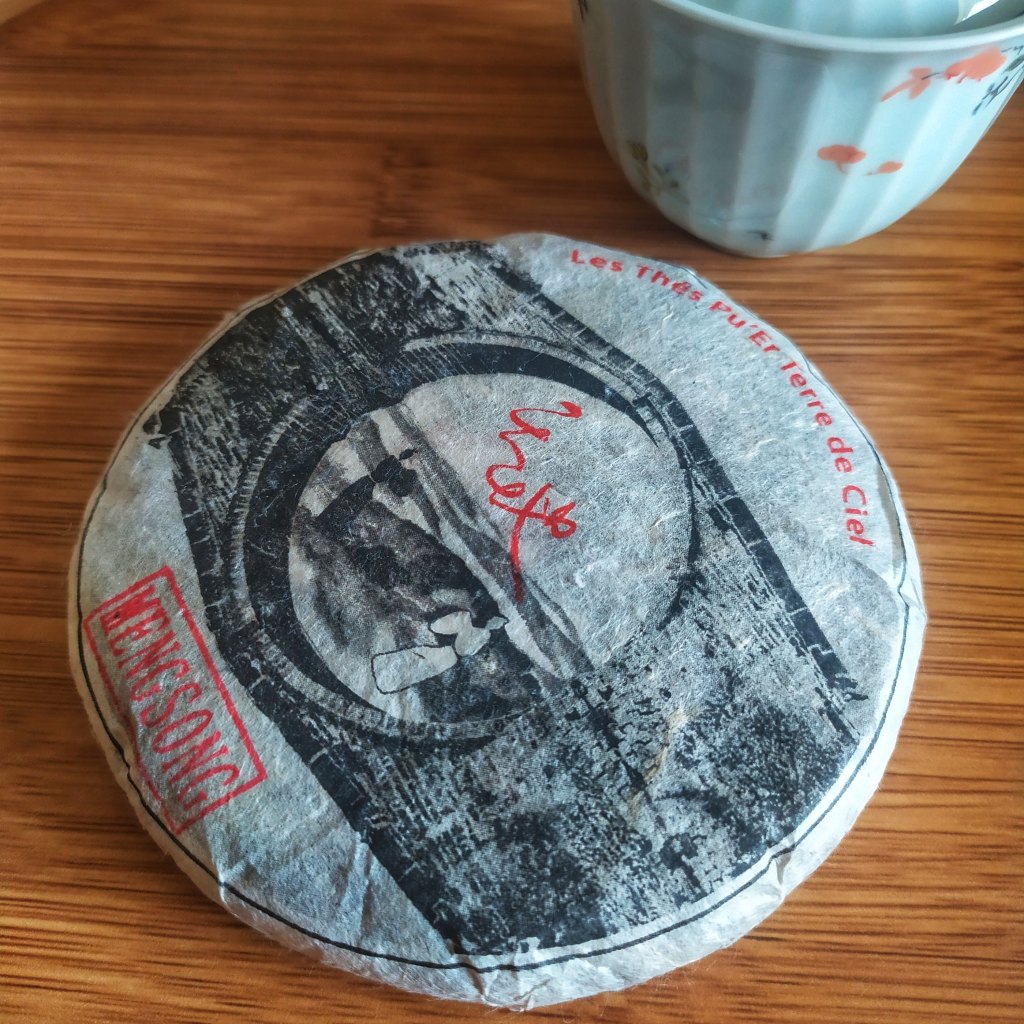
    The sheng pu of Thès Terre de Ciel is the reflection of an extraordinary terroir such as that of Sanmai, a village that follows the limelight of Mengsong teas, preserving its pure fruity appearance and sugary touch and at the same time sheltered from oracular exaltation and censorship which brought many teas from these areas at now crazy prices.

    Sanmai pu’er are nostalgic stimulants, a perpetual conversation with the hippocampus like opening an album of memories on your lap. This 2013, from old trees at 1600 meters above sea level, has the traits of someone who brings with him the first charms of the time while retaining that enlivening and exuberant youthful verve.

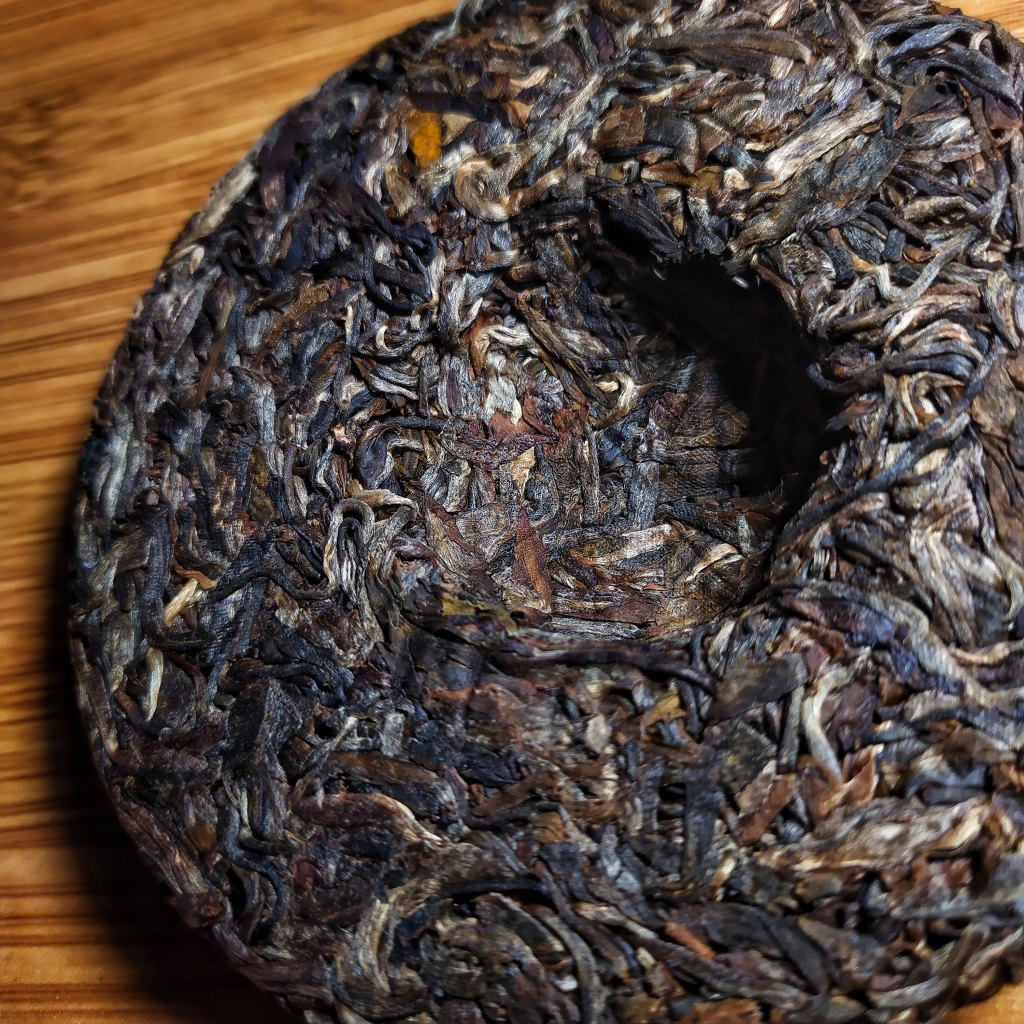
    The color of the liqueur is amber, the hints of the wet leaves echo peach jelly, dried plums, yellow rock sugar and custard cream. Its olfactory fervor is an unfolding of different layers of complexity, a swing of evolved notes and other more naive and fresh ones.
    The spectrum then turns to naturalism, with olfactory memories of pickled bamboo, of mountain flowers up to the progression of reminiscence first of undergrowth, then minerals and iodines, like an orchard next to a creek, enjoying dried tropical fruit and Moroccan biscuits.

    The aromatic approach in the mouth is that of a good, true pu’er, without excesses of fame or rhetoric. On the palate it is sweet and accommodating, with a practically absent bitterness and astringency. The sip is enveloping, of medium thickness, the sweetness of dark sugar and peach cream is integrated and it speeds it up, the note of pomelo zest is subservient to a set of bakery ad fruity aromas that recall a fruit tart. Excellent persistence of a finish with a fascinating floral and wild apple weaving.

  • Sanmai, the village in Mengsong where time seems to have stopped

    Sanmai, the village in Mengsong where time seems to have stopped

    Sanmai has gained more and more attention from pu’er enthusiasts in recent years, following the growing interest in the forests of Naka and the Mengsong area.

    It is surrounded by some of the most famous mountains in Menghai county, about an hour north of Banpo zhai in the Nannuo area, and an hour and a half south of Huazhuliangzi, reachable passing through the villages of Bameng and Baotang. The forests alternate with the taidicha like an ecological clash between human and nature,the primitive and forest scenarios intensify as you enter the trees towards the North, on the road to Sanmai Laozhai. Once in Sanmai Shangzhai there are only a few kilometers to walk towards the ancient gardens where the natural severity and the inexorability of the woods continues up to the gates of Nanben Laozhai.

    Some Mengsong areas seem to open up towards the immense, they consecrate themselves in that “Open” which for Heidegger was the condition in which things, places, people can appear for what they are and not for their numerical value. From the ancient gardens of Sanmai, the valley sloping down to Jinghong, it seems like a mirage that would have elicited a surprised smile, despite his countless trips, even at Frederic Edwin Church.

    The lichens and saprophytic plants embrace the shrubs in those slopes born from an insane verticalism, which forced the few pickers who bet part of their existence on tea to remain more anchored to the anxieties of concreteness, where the violet of their cheeks was the only chromatic hint among the shades of that primordial greenery.

    Beyond the narrow and steep road, the rugged gorges and the road surface in which every ravine seems an existential leap, the Hani have found a home for centuries, what was previously a settlement became a security hub in 1934 under the name of Nanben Hebao, for then seeing his own name, Sanmai, only in 1956. Caravans often interrupted their journey here, the rains broke in for days, the oxen slipping caused them to lose the equipment entrusted to them and hence the legend of the name Sanmai, or the place where the tools were tied forming a trellis in the saddle of the ox.

    In the ancient gardens tea trees are scattered, some tall yet young seem to converse with the conical bodies of Moso bamboo which often makes this forest look like the ecosystem of Huazhuliangzi.
    Here, on the contrary, the bamboo was planted artificially, when tea had not yet reached its current economic importance, as a cash crop for building and textile purposes, and to restore the excessive soil reclamation which led to extremely important erosive phenomena. However, now its removal and reconversion of the land is a problem that inhabitants are facing with difficulty.

    The descendants of those exiled souls who bet on the tea of Mengsong and Sanmai now reap the fruit of a legacy that expands beyond its disciplinary limits, to the point of involving the destiny of their own territory.

    The rural scenes give value to the time that has passed, the villages develop on the open ridges of the mountains,where the approximately 500 families, mainly Hani, still live mainly thanks to livestock and farming. During the Gatangpa festival you can smell the scent of glutinous rice cakes in the alleys, people walk along the beaten path to reach the place of offerings, and then gather with their families drinking tea and rice wine, even some hens seem busy running out of the old wooden sheds; the black of the ethnic clothes, adorned with silver and silk tassels and the colorful bandanas with geometric motifs offer the only chromatic contrast from the red of the clay soil, as if their smiles were in that instant the only color detail on a black and white background.

    Despite the growing awareness of the value of their tea, it seems that the jianghu forged by conflicts of personality and self-affirmation has not arrived here, their leaves still manage to offer an experience saturated with meaning, freed from economic conflicts and apocryphal slogans; they develop an extended atmosphere in which the link with a past emerges, with those identities, of those perceptions beyond time, which have the ability to bring the aesthetic experience of this village back to the dimension of the present in a different, imperceptible and at the same time sensitive in its liquid revelation.

  • A forest out of this world, shaped by a Caravaggesque hand. This is Paliang

    A forest out of this world, shaped by a Caravaggesque hand. This is Paliang

    Passing the muddy paths close to Bulang, with those mountains behind you that seem to have been born from the virtuosity of a Caravaggesque hand, shaped by tectonic inclemency, by geological tension, the sun shines burning over the tropical karst sinkholes, a place where nature and men weave millenary relationships, meeting in the most inaccessible forest and in the architectural remains of the imperial era.

    The light filters through the dense forest, radiating the tea trees that look like illuminated actors in a naturalistic work twisted in lignified gestures, while the boys in the village load the trucks with cassava and laughter intones a background melody. Here stands the ancient village of Paliang, an out of this world place at about 1850 meters above sea level, surrounded by primitive works, where popular customs are preserved in their amnioticism.

    All this is defined by leaves that show in an objective elegance what is an empathetic initiation to Bulang teas. The infusions reveal a more restrained astringency, a character devoid of that fatherly austerity represented by the strong bitterness of some teas that are encountered a few tens of miles away.

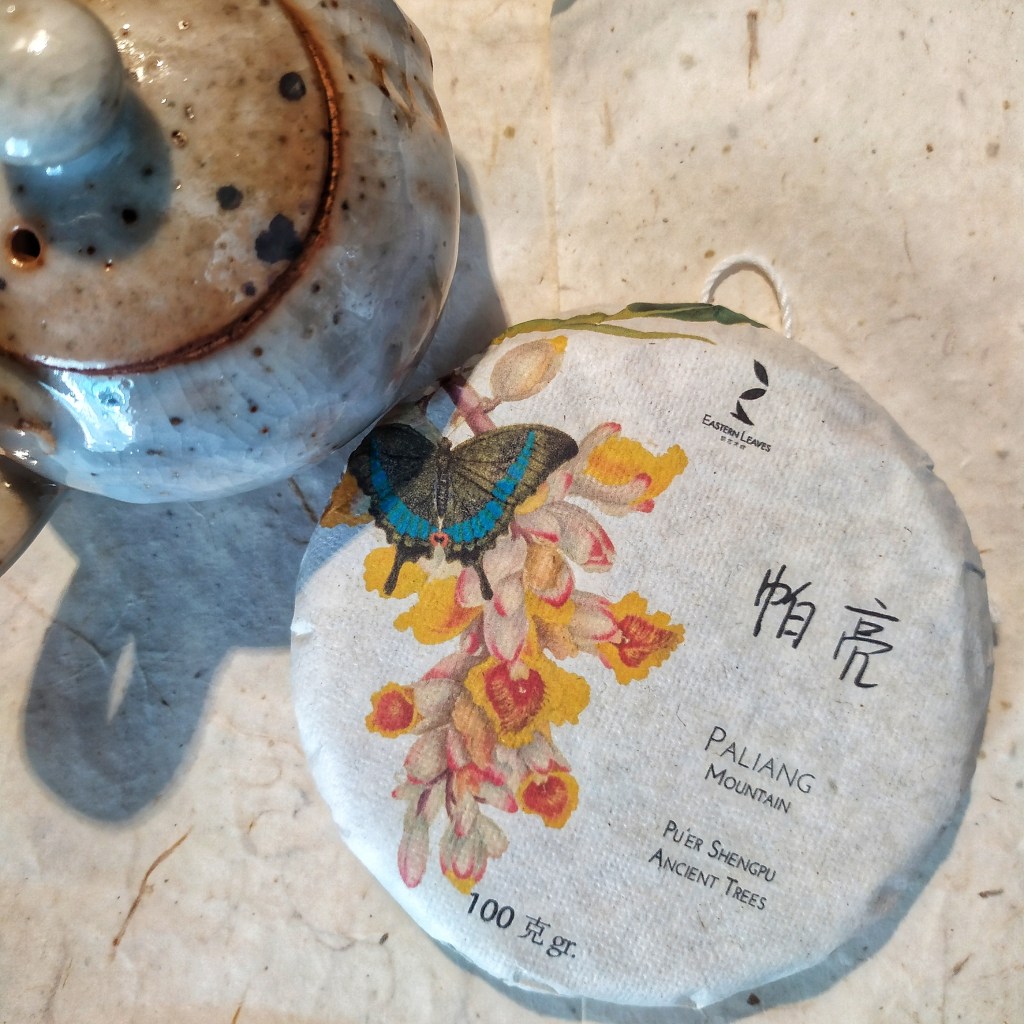
    This sheng pu comes from material harvested in 2021 in Paliang. The scents of the leaves are like taking a look at an ancestral view, when wet they recall charcoal-cooked tropical fruit, the wild flowers bring back memories of an excursion on the bank of a wooded river, surrounded by deep forest moss, pervaded by the smell of wet rock. Almost primitive and mineral scents are accompanied by those of the juiciness of a basket of ripe fruit, there are notes of toasted dried fruit and slight hints of ancient leather.

    In the mouth it flaunts a smooth texture, it seems wrapped in silk drapes, the bitterness is contained although present, tempered by the soft and deep echoes of a sweetness resulting from the juiciness of a ripe peach. The sip recalls the sensations of a good Montrachet, the palate is soon refreshed by a peculiar minerality and eagerly seeking the next contact with the cup.

  • An emotional tea along Xiangling Highway. Mr Quen Cun An and his early 2000’s Manzhuan pu’er

    An emotional tea along Xiangling Highway. Mr Quen Cun An and his early 2000’s Manzhuan pu’er

    Along the Xianglun Highway, the entrances to the forest alternate with those of the taidicha, a single main road connects the village of Manzhuang to that of Manlin. The primeval essence of the tropical forest can be seen from the few patches of bare earth left; the age, mineralogy and extensive leaching of acrisol, which have led to low levels of plant nutrients, counteract the silt-clay undertones of the iron- and aluminum-rich ferrarsol in which the camellia has found its home.

    In the teahouses you drink the liquid consequence of a territory and its time, of a history of sacrifices and the search for the truest self-assertion. They become a place to find a family, a group or a simple shelter where one can abstract oneself from taxes or from any contradiction of contingencies, where every soul, even if tacit, does not wander alone, but together with other worn out and thirsty souls.

    Mr. Quen’s Manzhuan sheng pu’er expresses the charm of the lived, it is the example of those teas that seem to simplify what is most hidden and arcane and complicate what is simpler, making a set of organoleptic notes a complex symphony and a vivid image.

    The liqueur has a reddish color with orange reflections, reminiscent of the nuances of a tawny port. The scents of the wet leaves enriched with jinhua bring back memories of raw and primitive landscapes as Bruegel the Elder would have imagined them, with notes of damp earth, dried mushrooms, undergrowth, leading to a wood cabin under the rain, with the smell of aged mahogany, old books and a bouquet of faded flowers. Light balsamic tones take over in the background, together with those of burnt wood, laurel, dried plums, piloto tobacco, black pepper and dried longan.

    The gloomy evening atmosphere becomes more vivid with the appearance of notes of leather, cognac and typical hints of aging in oak barrels.
    The body is medium thick, the sip has notes of walnut, dried plums and aromatic herbs which are the prelude to the nuances of leather, old wood, cinchona, dried citrus peel and filter coffee.

    It is a sheng of great balance and sensory complexity, the bitterness is now perfectly integrated and not very perceptible as is the astringency, excellent huigan and remarkable persistence.
    Material from Ba Zhong Zhai village, Manzhuan area, family garden of Quen Cun An.

  • As long as the root is still there, everything is still there. A few words about Manzhuan

    As long as the root is still there, everything is still there. A few words about Manzhuan

    “只要根还在,一切都还在”
    Before the advent of a group of Taiwanese tea explorers in 1994, Manzhuan was a heavily rural area, dominated by vegetation surrounding classical Han architecture. Residents of Manzhuang, Manlin and Manqian were still recovering from the war that decimated many families, the losses due to the famine and class sacrifices of the Maoist era, especially between the 50s and 70s, brought the area of Manzhuang to count less than a hundred people, the sale of tea was almost impossible and agriculture was not even enough for self-sustaining.

    Social regimentation had devastated the existence of a place, disfigured the quiet by imposing an artificial order irreconcilable to it. But history soon revealed a whole other future, and from the mid 70s onwards the production and sale of tea was resumed, many centuries-old trees were pruned to increase production and answer an ever-increasing demand. This happened until the early 2000s, when the effects of the Taiwanese expedition and the explosion of the pu’er market made sure to return to a policy of conservation and preservation of their land, reliving their past.
    As long as the root is still there, everything is still there “只要根还在,一切都还在”.

    Manzhuang is one of those few remaining places that detract from humanity the superficial, in which between man and earth there is not a mere utilitarian link as between an animal and a drinking trough, but rather existential as the one between the world and God. It is here that trees distill the air full of herbs and wild fruits and man becomes able to transform it into the liquid painting of a land that still resists modernization, taking root in its primordial essence.

    Drinking Manzhuan pu’er like Mr. Quen’s is like letting a sip of reconstruction run down your throat, giving you the keys to a hard-earned identity. They are teas that allow to go beyond the material nature of the object, a liquid synthesis of the historical complexity of a region that has been the cradle of tea lyricism and incubator of a natural heritage for more than a thousand years.

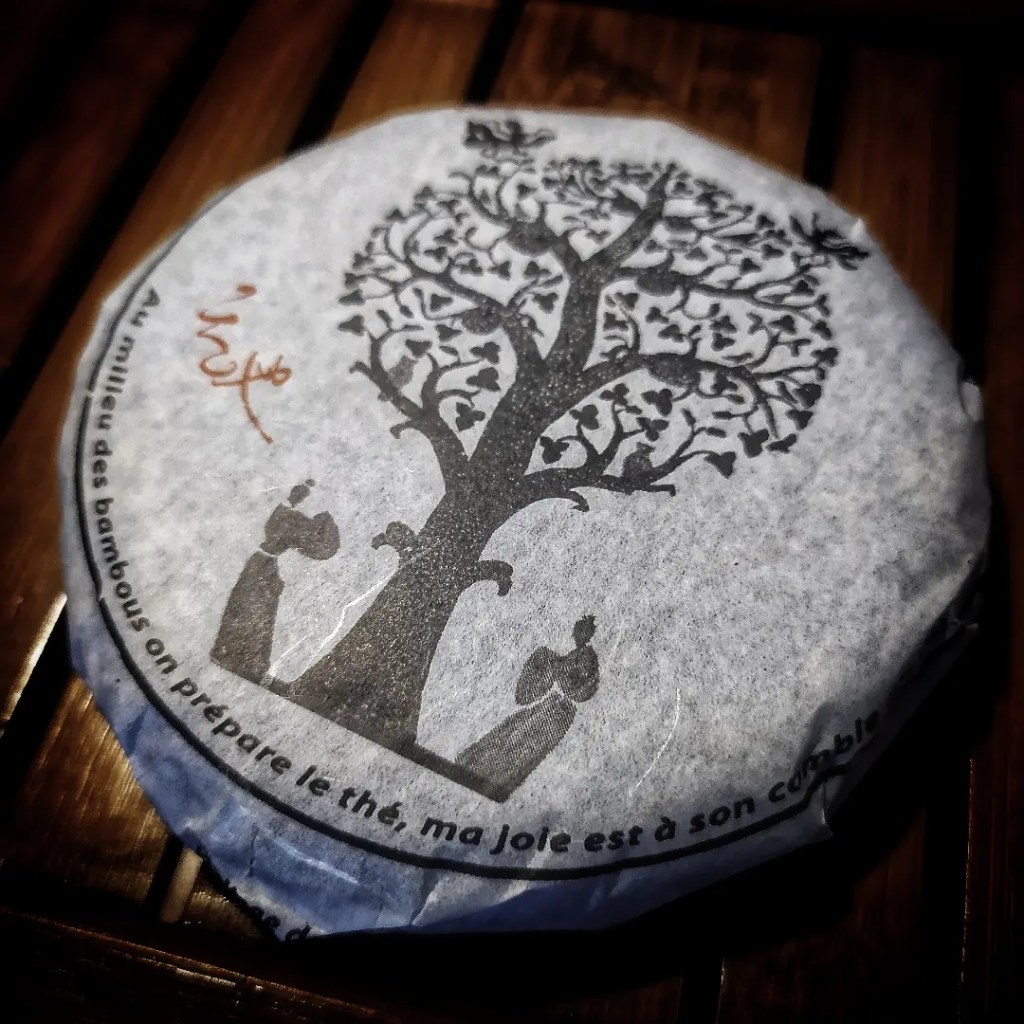
    P.S. the cake in the photo, although produced in Yibang, bears the symbol and style of the productions of Mr. Quen Cun An’s family (Quanjihao tea factory), who manage gardens throughout the Six Mountains, including Manzhuan.

  • When Mahei was called Lù biān. Journey through the history of the village in the company of a 2020 Mahei dashu sheng pu

    When Mahei was called Lù biān. Journey through the history of the village in the company of a 2020 Mahei dashu sheng pu

    Travel 25 kilometers west of Guafengzhai, you will arrive in Mahei. This was the first stage of the ancient tea road on the journey from Laos to China. It is said that one of the original names of Mahei 麻 黑 was “路 边” Lù biān, “Roadside”, because Maheizhai is near the road leading to Laos. In the past, one could start from Laos towards Yiwu and settle the night at the “roadside”, the old Mahei.

    Although it is one of the areas that dictates the highest price in Yiwu, only in recent years has there been an incessant attention to the restoration of natural conditions with low interventionism in the tea forests, remedying the tough pruning approach of the 80s-90s in order to increase the yield of ancient trees. Many trees still exceed 300 years but today the mixed and indistinct collection of gushu, young trees and ancient pruned trees is very common and have a clear organoleptic distinction is very complicated. Old trees Mahei pu is much sought after and expensive and its taste embodies part of the soul of Yiwu.

    Roughly speaking, it can be said that Mahei tea from ancient wild trees has a softer sip, with a greater opening sweetness and a bitterness that acts as a splendid counterweight. The astringency orchestrates a balanced, lingering and memorable melody, the huigan is intense, powerful and comes quickly, the body is silky and refreshing in which the typical honeyed character is enriched by a complexity unrecoverable in some non-wild or shengtai material.

    This sheng pu by Thés terre de ciel comes from dashu trees, from material collected in the spring of 2020. In the wet leaves vegetal and wild hints of leather are combined with notes of honey, flowers and caramel, woody fragrances like those of raw mushrooms are the prelude to a sweet opera adorned with a bouquet of aromatic herbs, in which the background smells of petricore and wet vegetation.

    The sip has an excellent structure, the pleasant and indulgent bitterness typical of Mahei does not overshadow or obscure the other sensations but instead enhances the tea by contrasting with sweetness and a graceful astringency. The huigan is immediate, minerality makes the mouth water refreshing the palate in which progressively appear aromas of myrtle leaf, dried and candied apple, mango and mulberry. A good roundness accompanied by notes of acacia honey and manuka continue in a very lingering finish at the end of an antithetical taste experience, elegant and wild at the same time, still enlivened by a freshness and a vegetal nuance that herald its evolutionary intent.