
Hiking in Fengqing it is impossible not to arrive at what is perhaps the oldest tea tree in the world after drinking liters of that Fengqing 58 which is served in every single restaurant in the prefecture. But climbing higher up, towards 2000 meters beyond the taidicha and rice fields that continue northwards, near the villages of Chajia and Hedicun, you arrive at Xiangzhuqing, a small village at the foot of the peak with a fair amount of ancient trees around the village.
The air is cleaner, more humid, the heat stops in the Fengqing lowland and the rains fall timidly on the light sandy-ferrous soils of the mountain.
The extensive drainage, the scarcity of nutrients towards the surface layer creates a clear distinction with Mengku trees, environment and in the concentration of biocomponents in tea leaves.
Although it is assumed to be the same variety, Xiangzhuqing pu’er are lighter, floral and with almost no astringency and bitterness. They essentially seem like the less hypochondriac counterpart of some Yiwu teas on the Gaoshan side.
Encountering this 2019 gushu sheng from Mr. Li Yu Lu is a direct response to the arrhythmic advancement of Fengqing pu’er onto the market; fine, delicate teas that showcase Lincang in a new, renewed light.
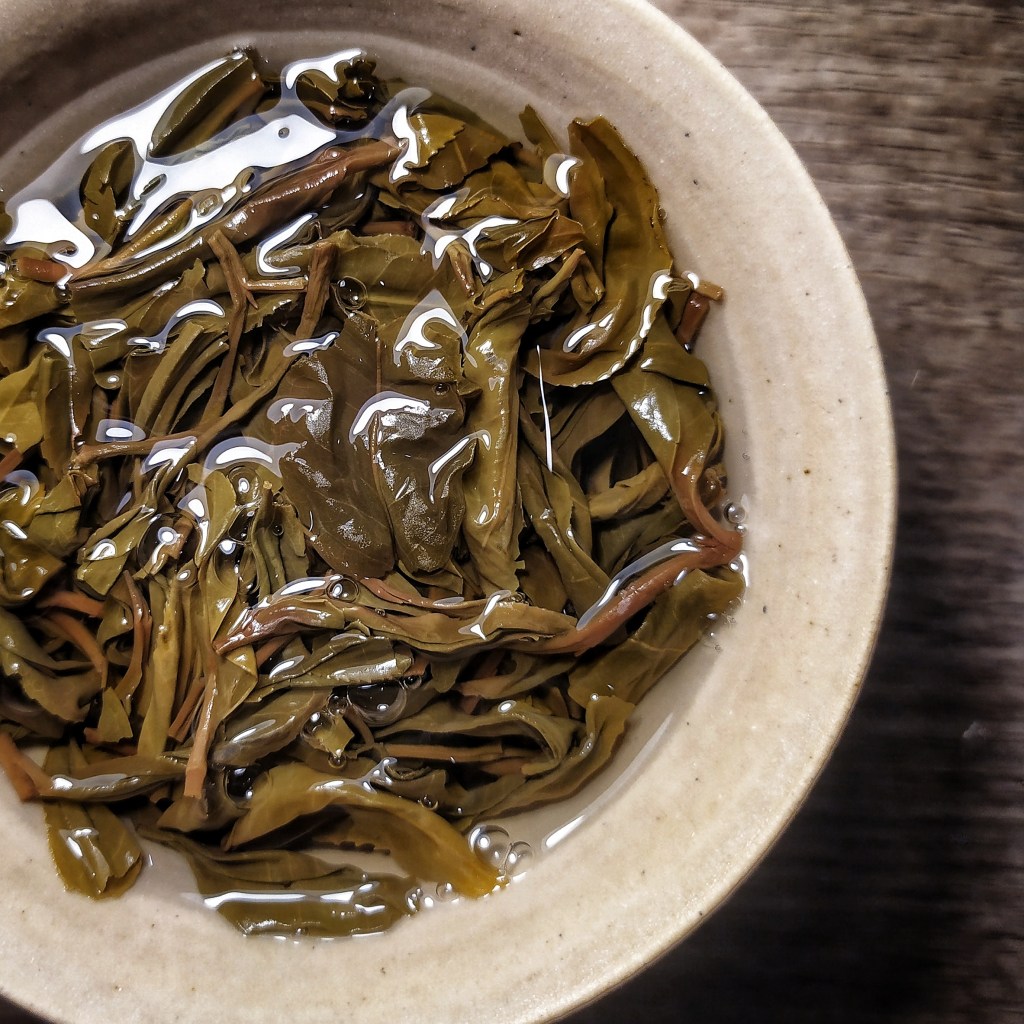
The wet leaves seem to revive memories of a hot summer, with notes of persimmon, papaya, orange peel, in which balsamic tones and nuances of peach toffee candy, green melon, hay and dried apple alternate composedly. They are counterbalanced by floral hints of osmanthus, elderberry and scents of a walk in a freshly mown lavender field. More sharp fragrances emerge later such as rubber tree, juniper and black pepper.
The sip is at times monotonous but enlivened by a pleasant mineral verve, it is sugary, medium-bodied with a typical absence of astringency and bitterness, ending on juicy aromas of persimmon, mango jam and elderberry.
 Wild Harvested
Leave a comment