
I don’t think there can be any tea, any time, any sip without the people who bring with them the truth of a territory. One of the first tea maker I met was from Bameng, he worked for a factory in Mengsong and was nicknamed 小毛虫 “little caterpillar”. This name was given to him by his parents, when he used to sneak out of the woven wooden basket to observe spiders and insects while his family clung to the ancient trees for the harvest.
Every time he picked up those yellow caterpillars he went back towards his mother’s legs crying, with his face full of mud and his hands swollen from the stinging substance of the insect. He had an immoderate passion for those caterpillars and an even greater stubbornness.
His family’s teas were special, with that disarming power right in the mouth, his laughter when talking about the times now spent in his village were even more energetic.
His nickname also referred to the ability of those insects to transform, as well as the growth that his parents hoped for him. He incessantly emphasized how his village had changed, how the people of that place had changed and with them their landscape. We talked about how tea had been an alibi for both dreams and reality, a substance of conversion capable of overturning eras and conditions, of extracting from things its opposite.
We sipped pu’er talking about how the tea inherited its alchemical nature, as a transmutative substance and as a creator ex nihilo. The noise of the forest and of the harvest would always be the backdrop to his life and tea would always accompany him until the end of the sunset, until the last dance of the chrysalises.
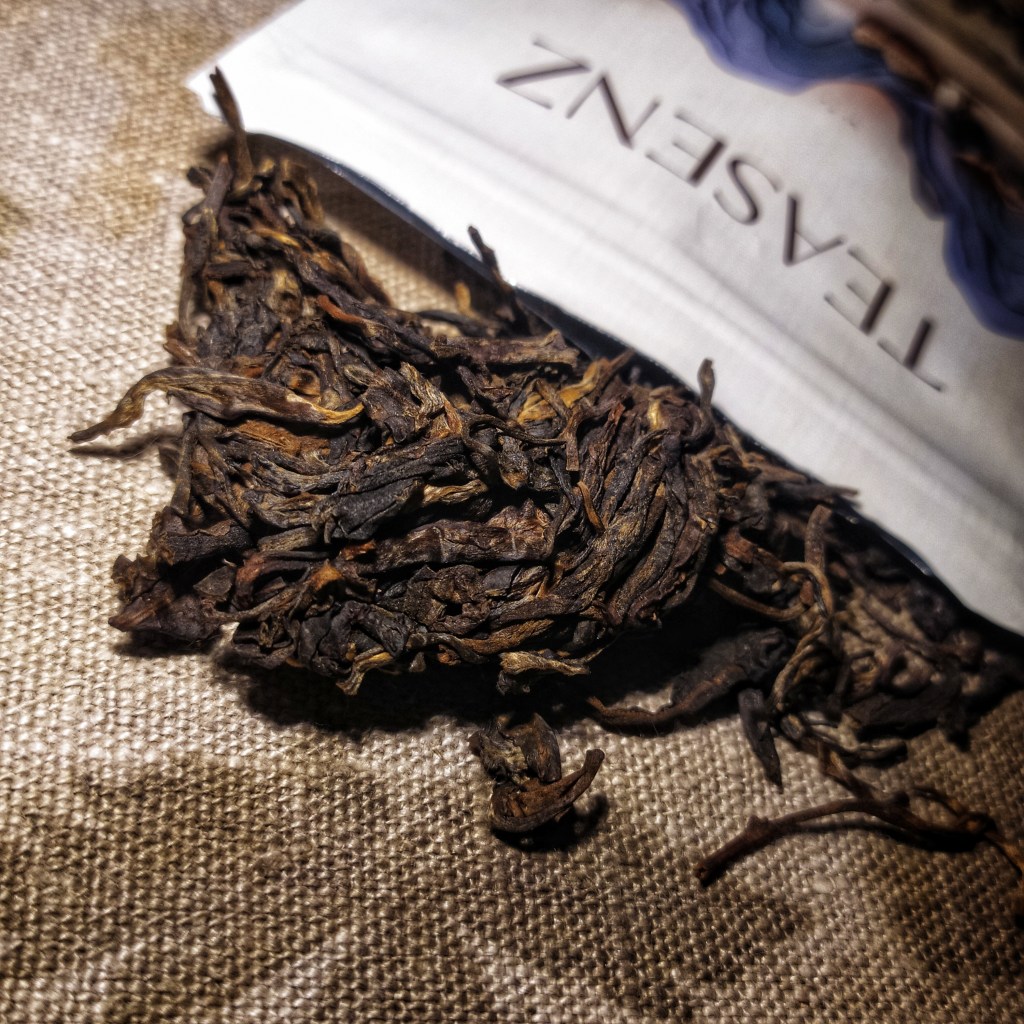
This 2007 Mengsong Gushu by Teasenz reminds me of those chats, those powerful, intense and penetrating pu’er. The scent of wet leaves is reminiscent of leather boots, sundried plum, flambéed citrus peel together with the sensation of dried rose petals in the middle of an ancient book. Balsamic notes then appear, of turnips cooked over charcoal and in the background light nuances of an open tin of latakia tobacco placed on an old, slightly damp fir furniture.
The sip is silky with a medium persistence and an excellent sweetness accompanied by a typical salty flavor that recalls a pleasant mineral sensation of rock. A good huigan is surrounded by notes of roots, rhododendron honey, rose hips, plum and leather, adorned with an orchestra of citrus notes, balsamic candy and light traces of cardamom.
 Wild Harvested
Leave a comment