
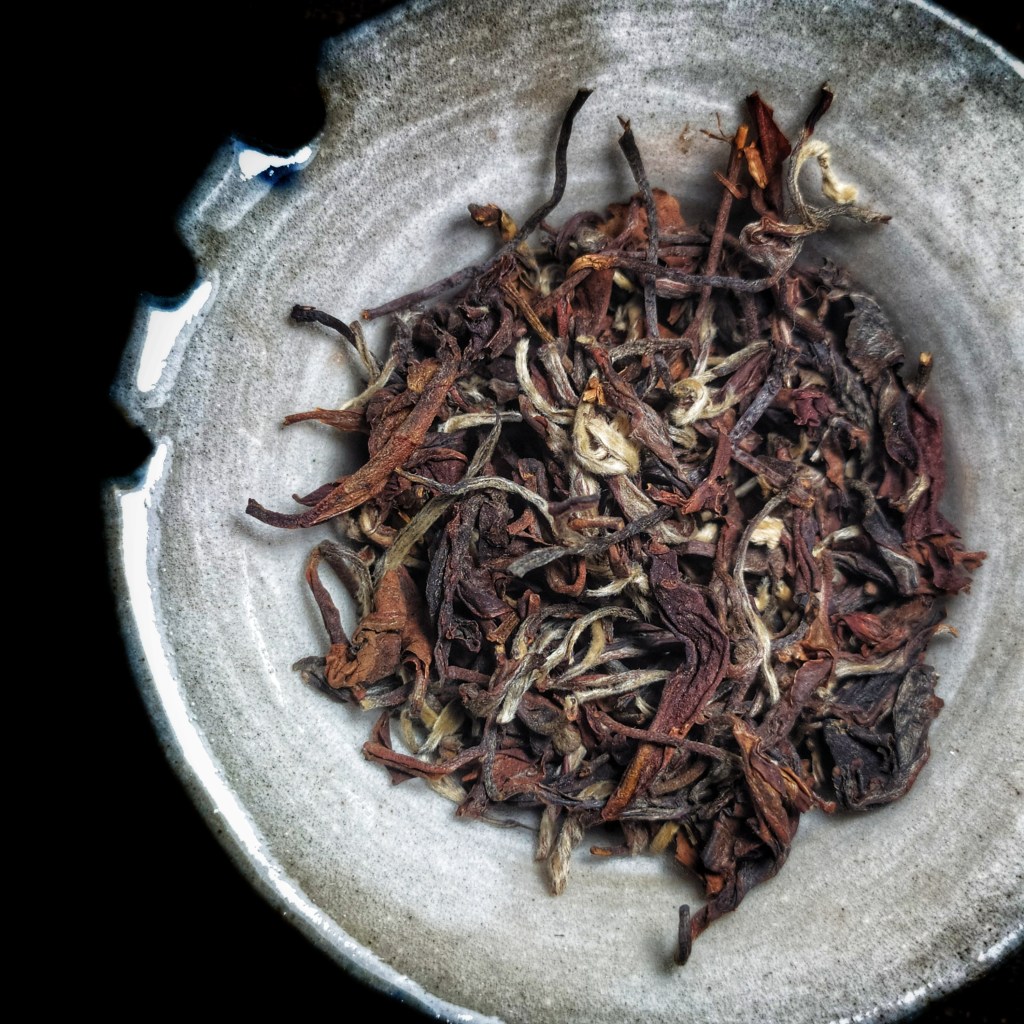
Ennui, boredom, the name of this tea, the strange sensation that overwhelms you when nothing happens, when everything forces you to remain still, like an old wreck of a bus stopped in the middle of nowhere, and you there, with an empty gaze, with a half-extinguished cigarette between your fingers, without knowing where you will go or what you will do. Boredom is the slow rain that beats on the windshield while you wait for a level crossing to close, waiting for a train that will never pass.
It is with you wherever you go, like an old battered suitcase that you can’t forget anywhere. According to Heidegger and Schopenhauer, boredom is a sign of a more significant absence, that of an authentic connection with reality, the feeling associated with the unsatisfiability of worldly things. But boredom can be seen as a crisis of meaning, which opens up new possibilities of existence, it makes you feel as if time is a trap, a kind of dead end, but things like culture, rituals and traditions provide an antidote through their ability to live time and experience through values that transcend the individual.
Teas like Ennui are authentic expressions of civilization, they not only entertain but give shape to a moment. They are those true teas, shaped by high altitudes, by the hard, merciless soil, those peaks that teach you freedom and coexistence with emptiness.
Its leaves enclose that sense of limit, of transcendence, where boredom has no space. Between the notes of chestnut honey, peach and turmeric, accords of tuberose and Bulgarian rose, jasmine and ylang ylang make their way, accompanied by the scents of birch wood and face powder as in an overlapping of works by Rachael McCampbell exhibited in an old venetian coquetry.
And if the antidote to boredom is culture and tradition, tea, from this perspective, is a sort of Aristotelian mimesis: it imitates and returns, in the form of a sensitive experience, the nature and culture of the place from which it comes. And so in its soft and sweet sip, aromas of grapes, moss, spices and rose weave the memory of a glass of moscato passito in the middle of summer, consecrating a tea of incredible persistence.
 Wild Harvested
Leave a comment