
Well, you see, when I first started drinking tea I never thought it would become such an important part of my life. I suppose no one ever expects it at the beginning, but I certainly didn’t imagine that something with such a high percentage of water could bring relief to my cirrhotic, worn-out soul, born of a guttural Tom Waits scream and stitched onto me by a drunk tailor.
It’s not something I dwell on very often. My life, like most lives I know, leaves little room for sustained introspection or ascetic reveries, the sort where you retrace your existence with your bare collarbones pressed into cold marble. The last few times I found myself flat on my back, it certainly wasn’t in pursuit of insight. If anything, with me sprawled out like that, the room seemed to shed what little claim it had to respectability.
Every so often, though, something breaks through the ambient noise, something that jump-starts circulation in my tingling brain and brings me back to the keyboard while I’m drinking something unexpectedly pleasurable, wearing that faint, unmistakable smile of post-coital satisfaction, the kind you hope no one is paying close attention to.
Tea, for me, isn’t meditation. It’s maintenance. A necessary distinction, especially once you’ve stopped believing in revelations and settled instead for remaining operational. And this isn’t simply tea. It’s the return of the impulse to move my hands across a keyboard, a reminder of where everything began, when writing hadn’t yet adopted the tone of therapy and was merely a byproduct of staying awake longer than everyone else.
It’s a reminder of my therapist’s office, Bauhaus in style, where amid excesses of glassy functionalism and metallic geometries, the photographs of Jung, her bony hands protruding from the cuffs of her usual wool sweater, beyond the teak surface of that Danish desk, I can feel entitled to sink into my moment, which, in that case, meant the cognac-leather backrest of her Wassily Chair B3. Marcel Breuer did just as fine a job with that chair for my mental well-being. I liked that room; it was furnished as if someone had decided that psychologically misaligned, too, deserved a proper frame, not just polypropylene crap, particleboard, and poly-laminate assembled in some windowless warehouse while singing the praises of aesthetic surrender.
In its own way, Serenade does the same thing.
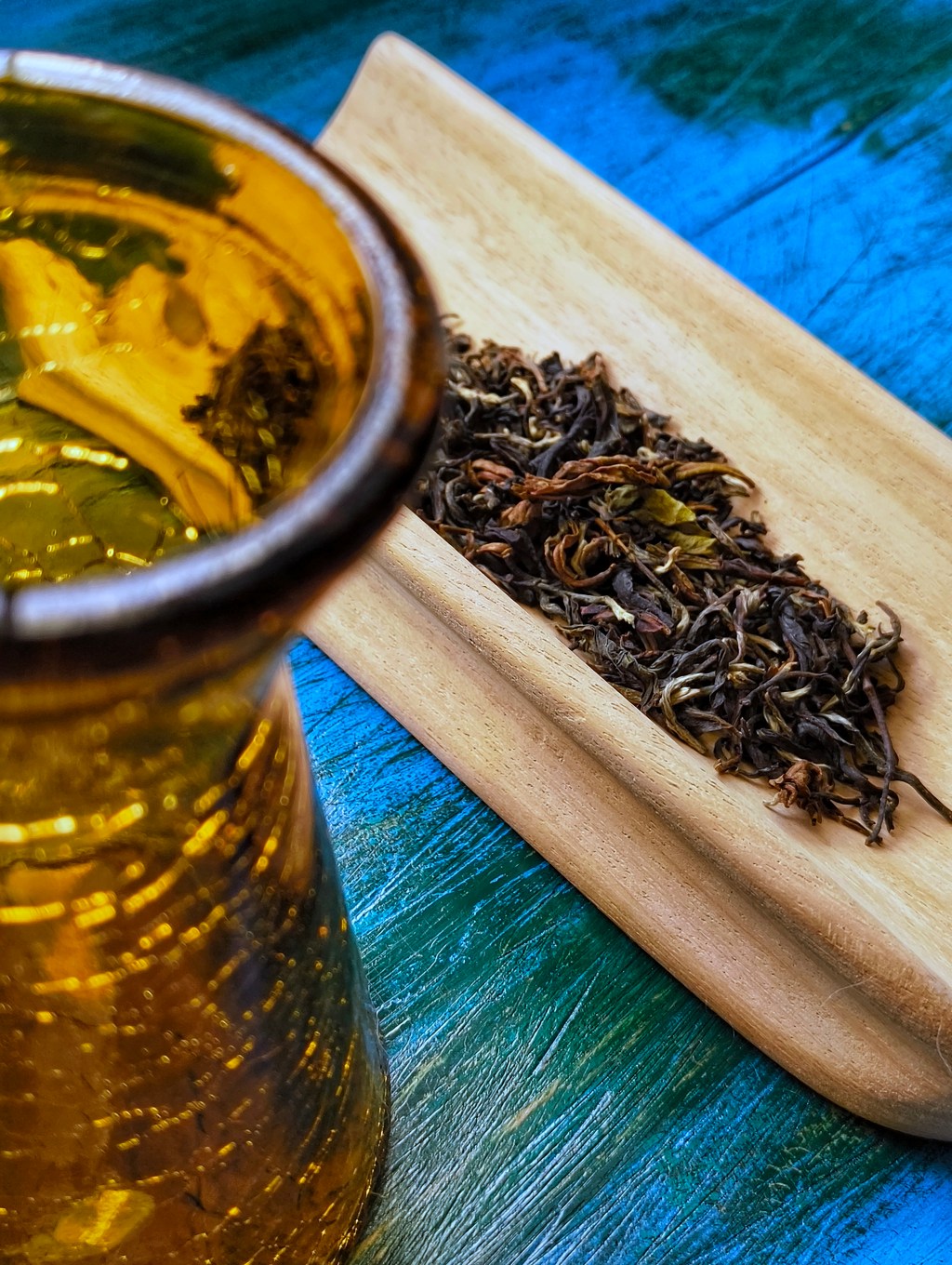
It’s a frosted batch, from the autumn of 2024 if memory serves, a sweet, sugared liquid that never quite tips into cloying. Aromas of saffron, powder, antique rose. As I inhale the damp leaves, I’m taken back to my mother’s bottle of Baccarat Rouge, two-thirds empty, sitting on her nightstand, the kind of object that disappears alongside the unspoken understanding that something is slowly, quietly ending.
On the palate, those Kurkdjian-adjacent notes return, flanked by hints of jam and honey, followed by an aromatic excess of sandalwood and musk, a depth that arrives late and lingers with the elastic persistence of its own sweet afterimage. It’s a tea that allows anyone access to ecstasy without going into debt: a quietly subversive form of wealth, a luxury that doesn’t improve your standing in the world, but makes it temporarily more inhabitable.
 Wild Harvested
Leave a comment