Category: Articles

  • A few words about Giàng Pằng, the village above the clouds, brewing a reviving 2023 spring sheng pu’er

    A few words about Giàng Pằng, the village above the clouds, brewing a reviving 2023 spring sheng pu’er

    You could hear the army advancing among the ancient tea trees, the march on the wet ground through those wooden body embraced by moss interrupted the solemn silence, the metallic noises of the pots and pans being brought along and that of the rifle shells dictated the rhythm of a macabre dance.
    The H’Mông children looked at the soldiers, seeing every last remnant of soul in their eyes, acts of tenderness could still be observed on those difficult paths where the yellow grass interrupted the recurring reddish texture of the soaked clay, and so on for kilometers up to Phình Hồ accompanied by the abiding humidity that penetrated the bones and the scent of cinnamon trees mixed with that of the grease of damp weapons, and finally to Giàng Pằng.

    This must be what Tô Hoài saw on his travels to Sùng Đô, Giàng Pằng, a village above the clouds whose houses at night, lit by fire, appeared to him like the fervent eyes of a young revolutionary woman, and when the fog vanished was like lifting the thin veil that covered her countenance.

    Surrounded around the fire, the crackling of the bonfires reverberates on the branches above, producing a melody consecrating images and sounds of another world; the gaze turned to the forest of those who produce tea here seems persuaded by the same lifeblood of the camellia, of those who, despite the suffering and pain of loss, manage to live the “here and now” of their being without anything else, those who manage, despite it all, to consist in the last act of present.

    Only in recent years the government tried to enhance this forest and the resilience and tenacity of its inhabitants, an attempt to return a product that is a reflection of the extraordinary uniqueness of its primordial topography and of its territory, rich in ancient tea trees and with an unimaginable potential.

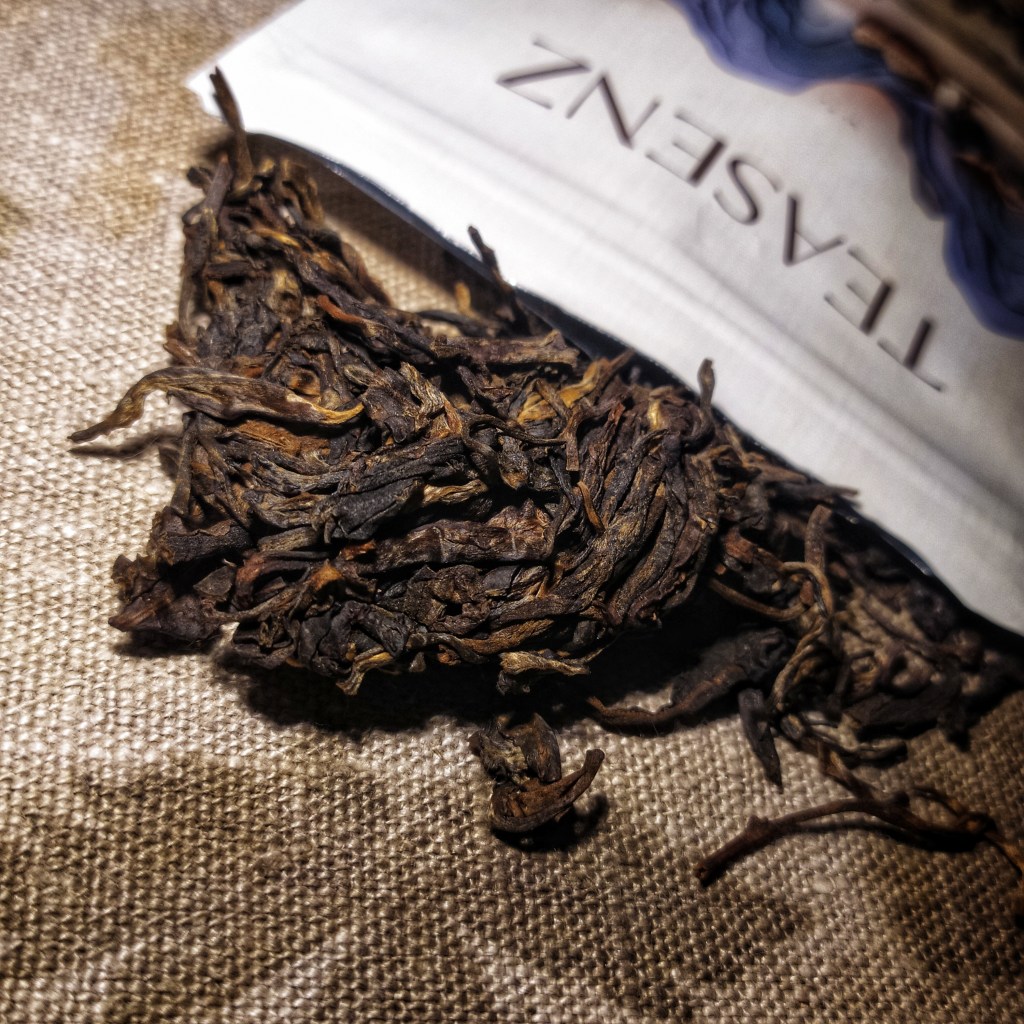
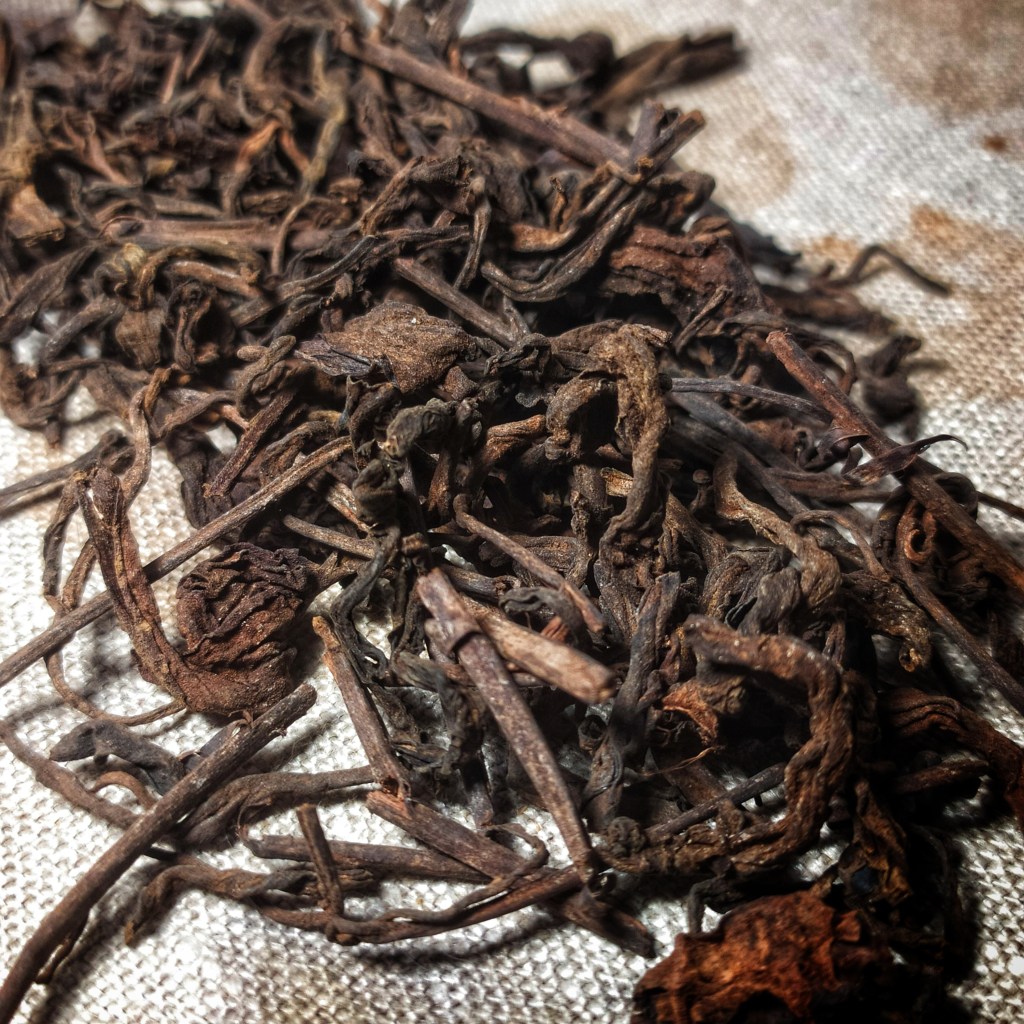
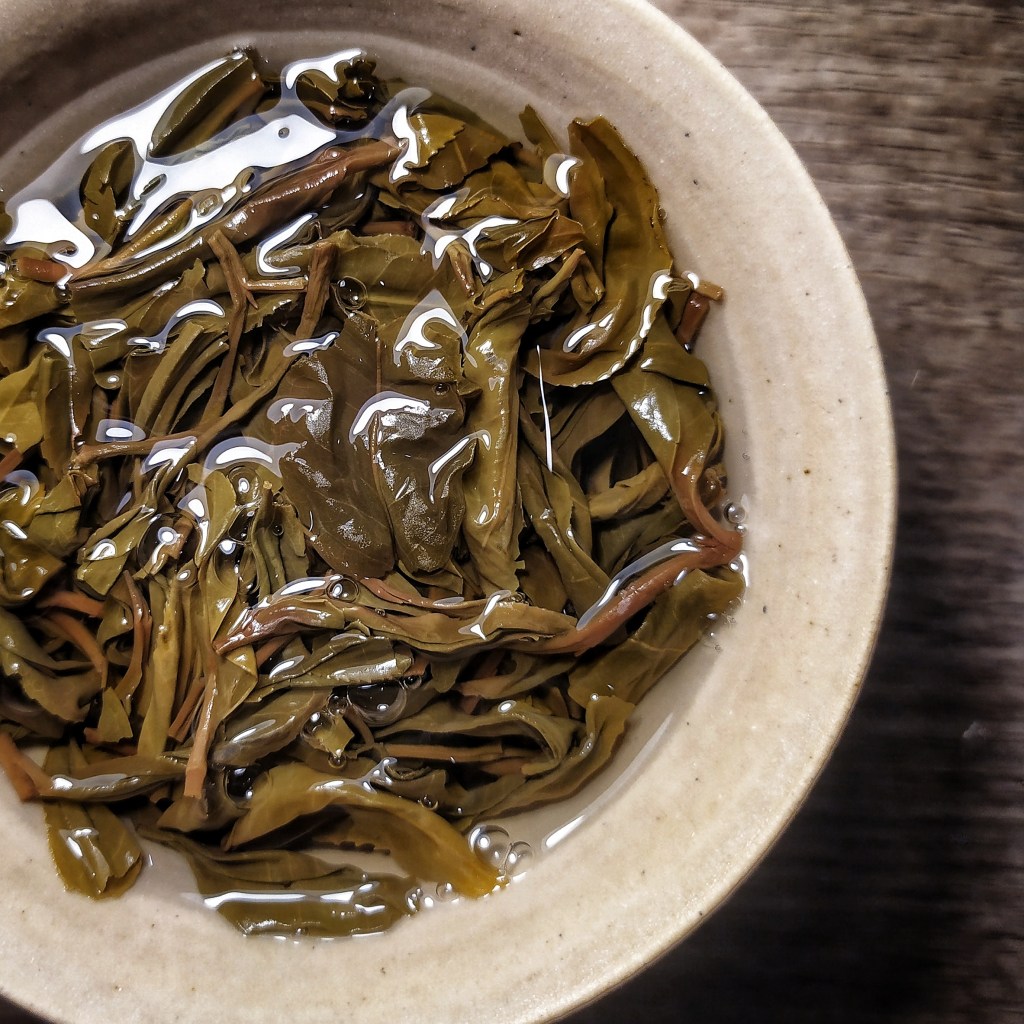
    The leaves of this 2023 spring sheng pu’er are harvested in Giàng Pằng, Yên Bái province, at 1400 m altitude. It is a mountain tea whose aromas unfold creating an ascension itinerary to the summit, the wet leaves begin with notes of wild flowers and medlars, enveloped in the scents of a pot in which peach jam is cooking. The interesting complexity develops in a crescendo of fermentative notes and macerated plum, tomato sauce and a bouquet of aromatic herbs accompanied by typical bread-making scents.
    The sip has a medium thickness, is vibrant, fresh and surprisingly sweet, with low bitterness and astringency, adorned with a pleasant floral component and supported by a good huigan and a slight tang of wild berries.

  • Reflections on ripe pu’er and an alchemical potion from Vietnam – Viet Sun Thượng Sơn Gushu Ripe 2017

    Reflections on ripe pu’er and an alchemical potion from Vietnam – Viet Sun Thượng Sơn Gushu Ripe 2017

    I have always loved ripe pu’er fermented in small batches, artisanal productions that made me forget those old hypertrophic factories of Menghai, with those endless expanses of concrete on which the leaves are turned over and battered with old rusty construction shovels.

    However, I hate many contemporary shu hyper-fermented in piles as tall as buildings, so thick that you struggle to move them with the tongue in your mouth and whose swallowing simulates an attempted suffocation.

    Because for me a great tea is a cultural fact as well as a substance, which still represents people and territories, something that according to Dumas should be drunk on knees and with bare heads, which responds to the order of its terroir and not vice versa, a distillate of that perspective that the Greeks called aidos, the honest recognition that other things and people are more important than ourselves and not something to be lumped together until the bacteria perform some kind of transubstantiation.

    This 2017 @vietsuntea pu’er comes from gushu in Thượng Sơn and it is more than a great tea, it is a remedy, an alchemical potion, an extract of those sunsets whose light reflected by the rice fields seems to create an apparent contrast between two skies.

    It presents itself with a dark leather brown colour, the scent pervade the room with hints of molasses, rice pudding, hong dou sha, leavening dough, cocoa beans and dried fruit, all enveloped in hints of leather, antique wood and fermented leaves.

    The liqueur is also peculiar, it is creamy, enveloping, silky but without that excessive thickness resulting from a fetishism for the jaw fatigue of some post-modern yunnanese shu. The sip is firm, old-fashioned, with a nostalgic sweetness of those times when the bitterness of Lao Man E was considered even slightly vulgar.

    The qi is frighteningly tangible, the aromas almost recall those of a 30 year old Hermitage, the hint of licorice tells of a Greece it has never been to and the earthy and ricey accords gather with them the whole soul of its people. Around the world in a cup.

  • Brief historical excursus on the efforts and resilience of the Anhua people

    Brief historical excursus on the efforts and resilience of the Anhua people

    Politics clouded every public and private space in China at the end of the 70s, revolutionary inspiration raged incessantly from the large squares to the alleys of the rural dimension. The Hunan we know today, a land of extraordinary teas, has seen some of the most important Chinese political figures sit at its hickory wood tables.

    The dark liqueur, imbued with smoky aromas, was a participant in the CCP meetings, a witness to history and speeches that were never revealed. The heicha was present during the strategies of a young chairman Mao, of Liu Shaoqi, Wang Zhen, and then-Liberation Army militant Hua Guofeng, who would become the main supporter of the monumental growth of tea cultivation and agricultural modernization during the Cultural Revolution.

    Before leaving for Beijing, having defeated the gang led by Mao’s mad widow and being recognized as one of the most powerful men in China until the takeover of the Deng Xiaoping movement, he saw the acreage of Hunan tea increase from 42 to 172 thousand hectares in ten years, even if half were removed around the 90s.

    It was the heicha that warmed the souls of the soldiers during the Sino-Japanese battle of Ichigo Operation, that sustained the squadrons on days when not even the land could give relief to the dead.

    The huigan of a heicha dates back as the disenchanted voice of those who have now passed away and those who continue their work. Homeland of farmers, idealists, politicians, the look at Hunan is left to a feeling of fatigue and historical awareness that never seems to find rest.

    Initially tea was a necessity for the inhabitants of the province, planting it meant having preferential access to coal, kerosene, iron for work tools and fertilizers, furthermore the cooperatives purchased all the tea produced with advances in cash, so that farmers could purchase inputs before harvest, although often at unfair prices.

    Even today the roads that lead to Yiyang are part of an arduous pilgrimage where few still venture out, at times it seems like everything has remained still, you seem to have entered another era where in many rural villages no one will offer you a flat image for families or a little speech from a leaflet, rather a cup of tea together and lives to listen to. The people, the territory, are like their teas, a hermitage in the highlands, stranger to that sad modernist compulsion and the sadistic urbanism that seems to bypass history.

    In many homes you can still see jars containing remedies and potions on wooden shelves, alongside old ceramic and copper teapots; you are greeted by the warm whine of the kettle on the stove, the wood is now white ash, the smell of smoke still sometimes saturates the atmosphere and the drops of condensation look like tears on the windows, those little things that drag you into your corner of familiar comfort even in the most remote place in the world.

    Here, in the early Hongwu years of the Ming Dynasty, Shaanxi tea merchants opened a factory to purchase and process tea, then transport it to Jingyang. After fermentation and flowering was pressed into bricks and then sealed with hemp paper. The central government established inspection and transportation departments in Xining, Hezhou and other places in Shaanxi. Fucha was so important that to prevent tax evasion, sanctions were approved such as beheading for those who illegally left the province with tea and imprisonment or death sentence for officials who allowed their escape.

    Anhua tea traders were later empowered to transport tea on grueling and brutal journeys across the Anhua Ancient Tea Horse Road, starting from the ancient market of Huangshaping and Yuzhou, along the Zishui River, then to Dongting Lake by sail boat, and then transferred it to Shaanxi.

    However, the birth of the farmer movement and the Shaanxi-Gansu Muslim Uprising blocked tea trade routes in the northwest, resulting in a slowdown in trade and the people of Anhua found themselves without anyone to accept the import, creating a circuit of tax non-compliance that was at that point incurable. Furthermore, foreign capital took advantage of contractual asymmetries and inadequacies between sellers and the Qing government to directly purchase large quantities of cheap tea.

    The first signs of recovery came with Zuo Zongtang’s “Tea Law”, opening the doors to a new tributary system and a new and prolific tea export route, but new problems were created, however, during the political disintegration of China under the blows of the warlords of Beiyang and in the early years of the Republic of China.

    The central government’s control over local forces weakened considerably, the tea trade in the northwestern region was left to the local government which was solely concerned with the collection of tea taxes without any attention to direct control over tea market policies.

    After a slight relief from the markets due to a fiscal relief of the provisional regulation of April 1942, throughout all the 40s to the following 40 years there would no longer be much news; the social unrest, the Sino-Japanese war, the consequent destruction of the roads to block supplies and the lack of intervention in the management of the markets in Hunan caused the disappearance of this type of tea, whose presence persisted almost exclusively at a local level.

    The history of Anhua has always concerned people, going beyond politics, beyond market logic, carrying on its shoulders the weight of history and the torment that accompanies the sunset of eras, but it is certain that a new future awaits this territory, worthy of these people and their tea.

    While I’m doing this soliloquy I’m drinking a wonderful Eastern Leaves 2007 Fucha from Anhua, and I am more and more convinced of how this is a tea that more than others is a veteran of incendiary contexts, a reactionary symbol endowed with the cadence of the human voice in narrating with spiritual sincerity our past, when farmers produced tea surrounded by the metallic noise of trucks and the smell of kerosene, fixing the historical truth in the persistence of consciousness.

  • Finesse as redemption for Fengqing pu’er. Xiangzhuqing gushu sheng pu 2019 by Li Yu Lu

    Finesse as redemption for Fengqing pu’er. Xiangzhuqing gushu sheng pu 2019 by Li Yu Lu

    Hiking in Fengqing it is impossible not to arrive at what is perhaps the oldest tea tree in the world after drinking liters of that Fengqing 58 which is served in every single restaurant in the prefecture. But climbing higher up, towards 2000 meters beyond the taidicha and rice fields that continue northwards, near the villages of Chajia and Hedicun, you arrive at Xiangzhuqing, a small village at the foot of the peak with a fair amount of ancient trees around the village.

    The air is cleaner, more humid, the heat stops in the Fengqing lowland and the rains fall timidly on the light sandy-ferrous soils of the mountain.
    The extensive drainage, the scarcity of nutrients towards the surface layer creates a clear distinction with Mengku trees, environment and in the concentration of biocomponents in tea leaves.

    Although it is assumed to be the same variety, Xiangzhuqing pu’er are lighter, floral and with almost no astringency and bitterness. They essentially seem like the less hypochondriac counterpart of some Yiwu teas on the Gaoshan side.

    Encountering this 2019 gushu sheng from Mr. Li Yu Lu is a direct response to the arrhythmic advancement of Fengqing pu’er onto the market; fine, delicate teas that showcase Lincang in a new, renewed light.

    The wet leaves seem to revive memories of a hot summer, with notes of persimmon, papaya, orange peel, in which balsamic tones and nuances of peach toffee candy, green melon, hay and dried apple alternate composedly. They are counterbalanced by floral hints of osmanthus, elderberry and scents of a walk in a freshly mown lavender field. More sharp fragrances emerge later such as rubber tree, juniper and black pepper.

    The sip is at times monotonous but enlivened by a pleasant mineral verve, it is sugary, medium-bodied with a typical absence of astringency and bitterness, ending on juicy aromas of persimmon, mango jam and elderberry.

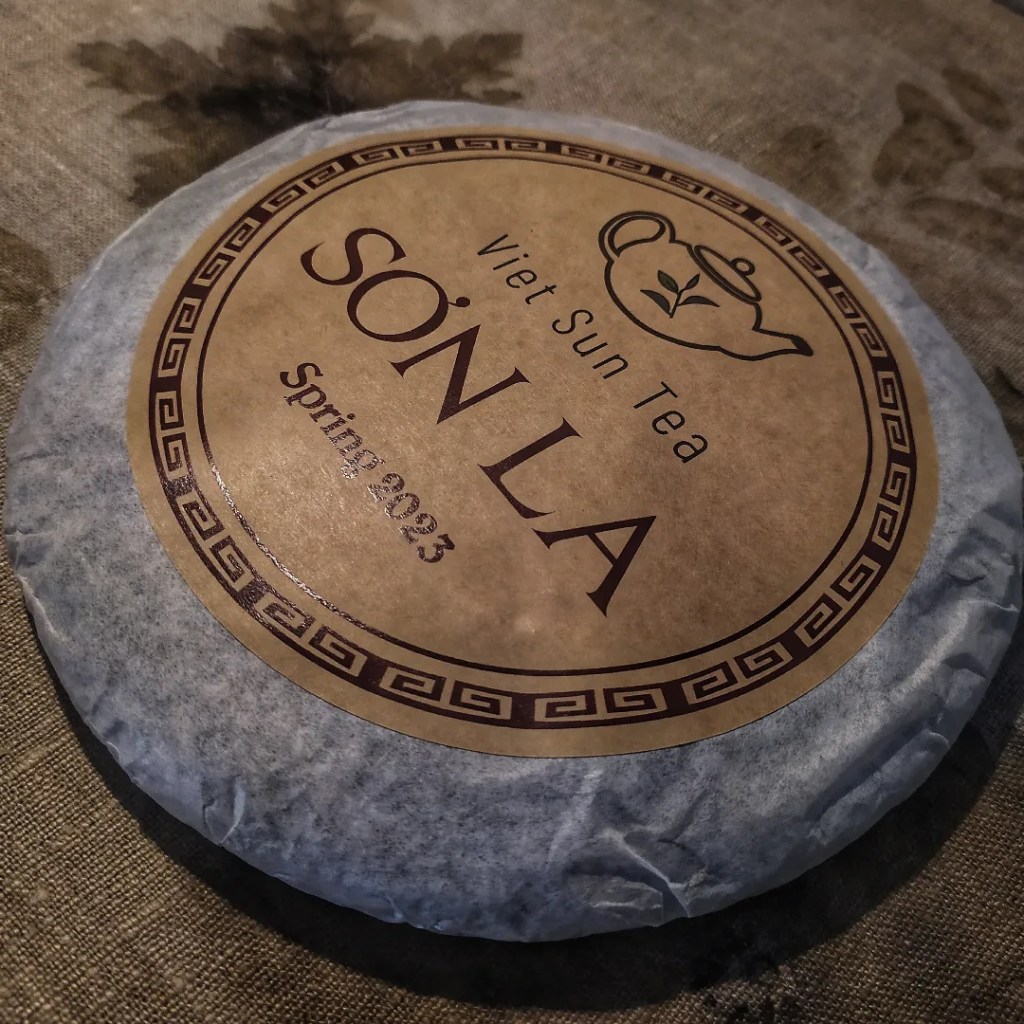
  • Another great sheng pu from Vietnam. Viet Sun Sơn La 2023

    Another great sheng pu from Vietnam. Viet Sun Sơn La 2023

    When you drink teas like those of Sơn La you are pervaded by a sense of satisfaction and touched by a contemplative streak, they are acrobatic teas capable of pushing themselves to the limit with a strong personality while maintaining balance and harmony, like a painting in which all the lines of force resolve into their own whole.

    This tea comes from Bắc Yên, a place characterized by a complex mountainous terrain at 1800-1900 m inhabited mainly by H’Mong ethniciy, in the province of Sơn La, a wild paradise full of travellers, but who instead of wandering on foot as composedly as in a painting by Camille Pissarro, they jolt disorderly on 4×4 trucks and scooters towards the summit.

    One evening, in a Vietnamese grocery shop on the way home, I heard the name Sơn La for the first time. An elderly lady slipped a sticky rice cake, the Bánh giầy, translucent and fragrant, from her experienced and elegant hands. She removed it from the banana leaf to put it on the charcoal, then took a jar containing some fermented apples. It was a vinegar made with water, sugar and táo mèo from the previous year (cat apple or Docynia indica, a typical fruit of these areas), letting herself go back to childhood memories, of springs now gone, spent in the white shadow of the Quả táo mèo in bloom, betraying a bit of emotion visible in the glimmers of her thick silvery hair.

    That slight scent of embers, that wok hei can be found in the wet tea leaves, tamed by notes of green meadow, rosehip and white peach. During the infusions, notes of poached pear and kumquat, elusive scent of grapefruit peel and green pepper are revealed with a sweet nuance of canned sugar.

    The sip is unique, archetypal, enveloping and enlivened by a dynamism that alternates vibrant acidity with sweetness, a moderate bitterness of bergamot with a rocky minerality. The liqueur develops in its complexity on lingering aroma of white peach and accompanied by fragrances of jasmine, persimmon and subtle notes of serpillo.

    It is already an extremely enjoyable sheng but I am sure that with the embrace of time it will guarantee memorable and contemplative sessions.

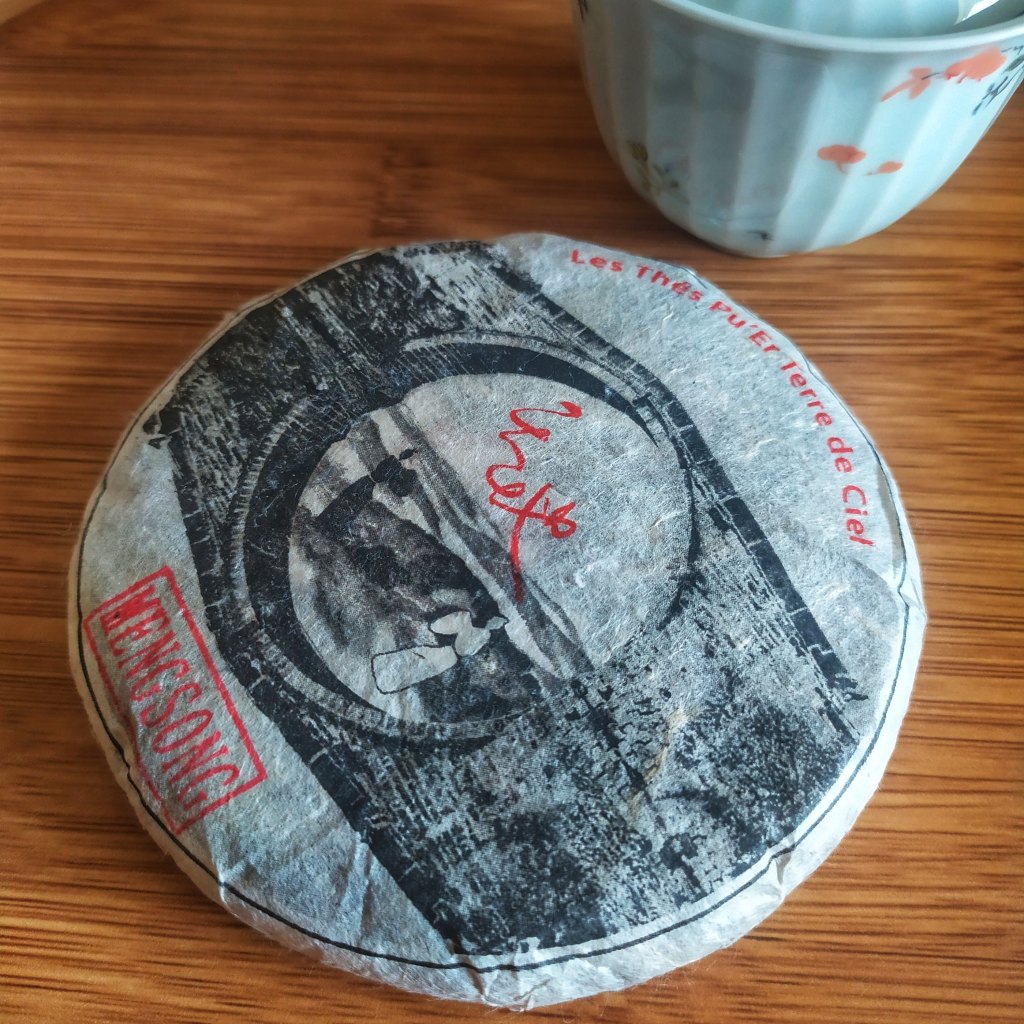
  • A cup that smells like an orchard next to a creek. TTdC Sanmai 2013 sheng pu from hundred-year-old trees

    A cup that smells like an orchard next to a creek. TTdC Sanmai 2013 sheng pu from hundred-year-old trees

    The sheng pu of Thès Terre de Ciel is the reflection of an extraordinary terroir such as that of Sanmai, a village that follows the limelight of Mengsong teas, preserving its pure fruity appearance and sugary touch and at the same time sheltered from oracular exaltation and censorship which brought many teas from these areas at now crazy prices.

    Sanmai pu’er are nostalgic stimulants, a perpetual conversation with the hippocampus like opening an album of memories on your lap. This 2013, from old trees at 1600 meters above sea level, has the traits of someone who brings with him the first charms of the time while retaining that enlivening and exuberant youthful verve.

    The color of the liqueur is amber, the hints of the wet leaves echo peach jelly, dried plums, yellow rock sugar and custard cream. Its olfactory fervor is an unfolding of different layers of complexity, a swing of evolved notes and other more naive and fresh ones.
    The spectrum then turns to naturalism, with olfactory memories of pickled bamboo, of mountain flowers up to the progression of reminiscence first of undergrowth, then minerals and iodines, like an orchard next to a creek, enjoying dried tropical fruit and Moroccan biscuits.

    The aromatic approach in the mouth is that of a good, true pu’er, without excesses of fame or rhetoric. On the palate it is sweet and accommodating, with a practically absent bitterness and astringency. The sip is enveloping, of medium thickness, the sweetness of dark sugar and peach cream is integrated and it speeds it up, the note of pomelo zest is subservient to a set of bakery ad fruity aromas that recall a fruit tart. Excellent persistence of a finish with a fascinating floral and wild apple weaving.

  • Sanmai, the village in Mengsong where time seems to have stopped

    Sanmai, the village in Mengsong where time seems to have stopped

    Sanmai has gained more and more attention from pu’er enthusiasts in recent years, following the growing interest in the forests of Naka and the Mengsong area.

    It is surrounded by some of the most famous mountains in Menghai county, about an hour north of Banpo zhai in the Nannuo area, and an hour and a half south of Huazhuliangzi, reachable passing through the villages of Bameng and Baotang. The forests alternate with the taidicha like an ecological clash between human and nature,the primitive and forest scenarios intensify as you enter the trees towards the North, on the road to Sanmai Laozhai. Once in Sanmai Shangzhai there are only a few kilometers to walk towards the ancient gardens where the natural severity and the inexorability of the woods continues up to the gates of Nanben Laozhai.

    Some Mengsong areas seem to open up towards the immense, they consecrate themselves in that “Open” which for Heidegger was the condition in which things, places, people can appear for what they are and not for their numerical value. From the ancient gardens of Sanmai, the valley sloping down to Jinghong, it seems like a mirage that would have elicited a surprised smile, despite his countless trips, even at Frederic Edwin Church.

    The lichens and saprophytic plants embrace the shrubs in those slopes born from an insane verticalism, which forced the few pickers who bet part of their existence on tea to remain more anchored to the anxieties of concreteness, where the violet of their cheeks was the only chromatic hint among the shades of that primordial greenery.

    Beyond the narrow and steep road, the rugged gorges and the road surface in which every ravine seems an existential leap, the Hani have found a home for centuries, what was previously a settlement became a security hub in 1934 under the name of Nanben Hebao, for then seeing his own name, Sanmai, only in 1956. Caravans often interrupted their journey here, the rains broke in for days, the oxen slipping caused them to lose the equipment entrusted to them and hence the legend of the name Sanmai, or the place where the tools were tied forming a trellis in the saddle of the ox.

    In the ancient gardens tea trees are scattered, some tall yet young seem to converse with the conical bodies of Moso bamboo which often makes this forest look like the ecosystem of Huazhuliangzi.
    Here, on the contrary, the bamboo was planted artificially, when tea had not yet reached its current economic importance, as a cash crop for building and textile purposes, and to restore the excessive soil reclamation which led to extremely important erosive phenomena. However, now its removal and reconversion of the land is a problem that inhabitants are facing with difficulty.

    The descendants of those exiled souls who bet on the tea of Mengsong and Sanmai now reap the fruit of a legacy that expands beyond its disciplinary limits, to the point of involving the destiny of their own territory.

    The rural scenes give value to the time that has passed, the villages develop on the open ridges of the mountains,where the approximately 500 families, mainly Hani, still live mainly thanks to livestock and farming. During the Gatangpa festival you can smell the scent of glutinous rice cakes in the alleys, people walk along the beaten path to reach the place of offerings, and then gather with their families drinking tea and rice wine, even some hens seem busy running out of the old wooden sheds; the black of the ethnic clothes, adorned with silver and silk tassels and the colorful bandanas with geometric motifs offer the only chromatic contrast from the red of the clay soil, as if their smiles were in that instant the only color detail on a black and white background.

    Despite the growing awareness of the value of their tea, it seems that the jianghu forged by conflicts of personality and self-affirmation has not arrived here, their leaves still manage to offer an experience saturated with meaning, freed from economic conflicts and apocryphal slogans; they develop an extended atmosphere in which the link with a past emerges, with those identities, of those perceptions beyond time, which have the ability to bring the aesthetic experience of this village back to the dimension of the present in a different, imperceptible and at the same time sensitive in its liquid revelation.

  • The forest of Hoàng Su Phì and reconciliation with the truth. Soliloquy with Viet Sun black tea from ancient trees

    The forest of Hoàng Su Phì and reconciliation with the truth. Soliloquy with Viet Sun black tea from ancient trees

    The sound of the horn in the Dao rituals dictates the rhythm of a place that seems alive in the eternal instant of a perpetual past, the thunders are rhythmic like the steps of the Jade Emperor on his journey to earth.

    The people do their utmost in the preparation of the traditional ceremony in their black tunic whose red drapes blown by the wind seem to give them a permanent dynamism, while their clothes and the folds on their faces seem to merge with the sky broken by lightning, letting the viewer try to understand the silent emotions they express.

    Places like Hoàng Su Phì revive that pure, almost mythological naturalism, saving it from being a mere memory. The paths seem a return to the eras of myths and magic, spiritualism, tenacity and subsistence, far from the paved road of self-flagellation materialism. It is those paths that force us to reformulate contingency, those smells of an extinct nature that ask us, as Derrida said, to rethink our relationship with the truth. They are forests where not only the camellia orchestrate a unique opéra in harvest time, but they are real metaphysical theater for find again time and conciliation with history, acts of rediscovery of a lost essentiality.

    A particularly interesting Viet Sun tea from 2022, sourced from ancient trees in the Hoàng Su Phì forest in Hà Giang province. The notes of the wet leaves are extremely special, aromas of chestnut honey, cocoa and malt biscuits are perceptible, accompanied by dried sour cherries combined with more floral nuances of violet and lilac. A more particular weaving approaches timidly, in the background you can feel the dried straw, tamarind sauce and dry cranberry, to then arrange on very clear memories of distilled grape skin, muscat grappa and notes of old, freshly waxed wood.

    The sip is coherent, medium-bodied, sensations of cocoa combine beautifully with those of malted barley and honey, enlivened by a never tiring, balanced and persistent sweetness.

  • A forest out of this world, shaped by a Caravaggesque hand. This is Paliang

    A forest out of this world, shaped by a Caravaggesque hand. This is Paliang

    Passing the muddy paths close to Bulang, with those mountains behind you that seem to have been born from the virtuosity of a Caravaggesque hand, shaped by tectonic inclemency, by geological tension, the sun shines burning over the tropical karst sinkholes, a place where nature and men weave millenary relationships, meeting in the most inaccessible forest and in the architectural remains of the imperial era.

    The light filters through the dense forest, radiating the tea trees that look like illuminated actors in a naturalistic work twisted in lignified gestures, while the boys in the village load the trucks with cassava and laughter intones a background melody. Here stands the ancient village of Paliang, an out of this world place at about 1850 meters above sea level, surrounded by primitive works, where popular customs are preserved in their amnioticism.

    All this is defined by leaves that show in an objective elegance what is an empathetic initiation to Bulang teas. The infusions reveal a more restrained astringency, a character devoid of that fatherly austerity represented by the strong bitterness of some teas that are encountered a few tens of miles away.

    This sheng pu comes from material harvested in 2021 in Paliang. The scents of the leaves are like taking a look at an ancestral view, when wet they recall charcoal-cooked tropical fruit, the wild flowers bring back memories of an excursion on the bank of a wooded river, surrounded by deep forest moss, pervaded by the smell of wet rock. Almost primitive and mineral scents are accompanied by those of the juiciness of a basket of ripe fruit, there are notes of toasted dried fruit and slight hints of ancient leather.

    In the mouth it flaunts a smooth texture, it seems wrapped in silk drapes, the bitterness is contained although present, tempered by the soft and deep echoes of a sweetness resulting from the juiciness of a ripe peach. The sip recalls the sensations of a good Montrachet, the palate is soon refreshed by a peculiar minerality and eagerly seeking the next contact with the cup.

  • A visceral bond with time that has never been broken and a history that has never been betrayed. Journey to Lùng Vài through this Viet Sun 2022 sheng pu’erh

    A visceral bond with time that has never been broken and a history that has never been betrayed. Journey to Lùng Vài through this Viet Sun 2022 sheng pu’erh

    The rain poured down, the people in the highland villages returned home after working in the fields all day, the light fades as people’s voices approach, dispersing the fatigue of the harvest in their song. The forests stand between the terraced fields like polychromatic marvels, the mountain farmers appear like artists when their work creates such harmonious beauty, one that would have enraptured Holderlin and which he would have described as an art inspired by that original mutual belonging between sky and earth.

    As the sunlight disperses the mist, the fields fill with water like sparkling mirrors reflecting the sun and clouds. A now dim light filters through the palm roofs, the rural architecture seems aged and embraced by moss, but still firm and representative of times gone by. One can see an ancient splendor that is renewed with every glance at it, imagining a visceral bond with time that has never been broken and a history that has never been betrayed.

    This Viet Sun Lùng Vài tea, like the architecture in this area, bears witness to the events, they are beyond the present, not as a relic of the post-history but as narrating entities surviving in the subsistence of their descendants.

    This is a sheng from an extremely interesting and characteristic terroir, located on the eastern side of Tây Côn Lĩnh mountain, Hà Giang province, from ancient tea trees. The dried leaves have an intensely floral scent, once wet they show an evocative and complex character made up of citrus tones, charcoal-cooked fruit, fragrances of dried mango, pear soaked in white wine, candied orange and apple custard. The sip is both juicy and vibrant, refreshing, wisely balanced and medium-bodied, with an initial and subtle bitterness.

    A good huigan accommodates aromas that recall lemon cream, citrus honey, flambéed fruits on a background of alpine herbs; notes of orange peel and carrot plumcake conclude a dynamic and intensely meaningful session.